Atlas F Site 556-2 Missile Silo, Alburgh Vermont
Longitude: -73.288053461386
Site Type: Atlas F vertical silo launch facility
Missile Type: SM-65F Atlas
Missile Assigned to this Silo: GD mfg 104F; GD serial 62-12140; AF tail 140; later launched successfully from Vandenberg A-2 in Mar 1969 with OV1-17/OV1-18/OV1-19 technology-test payloads
Number of Launchers/Missiles: 1
Parent Base: Plattsburgh AFB
Missile Wing: 380th Strategic Aerospace Wing
Missile Squadron: 556th Strategic Missile Squadron
Corps of Engineers Site ID: 2
Approximate Base Size: 9 acres (reported town-owned silo site; not verified original Air Force acquisition acreage)
Current Site Use: Town-owned former missile site; former highway-department/municipal use; fenced property with solar-panel use and environmental land-record notice
Site Ownership: Town of Alburgh / municipal ownership)
Accessible: No public access to launch complex; fenced municipal property; historical marker reported near Alburgh Welcome Center
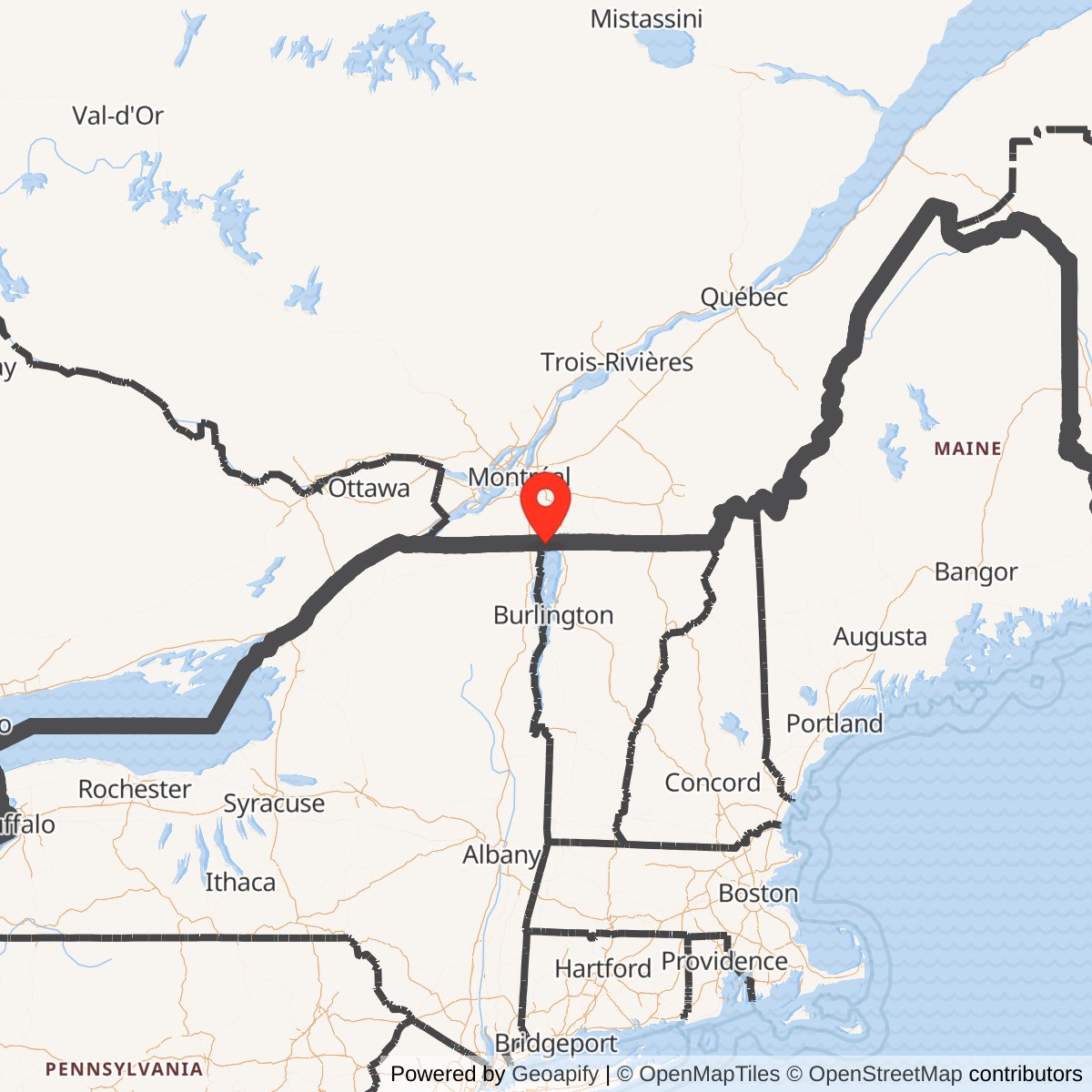
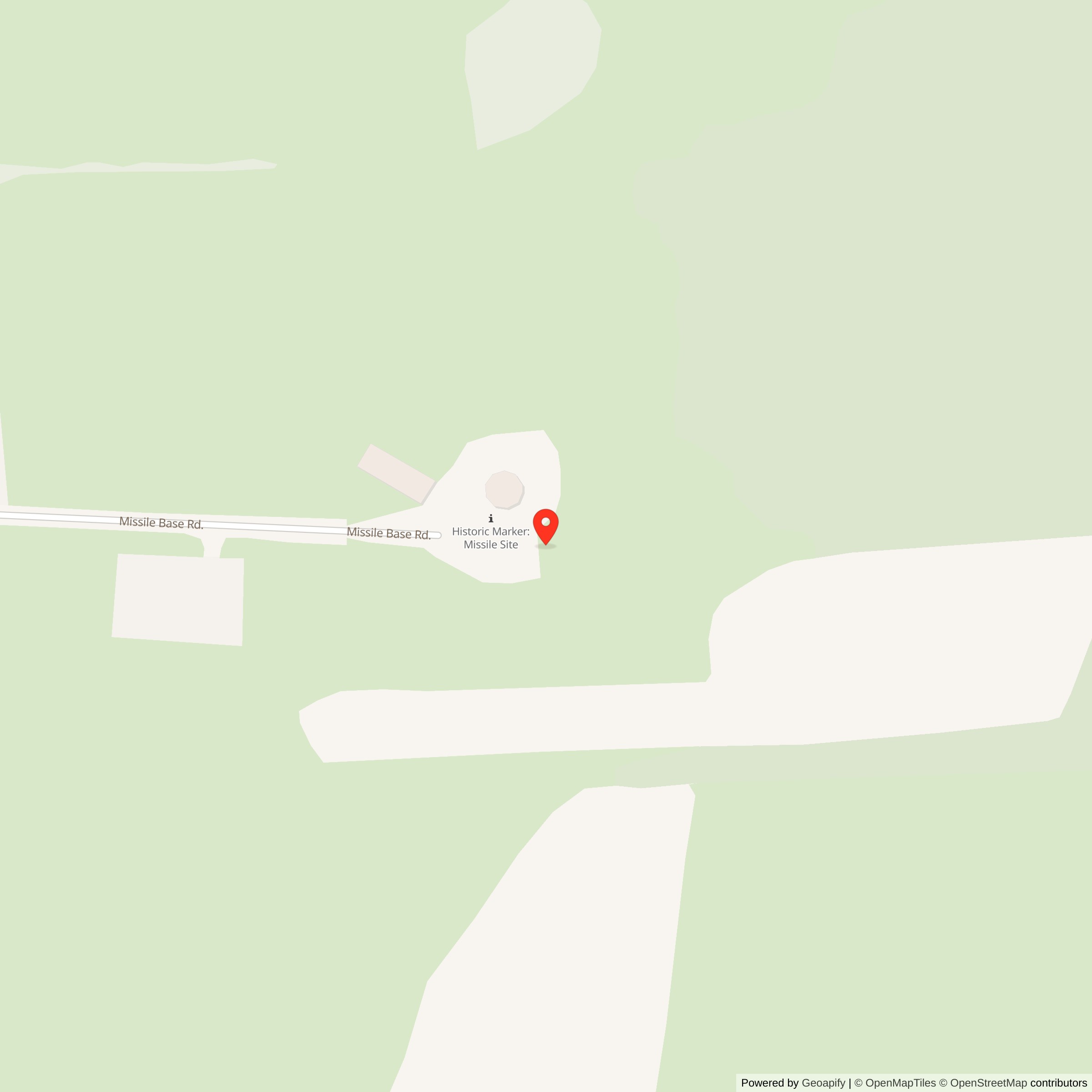
On a flat, windswept piece of Alburgh, Vermont, a short drive from Lake Champlain and the Canadian border, one of the most unusual ICBM sites in the United States hid beneath an ordinary rural road. Atlas F Site 556-2 was one of only two Atlas F missile silos built in Vermont, and part of the only operational U.S. ICBM squadron ever deployed east of the Mississippi River. For a few tense Cold War years, this small Grand Isle County site connected a lakeside Vermont town to Strategic Air Command's national nuclear-alert network.
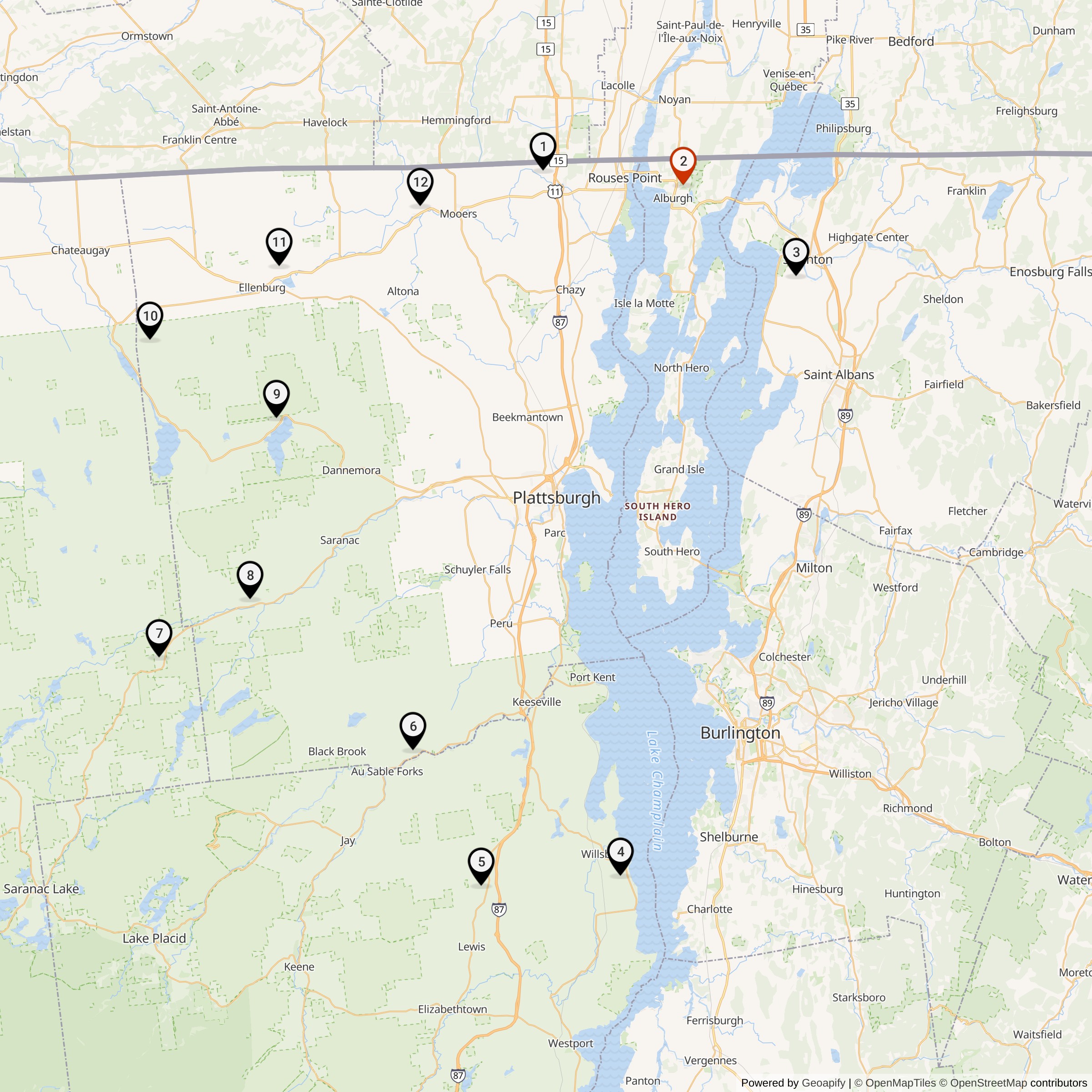
Atlas F Site 556-2, also known in several sources as Site 2, Alburg or Alburgh, was an SM-65F Atlas intercontinental ballistic missile launch facility operated by the 556th Strategic Missile Squadron from Plattsburgh Air Force Base, New York. The site belonged to the 380th Strategic Aerospace Wing and was one of twelve independent Atlas F launch sites arrayed around Plattsburgh AFB. Unlike later Minuteman launch facilities, an Atlas F launch complex had its own underground control/support spaces and missile silo.
Site 556-2 is no longer an active missile site. The 556th SMS Atlas F force was declared operational on 1962-12-20. USAF unit-history material records the squadron phaseout sequence: the first ICBM went off alert on 1965-03-12, the last ICBM went off alert on 1965-04-10, the last ICBM shipped on 1965-04-13, and the squadron was discontinued on 1965-06-25. The former launch facility is decommissioned, municipally owned/reused, environmentally closed with institutional controls, and not an active military installation.
Location, Landscape, and Site Description
Site 556-2 stood in a landscape very different from the open High Plains settings associated with many Atlas and Minuteman fields. It was built on the Alburgh peninsula in northwestern Vermont, a narrow Lake Champlain landscape close to the U.S.-Canada border. The site lay off Route 2, reached by the aptly named Missile Base Road. Its location placed it roughly east of the village of Alburgh and across Lake Champlain from the Plattsburgh AFB support base.The site was one of two Plattsburgh Atlas F facilities in Vermont; the other was Site 556-3 near Swanton. Ten additional 556th SMS Atlas F sites were in New York. Together they formed a ring of isolated, hardened launch complexes around the base. In the Atlas F design, each complex was a self-contained launch facility rather than a simple remote silo. The missile stood vertically underground inside a heavily reinforced concrete-and-steel silo, rested on an elevator, and could be lifted above ground for launch after liquid-oxygen loading. The control and support areas were underground and connected to the silo by a tunnel, while surface structures included an access road, security fencing or controlled entry, support buildings, and Quonset-type structures.
Later aerial imagery and historical reporting describe the Alburgh site as a small municipal tract with two Quonset huts, concrete surfaces, access road remains, and the underground silo and control spaces sealed or inaccessible. Seven Days reported that the former site was approximately nine acres. The Vermont DEC hazardous-site record describes the site as fenced and not accessible to the public, with municipal use and later solar-panel use on the property. EPA identifies the site as ATLAS MISSILE S-2, off Route 2, Alburg, Vermont.
Strategic and Cold War Context
The Alburgh silo existed because the United States was trying to solve one of the central military problems of the early nuclear age: how to create a land-based missile force that could survive long enough to deter attack, respond quickly, and reach intercontinental targets. Atlas was the Air Force's first operational ICBM family. Atlas D and E sites used earlier basing concepts, but Atlas F represented the most hardened and advanced Atlas field deployment. The missile was stored vertically in an underground silo-lift launcher, an arrangement intended to protect the missile while reducing the time needed to raise and prepare it for launch.The Plattsburgh deployment was strategically distinctive. Most American ICBM fields were placed in the West, Midwest, or Great Plains, but the 556th SMS placed twelve Atlas F missiles around Plattsburgh AFB in northeastern New York and northwestern Vermont. Vermont Historical Society summarizes the Alburgh site as part of a Plattsburgh-controlled Atlas F network active between 1961 and 1965. Seven Days emphasized the local contrast: two of the twelve silos were in Vermont, while ten were in New York, and the Alburgh site sat on a narrow spit of land near Lake Champlain and the Canadian border.
Atlas F was a liquid-fueled, first-generation ICBM. Its RP-1 kerosene fuel could be kept aboard the missile during alert, but its liquid oxygen was cryogenic and could not be stored aboard indefinitely. Operational readiness therefore did not mean that the missile sat continuously raised above ground or continuously filled with liquid oxygen. For an Atlas F silo such as 556-2, an alert posture meant that the missile and launch complex were staffed, secured, monitored, maintained, connected to Strategic Air Command command-and-control channels, and prepared to proceed through the launch sequence if ordered. In an actual launch preparation, the silo doors would open, the missile would be loaded with liquid oxygen, raised on its elevator, locked in launch position, and fired from above ground. The 556th SMS sites were manned continuously while the squadron was active, and during the Cuban Missile Crisis the operational sites were at a high alert level and ready to launch if required.
Construction and Activation
The Plattsburgh Atlas F field was built during the crash-priority years of first-generation ICBM deployment. The USAF unit history records that the 556th Strategic Missile Squadron was activated in 1961, organized at Plattsburgh AFB on 1961-10-01, turned over to Strategic Air Command on 1962-12-07, and became operational on 1962-12-20.Construction of the Atlas F sites was technically demanding and dangerous. The Alburgh silo was a deep, heavy civil-engineering project built around a reinforced launch structure, underground control/support rooms, blast doors, elevator machinery, propellant-handling systems, power, ventilation, communications, water-removal systems, and surface support buildings. Seven Days, citing the Plattsburgh Press-Republican, reported that a falling bucket plunged through the Alburgh silo during construction and killed a 28-year-old worker from Gouverneur, New York. The same article noted that at least three other men died while working on the twelve Plattsburgh-area silos. The incident gives Site 556-2 a grim construction history that is not captured by simple activation/deactivation tables.
Local memory of the site's arrival was vivid. Seven Days reported that Alburgh residents remembered the day in 1962 when an Atlas missile came through town on a large flatbed truck, drawing crowds along the route; some utility poles along Route 2 reportedly had to be temporarily removed so the missile could pass. That scene captures the collision between a small Vermont town and a national strategic program: an 81-foot missile designed for global nuclear war being threaded through local roads, bridges, utilities, and townspeople.
Missile System and Technical Role
Site 556-2 was built for the SM-65F Atlas, the final operational Atlas ICBM variant. The National Park Service describes Atlas as the first operational U.S. ICBM and notes that Atlas F was the best of the deployed Atlas types, using a blast-proof silo-lift configuration and an approximately ten-minute launch sequence. The missile was kept vertical, the two 75-ton overhead doors opened, and the missile was lifted from the silo before launch. The missile used RP-1 fuel and liquid oxygen, with the RP-1 kept aboard during alert and liquid oxygen loaded before the missile was raised.Public-source descriptions identify the Atlas E/F family as carrying a Mark IV reentry vehicle and W-38 thermonuclear warhead. F.E. Warren AFB's public Atlas fact sheet gives the Atlas ICBM a range of more than 6,300 miles. Those figures should be read as general public-source descriptions of the Atlas weapon system, not site-specific operational targeting information.
The assigned missile at Site 556-2 is unusually well documented. The missile was General Dynamics manufacturing number 104F, General Dynamics serial number 62-12140, Air Force tail number 140. The missile was accepted on 1962-08-16 and delivered on 1962-08-22.
Atlas 104F had a later post-alert career. After the Atlas ICBM force was retired, many Atlas missiles were refurbished and reused as test and space-launch vehicles. The 104F was successfully launched from Vandenberg AFB launch from Gantry A-2 with a technology-test payload identified as OV1-17 / OV1-18 / OV1-19 on 1969-03-17.
Operational History
The 556th Strategic Missile Squadron had an unusual missile lineage before it ever reached Plattsburgh. USAF unit-history material traces the squadron from a World War II bombardment unit to a Snark missile organization and then to an Atlas F ICBM unit. The 556th was organized at Plattsburgh AFB on 1961-10-01 and operated SM-65F Atlas missiles from 1962 to 1965. The unit history identifies Plattsburgh AFB as the squadron station from 1961-10-01 to 1965-06-25, records the weapon system as SM-65F Atlas from 1962 to 1965, and states that the squadron was the last Series F Atlas squadron and the last squadron in the Atlas program.For the people assigned to Site 556-2, operations meant constant alert discipline at a remote, hardened, liquid-fueled missile complex. The 556th sites were manned 24 hours a day, seven days a week, while the squadron was active. The site required missile crews, maintenance personnel, security personnel, communications support, propellant capability, power and water systems, and periodic inspections. Unlike a later Minuteman launch facility, which was normally unmanned and remotely monitored from a separate launch control center, an Atlas F site included its own crewed underground launch-control and support space.
The Cuban Missile Crisis came just as the 556th SMS was approaching full operational status. The SAC Missile Chronology records that, during the latter part of October 1962, the 556th SMS at Plattsburgh was required for the first time to place all twelve Atlas missiles on alert. This did not mean that the Site 556-2 missile sat continuously outside the silo or continuously loaded with liquid oxygen. It meant that the missile complex was placed in an operational launch-ready alert posture: crews, security, maintenance, communications, and missile systems were kept ready to execute the Atlas F launch sequence if ordered. For Atlas F, that launch sequence still required liquid-oxygen loading and raising the missile above ground before launch.
Site 556-2 also stood out because of its public visibility in Vermont memory. Seven Days reported that local residents remembered the missile's 1962 arrival through Alburgh and the mixed public reaction: some people feared that the site made the town a Soviet target, while others welcomed the jobs and money associated with the program. The site was not simply a remote military facility; it was an engineered intrusion into a small rural community, one that shaped roads, utilities, local employment, land use, and local identity.
Deactivation and Disposal
The Atlas F system had a short front-line career. By the mid-1960s, solid-fueled Minuteman and storable-liquid Titan II missiles had made Atlas obsolete as an operational ICBM. USAF unit-history material records the Plattsburgh phaseout sequence: first ICBM off alert on 1965-03-12, last ICBM off alert on 1965-04-10, last ICBM shipped on 1965-04-13, and the 556th SMS discontinued on 1965-06-25.For Site 556-2, decommissioning meant more than a unit-status entry. The missile was removed, the launch complex lost its operational mission, and equipment was removed or salvaged. Seven Days reported that, in Alburgh, the military welded shut the nine-ton silo doors, removed equipment from the Quonset huts, and gave the site to the town. After the sump pumps were shut off, the empty underground spaces flooded, a common afterlife for many former Atlas F complexes.
The site did not enter the later arms-control demolition story associated with Minuteman and Peacekeeper reductions. Instead, it represents the earlier Atlas disposal pattern: rapid military obsolescence, missile removal, equipment removal, transfer or disposal of the property, and local reuse. The decommissioned Atlas F site became a municipal problem and opportunity rather than a preserved Cold War landmark. It was ultimately associated with highway-department use, brownfield management, and solar reuse discussions.
Current Status and Site Use
The former Atlas Missile S-2 property remains a decommissioned missile site, not an active military installation. EPA's CERCLA profile identifies ATLAS MISSILE S-2, EPA ID VTD988366126, off Route 2 in Alburg, Grand Isle County, Vermont. EPA states that the site is not on the National Priorities List, has a Non-NPL status of NFRAP, and that EPA has determined no further federal action will be taken.The Vermont DEC hazardous-site record identifies the site as Atlas Missile S-2, site number 770025, off Route 2 in Alburgh. It lists the site use as government, priority as SMAC - Site Management Activities Completed, and site status as Voluntary Action. The Vermont record states that a confirmation study was completed in July 1988 and a site inspection in April 2000; low-level VOCs and metals were detected, but soil and groundwater results showed low levels of contaminants and nothing above industrial standards. The record also states that the site is fenced, not accessible to the public, and has solar-panel use, with a land-record notice serving as a mechanism to prevent future work without notice to DEC. The site closure date is listed as 2017-09-06.
Seven Days reported in 2015 that the town had owned the underground silo for decades, that the site was about nine acres, and that local officials had used it for the Alburgh Highway Department before discussing a sale or solar project. Because that article also reported that the highway department had moved to a new facility before 2015, the current-use description should be cautious: the site is best described as a town-owned, fenced former missile site with municipal/highway-department history, brownfield controls, and solar-panel use reported by Vermont DEC.
Public access is not available to the underground facility. The site is fenced and subject to institutional controls. A nearby historical marker at the Alburgh Welcome Center identifies the site in public memory, but that marker does not make the former launch complex itself open for public exploration. The underground silo and control areas may be flooded, sealed, structurally hazardous, or otherwise unsafe.
Chronology
- 1961-10-01 The 556th Strategic Missile Squadron was organized at Plattsburgh AFB, New York.
- 1962-08-16 Atlas 104F, General Dynamics serial number 62-12140 and Air Force tail number 140, was accepted.
- 1962-08-22 Atlas 104F was delivered for the 556th Strategic Missile Squadron.
- 1962 Site 556-2 was turned over to the Air Force sometime in 1962.
- 1962 Local memory recorded the Atlas missile moving through Alburgh on a large flatbed truck; Seven Days reported that utility poles along Route 2 had to be temporarily removed.
- 1962-10 During the Cuban Missile Crisis period, the Plattsburgh Atlas F force was required to place all twelve missiles on alert as the squadron approached full operational status.
- 1962-12-07 The 556th Strategic Missile Squadron was turned over to Strategic Air Command.
- 1962-12-20 The 556th Strategic Missile Squadron was declared operational, completing the operational deployment of the Atlas F force.
- 1965-03-12 The first 556th SMS ICBM went off alert during Atlas phaseout.
- 1965-04-10 The last 556th SMS ICBM went off alert.
- 1965-04-13 The last 556th SMS ICBM was shipped.
- 1965-06-25 The 556th Strategic Missile Squadron was discontinued.
- 1967 Seven Days reported that the military gave the Alburgh site to the town after welding shut the silo doors and removing equipment.
- 1969-03-17 Atlas 104F as launched successfully from Vandenberg AFB Gantry A-2 with OV1-17 / OV1-18 / OV1-19 technology-test payloads.
- 1988-07 Vermont DEC records list a confirmation study completed in July 1988.
- 2000-04 Vermont DEC records list a site inspection completed in April 2000.
- 2015 Seven Days reported town discussions about selling or reusing the nine-acre former missile site for a solar project.
- 2017-09-06 Vermont DEC lists the Atlas Missile S-2 site closure date.
- 2025-05-29 Vermont DEC's Atlas Missile S-2 hazardous-site record was last updated.
Plattsburgh history-office packet on Atlas Missile Deployment
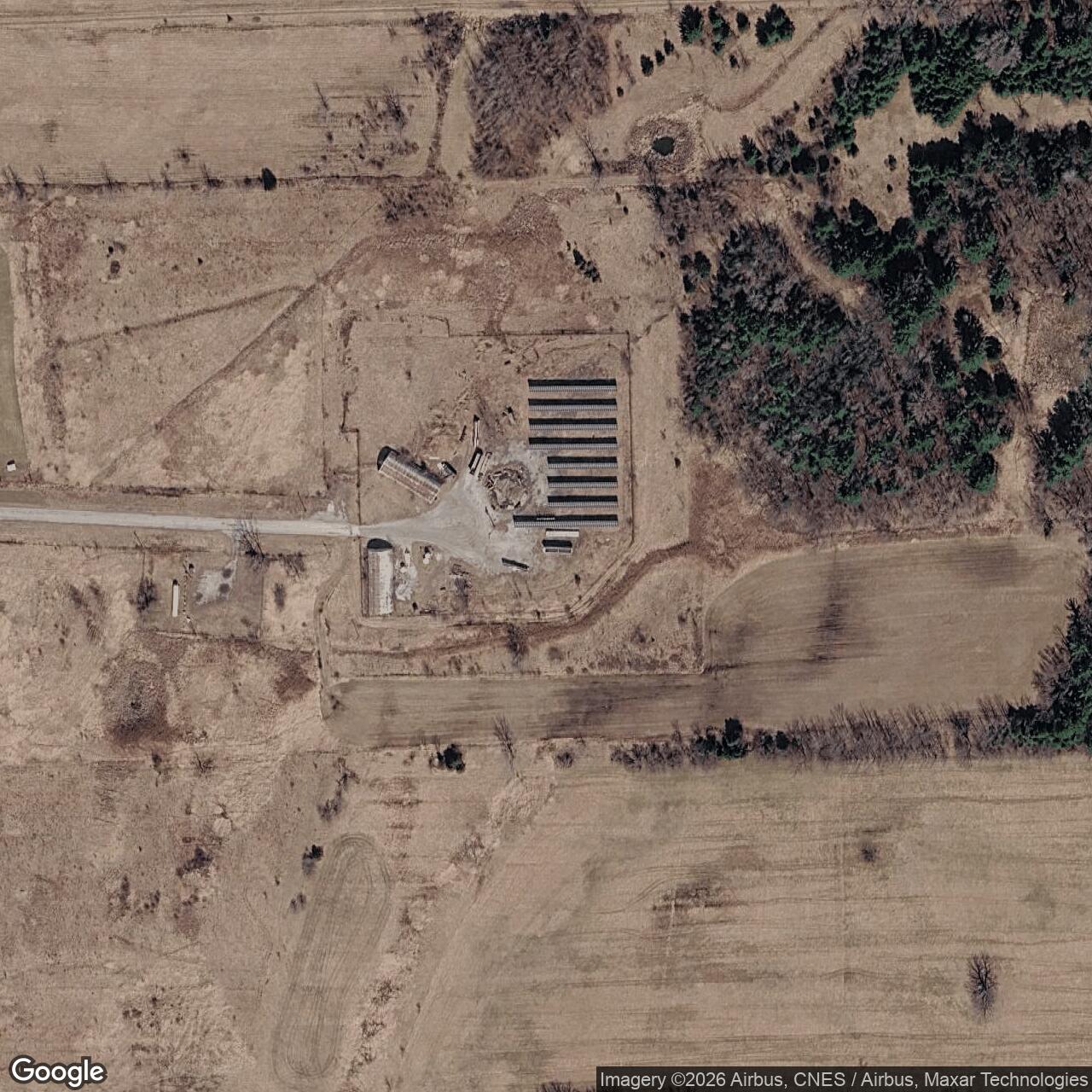
Read about the Atlas at Plattsburgh AFB
All Atlas Missile Silo Locations