
Atlas E Site 566-5 Missile Silo, Grover Colorado
Longitude: -104.21598180117
Site Type: Atlas E single-missile coffin launcher complex
Missile Type: SM-65E Atlas
Number of Launchers/Missiles: 1
Parent Base: F.E. Warren AFB
Missile Wing: 389th Strategic Missile Wing
Missile Squadron: 566th Strategic Missile Squadron
Current Site Use: Former Atlas E launch complex near Grover; CDPHE identifies Colorado Atlas 9 as converted into a residence and cleanup closed in March 2008.
Site Ownership: Private property after post-1965 disposal; CDPHE states Colorado Atlas complexes were sold to public and private owners.
Accessible: No public access / private property.
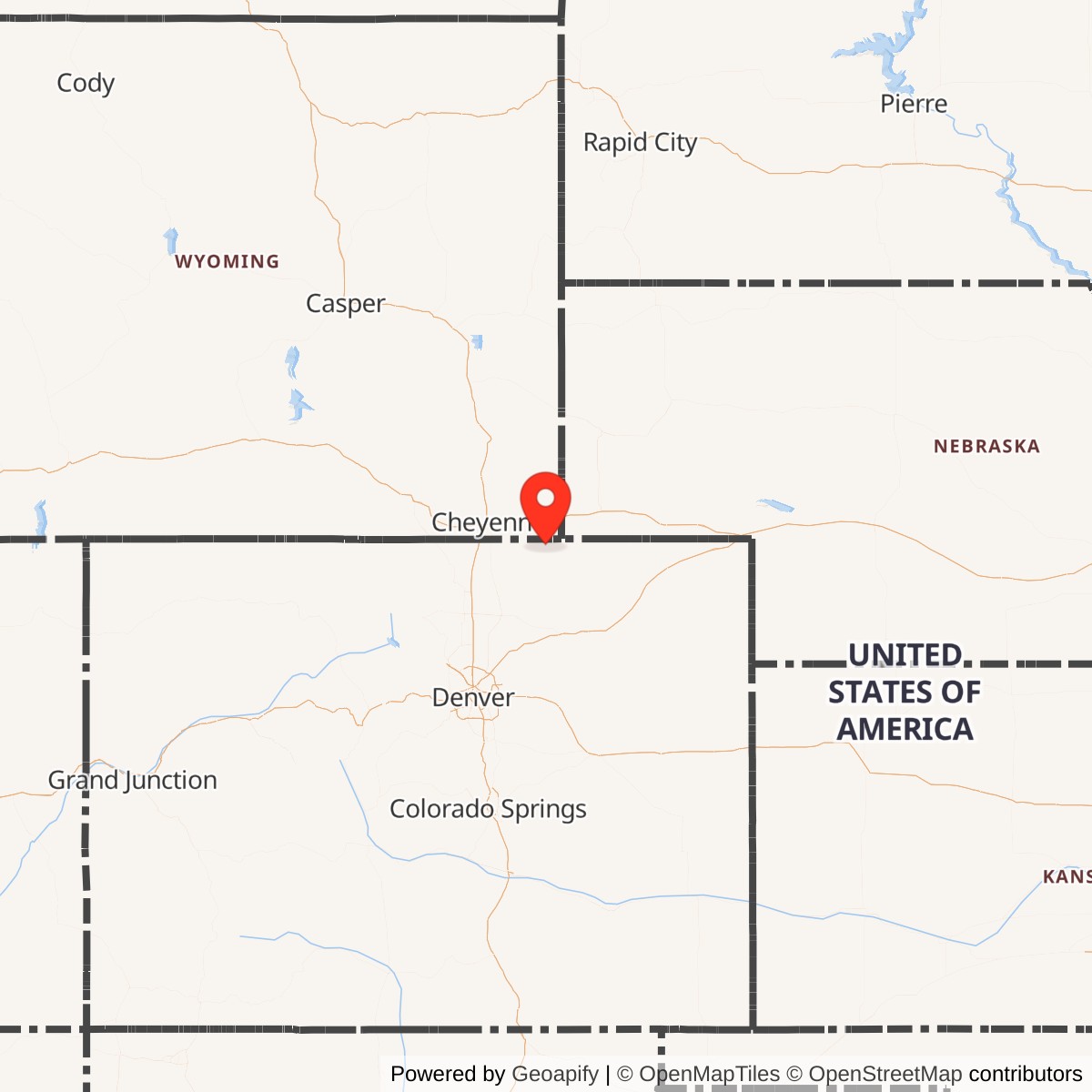
Atlas E Site 566-5 was a single-missile SM-65E Atlas intercontinental ballistic missile launch complex assigned to the 566th Strategic Missile Squadron and supported from F.E. Warren Air Force Base near Cheyenne, Wyoming. The site was one of nine Atlas E coffin-launcher complexes operated by the 566th SMS as part of the 389th Strategic Missile Wing's early Cold War ICBM mission. It was located near Grover in Weld County, Colorado, at approximately 40.94572216, -104.21598180.
The site is no longer an active missile installation. Atlas site references list the Grover complex as decommissioned on 1965-03-25, after the 566th SMS missile force had been removed from alert and the squadron's missiles had been shipped out in late 1964. Colorado environmental records identify the former Grover complex as Colorado Atlas 9, one of five former Atlas E sites in northern Colorado. Those records state that Atlas 9 was fully investigated and cleaned up, with site closure completed in March 2008 and no further cleanup actions planned.
Location, Landscape, and Site Description
Site 566-5 stood in the open ranching and agricultural landscape of northeastern Colorado near Grover, in Weld County. Its location placed it south of the Wyoming state line and southeast of F.E. Warren AFB, extending the 566th Strategic Missile Squadron's dispersed ring of Atlas E launch complexes across Wyoming, Nebraska, and Colorado. The landscape was typical of the High Plains missile field: broad visibility, sparse settlement, long roads, and enough distance between sites to reduce the danger that one attack or accident could disable several missiles at once.The Atlas E site was not a Minuteman-style unmanned launch facility controlled from a remote launch control center. It was a self-contained launch complex for one missile. The Atlas E design placed the missile horizontally in a semi-hardened coffin shelter. During a launch sequence, the heavy roof or door was opened, the missile was raised upright, and the vehicle was fueled with RP-1 kerosene and liquid oxygen before launch. In addition to the launch and service building, an operational Atlas E site required a launch operations area, utilities, power systems, communications, water and sanitary systems, security features, roads, fencing, and support buildings.
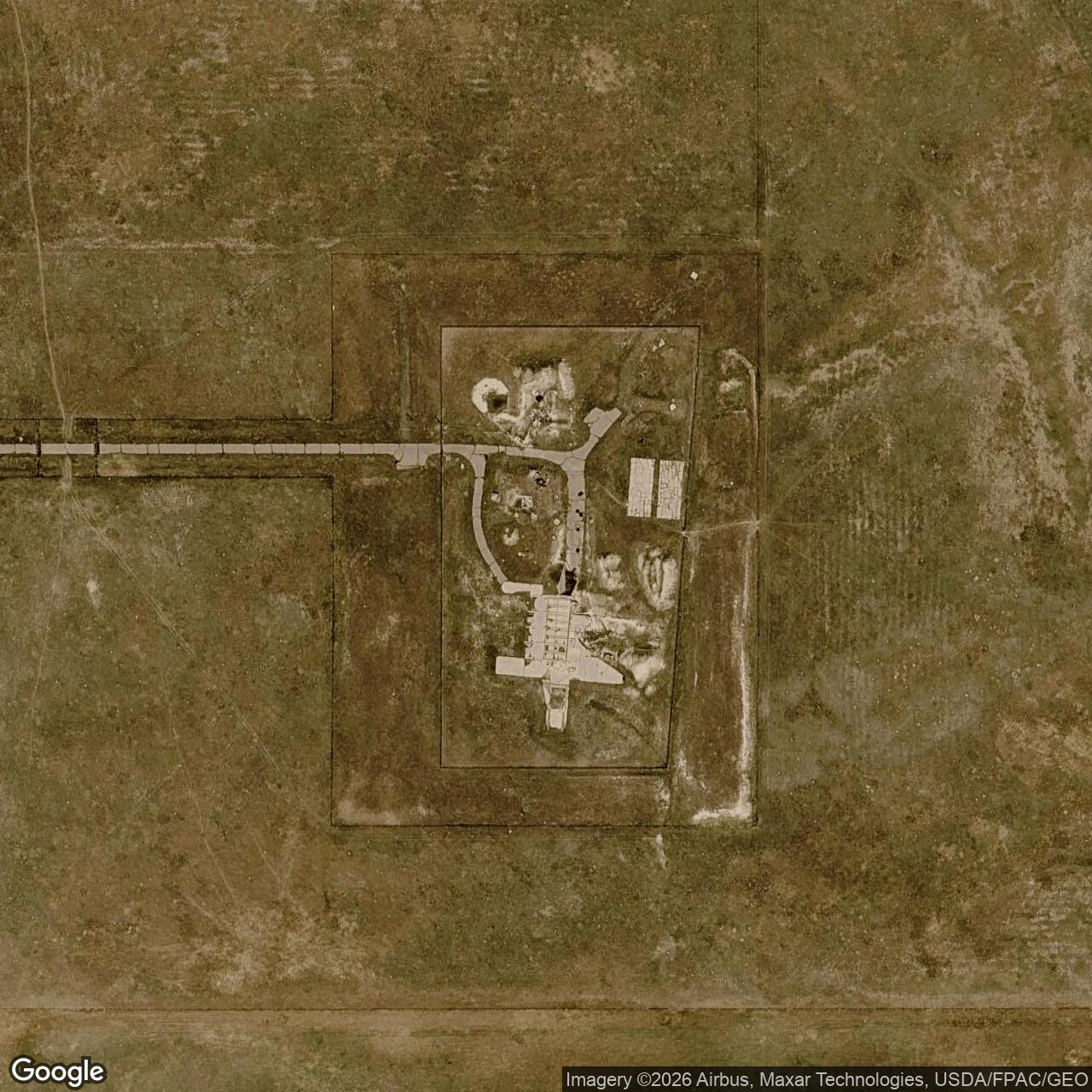
Aerial imagery shows the Grover complex as a recognizable former missile site with the large rectangular launch area, access road pattern, support-building area, and distinctive Atlas E layout still visible after decommissioning. The coordinates used here identify the former missile complex as a whole, not a separate launch-control capsule or an individual point inside the launcher.
Strategic and Cold War Context
The Atlas program was the United States Air Force's first operational ICBM program. It developed during the period when Strategic Air Command was trying to supplement the bomber force with missiles capable of reaching intercontinental targets directly from the United States. The Atlas missile was a major national priority because it gave the United States a land-based nuclear missile capability during the same period in which the Soviet Union was demonstrating long-range missile and space-launch capability.Atlas E was an important transitional version of the Atlas system. The National Park Service describes Atlas E as similar to Atlas D but deployed in individual launch complexes and using inertial guidance. That was a major change from the earlier Atlas D pattern of grouped launchers and radio guidance. The individual Atlas E coffin sites gave each missile its own complex and modestly improved blast protection, while still retaining the maintenance burdens and launch limitations of a liquid-fueled missile.
Site 566-5 existed because of that transitional strategy. It represented the Air Force's attempt to make first-generation ICBMs operational quickly while improving survivability and independence over the earliest Atlas D complexes. It also illustrates why Atlas service was brief. Atlas E required pressurization of its thin stainless-steel airframe, careful maintenance of liquid-fuel and liquid-oxygen systems, and a launch sequence that was more complex than the later solid-fueled Minuteman missile.
Construction and Activation
The 566th Strategic Missile Squadron was activated on 1959-08-15 and later moved into Atlas E operations at F.E. Warren AFB. The official squadron summary records the SM-65E Atlas as the unit's weapon system and lists Strategic Air Command turnover and operational status on 1961-03-30. The squadron was assigned to the 389th Strategic Missile Wing on 1961-07-01.The site-specific AtlasMissileSilo.com entry for Site 5 at Grover lists construction as beginning in 1960 and turnover to the Air Force in 1961, but it does not provide exact month-and-day dates for those site-level milestones. Those dates match the broader 566th SMS Atlas E deployment period. The Grover site therefore should be understood as part of the 1960-1961 construction and activation wave that created the nine Atlas E sites around F.E. Warren.
Construction of an Atlas E site was a substantial engineering effort even though it housed only one missile. The missile shelter, launch operations building, power and utility systems, security features, roads, drainage, communications, and support buildings had to be placed on an isolated rural parcel and tied into the broader Strategic Air Command command-and-control system. The site had to function as a remote alert station capable of supporting a crew, maintaining a missile under pressure, and preparing the weapon for launch if ordered.
Missile System and Technical Role
Site 566-5 housed one SM-65E Atlas missile in an Atlas E coffin-launcher complex. The Association of Air Force Missileers describes Atlas E as using an all-inertial guidance system, with each missile deployed singly and paired with one control center. It also describes the coffin roof as being at ground level and providing about 25 psi overpressure protection. Atlas E combat crews included two officers and three enlisted members, and crews stood 24-hour alerts before being relieved by a new crew from the main base.The missile was stored horizontally and was not kept fully fueled for extended periods. When the crew executed the launch checklist, the coffin roof was opened, the missile was erected, and RP-1 kerosene and liquid oxygen were loaded. Once propellants were aboard and the missile was ready, the launch sequence could proceed. Public missile-history summaries describe Atlas E as having an approximately fifteen-minute launch response time.
Missile capability, warhead, and reentry vehicle: Atlas E was an early liquid-fueled ICBM designed to deliver a single nuclear warhead at intercontinental range. The National Park Service identifies Atlas E as an individual-complex, inertially guided ICBM, while the 566th SMS site identifies the Atlas E as using a General Electric Mark IV reentry vehicle and a W-38 nuclear warhead with an approximately 3.8-megaton yield. The Smithsonian's National Air and Space Museum identifies the Mark 4 reentry vehicle as carrying a W-38 nuclear warhead with a yield of about 3.75 megatons.
Operational History
Site 566-5 served as one of the nine dispersed Atlas E launch complexes of the 566th Strategic Missile Squadron. The squadron's sites formed a ring around F.E. Warren AFB, with Site 5 extending the missile field into Weld County, Colorado. The 566th SMS stood alert during the early 1960s, a period that included the Berlin crisis, the acceleration of American ICBM deployments, and the Cuban Missile Crisis.The operational life of the Grover site was demanding but short. An Atlas E crew had to maintain a liquid-fueled missile, its guidance and launch equipment, communications, power systems, and site infrastructure while standing continuous alert at a remote location. The site was manned around the clock during the squadron's active missile period. The crew's job was to keep the missile in a state from which it could be erected, fueled, and launched if Strategic Air Command transmitted a valid order.
Maintenance and support responsibilities were equally important. Atlas E sites required missile maintenance, power-production support, facility maintenance, communications and electronics work, security operations, and nuclear-weapons support from the broader wing and Air Force logistics system. The missile's balloon-tank structure had to remain pressurized; the liquid oxygen and RP-1 fuel systems had to remain ready; and the launch equipment had to be maintained despite the harsh High Plains environment.
Site-Specific and Squadron-Specific Events
The most important documented event involving Site 566-5 was the squadron's alert posture during the Cuban Missile Crisis. The 566th SMS historical site states that all 566th SMS sites were at a high level of alert during the crisis and ready to launch if required. F.E. Warren's official base history similarly states that the 389th Strategic Missile Wing placed all of its Atlas missiles in launch configuration until the crisis abated on 1962-11-27. Those sources describe a squadron- and wing-level event, not a separate incident unique to Grover, but the Grover site was part of the affected 566th SMS missile force.The 566th SMS unit history also records a distinctive squadron emblem approved on 1962-03-02. It showed a mole emerging from the earth with a missile and nine stars, with the nine stars representing the nine dispersed launch sites. That emblem is not a site-specific event, but it is a useful squadron-level expression of how the Air Force understood the 566th SMS mission: dispersed underground or semi-hardened missile operations carried out by crews working at remote launch sites.
Deactivation and Disposal
The Atlas E force around F.E. Warren was phased out rapidly as newer missile systems entered service. The official 566th SMS unit summary records the first squadron ICBM off alert on 1964-10-01 and the last ICBM shipped on 1964-10-22. The squadron was inactivated on 1964-12-15, while the station entry continues to 1965-03-25. The site-specific AtlasMissileSilo.com page for Grover lists Site 5 as decommissioned on 1965-03-25. Those dates likely describe different stages of the same shutdown process: missiles removed from alert, missiles shipped, squadron inactivation, and final administrative decommissioning or site closeout.The general post-Atlas pattern was that the missile and military equipment were removed, the site was declared surplus, and the property was sold or transferred for non-military use. Colorado Department of Public Health and Environment records state that Colorado's five former Atlas E sites were decommissioned and the missiles removed in 1965, after which the complexes were sold to public and private owners.
The Grover site's later documented history is environmental rather than operational. CDPHE identifies the Colorado Atlas sites as Formerly Used Defense Sites investigated and cleaned up for the Department of Defense by the U.S. Army Corps of Engineers under the CERCLA/Superfund process, although the sites are not on the National Priorities List. CDPHE states that petroleum and/or PCB soil contamination was found at all five Colorado Atlas sites and that Atlas 9, 10, and 13 have been fully investigated and cleaned up. For Atlas 9, which corresponds to the Grover 566-5 site in Colorado Atlas numbering, investigations were completed, a soil removal action was conducted in 2006, site closure was completed in March 2008, and no further cleanup actions were planned.
Current Status and Site Use
Atlas E Site 566-5 is a decommissioned former missile complex on private property near Grover. Colorado Department of Public Health and Environment records describe Atlas 9 as being converted into a residence and state that the site's environmental cleanup was closed in March 2008 with no further cleanup actions planned. The site should not be treated as publicly accessible.The former launch complex remains historically legible in aerial imagery because the Atlas E site plan left a distinctive footprint. The launch area, support area, roads, and disturbed ground pattern identify the former missile installation, even though the missile, operational crew, launch alert mission, and Strategic Air Command equipment are gone. As with many former Atlas E complexes, the site's Cold War history is preserved less by a public museum program than by surviving structures, environmental records, site imagery, and the memory of its short period as part of the nation's first operational ICBM force.
Chronology
- 1959-08-15 The 566th Strategic Missile Squadron was activated.
- 1960 Construction began at Site 566-5.
- 1961 Site 566-5 was turned over to the Air Force.
- 1961-03-30 The 566th SMS was turned over to Strategic Air Command and recorded as operational.
- 1961-07-01 The 566th SMS was assigned to F.E. Warren AFB under the 389th Strategic Missile Wing.
- 1962-03-02 The Atlas-era 566th SMS emblem with nine stars representing the nine dispersed launch sites was approved.
- 1962-10 During the Cuban Missile Crisis, the 566th SMS sites and the broader 389th Strategic Missile Wing Atlas force stood at an elevated alert posture.
- 1962-11-27 F.E. Warren's Atlas crisis posture ended after the Cuban Missile Crisis abated.
- 1964-10-01 The first 566th SMS ICBM was removed from alert.
- 1964-10-22 The last 566th SMS ICBM was shipped.
- 1964-12-15 The 566th Strategic Missile Squadron was inactivated.
- 1965-03-25 Site 566-5 is listed as decommissioned by the site-specific AtlasMissileSilo.com summary.
- 1965 Colorado Department of Public Health and Environment records state that Colorado Atlas E sites were decommissioned and the missiles removed in 1965.
- 2006 CDPHE records state that a soil removal action was conducted at Atlas 9.
- 2008-03 CDPHE records state that closure of Atlas 9 was completed, with no further cleanup actions planned.
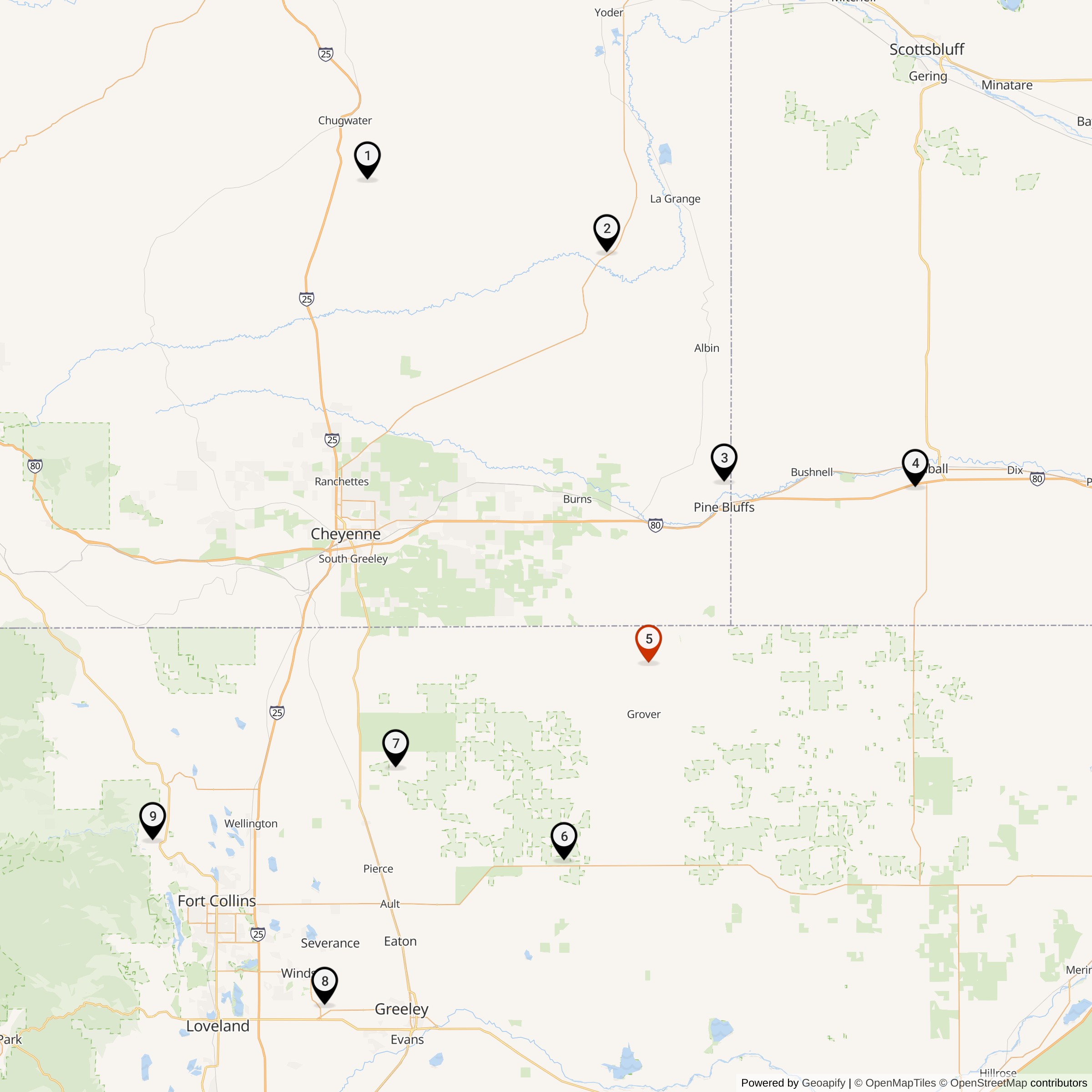
Read about the Atlas at F.E. Warren AFB
All Atlas Missile Silo Locations