Atlas D Site 576-A Missile Silo, Lompoc / Vandenberg California
Longitude: -120.600338087535
Site Type: Atlas D three-launcher gantry launch complex / Vandenberg test and training facility
Missile Type: SM-65D Atlas
Number of Launchers/Missiles: 3
Parent Base: Vandenberg AFB
Missile Wing: 704th Strategic Missile Wing; 1st Missile Division; 392nd Strategic Missile Wing; 1st Strategic Aerospace Division
Missile Squadron: 576th Strategic Missile Squadron
Current Site Use: Former Atlas D three-launcher gantry/test complex within Vandenberg Space Force Base; pads decommissioned and stripped of equipment after later ABRES/BMRS/test/space uses.
Site Ownership: U.S. Government / Vandenberg Space Force Base
Accessible: Restricted / active military installation; no general public access
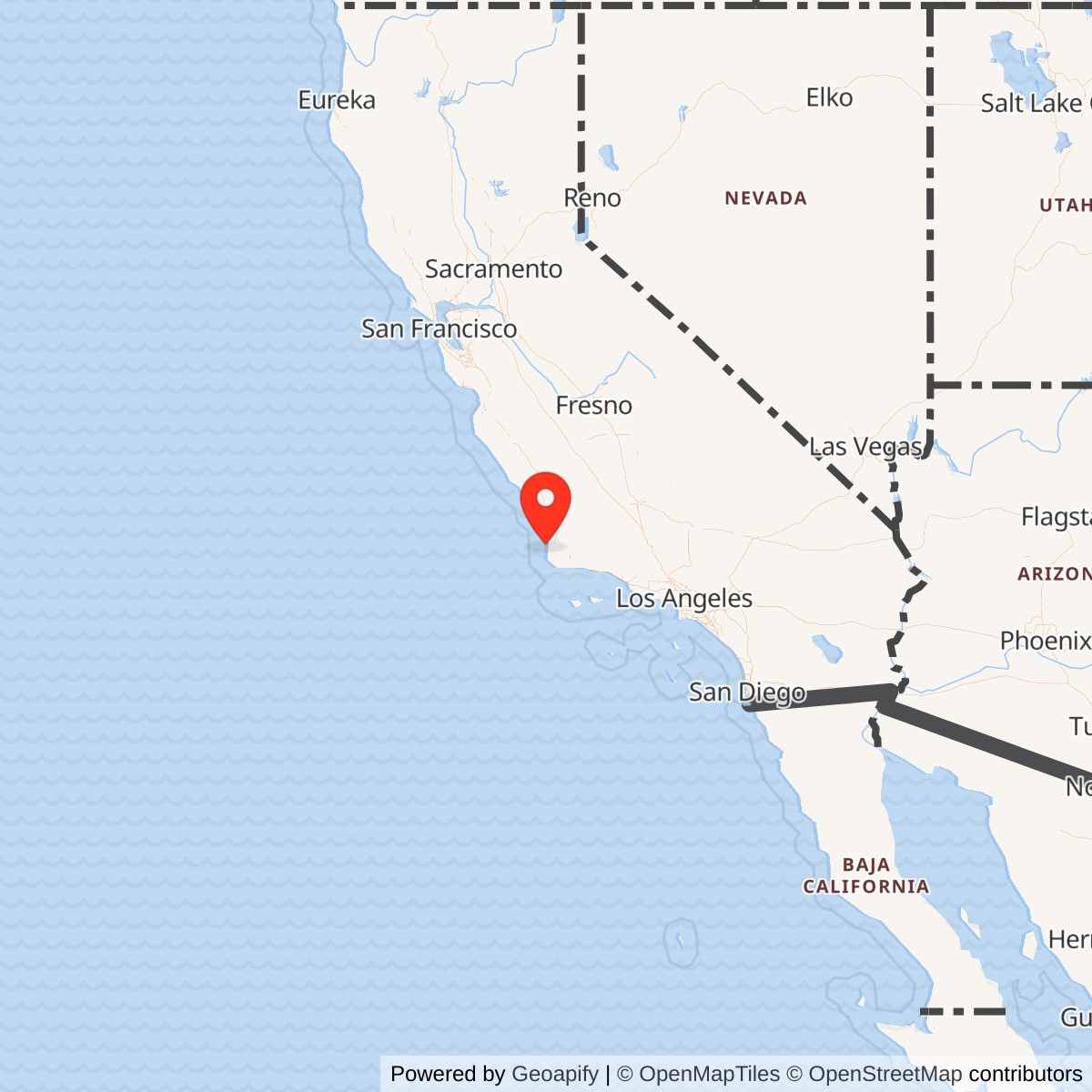
Atlas D Site 576-A, also known as Site A or 576 Alpha, was an early Strategic Air Command Atlas D launch complex at Vandenberg Air Force Base, now Vandenberg Space Force Base, near Lompoc in Santa Barbara County, California. The site was operated by the 576th Strategic Missile Squadron, the first Strategic Air Command squadron activated for the Atlas intercontinental ballistic missile program. It formed one of the first two Atlas D complexes at Vandenberg, alongside 576-B, and was built as a three-launcher aboveground gantry complex rather than as a single dispersed silo.
It is no longer an active Atlas launch site, but it remains within Vandenberg Space Force Base, an operational military installation with restricted public access.
The first launcher in the complex, 576-A-1, was accepted from the contractor by the 1st Missile Division on 1958-10-16. The first Atlas D missile arrived at the squadron in February 1959. The first Atlas launch from the complex occurred from 576-A-2 on 1959-09-09, and the squadron's Atlas missiles were placed on alert roughly a month later. The 576th Strategic Missile Squadron was discontinued and inactivated on 1966-04-02, but individual pads within the 576-A complex continued to support later Atlas D, Atlas E, Atlas F, ABRES, BMRS, reentry-vehicle, target, and space-related launches into the 1970s. The Cape Canaveral Space Force Museum's Vandenberg complex summary states that all three 576-A pads were later decommissioned and stripped of equipment.
Location, Landscape, and Site Description
Site 576-A lies in the north-coastal launch range landscape of Vandenberg Space Force Base. Vandenberg's location on the California coast gave the Air Force a West Coast range from which ballistic missiles and later space launch vehicles could be flown over the Pacific Ocean. The site was not a remote agricultural missile field like many later Atlas E, Atlas F, Titan, or Minuteman installations. It was a test, training, evaluation, and early alert complex inside a dedicated military launch range.The terrain around 576-A is the rolling, coastal upland landscape typical of Vandenberg's North Base area: open grassland and chaparral-covered ground cut by base roads, with launch pads placed so missile flights could be directed safely over the Pacific. The complex's three launchers were aboveground gantry pads. This made 576-A visually and functionally different from the later Atlas D "coffin" complexes at Warren and Offutt, the Atlas E buried coffin launchers, and the Atlas F silo-lift sites. The Cape Canaveral Space Force Museum describes the three 576-A pads as Atlas D gantry pads, with gantries similar in broad concept to Cape Canaveral Launch Complexes 11 through 14, though the Vandenberg gantries were simpler A-frame structures.
The three launch positions were designated A-1, A-2, and A-3. The 576th Flight Test Squadron lineage/history summary states that Complex 576-A consisted of three aboveground gantries and that each of the initial Atlas D complexes, 576-A and 576-B, had one launch control center. In practical terms, 576-A should be understood as one integrated three-launcher launch complex rather than three geographically dispersed missile sites.
Strategic and Cold War Context
Site 576-A belongs to the earliest operational period of the U.S. intercontinental ballistic missile force. In the late 1950s, the Air Force was trying to transform the Atlas from a high-priority development program into a fielded strategic weapon that could supplement manned bombers and provide a land-based nuclear deterrent at intercontinental range. Vandenberg was central to that transition because it provided a place where Strategic Air Command crews could train, test launch procedures, launch Atlas missiles over the Pacific, and move from developmental demonstrations toward operational alert practices.The official Vandenberg history states that Strategic Air Command assumed responsibility on 1958-01-01 for attaining the initial operational capability of the U.S. land-based strategic deterrent missile force and for conducting missile launch-crew training, while Air Research and Development Command retained responsibility for Vandenberg launch-facility construction and launch-vehicle research and development. That division of responsibility explains the hybrid character of 576-A. The site was not simply a tactical alert location and not simply a research pad. It was a place where the early Atlas weapon system, launch crews, range procedures, command responsibilities, and missile reliability were being proven at the same time.
The 576th Strategic Missile Squadron was activated at Cooke Air Force Base, soon renamed Vandenberg, on 1958-04-01. It was SAC's first ICBM squadron and first Atlas squadron. The site therefore represents the period before the Air Force had settled into the more familiar dispersed-silo missile-field pattern. Complex 576-A was a soft aboveground gantry complex with three launchers and one launch control center. That arrangement exposed the early limits of Atlas survivability, but it allowed rapid training, testing, and operational familiarization at a time when simply demonstrating that an ICBM could be handled, fueled, controlled, and fired by SAC crews was itself strategically significant.
Construction and Activation
The first Atlas launch facilities at Vandenberg were built rapidly as the Air Force converted the former Camp Cooke / Cooke Air Force Base into the West Coast center for ballistic-missile operations. The 576th Flight Test Squadron lineage/history summary states that facilities for America's first ICBM were already under construction when Headquarters Strategic Air Command activated the 576th Strategic Missile Squadron on 1958-04-01. It records that the first Atlas launcher to be completed, 576-A-1, was accepted from the contractor by the 1st Missile Division on 1958-10-16. The first Atlas D missile arrived the following February.Complex 576-A was built with three aboveground gantry launchers. This was the earliest Vandenberg Atlas D arrangement, before the aboveground coffin launchers at 576-B and before the buried coffin and silo-lift launchers that followed for Atlas E and Atlas F. The Cape Canaveral Space Force Museum summary for Complex 576-A records that three Atlas D launch pads were built in 1959. Its pad notes state that A-1 was also known as 4300A-1, ABRES A-1, and BMRS A01; A-2 was also known as 4300 A-2 and BMRS A-2; and A-3 was also known as 4300 A-3 and BMRS A-3. Those later alternate designations reflect the pads' post-Atlas-ICBM reuse for reentry-system and test programs.
The first Atlas launch from 576-A occurred on 1959-09-09, when an Atlas D was launched from pad A-2. Vandenberg's official history identifies this as the first Atlas missile launched from Vandenberg Air Force Base. The 576th Flight Test Squadron history says that immediately after that launch, SAC Commander in Chief General Thomas S. Power declared Vandenberg's Atlas missile operational. A month later, the squadron's Atlas missiles were placed on alert status. An Atlas 19D on gantry A-1 became America's first ICBM placed on active alert after being equipped with a nuclear warhead.
Missile System and Technical Role
Site 576-A was built for the SM-65D Atlas, the first operational version of the Atlas ICBM. Atlas D was a liquid-fueled, "one-and-a-half-stage" missile: its booster engines and sustainer engine fired at liftoff, after which the booster section was jettisoned while the sustainer continued toward the target. Unlike later solid-fueled Minuteman missiles, Atlas required fueling and complex prelaunch handling. The 576th Strategic Missile Squadron's work at Vandenberg helped test not only the missile itself but also the procedures, crew training, range safety, countdown discipline, launch-control arrangements, and postflight analysis that made an operational ICBM force possible.Complex 576-A's three launchers were aboveground gantry pads. The missile was serviced and prepared at the pad, supported by the gantry structure and nearby ground equipment, rather than stored in a hardened underground silo. The 576th Flight Test Squadron history describes 576-A and 576-B as the initial Atlas D complexes at Vandenberg and notes that each had one launch control center. That arrangement allowed a single control center to support three launch positions within the same complex.
Missile capability, warhead, and reentry vehicle: Atlas D was an intercontinental-range, liquid-fueled nuclear delivery system. Public-source descriptions differ on exact warhead/RV detail. The National Park Service summary of the Atlas ICBM identifies Atlas D as a 75-foot missile with a 5,500-mile range and a 1.44-megaton warhead.
Operational History
The 576th Strategic Missile Squadron operated 576-A during the formative years of Atlas service. The squadron's assignment history shows how experimental and transitional this period was. The 576th was activated as an Atlas ICBM squadron on 1958-04-01, assigned first to the 704th Strategic Missile Wing, then to the 1st Missile Division, then to the 392nd Strategic Missile Wing, and finally to the 1st Strategic Aerospace Division before inactivation on 1966-04-02.The first operationally important event at Site A was the acceptance of launcher A-1 on 1958-10-16, followed by the arrival of the first Atlas D missile in February 1959. The first Atlas D launch from Vandenberg occurred from 576-A-2 on 1959-09-09. The Vandenberg Space Force Base history identifies that flight as the first Atlas launch from Vandenberg. The Vandenberg launch-history chronology lists the same event as an Atlas D launch from 576 A-2, a SAC launch with the code name "Desert Heat."
Site A's early importance was as much institutional as technical. The launch allowed SAC to announce that Vandenberg's Atlas missile was operational, and soon afterward the squadron placed Atlas missiles on alert. The 576th history is frank about the limits of this milestone: it says the activation had more psychological value than military value because Atlas D reliability was highly questionable and improved versions were already in production. That statement should not be read as diminishing the site's importance. Instead, it explains why 576-A mattered. It was the bridge between missile development and a credible operational ICBM force.
Pad A-3 entered launch use on 1960-01-26, with the Atlas D launch code-named "Dual Exhaust." Pad A-1 did not begin its regular launch sequence until later. After the initial operational-alert and SAC training period, the pads at Site A supported a long sequence of test and evaluation launches. The Cape Canaveral Space Force Museum summary records Atlas D launches from A-1 through 1966, Atlas F launches beginning in 1967, a single Atlas E launch from A-1 in 1968, and a later Atlas Burner II space launch from A-1 in 1972. It also records that A-2 hosted the 1959 Atlas D IOC launch and later Atlas F launches, while A-3 supported Atlas D launches, later Atlas F launches, and two Atlas E launches.
The Vandenberg launch chronology shows the continuing role of the 576-A complex after the initial alert period. It records the 1959-09-09 Atlas D launch from 576 A-2, the 1960-01-26 Atlas D launch from 576 A-3, multiple ABRES/BMRS Atlas launches in the mid-to-late 1960s, and later Atlas F BMRS launches from A-1 and A-3 into 1974. In this later phase, 576-A was no longer simply a first-generation Atlas D alert complex. It had become part of Vandenberg's broader missile test and reentry-vehicle evaluation infrastructure.
Site-Specific and Squadron-Specific Events
The most important site-specific event associated with 576-A was the first Atlas launch from Vandenberg on 1959-09-09. It was conducted from 576-A-2 by the 576th Strategic Missile Squadron. The official Vandenberg history marks that launch as one of the installation's early missile milestones, and the 576th history records that General Thomas S. Power declared Vandenberg's Atlas missile operational immediately afterward.Another important Site A event followed about a month later, when the squadron's Atlas missiles were placed on alert. The 576th unit history states the squadron's Atlas missiles were placed on alert status approximately one month after the September 1959 launch.
The squadron also received an Air Force Outstanding Unit Award for 1962-07-01 through 1964-06-30. That award belongs to the 576th SMS rather than to 576-A alone, but it falls within the period when Site A was supporting Atlas D test, training, alert, and evaluation work.
Deactivation and Disposal
Site 576-A did not go through the same post-Cold War arms-control demolition process later associated with many Atlas F, Titan II, Minuteman, or Peacekeeper launch sites. It was located within an active military test range, not on a dispersed rural parcel later sold to private ownership. Its deactivation and post-Atlas history were therefore a matter of changing launch-range use rather than GSA disposal of an isolated missile site.The Atlas D alert mission at Vandenberg declined as newer Atlas E, Atlas F, Titan, and Minuteman systems entered service. The 576th history records "1st ICBM off Alert" on 1964-05-01 and states that the 576th Strategic Missile Squadron was discontinued and inactivated on 1966-04-02.
However, the physical pads did not simply disappear in 1966. They continued to be used for later programs. Pad A-1 supported later Atlas F launches, an Atlas E launch, and an Atlas Burner II space launch. Pad A-2 supported Atlas F launches after its original Atlas D IOC role. Pad A-3 supported additional Atlas D, Atlas E, and Atlas F launches. These later uses were associated with ABRES, BMRS, Nike-Zeus targets, reentry-vehicle work, target vehicles, and related test programs rather than with an operational Atlas D alert force.
The post-closure process appears to have occurred in stages. First, the Atlas ICBM alert role ended and the 576th SMS was inactivated. Second, the pads were retained within the Vandenberg range for continuing test and evaluation launches. Third, after the last Atlas uses ended, the complex was decommissioned and stripped of equipment. The Cape Canaveral Space Force Museum summary explicitly states that all three 576-A pads have been decommissioned and stripped of equipment. Available public sources do not document a FUDS-style private transfer, a START-era silo implosion, or a discrete environmental cleanup record for 576-A comparable to the former rural Atlas sites in Wyoming, Nebraska, Iowa, Kansas, Texas, Oklahoma, New Mexico, or New York.
Current Status and Site Use
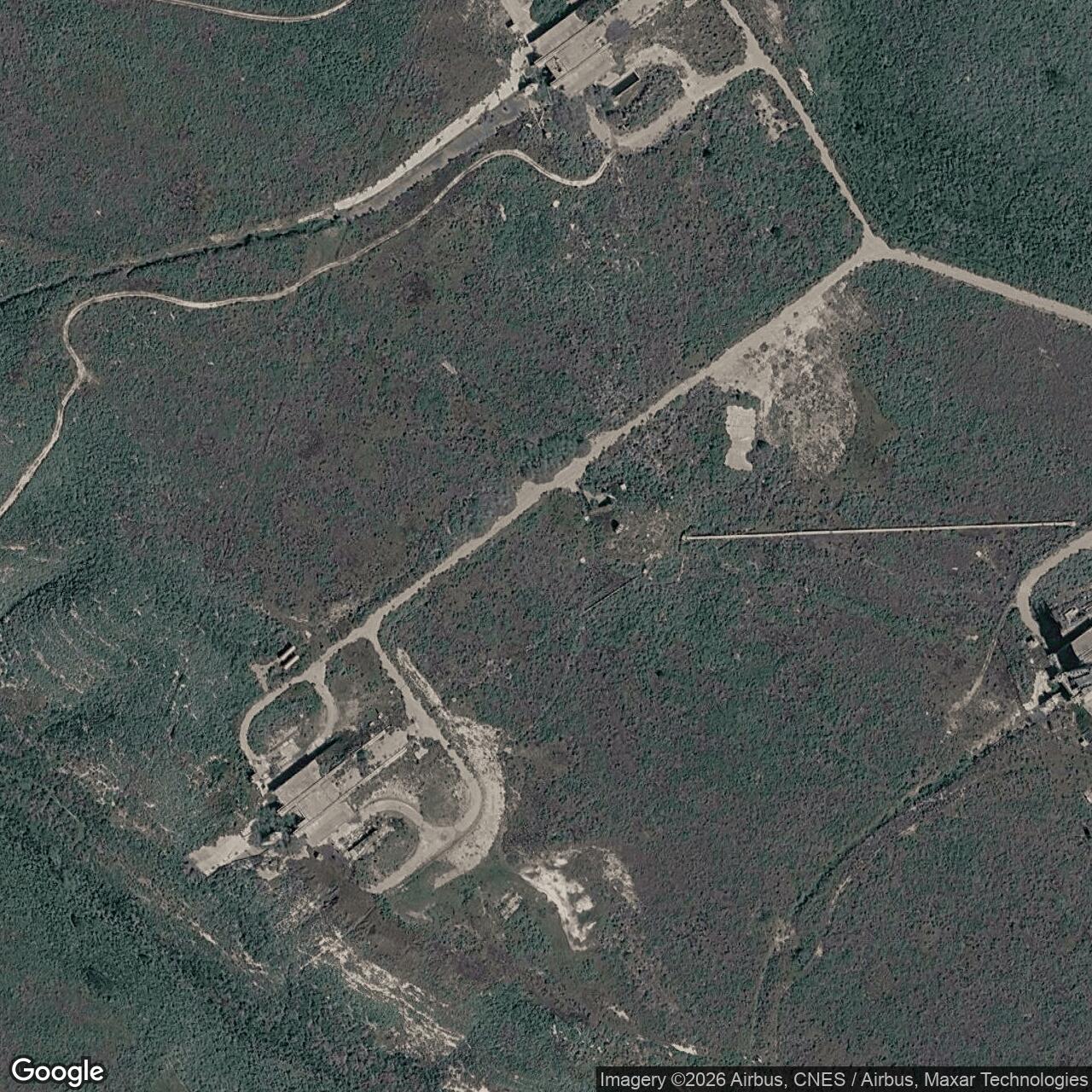
The 576-A complex remains inside Vandenberg Space Force Base. It is not an active Atlas launch site and is not open to the general public. The broader installation remains an active Space Force launch and range base. Vandenberg's official history states that Space Launch Delta 30 manages launch and range missions on the Western Range and supports government, military, civil, and commercial space-launch activity. The former 576-A pads are best understood today as decommissioned launch-range infrastructure inside an active military installation.The visible remains are those of a former launch complex rather than a privately accessible abandoned silo. AtlasMissileSilo.com present-day photographs show the pad areas, service roads, launcher hardstands, and remaining launch-complex landscape. The Cape Canaveral Space Force Museum summary states that the pads have been stripped of equipment, which is consistent with a site whose major missile-handling and gantry equipment is no longer in operational use.
Chronology
- 1958-04-01 Headquarters Strategic Air Command activated the 576th Strategic Missile Squadron at Cooke Air Force Base, later Vandenberg Air Force Base.
- 1958-10-04 Cooke Air Force Base was redesignated Vandenberg Air Force Base.
- 1958-10-16 Atlas launcher 576-A-1 was accepted from the contractor by the 1st Missile Division.
- 1959-02 The first Atlas D missile arrived for the 576th Strategic Missile Squadron.
- 1959-09-09 An Atlas D launched from 576-A-2; Vandenberg identifies this as the first Atlas missile launched from Vandenberg Air Force Base.
- 1959-09-09 After the successful launch, SAC Commander in Chief General Thomas S. Power declared Vandenberg's Atlas missile operational.
- 1959-10 The squadron's Atlas missiles were placed on alert status approximately one month after the first Atlas launch.
- 1960-01-26 Atlas D launched from 576-A-3 in a mission listed as "Dual Exhaust."
- 1962-07-01 The 576th Strategic Missile Squadron began the award period for an Air Force Outstanding Unit Award that ran through 1964-06-30.
- 1964-05-01 The 576th unit history records the first ICBM off alert.
- 1965-08-05 The Cape Canaveral Space Force Museum lists the first Atlas F launch from pad 576-A-2.
- 1966-04-02 The 576th Strategic Missile Squadron was discontinued and inactivated.
- 1967-05-19 The Cape Canaveral Space Force Museum lists the first Atlas F launch from pad 576-A-1.
- 1967-02-13 The Cape Canaveral Space Force Museum lists the first Atlas F launch from pad 576-A-3.
- 1968-03-06 The Cape Canaveral Space Force Museum lists the first Atlas E launch from pad 576-A-3.
- 1968-04-18 The Cape Canaveral Space Force Museum lists the sole Atlas E launch from pad 576-A-1.
- 1971-08-07 The Cape Canaveral Space Force Museum lists the last Atlas F launch from pad 576-A-2.
- 1972-10-02 The Cape Canaveral Space Force Museum lists the Atlas Burner II launch from pad 576-A-1.
- 1974-09-08 The Vandenberg launch-history chronology lists an Atlas F BMRS launch from A-1.
- 1974-10-13 Final Atlas F launch from 576-A-3.
- 2021-05-14 Vandenberg Air Force Base was renamed Vandenberg Space Force Base.
All Atlas Missile Silo Locations