
Atlas F Site 576-G (OSTF-2) Missile Silo, Lompoc / Vandenberg SFB California
Longitude: -120.56175768855
Site Type: Atlas F underground silo-lift operational suitability / operational system test facility
Missile Type: SM-65F Atlas
Missile Assigned to this Silo: Test missiles launched from Site G / OSTF-2: 57F (GD serial 61-2543; AF tail 543; accepted 1962-03-30; launched 1962-08-10; failure); 13F (GD serial 60-5536; AF tail 536; accepted 1961-09-14; launched 1962-11-14; failure); 83F (GD serial 61-2569; AF tail 569; accepted 1962-07-09; launched 1963-03-21; successful); 45F (GD serial 61-2531; AF tail 531; accepted 1963-07-10; launched 1963-10-03; failure); 109F (GD serial 62-12145; AF tail 145; accepted 1963-09-12; launched 1963-12-18; successful; final Atlas R&D flight); 3F (GD serial 60-5526; AF tail 526; accepted 1961-04-29; launched 1964-04-03; failure); 106F (GD serial 62-12142; AF tail 142; accepted 1963-04-30; launched 1965-01-08; successful; final Atlas ICBM test flight).
Number of Launchers/Missiles: 1
Parent Base: Vandenberg AFB (now Vandenberg SFB)
Missile Wing: 1st Missile Division / 1st Strategic Aerospace Division
Missile Squadron: 576th Strategic Missile Squadron
Current Site Use: Abandoned former Atlas F silo-lift test facility within Vandenberg Space Force Base; 2021 VSFB Commercial Space Master Plan lists Site G / 576 Golf (OSTF-2) as an abandoned ICBM test site with no current user/operator.
Site Ownership: Department of Defense / U.S. Space Force (Vandenberg SFB)
Accessible: No general public access; within active Vandenberg Space Force Base and accessible only by authorization.
At Vandenberg's Atlas Site G, the Cold War did not look like a quiet missile buried in a Kansas wheat field or a New York pasture. It looked like an Atlas F rising from an underground silo on California's central coast, surrounded by gantry hardware, propellant systems, range instruments, and test crews waiting to learn whether America's first-generation silo-launched ICBM would work when the countdown reached zero. Site 576-G, better known during much of its life as OSTF-2, was where Atlas F reliability was proven the hard way: with seven test launches, four failures, three successes, and the final Atlas ICBM test flight ever launched.
Atlas F Site 576-G (OSTF-2) was an Atlas F underground silo launch facility at Vandenberg Air Force Base, now Vandenberg Space Force Base, near Lompoc in Santa Barbara County, California. The site was part of the 576th Strategic Missile Squadron, the Strategic Air Command Atlas test squadron at Vandenberg. It was an Atlas F operational suitability / operational system test facility rather than a dispersed combat-alert field silo.
The site is best identified as Atlas F Site 576-G (OSTF-2), or Site G / 576 Golf, with one underground-silo launcher. The Cape Canaveral Space Force Museum identifies Complex 576 G as Operational System Test Facility 2 and notes that it was renamed 576 G in 1964. The site's first Atlas F launch occurred on 1962-08-10, while it was still commonly described as OSTF-2. The last Atlas F launch from the site occurred on 1965-01-08. The site is inactive, decommissioned as an Atlas missile facility, abandoned, and located within the controlled boundaries of active Vandenberg Space Force Base. It is not open to the general public.
Location, Landscape, and Site Description
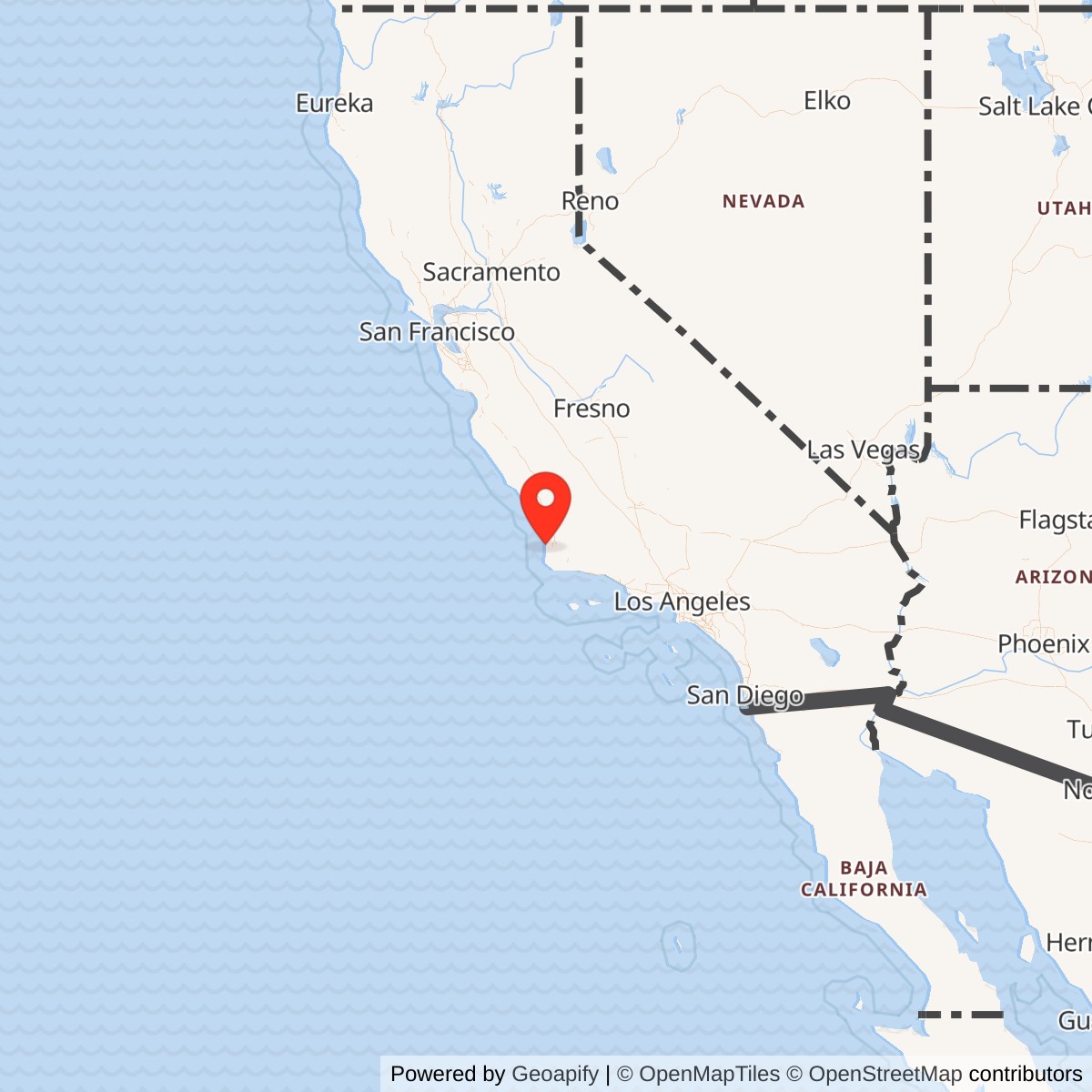
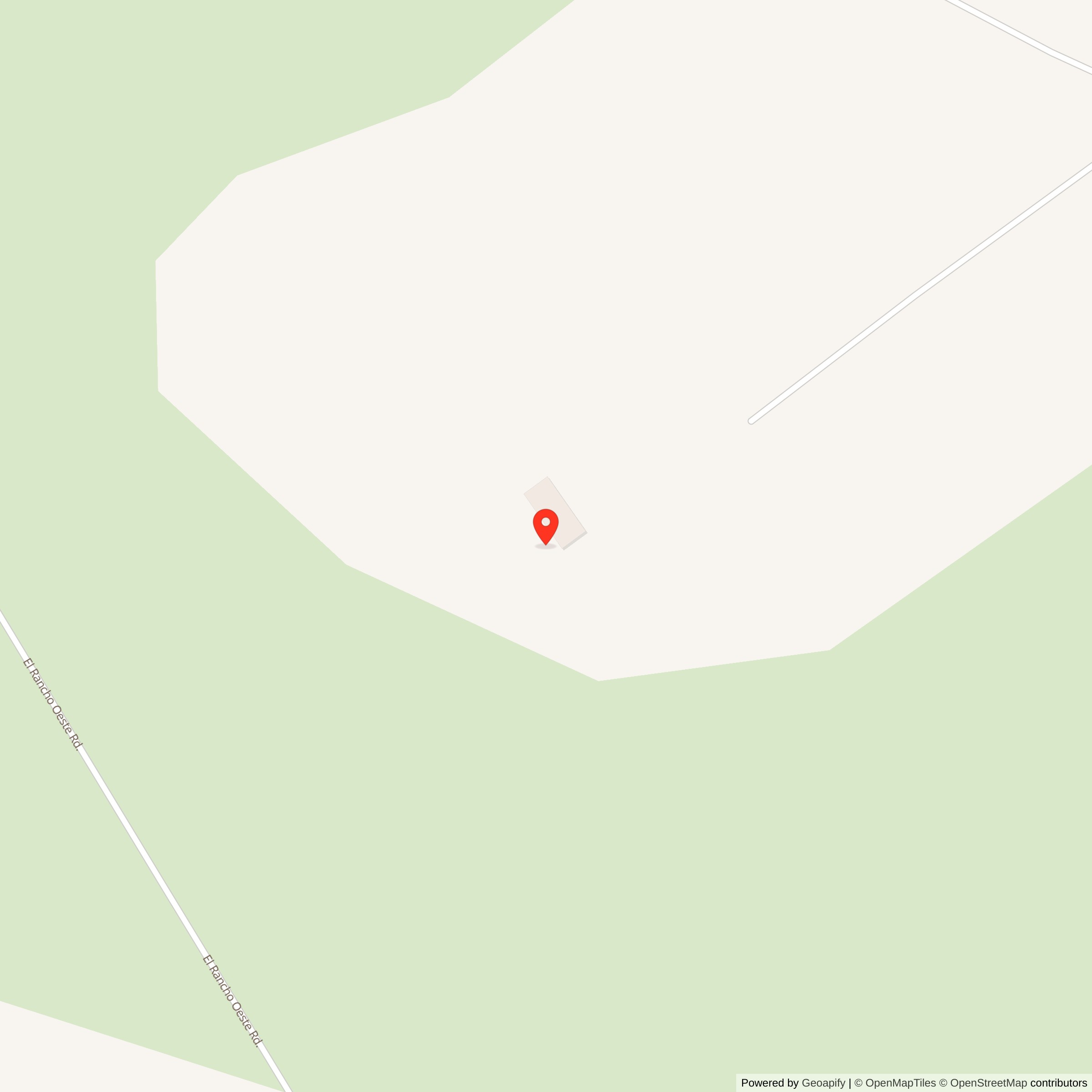
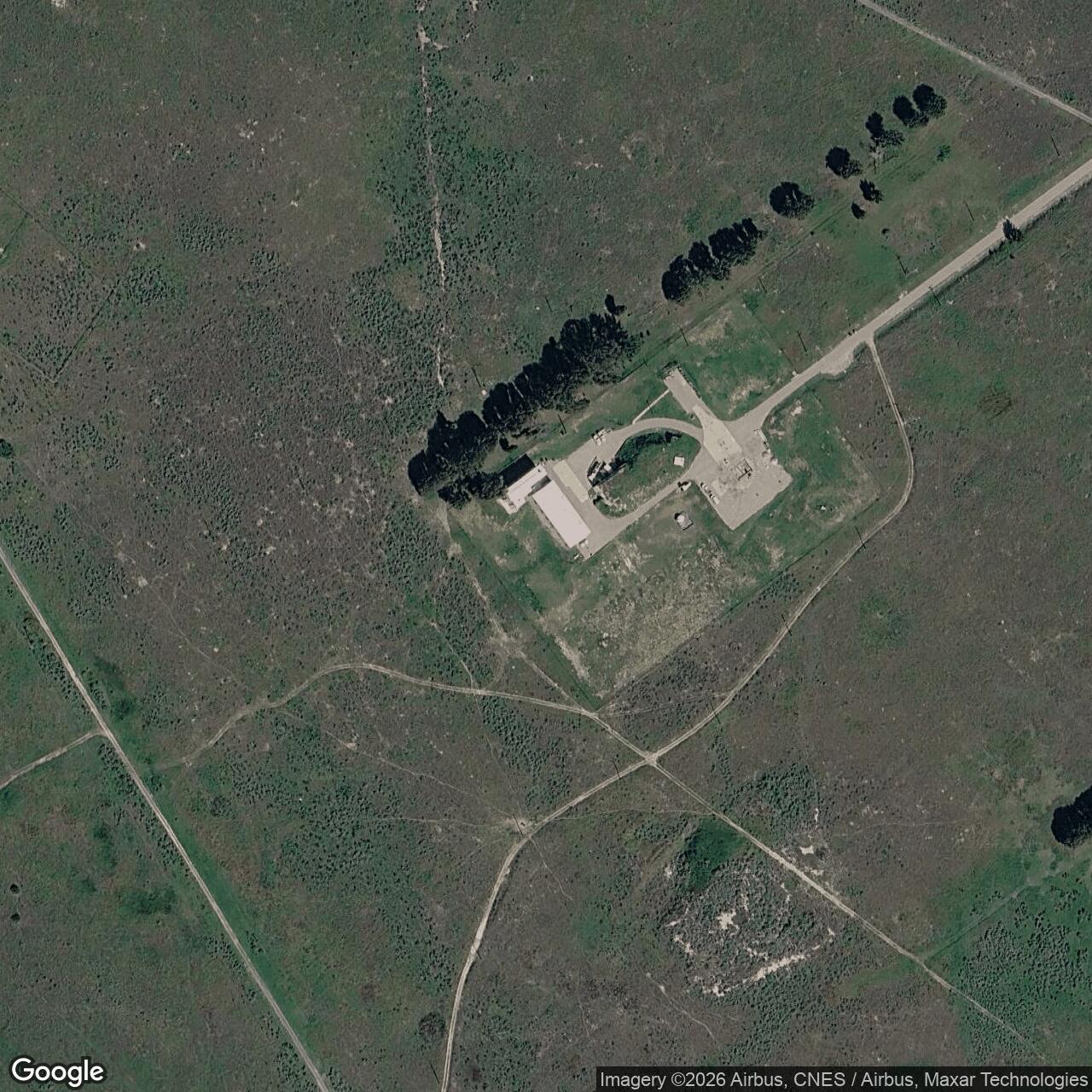
Site 576-G (OSTF-2) is located on Vandenberg Space Force Base in Santa Barbara County, California, north of the Lompoc area and within the base's North Base ballistic-test landscape. The setting is coastal California military range terrain: rolling hills, access roads, scrub and grassland, and the specialized range infrastructure needed to conduct ballistic missile test launches over the Pacific Missile Range. The site's geography was fundamentally different from the operational Atlas F missile fields at Schilling, Lincoln, Altus, Dyess, Walker, Plattsburgh, and other inland bases. Instead of being a remote one-missile combat silo surrounded by agricultural land, OSTF-2 was part of Vandenberg's dense network of launch complexes, range instrumentation, test support roads, and specialized missile-test facilities.
The site was a single underground Atlas F silo-lift launcher. In an Atlas F silo-lift configuration, the missile was stored protected in a hardened underground structure but was raised by an elevator to the surface for launch. That distinction matters: Atlas F was silo-based, but it was not a true "launch from inside the silo" system in the later Minuteman sense. The Atlas missile had to be erected or elevated, fueled with RP-1 and liquid oxygen, pressurized, checked out, and launched from the aboveground position. The underground silo protected the missile and support equipment before launch; it did not provide the final launch tube used by later solid-fuel ICBMs.
Present-day imagery and the Vandenberg Commercial Space Master Plan indicate the site remains identifiable as a former ICBM test location. The 2021 master plan lists "Site G - 576 Golf (also known as OSTF-2)" as an ICBM Test Site with current status "Abandoned" and no user or operator. Because the site remains inside Vandenberg Space Force Base, the public should treat it as a restricted military location.
Strategic and Cold War Context
The Atlas program was the United States Air Force's first operational intercontinental ballistic missile program. The National Park Service summarizes the Atlas as the first operational U.S. Air Force ICBM and notes that Atlas D, E, and F sites were operational during the early 1960s before Atlas was phased out in favor of Minuteman and Titan. Atlas F represented the most protected operational Atlas configuration: a single missile in an underground silo-lift complex, paired with all-inertial guidance and a faster launch response than earlier Atlas configurations.
Site 576-G (OSTF-2) existed because the Air Force needed a realistic place to test the Atlas F weapon system from a silo environment. Vandenberg's role was not simply to launch rockets; it was to verify that deployed missile designs, launch crews, checkouts, propellant systems, range safety procedures, and support equipment could work together under operationally representative conditions. Vandenberg gave the Air Force a west-coast test range where missiles could be launched over the Pacific toward instrumented impact areas while crews and engineers collected performance and reliability data.
The site also reflected the special tension of first-generation ICBM technology. Atlas was powerful and path-breaking, but it was also a liquid-fueled missile that required extensive preparation before launch. Its thin stainless-steel "balloon tank" structure had to remain pressurized to hold its shape. The missile used RP-1 kerosene fuel and liquid oxygen oxidizer. Liquid oxygen could not simply sit in the missile indefinitely; it had to be loaded during launch preparation, boiled off over time, and handled with demanding safety procedures. Later solid-fuel Minuteman missiles solved many of these problems, but Atlas F occupied the transitional moment when the United States had achieved intercontinental missile capability but was still learning how to make that capability practical, survivable, and repeatable.
Construction and Activation
Construction of Site G / OSTF-2 began in November 1960, and construction was completed sometime in 1961. The facility was built as one of the Atlas F underground silo-style launch complexes associated with the 576th Strategic Missile Squadron at Vandenberg. The 576th SMS had seven sites and eleven total launcher facilities at Vandenberg: three Atlas D gantry launchers, three Atlas D coffin launchers, two Atlas E coffin launchers, and three Atlas F underground silo-style launcher complexes. Within that group, Site D, Site E, and Site G (OSTF-2) were Atlas F series facilities.
The site's operational testing life began with the launch of Atlas F missile 57F on 1962-08-10. That first launch did not succeed. The roll program failed because of an open circuit in the missile programmer unit, and the range safety officer destroyed the missile at T+67 seconds. The first launch therefore captured exactly why the Air Force needed a facility such as OSTF-2: the site was not a museum piece or a passive training mockup, but a test environment where failures exposed the weaknesses of a real weapon system.
In 1964, the facility was renamed Complex 576 G. The Cape Canaveral Space Force Museum notes that Complex 576 G was renamed in 1964 and that two launches occurred after the name change: Atlas 3F on 1964-04-03 and Atlas 106F on 1965-01-08.
Missile System and Technical Role
The missile associated with Site 576-G was the SM-65F Atlas, usually called Atlas F. Atlas F was a liquid-fueled, one-and-a-half-stage ICBM using RP-1 and liquid oxygen. In a one-and-a-half-stage arrangement, booster engines were dropped after early powered flight while the sustainer engine continued. Atlas F was stored in a hardened underground silo-lift facility and raised to the surface before launch.
Atlas E and Atlas F missiles used the Mark 4 reentry vehicle and W-38 thermonuclear warhead. The National Air and Space Museum describes the Mark 4 as an AVCO-built reentry vehicle used on Atlas E/F and Titan I missiles in the early 1960s, carrying a W-38 nuclear warhead with a yield of about 3.75 megatons.
The site's technical purpose was to support operational suitability and operational-readiness launches from an Atlas F silo environment. The launch record shows that OSTF-2 fired Atlas F missiles with Category II or named test payloads such as Operation Crash Truck, Operation Action Time, Operation Kendall Green, Operation Hot Rum, Operation Day Book, Operation High Ball, and Operation Pilot Light. These names mark the site's test role: rather than standing alert with an assigned nuclear weapon as part of a deployed missile field, OSTF-2 supported launches designed to test missile performance, checkout procedures, crew training, operational readiness, and the reliability of the Atlas F system.
Operational History
The 576th Strategic Missile Squadron was the central operating unit for the site. The current Air Force Global Strike Command history of the 576th Flight Test Squadron states that the 576th was reactivated on 1958-03-06 as the 576th Strategic Missile Squadron assigned to Cooke Air Force Base, later Vandenberg, and assigned to Strategic Air Command as an Atlas ICBM unit on 1958-04-01. The same official history states that the 576th was deactivated on 1966-04-02. The modern 576th Flight Test Squadron preserves the lineage of that Cold War missile-test organization.
During the Cuban Missile Crisis all 576th sites were temporarily launch capable and ready to launch Atlas missiles if necessary. For a Vandenberg Atlas F test facility such as OSTF-2, that should not be misunderstood as a later Minuteman-style continuous underground alert posture. It meant that the launcher, missile, crews, checkout procedures, propellant/fueling capability, range coordination, and command arrangements were kept in a state where a launch could be conducted if directed. It did not mean the missile was continuously raised on the elevator, continuously loaded with liquid oxygen, or sitting indefinitely in a fully fueled launch condition.
OSTF-2's active history is defined by seven Atlas F launches between 1962 and 1965. Those launches were not clean demonstrations of a mature system; they were a hard technical education in what could go right and what could fail. Four of the seven launches failed, including one destroyed by range safety, two failures in which the missile fell over and exploded after an engine failed to start, and one failure caused by a thrust-section fire. Three were successful, including the final Atlas research-and-development flight and the final Atlas ICBM test flight.
OSTF-2 Launch Record:
- 1962-08-10 - Atlas F missile 57F was launched from Site G / OSTF-2. It was the first missile launched from the complex. The mission failed after the roll program failed because of an open circuit in the missile programmer unit; the range safety officer destroyed the missile at T+67 seconds.
- 1962-11-14 - Atlas F missile 13F was launched from Site G / OSTF-2 on an Operational Readiness Training mission, Operation Action Time. The launch failed after a thrust-section fire caused premature sustainer shutdown.
- 1963-03-21 - Atlas F missile 83F was launched from Site G / OSTF-2 on Operation Kendall Green. The launch outcome as successful.
- 1963-10-03 - Atlas F missile 45F was launched from Site G / OSTF-2 on Operation Hot Rum. The launch failed when a stuck valve caused the B-2 booster engine not to start. The missile fell over shortly after hold-down clamp release and exploded on impact with the ground.
- 1963-12-18 - Atlas F missile 109F was launched from Site G / OSTF-2 on Operation Day Book. The launch was successful and it was the final Atlas research-and-development flight.
- 1964-04-03 - Atlas F missile 3F was launched from Site G / OSTF-2 on Operation High Ball. The launch failed when a stuck valve caused the B-1 engine not to start. The missile fell over and exploded on impact with the ground.
- 1965-01-08 - Atlas F missile 106F was launched from Site G / OSTF-2 on Operation Pilot Light. The launch was successful, and it was the final Atlas ICBM test flight and the last missile launched from the Site G / OSTF-2 complex.
Deactivation
Site 576-G (OSTF-2) left Atlas service as the Atlas program itself was being phased out. The Air Force Global Strike Command history of the 576th Flight Test Squadron states that the 576th Strategic Missile Squadron was deactivated on 1966-04-02. The Cape Canaveral Space Force Museum notes that the Complex 576 G silo has been decommissioned and stripped of equipment.The site's deactivation was not a post-Cold War arms-control demolition like the later Minuteman and Peacekeeper reductions. It was part of the mid-1960s retirement of Atlas as a first-generation ICBM system after Minuteman and Titan systems had entered service. The National Park Service notes that Atlas was phased out in favor of Minuteman and Titan ICBMs. Atlas F had been important because it put a first-generation liquid-fueled ICBM in a hardened underground facility, but by 1965 the solid-fuel Minuteman force had made the Atlas weapon system obsolete as a deployed alert missile.
Because OSTF-2 remained inside Vandenberg, the site did not go through the same pattern of GSA sale, private reuse, environmental FUDS tracking, and parcel-level disposal seen at many former operational Atlas F sites in Kansas, Nebraska, Oklahoma, Texas, New York, Vermont, and New Mexico.
Current Status and Site Use
Atlas F Site 576-G (OSTF-2), is inactive and abandoned as a missile launch facility. It is located inside Vandenberg Space Force Base, an active military installation. The 2021 Vandenberg Commercial Space Master Plan lists "Site G - 576 Golf (also known as OSTF-2)" as an ICBM Test Site, with current status "Abandoned" and no user or operator.
The site is not open to the public. Any remaining structures, foundations, access roads, or silo-related features are within the controlled base environment. The site should be treated as restricted federal property and a former missile-industrial facility.
Chronology
- 1960-11 Construction began on Site G / OSTF-2, the Atlas F operational suitability test facility at Vandenberg Air Force Base.
- 1961 Construction of Site G / OSTF-2 was completed.
- 1962-08-10 Atlas F missile 57F was launched from Site G / OSTF-2 and failed after the missile programmer-unit problem led to range-safety destruction at T+67 seconds.
- 1962-10 During the Cuban Missile Crisis, all 576th Strategic Missile Squadron sites were temporarily launch capable and ready to launch if necessary.
- 1962-11-14 Atlas F missile 13F was launched from Site G / OSTF-2 and failed after a thrust-section fire caused premature sustainer shutdown.
- 1963-03-21 Atlas F missile 83F was successfully launched from Site G / OSTF-2.
- 1963-10-03 Atlas F missile 45F launched from Site G / OSTF-2 and failed when a stuck valve prevented the B-2 booster engine from starting; the missile fell over and exploded on impact.
- 1963-12-18 Atlas F missile 109F was successfully launched from Site G / OSTF-2, the final Atlas research-and-development flight.
- 1964 The facility was renamed Complex 576 G, according to the Cape Canaveral Space Force Museum.
- 1964-04-03 Atlas F missile 3F launched from Site G / OSTF-2 and failed after a stuck valve prevented the B-1 engine from starting; the missile fell over and exploded on impact.
- 1965-01-08 Atlas F missile 106F was successfully launched from Site G / OSTF-2. It was the final Atlas ICBM test flight and the last missile launched from the Site G / OSTF-2 complex.
- 1966-04-02 Site G / OSTF-2 was decommissioned, and the 576th Strategic Missile Squadron was inactivated.
- 2021 The Vandenberg Commercial Space Master Plan listed Site G / 576 Golf / OSTF-2 as an abandoned ICBM test site with no current user or operator.
All Atlas Missile Silo Locations