
Atlas F Site 578-3 Missile Silo, Clyde Texas
Longitude: -99.460686590962
Site Type: Atlas F vertical silo launch facility
Missile Type: SM-65F Atlas
Number of Launchers/Missiles: 1
Parent Base: Dyess AFB
Missile Wing: 96th Strategic Aerospace Wing
Missile Squadron: 578th Strategic Missile Squadron
Current Site Use: Private property; renovated / partially preserved former Atlas F silo complex
Site Ownership: Private
Accessible: No public access verified; owner permission required
Atlas F Site 578-3 was an SM-65F Atlas intercontinental ballistic missile launch complex assigned to the 578th Strategic Missile Squadron at Dyess Air Force Base, Texas. It was one of the twelve dispersed Atlas F vertical-silo launch facilities built in the Dyess missile field and was operated by Strategic Air Command under the 96th Bombardment Wing, which was redesignated the 96th Strategic Aerospace Wing in 1963. Because it was an Atlas F complex, Site 578-3 did not depend on a separate Minuteman-style remote Launch Control Center. The launch-control, crew-support, and missile-support functions were integrated into the individual launch complex.
The 578th Strategic Missile Squadron was activated at Dyess on July 1, 1961, but USAF unit-history material lists the Dyess Atlas F force as turned over to Strategic Air Command on November 4, 1962 and operational on November 15, 1962. The site was removed from active missile service during the 1964-1965 Atlas phaseout and was decommissioned with the rest of the 578th Strategic Missile Squadron on March 25, 1965. It is not an active military installation today. It is a decommissioned former Atlas F silo complex on private property, with no verified routine public access.
Location, Landscape, and Site Description
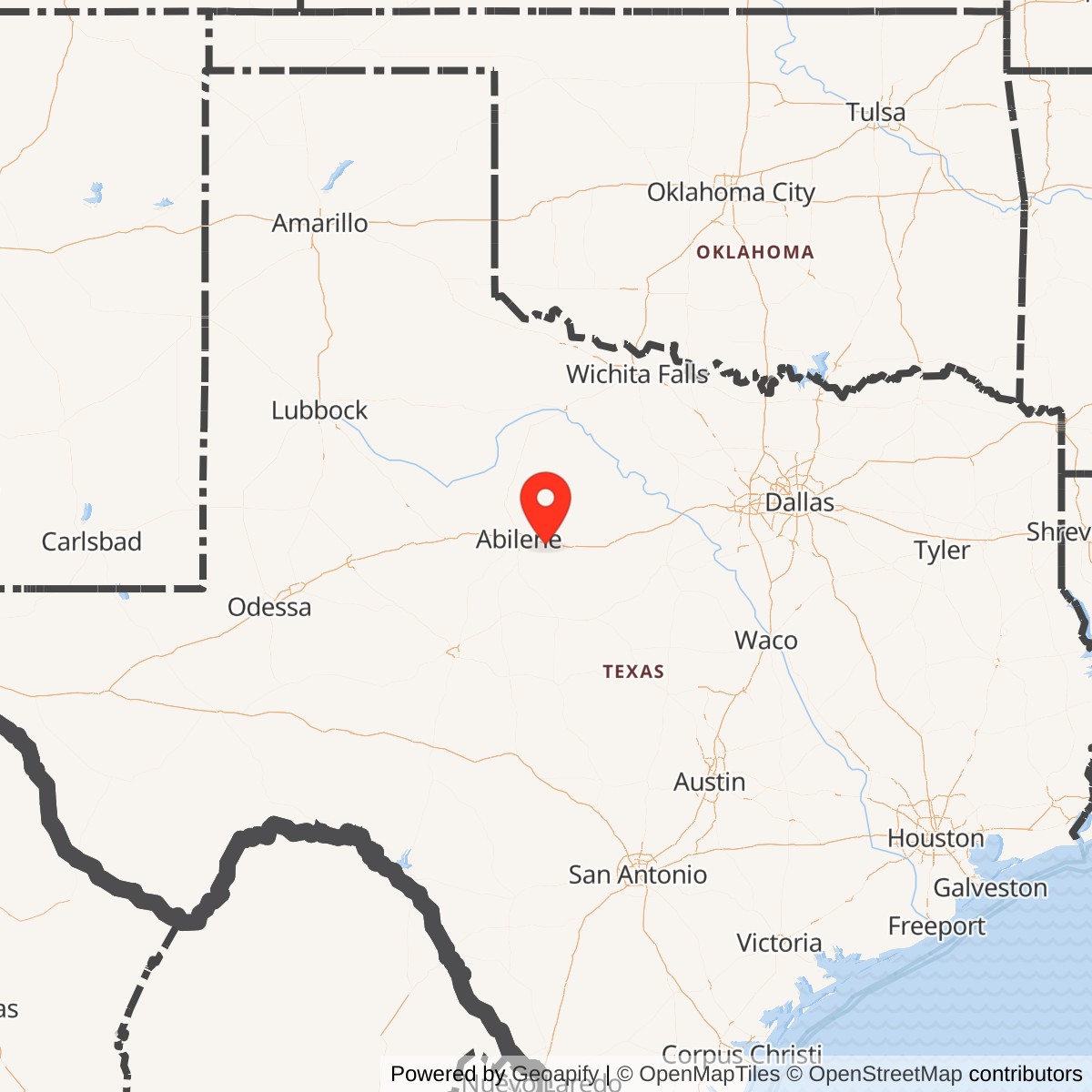
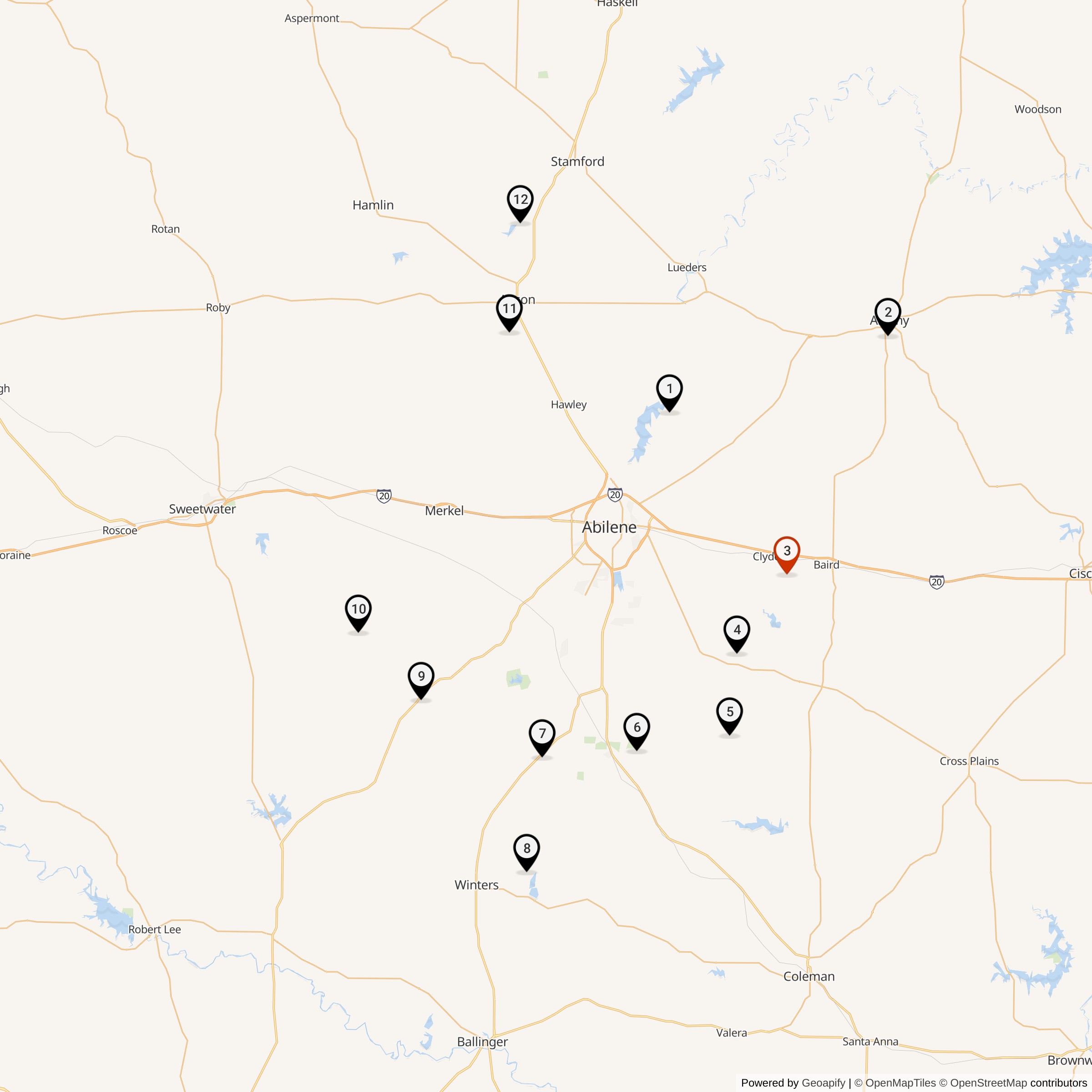
Site 578-3 occupied a rural West Texas location about 2.5 miles southeast of Clyde. It sat in the Callahan County countryside, between the Clyde and Baird localities, in a landscape of agricultural fields, pasture, creek bottoms, oil-and-gas infrastructure, ranch roads, and scattered rural development. The placement fit the Dyess missile-field pattern: the launch complexes were spread in a ring around the Abilene area so that a single attack, sabotage incident, or accident would be less likely to disable the whole squadron.The site was close enough to Dyess AFB for missile maintenance, security, logistics, and command support, but it was far enough from the base and from other sites to gain the dispersal that Atlas F basing required. The official Dyess AFB history treats the Atlas missile sites as part of the base's Cold War operating environment, and the 578th Strategic Missile Squadron site pages describe the twelve launch sites as a ring around Abilene. Site 578-3 formed the east-southeast portion of that ring.
The complex was an Atlas F silo-lift launch facility. The missile was stored vertically in a hardened underground silo. In a launch sequence, the two massive overhead doors opened, the missile and launch platform rose to the surface, and the missile was fired from above the silo rather than from inside it. The Atlas F system therefore differed from Atlas E coffin-launcher sites, where the missile was stored horizontally, and from later Minuteman silos, which were designed for direct underground launch.
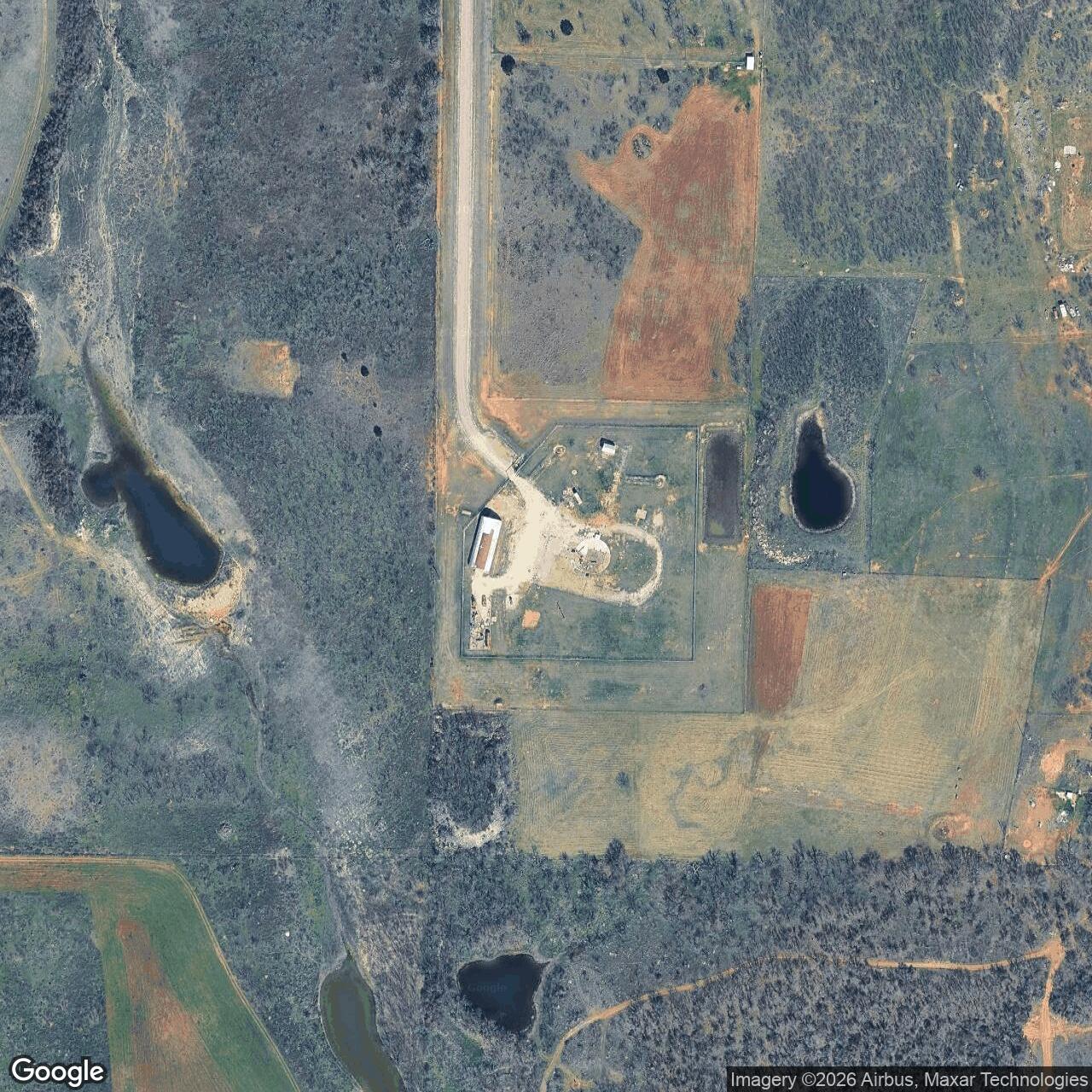
The complex would have included the launch silo, launcher/elevator system, launch doors, underground launch-control and support spaces, crew access, utility systems, power and ventilation equipment, propellant-loading equipment, water supply, communications equipment, antennas, security fencing, hardstands, surface support buildings, and an access road. Atlas Missile Museum of Texas material describes the former Site 3 property as a very complete site. It states that an original Quonset hut remains and that the site still uses original water wells for its water supply.
Strategic and Cold War Context
Site 578-3 existed because the United States was trying to field a credible intercontinental ballistic missile deterrent quickly during the early Cold War. Atlas was the Air Force's first operational ICBM. It entered service before the solid-fueled Minuteman force had matured, and it belonged to a transitional period when the United States was still learning how to build, protect, operate, and command dispersed land-based nuclear missiles.The Atlas F was the last operational Atlas basing concept. Earlier Atlas D sites used aboveground gantry or coffin configurations and Atlas E used semi-hardened horizontal coffin launchers. Atlas F placed each missile in an individual blast-resistant vertical silo with its own launch-control and support spaces. This arrangement improved survivability, reduced the vulnerability of grouped launchers, and reflected a rapid evolution in American ICBM engineering between the late 1950s and early 1960s.
The site was also part of a wider Dyess Cold War landscape. Dyess AFB supported Strategic Air Command bomber and tanker operations, and the official Dyess history notes that Army Nike Hercules sites were positioned in the region to help defend SAC bombers and the Atlas F missile silos. Site 578-3 therefore belonged to a layered military system: bomber alert, tanker support, air-defense batteries, missile maintenance and security, and dispersed ICBM alert facilities all coexisted in the Abilene area.
Construction and Activation
Initial responsibility for constructing the Dyess Atlas F sites fell to the U.S. Army Corps of Engineers Fort Worth District. The Fort Worth District also received responsibility for nationwide procurement of the Atlas F propellant-loading system. When the Corps of Engineers Ballistic Missile Construction Office was formed in 1960, the Fort Worth District was relieved of direct silo-construction oversight, but the Dyess project remained a Fort Worth / CEBMCO construction effort built under intense national-priority pressure.The Dyess contract covered twelve Atlas F lift-launcher sites around Abilene: Abilene / Phantom Lake, Albany, Clyde, Denton Community, Oplin, Lawn, Bradshaw, Winters, Shep, Nolan, Anson, and Corinth. Six bids were opened at Abilene on May 26, 1960. USAF unit-history material identifies the low bid as approximately $20 million from a joint venture of H. B. Zachry Company and Brown & Root, Inc. Construction began on June 7, 1960. Site 578-3 was the Clyde site in that contract package.
The best detailed public engineering narrative for the Dyess Atlas F construction program is the Historic American Engineering Record documentation for Dyess Atlas F Site S-8 near Winters, Texas. That HAER file is not a site-specific record for Site 578-3, but it documents a representative Dyess Atlas F launch facility built under the same missile-field program by the same general construction organization. It is therefore valuable for understanding what construction of Site 578-3 required, while still recognizing that the exact excavation sequence and local geology at Clyde could have differed from the Winters site.
The HAER account shows that construction was not simply a matter of digging a hole and placing a missile inside it. At Site S-8, open-cut excavation began with DW-20 scrapers, three dozers, and a grader until the shaft reached a reference elevation. Silo-shaft excavation then used a front-end loader with rear ripper teeth, a forty-ton crane with a clam bucket, and later a hoist with a bucket and guide tracks. When excavation reached harder gypsum, limestone, and shale, the contractor had to drill and shoot the material with explosives. The report describes multiple drilled shots, each roughly twenty-one feet deep, using hundreds of two-inch holes and dynamite to break the rock. This gives a useful sense of the heavy civil-engineering work behind the otherwise quiet rural footprint of the Dyess sites.
The HAER construction record also describes how shoring was installed as the shaft deepened. Circular I-beam segments were bolted together to form continuous ring beams around the excavation. Welded wire mesh, pneumatic concrete, and metal or wood shoring filled the spaces between ring beams. Once excavation was complete, the shaft floor was sealed with reinforced concrete, reinforcing steel was installed, and the silo walls were poured with a slip-form system. The slip form used platforms for concrete buggies and finishers and was raised by pneumatic jacks as the wall was cast.
After the shaft and silo wall work, the steel crib was erected inside the silo. The crib was the multi-level internal steel structure that supported the missile, operating ground equipment, maintenance platforms, elevators, stairs, and launch-related equipment. HAER describes the crib as roughly forty-two feet wide and 151 feet deep, suspended from the concrete silo wall by shock-isolation hardware so that the crib and missile could survive some degree of ground shock. The Atlas F silo thus involved a complex internal structural system, not just a reinforced concrete cylinder.
The propellant-loading system and support equipment were installed after the crib work advanced. HAER records that the Atlas F propellant-loading system included a liquid-oxygen tank with a 23,000-gallon capacity and gaseous-nitrogen tanks. Delivery delays for those vessels forced construction-sequence adjustments. The builders postponed the silo cap, cast a parapet wall to permit backfill, and later lowered the tanks into place with a derrick. Mechanical and electrical installation followed: floor gratings, stairs, ladders, handrails, preassembled piping, electrical equipment, mechanical units, launch-platform counterweights, drive mechanisms, and other specialized systems.
The launch platform itself was one of the key features of the Atlas F lift-launcher design. It had to raise the missile from the silo while resisting launch loads, exhaust heat, blast, and alignment forces. The HAER documentation for the representative Dyess site describes a platform roughly forty-nine feet tall, about sixteen feet square, and weighing approximately 222,000 pounds without the missile or operating equipment. A drive system with electric motors, gear reducers, cable drums, steel cables, and counterweights raised and lowered it. The silo was capped by a nine-foot-thick reinforced-concrete slab and two massive steel doors. HAER describes each door as twenty-two feet wide, two and one-half feet thick, and weighing 150,000 pounds.
Construction at Dyess was notable because, unlike some missile-field projects elsewhere, it was completed on time and without work stoppages caused by labor unrest. That success had a human cost. USAF unit-history material and The Military Standard both record three fatalities and thirty-three disabling injuries associated with the Dyess Atlas F construction project. The Smithsonian National Air and Space Museum's archival description of the Atlas Missile Project Site Construction Photographs also records that Major Charles William Moore, USAF, the Site Activation Task Force project manager, and his unit received an award for completing the construction on time and under budget.
Site-specific missile assignment also helps bracket Site 578-3's activation sequence. The missile assigned to Site 3 was General Dynamics Missile Serial Number 61-2540, General Dynamics Manufacturing Number 54F, and Air Force Missile Tail Number 540. The missile acceptance date was February 22, 1962 and the delivery date was March 15, 1962. The 578th Strategic Missile Squadron was activated on July 1, 1961 while construction and site activation work continued. USAF unit-history material then lists turnover to SAC on November 4, 1962 and operational status on November 15, 1962.
Missile System and Technical Role
Site 578-3 housed the SM-65F Atlas, the final operational Atlas ICBM variant. The National Park Service describes Atlas as the United States Air Force's first operational intercontinental ballistic missile and notes that Atlas F was held in a blast-proof silo-lift configuration. F. E. Warren Air Force Base's Atlas fact sheet similarly explains that an underground silo was developed because Atlas was vulnerable above ground and that an elevator raised the missile to ground level for launching.The missile was a liquid-fueled, pressure-stabilized system. It carried RP-1 fuel on alert, but liquid oxygen had to be loaded before launch. The Atlas airframe also depended on internal pressure because its stainless-steel structure was very thin. The National Park Service compares the unpressurized Atlas to a deflated balloon. These requirements shaped Site 578-3's propellant systems, nitrogen systems, maintenance routines, crew procedures, safety hazards, and the complexity of the launch countdown.
The Atlas F was not a direct underground-launch missile. Before firing, the missile had to be lifted out of the silo and locked into its aboveground launch position. The launch crew then completed final steps before the missile-away command. This was more survivable than early aboveground Atlas basing, but it was still less inherently responsive and less maintenance-efficient than the solid-fueled Minuteman sites that were entering service at the same time.
Public sources identify the Atlas E/F reentry system as the Mark 4 reentry vehicle carrying the W-38 nuclear warhead. The Smithsonian National Air and Space Museum states that the Mark 4 reentry vehicle was used on Atlas E/F and Titan I ICBMs and carried a W-38 nuclear warhead with a yield of about 3.75 megatons.
Operational History
Site 578-3 was part of the 578th Strategic Missile Squadron's twelve-site Atlas F force. The squadron was based at Dyess AFB and was assigned to the 96th Bombardment Wing, later redesignated the 96th Strategic Aerospace Wing. Unlike later unmanned Minuteman launch facilities, Atlas F complexes were staffed around the clock. The sites were manned twenty-four hours a day, seven days a week, throughout the squadron's active period. At Site 578-3, that meant launch crew, security, maintenance, communications, power, and propellant systems were all local realities rather than distant abstractions.The active operating period was brief but intense. USAF unit-history material records that the Dyess Atlas F force became operational in November 1962. The Cuban Missile Crisis occurred during that same period. The 578th Strategic Missile Squadron page states that all operational 578th sites were at a high level of alert during the crisis and were ready to launch if required. By the time the crisis passed, the Dyess sites had become part of the operational ICBM alert force that Strategic Air Command used to reinforce deterrence.
Everyday operation of Site 578-3 would have revolved around alert posture, inspections, training, missile maintenance, propellant readiness, security, and emergency procedures. The Atlas F system demanded constant attention because of its liquid oxygen, RP-1 fuel, gaseous-nitrogen pressurization, elevator platform, hydraulic doors, internal crib, power systems, and communications equipment. The missile was a strategic weapon, but the routine work at a site like 578-3 was practical and repetitive: checklists, communications checks, systems testing, readiness evaluations, repairs, exercises, security patrols, and periodic coordination with Dyess AFB.
The site also had a post-operational missile story. The Site 3 missile, Atlas 54F / serial number 61-2540 / Air Force tail number 540, was an operational ICBM later used for a Ballistic Missile Reentry System mission. The missile was successfully launched from Vandenberg AFB on May 1, 1974 with a BMRS / SFT-2 payload for a reentry-vehicle test. That does not mean the launch occurred from Site 578-3; rather, it shows that the missile assigned to the Clyde site survived the ICBM phaseout, was removed, refurbished or reassigned, and later used in the test program.
Deactivation and Disposal
The Atlas F force was overtaken quickly by Minuteman and by changes in nuclear-force planning. On May 16, 1964, Secretary of Defense Robert S. McNamara directed an accelerated phaseout of Atlas and Titan I ICBMs. USAF unit-history material records that the first Atlas F missile at Dyess was removed from alert on December 1, 1964, ahead of schedule, to avoid expensive maintenance work just before shutdown. The last 578th ICBM came off alert on February 3, 1965, and the last 578th ICBM was shipped on February 10, 1965. The squadron was deactivated on March 25, 1965.For Site 578-3, those dates mark the end of active missile service. The missile was removed from alert, missiles were shipped out, and the launch site was demilitarized. The official Dyess AFB history states that after decommissioning in 1965, the Atlas missiles were removed and the sites were demilitarized. Some equipment was reused elsewhere, and many properties were returned to earlier owners, transferred to local governments, sold, or eventually placed in private hands.
Site 578-3 has a documented post-military environmental record. The U.S. Army Corps of Engineers 2015 Texas FUDS inventory lists CLYDE ATLAS AF FACILITY S-3, K06TX0108, in Callahan County, with a CON/HTRW project category. In the FUDS inventory legend, CON/HTRW refers to containerized hazardous, toxic, and/or radioactive waste. The public inventory entry confirms that the former Site 3 property has been recognized in the FUDS/DERP system.
Current Status and Site Use
Site 578-3 is a decommissioned former Atlas F missile complex on private property in Callahan County, Texas. It is not an active missile site and not a routine public museum. The Atlas Missile Museum of Texas describes it as originally owned by the Clyde Independent School District, purchased by a private party in 2010, and extensively renovated thereafter. The same source calls it a very complete site, notes that an original Quonset hut remains, and states that original water wells are used for the site's water supply.That current-status description suggests that Site 578-3 is among the more visibly intact and actively maintained former Dyess Atlas F sites, but it remains private property. Former missile sites can contain confined spaces, altered structures, standing water, hazardous materials, fall hazards, electrical hazards, and other dangers. Physical access requires owner permission and appropriate safety precautions.
Chronology
- 1960-05-26 Six bids for the Dyess Atlas F construction project were opened at Abilene, Texas.
- 1960-06-07 Construction began on the twelve Atlas F lift-launcher sites around Dyess AFB.
- 1961-07-01 The 578th Strategic Missile Squadron was activated at Dyess AFB.
- 1962-02-22 The missile assigned to Site 3, Atlas 54F / General Dynamics serial number 61-2540 / Air Force tail number 540, was accepted.
- 1962-03-15 Atlas 54F was delivered to Dyess AFB.
- 1962-11-04 USAF unit-history material lists turnover to Strategic Air Command for the 578th Atlas F force.
- 1962-11-15 USAF unit-history material lists the 578th Atlas F force as operational.
- 1962 The 578th Strategic Missile Squadron's operational Atlas F sites were placed at a high level of alert during the Cuban Missile Crisis.
- 1963-05-28 to 1963-06-02 The 578th Strategic Missile Squadron underwent the first Operational Readiness Inspection for an Atlas F missile unit.
- 1964-05-16 Secretary of Defense Robert S. McNamara directed the accelerated phaseout of Atlas and Titan I ICBMs.
- 1964-12-01 The first Atlas F missile at Dyess was removed from alert ahead of schedule.
- 1965-02-03 USAF unit-history material lists the last 578th ICBM off alert.
- 1965-02-10 USAF unit-history material lists the last 578th ICBM shipped.
- 1965-03-25 The 578th Strategic Missile Squadron was deactivated and Site 578-3's active Atlas F service was over.
- 1974-05-01 Atlas 54F, formerly assigned to Site 3, was successfully launched from Vandenberg AFB with a BMRS / SFT-2 payload for a reentry-vehicle test.
- 2010 Atlas Missile Museum of Texas states that Site 3 was purchased by a private party and then underwent extensive renovation.
- 2015-09-30 The USACE Texas FUDS inventory listed CLYDE ATLAS AF FACILITY S-3, K06TX0108, in Callahan County with a CON/HTRW project category.
Read about the Atlas at Dyess AFB
All Atlas Missile Silo Locations