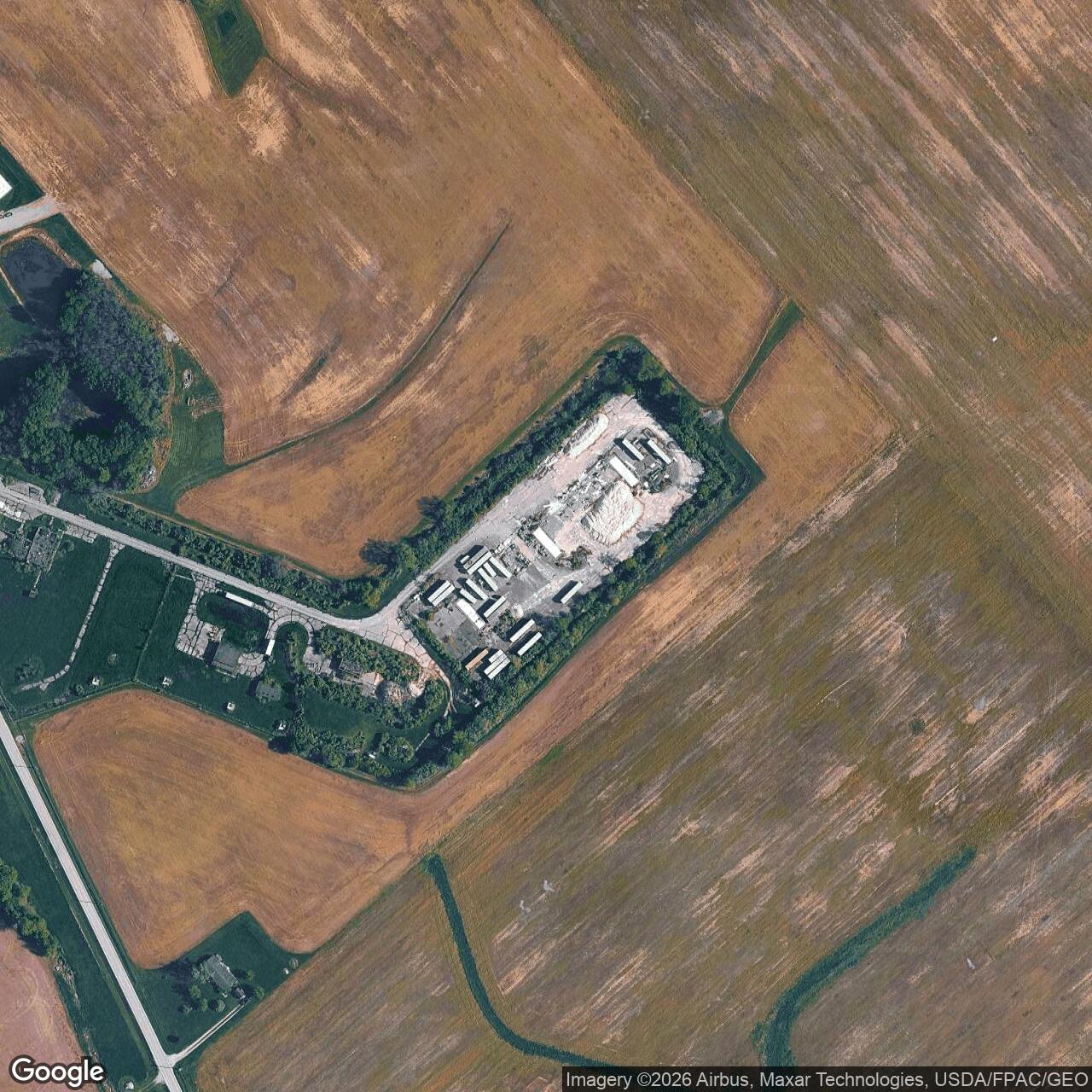
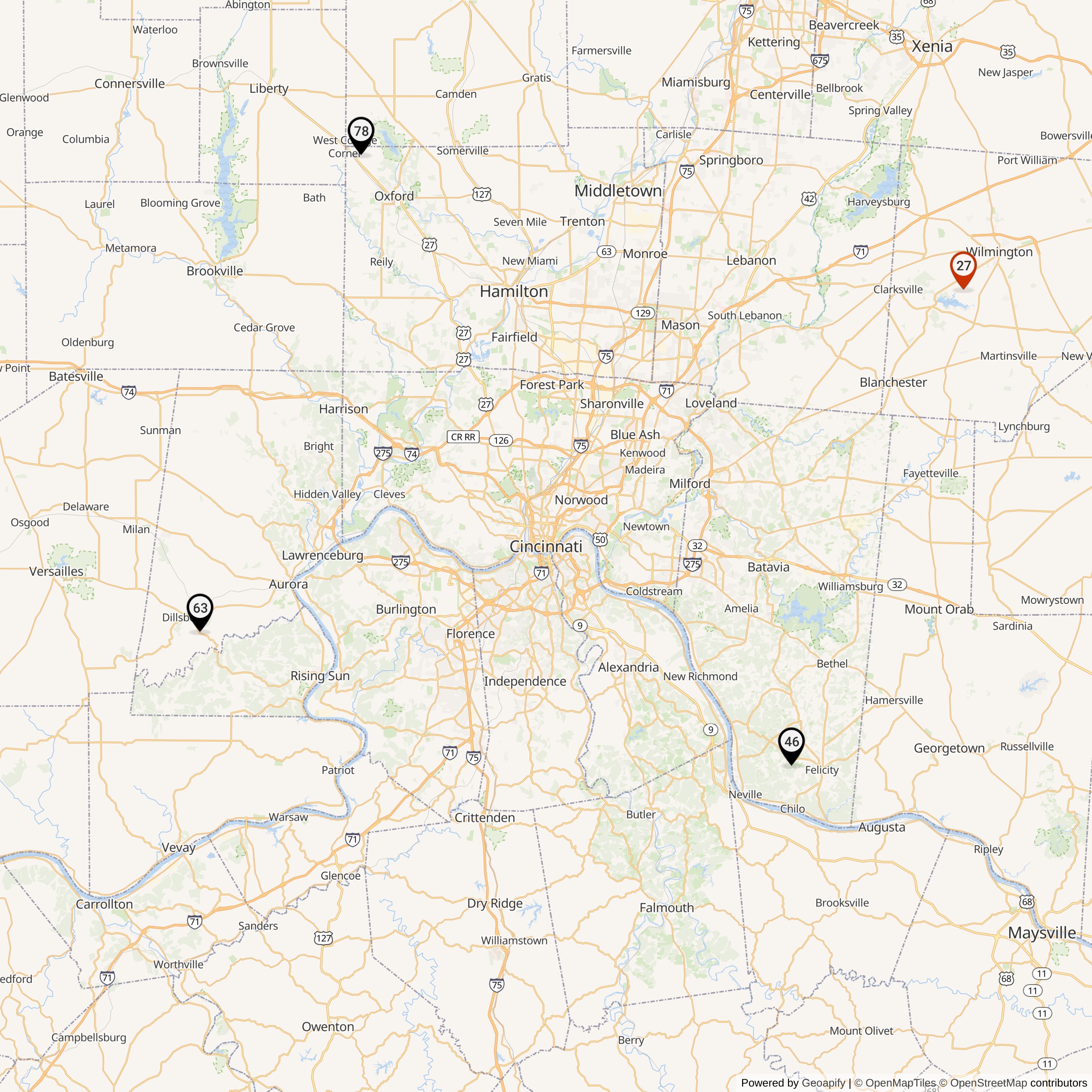
Nike Missile Site CD-27 Launcher, Wilmington Ohio
Longitude: -83.8818520735132
This location was part of the Cincinnati Defense Area
Site ID: CD-27
The missiles at this Launch Area were controlled by the Integrated Fire Control site located here.
Site Role: Launcher
A typical Nike air defense site consisted of two separate parcels of land. One area was known as the Integrated Fire Control (IFC) Area. This site contained the Nike system's ground-based radar and computer systems designed to detect and track hostile aircraft, and to guide the missiles to their targets.
The second parcel of land was known as the Launcher Area. At the launcher area, Nike missiles were stored horizontally within heavily constructed underground missile magazines. A large, missile elevator brought the Nikes to the surface of the site where they would be pushed across twin steel rails to one of four satellite launchers.
Elaboration on how Nike worked here.
Missile Type: Hercules
The Nike Ajax was the first in the Army's family of guided missiles, and the world's first operational, guided, surface-to-air missile system. Nike Ajax had a burnout speed of Mach 2.3, a range of 25-30 miles, and a ceiling of 65,000 feet.
Designed to carry either nuclear and/or high-explosive warheads, the Nike Hercules missile could attack supersonic aircraft operating at altitudes in excess of 150,000 feet and at a range of more than 87 miles.
Battery Type: single
Current site status: demolished
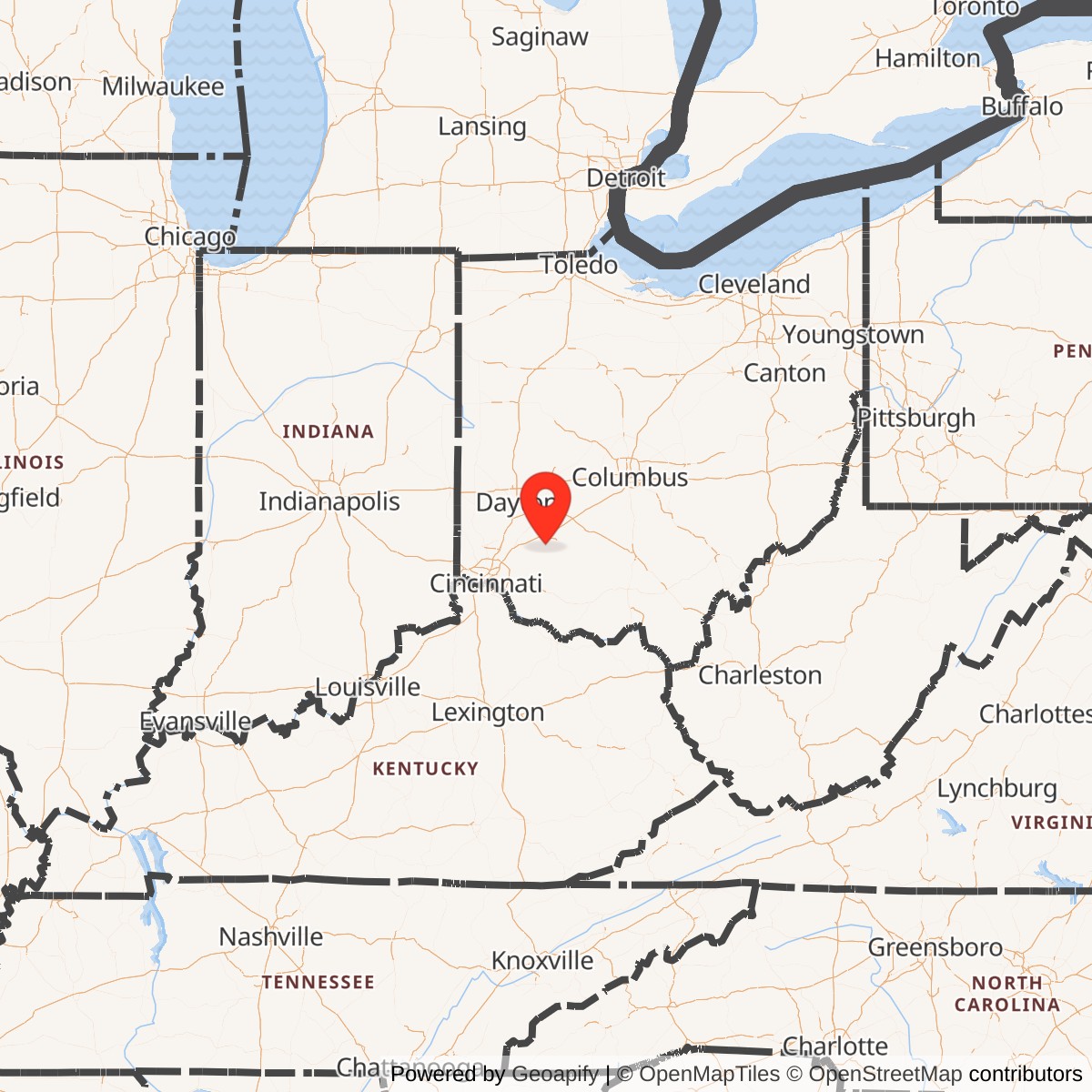
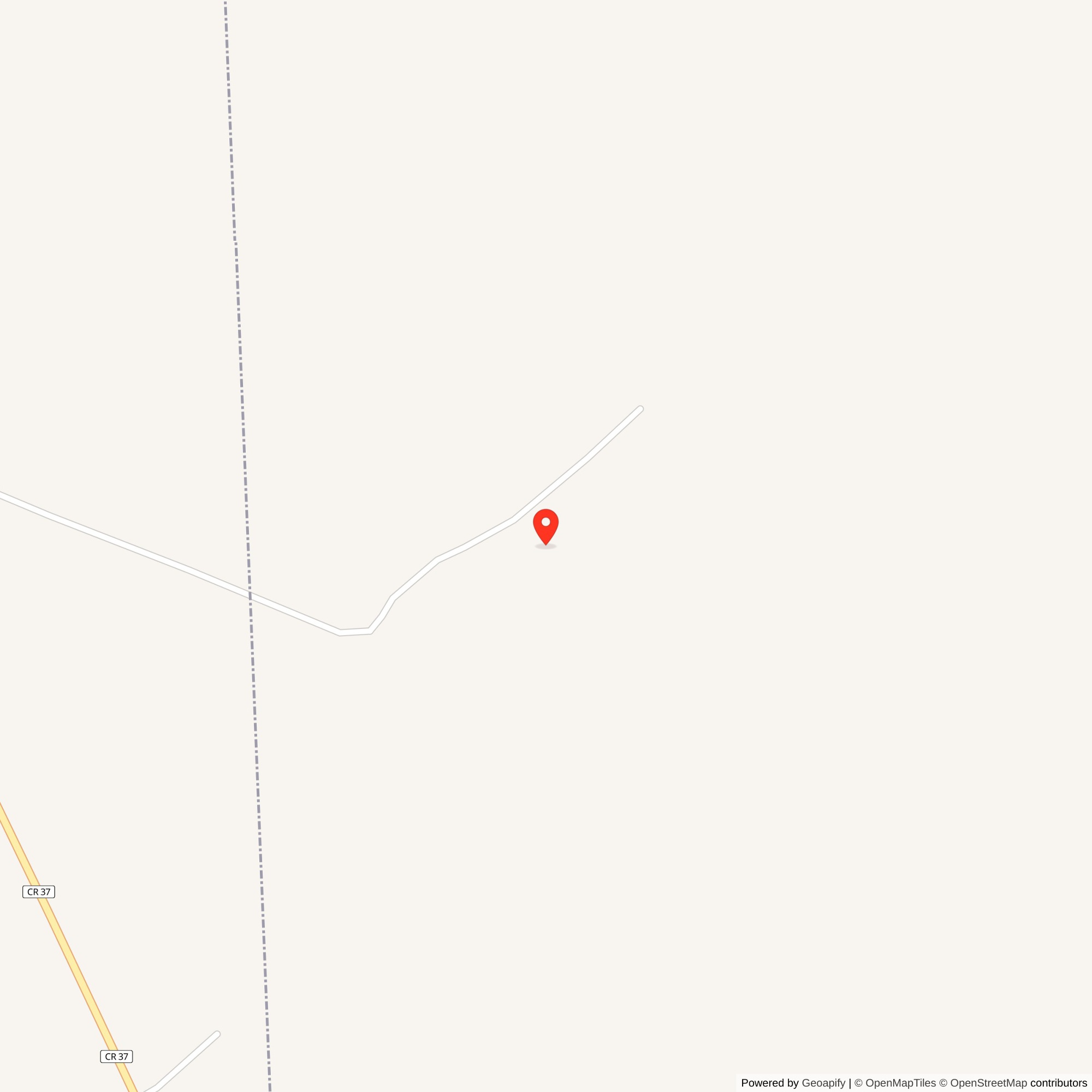
Nike Missile Site CD-27 was a U.S. Army Nike Hercules air-defense missile site in the Cincinnati-Dayton Defense Area. The site was located southeast of Wilmington, Ohio, in Clinton County, with the launch area near Cowan Lake and the control/Integrated Fire Control area nearby along the State Route 730 corridor.
CD-27 became operational in 1960 and remained in service until March 1971.
CD-27 was not simply another launcher battery. It also hosted, or was collocated with, a BIRDIE command-and-control function for the Cincinnati-Dayton Defense Area. That means the Wilmington site had a regional air-defense coordination role in addition to its local missile-battery role.
History
Nike Missile Site CD-27 was part of the later Hercules-era expansion of the Nike air-defense system. Unlike many of the early Nike batteries around cities such as Cleveland, Chicago, Detroit, New York, and Philadelphia, the Cincinnati-Dayton Defense Area was not primarily an early Ajax ring later thinned and converted. The southern Ohio/Indiana CD sites were deployed as Nike Hercules batteries in 1960, when the Army was already moving from the first-generation Nike Ajax system to the larger, longer-range, nuclear-capable Nike Hercules system.The larger Cold War setting was the national fear of a Soviet bomber attack against American cities, air bases, production centers, and command facilities. Nike was the Army's last-ditch surface-to-air defense against hostile bombers that penetrated the outer air-defense screen of early-warning radar, interceptor aircraft, and Air Force-controlled air-defense sectors. The Army's fixed Nike batteries were intended to protect specific regions or strategic targets by placing guided missiles close enough to engage aircraft before they reached the defended area.
The Cincinnati-Dayton Defense Area was organized to cover a strategically important part of southwestern Ohio and the upper Ohio River Valley. The official DoD Legacy missile-program history identifies the Ohio sites as CD-27 southeast of Wilmington, CD-46 at Felicity, and CD-78 northwest of Oxford, and notes that these worked with the Dillsboro, Indiana, CD-63 site. Together, those Nike Hercules batteries became operational in 1960 to defend the industrial centers of the upper Ohio River Valley. The same source identifies the U.S. Army Corps of Engineers Huntington District as the construction agency responsible for those sites.
CD-27's Wilmington location made sense in that regional pattern. It sat northeast of Cincinnati, southeast of Dayton, and near the Cold War military-airfield complex at Clinton County Air Force Base. Clinton County Air Force Base had a World War II Army Air Forces origin and, by 1960, was transferred to Strategic Air Command. The base and its surrounding airfield later became Wilmington Air Park after the Air Force decommissioned it in the early 1970s. CD-27 should not be described only as a defense of Clinton County AFB, because the published Nike-area history describes the larger mission as the defense of the upper Ohio River Valley. Still, the presence of Clinton County AFB and Wright-Patterson's important Air Force research, logistics, and command functions in southwestern Ohio help explain why the region was treated as strategically important.
Missile System and Site Configuration
CD-27 was a Nike Hercules site with the missile-type code Nike 3D/18H/12L-U. In plain terms, that indicates three Type D missile magazines, a standard allowance of eighteen Nike Hercules missiles, and twelve universal launchers. In the Nike missile-type key, the D magazine type identifies a magazine that could support either Ajax or Hercules with increased access room in the magazine, while U refers to universal launchers.Nike Hercules was the second major operational member of the Nike family. It used solid propellant rather than the Ajax missile's more hazardous liquid-fuel sustainer system. The Hercules had much greater range and altitude performance than Nike Ajax and could carry either a high-explosive fragmentation warhead or a nuclear warhead. Redstone Arsenal's Nike Hercules history gives the system's range as over 75 miles, its speed as Mach 3.65, its altitude capability as up to 150,000 feet, and its guidance as command guidance by electronic computer and radar.
A Nike battery was not just a missile storage yard. It was a coordinated weapon system made up of launchers, underground magazines, radars, computers, generators, communications equipment, maintenance buildings, barracks, and trained crews. The standard Nike battery was divided into an administrative area, an Integrated Fire Control area, and a launch area. The administrative function could be collocated with either the IFC or the launcher. The IFC and launcher were deliberately separated, usually by at least 1,000 yards and often by more than a mile, but they still needed a practical line-of-sight relationship for survey, communications, and system operation.
The IFC area contained the radars and control equipment that found, identified, tracked, and engaged targets. In a Nike engagement, warning came from the broader air-defense network; the local battery then used acquisition and tracking radars to follow the target and the selected missile. The ground computer calculated the intercept solution and transmitted steering commands to the missile. The missile itself did not act as a self-contained autonomous weapon; it was part of a ground-controlled radar/computer system.
The launch area contained the underground magazines and launch positions. In the standard underground Nike arrangement, missiles were stored horizontally in reinforced magazines below grade. Elevators raised the missiles to the surface. Once above ground, missile crews moved them along rails to the launchers, attached them to the launchers, elevated them to firing position, and completed launch procedures. CD-27's 3D/18H/12L-U configuration fits that standard three-magazine, twelve-launcher Hercules pattern.
BIRDIE Command-and-Control Role
The most distinctive feature of CD-27 was the command-and-control function associated with the site. The BIRDIE site collocated at C-27 hosted missile command-and-control functions for the Cincinnati-Dayton region.BIRDIE stood for Battery Integration and Radar Display Equipment. It was a smaller, more transportable fire-distribution and command system used where a full Missile Master direction center was not justified or was too expensive. Missile Master and BIRDIE solved a real tactical problem: a ring of Nike batteries could not operate efficiently if each battery independently chose targets without knowing what the others were engaging. Early manual plotting and voice-command procedures were too slow for jet-age air defense. BIRDIE helped integrate radar information, target assignments, and missile-battery action so that multiple batteries could be used as a coordinated regional defense instead of as isolated individual launch sites.
For CD-27, this means the site had significance beyond its missile magazines. The Wilmington installation appears to have functioned as a local Nike Hercules battery and as a command node for the Cincinnati-Dayton Defense Area. That regional command role is important because the Cincinnati-Dayton network was relatively small: the Ohio sites at Wilmington, Felicity, and Oxford, plus the Dillsboro site in southeastern Indiana. A BIRDIE facility at CD-27 would have helped coordinate that compact but strategically placed defensive ring.
Site Layout and Physical Remains
The CD-27 launch area was the heavily constructed part of the installation. Later photographs and site reports show that, after closure, the launch site still retained major Nike features: perimeter fencing, a guard-shack approach, underground magazine structures, elevator openings, launch-area pavement, support buildings, dog kennels, and other remnants of the operating battery. A 2007 photo account described the launch site as still standing and used by a farmer as pasture, with water in the magazine/elevator openings and much of the launch-area structure still visible.The IFC/control area survived in a different pattern of reuse. Public site inventories describe the control area as intact, with former Nike buildings used for school, industrial, or light-industrial purposes. One photo account identifies the nearby IFC as having been reused as a school and notes that many of the original buildings remained visible at that time.
The combination of an intact or partly intact launcher and a reused IFC makes CD-27 more legible than many demolished Nike sites. At a heavily redeveloped Ajax site, it can be difficult to reconstruct the original launcher/control split. At CD-27, the rural setting, surviving concrete, underground magazine structures, and separate control-area reuse still express the basic Nike plan.
Deactivation and Post-Closure Use
CD-27 was deactivated in March 1971. The Cincinnati-Dayton sites as a group remained active until about 1970-1971, after which the Army's continental Nike network continued to shrink rapidly. This decline reflected changes in Cold War threat perception and technology. The Nike system was designed first for bomber defense, but by the 1960s the principal Soviet strategic threat had shifted increasingly toward intercontinental ballistic missiles and submarine-launched ballistic missiles. Nike Hercules remained useful as an air-defense system, but fixed anti-bomber missile rings were no longer the centerpiece of U.S. strategic defense.After deactivation, CD-27 passed into civilian and private reuse. The launch site was reported as intact and privately owned in the DoD missile-site inventory. Later public descriptions characterize the launch area as private agricultural or rural property, with the magazines and launch structures still visible but deteriorated and unsafe. The control area has been reused for school and industrial purposes, with some original buildings still present or adapted.
List of all Nike Installations in the Cincinnati Defense AreaList of all Nike Installations in Ohio