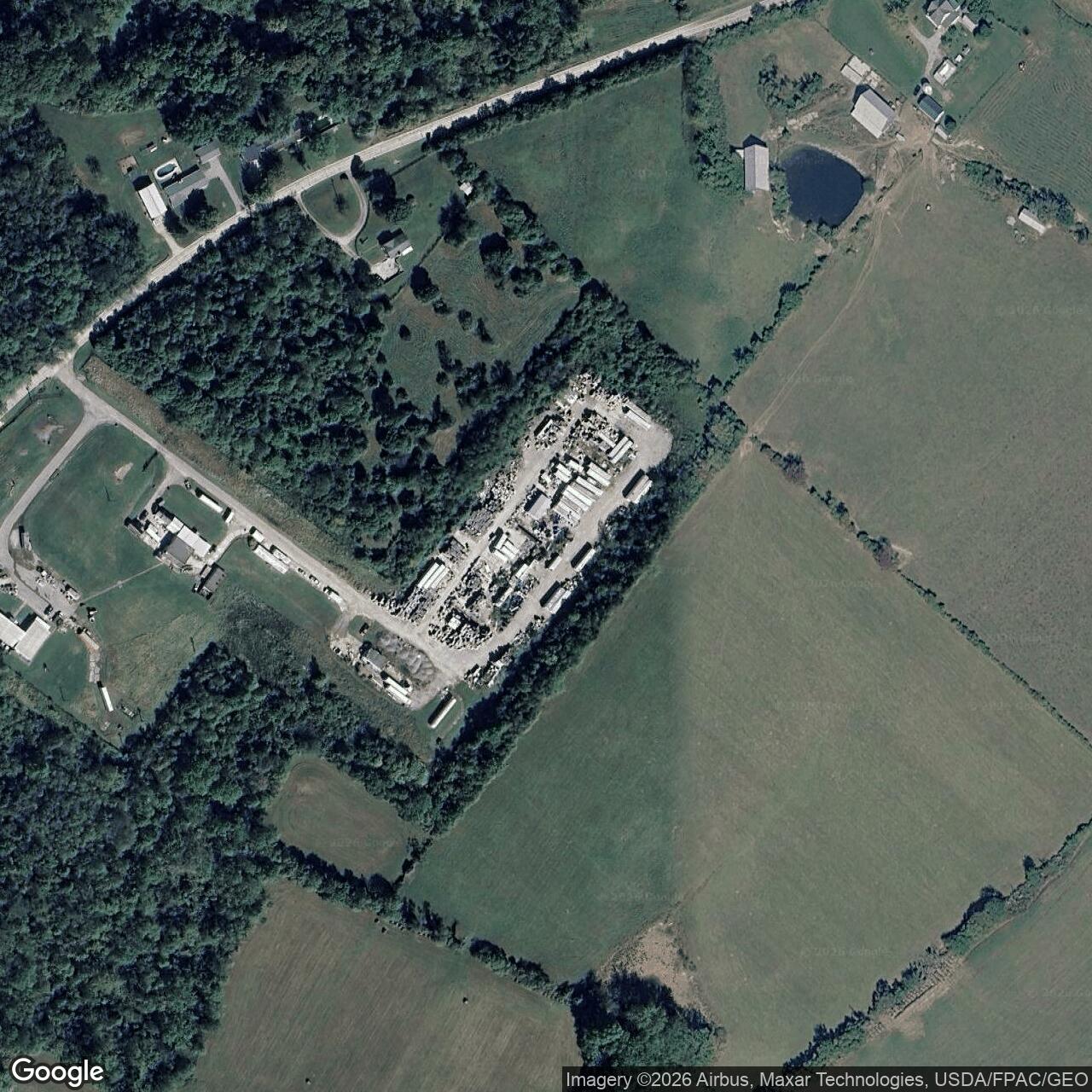
Nike Missile Site CD-46 Launcher, Felicity Ohio
Longitude: -84.1425544611129
This location was part of the Cincinnati Defense Area
Site ID: CD-46
The missiles at this Launch Area were controlled by the Integrated Fire Control site located here.
Site Role: Launcher
A typical Nike air defense site consisted of two separate parcels of land. One area was known as the Integrated Fire Control (IFC) Area. This site contained the Nike system's ground-based radar and computer systems designed to detect and track hostile aircraft, and to guide the missiles to their targets.
The second parcel of land was known as the Launcher Area. At the launcher area, Nike missiles were stored horizontally within heavily constructed underground missile magazines. A large, missile elevator brought the Nikes to the surface of the site where they would be pushed across twin steel rails to one of four satellite launchers.
Elaboration on how Nike worked here.
Missile Type: Hercules
The Nike Ajax was the first in the Army's family of guided missiles, and the world's first operational, guided, surface-to-air missile system. Nike Ajax had a burnout speed of Mach 2.3, a range of 25-30 miles, and a ceiling of 65,000 feet.
Designed to carry either nuclear and/or high-explosive warheads, the Nike Hercules missile could attack supersonic aircraft operating at altitudes in excess of 150,000 feet and at a range of more than 87 miles.
Battery Type: single
Current site status: demolished
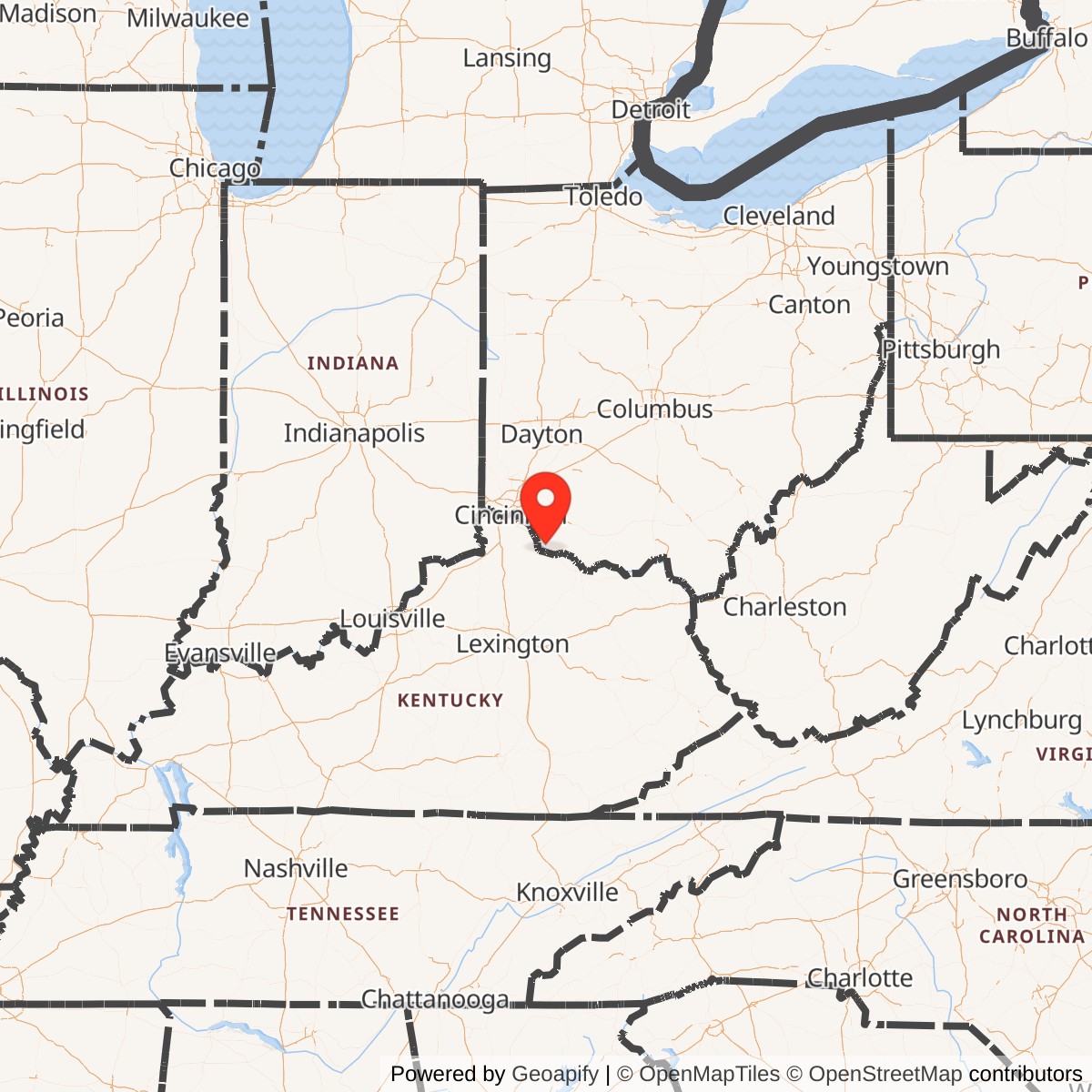
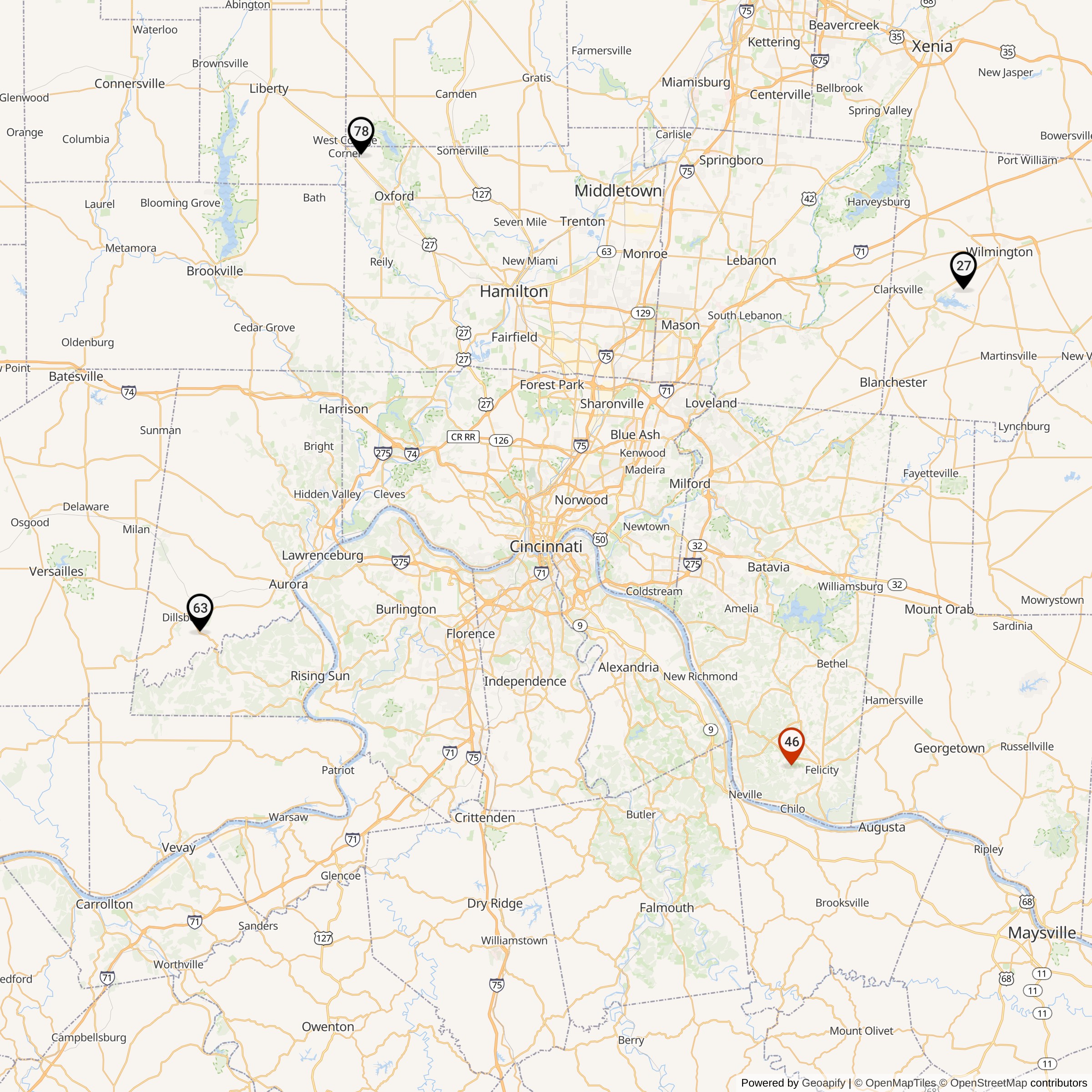
Nike Missile Site CD-46 was a U.S. Army Nike Hercules surface-to-air missile site in the Cincinnati-Dayton Defense Area. The site was located in Clermont County, Ohio, near Felicity and west of the village in the rural Ohio River uplands between the Felicity, Point Isabel, Moscow, and Chilo areas. It was part of the four-site Cincinnati-Dayton Nike Hercules network that also included CD-27 near Wilmington, CD-78 near Oxford, and CD-63 near Dillsboro, Indiana.
The strongest site inventory sources identify CD-46 as active from April 1960 to March 1970. It was a Nike Hercules site, not an earlier Nike Ajax site converted to Hercules. Its missile-type code is listed as Nike 3D/18H/12L-U, meaning three Type D magazines, eighteen Nike Hercules missiles, and twelve universal launchers.
Post-closure condition and reuse: control site reported in earlier inventory as Ohio Army National Guard / C Company, 216th Engineers; launch site reported as industrial; a 2008 Federal Register listing identified "NIKE Site Cd-46, Felicity OH" as Corps of Engineers excess property with extensive deterioration. The exact parcel covered by the 2008 listing should be treated cautiously, but it clearly documents a later federal property-disposal or suitability review associated with the former site.
Historical Background
CD-46 belonged to the later Nike Hercules phase of the Cold War continental air-defense system. The original Nike program had been developed after World War II because conventional antiaircraft artillery could no longer reliably defend cities and installations against faster, higher-flying aircraft. The Soviet Union's 1949 atomic bomb test, the Korean War, and the growth of Soviet long-range aviation made air defense a central Cold War concern. The United States responded with layered defenses: warning radars, interceptor aircraft, command-and-control centers, and Army surface-to-air missile batteries around likely target areas.The first operational Nike system, Nike Ajax, went into service in 1954 and was deployed around major urban, military, and industrial areas. Nike Ajax was a major technological step, but it had limitations. It used liquid propellants, had a shorter range than later Hercules, and carried only conventional high-explosive fragmentation warheads. It was also a one-target-at-a-time system in its original form, requiring additional command-and-control improvements to coordinate many batteries in a regional defense.
Nike Hercules was the second major operational Nike missile. It was larger, faster, longer-ranged, solid-fueled, and capable of carrying either a high-explosive or nuclear warhead. In the late 1950s and early 1960s, the Army converted many earlier Ajax batteries to Hercules and also built new Hercules-only defense sites. CD-46 was part of that new-site pattern. The Cincinnati-Dayton Defense Area was not a mid-1950s Ajax ring like Cleveland. Instead, the published site inventories identify the CD sites as Nike Hercules batteries that became operational in 1960.
The Cincinnati-Dayton area was strategically important for several reasons. The published DoD missile-site history states that the Cincinnati-Dayton Nike Hercules sites were built to defend the industrial centers of the upper Ohio River Valley. That mission should be read broadly. The area included Cincinnati's industrial and transportation base, Dayton's military and aviation associations, nearby Wright-Patterson Air Force Base, regional manufacturing capacity, highways, rail routes, Ohio River infrastructure, and the concentration of population and industry in southwestern Ohio and southeastern Indiana. A bomber attack against this region would not have been understood only as an attack on a city; it would have been an attack on a connected industrial, military, logistical, and transportation corridor.
CD-46's location near Felicity placed it on the southeastern side of the Cincinnati-Dayton defensive pattern. The site sat in rural Clermont County, east of Cincinnati and near the Ohio River, rather than in the center of the city. That rural siting made sense for a Hercules battery. Nike Hercules had a longer range than Ajax, allowing sites to be placed farther out, where land acquisition was easier and the missiles could engage aircraft before they reached the defended urban-industrial core.
Construction and Regional Defense Role
The U.S. Army Corps of Engineers Huntington District had responsibility for construction of the Cincinnati-Dayton Nike Hercules sites. This is an important distinction because the Ohio Nike sites were constructed by different Corps districts depending on their defense area. The Cleveland Nike sites were associated with the Pittsburgh District, while the Cincinnati-Dayton Hercules sites fell under the Huntington District's Ohio River Valley construction responsibilities.CD-46 was one of the Ohio Hercules batteries in that Huntington District program. Along with CD-27 at Wilmington, CD-78 at Oxford, and CD-63 at Dillsboro, Indiana, it formed a compact Nike Hercules defense network covering southwestern Ohio and the upper Ohio River Valley. The network's command-and-control function was associated with a BIRDIE installation collocated at CD-27. BIRDIE, or Battery Integration and Radar Display Equipment, was a smaller command-and-control system used to integrate multiple Nike batteries in defense areas that did not require a full Missile Master complex.
This command-and-control context matters because Nike batteries did not operate as isolated launch farms. A single battery could detect, track, and engage a target, but a defense area needed coordination so that multiple batteries did not all engage the same bomber while leaving other targets unassigned. BIRDIE helped distribute target information and engagement control across a region. CD-46 therefore should be interpreted as one battery within a coordinated Cincinnati-Dayton system whose command function was centered at CD-27.
Missile System and Site Configuration
CD-46's missile-type code, Nike 3D/18H/12L-U, describes the physical and operational character of the launcher area. The "3D" portion indicates three Type D missile magazines. In the Nike missile-type key, Type D magazines were designed with increased access room and could support the Hercules-era configuration. The "18H" portion indicates eighteen Nike Hercules missiles, and "12L-U" indicates twelve universal launchers.This configuration identifies CD-46 as a Hercules site from the beginning of its operational life. It should not be grouped with the earlier Cleveland Ajax sites that were either deactivated or converted. CD-46 was part of the 1960 Hercules deployment pattern, built for the larger missile and broader regional coverage.
Nike Hercules was a command-guided surface-to-air missile. It did not fly independently to a target after launch in the modern fire-and-forget sense. The battery's ground radars tracked both the target and the missile. The ground-based computer generated an intercept solution and transmitted steering commands to the missile. The missile's effectiveness depended on the entire site system: acquisition radar, target-tracking radar, missile-tracking radar, fire-control equipment, communications, power generation, launcher crews, maintenance crews, and regional command-and-control.
Official Redstone Arsenal historical data gives the Nike Hercules missile a length of about 41 feet, a diameter of 31.5 inches, a speed of about Mach 3.65, a range of more than 75 miles, and an altitude capability up to about 150,000 feet. Hercules could carry either a high-explosive fragmentation warhead or a nuclear warhead. The nuclear option was intended to destroy formations of attacking bombers or compensate for the difficulty of intercepting multiple aircraft with conventional warheads.
The presence of a Nike Hercules battery in rural Clermont County therefore represented a major Cold War military capability. CD-46 was not simply a storage depot. It was a ready air-defense installation designed to receive warning, track hostile aircraft, prepare and launch missiles, and participate in a coordinated regional engagement.
Site Layout and Operation
A standard Nike battery was divided into three functional areas: the administrative area, the Integrated Fire Control area, and the launch area. The administrative area included barracks, mess facilities, support offices, recreation or supply space, vehicle maintenance, and general site support. Depending on the site, those functions could be collocated with either the IFC or launch area.The IFC area was the radar and command portion of the battery. It contained the acquisition radar, target-tracking radar, missile-tracking radar, radar-control and battery-control equipment, generators, trailers or buildings for electronics and maintenance, and the personnel who operated the fire-control system. At a Hercules site, the radar suite could include additional equipment such as HIPAR or ABAR at some batteries and target-ranging radar to help counter jamming. I did not find a verified site-specific radar-type listing for CD-46 in the accessible sources, so the safest description is that it was an operational Nike Hercules IFC/control site rather than assigning a particular radar package without confirmation.
The launcher area was the hardened missile portion of the battery. At a three-magazine Hercules site such as CD-46, missiles were stored horizontally in reinforced underground magazines. Elevators raised the missiles to the surface. Crews then moved the missiles along rails to the launchers, positioned them, elevated them for firing, and completed prelaunch procedures. The universal launchers at CD-46 allowed the site to handle the Hercules missile configuration.
The separation between the IFC and launch area was fundamental to Nike design. The two parts had different hazards and functions. The IFC needed radar visibility and a stable surveyed relationship to the battery; the launcher area needed blast safety, magazine space, security, launch rails, missile-handling areas, and access control. The two areas worked as one weapon system through communications and fire-control integration.
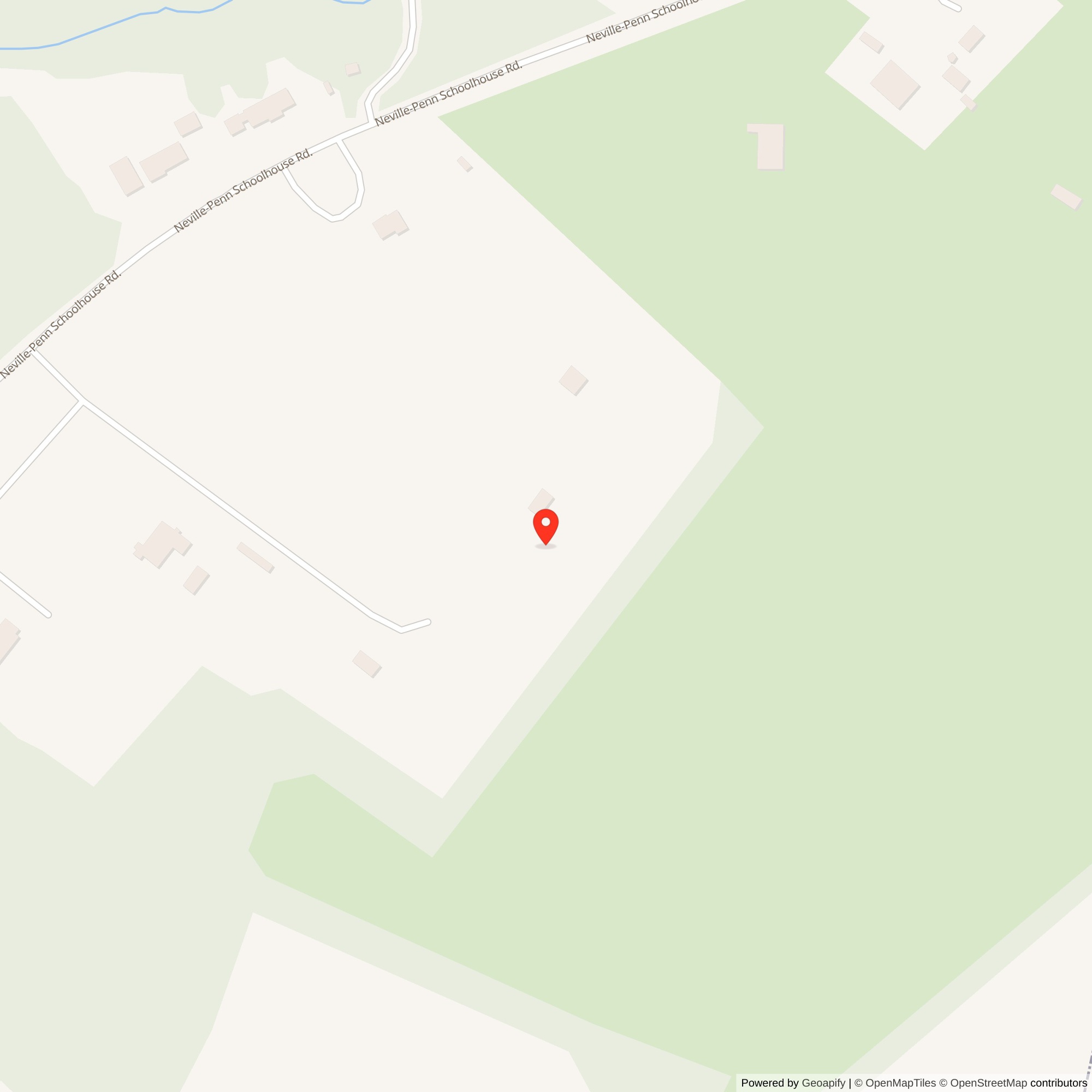
The coordinates show the CD-46 launcher at 38.843600, -84.142554 and the IFC/control area at 38.851320, -84.155692. These locations place the control area northwest of the launcher area, with both portions west of Felicity. That separation fits the standard Nike layout pattern, with the radar/control area and launcher area distinct but close enough to operate as one battery.
Daily Life and Operating Demands
CD-46 would have required a disciplined daily routine. Soldiers at a Nike Hercules site maintained the missiles, radars, generators, vehicles, communications equipment, fencing, security posts, launcher mechanisms, magazines, elevators, and support buildings. The missile system was technical and manpower-intensive. A battery had to be ready not only to fire but to prove readiness during inspections, exercises, and recurring training.Launcher crews had to keep the magazines and launch rails serviceable, maintain missile handling procedures, secure the warhead and missile areas, and conduct drills to raise missiles from storage to launch position. Fire-control personnel had to operate and maintain radars, coordinate target-tracking data, and practice engagement procedures. Maintenance personnel worked on generators, electronics, vehicles, and physical plant. Security personnel controlled access to a site that, because it could carry nuclear-capable missiles, was part of a highly sensitive Cold War weapons network.
Although CD-46 sat in a rural area, it was not remote in the strategic sense. It was tied to the national air-defense system and to the Cincinnati-Dayton command network. Its soldiers were part of a defense posture that assumed little warning time. The purpose of the fixed Nike installation was to make it possible to respond quickly if warning came from the broader air-defense network.
Deactivation
CD-46 was deactivated in March 1970. This was broadly consistent with the drawdown of many continental Nike batteries in the late 1960s and early 1970s. The Cincinnati-Dayton area remained active until roughly 1970-1971, with CD-27 at Wilmington apparently remaining active slightly longer than CD-46.The reasons for the Nike drawdown were technological, strategic, and fiscal. Nike Hercules was built primarily to defend against manned bomber attack. By the 1960s, the strategic threat had increasingly shifted toward intercontinental ballistic missiles and submarine-launched ballistic missiles. Fixed surface-to-air missile rings around cities could not stop a ballistic-missile attack. At the same time, the cost of maintaining large numbers of air-defense sites competed with other defense priorities, including the Vietnam War, strategic missile programs, and newer air-defense systems.
Nike Hercules still had military value, and some sites in the United States remained active into the mid-1970s or later in Alaska and Florida. But many defense areas were thinned or eliminated. CD-46's March 1970 closure places it in that national transition from bomber-defense missile rings to a Cold War defense posture dominated by deterrence, strategic warning, and ballistic-missile forces.
Post-Closure Use and Site Condition
After deactivation, CD-46 entered the familiar post-Nike pattern of transfer, reuse, partial abandonment, and environmental/property review. The DoD Legacy inventory described the CD-46 control site as associated with the Ohio Army National Guard, C Company, 216th Engineers. It described the launch site condition or owner as industrial. Later public list entries state that the control-site buildings remained in good condition but that radar towers were gone, and that the launcher area's magazines or hardstand areas were being used for tractor-trailer parking and storage. Those later descriptions should be treated as condition snapshots rather than permanent status.A Federal Register notice published in August 2008 listed "NIKE Site Cd-46, Felicity OH," with the U.S. Army Corps of Engineers as landholding agency, property number 31200740015, status "Excess," and reason "Extensive deterioration." The notice does not, by itself, identify exactly which part of the former Nike installation was covered. It may refer to a building or parcel within the former control/administrative property, a residual federal property interest, or another portion of the former installation. Still, it is strong evidence that at least some CD-46-associated federal property remained in the federal disposal or suitability-review system decades after missile operations ended.
List of all Nike Installations in the Cincinnati Defense AreaList of all Nike Installations in Ohio