Nike Missile Site CL-11 IFC, Painesville Ohio
Longitude: -81.27531
This location was part of the Cleveland Defense Area
Site ID: CL-11
This site controlled the missiles at the Launch Area located here.
Site Role: IFC
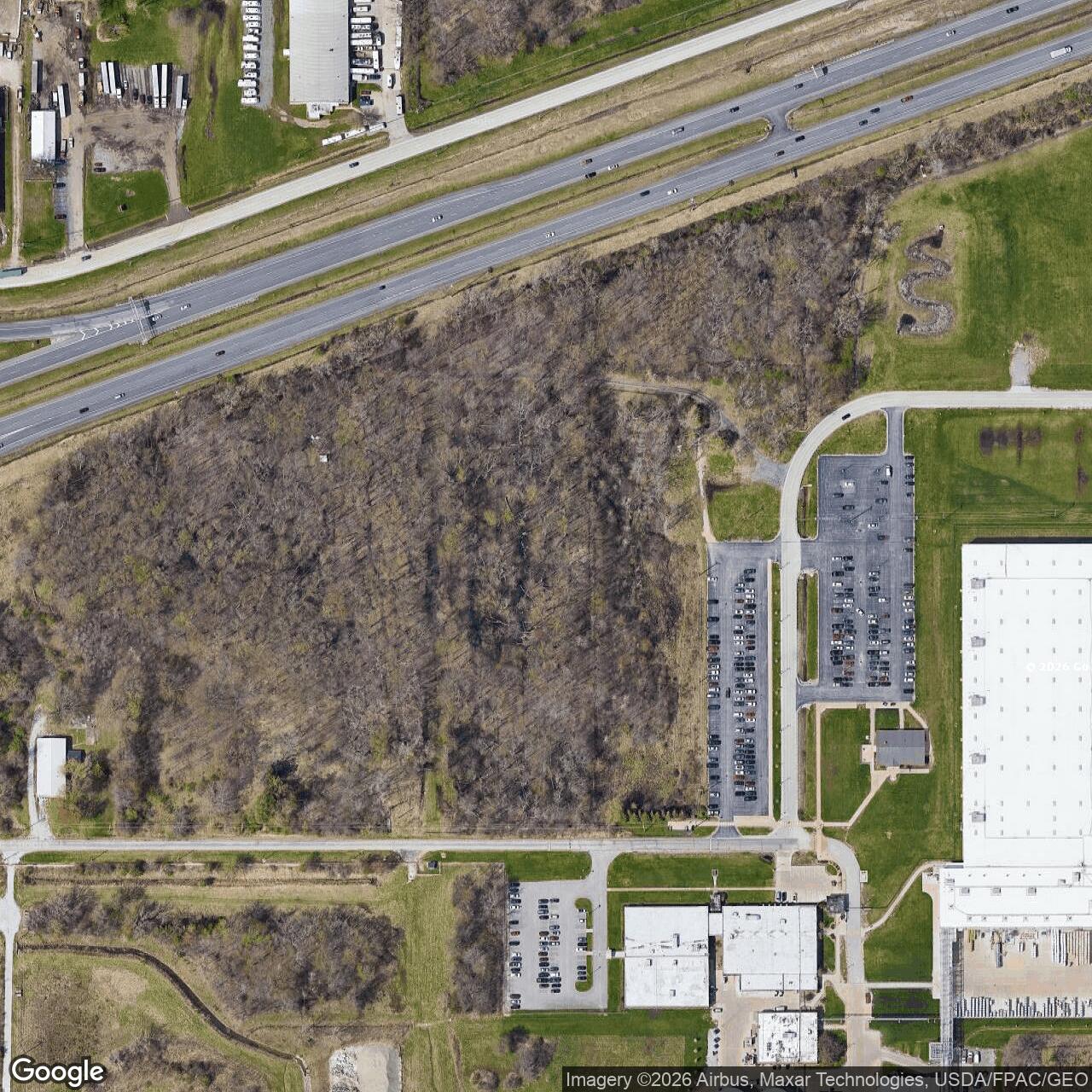
A typical Nike air defense site consisted of two separate parcels of land. One area was known as the Integrated Fire Control (IFC) Area. This site contained the Nike system's ground-based radar and computer systems designed to detect and track hostile aircraft, and to guide the missiles to their targets.
The second parcel of land was known as the Launcher Area. At the launcher area, Nike missiles were stored horizontally within heavily constructed underground missile magazines. A large, missile elevator brought the Nikes to the surface of the site where they would be pushed across twin steel rails to one of four satellite launchers.
Elaboration on how Nike worked here.
Date Site Converted to Hercules Missile: September, 1959
Nike Hercules were more powerful and nuclear capable missiles. Many locations originally built for the Ajax were later modified and upgraded to the newer Hercules.
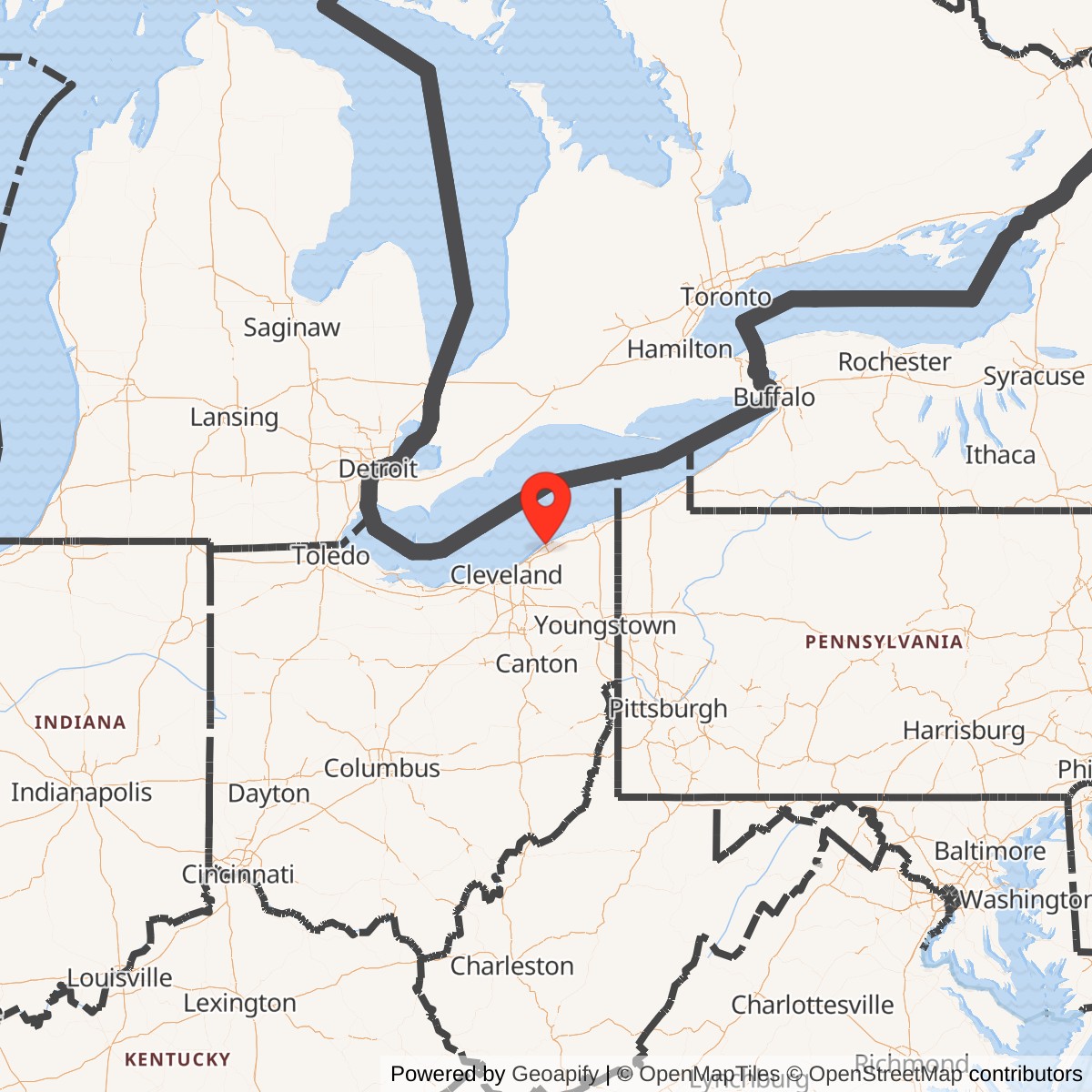
Nike Missile Site CL-11 was a U.S. Army Nike air-defense missile battery in the Cleveland Defense Area. The site was located in the Painesville area of Lake County, Ohio, east of Cleveland and near the Lake Erie approaches to the city's industrial region. It was part of the Cold War missile ring that defended the Cleveland metropolitan area, its lakefront, transportation corridors, and industrial base from the perceived threat of Soviet bomber attack.
The battery was activated in June 1958, converted from Nike Ajax to Nike Hercules service during the late 1950s, and deactivated in June 1971. It was one of the Cleveland Defense Area sites that remained active into the Hercules period, and it was one of the final Cleveland-area Nike batteries to close when the remaining Hercules sites were deactivated in 1971.
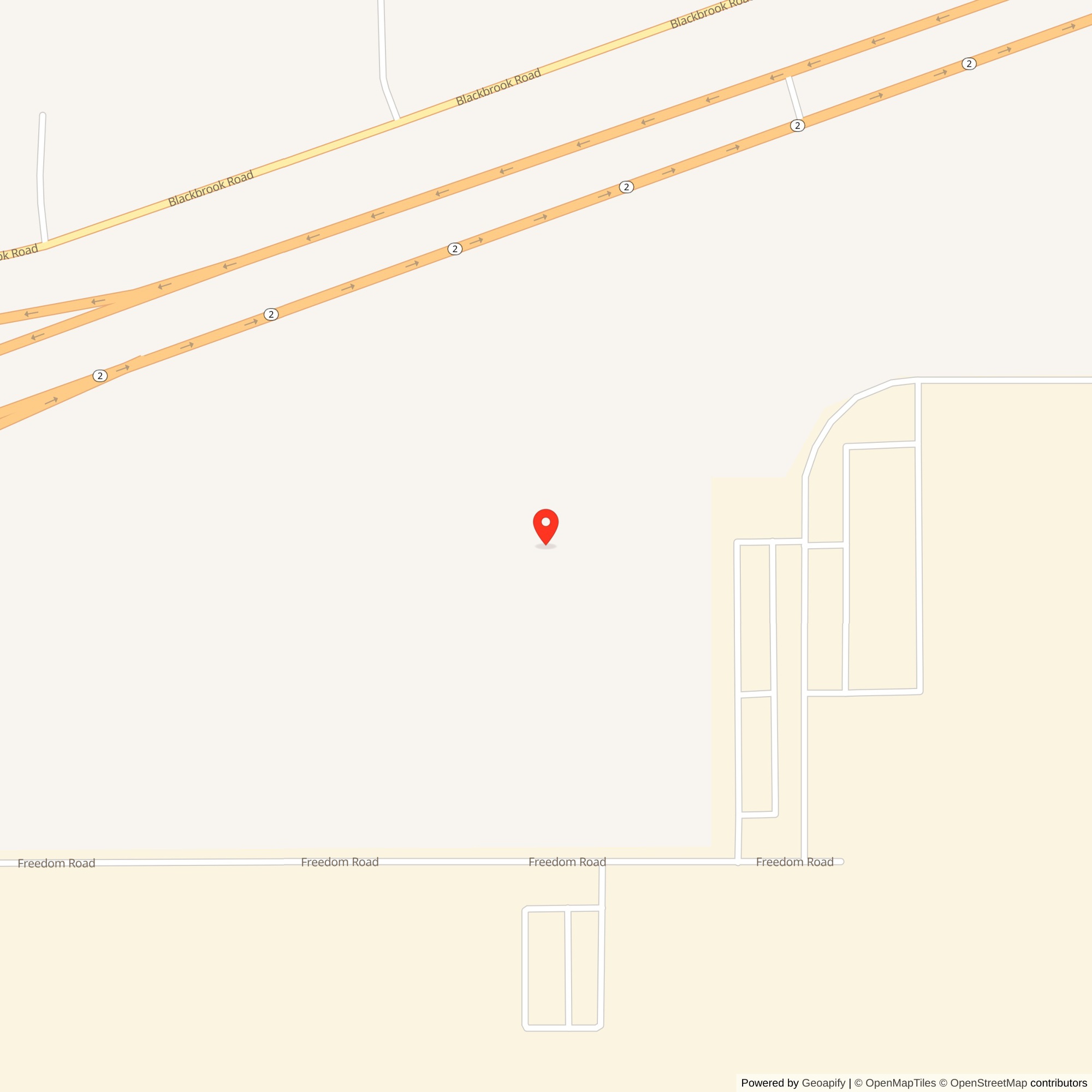
Site-specific public references list very similar coordinates: launcher area at approximately 41.72784, -81.28736 and IFC area at approximately 41.72247, -81.27531. The IFC area is identified in site histories as 505 Blackhawk, associated after closure with industrial use. The launcher area is identified in post-closure references with the Lake County Engineers Office and storage use.
Units that served at CL-11
Reported unit sequence:- February 1957-September 1958: Battery A, 508th U.S. Army
- September 1958-June 1971: Battery A, 3rd Battalion, 65th U.S. Army
Historical Background
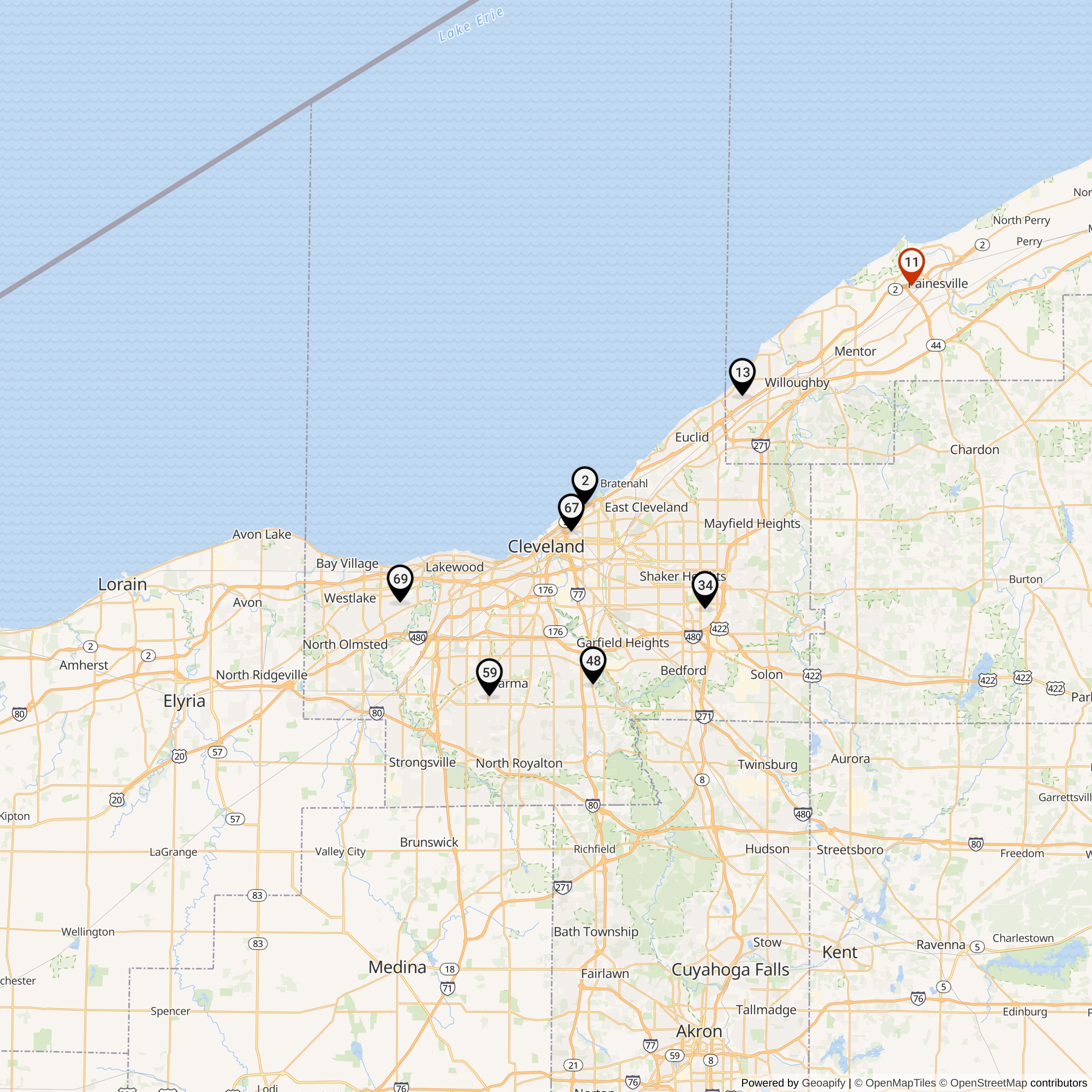
The Nike program was the Army's principal contribution to the fixed air-defense system built around the United States during the early Cold War. Nike sites were designed to protect major cities, industrial districts, ports, air bases, atomic facilities, and other strategic targets from long-range bomber attack. The Cleveland region was one of the urban-industrial areas selected for Nike defense because of its population, steel and manufacturing base, Lake Erie port and transportation infrastructure, and place within the broader industrial corridor of the lower Great Lakes.The Cleveland Defense Area included several Nike sites positioned around the metropolitan region. Federal missile-site summaries identify the Cleveland-area Nike Ajax sites as CL-02 at Bratenahl, CL-11 at Painesville, CL-13 at Willowick, CL-34 at Warrensville, CL-48 at Garfield Heights, CL-59 at Parma/Midpark Station, CL-67 at Lakefront Airport, and CL-69 at Lordstown / Fairview Park. Headquarters facilities were located at the Shaker Heights Armory and in Cleveland. The U.S. Army Corps of Engineers Pittsburgh District had responsibility for construction of these Cleveland-region Nike sites.
CL-11 occupied the eastern side of the Cleveland defense pattern. While sites closer to the city covered the immediate lakefront and inner suburban approaches, CL-11 extended the defended zone into Lake County. Its location near Painesville gave the Army a position east of Cleveland from which to engage hostile aircraft approaching from the Lake Erie corridor or from northeastern approaches before they could reach the city and its industrial targets.
Construction and Nike Ajax Period
CL-11 was activated in June 1958. Its first operational weapon system was the Nike Ajax, the Army's first operational guided surface-to-air missile. The Nike Ajax was a radar-command-guided missile system intended to intercept high-altitude bombers. A Nike Ajax battery relied on acquisition radar, target-tracking radar, missile-tracking radar, and a ground-based fire-control computer. The missile itself was launched from a fixed battery site and steered by electronic commands generated from the ground.Like other Nike sites, CL-11 was divided into two major operational sections: the Integrated Fire Control area and the launcher area. The IFC area housed the radar and guidance equipment used to acquire and track incoming aircraft, track the missile after launch, and compute the intercept solution. The launcher area held the missiles, underground magazines, launch rails, launch controls, assembly and maintenance facilities, generators, and security perimeter. The two sections had to be separated for safety and operational reasons but still remain close enough and properly aligned for radar, communications, and line-of-sight requirements.
The original Ajax-era mission at CL-11 was point defense: protecting the Cleveland area from bomber attack by placing missiles close enough to the defended region to engage aircraft before they reached their targets. A Nike battery could be placed on alert, receive target information through the air-defense network, acquire the target on local radar, and launch a missile under the control of the battery's own radar-computer system.
Conversion to Nike Hercules
CL-11 was one of the Cleveland-area sites converted from Nike Ajax to Nike Hercules. The Hercules missile represented a major improvement over Ajax. It was larger, had greater range and altitude capability, used solid propellant, and could carry either a high-explosive or nuclear warhead. Hercules also allowed fewer batteries to defend a wider area because each battery could cover more territory than an Ajax battery.Site-specific references list CL-11's Hercules conversion date as September 1959. Appendix D of the History of the Nike Hercules Weapon System lists CL-11 as a converted Cleveland Defense Area site with a construction period of June 1958 to September 1959 and an operational date with Hercules missiles of 24 March 1960. These two entries are best read together: the physical conversion work appears to have been associated with the June 1958-September 1959 construction period, while formal operational status with Hercules missiles was recorded in March 1960.
CL-11 is commonly listed with the configuration Nike 3B/18H,30A/12L-U: three magazines, a capacity associated with 30 Nike Ajax missiles and 18 Nike Hercules missiles, and twelve universal launchers. Site-specific references list three Type B magazines, twelve universal / Hercules-capable launchers, HIPAR radar, and RRIS equipment. Appendix D lists CL-11 with a 3D magazine classification, which differs from some later Nike site summaries that list the site as 3B. The important operational point is that CL-11 was converted to handle Hercules missiles and remained in service as a Hercules-capable Cleveland Defense Area battery until 1971.
Operational Role During the Hercules Period
The conversion to Hercules changed the military significance of CL-11. Ajax batteries were built as close-in point-defense weapons; Hercules sites had greater reach and, because the missile could carry a nuclear warhead, were intended to defeat massed bomber formations as well as individual aircraft. CL-11's eastern location made it part of a wider defensive envelope rather than merely a local installation guarding Painesville. Its radar and launch crews contributed to the larger Cleveland air-defense system, which was connected to regional command-and-control arrangements and to the national air-defense posture of the Cold War.The reported presence of HIPAR indicates an Improved Hercules-era capability. HIPAR, the High-Power Acquisition Radar, was added to selected Hercules batteries to detect targets at greater range and improve the battery's ability to respond to faster or more complex threats. In practical terms, the IFC crews at CL-11 were responsible for operating radar and fire-control equipment, maintaining readiness, tracking assigned targets, and coordinating with the launcher crews who handled the missiles themselves.
The launcher crews worked in a physically separate and heavily secured area. Missiles were stored horizontally in underground magazines and brought to the surface by elevator. Once raised, they could be moved along rails to the launchers. The launcher area also required missile assembly, maintenance, electrical power, emergency equipment, security fencing, and launch-control functions. In the Hercules period, the physical plant had to accommodate larger missiles and increased security requirements, including the tighter controls associated with nuclear-capable weapons.
Site Layout and Facilities
CL-11's IFC area was listed at 505 Blackhawk and later associated with industrial use. Site histories identify it with a chemical-plant or industrial property after military closure. The IFC area originally would have included radar positions, generator and power facilities, control vans or control buildings, administrative or support structures, and the equipment needed for target acquisition, tracking, and missile guidance.The launcher area was located to the northwest of the IFC area. The site-specific coordinates place it near 41.727414, -81.286430. The launcher area contained the underground missile magazines, elevator systems, launch rails, launch positions, launch control facilities, generator and maintenance support, and security perimeter. Later visitor reports noted that the launcher area remained unusually intact compared with many former Nike sites, with elevators reportedly still operating in 2002 and the pits being used as storage areas for Lake County equipment and supplies.
The separation between the IFC and launcher areas reflected the basic Nike layout. The IFC needed unobstructed radar coverage and line-of-sight relationships to the missile-tracking functions, while the launcher area needed enough land for magazines, launchers, safety arcs, fencing, and access. The split-site design also explains why former Nike installations often have two very different post-military histories: radar/control land could become industrial, commercial, residential, or municipal property, while launcher land might remain as storage, public works, school, park, or maintenance property because the buried magazines were difficult and expensive to remove.
Deactivation and Post-Closure Use
CL-11 was deactivated in June 1971. Its closure was part of the broader drawdown of Nike defenses as the strategic threat changed from manned bomber attack toward intercontinental ballistic missiles and as the Army reduced and consolidated its fixed continental air-defense network. In 1968, the Cleveland Defense Area merged with Detroit's defense area. By June 1971, the three remaining Cleveland Nike Hercules batteries were deactivated.After closure, the CL-11 IFC area passed into industrial or private use. Site-specific post-closure notes state that a chemical plant across the road took possession of the IFC area shortly after closure and removed most of the remaining military features, although older reports indicated that the generator building, HIPAR building, and fallout shelter survived for some period and that antenna towers had been removed. Later public listings suggest further demolition of IFC buildings, so the exact present condition of any surviving IFC features should be field-verified.
The launcher area had a more utilitarian post-military life. It is listed as associated with the Lake County Engineers Office and used for storage. Compared with many former Nike sites that were entirely demolished or redeveloped, CL-11's launcher area appears to have retained more of its physical missile-site character for a longer period. The underground magazines, elevator pits, rails, paved surfaces, and fenced storage layout made it adaptable for county storage and public-works use even after the missiles and military equipment had been removed.
List of all Nike Installations in the Cleveland Defense AreaList of all Nike Installations in Ohio