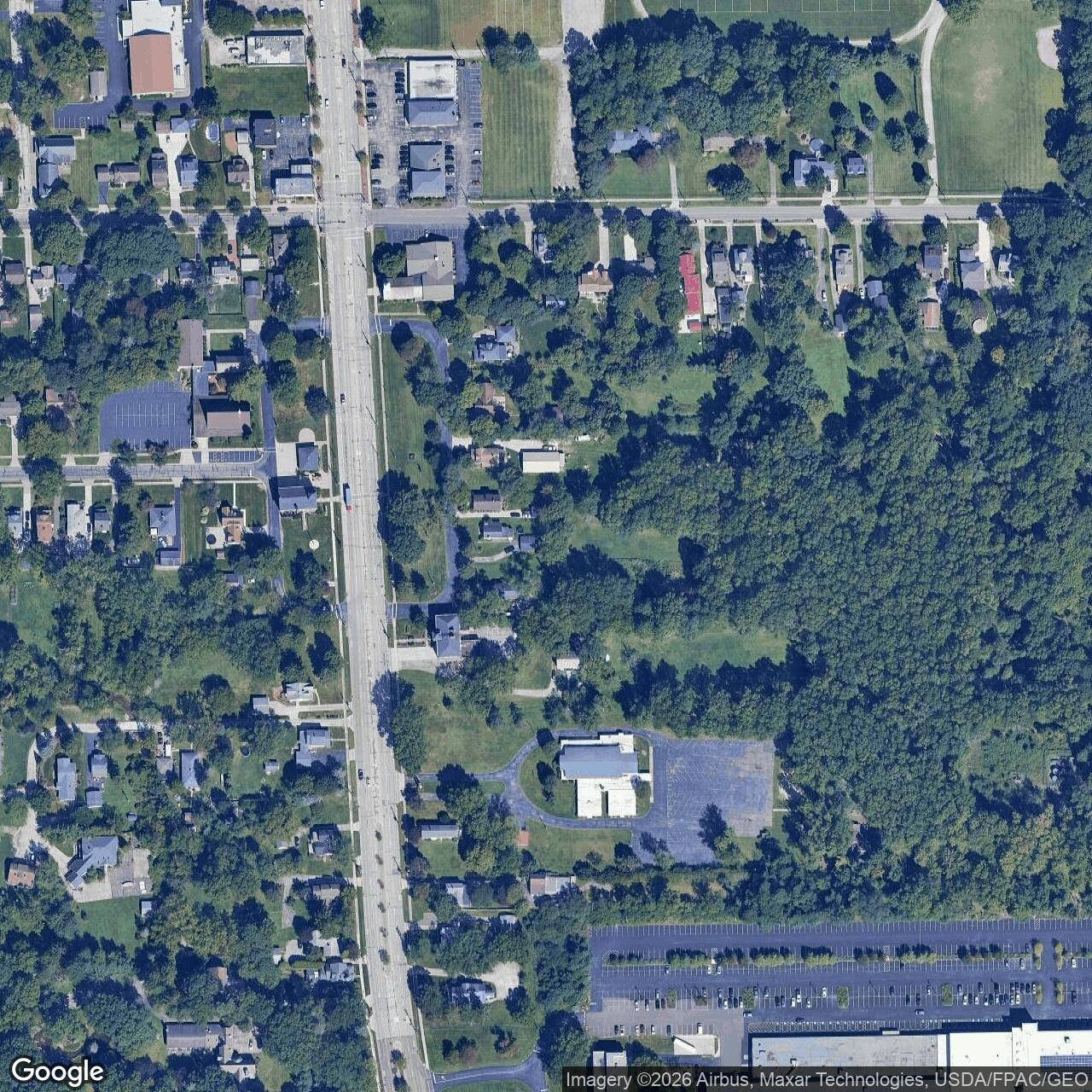
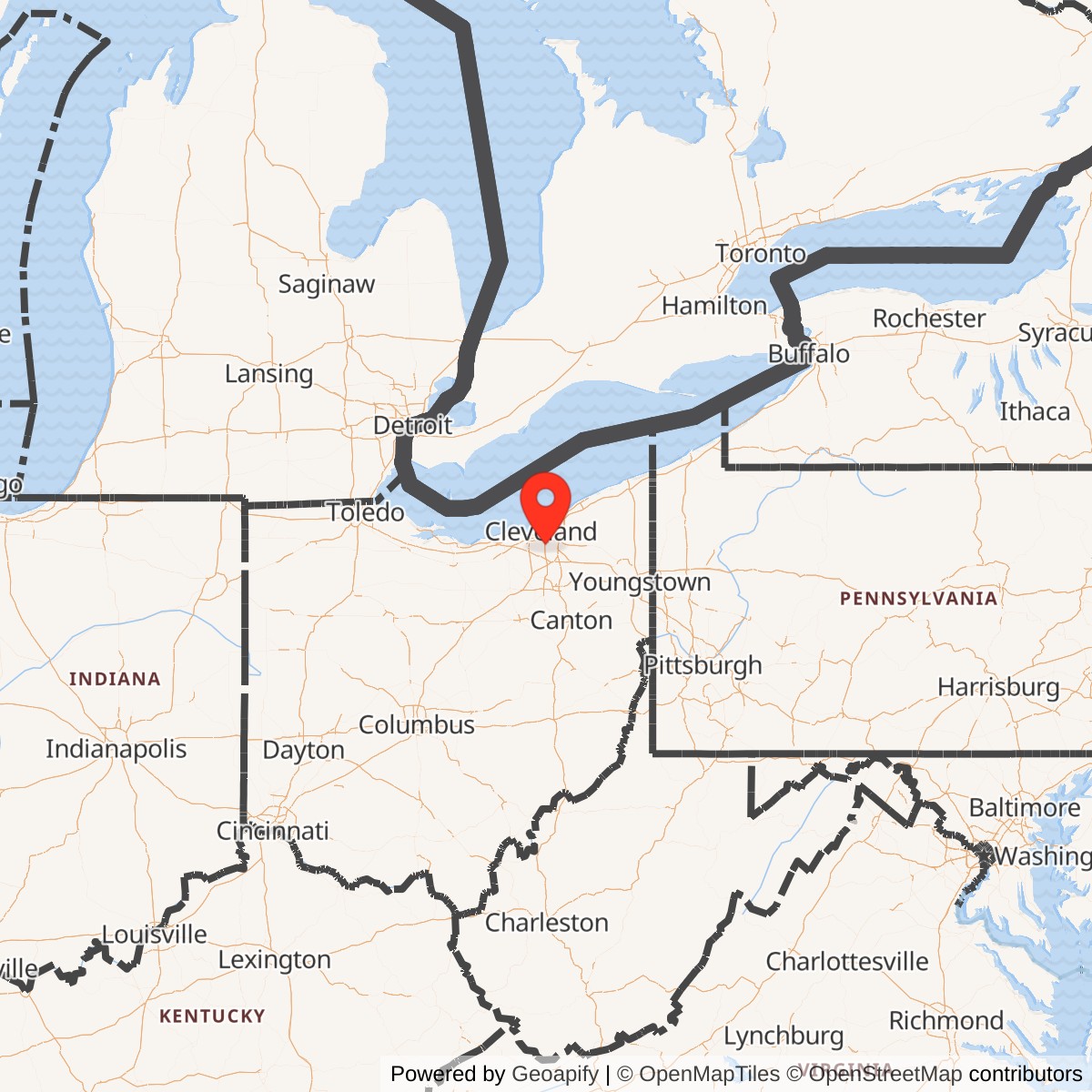
Nike Missile Site CL-48 IFC, Garfield Heights Ohio
Longitude: -81.6398
This location was part of the Cleveland Defense Area
Site ID: CL-48
This site controlled the missiles at the Launch Area located here.
Site Role: IFC
A typical Nike air defense site consisted of two separate parcels of land. One area was known as the Integrated Fire Control (IFC) Area. This site contained the Nike system's ground-based radar and computer systems designed to detect and track hostile aircraft, and to guide the missiles to their targets.
The second parcel of land was known as the Launcher Area. At the launcher area, Nike missiles were stored horizontally within heavily constructed underground missile magazines. A large, missile elevator brought the Nikes to the surface of the site where they would be pushed across twin steel rails to one of four satellite launchers.
Elaboration on how Nike worked here.
Nike Site CL-48 was a U.S. Army Nike Ajax surface-to-air missile battery in the Cleveland Defense Area. It was one of the fixed Cold War air-defense sites built around Greater Cleveland during the mid-1950s to defend the city, its industrial districts, its transportation network, its Lake Erie approaches, and the surrounding northeastern Ohio region against possible Soviet bomber attack.
CL-48 operated as a Nike Ajax site from 1956 until August 1961. It was not converted to Nike Hercules. After the Army ended the air-defense mission, the former control area was transferred to local school use in Garfield Heights, while the launcher area in Independence became school property and an outdoor education / land laboratory site.
Historical Background
CL-48 belonged to the first-generation Nike missile network built around Cleveland during the Cold War. The Nike program grew out of a basic problem that World War II and early Cold War air-defense planners could no longer avoid: conventional antiaircraft guns were becoming inadequate against faster, higher-flying bombers. After the Soviet Union tested an atomic bomb in 1949 and the Korean War intensified American rearmament, the United States began building a layered continental air-defense system. The Air Force supplied long-range warning, fighter interception, and command-and-control functions, while the Army developed and deployed guided surface-to-air missiles as a last line of defense around important cities, air bases, industrial regions, and strategic installations.Cleveland was an obvious air-defense priority. It was a major industrial and transportation city on Lake Erie, part of the Great Lakes manufacturing belt, and a region with steel production, chemical and petroleum facilities, rail corridors, port facilities, heavy manufacturing, and dense population. In the 1950s, Cold War planners assumed that Soviet long-range bombers could threaten American industrial centers and that the Great Lakes region would be a critical target set in any strategic attack. Cleveland's Nike sites therefore were not isolated local curiosities. They were part of a nationwide pattern in which Army missile batteries were placed around metropolitan areas judged important enough to warrant fixed air defense.
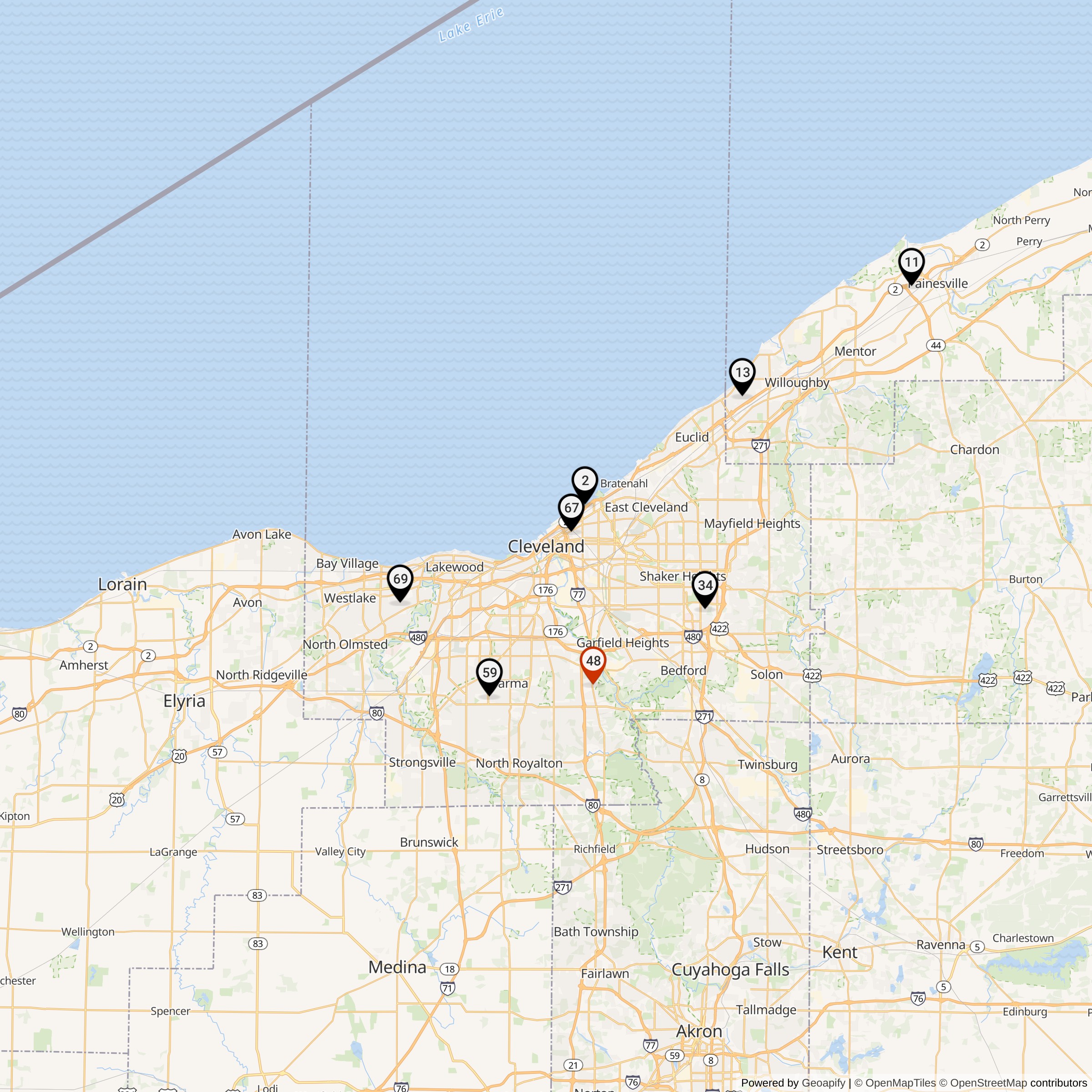
The Cleveland Defense Area consisted of several Nike batteries distributed around the metropolitan region. Federal missile-site summaries and local Cleveland histories identify the Cleveland-area Nike sites as CL-02 at Bratenahl, CL-11 at Painesville, CL-13 at Willowick, CL-34 at Warrensville / Highland Hills, CL-48 at Garfield Heights / Independence, CL-59 at Parma / Midpark Station, CL-67 at Lakefront Airport, and CL-69 at Fairview Park / Rocky River. Headquarters and related command facilities were located at the Shaker Heights Armory and in Cleveland. The U.S. Army Corps of Engineers Pittsburgh District, part of the Ohio River Division, had responsibility for construction of the Cleveland-region Nike sites.
CL-48 occupied the southeastern portion of the Cleveland ring. Its launcher was in Independence, while its control area was in Garfield Heights. This split was normal for Nike batteries. A Nike site was not a single compact post. It was a separated weapons system made up of a control area, where radars and fire-control equipment detected and tracked targets, and a launch area, where the missiles were stored, serviced, fueled, armed, and launched. The two halves had to be far enough apart for safety and radar geometry, but close enough for the fire-control radars to guide missiles from the launcher toward the target.
Nike Ajax at CL-48
CL-48 was a Nike Ajax site. Nike Ajax was the Army's first operational guided surface-to-air missile and the first operational missile in the Nike family. The system was designed to engage formations of enemy bombers before they reached their targets. Unlike later Nike Hercules batteries, Ajax sites carried conventional high-explosive warheads rather than nuclear warheads.A Nike Ajax battery combined radar, analog computing, command guidance, underground missile storage, and trained missile crews. The Integrated Fire Control area normally used acquisition radar to detect targets, target-tracking radar to follow the hostile aircraft, missile-tracking radar to follow the outgoing Nike missile, and a computer to calculate the intercept. Guidance commands were sent from the ground to the missile. The missile itself did not simply fly independently to the target; the ground system tracked both missile and target and directed the missile toward the intercept point.
The launch area stored Nike Ajax missiles horizontally in underground magazines. When a firing order or drill occurred, missiles could be raised to the surface on elevators, moved along rails or launchers, fueled, armed, elevated, and made ready for firing. The Cleveland local-history description of the Nike launch bases lists missile assembly, generator, acid-storage buildings, a fueling area, underground missile storage and launchers, barracks, and a launcher-control trailer as typical features. For an Ajax battery such as CL-48, the presence of acid-storage and fueling facilities was especially important because Ajax used a liquid-fuel sustainer motor with hazardous propellants.
CL-48's reported configuration, Nike 1B, 2C/30A/12L-A, indicates a relatively large Ajax-only launch installation. The "30A" portion of the code identifies a 30-missile Ajax load; "12L-A" indicates 12 Ajax launchers; and the "1B, 2C" portion indicates a mix of magazine types. The absence of a Hercules missile count or universal-launcher designation is significant. CL-48 was not one of the Cleveland sites modernized for Hercules service.
Site Layout and Operation
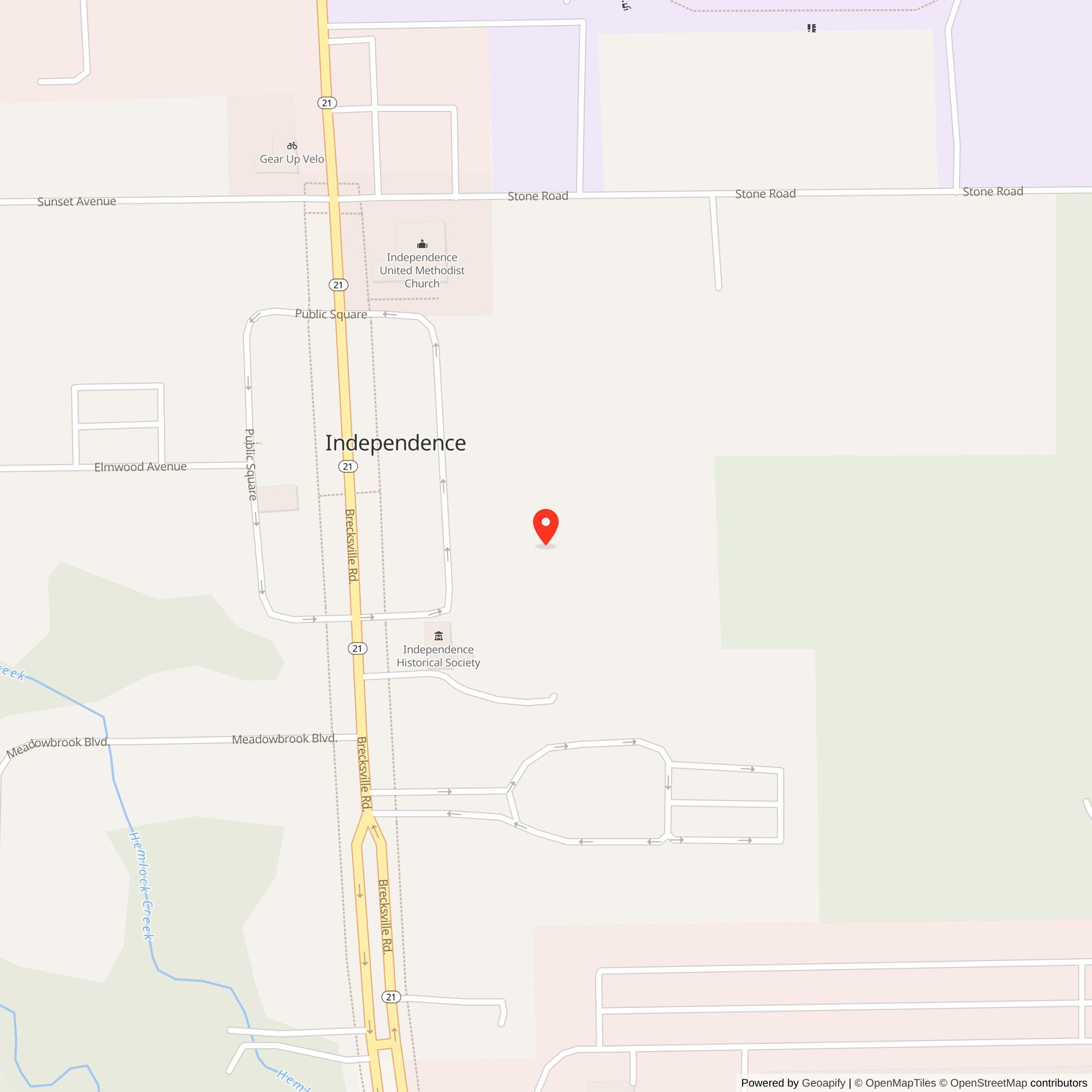
The CL-48 control area was in Garfield Heights at 5640 Briarcliff. The control site's role was to search the airspace, acquire targets, track aircraft, track launched missiles, and generate the guidance solution. Local Cleveland historical accounts describe the standard control area as including a mess hall, administration building, barracks, radar tower, and control van. At CL-48, the control location later became associated with the Garfield Heights Board of Education, and some accounts describe buildings remaining in school-board use after the Army left.The launch area was in Independence at 733 Stone Road. This was the weapons-storage and firing portion of the battery. It contained the underground missile magazines, launchers, launch-control facilities, support buildings, and perimeter security. The launch area's later reuse by Independence Local Schools preserved the general site footprint better than at some heavily redeveloped Nike locations, although the military function ended in 1961. The magazine area is described in public site inventories as paved over for school-bus parking and used as part of an outdoor education / land-lab setting.
The separation between the Garfield Heights control area and the Independence launch area also illustrates how a Nike battery interacted with suburban geography. The Army needed a control site with radar line-of-sight and sufficient separation from the launcher, while the launcher needed secure land for magazines, propellant handling, launchers, barracks, roads, utilities, and safety clearances. In the densely developed Cleveland suburbs, those requirements produced split installations that became interwoven with local roads, school properties, parklands, and later redevelopment.
Operational Role in the Cleveland Defense Area
CL-48's operational purpose was to protect the southeastern approaches to the Cleveland metropolitan area. Along with the other Cleveland Nike batteries, it formed part of an overlapping ring of missile coverage. A bomber threat approaching from the south or southeast, or maneuvering toward Cleveland's industrial and urban core, would have been detected and engaged within the coordinated air-defense system.In practical terms, the site was a watch station as much as a missile installation. Crews had to maintain missiles, radars, communications equipment, generators, magazines, and launch equipment in a condition that would allow rapid response. Training, inspections, readiness drills, radar checks, missile handling, security duty, and coordination with higher air-defense command were routine parts of the site's mission. Most of the daily labor was repetitive and technical rather than dramatic, but the mission carried enormous Cold War significance: the site existed because national planners believed a nuclear-armed bomber attack on American cities was possible.
The Ajax-only Cleveland sites had a short operational life because air-defense technology and national strategy changed rapidly. Nike Ajax was deployed quickly in the 1950s, but by the end of the decade the Army was already shifting selected batteries to Nike Hercules. Hercules had greater range, higher altitude capability, and the ability to carry nuclear warheads. Cleveland's long-lived Nike sites were those chosen for Hercules conversion. CL-48 was not among them.
Closure
CL-48 closed in August 1961. Its closure came as the Army reduced the number of Ajax-only batteries and concentrated resources on fewer, more capable Hercules sites. Local Cleveland history notes that by August 1961 only the Warrensville and Parma-Parma Heights Ajax bases remained operational among the Cleveland Ajax batteries, and that the Hercules-equipped Cleveland sites lasted longer before final closure in 1971. CL-48 therefore represents the earlier phase of the Cleveland Nike system: the initial Ajax ring that was built quickly, operated only a few years, and then disappeared into local reuse.The site's short operational life does not make it insignificant. In fact, it is characteristic of many Nike Ajax installations. They were built during an urgent early Cold War construction program, often on the margins of cities and suburbs, and many became obsolete or were closed within a decade. The speed with which CL-48 went from active missile battery to school-board property captures the pace of Cold War military change in the late 1950s and early 1960s.
Post-Closure and Reuse
After deactivation, the CL-48 properties were transferred out of military use. The former control site became associated with the Garfield Heights Board of Education. The former launch site in Independence became associated with the Independence Board of Education / Independence Local Schools. Public inventories describe the launch area as a "Land Lab," with the missile magazine area paved over for school-bus parking and used in outdoor education.This reuse pattern was common among Cleveland-area Nike sites. Once the military mission ended, the properties were too valuable and too embedded in local communities to remain vacant indefinitely. Some Cleveland Nike locations became parks, school facilities, service centers, industrial sites, or transportation-related property. CL-48's conversion to school use is therefore part of the broader post-Nike transformation of Cold War defense land into ordinary civic infrastructure.
The surviving physical integrity of CL-48 is mixed. The site is not preserved as a missile museum or intact military reservation. Public inventories describe some former control-area buildings as still standing and in school-board use, while the launch magazines were paved over and the area adapted for school-bus parking and outdoor education. The clearest remains are likely the site footprint, old circulation patterns, building remnants or reused structures, and the memory of how the split control/launch installation fit into the Garfield Heights and Independence landscape.
List of all Nike Installations in the Cleveland Defense AreaList of all Nike Installations in Ohio