
Nike Missile Site D-61 Launcher, Wayne County Airport Michigan
Longitude: -83.3497577564859
This location was part of the Detroit Defense Area
Site ID: D-61
The missiles at this Launch Area were controlled by the Integrated Fire Control site located here.
Site Role: Launcher
A typical Nike air defense site consisted of two separate parcels of land. One area was known as the Integrated Fire Control (IFC) Area. This site contained the Nike system's ground-based radar and computer systems designed to detect and track hostile aircraft, and to guide the missiles to their targets.
The second parcel of land was known as the Launcher Area. At the launcher area, Nike missiles were stored horizontally within heavily constructed underground missile magazines. A large, missile elevator brought the Nikes to the surface of the site where they would be pushed across twin steel rails to one of four satellite launchers.
Elaboration on how Nike worked here.
Missile Type: Ajax/Hercules
The Nike Ajax was the first in the Army's family of guided missiles, and the world's first operational, guided, surface-to-air missile system. Nike Ajax had a burnout speed of Mach 2.3, a range of 25-30 miles, and a ceiling of 65,000 feet.
Designed to carry either nuclear and/or high-explosive warheads, the Nike Hercules missile could attack supersonic aircraft operating at altitudes in excess of 150,000 feet and at a range of more than 87 miles.
Battery Type: single
Date Site Converted to Hercules Missile: October, 1961
Nike Hercules were more powerful and nuclear capable missiles. Many locations originally built for the Ajax were later modified and upgraded to the newer Hercules.
Current site status: unknown
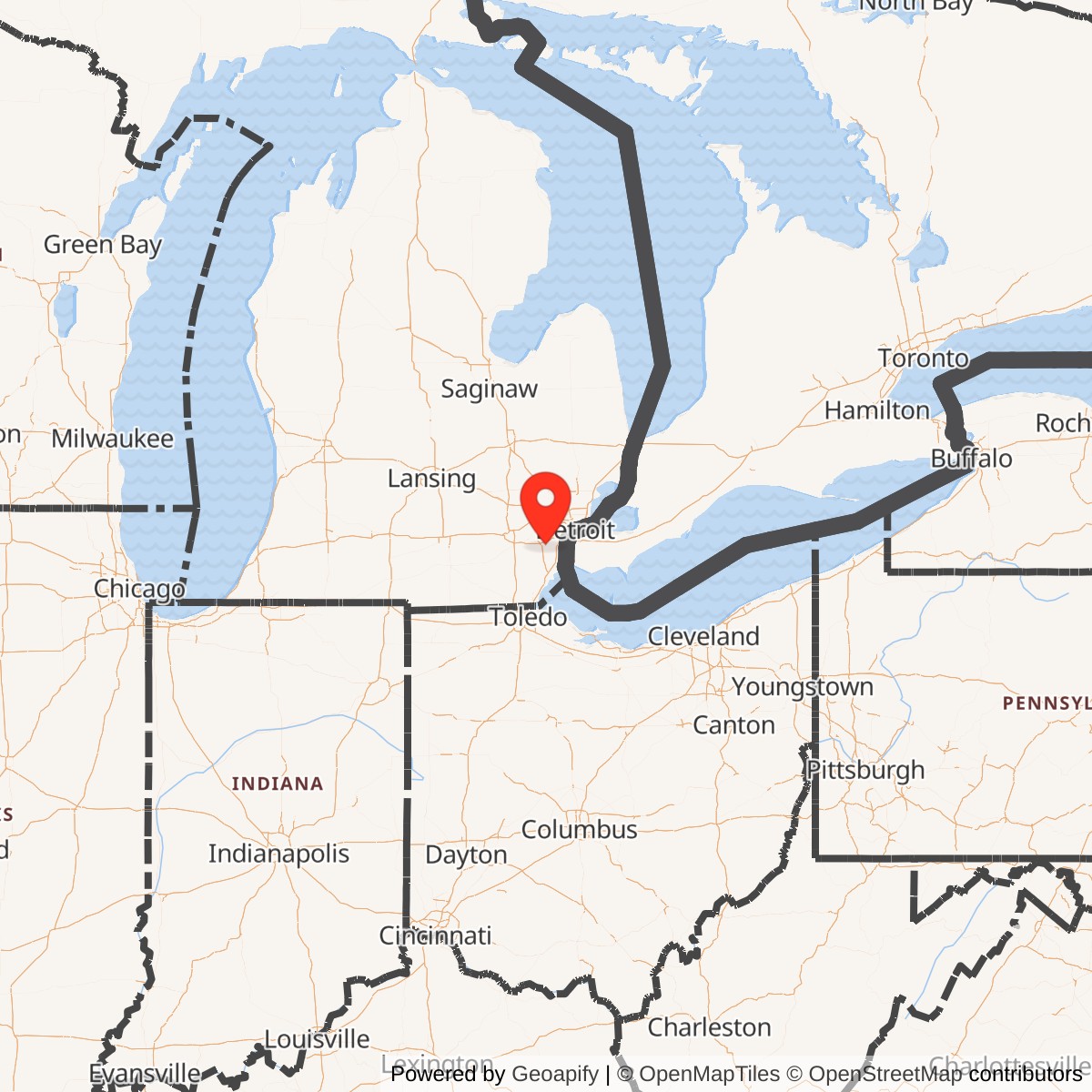
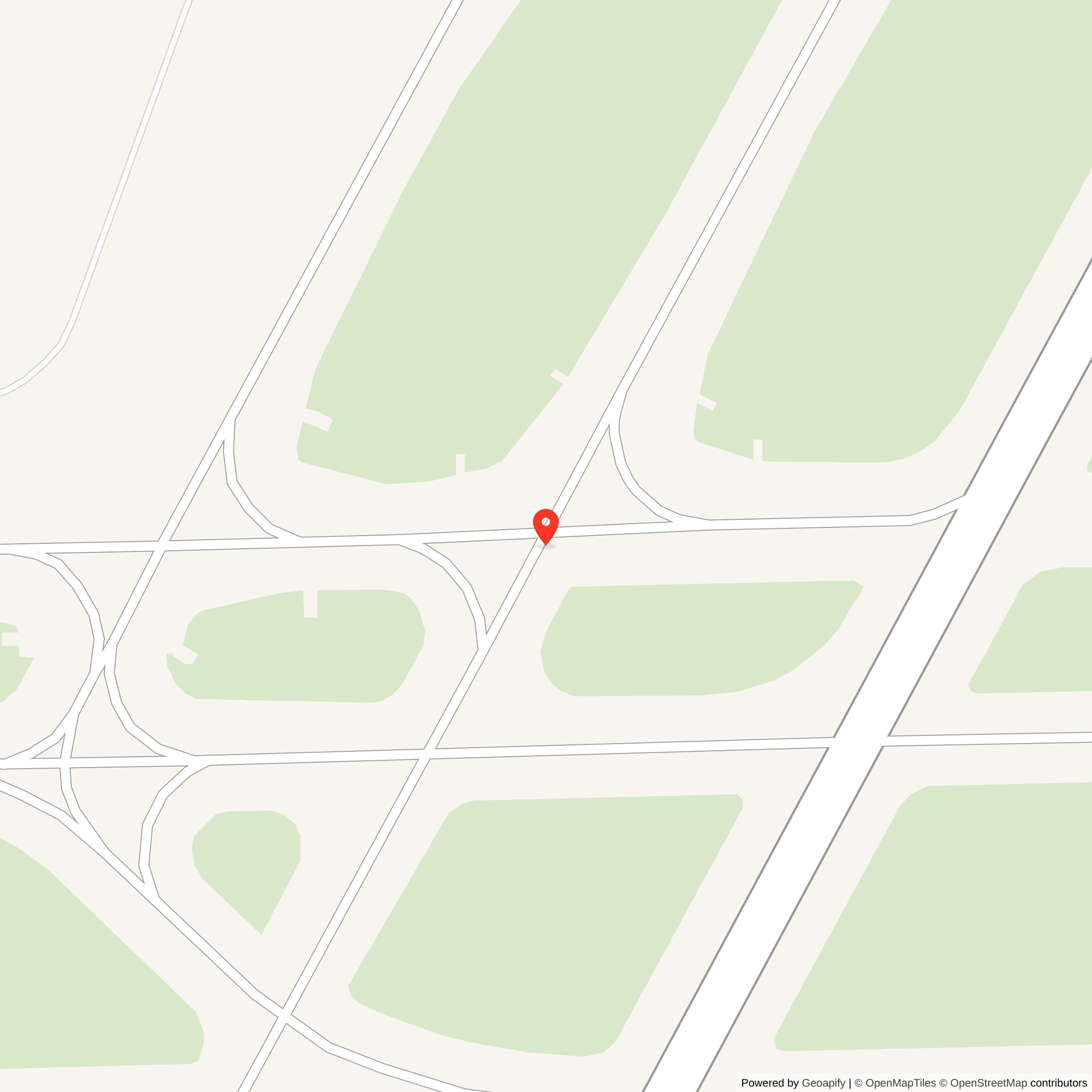
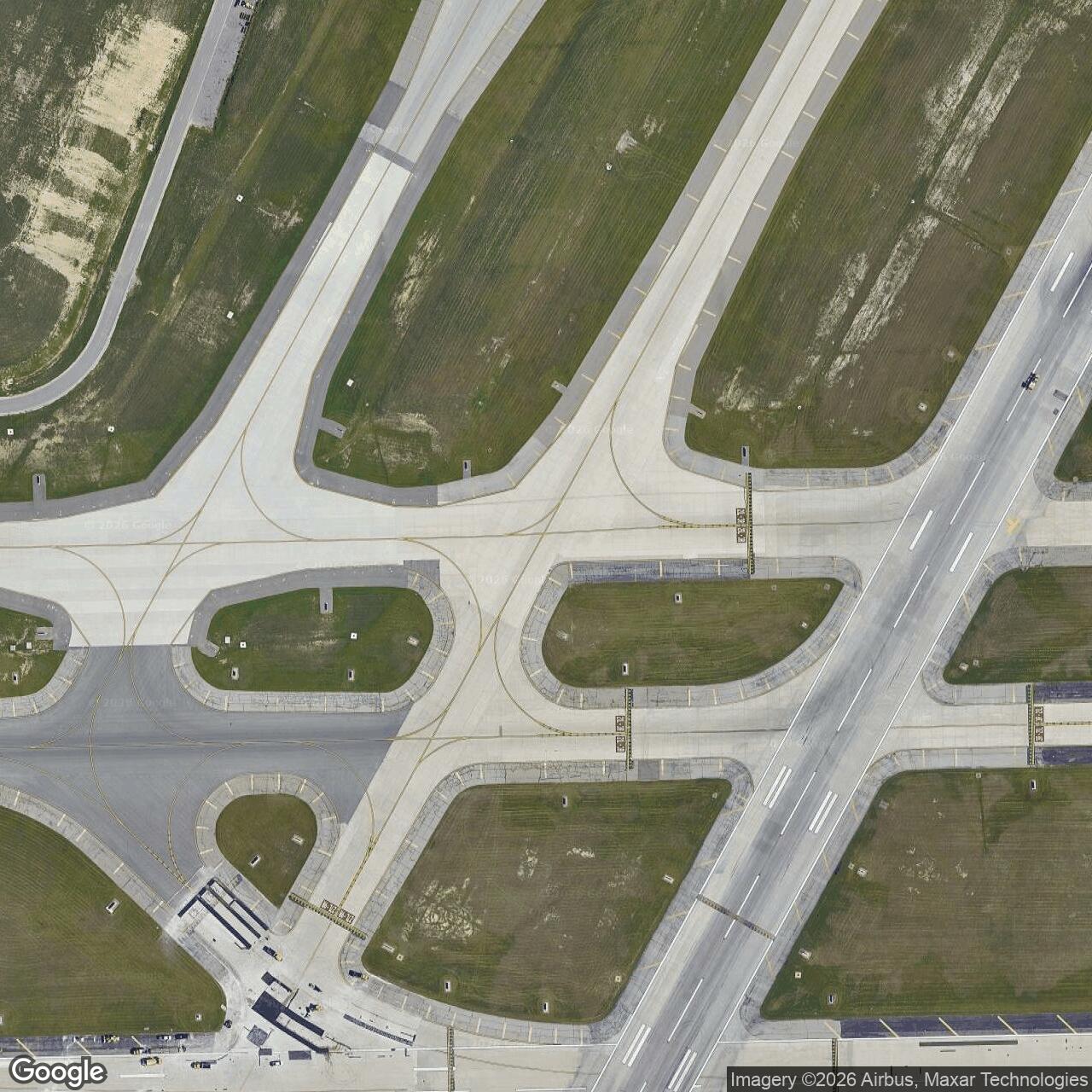
For fourteen years, guided missiles and passenger aircraft occupied the same expanding airport landscape at Romulus. Nike D-61 stood inside the property of what became Detroit Metropolitan Wayne County Airport, with its radar and control area beside a Michigan Air National Guard ramp and its underground launcher farther south in the active airfield. The Army activated D-61 in June 1957, converted it from Nike Ajax to Nike Hercules in 1961, transferred its firing mission to the Michigan Army National Guard in 1963, and closed it in June 1971. Airport growth then accomplished what ordinary redevelopment could not: the former missile site disappeared beneath the operational surface of one of the nation's major commercial airports. D-61 is therefore a Cold War site whose absence is part of its history. The runways, ramps, and taxiways that erased it also explain why the Army put the battery there in the first place.
Nike D-61 occupied two separated components on Detroit Metropolitan Wayne County Airport property in Romulus, Wayne County, Michigan. The Integrated Fire Control area stood in the northeastern part of the airport landscape, west of Middlebelt Road, approximately along the projected line of Goddard Road, and immediately south of the former Michigan Air National Guard ramp. The launcher stood farther south, near the point where Merriman and Superior roads would have met before airport development interrupted the local road grid.
The official national inventory calls the location Romulus/Dearborn. Period and later sources also use Wayne County Airport, Detroit Metro Airport, Metro Airport, and Inkster. Romulus is the actual municipality and Detroit Metropolitan Wayne County Airport is the clearest modern landmark. Dearborn and Inkster are best treated as regional or mailing associations rather than as the municipality containing the battery.
The two properties were operationally connected but physically distinct. Radar crews, engagement controllers, and computer operators worked at the IFC. Missile, launcher, assembly, maintenance, and security crews worked at the launch area. Communications circuits tied them together. Higher headquarters assigned targets and coordinated the Detroit defense, but D-61's local IFC still had to track both the target and its own missile and calculate the intercept.
An Airport Before the Missile Battery
The ground already had a military aviation history before Nike arrived. Wayne County Airport opened in Romulus in 1930. During the Second World War the Army took control and operated it as Romulus Army Air Field. The Detroit Historical Society describes the field as a staging point in the movement of newly manufactured military aircraft toward Europe. Aircraft built at factories around the country, including Ford's Willow Run complex, passed through the regional ferry system. Women Airforce Service Pilots were among those who moved military aircraft through the wartime network.Wayne County regained control in 1947 and renamed the installation Detroit-Wayne Major Airport. The county then greatly enlarged the field. New runways, terminals, navigation equipment, and passenger facilities transformed the former Army airfield into Detroit's principal commercial airport during the 1950s and 1960s. Long-range civil air-traffic radar arrived in 1956. The L. C. Smith terminal opened in 1958, the year after D-61 activated. Major passenger carriers shifted from Willow Run to the Romulus airport as the jet age began.
The Michigan Air National Guard also remained a visible neighbor. An official Air National Guard history says two Michigan Guard flying squadrons operated at Detroit Metro from the end of the Second World War through 1971. The 127th Wing and its associated flying units used the airport during D-61's entire operational life. A dedicated D-61 aerial caption places the Nike IFC immediately south of the Michigan Guard ramp. In practical terms, Army radar operators and missile crews worked beside an active military flying installation embedded within a growing civil airport.
This juxtaposition made D-61 unusually legible as a layered defense site. The wartime airfield had moved military aircraft toward combat. The postwar Guard units maintained military flying readiness. The Nike battery defended the metropolitan region against hostile bombers. Civil airlines simultaneously carried the airport toward a very different future. All four functions occupied the same broad landscape.
Planning and Construction
The National Archives at Chicago lists a Detroit District Corps of Engineers drawing file titled Wayne County Nike Site D-61, dated 1953-1954 and identified as as-built. That is earlier than the June 1957 operational date accepted by both the national inventory and the dedicated D-61 history. Without inspection of the actual drawings, the dates should not be treated as proof that a combat-ready battery stood at the airport in 1954. They may cover surveys, grading, standard plans, initial construction, or a preliminary as-built package that preceded unit activation.The gap is historically important. Nike deployment involved several dates that did not always coincide: authorization, real-estate action, design, construction, beneficial occupancy, unit arrival, missile issue, technical acceptance, and full operational status. The archival file proves that D-61 was part of the early Detroit planning program. The June 1957 date identifies the beginning of its recorded operational battery service.
Airport property offered obvious advantages. Much of the land was already under public ownership or control. Roads, electricity, communications, security, maintenance capacity, and military aviation support existed nearby. Open ground reduced some of the acquisition problems that complicated Nike construction in developed suburbs. The location also placed the battery on the southwest side of metropolitan Detroit, where it could contribute to the defensive ring protecting the city's population, industrial plants, transportation system, and air approaches.
The same location contained the seed of D-61's eventual destruction. Airports consume land. Runways need clear zones, parallel taxiways, ramps, navigation facilities, drainage, lighting, service roads, and room for future expansion. A fixed missile installation that was useful in the 1950s could become an obstruction after its defense mission ended. At D-61, post-service airport development did not merely reuse individual buildings. It absorbed the military parcels into the airfield itself.
Physical Layout
D-61 followed the separated Nike pattern. The IFC occupied the northern control property. Its radar and control equipment required clear lines of sight, stable foundations, reliable electrical power, communications links, and enough separation from the launch area for the missile-tracking radar to acquire a missile after liftoff. The dedicated D-61 history identifies an AN/FPS-75 radar in the later configuration, although no reviewed primary equipment ledger establishes exactly when it arrived or whether the listing describes the entire Hercules period.The IFC would have included acquisition radar, target-tracking radar, missile-tracking radar, an analog computer and plotting equipment, radar-control vans or fixed operating spaces, generator and power-distribution facilities, communications equipment, maintenance support, and crew and security buildings. The Army did not guide Nike missiles from the launcher. The engagement was computed and commanded from this control property.
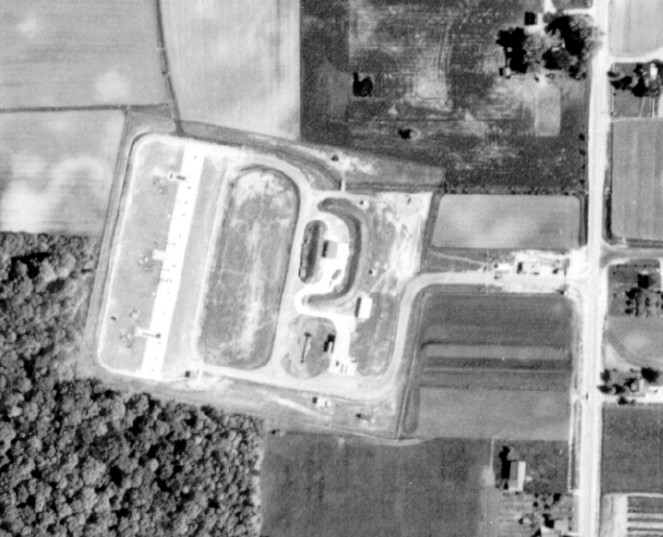
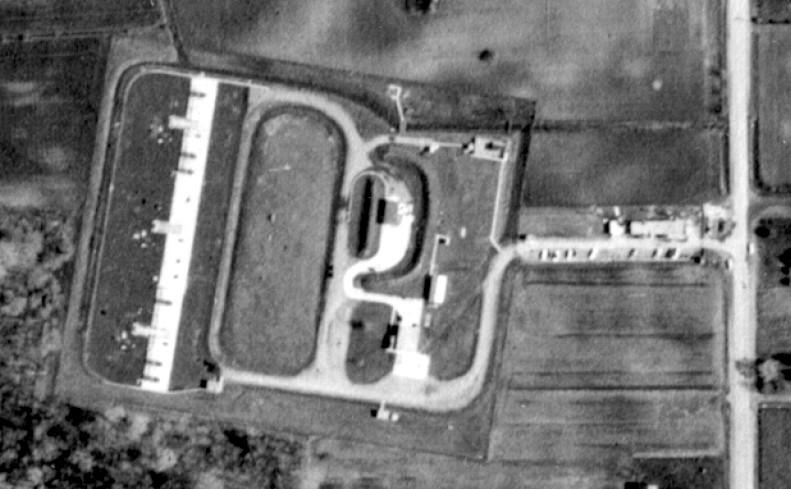
The 1961 aerial image shows the IFC immediately south of the Michigan Air National Guard ramp. That relationship is a useful locator and an important piece of operational context. The radar site was not hidden in an isolated rural field. It stood beside military aircraft operations and within an airport environment already full of radio transmissions, navigation aids, paved surfaces, lighting, security restrictions, and controlled movement.
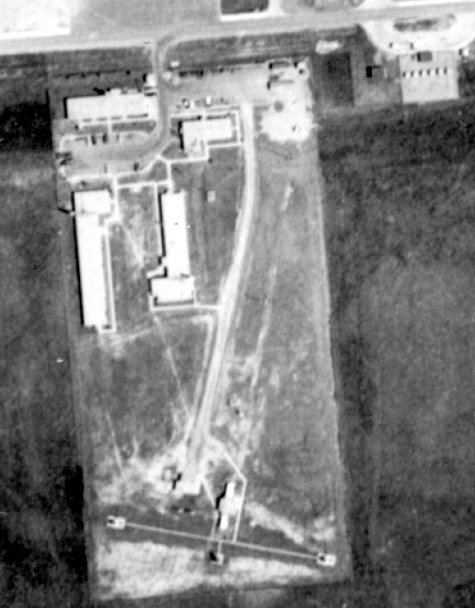
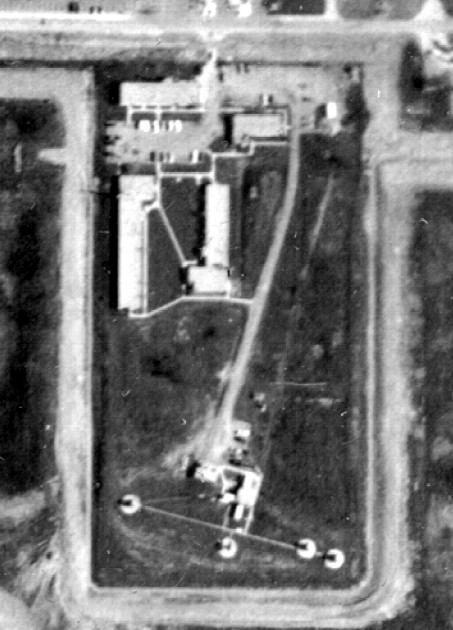
The launch area stood well south of the IFC. It contained three underground missile-storage magazines, their elevators and surface launch positions, a launch-control function, missile assembly and test support, warheading and maintenance spaces, generators, security facilities, access roads, and the protected circulation needed to move missiles and support equipment. The record places the launcher where Merriman and Superior roads would have intersected if the airport had not overtaken the road network.
Historic aerials from 1961 and 1967 (see below) are the best publicly available guides to D-61's physical arrangement. They show the battery before demolition and allow the former military geometry to be compared with the later airfield. The 1961 launcher image identifies Merriman Road to the east. The paired IFC image identifies the Guard ramp to the north. The 1967 set shows both properties during the Michigan Army National Guard period and during a major phase of Detroit Metro's commercial growth.
Configuration and Decoded Meaning
The official configuration is: Nike 1B,2C/18H,30A/12L-UAThe first portion, 1B,2C, describes the three underground magazines. One was a Type B magazine and two were Type C magazines. The official Nike key describes Type C as the original Ajax-only design. Type B could handle Ajax and could be modified for Hercules-related launcher and elevator requirements.
The middle portion, 18H,30A, records the Hercules and Ajax missile allowances associated with the site: eighteen Hercules and thirty Ajax. These numbers are configuration or designed-inventory values, not a verified count of missiles present on a particular alert day. Actual on-hand totals could change with conversion, maintenance, training, depot movement, readiness requirements, and final drawdown.
The last portion, 12L-UA, records twelve launcher positions and a UA arrangement. In the official key, UA means one-half Universal launchers and one-half Ajax launchers. Read literally, D-61 had six Universal and six Ajax positions in the mixed configuration. A Universal launcher could support Hercules as well as Ajax, while an Ajax launcher was not automatically Hercules-capable.
The magazine notation also resists an overly simple reconstruction. If Type C was Ajax-only and Type B was the readily Hercules-compatible type, the code does not by itself explain how the eighteen-Hercules allowance was distributed among the three sections. The configuration should not be turned into an invented magazine-by-magazine load plan. A D-61 Hercules conversion drawing or technical property record would be needed to show which elevators, rails, doors, launch positions, and storage areas were modified.
June 1957 Activation and Regular Army Service
The dedicated D-61 chronology gives June 1957 as activation. Battery C, 504th Antiaircraft Artillery Missile Battalion operated the site from June 1957 through September 1958. This was the Ajax phase. Crews maintained liquid-fueled Ajax missiles, operated the early radar and analog-computer system, tested elevators and launchers, and stood alert within the Detroit Defense Area.In September 1958, Battery C became or was succeeded by Battery C, 2nd Missile Battalion, 517th Artillery. The change reflected Army reorganization under the Combat Arms Regimental System rather than construction of a new battery. The 2nd Missile Battalion, 517th continued at D-61 through February 1963.
The Regular Army period coincided with rapid change around the battery. Detroit Metro opened a new passenger terminal in 1958 and attracted the airlines that had been using Willow Run. The airport's expanding civil radar, navigation, ramp, and runway system operated beside an Army engagement radar site. Nike crews had to maintain strict communications and radar discipline in a busy aviation environment, while airport personnel worked around a restricted missile installation that did not appear on passenger maps.
Ajax required close attention to fueling and handling. Its sustainer used liquid propellants that were hazardous and demanded protective procedures. Launcher crews inspected missiles, fueled and tested components according to Army schedules, operated underground elevators, and moved missiles on surface rails. IFC crews checked acquisition and tracking alignment, calibrated the computer, practiced simulated engagements, and maintained communications with the launcher and regional command.
Conversion to Nike Hercules
June 1961 was the Hercules conversion date. The broader official Detroit narrative agrees that D-61 was one of the defense-area batteries converted between 1958 and 1961. Hercules increased the battery's reach, altitude, speed, and ability to engage formations of high-performance aircraft.Conversion affected both properties. At the launcher, Hercules required changes to handling, testing, launch equipment, safety procedures, and at least part of the magazine and elevator system. At the IFC, the more capable mission required appropriate acquisition and tracking equipment, computer and communications changes, and crew retraining. The site-specific source identifies AN/FPS-75 radar equipment in the later configuration.
Hercules used solid propellant rather than Ajax's liquid sustainer fuel. It was larger, heavier, faster, and longer ranged. Its greater engagement envelope allowed the Army to close some Ajax-only batteries while retaining a smaller number of Hercules sites. D-61 thus moved from the dense first-generation Detroit ring into the reduced Hercules network that survived through the 1960s.
Nike Hercules was nuclear-capable, but capability is not proof of a site-specific nuclear inventory. No reviewed D-61 record establishes warhead types, quantities, arrival dates, custody arrangements, or alert status. The defensible description is that D-61 operated a nuclear-capable Hercules system. It is not responsible to invent a local stockpile or claim that every missile at the site carried a nuclear warhead.
The Michigan Guard Headquarters Overlap
The D-61 unit table contains an easily misunderstood overlap. It lists Headquarters and Headquarters Battery, 2nd Battalion, 177th Artillery, Michigan Army National Guard, at the site from 1959 through February 1963, while Battery C, 2nd Missile Battalion, 517th Artillery remained the Regular Army firing battery through the same period.These entries need not conflict. A headquarters battery and a firing battery performed different functions. The Guard headquarters presence could support administration, training, readiness preparation, and transition without replacing the Regular Army crew then operating the launchers and IFC. The record does not prove that two firing batteries simultaneously controlled D-61.
The overlap also shows that the 1963 handoff was prepared rather than improvised. The Michigan Guard was already embedded in the air-defense organization before it assumed the continuing battery mission. This mattered because Hercules readiness demanded trained radar, computer, missile, power, communications, and maintenance specialists. A fixed missile site could not be transferred effectively by changing the unit sign at the gate on a single day.
Michigan Army National Guard Operation
In February 1963, Battery C, 1st Battalion, 177th Artillery, Michigan Army National Guard assumed the firing mission. It operated D-61 until June 1971. The transition made citizen-soldiers responsible for a sophisticated, round-the-clock continental-defense weapon system.Guard operation did not reduce D-61 to occasional weekend activity. The battery still required alert coverage, trained crews, physical security, missile accountability, calibrated radar and computer equipment, reliable power, tested communications, and functioning elevators and launchers. Full-time technicians and rotating Guard personnel sustained the mission between formal training periods.
The location created a striking military pairing. To the north of the Nike IFC, Michigan Air National Guard flying units used their own airport ramp. At D-61, Michigan Army National Guard soldiers operated surface-to-air missiles. The two Guard components had different chains of command and missions, but both contributed to air defense from the same airport property.
The Air Guard's role at Detroit Metro ended shortly before D-61's. An official 127th Wing account identifies 1971 as the year the wing became the host at Selfridge. Another Air National Guard account says the Michigan flying units moved from Detroit Metro to Selfridge by the end of 1970 or during the 1970-1971 transition. D-61 closed in June 1971. The near-simultaneous departures marked the end of a distinctive period when civil aviation, Guard flying, and Army missile defense occupied adjacent parts of the Romulus airport.
Daily Readiness
D-61's history was made mostly during alerts, tests, drills, inspections, maintenance shifts, and ordinary duty days rather than combat launches. IFC personnel aligned radar, acquired practice targets, monitored tracks, calibrated analog circuits, exercised communications, and rehearsed the sequence from target assignment to burst command. Launcher crews inspected missiles, elevators, rails, launchers, cables, test equipment, generators, and safety systems.The separation between the two properties required discipline. The launcher could not engage independently. Its crew received commands from the IFC and reported missile and launcher status back to the control crew. The IFC could calculate an intercept only if the acquisition, target-tracking, and missile-tracking chain worked correctly. Both sites depended on higher headquarters for coordinated target assignment and on commercial power, backup generators, telephone circuits, radios, vehicles, and a wide maintenance network.
Airport operations added another layer. Restricted roads, aircraft movement, construction, navigation equipment, and expanding pavement surrounded the battery. Army and Guard personnel needed access without interfering with civilian aviation security. Airport planners needed to accommodate a federal defense mission within land that was becoming increasingly valuable for commercial use.
Role in the Wider Military Network
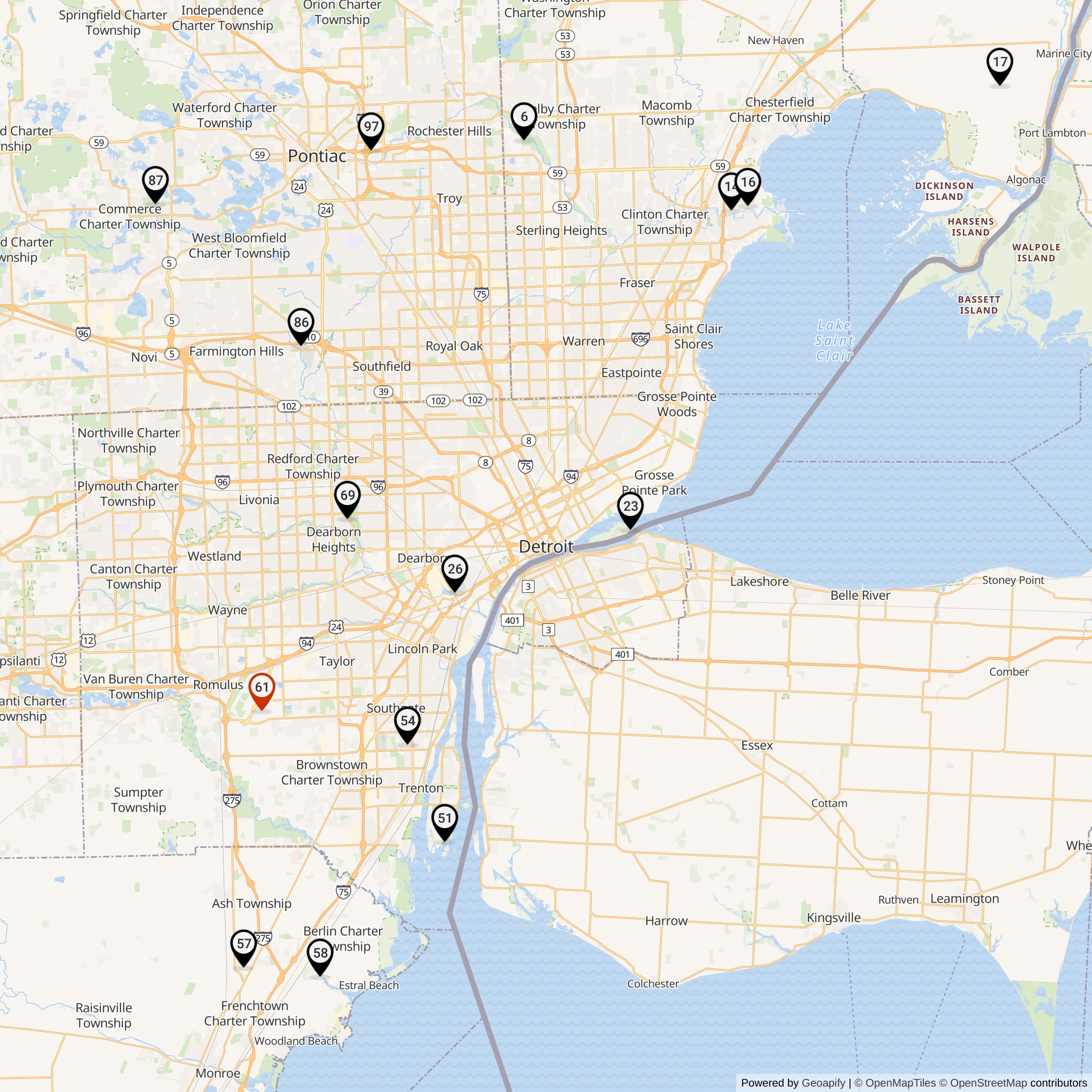
D-61 occupied the southwest portion of the Detroit defensive ring. Nearby batteries included D-51 at Grosse Ile, D-54/55 at Riverview, D-57/58 at Carleton-Newport, D-69 in Rouge Park, and the more distant western and northern sites that completed the metropolitan perimeter. Their engagement zones overlapped so that an attacking bomber would encounter more than one possible battery along important approaches.The defended region was larger than downtown Detroit. It included automobile factories, steel and chemical plants, rail junctions, river and highway corridors, airports, power facilities, military installations, and a dispersed population. D-61's airport location gave it an obvious local association with Wayne County Airport, but the battery belonged to the metropolitan network rather than to a narrow point-defense mission documented only for the terminal or runways.
Regional coordination came from Army air-defense command facilities at Selfridge and headquarters in the Detroit area. Missile Master, and later Missile Mentor, could assemble wider radar information and assign targets among batteries. That higher-level system did not remotely fly the missile. Once D-61 accepted an engagement, its local IFC still tracked the target and missile, solved the intercept, transmitted steering commands, and issued the burst command.
The airport also connected D-61 to the larger military aviation network. During the early years, the adjacent Michigan Air Guard flew air-defense and later reconnaissance missions. The missile battery and flying units represented different answers to the same strategic problem: how to detect, understand, and respond to threats approaching the industrial Great Lakes region.
Why D-61 Closed
The Army closed D-61 in June 1971 after fourteen years of recorded service and approximately ten years in the Hercules configuration. Its closure came earlier than the final Detroit Hercules batteries at D-06, D-58, and D-87, which remained active until 1974.No reviewed document assigns D-61's closure to a single cause. Nationally, the bomber threat changed, intercontinental ballistic missiles became central to strategic planning, air-defense budgets and force structure contracted, and improved Hercules coverage allowed a smaller number of batteries to remain. Locally, airport property was increasingly valuable for aviation development. Those pressures all form part of the context, but a direct causal claim about a particular runway project requires a decision record not located.
Closure involved more than lowering a flag. Missiles, warheads, classified material, guidance equipment, and sensitive communications gear had to be inventoried and removed. Fuels, oils, batteries, test equipment, and maintenance materials required disposition. Radar towers and launch equipment had to be dismantled or abandoned for later removal. The Army and airport authorities then had to determine how the land could be safely returned to aviation use.
Demolition and Airport Absorption
The D-61 history states that the launcher was demolished in July 1974 and that its former location became a taxiway. A 1999 field-research account instead says airport expansion and a new runway occupied the launch property. These are not necessarily irreconcilable. A runway project normally includes taxiways, shoulders, lighting, drainage, safety areas, and associated pavement. They do, however, show why the exact modern feature should not be named without a georeferenced engineering overlay.The core fact is secure: the launcher did not survive as an abandoned three-magazine compound. Airport development erased it and incorporated the tract into the active airfield. The former local-road relationship at Merriman and Superior disappeared with it.
The IFC also lost its recognizable Nike identity. The 1999 researcher placed it beside the former Guard ramp in an area then used for cargo or general-aviation activity and reported no obvious Nike structures. Current airport diagrams show a dense operating landscape of ramps, runways, taxiways, service facilities, and restricted areas. No post-closure architectural survey located documents a surviving D-61 radar tower, generator building, van pad, or control structure.
This is a fundamentally different afterlife from a Nike site converted to a park, school, warehouse, or residence. At D-61, the successor use is the same broad aviation mission that preceded the missile battery. The airport did not merely occupy the land after the Army left. It grew around, across, and through the former site until the battery became part of the pavement history of Detroit Metro.
Formerly Used Defense Sites Record
The 2001 General Accounting Office inventory lists NIKE D-61 as Formerly Used Defense Site E05MI0124 in Wayne County. In that historical snapshot, the property was eligible for the FUDS program but the hazards column was marked No and no eligible cleanup projects or associated costs were listed.It confirms federal recognition of the former defense property. It does not establish that every former component was separately investigated, nor does it certify any unrestricted activity within an operating airport. It also should not be confused with the separate Romulus Army Air Field FUDS entry, E05MI0111, which the same inventory lists with its own projects and costs.
More recent environmental investigations at Detroit Metro address airport-wide activities, including historical use of firefighting foam. Those records should not be automatically attributed to D-61.
Current Component Conditions
The former D-61 IFC lies within Detroit Metropolitan Wayne County Airport's restricted operational property. The area was historically south of the Michigan Air National Guard ramp and west of Middlebelt Road. Later observation described ramp and cargo-related reuse and no obvious Nike buildings. Current survival of individual IFC foundations or subsurface utilities has not been established by a public preservation survey.The former launcher also lies within restricted airport property. The Army-era launch complex was demolished in July 1974 according to the site history. Subsequent airfield pavement and related development absorbed the tract. The magazines, elevators, surface launcher positions, and support buildings should be treated as removed unless airport engineering or archaeological records prove a buried remnant.
The airport remains owned and operated by the Wayne County Airport Authority. The current Federal Aviation Administration airport diagram depicts an active six-runway system with extensive taxiways, ramps, terminals, service areas, and controlled movement surfaces.
Chronology
- 1930 Wayne County Airport opens at Romulus.
- 1940-1947 The Army controls the airport during the Second World War and operates it as Romulus Army Air Field. It supports the regional movement of military aircraft.
- 1947 Wayne County regains control and renames the field Detroit-Wayne Major Airport. Major postwar expansion follows.
- 1953-1954 The National Archives finding aid dates the Wayne County Nike Site D-61 as-built drawing file to these years. The exact relationship of those drawing dates to completed construction remains unresolved.
- 1956 The airport receives long-range civil air-traffic radar as it prepares for larger-scale passenger and jet operations.
- June 1957 D-61 activates with Battery C, 504th Antiaircraft Artillery Missile Battalion and Nike Ajax.
- 1958 The L. C. Smith passenger terminal opens as Detroit Metro expands. D-61 continues operating within the same airport landscape.
- September 1958 Battery C transitions to the 2nd Missile Battalion, 517th Artillery during Army reorganization.
- 1959-February 1963 Headquarters and Headquarters Battery, 2nd Battalion, 177th Artillery, Michigan Army National Guard is listed at D-61 while the Regular Army firing battery continues. The overlapping record reflects different headquarters and firing roles.
- June 1961 The dedicated D-61 history gives this as the Hercules conversion date. The broader official account confirms conversion by 1961, but Appendix D provides no D-61 row or exact operational day.
- February 1963 Battery C, 1st Battalion, 177th Artillery, Michigan Army National Guard assumes the continuing D-61 mission.
- 1963-June 1971 Michigan Guard crews operate the Hercules battery at the airport.
- 1967 Surviving aerial images document the IFC beside the Guard ramp and the three-magazine launcher during Guard operation.
- Late 1970-1971 Michigan Air National Guard flying units move from Detroit Metro to Selfridge during the transition that makes the 127th Wing Selfridge's host organization.
- June 1971 D-61 closes.
- July 1974 The dedicated site history records demolition of the launcher. Airport pavement subsequently absorbs the former launch tract.
- 1999 A researcher reports that the IFC area has become ramp or cargo-related airport property with no obvious Nike structures and that runway expansion has overtaken the launcher vicinity.
- 2001 The GAO FUDS inventory lists NIKE D-61 as E05MI0124, eligible for the program but with no hazards or eligible projects recorded in that snapshot.
- Present Both former components lie within restricted Detroit Metropolitan Wayne County Airport property. The launcher is demolished; no publicly verified Nike structures remain at the IFC.
List of all Nike Installations in Michigan
Sources & References
- PDF Defend and Deter: The Legacy of the United States Cold War Missile Program (39.9 MB) Source for the Detroit Defense Area,
- WEB National Archives at Chicago, Nike Missile Sites finding aid Primary archival locator for Detroit District Box 74, Wayne County Nike Site D-61, 1953-1954, As Built.
- PDF Nike Hercules and Nike Ajax Development, (5.98 MB) Primary historical report used for general Hercules technology, conversion, and deployment
- WEB Ed Thelen, Nike Missile Locations, Michigan Secondary cross-check for airport-property identity, 1999 site observations
- WEB U.S. GAO Michigan Properties Identified for Potential Inclusion in the FUDS Cleanup Program, 2001 Historical program snapshot listing NIKE D-61 as E05MI0124.
- WEB Detroit Historical Society, Detroit Metropolitan Wayne County Airport Source for the 1930 opening, Romulus Army Air Field wartime use, 1947 county return, postwar enlargement, etc.
- WEB Michigan Department of Environment, Great Lakes, and Energy, Detroit Metropolitan Wayne County Airport Official source for the airport's ownership and military-to-civil chronology.
- WEB Air National Guard Official source stating that two Michigan Air National Guard squadrons operated at Detroit Metro from the end of World War II through 1971.
- WEB 127th Wing, official fact sheet Source for the 1971 transition that made the 127th Wing the host organization at Selfridge.
- PDF Federal Aviation Administration Detroit Metro Wayne County Airport diagram, July 2026 cycle.
- WEB Wayne County Airport Authority Detroit Metro maps Current official sources for airport ownership and public orientation.