
Nike Missile Site D-86 IFC, Franklin / Bingham Michigan
Longitude: -83.2958670162086
This location was part of the Detroit Defense Area
Site ID: D-86
This site controlled the missiles at the Launch Area located here.
Site Role: IFC
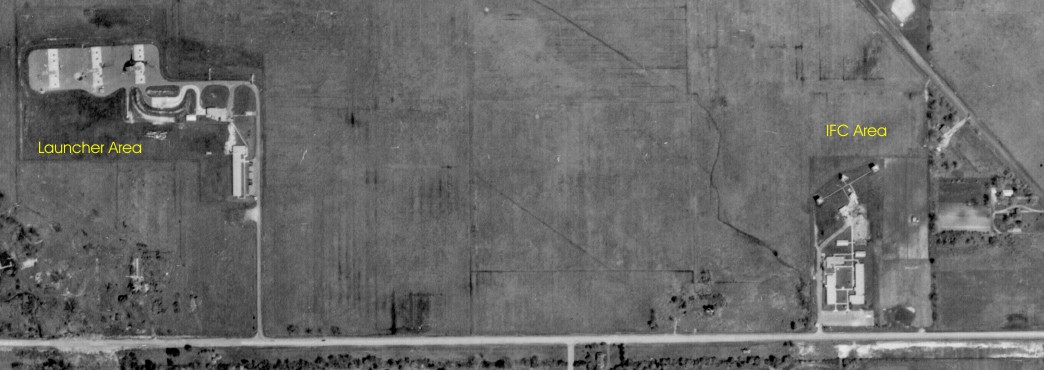
A typical Nike air defense site consisted of two separate parcels of land. One area was known as the Integrated Fire Control (IFC) Area. This site contained the Nike system's ground-based radar and computer systems designed to detect and track hostile aircraft, and to guide the missiles to their targets.
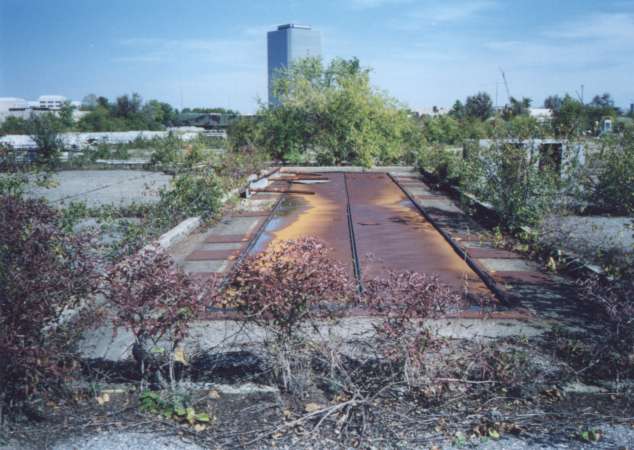
The second parcel of land was known as the Launcher Area. At the launcher area, Nike missiles were stored horizontally within heavily constructed underground missile magazines. A large, missile elevator brought the Nikes to the surface of the site where they would be pushed across twin steel rails to one of four satellite launchers.
Elaboration on how Nike worked here.
Missile Type: Ajax
The Nike Ajax was the first in the Army's family of guided missiles, and the world's first operational, guided, surface-to-air missile system. Nike Ajax had a burnout speed of Mach 2.3, a range of 25-30 miles, and a ceiling of 65,000 feet.
Designed to carry either nuclear and/or high-explosive warheads, the Nike Hercules missile could attack supersonic aircraft operating at altitudes in excess of 150,000 feet and at a range of more than 87 miles.
Battery Type: single
Current site status: unknown
The missiles left D-86 in 1963, but the launch tract did not stop being a military place. The Navy Reserve reused its barracks and administration facilities, and the Army Reserve later made the compound the First Lieutenant Robert L. Poxon Army Reserve Center. In 2019, Army Reserve soldiers were still training there while traces of the earlier Nike installation reportedly survived around them. One former naval reservist later recalled drilling on the property without realizing that the flooded underground magazines belonged to a Cold War missile battery.
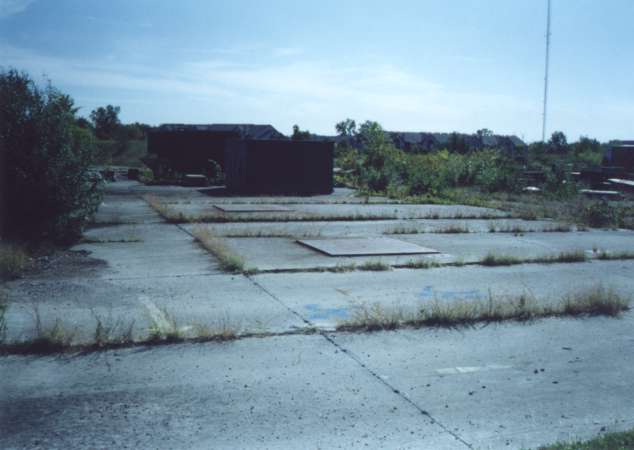
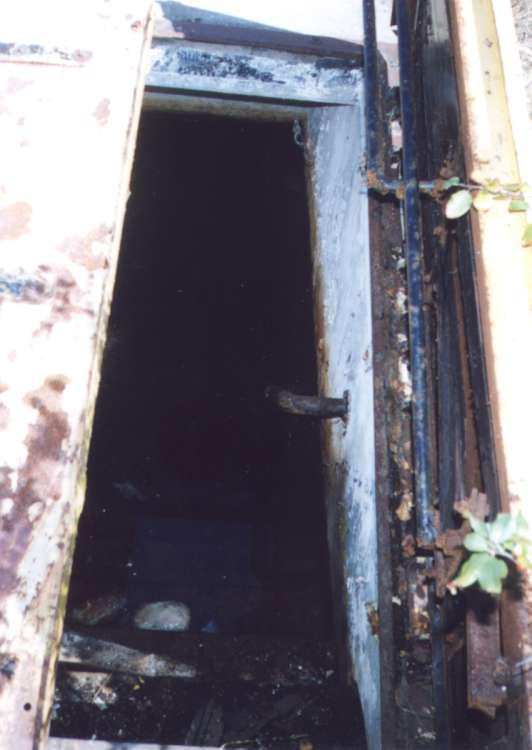
That continuity makes D-86 one of the Detroit Defense Area's more unusual afterlives. Its Integrated Fire Control area, a short distance to the east, was demolished and replaced by office development. The launcher, which the official inventory calls obliterated, is the component for which the stronger site-specific evidence reports surviving military buildings, a fueling berm, a water-treatment building and tank, and three water-filled magazine pits. The national condition descriptions appear to have been assigned to the wrong components or to have become misleading through later change.
D-86 was also more than a firing battery. During its Regular Army years, it hosted both the firing unit and the headquarters battery of the battalion that controlled several Detroit-area sites. The installation therefore combined a local Ajax engagement mission with a wider command role. It entered service in June 1957, passed through the Army's 1958 artillery reorganization, transferred its firing mission to the Michigan Army National Guard in October 1960, and closed in February 1963. It never converted to Nike Hercules.
Location and Site Identity
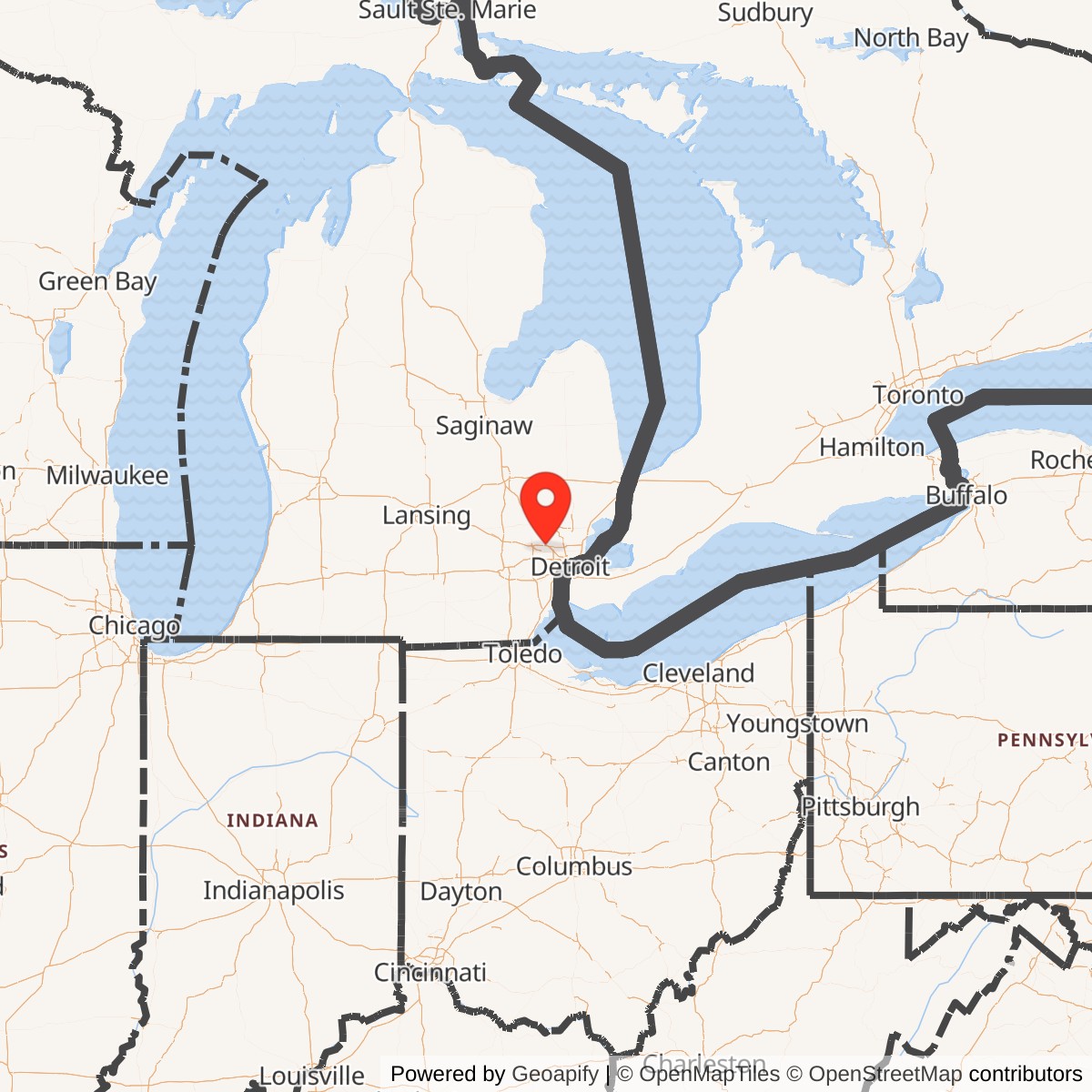
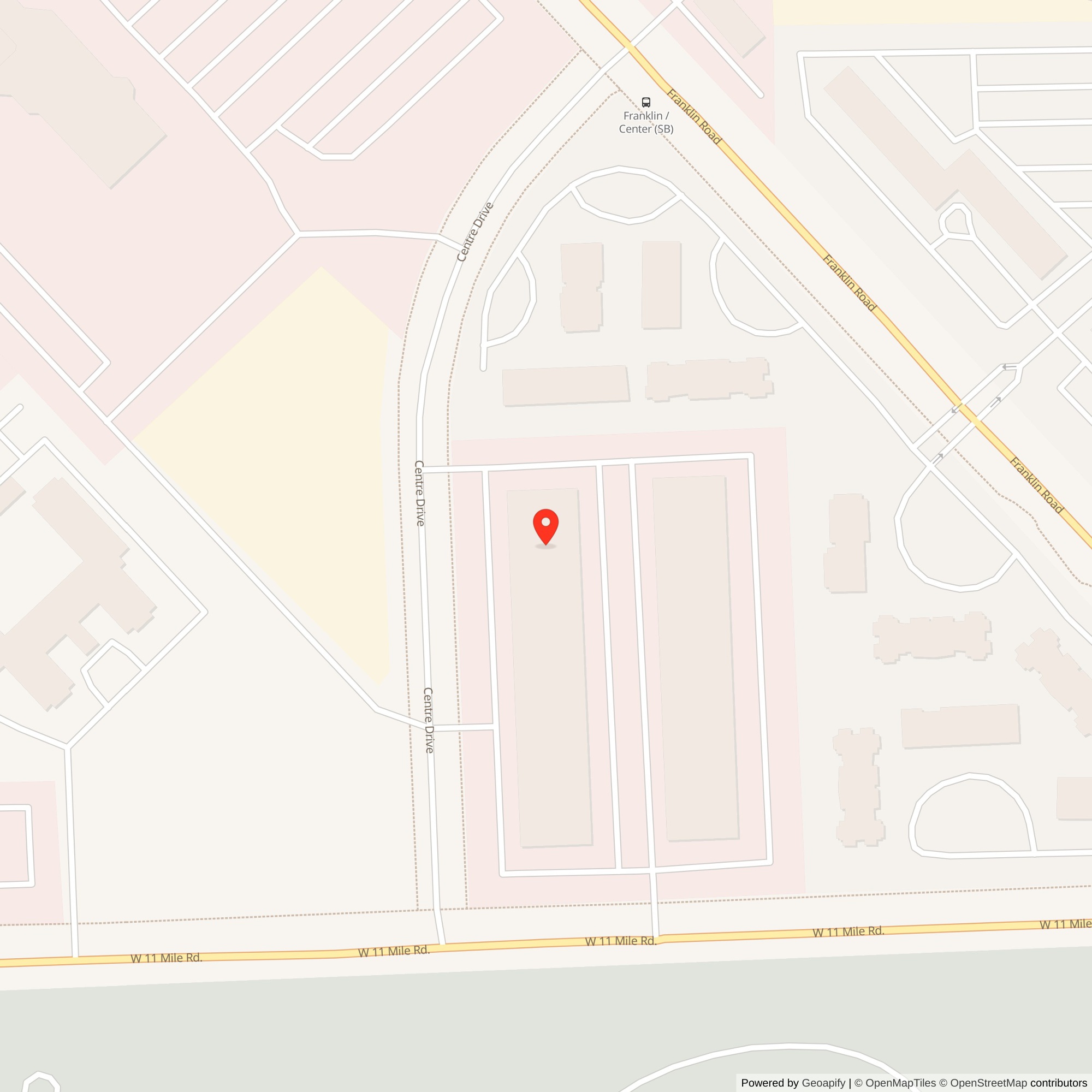
Nike D-86 stood in what is now Southfield, Oakland County, Michigan, along the north side of Eleven Mile Road. Period and official sources call the location Franklin, Bingham, Franklin/Bingham, Southfield Township, or Southfield. These names describe overlapping ways of identifying the same suburban area. The official national Nike inventory uses Franklin/Bingham. National Archives property records use Southfield and Southfield Township.The IFC occupied land north of Eleven Mile Road between Franklin Road and the historic Center Road alignment. The launcher lay farther west on the same side of Eleven Mile, between Telegraph and Inkster roads. The components were close enough for reliable dedicated communications but separated so that the radar and command equipment did not occupy the hazardous missile-handling compound.
Why Southfield Mattered
Southfield in the 1950s sat near the northwestern side of the Detroit metropolitan target complex. Detroit and its suburbs contained automobile and defense plants, steel and chemical production, rail yards, power infrastructure, airports, military installations, river shipping, and a large population. A hostile bomber approaching from the north or west could threaten far more than a single factory. The region's industrial capacity was itself a strategic asset.The area's postwar suburban growth also created a practical tension. Nike batteries needed clear radar horizons, room for underground magazines and surface launchers, road access, electricity, water, and secure perimeters. Yet the system had to be close enough to the defended city to intercept aircraft before they reached their targets. D-86 occupied what was still a relatively open edge landscape when the Army built it. Later office, residential, and institutional development absorbed the former military tracts.
The position complemented other Detroit batteries rather than defending Southfield alone. D-87 near Commerce Township covered the northwest. D-06 at Utica, the Selfridge sites, the eastern shoreline batteries, the Detroit River sites, and the western and downriver batteries formed an overlapping ring. D-86 contributed an Ajax engagement sector inside that network and, for part of its life, provided a battalion headquarters location from which a wider set of units could be administered.
Construction and Activation
National Archives at Chicago finding aids identify federal property-disposal files for Nike Site D-86 at Southfield and a combined file for D-85 and D-86 in Southfield Township. Those records are promising research leads for acquisition, lease, transfer, and disposal details, but the finding aid alone does not establish the contents of each folder.The official Defend and Deter inventory and the dedicated site chronology agree that D-86 became active in 1957. The dedicated chronology narrows that milestone to June.
Activation should not be confused with the first day of construction. Building a Nike Ajax installation required land control, survey and grading, excavation of reinforced-concrete magazines, construction of elevators and surface launcher rails, erection of radar towers, installation of power and communications, equipment acceptance, missile issue, and crew certification. These activities normally extended across many months. June 1957 is the best documented operational milestone located, not a claim that every part of the property first came under Army control in that month.
Physical Layout
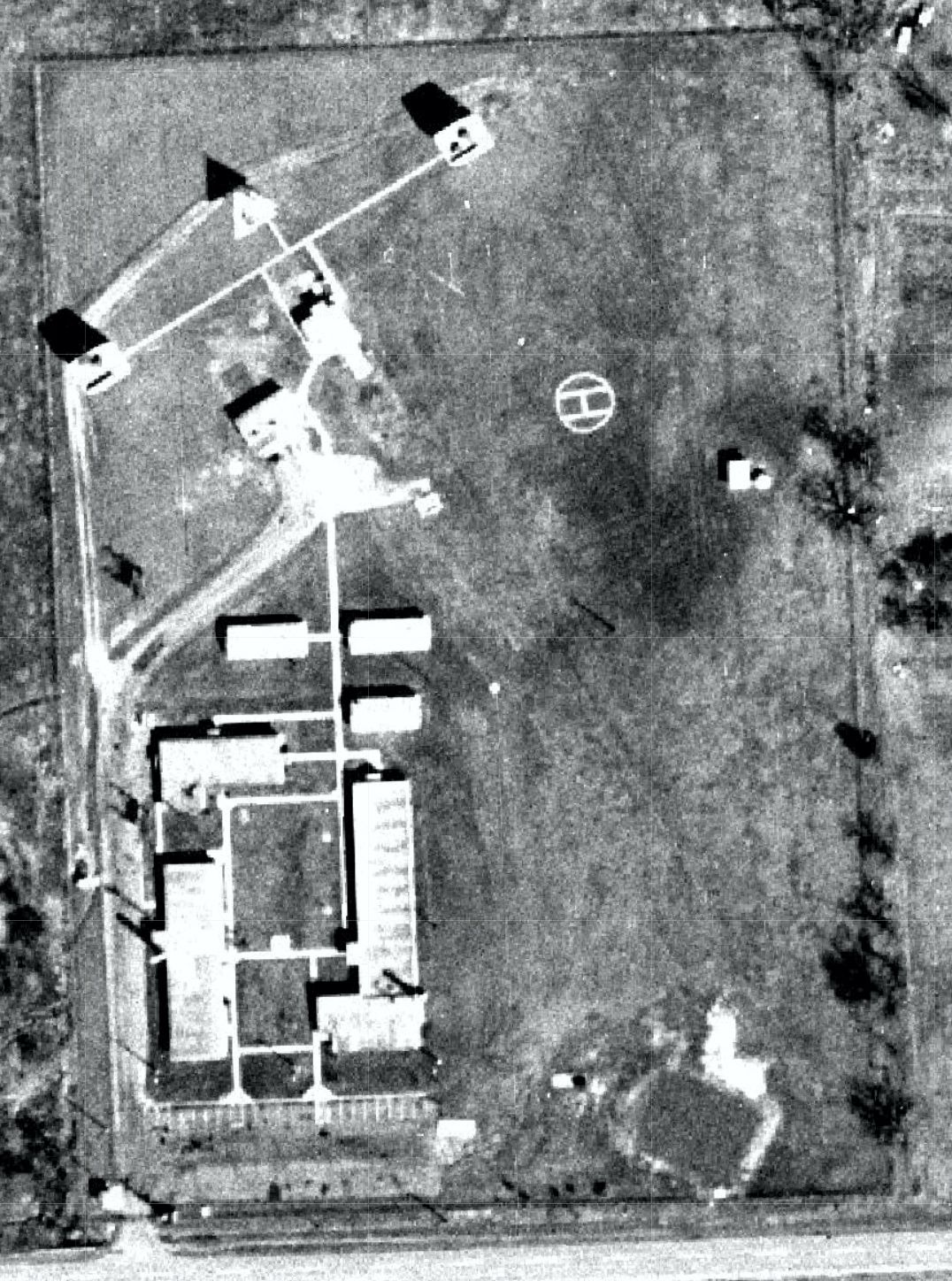
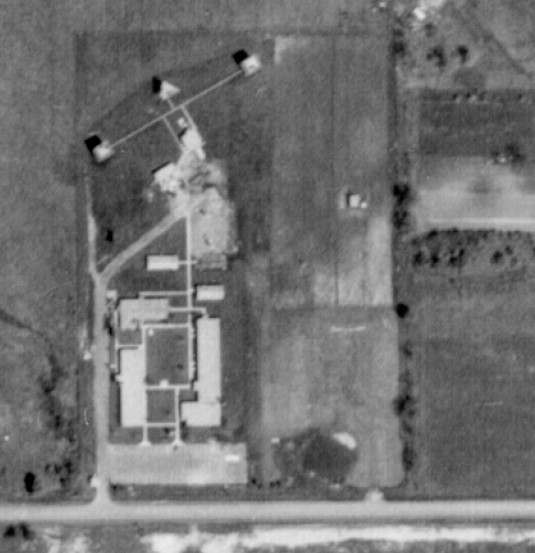
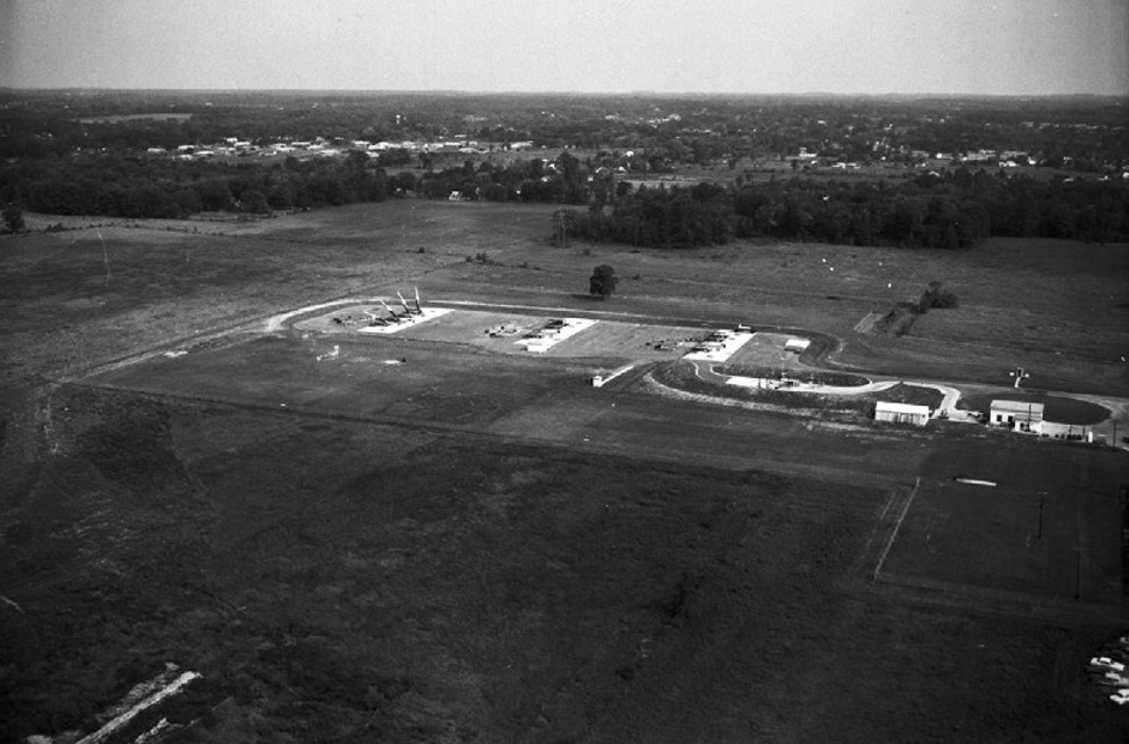
D-86 followed the separated Nike Ajax pattern. Its IFC was the electronic half of the weapon system. The dedicated site history identifies a LOPAR, or Low-Power Acquisition Radar. LOPAR searched for approaching aircraft and helped the crew acquire a target. Once a target had been assigned, the target-tracking radar followed it while the missile-tracking radar followed the departing Ajax. An analog computer compared the two tracks, calculated an intercept, transmitted steering commands, and ordered detonation at the predicted point.The IFC required more than radar antennas. It included operating and equipment spaces, generators or conditioned electrical power, communications connections, maintenance functions, ready facilities, access roads, security fencing, and radar towers or mounts. The D-86 image collection (see below) includes aerial views of the control site in 1963 and 1967, offering a way to reconstruct its internal geometry before later demolition.
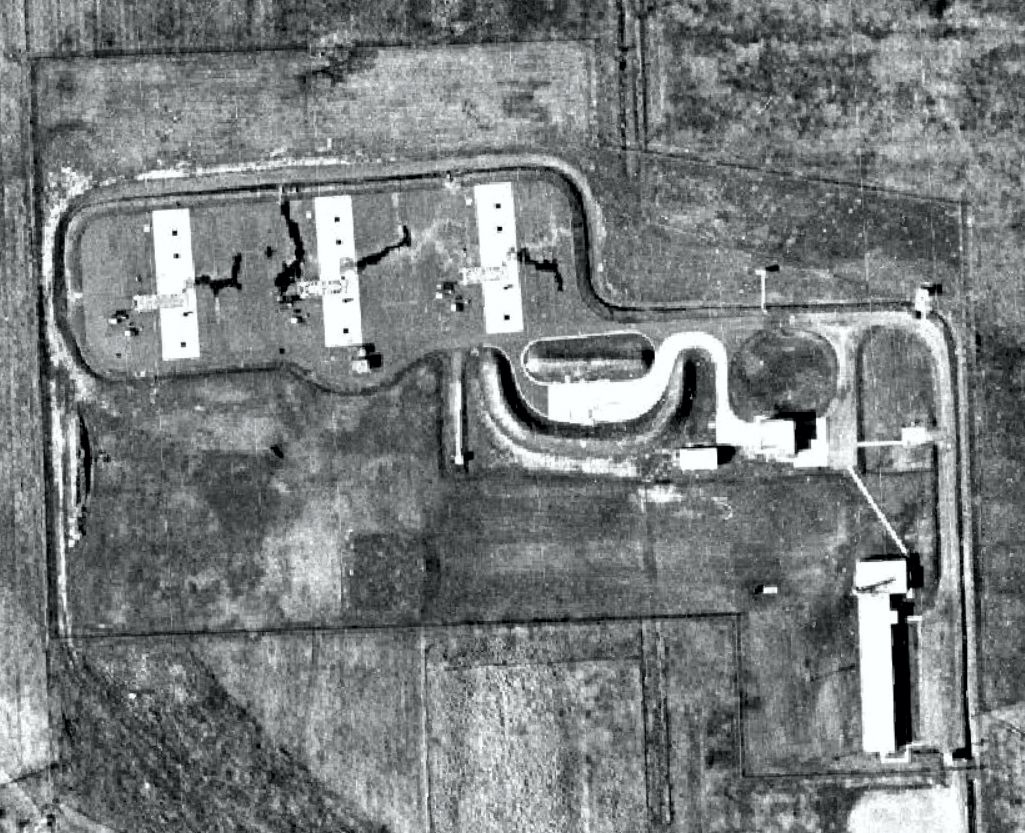
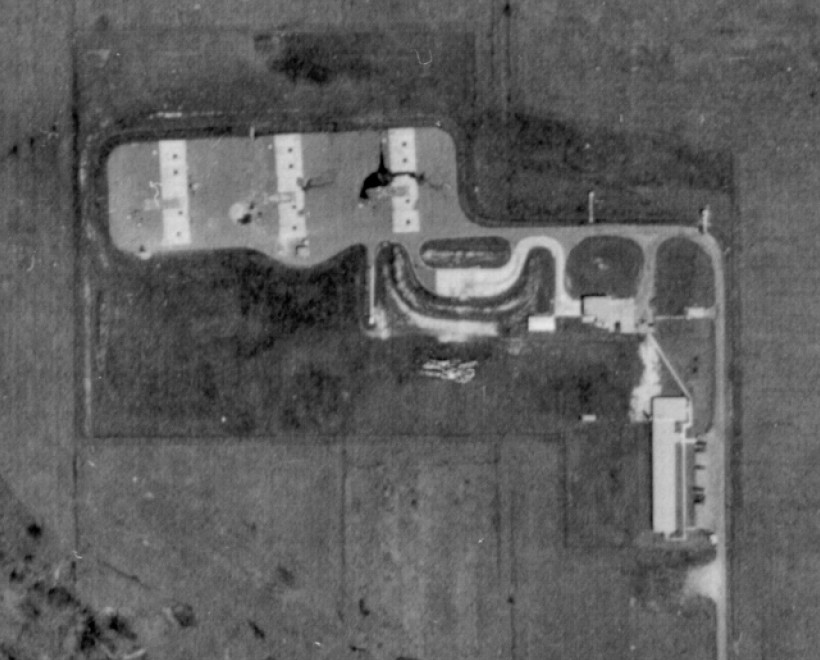
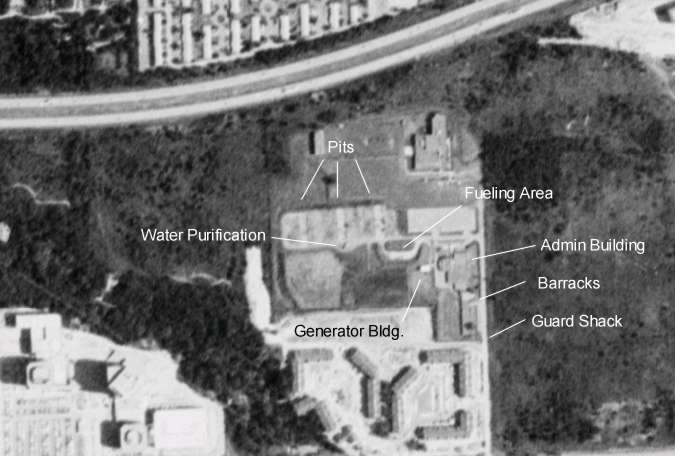
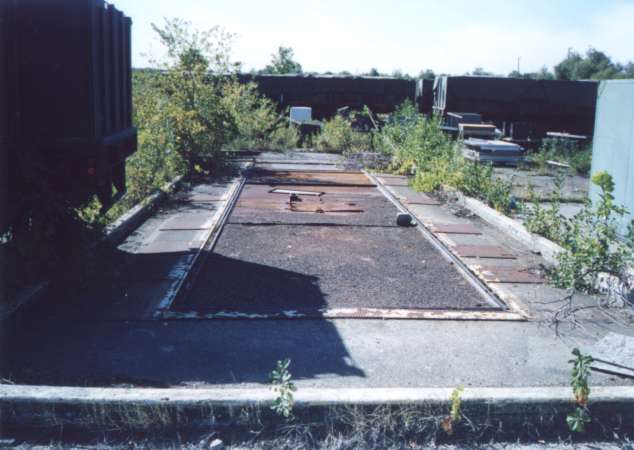
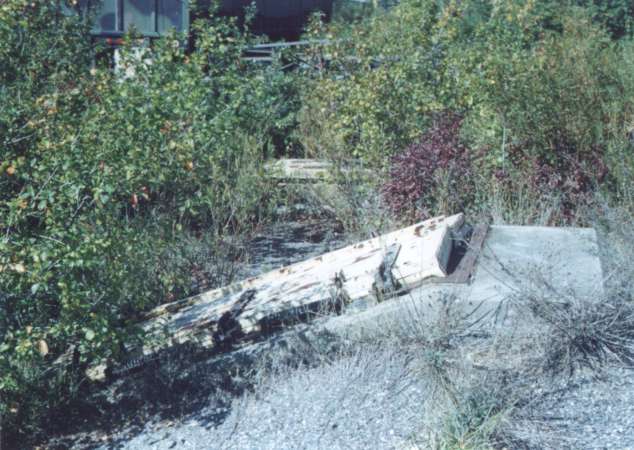
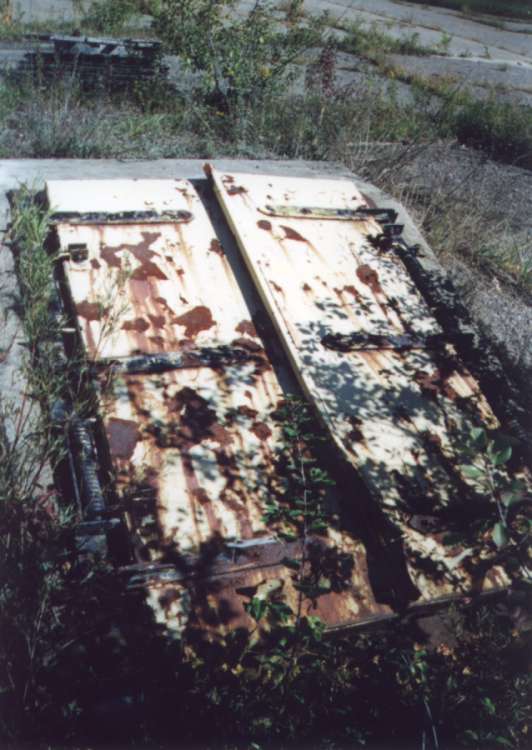
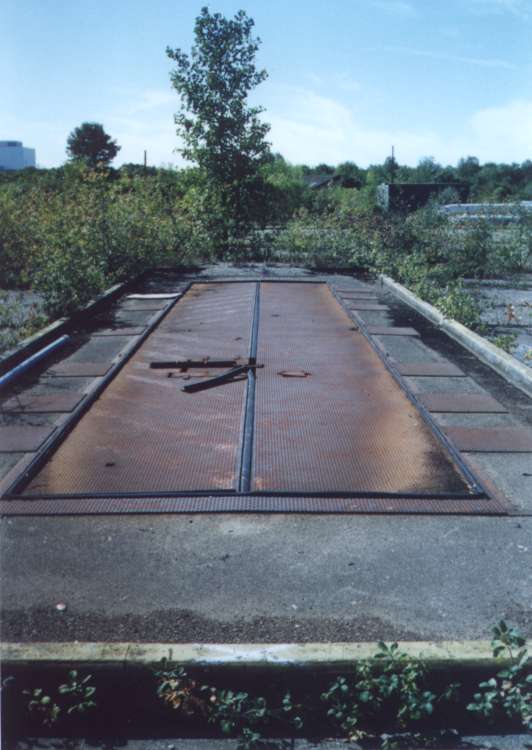
The launcher contained three underground missile-storage magazines. Elevators raised missiles to the surface, where crews transferred them along rails and positioned them on twelve Ajax launchers. The site also required assembly, testing, fueling, neutralization, electrical generation, water, administration, barracks, security, and vehicle circulation.
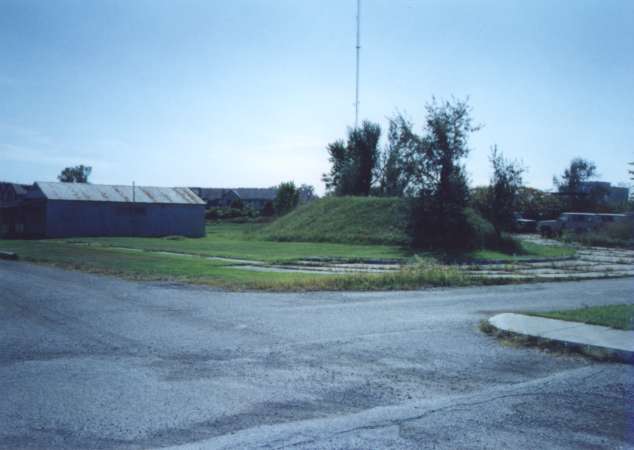
Ajax's liquid sustainer fuel and oxidizer made the fueling area especially important. The dedicated D-86 history reports that the protective fueling berm survived an earlier field examination even though the fueling building had disappeared. A second building near the berm could have been a generator building, but the observer could not identify it confidently.
Configuration and Decoded Meaning
The official D-86 configuration is: Nike 1B,2C/30A/12L-AThe `1B,2C` portion means one B-type and two C-type underground missile-storage magazines. These were horizontal storage and handling structures equipped with elevators. They were not vertical strategic-missile silos. A magazine could hold several missiles below grade, raise them to the surface, and feed multiple launch positions.
The `30A` portion records a configured allowance of thirty Nike Ajax missiles. It is a design and inventory figure, not proof that thirty missiles were physically present on every day of the site's life. Missiles could be away for inspection, maintenance, depot work, training, or final drawdown.
The `12L-A` portion records twelve Ajax launcher positions. They were surface launchers supplied from the three underground magazines. The configuration matches the dedicated site's independent description of thirty Ajax missiles, one B and two C magazines, and twelve Ajax launchers.
D-86 remained Ajax-only. It does not appear among the Detroit sites listed as converted to Hercules, and it does not appear in the supplied Hercules conversion-date appendix. Nike Ajax carried a conventional fragmentation warhead. D-86 therefore should not be described as a nuclear missile base. Nike Hercules could be equipped with conventional or nuclear warheads, but that later system was not installed here.
The difference matters operationally. Ajax was a first-generation antiaircraft guided missile designed for formation targets in the bomber era. Hercules was larger, faster, longer-ranged, and capable of higher-altitude interception. Hercules conversion required substantial work to elevators, launchers, handling equipment, radars, and support systems. D-86 did not receive that investment. Its service life ended as the Army consolidated the Detroit ring around fewer Hercules batteries.
Headquarters and Battery B, 18th Antiaircraft Artillery Missile Battalion
The unit chronology places Headquarters and Headquarters Battery, 18th Antiaircraft Artillery Missile Battalion at D-86 from June 1957 through September 1958. Battery B of the same battalion operated the firing site during the same interval.That pairing gives D-86 a dual identity. Battery B supplied the personnel who operated and maintained the local IFC and launcher. Headquarters and Headquarters Battery supported battalion command, administration, communications, logistics, and coordination across a wider group of Nike batteries. The site was consequently both one node in the defense ring and a place from which part of that ring was managed.
The exact boundaries between the battalion headquarters facilities, firing-battery cantonment, and launcher support buildings require period site plans or building schedules.
For Battery B, daily work centered on readiness. Launcher crews inspected missiles, launchers, rails, elevators, hydraulic or electrical systems, cables, fueling equipment, generators, and security systems. Radar and control personnel aligned electronic equipment, checked communications, ran simulated engagements, and maintained the target and missile tracking channels. Guards controlled access. Mechanics, cooks, clerks, supply personnel, and leaders made the alert operation possible.
Nike's deterrent effect depended on those routines. A missile did not have to be fired in combat for the battery to influence an attacker's planning. The credible possibility of rapid detection and interception came from trained crews, maintained equipment, reliable communications, and repeated readiness evaluation.
The 1958 Army Reorganization
In September 1958, the Army redesignated the D-86 organizations under the Combat Arms Regimental System. Headquarters and Headquarters Battery, 4th Missile Battalion, 3rd Artillery replaced the 18th battalion headquarters designation. Battery B, 4th Missile Battalion, 3rd Artillery replaced the earlier firing-battery designation.The new names did not represent construction of a new Southfield missile site. The same D-86 property and Ajax weapon system continued in service. The reorganization tied antiaircraft missile units to historic artillery regiments while preserving battalion and battery functions.
The firing Battery B chronology continues through October 1960. The headquarters chronology continues through December 1960. This two-month difference is not necessarily an error. It may reflect an administrative transition in which the local firing mission transferred before the Regular Army headquarters completed movement, inactivation, records turnover, or reassignment.
Michigan Army National Guard Operation
Battery A, 2nd Missile Battalion, 177th Artillery, Michigan Army National Guard, assumed the D-86 firing mission in October 1960 and operated it through February 1963. The Guard transition placed a complex guided-missile system in the hands of citizen-soldiers supported by full-time technicians and alert personnel.National Guard operation did not reduce the technical standard. The radar and computer equipment had to remain calibrated. Communications had to function. Missiles, elevators, launchers, and fueling equipment still required inspection and maintenance. Alert staffing and security continued. Units trained at missile ranges for live firing because an operational Ajax could not be launched over suburban Detroit for practice.
The change also connected D-86 to a larger Michigan Guard air-defense structure. Other Detroit batteries had Guard crews, and Guard organizations inherited missions from Regular Army units as the service reduced active-duty staffing. This arrangement kept the metropolitan defense network functioning while rooting its personnel more deeply in the communities around the sites.
The 177th Artillery had an important Michigan lineage, but lineage should not be used to assume the personal history of every D-86 soldier. The safe conclusion is organizational: D-86's final firing battery belonged to the Michigan Army National Guard's 177th Artillery missile force.
Role in the Wider Military Network
D-86 was one element in a coordinated air-defense system rather than an isolated launcher. Its radars could acquire and engage a target locally, but the Detroit Defense Area depended on information and assignment flowing through higher command facilities. The Army Air Defense Command Post at Selfridge used systems such as Missile Master and later Missile Mentor to assemble a broader tactical picture and distribute engagements among Nike batteries.Higher headquarters did not replace the D-86 IFC. A command post could tell the battery which target to engage and help prevent multiple sites from wasting missiles on the same aircraft. The local IFC still had to track the assigned target, track its own missile, solve the intercept, send guidance commands, and order detonation.
D-86's western suburban location gave it overlapping coverage with neighboring sites. D-87 near Commerce Township extended the ring farther northwest and later converted to Hercules. D-06 at Utica covered the northern approaches and also converted. Batteries around Selfridge, the Detroit River, Grosse Ile, the airport corridor, and downriver communities closed other routes toward the metropolitan target complex.
The headquarters batteries assigned to D-86 added another network layer. During the 18th Battalion and 4th Missile Battalion periods, D-86 supported battalion-level command functions for multiple subordinate batteries. Communications, reporting, logistics, training, evaluation, personnel administration, and maintenance coordination linked local alert sites to a common organization.
This wider role helps explain why the site's cantonment and administrative facilities were attractive for later reserve use. A property designed only as a cluster of missile magazines would have been difficult to reuse as a drill center. A battery and headquarters site already possessed offices, barracks, utilities, roads, security, and support space. The launcher's continuing military afterlife grew from that broader built environment.
Why D-86 Closed
D-86 deactivated in February 1963. The official national inventory and dedicated site chronology agree on the month. The reviewed sources do not provide a D-86-specific closure directive, but its Ajax-only status places the decision within a clear national and regional pattern.Nike Hercules had entered the Detroit Defense Area between 1958 and 1961. Converted sites could engage targets farther away and at greater altitude. The Army could therefore cover the region with fewer batteries. Ajax-only sites such as D-86 were closed as the first-generation system was withdrawn and the defense ring consolidated.
Closure did not mean the threat disappeared in February 1963. It meant that D-86's mission was absorbed by the remaining Hercules network and by evolving air-defense doctrine. The later growth of intercontinental ballistic missiles also reduced the strategic centrality of defenses designed primarily against manned bombers, although Detroit's Hercules batteries remained active for years after D-86 closed.
The unit chronology indicates that Battery A, 2nd Missile Battalion, 177th Artillery ended its D-86 assignment at closure.
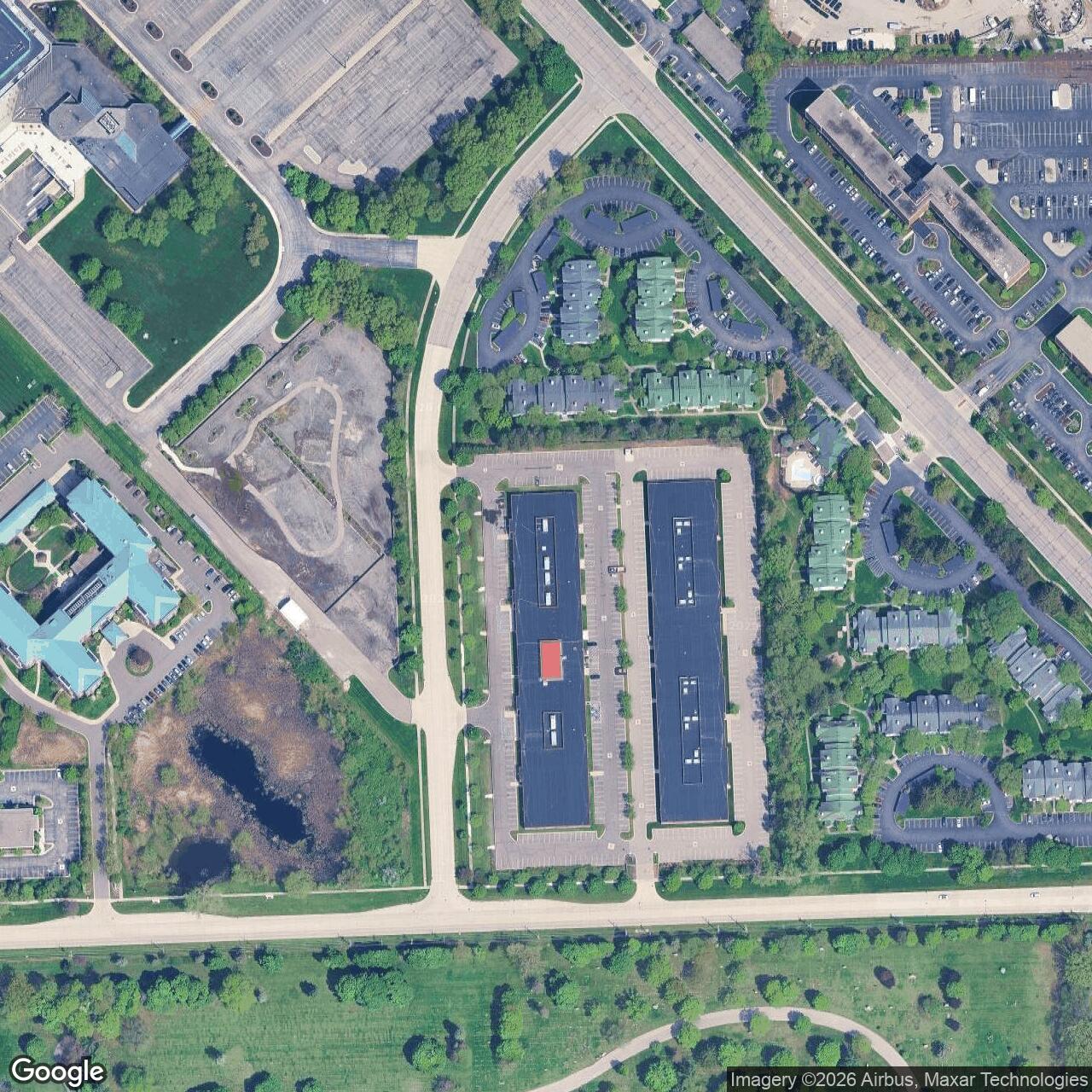
Disposal and the Split Afterlife
After deactivation, the IFC and launcher followed very different paths. The IFC was demolished and replaced by a couple of office buildings. Modern commercial listings confirm office or flex development in the immediate IFC vicinity.The launcher remained in federal reserve use. Its barracks and administration building were adapted first for the Naval Reserve and later for the Army Reserve. The recollection of a former naval reservist who drilled there provides a valuable human link, but the page does not give the Navy's acquisition date, unit designation, or complete occupancy period.
The present installation is the First Lieutenant Robert L. Poxon United States Army Reserve Center. Official Army Reserve photographs document soldiers of the 414th Civil Affairs Battalion training there in October 2019. A 2018 Department of Defense story describes an energy-modernization project at the Poxon center that replaced lighting and added occupancy controls. These records confirm active federal military use long after the Nike mission ended.
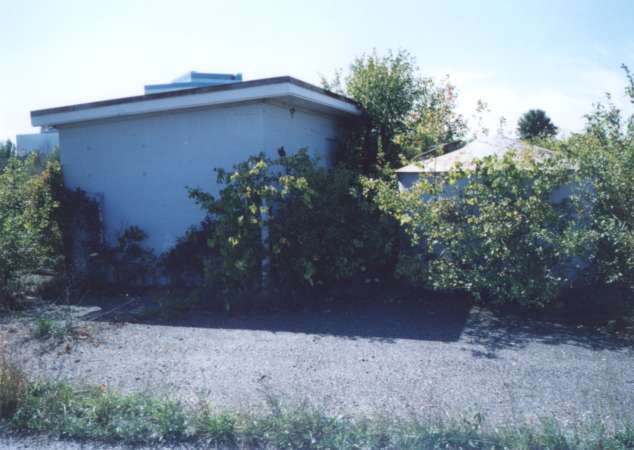
They do not prove that every building visible in current official photographs is a Nike-era building. Reserve centers are modified, expanded, and rehabilitated. The dedicated site history identifies the barracks and administration building as reused Nike structures, while the current official records establish the continuing installation. A building-by-building comparison of as-built plans, historic aerials, and current facility drawings is still needed.
National Archives property records offer the strongest next step. Record Group 291 includes a file titled Nike Site D-86, Southfield, Michigan, in accession 66A472, box 10, and a file titled Nike Sites D-85 & D-86, Southfield Township, in accession 61A128, box 3. These may document disposal decisions, retained federal tracts, easements, appraisals, conveyances, and correspondence. Detroit District Record Group 77 boxes also include all-sites grading, communications, Nike, and 1961 Nike-area drawings.
The Condition-Field Reversal
The official Defend and Deter table describes the control site as partially intact and associated with the State of Michigan, while describing the launch site as obliterated and associated with the State. The site-specific evidence points in the opposite physical direction.For the IFC, the dedicated history says demolition and office redevelopment. The 1963 and 1967 aerials provide a historical baseline, and present commercial development in the vicinity is consistent with that account. No reviewed source identifies a surviving operational control building, radar tower, or state-owned Nike parcel.
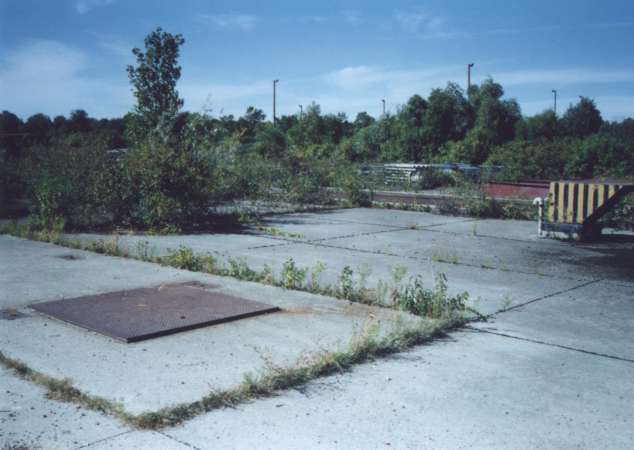
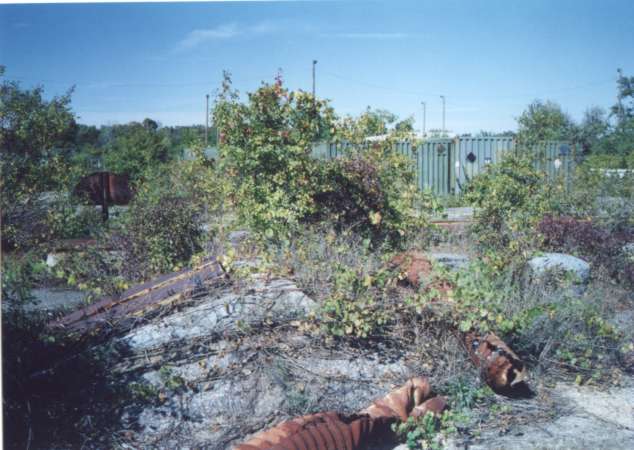
For the launcher, the dedicated history reports partial survival within a Reserve facility. Official Army Reserve and Department of Defense sources confirm that the Poxon Reserve Center occupies the location and remains active. The reported fueling berm, water-treatment structure, tank, unidentified utility building, and water-filled magazine pits make the launch tract the component with tangible Nike fabric.
The most likely explanation is that the national table's generic condition and ownership values were swapped between components, were based on an earlier or coarser property record, or were later copied without preserving component identity.
This correction does not convert the field observer's report into a 2026 engineering survey. The launcher is described as partially intact based on the detailed historical account and continuing federal use. Individual features are qualified as historically reported unless current official imagery or records verify them.
Naval Reserve Environmental Record
The Environmental Protection Agency maintains a federal-facility profile for the U.S. Naval Reserve Center - Southfield at the former launcher location. The profile identifies the property as a federal facility in EPA Region 5 and gives it EPA identification number MIN000510372. It is not on the National Priorities List. The current profile describes a federal-facility preliminary-assessment review as ongoing.This record independently supports the Naval Reserve reuse reported by the D-86 history. It also requires careful interpretation. An EPA site profile is not proof that every reviewed substance or environmental issue originated with Nike activity. The property had successive Army Nike, Naval Reserve, and Army Reserve uses. A preliminary assessment is an investigative status, not a final finding of contamination, responsibility, cleanup completion, or danger to neighboring property.
An older Federal Agency Hazardous Waste Compliance Docket entry identifies the same facility and EPA number under the Navy, with a docket date in December 1989. That historic listing helps establish the continuity of the federal property record. It should not be treated as a current risk rating.
Current Component Conditions
The former D-86 IFC is demolished as an operational Nike site. Office or flex development occupies the vicinity north of Eleven Mile Road near Franklin Road. No radar tower, acquisition-radar position, control building, generator building, or ready facility has been verified as surviving above ground. Exact correspondence between current parcels and the original fenced boundary remains to be established through a surveyed overlay.The former D-86 launcher is partially intact inside the active First Lieutenant Robert L. Poxon Army Reserve Center. The strongest historic feature account reports a surviving fueling berm, water-purification building and tank, possible generator building, adapted barracks and administration building, and three flooded magazine pits. The fueling building itself was reported gone. Current official sources verify active Army Reserve use but do not inventory the buried magazines or identify Nike-era structures.
Because the property is an active federal military installation, public access is restricted. The existence of older site photographs or underground remains does not authorize entry, photography from restricted areas, opening covers, probing magazines, or crossing fences. Water-filled underground structures, altered concrete, utilities, and later military construction create obvious safety and security concerns.
Researchers should rely on public roads, authorized archives, official imagery, historic aerials, and formal records requests. Any visit inside the Reserve Center would require explicit permission and escort through the responsible Army organization. The office-developed IFC vicinity should likewise be treated as private commercial property unless a public right-of-way or access agreement clearly applies.
Chronology
- 1950s, before June 1957 The Army acquires or controls the necessary Southfield-area tracts, constructs the separated IFC and three-magazine launcher, installs Ajax equipment, and prepares the assigned units. Precise acquisition and construction dates remain pending.
- June 1957 D-86 activates. Headquarters and Headquarters Battery, 18th Antiaircraft Artillery Missile Battalion and Battery B, 18th Antiaircraft Artillery Missile Battalion begin their recorded assignments.
- September 1958 Army reorganization redesignates the organizations as Headquarters and Headquarters Battery and Battery B, 4th Missile Battalion, 3rd Artillery.
- October 1960 Battery B's Regular Army firing assignment ends. Battery A, 2nd Missile Battalion, 177th Artillery, Michigan Army National Guard assumes the D-86 firing mission.
- December 1960 Headquarters and Headquarters Battery, 4th Missile Battalion, 3rd Artillery ends its recorded D-86 assignment. The two-month difference from the firing-battery transition may reflect administrative overlap or staggered movement.
- 1961 Aerial images in the dedicated site collection document the complete D-86 installation. Although the captions on the site page say 1967, the linked filenames use 1961.
- February 1963 D-86 deactivates. The official inventory and dedicated chronology agree on the month. The Ajax-only battery does not convert to Hercules
- 1963 An aerial image records the IFC and launcher at or near the end of missile service.
- After 1963 The IFC is demolished and its vicinity becomes office development. The exact demolition and redevelopment dates remain unresolved.
- Post-Nike period, date unresolved The Naval Reserve reuses the former launcher cantonment and administration facilities as a reserve center.
- June 6, 1988 A dated image in the dedicated D-86 collection documents the former launcher area during its reserve-use period.
- December 15, 1989 A federal hazardous-waste compliance docket entry identifies the U.S. Naval Reserve Center - Southfield under EPA ID MIN000510372.
- Later period, exact date unresolved The Army Reserve succeeds the Naval Reserve at the launcher property, which becomes the First Lieutenant Robert L. Poxon Army Reserve Center.
- March 2018 A Department of Defense story reports recognition of an interior-lighting modernization project at the Poxon center. The work replaced lights in ninety-four fixtures, added occupancy controls, and was projected to reduce lighting energy use substantially.
- October 19, 2019 Official Army Reserve photographs document soldiers of the 414th Civil Affairs Battalion training at the Poxon Army Reserve Center.
- Present The former IFC is demolished and office-developed. The launch tract remains an active, restricted Army Reserve installation with historically reported Nike features. The EPA profile for the former Naval Reserve Center is not on the National Priorities List and lists federal-facility preliminary-assessment review as ongoing.
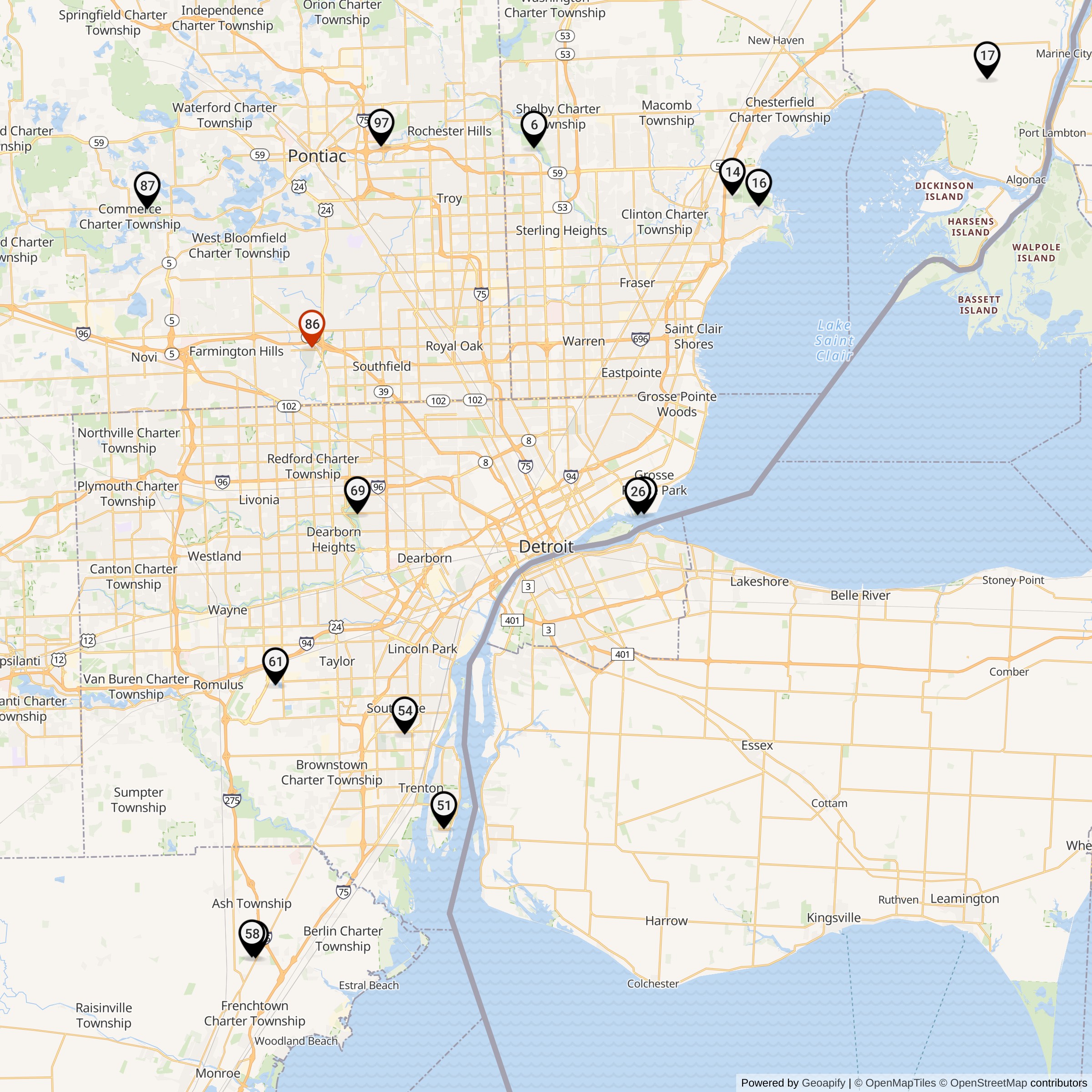
List of all Nike Installations in Michigan

Sources & References
- PDF Defend and Deter: The Legacy of the United States Cold War Missile Program The official national site table lists D-86 at Franklin/Bingham, active 1957 to February 1963.
- WEB National Archives at Chicago, Nike Missile Sites finding aid Record Group 291 identifies D-86-specific Southfield property files.
- WEB U.S. Army Reserve, 414th Civil Affairs Battalion Soldiers Conduct Soldier Readiness Official photograph and caption documenting activity at the Robert L. Poxon Army Reserve Center in Southfield on October 19, 2019.
- WEB U.S. Army Reserve, Poxon Army Reserve Center maintenance image Official current-facility evidence from October 2019.
- WEB Defense Visual Information Distribution Service Documents energy modernization at the Poxon Army Reserve Center.
- WEB U.S. Environmental Protection Agency Superfund Site Information for U.S. Naval Reserve Center - Southfield, EPA ID MIN000510372.
- WEB U.S. Environmental Protection Agency, Federal Agency Hazardous Waste Compliance Docket The historic docket identifies the Southfield Naval Reserve Center under the same EPA ID with a December 15, 1989 docket date.
- WEB LoopNet, 25900 West Eleven Mile Road commercial listing Used only as corroborating evidence for modern office/flex development in the IFC vicinity.