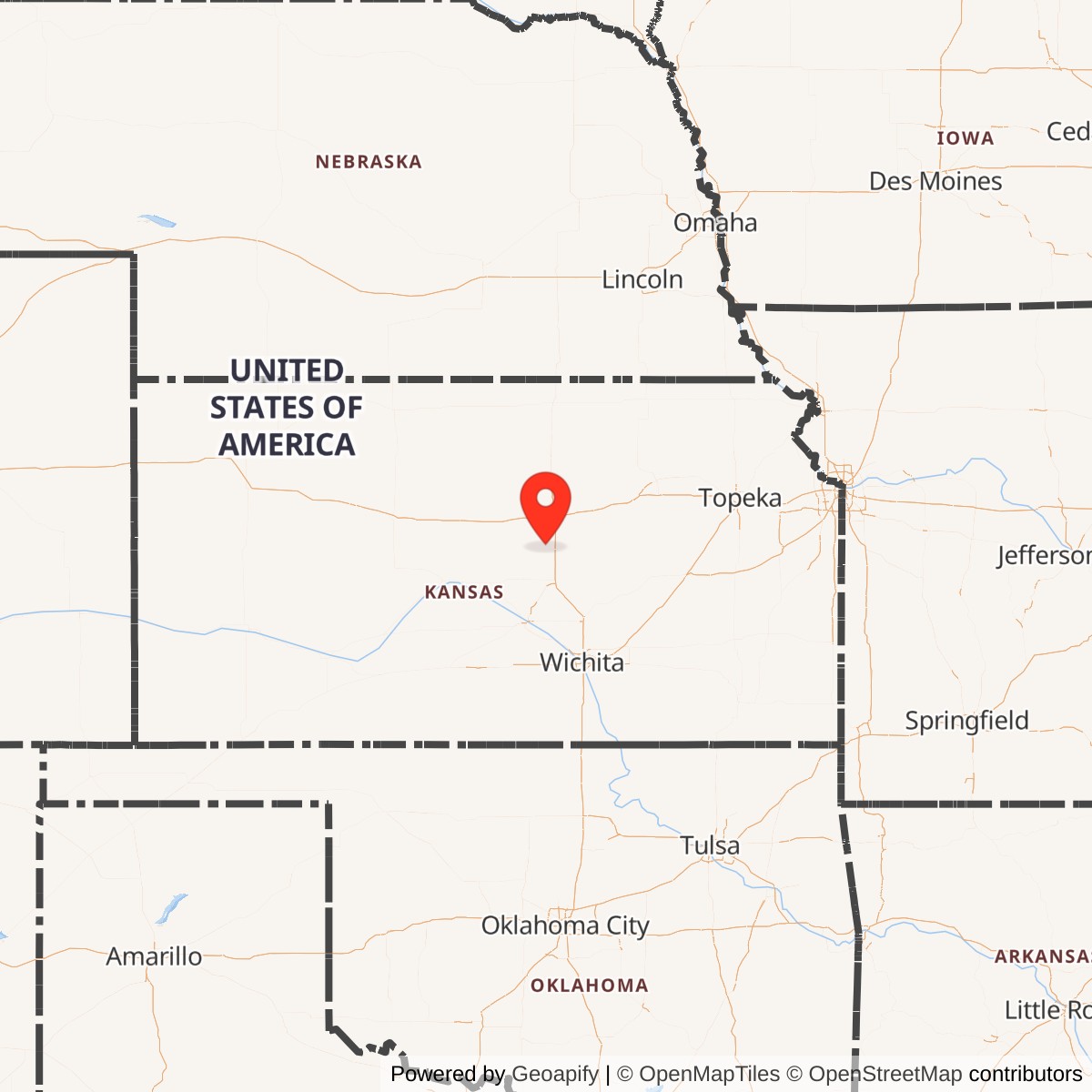
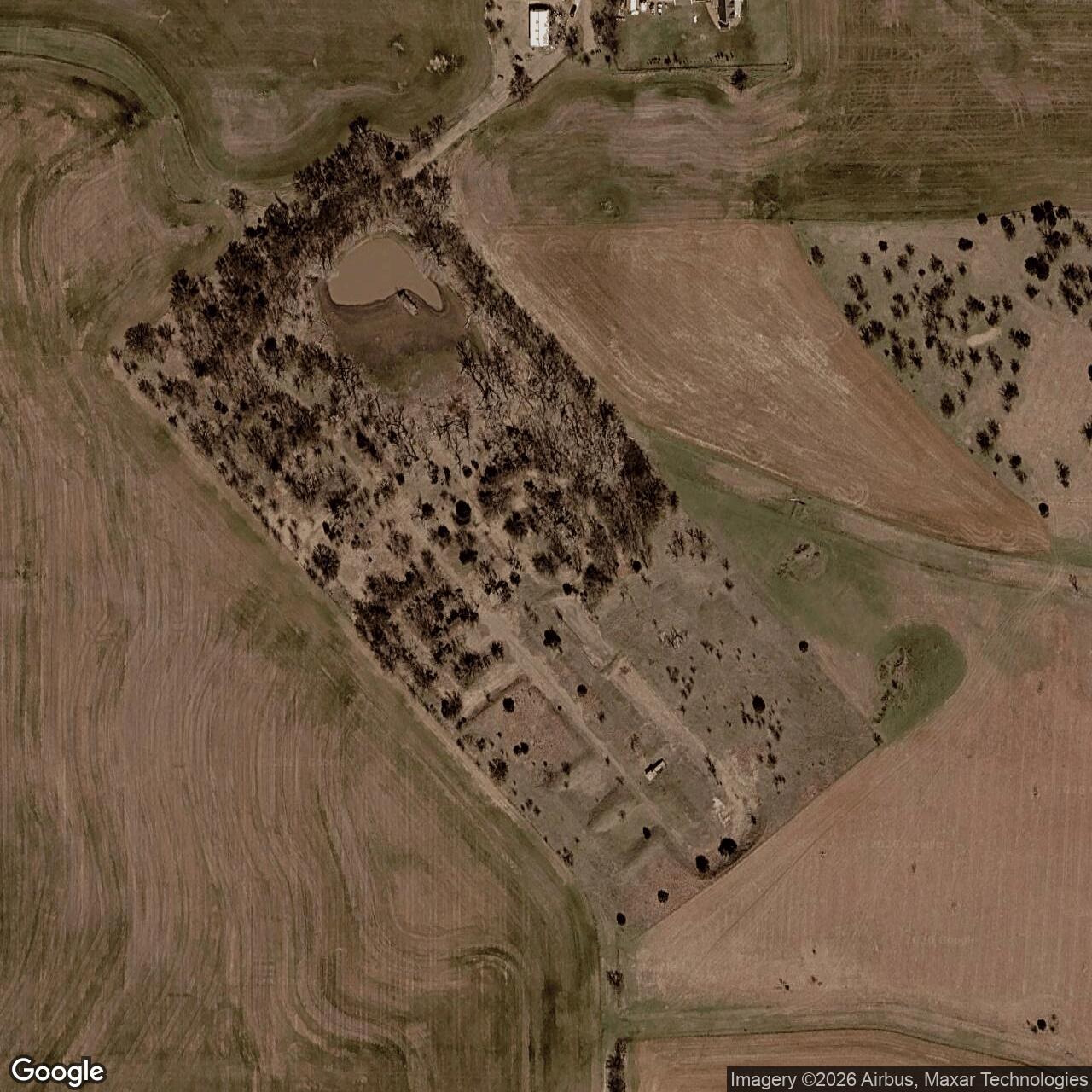
Nike Missile Site SC-50, Smolan Kansas
Longitude: -97.71806
SC-50 was constructed in 1959 near Smolan, Kansas, but was never made operational. Mapcarta Like SC-01, it was active on paper only from April to June 1960, then canceled when the Defense Department decided to abandon the entire Schilling AFB Nike Hercules program.
The designation SC-50 is also notable, per the Nike numbering system, "50" indicates the site was positioned due south of the Schilling AFB center point, making it the southern counterpart to SC-01 which sat due north. The two sites were thus positioned on roughly opposite sides of the base, which was the standard Nike deployment geometry for a two-battery defense area.
As with SC-01, SC-50 would have had a separate IFC area and launch area, but given the brevity of the program and its above-ground configuration, detailed separate coordinates for each sub-area are not documented in available records.
A typical Nike air defense site consisted of two separate parcels of land. One area was known as the Integrated Fire Control (IFC) Area. This site contained the Nike system's ground-based radar and computer systems designed to detect and track hostile aircraft, and to guide the missiles to their targets.
The second parcel of land was known as the Launcher Area. At the launcher area, Nike missiles were stored horizontally within heavily constructed underground missile magazines. A large, missile elevator brought the Nikes to the surface of the site where they would be pushed across twin steel rails to one of four satellite launchers.
Elaboration on how Nike worked here.