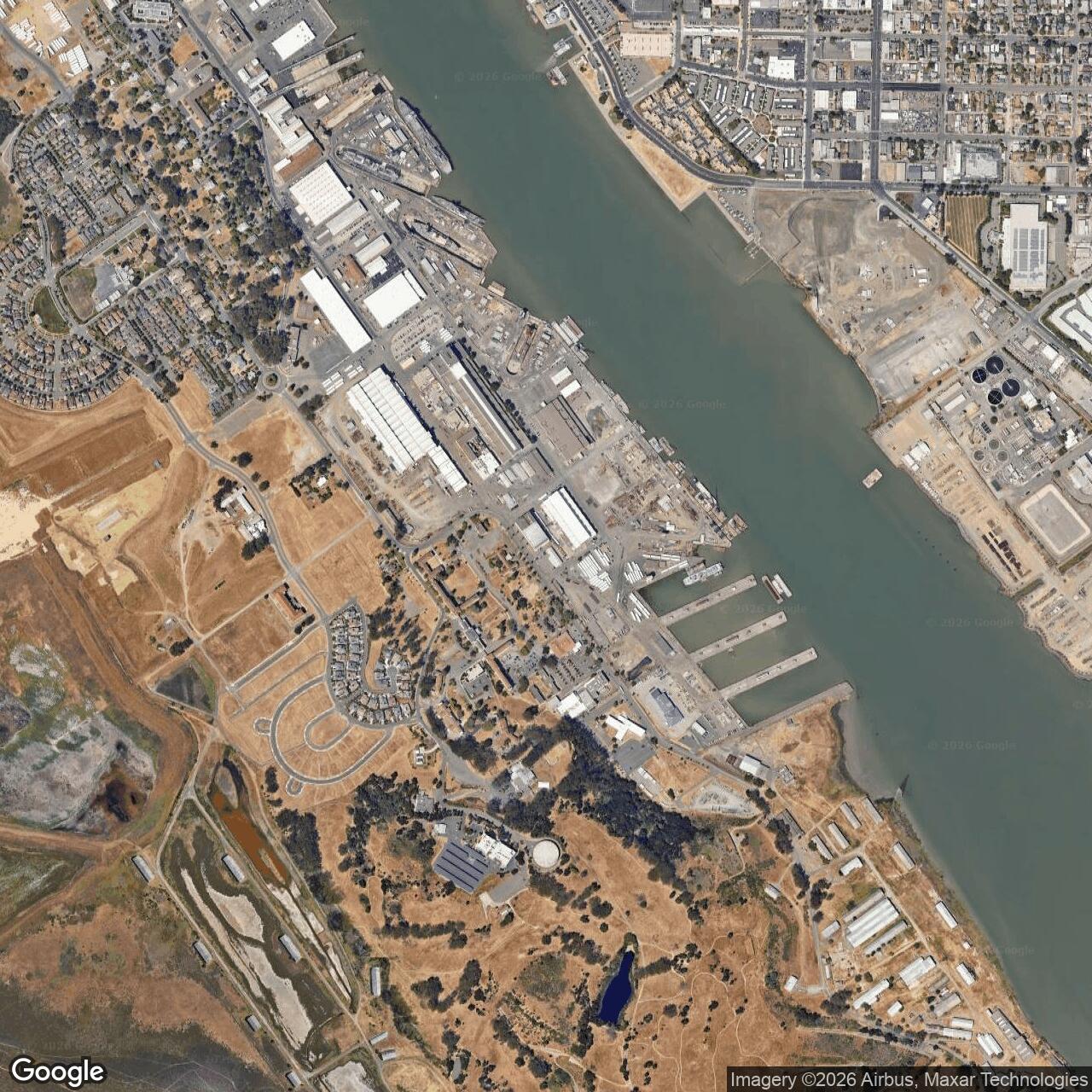
Mare Island Naval Shipyard, Vallejo California
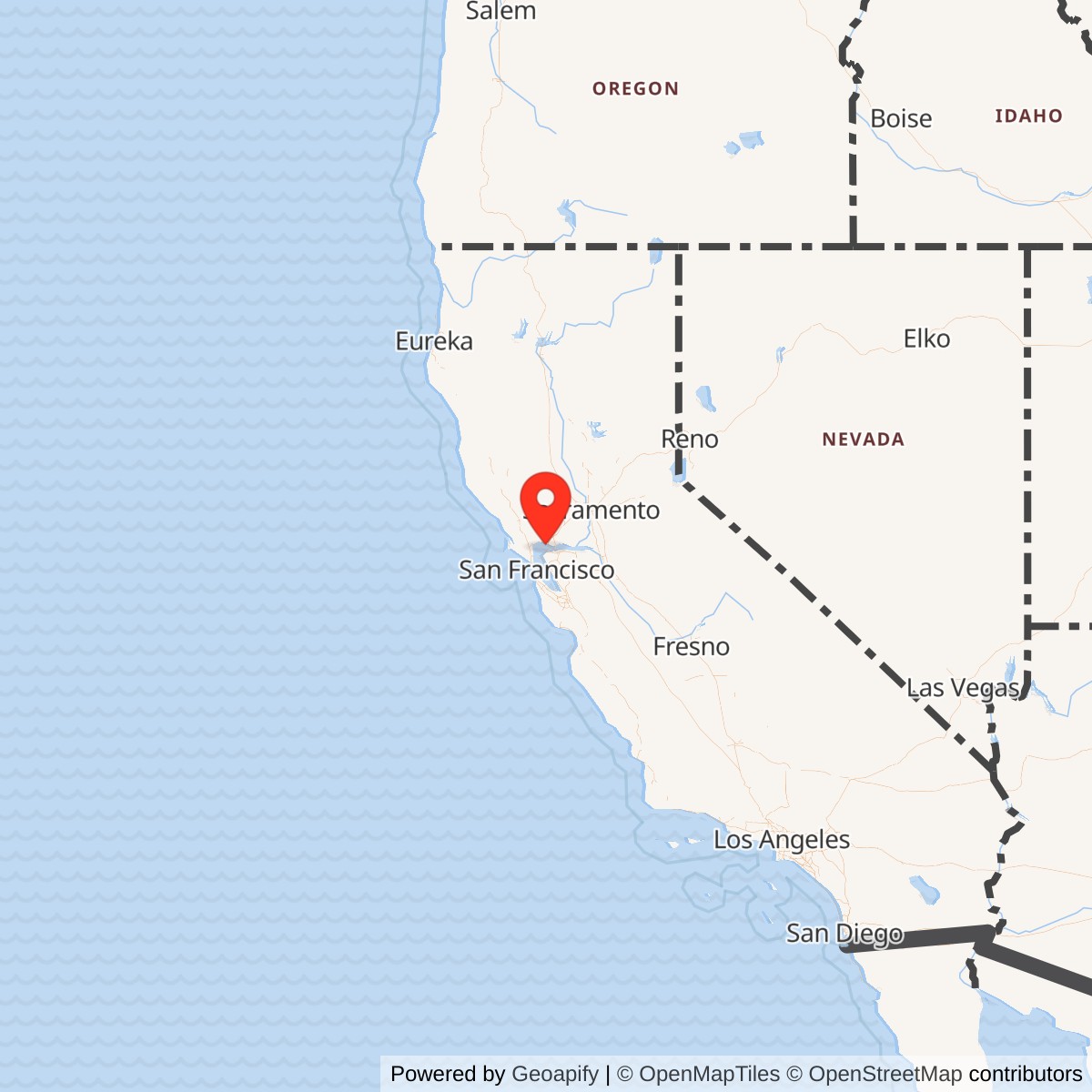
Longitude: -122.263333
Current Role: Former naval shipyard under BRAC redevelopment and Navy cleanup; mixed commercial, industrial, educational, residential, historic, civic, open-space, and maritime-oriented reuse on Mare Island, including Touro University, historic tours/sites, businesses, trails, preserve land, and residential community; Navy disposal and environmental actions continue for remaining parcels.
Before the United States had a Pacific fleet worthy of the name, it had Mare Island. The Navy's first permanent West Coast base began on a marsh-edged island opposite Vallejo in 1854, with Commander David Glasgow Farragut arriving to turn a remote California shoreline into the industrial anchor of American sea power in the Pacific. Over the next 142 years, Mare Island built wooden gunboats, destroyers, landing craft, submarine tenders, diesel submarines, and nuclear submarines; repaired war-damaged ships; supplied ammunition; housed Marines and sailors; trained recruits; and shaped Vallejo into a Navy town. Its story is not just a local shipyard story. It is the story of the United States learning to operate as a Pacific power.
Mare Island Naval Shipyard, often abbreviated MINSY or MINS, was located on Mare Island in Vallejo, California, roughly twenty-five miles northeast of San Francisco. The island sits along Mare Island Strait near the junction of the Napa River, Carquinez Strait, San Pablo Bay, and the inland approaches to the Sacramento-San Joaquin Delta. That geography made it attractive to the Navy in the early 1850s. It offered a protected inland anchorage close enough to San Francisco Bay to support the Pacific Squadron, but removed from the open-ocean weather and immediate harbor congestion of San Francisco itself. Its weakness was also obvious: shallow surrounding waters and tidal-marsh edges forced constant attention to dredging, waterfront improvement, and industrial adaptation.
The installation was formally a naval shipyard and naval station rather than a single-purpose drydock. It combined ship construction, ship repair, ordnance storage and handling, industrial shops, dry docks, piers, housing, hospital and medical facilities, Marine barracks, training functions, recruit functions, ammunition facilities, administrative headquarters, and later nuclear-submarine construction and overhaul. In the nineteenth century it was the only Navy yard on the Pacific Coast. In the twentieth century it became one of the Bay Area's most important naval-industrial plants, especially during the world wars and the Cold War submarine era.
Mare Island's active Navy identity ran from 1854 until 1996. Navy BRAC records list the former shipyard at 5,285 acres, place it in Vallejo, identify the 1993 BRAC round as the closure authority, and give 31 March 1996 as the closure date. The National Park Service identifies Mare Island as the first United States naval base on the West Coast and emphasizes its role in extending U.S. naval power into the Pacific. The modern City of Vallejo describes Mare Island as the nation's first West Coast naval station, now home to more than 100 businesses, Touro University California, a nature preserve, trails, historic resources, and a residential community.
Strategic Setting and Site Selection
Mare Island's selection made sense only in the context of the Pacific after the Mexican-American War and the California Gold Rush. The United States had acquired California, but it had not yet built the infrastructure needed to sustain naval operations there. Ships on the Pacific Station needed repair, stores, coal, ordnance, safe anchorage, and a place where the Navy could establish a durable institutional presence. San Francisco was the obvious commercial center, but the Navy also needed a site with room for shops, magazines, housing, drydock construction, and long-term federal control.In 1852 a Navy commission headed by Commodore John Drake Sloat recommended Mare Island for the Pacific Coast navy yard. The site had enough sheltered water to serve warships, enough land to develop an industrial reservation, and enough distance from San Francisco to reduce some of the distractions and costs of a boomtown port. The Navy purchased the island in 1853. On 16 September 1854, Farragut arrived and began the work of establishing the Navy's first permanent installation on the West Coast.
The early yard was modest by later standards. It began with a floating sectional dry dock, storehouses, shops, early workshops, and a developing waterfront. But even in that first phase the Navy was making a strategic statement. Mare Island represented a permanent federal naval commitment to the Pacific. It allowed the Navy to maintain ships without sending them around Cape Horn or depending entirely on commercial facilities. It also gave the United States a base from which to support diplomacy, commerce protection, and later warfighting across the Pacific basin.
Early Development and Nineteenth-Century Operations
Mare Island's first decades turned a raw site into a real naval-industrial yard. Farragut served as the first commandant and oversaw the beginning of shipyard operations before leaving in 1858. Civil engineer Daniel Turner and later Navy yard personnel built the basic physical plant: machine shops, smith shops, foundries, boiler shops, storehouses, magazines, piers, and roads. Several early shop buildings survived long enough to become part of the historic district, showing how much of the yard's original industrial DNA remained visible into the modern preservation era.The first major shipbuilding milestone came in 1859, when Mare Island launched USS Saginaw, a wooden-hulled, side-wheel gunboat and the first U.S. warship constructed on the West Coast. That launch mattered beyond the individual ship. It proved that the Navy could build warships in California with local infrastructure and Pacific-facing purpose. For a Navy still oriented heavily toward the Atlantic, Mare Island gave tangible form to the idea that the United States would build and sustain naval power on both coasts.
During the Civil War, Mare Island was not a battlefield, but it was militarily useful. It repaired ships, supported the Pacific Squadron, supplied ordnance, and maintained a federal naval presence in California at a time when national loyalty, commerce protection, and maritime control mattered. Marines were stationed there beginning in the 1860s, and the yard continued to expand as an integrated naval reservation. The Navy also used the island's southern ammunition areas for magazines and ordnance storage, a function that would remain important throughout the base's active life.
By the late nineteenth century Mare Island had become the Navy's major Pacific repair and construction yard. It handled American warships and, at times, foreign naval vessels visiting or operating in the Pacific. Dry Dock No. 1, constructed between 1872 and 1891, became one of the yard's defining engineering projects. The National Park Service identifies it as the first dry dock constructed on the West Coast. Its long construction period and granite-block engineering reflected both the difficulty of the site and the Navy's determination to create permanent industrial infrastructure.
The yard also became a community. Officers' quarters, workers' housing, barracks, chapels, hospital facilities, schools, roads, and social spaces gave Mare Island the character of a federal industrial town. St. Peter's Chapel, completed in 1901, became one of the most important surviving cultural landmarks on the island, known for its memorial character and Tiffany windows. The naval cemetery, officers' mansions, Alden Park, and the historic shops all show how Mare Island functioned as more than a waterfront factory. It was a lived Navy landscape.
Recruit Training, Marines, and the Naval Station Role
Mare Island's shipyard work often dominates the story, but the installation also supported broader station functions. Marines served there from the nineteenth century onward, guarding the yard, supporting naval discipline, and occupying the Marine Barracks area. The Marine presence tied Mare Island to naval security, expeditionary service, and the daily routines of a Navy yard where ammunition, ships, and industrial facilities required constant protection.Mare Island also held recruit-training functions. In the early twentieth century, it became the Navy's West Coast recruit training center before that function moved south to San Diego. That role placed thousands of sailors into the Navy's Pacific manpower pipeline. Recruits arriving at Mare Island learned naval discipline and basic service requirements before moving onward into ships, stations, and fleet assignments. The recruit mission did not produce the same visible artifacts as dry docks and cranes, but it was one of the ways Mare Island shaped the human Navy.
The naval station role also included hospitals, storehouses, administrative offices, supply functions, schools, communications, and transportation connections. Mare Island's rail and ferry links tied it to Vallejo and the broader Bay Area. Industrial workers, sailors, officers, Marines, contractors, families, and civilian employees moved through the base daily. This made Mare Island one of the most consequential federal employers in the region long before the great twentieth-century mobilizations.
World War I and the Destroyer Record
World War I pushed Mare Island into a new phase of speed and industrial intensity. The Navy needed destroyers, support ships, repair work, and rapid expansion. Mare Island responded by accelerating production and enlarging its workforce. Its best-known World War I achievement was the construction of USS Ward. The National Park Service notes that Mare Island still held the record for building the destroyer in 17½ days. That feat became a symbol of the yard's industrial discipline and wartime urgency.USS Ward was not only a construction record. The ship later became historically famous for firing on and sinking a Japanese midget submarine outside Pearl Harbor on 7 December 1941, one of the first American shots of the Pacific War. That later history gives the Mare Island-built destroyer a remarkable arc: born in the frantic shipbuilding environment of World War I, then placed at the opening moment of America's next Pacific war.
Mare Island also constructed larger and more complex ships in the World War I era and after. The battleship USS California was launched at Mare Island in 1919, becoming the only dreadnought battleship built on the West Coast. Heavy cruisers, destroyers, submarines, tenders, and auxiliary vessels followed in the interwar years. By then the yard had moved far beyond its frontier origins. It had become a mature naval shipbuilding plant with a workforce, shop culture, management structure, and industrial capacity that could respond to national emergencies.
Interwar Years and Submarine Development
The interwar period was not quiet for Mare Island. Naval budgets fluctuated, treaty restrictions shaped construction, and the Navy adjusted to new technologies. Mare Island continued to build and repair vessels, but it became especially important in submarine construction and maintenance. The yard's geography, dry docks, shops, and skilled workforce made it a natural West Coast submarine center.Mare Island built early submarines and later became deeply associated with the undersea force. This mattered because submarines became increasingly important to Pacific strategy. Long distances, island bases, Japanese naval power, and the need for stealthy operations made the submarine a central Pacific weapon. Mare Island's increasing submarine specialization positioned the yard for its crucial World War II and Cold War missions.
The interwar yard also remained a physical archive of naval architecture. Dry docks, piers, shops, cranes, officers' quarters, chapels, parade grounds, ammunition magazines, and waterfront structures from different decades overlapped. A sailor, machinist, or engineer walking the yard in the 1930s moved through layers of Navy history: Farragut-era planning, Victorian shops, early twentieth-century industrial expansion, and modernizing submarine facilities. That layered fabric later made Mare Island a National Historic Landmark district.
World War II: Industrial Arsenal of the Pacific
World War II transformed Mare Island into one of the busiest naval shipyards in the world. The attack on Pearl Harbor made Pacific shipbuilding and repair a national survival issue. Warships had to be built, repaired, converted, overhauled, and returned to the fleet at unprecedented speed. Mare Island's location inside San Francisco Bay, its workforce, its dry docks, and its long shipyard experience made it a central part of that effort.During the war the yard built submarines, destroyer escorts, submarine tenders, small craft, and large numbers of landing craft. NPS summarizes the wartime output as 17 submarines, four submarine tenders, 31 destroyer escorts, 33 small craft, and more than 300 landing craft by the end of the war. That production shows how Mare Island fit the Navy's Pacific requirements. Submarines attacked Japanese shipping and naval forces across the ocean. Destroyer escorts and tenders supported fleet protection and logistics. Landing craft made amphibious warfare possible from the Solomons to the Philippines.
Ship repair was just as important as new construction. War-damaged ships returned to yards such as Mare Island for emergency work, refit, and modernization. A ship repaired at Mare Island could rejoin the Pacific Fleet instead of being lost for months or written off entirely. The yard's dry docks and shops therefore converted battle damage into renewed combat power. This was industrial warfighting: machinists, welders, electricians, planners, riggers, crane operators, pipefitters, ordnance workers, draftsmen, engineers, and inspectors turned steel, labor, and time into ships that could fight again.
The wartime workforce was enormous and diverse. Like other Bay Area shipyards, Mare Island depended on thousands of civilian workers, including women and workers drawn from across the region and country. Vallejo's economy and social life were reshaped by wartime employment, housing pressure, transportation demands, and the Navy's round-the-clock tempo. The shipyard's wartime story is therefore also a labor history. Its output came from human effort on the waterfront, in shops, on piers, and inside the cramped spaces of submarines and warships.
Mare Island also interacted with the wider San Francisco Bay Area wartime shipbuilding system. Richmond, Oakland, Alameda, Hunters Point, Treasure Island, Port Chicago, and other sites each performed different military and industrial tasks. Mare Island was the pioneer and the Navy-owned shipyard anchor inside this regional network. Its role was not interchangeable with emergency commercial yards. It had the Navy culture, classified work, ordnance functions, submarine specialization, and long institutional experience that made it a federal naval-industrial core.
Cold War Submarine Yard
After World War II, Mare Island did not fade into reserve status. Instead, it became increasingly tied to the Cold War submarine Navy. The United States entered a period in which undersea warfare, nuclear propulsion, ballistic missile submarines, and long-duration deployments became central to national strategy. Mare Island's skilled workforce and shipbuilding infrastructure gave it a continuing role in that transformation.In the 1950s and 1960s the yard built and overhauled submarines, including nuclear-powered boats. NHHC and other historical sources identify Mare Island as a major West Coast submarine port and note that the yard built 17 nuclear submarines. This Cold War mission required more than ordinary shipbuilding. Nuclear submarine work demanded highly trained welders, engineers, nuclear-qualified personnel, quality-control systems, radiological controls, specialized shops, and strict documentation. The yard's identity shifted from general naval construction and repair toward one of the Navy's premier submarine industrial sites.
USS Sargo, launched in 1957, was a major milestone as an early nuclear-powered submarine built on the West Coast. Later boats tied Mare Island to the Polaris and nuclear deterrent era. The yard's submarine work linked Vallejo directly to the undersea portion of the Cold War strategic balance. Submarines built or overhauled at Mare Island patrolled far from California, but their readiness depended on the skills and facilities concentrated on the island.
The last ship built at Mare Island was the nuclear submarine USS Drum, launched in 1970. That event marked the end of a construction era even though overhaul and repair continued. In the 1970s and 1980s the shipyard remained an important maintenance and modernization facility. The Navy's undersea force still needed overhaul, refueling, repair, and technical support, and Mare Island's workforce retained deep expertise in submarine work.
Facilities and Physical Layout
Mare Island's physical layout reflected more than a century of expansion. The historic core lay along Mare Island Strait, where dry docks, piers, shops, cranes, and waterfront industrial buildings faced the channel. This was the working face of the shipyard. Ships entered dry docks, tied up at piers, received repairs, and moved through the industrial process along the eastern edge of the island.Behind the waterfront were shops and support buildings: machine shops, foundries, boiler shops, pipe shops, electrical shops, plate shops, warehouses, administration buildings, and drafting spaces. These structures allowed the yard to fabricate, repair, test, and install the components needed for naval vessels. The survival of many nineteenth- and early twentieth-century buildings is one reason the site has such a strong historic-district identity.
The southern and western portions of Mare Island held ammunition, storage, and later environmental areas. The ammunition depot and magazines were essential to the yard's mission, but they also created long-term cleanup responsibilities. Former tidal marshes were filled, dredged sediment was placed, and industrial disposal practices reflected the standards of their eras rather than modern environmental expectations. These areas later became part of the Navy's BRAC environmental program.
Residential and civic spaces occupied other parts of the base. Officers' quarters, enlisted housing, St. Peter's Chapel, the naval cemetery, schools, parks, the hospital area, and administrative buildings made Mare Island a complete naval community. Its landscape mixed heavy industrial waterfront, formal military housing, religious and memorial spaces, training areas, and open land. Few Navy bases expressed the full spectrum of naval life as clearly as Mare Island.
Historic Preservation
Mare Island's historic status reflects both its age and its national role. It was registered as a California Historical Landmark in 1960, and significant portions were designated a National Historic Landmark district in 1975. The National Park Service emphasizes the shipyard's association with the extension of American naval power into the Pacific, its first West Coast warship and dry dock, its World War I speed record, and its World War II production.The historic district includes hundreds of buildings and structures spanning from the earliest Navy years through World War II. Notable resources include early industrial shops, Dry Dock No. 1, officers' mansions, St. Peter's Chapel, ammunition magazines, Alden Park, and surviving waterfront structures. St. Peter's Chapel is particularly significant for its memorial character and stained glass. The Library of Congress HABS/HAER documentation for Mare Island and individual buildings provides an unusually rich visual and architectural record.
Preservation at Mare Island is complicated because the site is not a static museum. It is a former military-industrial city undergoing redevelopment, environmental cleanup, property transfer, and private reuse. Historic resources must coexist with commercial tenants, university uses, residences, infrastructure limitations, sea-level and shoreline concerns, and redevelopment pressure. This tension is central to Mare Island's post-Navy history: it is both a historic landscape and a redevelopment district.
Closure and BRAC
Mare Island was selected for closure under the 1993 Base Realignment and Closure process. The Navy closed the shipyard on 31 March 1996, ending 142 years of active naval operations. The closure was a profound event for Vallejo. Thousands of civilian jobs disappeared, a naval identity that had shaped the city for generations ended, and a massive federal industrial property had to be converted to new uses.Navy BRAC records list the former base at 5,285 acres and describe the action as closure with continuing BRAC disposal and environmental actions. The Navy's conveyance data show how complex the property transfer became: large portions were conveyed to the City of Vallejo through economic-development conveyance, some land transferred through federal-to-federal mechanisms, much acreage reverted to the State of California, and additional parcels remained subject to cleanup and disposal. The former shipyard did not pass from Navy hands to civilian reuse all at once. It moved in stages, with environmental, legal, infrastructure, and market conditions shaping each transfer.
The National Park Service notes that Mare Island was conveyed to the City of Vallejo in 2002 for reuse and redevelopment. Modern Vallejo planning describes Mare Island as a redevelopment landscape with businesses, Touro University California, trails, a nature preserve, historic resources, and residential community. That reuse preserves some of the old Navy geography while changing its economic base.
Environmental Cleanup
Mare Island's Navy history left a substantial environmental legacy. EPA's Superfund database identifies the Mare Island Naval Shipyard site under EPA ID CA7170024775, lists it as a federal facility in Solano County, and shows it as not on the National Priorities List but under state-lead cleanup activity. Navy BRAC materials show that disposal and environmental work continue on remaining parcels.Cleanup concerns include contaminants associated with ship repair, painting, ordnance handling, industrial shops, waste disposal, fuel use, dredging, landfills, and former munitions areas. In some areas the Navy has conducted investigations, removal actions, remedial planning, land-use controls, and monitoring. The 2024 Navy proposed-plan materials for the Paint Waste Area / UXO Site 13 illustrate the continuing nature of the cleanup program, including CERCLA-based investigation and remediation for contamination and potential buried munitions-related hazards.
Environmental cleanup is not a side note to Mare Island's history. It is part of the legacy of naval-industrial power. The same activities that made the shipyard strategically valuable, painting, welding, machining, fueling, weapons handling, dry-docking, dredging, and nuclear-era maintenance, also created long-term responsibilities for soil, groundwater, sediment, shoreline, and reuse planning.
Current Status
Mare Island Naval Shipyard is closed as an active Navy installation. The former base is a BRAC property in phased redevelopment and cleanup. The City of Vallejo describes modern Mare Island as home to more than 100 businesses, Touro University California, a nature preserve, trails, celebrated history, and a residential community. Historic tours and preservation work are supported by local organizations, including the Mare Island Historic Park Foundation.Current reuse is mixed. Portions of the former base support commercial, industrial, educational, residential, civic, recreational, and open-space uses. Some of the old waterfront and industrial infrastructure has supported maritime repair activity in the post-Navy era, though that reuse has fluctuated. Historic resources such as St. Peter's Chapel, Alden Park, officers' quarters, dry docks, and industrial buildings continue to define the island's identity. At the same time, Navy BRAC cleanup and property-disposal actions remain part of the site's current status.
Chronology
- 1775 Spanish naval officer Juan Manuel de Ayala entered San Francisco Bay and touched at or near what later became known as Mare Island.
- 1830 General Mariano Guadalupe Vallejo gave the island its present name in Mexican California-era local tradition.
- 1852 A Navy commission headed by Commodore John Drake Sloat recommended Mare Island as the site for a Pacific Coast navy yard.
- 1853 The United States Navy purchased Mare Island for use as a naval shipyard.
- 1854-09-16 Commander David Glasgow Farragut arrived at Mare Island and began establishing the Navy's first permanent installation on the West Coast.
- 1855 The floating sectional dry dock at Mare Island entered early use, giving the Pacific Squadron a repair facility on the West Coast.
- 1856 Early shop construction included industrial buildings that later became part of the historic shipyard landscape.
- 1858 Several early industrial shop buildings were completed or in use, reflecting the yard's transition from raw site to working industrial plant.
- 1859-03-03 USS Saginaw, the first U.S. warship built on the West Coast, was launched at Mare Island.
- 1862 Marines were stationed at Mare Island, establishing a long Marine barracks and security presence on the island.
- 1872 Construction began on Dry Dock No. 1, the first permanent dry dock built on the West Coast.
- 1891 Dry Dock No. 1 was completed after a long construction effort.
- 1901 St. Peter's Chapel was completed, becoming one of the most important surviving cultural landmarks at the shipyard.
- 1912 Mare Island functioned as the Navy's West Coast recruit training center before the later move of recruit training to San Diego.
- 1917-1918 World War I accelerated shipbuilding and repair work at Mare Island.
- 1918 USS Ward was built at Mare Island in 17½ days, setting a destroyer construction speed record.
- 1919 USS California, the only dreadnought battleship built on the West Coast, was launched at Mare Island.
- 1920s-1930s Mare Island continued to build and repair cruisers, destroyers, submarines, auxiliaries, and other naval vessels while expanding its submarine expertise.
- 1941-12-07 USS Ward, built at Mare Island during World War I, fired on a Japanese midget submarine near Pearl Harbor.
- 1941-1945 Mare Island became one of the busiest naval shipyards in the world, building and repairing ships for the Pacific War.
- 1945 By the end of World War II, Mare Island had produced 17 submarines, four submarine tenders, 31 destroyer escorts, 33 small craft, and more than 300 landing craft during the war.
- 1950s Mare Island's Cold War role increasingly centered on submarine construction, repair, and overhaul.
- 1957 USS Sargo, an early nuclear-powered submarine and the first nuclear submarine built on the West Coast, was launched from Mare Island.
- 1960 Mare Island Naval Shipyard was registered as a California Historical Landmark.
- 1970 USS Drum, the last submarine built at Mare Island, was launched.
- 1975 Major portions of Mare Island Naval Shipyard were designated a National Historic Landmark district.
- 1993 Mare Island Naval Shipyard was selected for closure under the Base Realignment and Closure process.
- 1996-03-31 The Navy formally closed Mare Island Naval Shipyard.
- 2002 Mare Island was conveyed in part to the City of Vallejo for reuse and redevelopment.
- 2010s-2020s Mare Island continued redevelopment as a mixed-use district while Navy BRAC environmental cleanup and property-disposal actions continued.
- 2024 Navy remedial planning for the Paint Waste Area / UXO Site 13 illustrated the continuing environmental-restoration work at the former shipyard.
- Present Mare Island remains a closed Navy installation under mixed redevelopment, historic preservation, and continuing Navy/state cleanup oversight.