
Naval Auxiliary Air Station Camp Kearny / Naval Air Station Miramar / Marine Corps Air Station Miramar, California
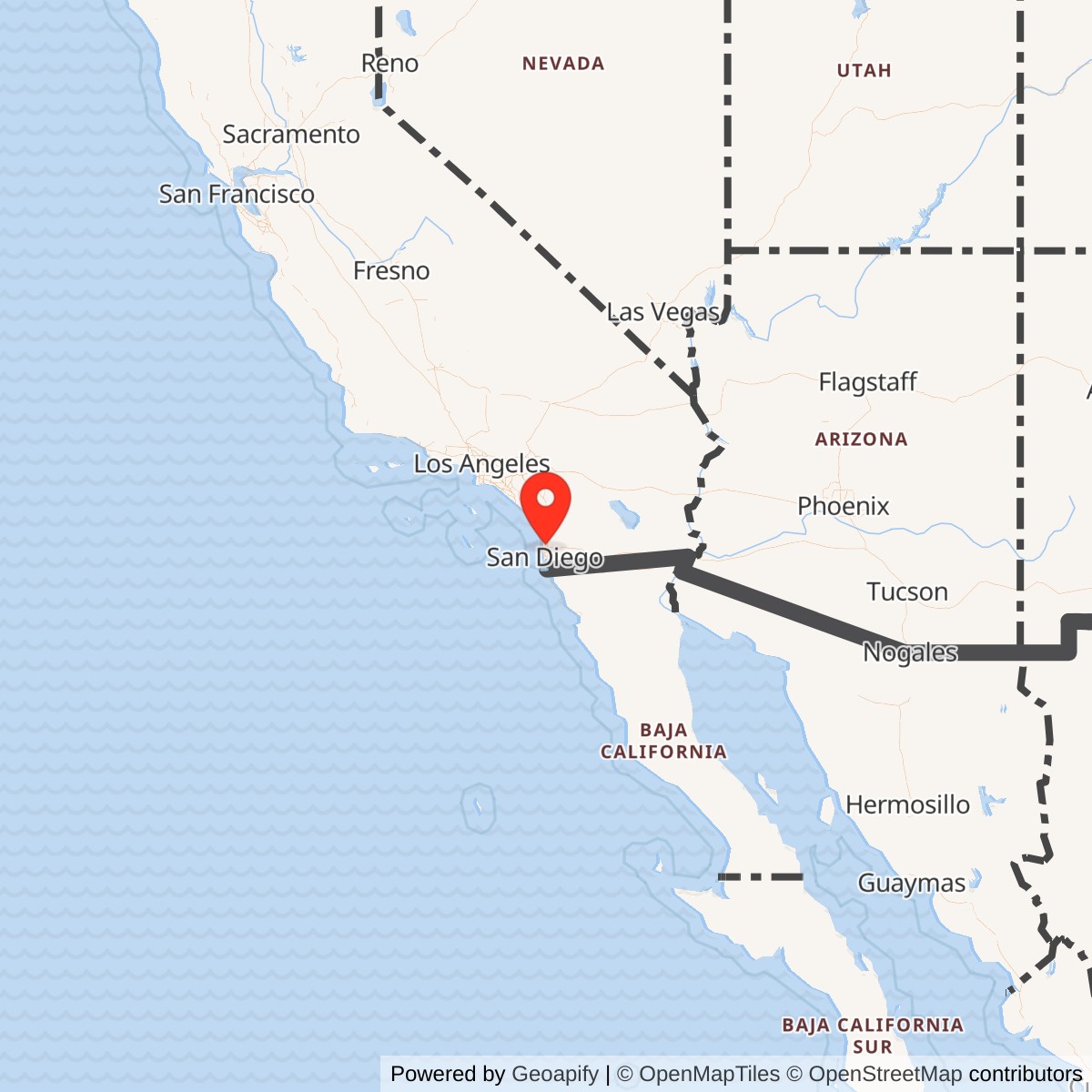
Longitude: -117.1425
Miramar is one of the comparatively rare American military installations whose history crosses major service boundaries without losing its underlying aviation purpose. The same Kearny Mesa landscape served the Army as Camp Kearny during World War I, the Navy as an interwar landing field and World War II auxiliary air station, the Marine Corps as an aviation depot and briefly as Marine Corps Air Station Miramar, the Navy again as one of its premier Pacific Fleet fighter bases, and the Marine Corps again after the 1997 realignment. Each transition changed the command structure, aircraft, buildings, and operational emphasis, but the site continued to matter because it combined a large airfield, extensive support space, favorable weather, and access to the broader Southern California military training network.
The commissioning of Naval Auxiliary Air Station Camp Kearny was on 1943-02-20. Its roots are older. The Navy had used the former Camp Kearny ground as an aviation landing field during the interwar period, and the Marine Corps simultaneously developed a separate aviation depot immediately north of the Navy airfield during World War II. Those adjacent facilities were temporarily combined as Marine Corps Air Station Miramar in 1946, transferred to Navy control in 1947, expanded into Naval Air Station Miramar during the jet age, and returned to the Marine Corps on 1997-10-01. The present installation is therefore a current Marine Corps base with a central and unusually long Navy phase.
The name Miramar also requires care. Camp Kearny was the World War I Army cantonment and later the geographic reference for the Navy's auxiliary air station. Marine Corps Air Depot Miramar was a separate wartime activity north of the Navy field. Naval Auxiliary Air Station Miramar, Naval Air Station Miramar, Mitscher Field, and Marine Corps Air Station Miramar describe later phases of the consolidated aviation property. Camp Elliott was a neighboring and eventually partly absorbed Marine Corps ground-training reservation east of the airfield. These names refer to related but not always identical boundaries, and the modern station includes land assembled through several transfers rather than a single unchanged parcel.
Strategic Geography and Physical Setting
Kearny Mesa offered military planners a combination that was increasingly scarce in coastal San Diego. The broad mesa stood inland from the congested waterfront but remained close to San Diego Bay, North Island, the naval supply system, and the city's rail and highway network. The region's generally favorable flying weather supported year-round aviation, while the open mesa allowed runways and training areas to be built with fewer immediate obstructions than at older urban airfields. The location also placed Miramar near a growing network of Navy and Marine Corps installations extending from San Diego and Coronado to Camp Pendleton, El Centro, Yuma, and the desert ranges farther east.That geography changed in meaning over time. Camp Kearny needed room for a large Army division and animal-drawn transportation. The interwar Navy valued a landing and emergency field that relieved pressure on coastal air stations. World War II planners needed a protected inland aviation plant, overhaul depot, staging point, and auxiliary field. The Cold War Navy required long runways, high-tempo jet operations, radar control, weapons training, and safety buffers around a master fighter base. The modern Marine Corps uses the same geographic position to connect fixed-wing, rotary-wing, tiltrotor, logistics, command-and-control, and ground-support units to a dense regional training network and to Indo-Pacific deployment routes.
The station's present footprint is often described as roughly 23,000 acres. Recent Marine Corps planning documents give approximately 23,065 acres, while earlier historical summaries rounded the property to about 24,000 acres. The difference reflects date, survey, and accounting conventions rather than a major contradiction. Much of the developed airfield, headquarters, housing, maintenance, and community-support area lies west of Interstate 15. East Miramar contains large tracts of chaparral, canyons, training areas, former ranges, environmental-restoration sites, and infrastructure inherited from Camp Elliott and later military uses.
Army Camp Kearny and the First Military Landscape
The first large military installation on Kearny Mesa was Camp Kearny, created during the emergency expansion that followed the United States' entry into World War I. San Diego was notified on 1917-05-24 that the Linda Vista area had been selected for a divisional camp. The city provided an initial five-year lease of about 8,000 acres without charge, and the government obtained additional maneuver land. Construction produced a temporary military city planned for approximately 30,000 soldiers and thousands of animals, with more than a thousand buildings and the roads, water, hospitals, warehouses, stables, and training grounds needed to sustain a full division.The 40th Division organized at Camp Kearny in September 1917 and drew heavily from National Guard organizations of western states. The camp population reached roughly 30,000 by November. Training reflected the Army of the period: infantry drill, rifle and machine-gun work, artillery, engineer activity, medical support, animal transport, and divisional field exercises. The division left in July 1918, and Camp Kearny later supported demobilization after the armistice. The Army closed the camp after the war, and most temporary structures disappeared, but roads, cleared ground, utilities, and the military familiarity of the property made later reuse easier.
The Army phase matters to the aviation history because it created a large federal-use landscape on Kearny Mesa before permanent aviation development. The former cantonment and maneuver lands provided open space in a region where military aviation was expanding rapidly. Even where the World War I building grid did not survive, the earlier camp established the mesa as a place where San Diego and the federal government could assemble, lease, and control land for military purposes. The later Navy and Marine Corps installations inherited both the geographic advantages and the complicated property history of Camp Kearny.
Interwar Naval Aviation
Naval aviation began using the former Camp Kearny area well before the World War II auxiliary station was commissioned. By the 1920s and 1930s the Navy needed additional landing grounds to support the expanding aviation establishment centered on North Island. The Kearny Mesa field provided emergency and training space away from the crowded coastal station. It also supported lighter-than-air activity during the era when the Navy operated the rigid airships USS Akron and USS Macon and experimented with long-range scouting systems linked to the Pacific Fleet.The interwar field remained modest compared with the later station, but improvements gradually made it more than a bare emergency strip. The Navy developed landing surfaces, fuel and support arrangements, and access from the old Camp Kearny road system. A paved landing field was present by the mid-1930s, and aviation use intensified as war approached. The site also had associated training features, including an outlying landing field and bombing target north of the main airfield. This dispersed pattern anticipated the larger World War II system in which the airfield, ranges, depots, and support areas operated as connected but physically separated components.
The interwar period established the continuity that later redesignations can obscure. Naval Auxiliary Air Station Camp Kearny was not built on an untouched mesa in 1943. It formalized and expanded a Navy aviation presence that had already existed for years. The World War II construction program replaced or absorbed earlier features, but the Navy chose the location because it was already tested as a useful auxiliary to the San Diego aviation system.
World War II Naval Auxiliary Air Station Camp Kearny
Increased wartime use transformed Camp Kearny from an outlying field into a commissioned auxiliary air station. On 1943-02-20 the Navy redesignated it Naval Auxiliary Air Station Camp Kearny. The installation supported multi-engine patrol and training activity, fleet aircraft movements, aviation support, and the larger mobilization of naval air power on the West Coast. As operations increased, the existing runway deteriorated under heavier use, and in July 1944 the Navy completed two concrete runways with taxiways and parking aprons. Those improvements created the durable airfield pattern from which postwar Miramar developed.The wartime Navy station was not isolated from the other military properties on the mesa. Immediately north of it, the Marine Corps established an aviation base and depot. East of the airfield, Camp Elliott trained Marines in ground-combat skills across a much larger reservation. The adjacent Navy and Marine Corps activities shared transportation corridors and supported the same Pacific war effort, but they retained separate commands and specific missions. The Navy field concentrated on aircraft operations and auxiliary-station functions. The Marine depot concentrated on receiving, assembling, repairing, modifying, storing, and distributing aviation equipment and vehicles.
The Navy's auxiliary station became a substantial activity by 1944. Concrete runways, aprons, fuel storage, ammunition magazines, maintenance spaces, communications, barracks, administration, medical support, security, and transportation facilities replaced the earlier image of a simple landing field. The station handled aircraft and personnel moving through the West Coast system while supporting training and fleet preparation. The pace was demanding, and wartime aviation carried serious risks. Secondary historical accounts identify several fatal PB4Y patrol-bomber accidents associated with Camp Kearny during 1944, including a cluster of losses during late May and early June. The exact details should be verified against individual accident records before assigning every casualty or aircraft to the field, but the record establishes that heavy multi-engine operations produced a real local accident burden.
The station also participated in the immense demobilization and material-processing task that followed victory. The airfield and neighboring depot had warehouses, hardstands, transportation assets, and administrative staffs capable of receiving personnel and equipment returning from overseas. This work was less visible than combat operations but essential to the transition from a wartime fleet to a smaller peacetime force. The scale of the property and its infrastructure helped prevent immediate abandonment even as wartime units departed.
Marine Corps Air Depot Miramar
The Marine Corps aviation activity north of the Navy field began arriving in late 1942. On 1943-03-01 the Marine Corps commissioned Marine Corps Aviation Base, Kearny Mesa, and on 1943-09-02 redesignated it Marine Corps Air Depot Miramar. The depot mission made the property more than an operating airfield. It received aircraft, engines, vehicles, components, and other equipment; performed inspection, repair, modification, assembly, storage, and distribution; and supported Marine aviation units preparing for Pacific operations.The depot's workforce included Marines, sailors, civilians, and members of the Marine Corps Women's Reserve. Women Marines performed clerical, transportation, administrative, and other support duties that allowed more men to move into overseas and operational assignments. As the war ended, the depot became a demobilization and separation center. More than 25,000 men were discharged through Miramar, while warehouses and storage areas filled with returning equipment that had to be inspected, repaired, reconditioned, re-crated, redistributed, or declared surplus.
Marine Corps Air Depot Miramar was decommissioned on 1946-05-01 and merged with the former Navy auxiliary station. The resulting installation was named Marine Corps Air Station Miramar. It served as headquarters for Marine Air, West Coast, supported Fleet Marine aviation and Navy multi-engine fleet aircraft, and operated a Pacific Coast vehicle pool for the Bureau of Aeronautics. This first Marine Corps air-station phase was short. In June 1947 Marine aviation headquarters and remaining units moved to Marine Corps Air Station El Toro, and the consolidated Miramar property passed back to Navy control.
Postwar Transfer and the Master Jet Station
The Navy formally took over the consolidated property on 1947-08-15 as Naval Auxiliary Air Station Miramar. The immediate postwar mission was limited compared with the later fighter base. The station supported medium land-based patrol aircraft, fleet movements, and the Bureau of Aeronautics vehicle pool. San Diego also explored possible joint civilian use during a period when military aviation budgets were contracting and the future of many wartime fields was uncertain.The strategic setting changed quickly. Jet aircraft required longer and stronger runways, expanded aprons, specialized maintenance, greater fuel capacity, modern electronics, and larger accident-clearance areas. The Navy's late-1940s Woods Plan directed development of Miramar as a master jet station for the Pacific Fleet. Construction and organizational changes accelerated during the Korean War. Historical sources differ slightly over whether the decisive full-station transition should be dated to 1951 or 1952. The most defensible chronology treats 1951 as the beginning of the full master-station conversion and 1952 as the formal redesignation to Naval Air Station Miramar.
Miramar's physical plant changed dramatically during this period. New runways, hangars, maintenance shops, supply facilities, fuel systems, barracks, family housing, administrative spaces, and utilities supported high-performance jet aircraft and a much larger permanent population. The Navy also needed buffer land beyond the original airfield because jet noise, approach patterns, and accident potential extended far outside the runway pavement. Land acquisitions and transfers during the late 1950s and 1960s expanded the installation and joined it to former Camp Elliott training ground.
Fightertown USA and the Cold War Jet Mission
By the mid-1950s Miramar had become a principal Pacific Fleet fighter station. The field received aircraft such as the F7U Cutlass and F8U Crusader, and the Navy formally named the airfield Mitscher Field in May 1955 in honor of Admiral Marc A. Mitscher, a central figure in naval aviation and fast-carrier operations. Nearly 400 jets were associated with the station by the middle of the decade. The combination of fleet fighter squadrons, replacement training, maintenance, weapons work, and intense flying made Miramar one of the Navy's most visible aviation installations.The name Fightertown USA emerged from this concentration of fighter aviation. By 1961 Miramar was widely identified with the title, which reflected more than public relations. The station trained and sustained carrier fighter squadrons, introduced new aircraft, developed aircrew proficiency, and supported deployment cycles for the Pacific Fleet. Fighters based or trained at Miramar operated from carriers across the Pacific and contributed to the Navy's Cold War deterrence posture.
Miramar expanded physically to sustain the jet mission. Beginning in 1958 the Navy acquired additional safety-buffer land west of the former highway corridor. By 1965 roughly 7,500 acres west of Highway 395 had been assembled, and on 1965-03-03 approximately 7,500 acres of former Camp Elliott property were transferred to the station. This eastern tract became East Miramar. The 1972 transfer of the former NASA Sycamore Canyon annex added another important piece of the modern reservation. These expansions gave the Navy both aviation safety buffers and land for training, communications, storage, environmental protection, and future development.
The station's operational tempo grew with its facilities. A joint Navy and Federal Aviation Administration Radar Air Traffic Control Center opened on 1970-07-17 and coordinated civilian and military aircraft in the congested San Diego region. By October 1968 Miramar was reported as the busiest military airfield in the United States and among the busiest airports of any kind. That volume reflected constant local training, carrier-deployment preparation, transient movements, instrument work, maintenance test flights, and the activity of multiple fleet and replacement squadrons.
Vietnam, Air Combat Training, and TOPGUN
The Vietnam War exposed serious weaknesses in American air-to-air combat performance. Missile-era assumptions had reduced emphasis on close-in fighter maneuvering, while combat experience showed that technology alone did not guarantee success. In response, the Navy established the Navy Fighter Weapons School at Miramar in 1969. The school, soon universally known as TOPGUN, developed an intensive course in air combat maneuvering, threat analysis, tactics, and instructor-level training.TOPGUN's placement at Miramar was logical. The station concentrated Pacific Fleet fighter squadrons, experienced instructors, maintenance support, radar control, and access to offshore and desert training airspace. Students could study enemy aircraft and tactics, fly demanding dissimilar-air-combat scenarios, and return to their fleet units as training multipliers. The first class graduated in April 1969. The program became one of the best-known examples of a military training institution changing operational performance through disciplined analysis and realistic practice.
Miramar's Vietnam-era role extended beyond the school. Fleet and replacement fighter squadrons prepared personnel and aircraft for carrier deployments to the Western Pacific. Aircrews trained in intercepts, formation tactics, weapons delivery, night and instrument operations, and carrier procedures. Maintenance and supply organizations sustained aircraft between deployments. The base itself was not a combat zone, but the daily work at Miramar directly supported naval operations over Southeast Asia.
F-14 Tomcat and Airborne Early Warning Era
On 1972-10-14 the Navy established the first two Pacific Fleet F-14 Tomcat squadrons at Miramar. The arrival of the F-14 marked another major technological transition. The aircraft combined long-range radar and missiles with high-performance air-combat capability and became the central Pacific Fleet carrier-defense fighter for the next generation. Miramar changed facilities, training, maintenance, and squadron organization to support the Tomcat.The F-14 era reinforced Fightertown's national image. Fleet squadrons cycled between Miramar and carrier deployments, while replacement training prepared new pilots, radar intercept officers, and maintainers. The base supported avionics, engines, weapons, simulators, ejection systems, and the large maintenance footprint required by the aircraft. F-14 squadrons associated with Miramar participated in Cold War cruises, crisis-response operations, combat air patrols, fleet exercises, and later operations in the Persian Gulf and Middle East.
On 1973-07-01 the Navy added airborne early warning squadrons and redesignated the major command as Commander Fighter-Airborne Early Warning Wing, U.S. Pacific Fleet. This broadened Miramar's system role. The station no longer supported fighter aviation alone. E-2 Hawkeye units provided airborne surveillance, command-and-control, and battle-management capabilities that linked carrier fighters, ships, and the wider fleet. During the 1980s the station also supported carrier air-wing staffs, readiness squadrons, adversary training, instrument training, and the Naval Air Facility at El Centro relationship.
Post-World War II Operations and Conflicts
Miramar's assigned units had extensive involvement in conflicts after World War II even though the installation itself remained in the United States. During the Korean War, the master-jet-station buildout supported the Navy's rapid expansion and the preparation of fighter units for carrier operations in the Far East. During the Vietnam War, Miramar squadrons and replacement organizations supplied trained fighter crews and maintained aircraft for repeated Pacific deployments. TOPGUN was created directly from the lessons of that conflict and became a lasting institutional response.During the later Cold War, Miramar-based carrier fighter and early-warning units participated in fleet deployments across the Pacific and Indian Oceans, crisis operations, and exercises with allied forces. Individual units associated with the station supported operations connected with Lebanon, Libya, the Persian Gulf, and the final decades of confrontation with the Soviet Union. The exact deployment record belongs to each squadron and carrier air wing, but Miramar was the shore base that regenerated personnel, aircraft, and training between cruises.
The Persian Gulf War demonstrated the operational value of the carrier-aviation system sustained at Miramar. Fighter, airborne early warning, maintenance, and air-wing organizations connected to the station deployed in support of Operations Desert Shield and Desert Storm. In the 1990s Miramar units continued to support no-fly-zone enforcement and contingency operations while the Navy prepared to leave the station under Base Realignment and Closure decisions.
The Marine Corps phase after 1997 brought a different but equally direct connection to combat. Headquarters and units of 3rd Marine Aircraft Wing at Miramar deployed in support of Operations Enduring Freedom and Iraqi Freedom, including major aviation operations during the 2003 invasion of Iraq and repeated rotations afterward. Wing organizations also supported humanitarian relief, theater security cooperation, Operation Inherent Resolve, and later Indo-Pacific exercises. Miramar-based aviation groups supplied fighters, tankers, helicopters, tiltrotors, logistics, air control, and headquarters elements, making the station a home base for units that operated across several combat theaters.
BRAC and Return to the Marine Corps
The 1993 Base Realignment and Closure decision reshaped military aviation in Southern California. Rather than close Miramar, the Department of Defense directed the Navy to leave and the Marine Corps to consolidate aviation missions from Marine Corps Air Stations El Toro and Tustin at the San Diego installation. TOPGUN and major Navy fighter functions moved to Naval Air Station Fallon in Nevada, while other Navy units relocated to bases better aligned with carrier aviation requirements.The official changeover occurred on 1997-10-01, when Naval Air Station Miramar became Marine Corps Air Station Miramar. The transfer was not merely a change of signs. Marine personnel, aircraft, equipment, and support activities from El Toro and Tustin moved to the station over several years. Fixed-wing fighter and tanker units, helicopter and later tiltrotor squadrons, aviation logistics, air control, headquarters, and installation-support organizations had to be integrated into a base designed around the former Navy fighter mission.
The closures of El Toro and Tustin in 1999 made Miramar the principal Marine aviation center in the San Diego area. The station inherited the historic Navy airfield and the training lands of East Miramar while becoming the headquarters home of 3rd Marine Aircraft Wing. The transition preserved the military aviation use of Miramar but changed its operational logic from a carrier-fighter shore base to a Marine Air-Ground Task Force aviation hub.
Current Mission
Marine Corps Air Station Miramar's current mission is to maintain and operate the station's facilities and property while providing services, material support, and training venues that promote combat readiness for 3rd Marine Aircraft Wing and other tenants. On order, the station serves as a power-projection platform for Joint Force operations in the Indo-Pacific Command area. The base supports more than 15,000 service members and family members from multiple services, along with civilian and contractor personnel.The installation functions as both an airfield and a wider military community. Headquarters and Headquarters Squadron operates the station and provides administrative, airfield, security, emergency, logistics, communications, and community services. 3rd Marine Aircraft Wing headquarters coordinates aviation combat power across several groups and bases. Miramar's tenant population also includes Navy activities, medical and support organizations, reserve elements, and the Naval Consolidated Brig Miramar.
The current flying mission includes fixed-wing fighters, aerial refueling and transport aircraft, helicopters, and tiltrotors. The station supports F/A-18 and F-35 operations, KC-130 aerial refueling and transport, CH-53 heavy-lift helicopters, MV-22 tiltrotors, and associated training aircraft. It also supports the maintenance, supply, command-and-control, ground support, simulators, weapons handling, fuel, crash rescue, and air traffic functions required to operate those fleets.
Units, Organizations, and Systems
The principal assigned command is 3rd Marine Aircraft Wing. The wing traces its history to 1942 and has participated in World War II, the Korean War era, Vietnam-era force development, Operations Desert Shield and Desert Storm, humanitarian operations in Somalia, Operations Enduring Freedom and Iraqi Freedom, Operation Inherent Resolve, and other contingencies. At Miramar, the wing headquarters integrates aircraft groups, an air-control group, a headquarters squadron, logistics, communications, and support organizations across Southern California and Arizona.Marine Aircraft Group 11 is the station's principal fixed-wing group. Its current organization includes fighter and fighter-attack squadrons, an F-35 training squadron, a KC-130 aerial-refueling and transport squadron, aviation logistics, and wing-support functions. Group aircraft and personnel have participated in combat from World War II through the Persian Gulf, Iraq, Afghanistan, and later operations. The group's Miramar mission includes maintaining combat-ready squadrons, conducting advanced aviation training, supporting deployments, and managing the transition to newer aircraft.
Marine Aircraft Group 16 is the principal rotary-wing and tiltrotor group at Miramar. Its squadrons operate MV-22 Ospreys and CH-53 heavy-lift helicopters and are supported by Marine Aviation Logistics Squadron 16 and ground-support organizations. MAG-16 units have served in Vietnam, the Persian Gulf, Somalia, Iraq, Afghanistan, disaster relief, and other expeditionary missions. Their presence gives Miramar a major vertical-lift and assault-support role that did not exist during the Navy fighter era.
Marine Air Control Group 38 provides command, control, communications, air surveillance, air-defense, and aviation-support capabilities. Its headquarters moved to Miramar in October 1998 during the consolidation from El Toro and Tustin. Group units have supported Operations Southern Watch, Enduring Freedom, Iraqi Freedom, and later expeditionary operations. The group connects aircraft to the wider Marine Air-Ground Task Force by providing air traffic control, radar, communications, low-altitude air defense, and direct air-support coordination.
Marine Wing Headquarters Squadron 3 supports the wing command element, while Headquarters and Headquarters Squadron operates the installation. Marine Fighter Attack Training Squadron 502 moved to Miramar in 2022 to train F-35B pilots and maintainers, adding a formal fifth-generation replacement-training role. Other units and tenants change as aircraft transition and force structure evolves, so a current squadron roster should be checked against official unit pages rather than treated as permanent.
During the Navy era, the installation hosted fighter squadrons, fleet replacement squadrons, airborne early warning squadrons, adversary and instrument-training units, carrier air-wing staffs, the Navy Fighter Weapons School, and the headquarters responsible for Pacific Fleet fighter and airborne early warning readiness. Those commands made Miramar a system-level base rather than a collection of unrelated squadrons. Training, maintenance, supply, radar control, intelligence, and tactics development were coordinated to prepare deployable carrier air-wing components.
Facilities and Physical Layout
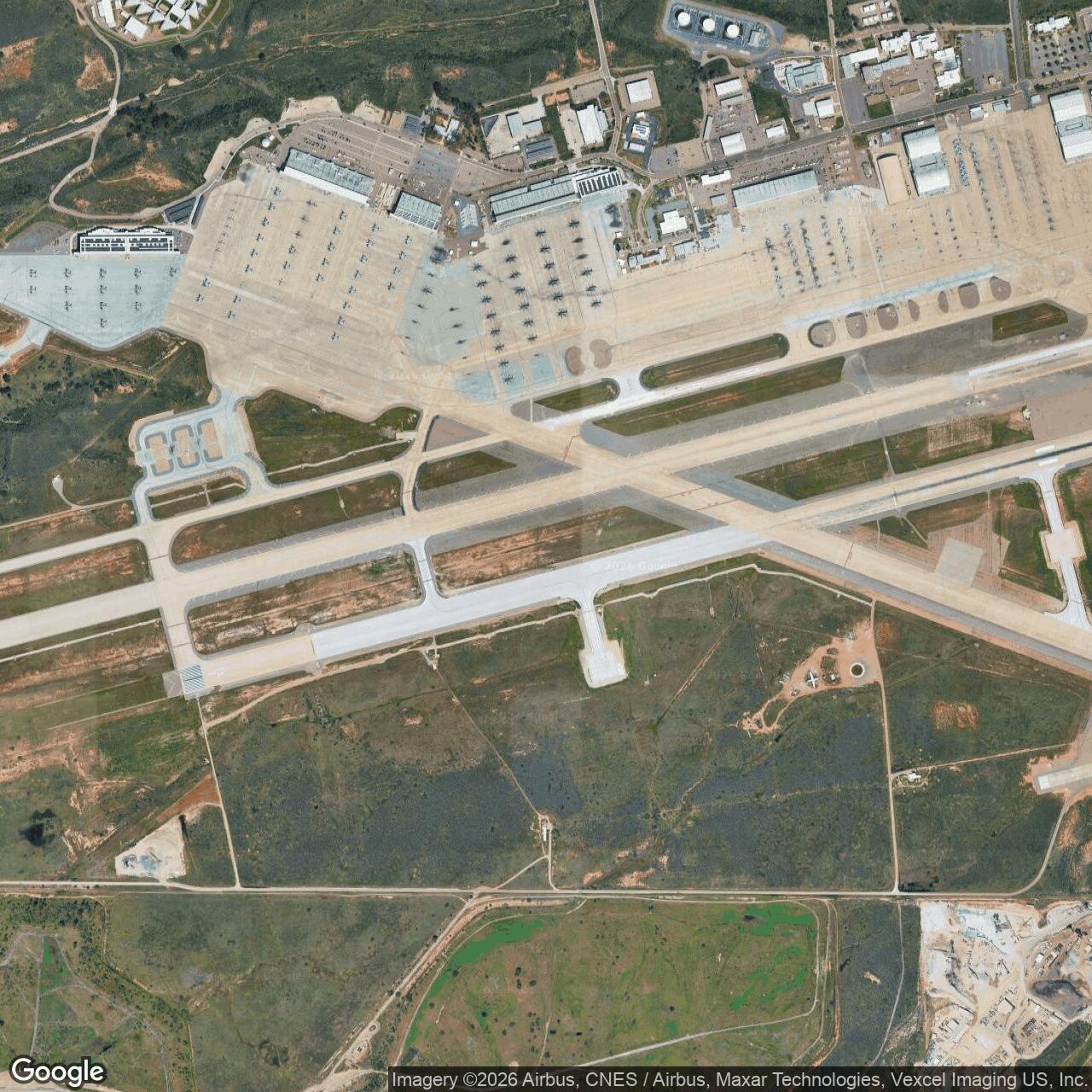
Mitscher Field is the operational center of the installation. The modern airfield has two principal parallel runways. Runway 6L/24R is approximately 12,000 feet long and 200 feet wide, and Runway 6R/24L is approximately 8,000 feet long and 200 feet wide. Taxiways, aprons, arresting systems, navigation aids, air traffic control, lighting, fuel distribution, and emergency services support high-performance military aircraft. Historical plans also identified a short emergency crossing runway and specialized landing areas, but the two major parallel runways define current flight operations.The developed western station includes hangars, squadron lines, aviation maintenance, supply, weapons facilities, headquarters, barracks, family housing, schools, medical and dental services, exchanges, recreation, fire and emergency services, security, utilities, and community support. Many buildings date from successive Navy and Marine Corps construction programs rather than one period. World War II structures, Cold War jet-age hangars, post-BRAC Marine facilities, and modern F-35 and helicopter-support projects coexist in a continuously modified landscape.
East Miramar is less developed but militarily essential. It includes training areas, former weapons ranges, maneuver land, communications sites, utility corridors, natural-resource habitat, and environmental-restoration areas. Marine Corps planning documents identify thousands of acres assigned to ground training, including weapons qualification, bivouac, explosive-ordnance-disposal work, and other field activities. This land also provides a buffer between the flight line and surrounding urban development.
The station's layout reflects the accumulation of predecessor properties. The original Navy airfield and Marine depot formed the western aviation core. Former Camp Elliott land expanded the station eastward. The Sycamore Canyon property added specialized Cold War infrastructure, including the former Atlas missile-related site. Later transfers created Miramar National Cemetery on approximately 300 acres associated with the western installation landscape. These different areas should not be collapsed into a single undifferentiated airfield parcel.
Significant Incidents, Accidents, and Emergency Response
Aviation operations at Miramar have always carried risk. World War II patrol-bomber training and staging produced fatal accidents, and the jet era introduced higher speeds, greater fuel loads, and more complex systems. The station's accident history includes aircraft losses on or near the property and incidents involving assigned units away from home station. A complete list would require squadron and Naval Safety Center records, but several events illustrate the operational burden.On 2008-12-08 an F/A-18D approaching Miramar crashed in San Diego's University City neighborhood. Four civilians were killed, two homes were destroyed, and others were damaged. The event became one of the station's most serious community tragedies and intensified attention to flight safety, approach paths, emergency response, and the relationship between a major military airfield and surrounding urban neighborhoods.
On 2023-08-24 a VMFA(AW)-224 F/A-18D crashed on government property east of the station during a training flight, killing the pilot, Major Andrew Mettler. The location prevented civilian casualties, but the loss underscored the continuing hazards of tactical aviation training. Station fire, security, medical, investigative, and environmental personnel responded as part of a coordinated military emergency system.
Miramar also maintains substantial emergency-response capability because of its aircraft mix, fuel systems, weapons areas, wildland terrain, and dense urban surroundings. Aircraft rescue and firefighting, structural fire protection, hazardous-material response, explosive-ordnance disposal, security, medical support, and mutual-aid relationships with local agencies are not secondary services. They are essential operational systems that allow the installation to conduct high-tempo flying and ground training safely.
Environmental Restoration and Natural Resources
Miramar's long history produced an equally long environmental legacy. Fuel farms, landfills, disposal areas, maintenance shops, firing ranges, former training grounds, jet-engine test areas, underground storage tanks, and specialized Cold War facilities created sites requiring investigation, cleanup, controls, or long-term monitoring. The Marine Corps Environmental Restoration Program manages both Installation Restoration sites and Munitions Response sites with Navy facilities engineering support and oversight from California regulators.The current environmental program identifies twenty-one Installation Restoration sites in the historical inventory, with eight listed as active on the station's public program page. Active or recently active areas include fuel-farm operations, Rose Canyon, the San Clemente Canyon disposal area, the Sycamore Canyon Atlas Missile Facility, the former gun club, another San Clemente disposal area, and Camp Elliott demolition-related soil contamination. Some former sites, including the North and South Miramar landfills, were transferred to the City of San Diego, while many other sites have been closed after investigation or remediation.
The munitions-response program addresses former ranges and areas where unexploded ordnance, discarded military munitions, or munitions constituents may remain. The public program page lists several active or open locations, including the 1980 skeet range, former pistol ranges, and Rifle Range 200 Targets, while other former ranges have been closed or removed from the program. These sites are a direct consequence of Camp Elliott and later weapons-training use and demonstrate why East Miramar remains a managed military landscape rather than simply undeveloped open space.
The station also contains significant natural habitat. Coastal sage scrub, chaparral, riparian corridors, vernal resources, canyons, and undeveloped training lands support sensitive species in the middle of metropolitan San Diego. Natural-resource management therefore has to balance combat readiness, fire management, endangered-species protection, invasive-species control, erosion, and public concern. The large eastern reservation provides both military training space and one of the region's important connected habitat areas.
Current Status
Marine Corps Air Station Miramar remains an active and strategically important installation. It is the headquarters home of 3rd Marine Aircraft Wing and supports fixed-wing, rotary-wing, tiltrotor, aerial-refueling, logistics, command-and-control, training, and installation-support missions. The base retains the two principal runways of Mitscher Field, large aviation-maintenance and squadron areas, extensive community facilities, and East Miramar training lands.The station's active status does not erase its Navy history. The runway system, Fightertown identity, TOPGUN association, F-14 heritage, radar-control infrastructure, and many Cold War facilities remain central to public memory. At the same time, the modern mission is Marine Corps expeditionary aviation rather than Pacific Fleet carrier-fighter basing. Current units prepare for joint operations, amphibious and expeditionary support, humanitarian response, and Indo-Pacific contingencies.
Chronology
- 1917-05-24 San Diego was notified that the Linda Vista area had been selected for a World War I divisional training camp.
- 1917-09-16 The 40th Division was organized at Camp Kearny.
- 1917-11 Camp Kearny's population reached approximately 30,000 soldiers.
- 1918-07-26 The 40th Division departed Camp Kearny for overseas movement and further wartime service.
- 1919 Camp Kearny supported demobilization and then closed as a major Army cantonment.
- 1920s-1930s The Navy used the former Camp Kearny ground as an auxiliary and emergency aviation field supporting the San Diego naval aviation complex.
- 1936 The Kearny Mesa naval landing field had been improved with a paved operating surface.
- 1939 The Navy's outlying field and bombing target north of the main airfield were in use.
- 1942-11 The first Marine personnel arrived to establish an aviation base and depot north of the Navy field.
- 1943-02-20 The Navy redesignated the developed field Naval Auxiliary Air Station Camp Kearny.
- 1943-03-01 Marine Corps Aviation Base, Kearny Mesa, was commissioned north of the Navy station.
- 1943-09-02 The Marine activity was redesignated Marine Corps Air Depot Miramar.
- 1944-07 Two concrete runways, taxiways, and parking aprons were completed at NAAS Camp Kearny.
- 1944 Heavy multi-engine Navy aviation activity included a series of fatal patrol-bomber accidents associated with the Camp Kearny operation.
- 1945 The Navy station and Marine depot shifted increasingly toward demobilization, separation processing, equipment return, and material disposition.
- 1946-05-01 Marine Corps Air Depot Miramar was decommissioned and merged with the Navy auxiliary station to form Marine Corps Air Station Miramar.
- 1947-06 Marine Air, West Coast, and remaining Marine aviation units moved from Miramar to MCAS El Toro.
- 1947-08-15 The consolidated property formally transferred to Navy control as Naval Auxiliary Air Station Miramar.
- 1949 The Navy's Woods Plan directed development of Miramar as a master jet station.
- 1951 Major construction and organizational conversion toward full master-jet-station status accelerated.
- 1952-04-01 Official planning histories commonly date the formal redesignation as Naval Air Station Miramar to this date.
- 1954 F7U Cutlass operations illustrated Miramar's emergence as a major jet-fighter base.
- 1955-05 The airfield was named Mitscher Field.
- 1957 F8U Crusader operations strengthened the station's Pacific Fleet fighter mission.
- 1958-08 The Navy began acquiring additional safety-buffer land around the station.
- 1961 Miramar became widely known as Fightertown USA.
- 1965-03-03 Approximately 7,500 acres of former Camp Elliott land were transferred to NAS Miramar, forming a major part of East Miramar.
- 1968-10 Miramar was reported as the busiest military airfield in the United States and one of the busiest airports nationally.
- 1969-04 The first Navy Fighter Weapons School class graduated at Miramar.
- 1970-07-17 The joint Navy and FAA Radar Air Traffic Control Center opened.
- 1972-10-14 The first two Pacific Fleet F-14 Tomcat squadrons were established at Miramar.
- 1972-12 Former NASA Sycamore Canyon property transferred to the Navy and became part of the station.
- 1973-07-01 The addition of airborne early warning squadrons led to redesignation of the major command as Commander Fighter-Airborne Early Warning Wing, U.S. Pacific Fleet.
- 1980s Miramar supported fighter, airborne early warning, carrier air-wing, replacement-training, adversary, instrument-training, and range-related organizations during the final Cold War decade.
- 1991 Miramar-associated fleet aviation units supported Operations Desert Shield and Desert Storm.
- 1993-09 The Base Realignment and Closure decision directed closure of MCAS El Toro and MCAS Tustin and realignment of NAS Miramar as a Marine Corps air station.
- 1996 TOPGUN and major Navy fighter-training functions relocated from Miramar to NAS Fallon.
- 1997-10-01 Naval Air Station Miramar officially became Marine Corps Air Station Miramar.
- 1998-10 Marine Air Control Group 38 headquarters relocated to Miramar during the Southern California Marine aviation consolidation.
- 1999 MCAS El Toro and MCAS Tustin closed, completing the major transfer of Marine aviation missions to Miramar.
- 2001-2021 Miramar-based 3rd Marine Aircraft Wing units supported Afghanistan, Iraq, Operation Inherent Resolve, and related global contingency operations.
- 2003 3rd Marine Aircraft Wing units operating from the Miramar system supported the invasion of Iraq and subsequent combat operations.
- 2008-12-08 An F/A-18D approaching Miramar crashed in University City, killing four civilians and destroying two homes.
- 2010-01 Miramar National Cemetery was dedicated on former or transferred station land; the first burial occurred later that year.
- 2020-01-21 VMFA-314 received its first F-35C, marking a major step in the station's fifth-generation fighter transition.
- 2022-01-10 VMFAT-502 transferred to Miramar to conduct F-35B replacement training.
- 2023-08-24 A VMFA(AW)-224 F/A-18D crashed on government property east of the station, killing the pilot.
- Present MCAS Miramar remains an active Marine Corps aviation installation, headquarters home of 3rd Marine Aircraft Wing, and an Indo-Pacific power-projection platform.
Sources & References
- WEB Marine Corps Air Station Miramar, "About MCAS Miramar" Source for current station mission, population, strategic setting, and Indo-Pacific role.
- PDF Marine Corps Air Station Miramar Environmental Management System, "Detailed History of Miramar" Source for Camp Kearny, Navy, Marine Corps depot, jet-base, TOPGUN, F-14, BRAC, and property chronology.
- WEB Marine Corps Air Station Miramar, official home page Source for current installation identity, commands, services, and public information.
- WEB 3rd Marine Aircraft Wing, "History" Source for wing lineage, combat service, and post-World War II operational history.
- WEB 3rd Marine Aircraft Wing, "Marine Aircraft Group 11" Source for current fixed-wing group organization, mission, aircraft, and combat history.
- WEB 3rd Marine Aircraft Wing, "Marine Aircraft Group 16" Source for current rotary-wing and tiltrotor group organization, mission, and operational history.
- WEB 3rd Marine Aircraft Wing, "Marine Air Control Group 38" Source for current air-control mission, Miramar relocation, and contingency-service history.
- WEB 3rd Marine Aircraft Wing, "Marine Fighter Attack Training Squadron 502" Source for the F-35B training squadron and its 2022 transfer to Miramar.
- WEB Marine Corps Air Station Miramar Environmental Management System, "Environmental Restoration" Source for active Installation Restoration and Munitions Response programs and site status.
- PDF Marine Corps Air Station Miramar, "Integrated Natural Resources Management Plan" Source for installation acreage, training lands, natural resources, and current land management.
- PDF Marine Corps Air Station Miramar, "Air Installations Compatible Use Zones Study" Source for airfield layout, runway dimensions, aircraft operations, noise, and accident-potential planning.
- WEB Naval History and Heritage Command, "TOPGUN: The Navy Fighter Weapons School" Source for the 1969 creation and early history of the Navy Fighter Weapons School.
- WEB Naval History and Heritage Command, "Naval Aviation News: TOPGUN" Source for TOPGUN training, tactics development, and fleet influence.
- WEB Naval Facilities Engineering Systems Command, "Former NAS Miramar" Source for Navy-era environmental restoration and installation history.
- WEB U.S. Environmental Protection Agency, "MCAS Miramar Federal Facility Profile" Source for federal-facility environmental identification and regulatory context.
- PDF Marine Corps Air Station Miramar, "Community Involvement Plan" Source for cleanup-site history, public involvement, and historical Installation Restoration and Munitions Response status.
- WEB Marine Corps Air Station Miramar, "Natural Resources" Source for habitat, species, fire, and environmental-management context.
- WEB Marine Corps Air Station Miramar, "Air Installations Compatible Use Zones" Source for current airfield compatibility, noise, and community-planning information.
- WEB Federal Aviation Administration data through AirNav, "KNKX MCAS Miramar" Source for representative airfield coordinates and current runway dimensions.
- WEB National Cemetery Administration, "Miramar National Cemetery" Source for the cemetery's establishment, location, and present federal use.
- WEB California State Military Museum, "Marine Corps Air Station Miramar" Source for supplementary historical photographs, wartime aviation, unit activity, and accident context.
- WEB U.S. Marine Corps, "Pilot killed in F/A-18D mishap near MCAS Miramar" Source for the 2023 training accident and pilot identification.
- WEB Marine Corps Air Station Miramar, "MCAS Miramar Air Show" Source for current public aviation outreach and the continuing presentation of station capabilities.