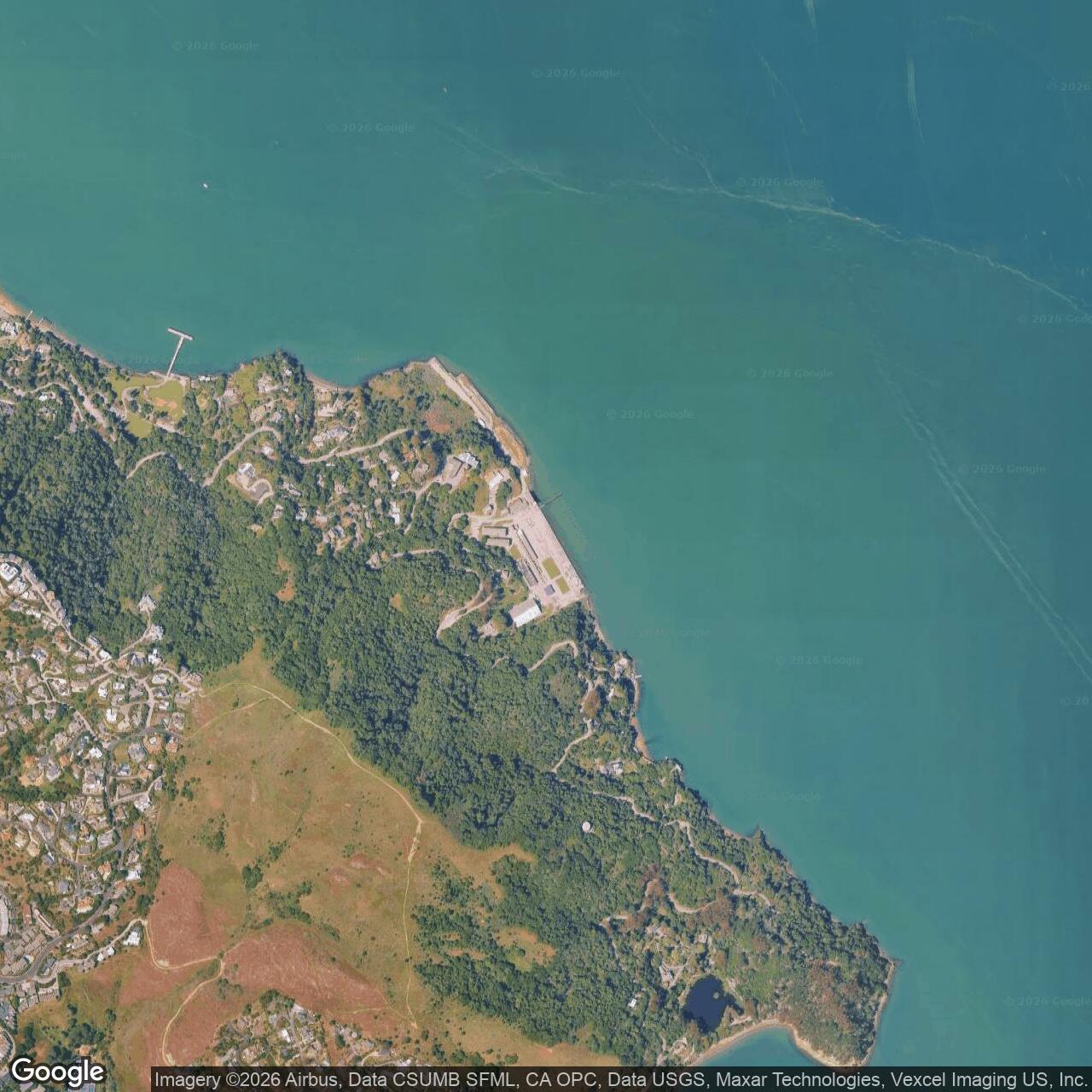
Naval Net Depot, Tiburon California
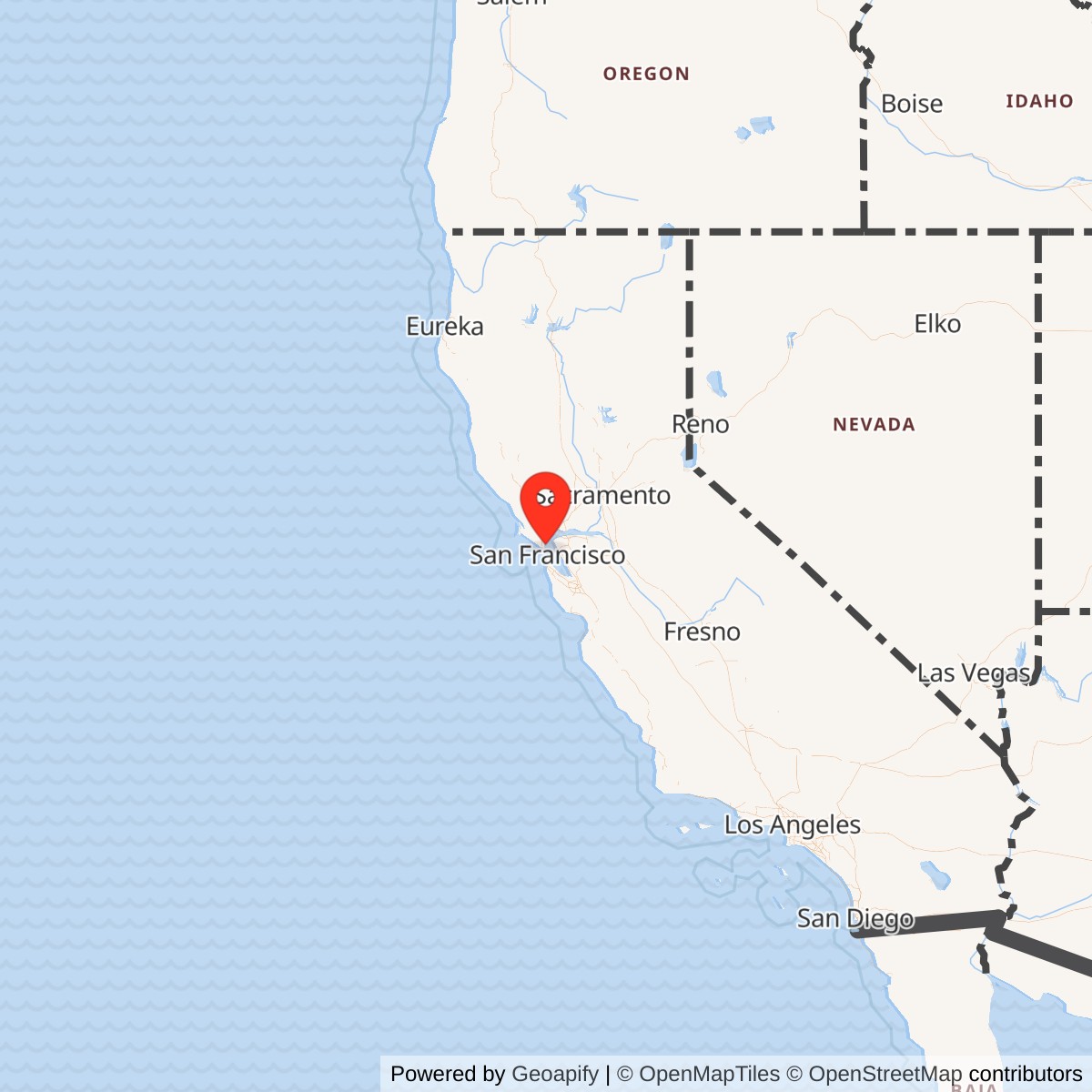
Longitude: -122.44676
Current Role: Former Navy coaling station and net depot site; now associated with Romberg Tiburon Campus / marine science uses and nearby county parkland; depot remnants and historic features remain in the landscape.
Naval Net Depot, Tiburon was a U.S. Navy shore installation on the east side of the Tiburon Peninsula, just inside the Golden Gate and across the bay from San Francisco. Its World War II identity was highly specialized: it was a net, boom, storage, training, and harbor-defense depot tied directly to the protection of San Francisco Bay and to the distribution of anti-submarine and anti-torpedo nets throughout the Pacific. The installation was commissioned on 1 August 1940, but its Navy story began earlier. The United States purchased the waterfront property in 1904, opened the Navy Coaling Station at Tiburon in 1909, closed the coaling station during the Depression in 1931, loaned the site for the California Nautical School, then reclaimed the property when the approach of World War II made San Francisco Bay defense urgent.
The site was valuable because of geography. Tiburon sits on a naturally protected deep-water shoreline inside the Golden Gate. From the Navy's perspective, the location had several advantages at once: it could handle large ships; it faced the entrance channel to one of the most important naval, commercial, and shipbuilding regions on the West Coast; it had older coaling-station piers, cranes, sheds, open working areas, and rail connections; and it was close enough to Mare Island, Hunters Point, San Francisco, Richmond, Alameda, and other Bay Area defense-industrial sites to operate as part of a larger naval system. The same infrastructure that once moved coal to battleships could move heavy steel net sections, floats, buoys, anchors, and boom gear to ships and harbor-defense sites.
The installation was not a fleet base in the ordinary sense and was not a shipyard. It was a specialized industrial and training station. Its work was practical, heavy, and maritime: fabricate or assemble net panels, handle massive lengths of steel cable, prepare floats and pontoons, train sailors and officers to install and maintain harbor nets, stage and repair anti-submarine and anti-torpedo net equipment, and support net tenders operating in the 12th Naval District and across the Pacific. Its most famous product was the massive protective net across the Golden Gate approach to San Francisco Bay, stretching from the Marin side toward the San Francisco waterfront. During the war, the installation also gained a closely related northern annex, the Floating Drydock Training Center Annex, where Navy personnel learned forward-area ship-repair and floating-drydock techniques for Pacific operations.
Mission Evolution
The first Navy mission at Tiburon was coaling. In the age of coal-fired battleships, the Navy needed a West Coast fueling station near deep water and close to the route out of San Francisco Bay. The Tiburon property had begun as a nineteenth-century codfishery and industrial waterfront, but after the United States acquired it in 1904 the Navy developed it into the Navy Coaling Station, Tiburon. The station opened in 1909 with large piers, coal-handling equipment, chutes, and supporting buildings. In 1908, during the Great White Fleet's world cruise, U.S. battleships and escorts fueled at Tiburon before heading across the Pacific. The site therefore entered naval history as a logistics and fueling point before it became a net depot.That first mission faded as the Navy shifted from coal to oil. By the 1920s, coal infrastructure was increasingly obsolete, and the Washington Naval Treaty era reduced the need to sustain older coal-burning battleships. The Navy closed the Tiburon coaling station in 1931. The same waterfront then took on a training role outside direct Navy operation when California used the property for its first nautical training school, the ancestor of the California Maritime Academy. Cadets trained there in the 1930s, and John A. Roebling's Sons Company used part of the property to reel cables during Golden Gate Bridge construction. Those uses preserved the maritime character of the site even while it was not an active naval base.
The outbreak of war in Europe changed the installation's future. The Navy reclaimed the Tiburon property in 1940 and commissioned the Tiburon Naval Net Depot on 1 August 1940. The new mission reflected the vulnerability of harbor entrances in an age of submarines, mines, torpedoes, and long-range naval raiders. The Navy needed anti-submarine and anti-torpedo barriers for important Pacific and West Coast harbors, and it needed people trained to handle those barriers under operational conditions. Tiburon became a storage and distribution center for nets sent to Navy bases along the West Coast and across the Pacific. It also became a training station where men learned how to assemble, install, use, maintain, and repair those heavy defensive systems.
The largest single project associated with the depot was the Golden Gate net. Historical summaries describe it as a seven-mile barrier weighing about 6,000 tons, built and installed across the entrance to San Francisco Bay from the Sausalito / Marin side toward the San Francisco Marina area. It was substantially complete before the Japanese attack on Pearl Harbor. A Navy citation later credited the depot with completing the Golden Gate net and installing it before 7 December 1941, emphasizing its contribution to West Coast defense. This gave Tiburon a direct role in the wartime defense of the San Francisco Bay Area before the United States had fully entered the war.
The mission expanded again in 1942 with the Floating Drydock Training Center Annex at Paradise Cove, just north of the main net depot. The annex was begun in November 1942 and considered usable by January 1943. It trained several thousand officers and men for overseas ship-repair activity in the Far Pacific, including personnel who would work with floating dry docks, mobile repair facilities, and salvage or forward-area maintenance systems. The annex was disestablished in 1944 after the immediate training requirement had been met, but during its short life it gave the Tiburon naval complex a second wartime identity: not only harbor defense, but forward naval repair training.
After World War II, the depot did not disappear immediately. It continued in use as a Navy training center for the United States and allied personnel. It was recommissioned during the Korean War, when renewed Pacific tensions briefly revived the need for a net supply and repair depot. By the later 1950s, however, harbor nets had declined in importance, the Navy was retrenching, and the specialized Tiburon mission no longer justified an active depot. The depot closed in March 1958 and remained in caretaker status until 1964.
Operational Role
The daily work of Naval Net Depot, Tiburon was industrial seamanship. Anti-submarine and anti-torpedo nets were not small pieces of gear. They were large, heavy systems built from steel cable, rings, floats, gates, buoys, anchors, and "clumps" designed to hold a barrier in position against tides, currents, ship traffic, and possible enemy action. At Tiburon, enlisted sailors, civilian workers, riggers, trainers, and support personnel handled heavy wire rope and net panels on open pads, piers, and old coaling-station working surfaces. The installation's surviving visual record repeatedly shows the practical nature of the mission: cable coils, ball floats, gantry equipment, piers, sheds, and men moving material rather than ceremonial parade grounds or traditional barracks-centered base life.The Golden Gate barrier was the depot's best-known operational achievement. San Francisco Bay was one of the most important American military-industrial waterfronts in the Pacific war. It included shipyards, naval facilities, Army ports, repair yards, embarkation functions, and major commercial docks. The defensive logic was simple: an enemy submarine that entered the bay could threaten shipping, morale, and war production. The net line created a physical underwater barrier while allowing controlled vessel access through gates. Tiburon's role was to turn that concept into a working system before war actually reached the United States. By the time of Pearl Harbor, the installation had already made the Golden Gate a much harder target.
Tiburon also served a wider Pacific system. Nets and net components were sent from the depot to naval bases along the West Coast and across the Pacific. Net vessels and tenders used Tiburon as an operating or support point. Navy ship-history records show that the net layer Cohoes served at Tiburon Net Depot after arriving from the Central Pacific in December 1945 and remained there into April 1946. Other net vessels associated with the 12th Naval District and the Pacific net system operated in the same functional world: laying, maintaining, salvaging, towing, and removing nets, buoys, and harbor-defense gear. The depot was therefore both a factory-like shore activity and a support base for specialized vessels.
The depot's training mission was just as important as its production and distribution mission. Harbor nets were only useful if personnel knew how to install, maintain, open, close, and repair them. Students at Tiburon learned the rigging, handling, and operational practices needed to make these barriers work. Training included the physical use of nets and booms, field installation procedures, and maintenance methods for systems that were exposed to salt water, heavy loads, and constant movement. The work demanded mechanical skill and maritime discipline more than glamour.
The Floating Drydock Training Center Annex added another operational layer. Mobile dry docks were essential to Pacific warfare because damaged ships could not always return to major continental yards. Floating dry docks could be built in sections, moved forward, assembled in combat areas, and used to repair vessels closer to the theater. At Tiburon's annex, thousands of officers and men trained for this overseas repair mission. Local historical material identifies about 4,000 personnel trained there, including roughly 1,000 deep-sea divers. The annex's short life reflected wartime urgency: acquire land, build barracks and support buildings quickly, house trainees before all utilities were complete, and push trained repair personnel into the Pacific system.
The installation also shaped local life in Tiburon. The depot and annex brought enlisted personnel, civilians, ship-repair trainees, divers, riggers, and naval mechanics into a small waterfront community. Sailors interacted with local churches, businesses, transportation, recreation, and weekend social life. The military landscape extended beyond fences and piers into Main Street, local baseball games, impromptu dances, and ferry or ship traffic connecting Tiburon with San Francisco. Like many wartime installations, Tiburon was simultaneously a specialized defense facility and a social disruption that changed the tempo of a local community.
Facilities and Physical Layout
The former Naval Net Depot occupied the east shore of the Tiburon Peninsula along Paradise Drive. The core site included the old coaling-station waterfront, docks, warehouses, concrete trestles, working pads, storage buildings, administrative and support buildings, and later net-depot facilities. Much of the original coaling infrastructure was reused because it was well suited to handling heavy material. The enormous net sections, floats, cable, and anchors required cranes, open waterfront surfaces, piers, and deep-water access. Tiburon's earlier industrial form therefore made it unusually adaptable to net-depot work.The 1909 coaling station had been organized around U-shaped piers, movable platforms, coal chutes, support buildings, and heavy waterfront handling. As a net depot, those features became assets rather than relics. Heavy gantries and open working areas helped move net material from land to vessels and from storage to assembly points. The older infrastructure explains why the Navy could reactivate the site quickly in 1940 instead of building an entirely new net station from raw land.
The depot's northern waterfront and nearby Paradise Cove area also became militarized. Roebling property used during Golden Gate Bridge construction became part of the expanded naval site, and the Floating Drydock Training Center Annex occupied additional acreage north of the main depot. The annex included barracks, storage, support buildings, training areas, a pier, and related waterfront features. In 1945-1946 the annex property was used in connection with returning servicemen from the Pacific Theater and with the storage or recycling of old nets, anchors, and floats.
Some military-era features remained after closure. Historical campus material notes that many existing buildings on the later marine-science campus were constructed during the Navy Net Depot period, while some structures from the Coaling Station period also survived. Remnants associated with the naval period have included concrete trestle features, former coal-bin or storage areas, the old theater, headquarters-related structures, water tower elements, pier remnants, and net-associated debris or artifacts. Paradise Beach Park also incorporated former Navy material; local accounts note that net anchors or weights were reused in shoreline or breakwater features and that a former naval pier was adapted for recreational use.
Closure, Transfer, and Reuse
The active depot closed in March 1958 and remained in caretaker status until 1964. Its closure reflected the postwar decline of harbor net defense as a central naval technology. Submarine warfare, missile-age defense, sonar, aircraft, mine warfare, and other systems changed the Navy's view of fixed harbor barriers. A specialized net depot that had been urgent in 1940 no longer fit the Navy's peacetime priorities.After closure, the property entered a layered reuse period. Portions of the former naval land became county parkland, including Tiburon Uplands and Paradise Beach Park. The former Floating Drydock Training Center Annex area became part of Paradise Beach County Park after Marin County acquired the annex parcel. The public-park reuse preserved parts of the waterfront and hillside landscape while translating military work spaces into recreation, shoreline access, picnic areas, parking, and fishing facilities.
The main depot site moved into federal scientific use and then university marine-science use. The Tiburon Marine Laboratory of the Bureau of Sport Fisheries and Wildlife moved onto the site in 1961. The Marine Minerals Technology Center of the Bureau of Mines followed in 1963. These agencies became part of the Department of Commerce and National Oceanic and Atmospheric Administration system in 1970. Later, San Francisco State University established the Romberg Tiburon Center for Environmental Studies / Estuary & Ocean Science Center on the former depot property. The site's deep-water access, waterfront labs, and Bay location made it an ideal marine-science campus, continuing the maritime character of the place even though the Navy mission had ended.
Chronology
- 1877 - William C. Lynde and Howard M. Hough developed part of the east shore of the Tiburon Peninsula as a large Pacific Coast codfishery and industrial waterfront.
- 1904-06-30 - The United States purchased the Tiburon waterfront property from Lynde and Hough for use by the Navy.
- 1908 - The Great White Fleet coaled at Tiburon before heading across the Pacific during its world cruise.
- 1909 - The Navy Coaling Station, Tiburon opened.
- 1922 - The Washington Naval Treaty and the Navy's transition from coal to oil accelerated the decline of the coaling-station mission.
- 1931 - The Navy closed the Tiburon coaling station during the Depression.
- 1931 - The former Navy site was loaned to California for the state's first nautical training school, later associated with the California Maritime Academy.
- 1933 - The nautical school graduated its first class of Merchant Marine officers.
- 1930s - John A. Roebling's Sons Company used part of the Tiburon waterfront to reel cables for the Golden Gate Bridge.
- 1940 - The Navy reclaimed the property as war threatened and the California Nautical School relocated.
- 1940-08-01 - The Tiburon Naval Net Depot was commissioned.
- 1941-12-07 - The Golden Gate anti-submarine net was already substantially installed before the Japanese attack on Pearl Harbor.
- 1942 - Wartime expansion continued as net production, storage, distribution, and training demands increased.
- 1942-11-19 - Work began on the Floating Drydock Training Center Annex at Paradise Cove.
- 1943-01-15 - The Floating Drydock Training Center Annex was considered usable.
- 1943 - The Navy acquired the annex site and constructed barracks, storage, and support buildings rapidly to support training.
- 1944 - The Floating Drydock Training Center Annex was disestablished after training several thousand officers and men for Pacific ship-repair duty.
- 1945-1946 - The annex area was used in connection with returning servicemen from the Pacific and for storage or recycling of old nets, anchors, and floats.
- 1945-12 - The net layer Cohoes arrived at San Francisco for duty at Tiburon Net Depot after Central Pacific service.
- 1946-04 - Cohoes departed Tiburon for Astoria, Oregon.
- Post-World War II - The depot continued in use as a training center for the Navy and U.S. allies.
- Korean War era - The depot was recommissioned and served as a net supply and repair depot for the Pacific.
- 1958-03 - The depot closed again as the Navy retrenched and fixed net-defense missions declined.
- 1958-1964 - The former depot remained in caretaker status.
- 1959 - Marin County purchased the former annex parcel for park use, leading to Paradise Beach Park.
- 1961 - The Tiburon Marine Laboratory of the Bureau of Sport Fisheries and Wildlife moved onto the former depot site.
- 1963 - The Marine Minerals Technology Center of the Bureau of Mines followed.
- 1970 - The federal marine-science activities became part of the newly established National Oceanic and Atmospheric Administration / Department of Commerce structure.
- 1975 - San Francisco State University acquired or began taking over the old net depot property for marine-science use, according to later historical summaries.
- 1978 - San Francisco State University began a field station and marine laboratory on the former Net Depot site.