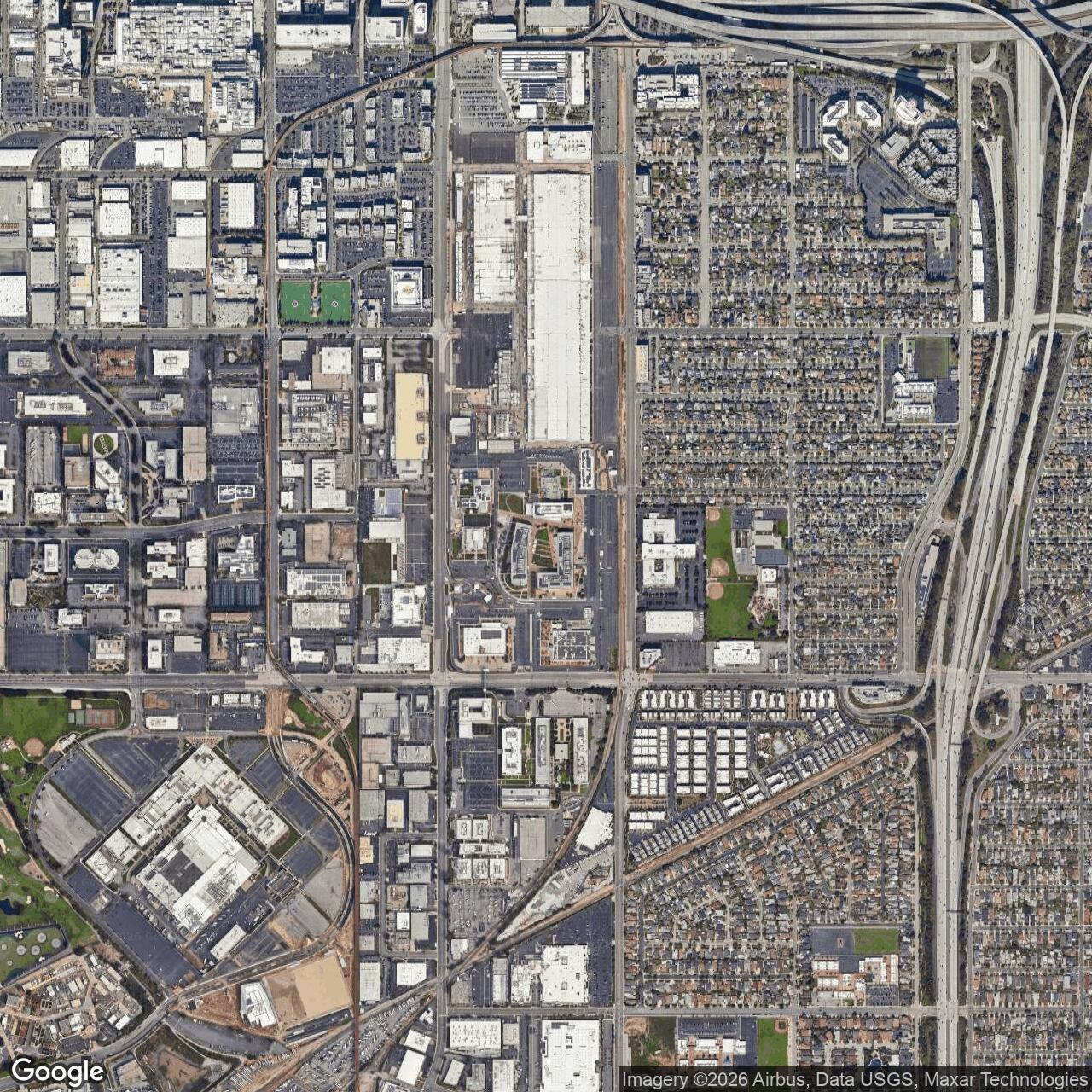
Los Angeles Space Force Base, Los Angeles California
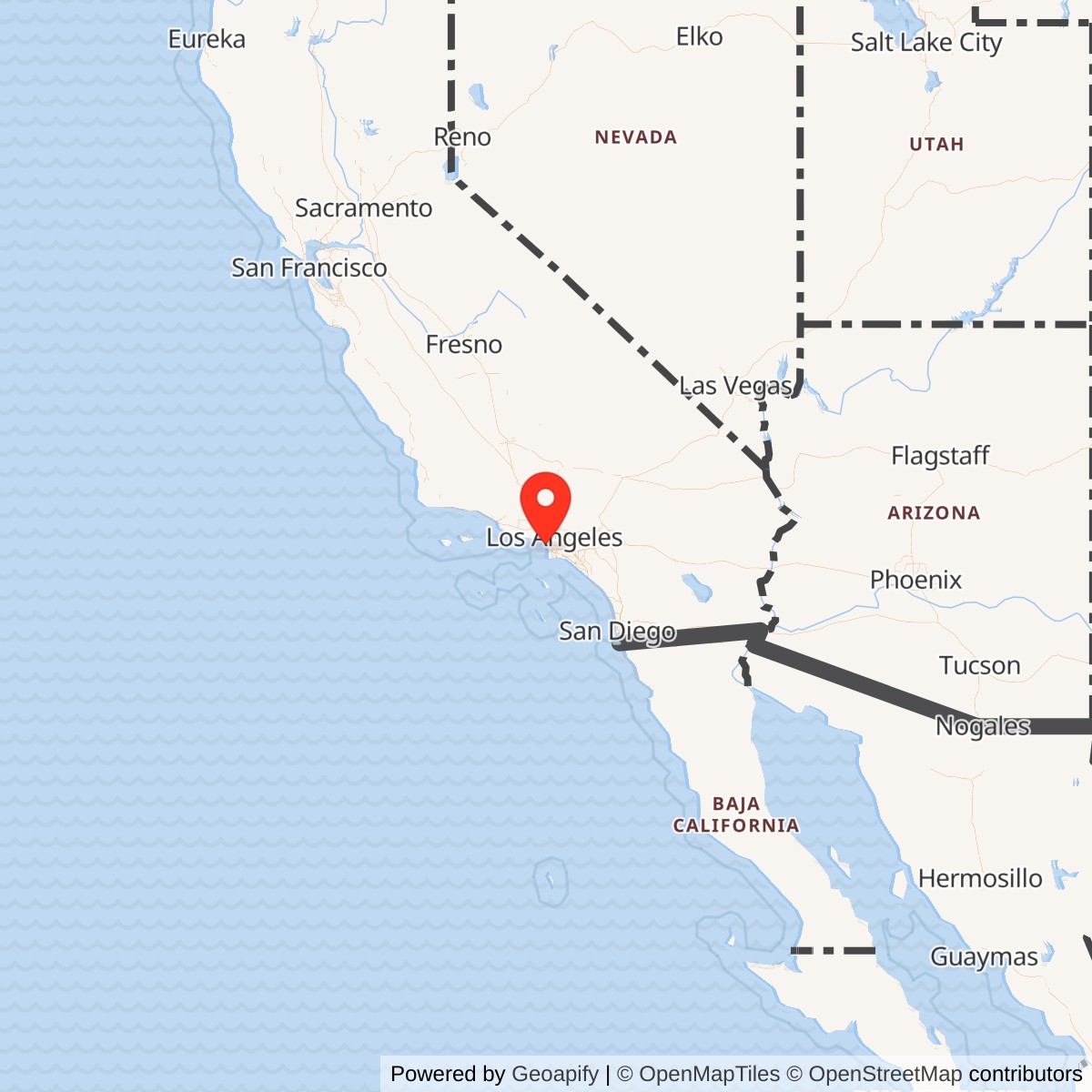
Longitude: -118.38056
Current Role: Active non-flying headquarters and acquisition campus hosting Space Systems Command and Space Base Delta 3; space-system development, acquisition, integration, testing, fielding, sustainment, installation support, and geographically separate housing annexes
Los Angeles Air Force Base is a military installation built for work that usually becomes visible only after it leaves the ground somewhere else. From offices and laboratories in the Los Angeles aerospace corridor, military and civilian teams have directed the development of intercontinental ballistic missiles, reconnaissance satellites, missile-warning spacecraft, weather satellites, secure communications systems, the Global Positioning System, launch vehicles, ground-control networks, and many other parts of the national-security space enterprise. The base has no runway and does not launch rockets. Its operational product has been the engineering, acquisition, integration, testing, fielding, and sustainment of systems used around the world and in orbit.
The installation's official public website and current Department of the Air Force documents continue to identify it as Los Angeles Air Force Base, usually abbreviated LAAFB. The U.S. Space Force operates the base, and some official Space Force news releases and public references use Los Angeles Space Force Base. No formal redesignation order located established a date on which the installation ceased to be Los Angeles Air Force Base. The most precise current treatment is therefore Los Angeles Air Force Base as the official name, with Los Angeles Space Force Base recognized as a common Space Force-era alternate name. This is unlike Vandenberg, Patrick, and Cape Canaveral, whose Space Force redesignations were formally announced.
Several dates describe different parts of the site's identity. July 1, 1954 marks activation of the Western Development Division, the organizational ancestor of today's Space Systems Command. October 1962 marks transfer to the Air Force of the former Navy-owned portion of a Douglas Aircraft plant in El Segundo. April 30, 1964 marks official designation of the consolidated property as Los Angeles Air Force Station and is the best opening date for the present installation. September 15, 1987 marks redesignation as Los Angeles Air Force Base. August 13, 2021 marks the redesignation of the Space and Missile Systems Center as Space Systems Command. These are command, property, installation, naming, and organizational dates, not competing versions of one event.
The current main base occupies 54 acres in El Segundo. That figure comes from recent official environmental documentation and covers the compact administrative campus west of Aviation Boulevard. It does not include Fort MacArthur, Pacific Heights, Pacific Crest, or other geographically separate housing and support properties. Fort MacArthur is a distinct former Army post transferred to the Air Force in 1982 and later administered as a Los Angeles base annex. It retains its own installation identity even though it now supports the Los Angeles garrison.
The current host is Space Base Delta 3, and the principal headquarters is Space Systems Command, one of the U.S. Space Force field commands. The base supports thousands of military members, civilian employees, and contractors. Its official profile describes more than 7,000 assigned personnel and a physical plant valued at roughly $1 billion. Because organizational alignments and staffing totals change, those figures should be read as a current official snapshot rather than permanent historical constants.
The Los Angeles Aerospace Setting
The installation belongs in El Segundo because southern California had already become a center of aviation, electronics, missile, and systems-engineering expertise. Douglas, North American, Hughes, Lockheed, Ramo-Wooldridge, RAND, and other firms or research organizations formed a dense technical network around Los Angeles. Nearby universities and laboratories supplied engineers and scientists. Los Angeles International Airport, major highways, rail connections, and defense factories tied the region to the national aerospace economy.
The postwar strategic problem was not simply how to build a larger aircraft. It was how to create reliable long-range missiles and spacecraft by coordinating propulsion, guidance, structures, electronics, communications, testing, launch facilities, contractors, budgets, and military requirements. No single factory could manage the whole task. The Air Force therefore needed an organization able to direct an integrated system across many companies and government sites. Southern California offered both the contractor base and the technical labor force for that work.
This setting also explains why the base has always looked different from a conventional flying installation. Its military value lies in secure offices, program-management spaces, conference facilities, communications networks, laboratories, and proximity to industry. Aircraft operations belong to other bases and civil airports. Launches occur at ranges such as Vandenberg Space Force Base and Cape Canaveral Space Force Station. Los Angeles manages and supports systems that operate through a far wider network.
Western Development Division and the Missile Emergency
The direct organizational story began on July 1, 1954, when the Air Force activated the Western Development Division under Air Research and Development Command. Brigadier General Bernard A. Schriever led the new organization. Its overriding mission was to develop an operational intercontinental ballistic missile before the Soviet Union could gain a decisive strategic advantage.
The division's first quarters were improvised. It worked initially in a former church and parochial-school complex in Inglewood, then moved into leased offices in the Arbor Vitae complex near Los Angeles International Airport. Those locations were predecessor headquarters spaces, not earlier names for the present base. They show how urgently the Air Force began the missile program: the organization existed and worked before a permanent installation had been assembled.
Schriever and his team applied systems engineering on a scale that was new to the Air Force. The Ramo-Wooldridge Corporation supplied technical direction and later helped form Space Technology Laboratories. The independent nonprofit Aerospace Corporation was created in 1960 to provide enduring scientific and engineering support without the commercial conflicts of a weapons manufacturer. This government, nonprofit, and contractor arrangement became a defining feature of the Los Angeles mission.
The Western Development Division managed parallel ballistic-missile efforts rather than waiting for one design to succeed. Atlas became the first operational American ICBM. Titan provided another liquid-fueled path and evolved through later missile and launch-vehicle forms. Thor began as an intermediate-range ballistic missile and also became the foundation for a long-lived family of space launch vehicles. Minuteman introduced solid fuel, rapid response, smaller silos, and a force structure suited to sustained strategic alert.
The division was redesignated the Air Force Ballistic Missile Division on June 1, 1957. Its work connected Los Angeles to missile test and launch locations, production plants, operational Strategic Air Command wings, command-and-control systems, and nuclear deterrence planning. The missiles themselves were never based or launched from the El Segundo headquarters. Los Angeles was the acquisition and integration center that turned military requirements and industrial components into fielded systems.
From Ballistic Missiles to Military Space
Space responsibilities grew out of the same technical base. The Air Force's WS-117L reconnaissance and warning program developed into several early satellite systems. Discoverer served publicly as a technology program while also supporting the classified CORONA photographic-reconnaissance effort. Discoverer 13 achieved the first successful recovery of an object returned from orbit in August 1960. Discoverer 14 soon returned exposed film that was recovered in midair, proving an operational reconnaissance technique that gave national leaders information unavailable by other means.
SAMOS pursued satellite reconnaissance and data return through additional approaches. MIDAS sought early warning of ballistic-missile launches by detecting infrared signatures from space. These programs had uneven technical results, but together they built experience in spacecraft design, launch integration, tracking, ground systems, recovery, sensors, and program management. That experience became the foundation for later operational space missions.
On April 1, 1961, the Air Force divided the mission between the Space Systems Division and Ballistic Systems Division. Space Systems Division remained in the Los Angeles area. Ballistic Systems Division moved to Norton Air Force Base in San Bernardino. The separation reflected the growing scale of both missions rather than a clean break between them. Launch vehicles, guidance technology, contractors, and test infrastructure continued to overlap.
Creating Los Angeles Air Force Station
The Air Force began assembling a permanent El Segundo installation as its mission expanded. In December 1960 it purchased the Ramo-Wooldridge Research and Development Center. That property became Area A. In October 1962 the Navy transferred approximately 50 acres of a former Douglas Aircraft plant property to the Air Force. That tract became Area B.
The Navy's title to the former Douglas parcel did not make the property an operating naval station, and the contractor plant should not be treated as a predecessor military installation. Its significance lies in the industrial history of the land. Douglas had used the El Segundo complex for aircraft manufacturing and related work. The Air Force adapted part of that industrial landscape for space and missile administration.
The Aerospace Corporation constructed a headquarters complex nearby in 1963 and 1964, while Space Systems Division moved from the leased Arbor Vitae offices into the new El Segundo setting. On April 30, 1964, the combined Air Force property was officially designated Los Angeles Air Force Station. Area A contained the research-and-development center and primary headquarters functions. Area B occupied the former Douglas tract across Aviation Boulevard and supported additional offices, shops, services, and base functions.
This date is important because histories often describe the base as established in 1954. The 1954 date correctly identifies the command lineage and start of the mission, but the organization then occupied leased Inglewood and Arbor Vitae facilities. The permanent military installation called Los Angeles Air Force Station began in 1964 after the Air Force assembled the El Segundo property.
Space and Missile Organization, 1967-1992
The organization changed names repeatedly as national priorities shifted. On July 1, 1967, the Air Force combined Space Systems Division and Ballistic Systems Division into the Space and Missile Systems Organization, known as SAMSO. The merger reunited the two major development communities and placed ballistic missiles, military spacecraft, launch systems, and supporting technologies under one senior organization.
SAMSO oversaw major Cold War systems. The Defense Support Program translated earlier missile-warning experiments into an operational constellation. The first DSP spacecraft launched in 1970. Its infrared sensors detected missile launches and nuclear events, supporting strategic warning and, later, theater forces. During the Persian Gulf War, DSP warning of Iraqi Scud launches demonstrated that a system designed for global nuclear warning could also protect deployed forces and civilian populations.
Defense Meteorological Satellite Program spacecraft supplied cloud, storm, and environmental data needed for flight, ship, missile, and ground operations. Military satellite communications evolved through systems such as the Defense Satellite Communications System and Milstar. Satellite-control networks connected spacecraft to tracking stations and operations centers. The Space Test Program provided opportunities to fly experimental payloads and reduce risk for future operational systems.
The Global Positioning System became one of the center's most consequential programs. Navstar GPS combined a constellation of precise timing and navigation satellites with ground control and military user equipment. Early development and testing established the concept, while an operational constellation was deployed through a successful series of Delta II launches beginning in 1989. GPS became essential to military navigation, precision timing, mapping, communications, search and rescue, logistics, and weapons employment. Its civil availability later transformed transportation, surveying, finance, agriculture, emergency response, and everyday life.
On October 1, 1979, SAMSO was divided into Space Division at Los Angeles and the Ballistic Missile Office at Norton. The change again separated space and strategic-missile program management. On March 15, 1989, the organizations became Space Systems Division and Ballistic Systems Division. Ballistic missile management moved back under the Los Angeles organization in 1990, and the Air Force created the Space and Missile Systems Center on July 1, 1992. The Ballistic Missile Office was absorbed the following year. When the missile headquarters at Norton closed in September 1995, remaining personnel and functions moved to Los Angeles.
Los Angeles Air Force Base and Installation Support
Los Angeles Air Force Station was redesignated Los Angeles Air Force Base on September 15, 1987. The change did not add a runway or transform it into a flying base. It recognized the scale and permanence of the installation and its host-support responsibilities.
Base support organizations evolved alongside the acquisition command. The 655th Air Base Squadron provided support before the 61st Air Base Group activated in 1994. The organization became the 61st Mission Support Group in 2006, returned to the 61st Air Base Group designation in 2010, became Los Angeles Garrison during the Space Force transition, and was succeeded by Space Base Delta 3 in 2022. Through these changes, the host mission remained recognizable: security, communications, civil engineering, logistics, personnel support, medical care, contracting, financial management, and the daily operation of a dense urban installation.
The base's non-flying status shapes that support mission. There is no military airfield, ICAO identifier, runway, flight line, or assigned aircraft fleet. Official visitors and personnel use Los Angeles International Airport or other regional airfields. The installation must operate within the traffic, security, cost, real-estate, and infrastructure constraints of the Los Angeles metropolitan area.
Fort MacArthur and the Housing Annexes
The Air Force acquired a geographically separate support landscape in San Pedro when the Army transferred Fort MacArthur on October 1, 1982. Fort MacArthur had been a major Army coast-defense post protecting Los Angeles Harbor and later supported antiaircraft, air-defense, reception, and other missions. Transfer made it part of the Los Angeles base support system, chiefly for military family housing and community services, but did not erase its Army history or make it part of the original El Segundo site.
New townhouses were built at Fort MacArthur between 1981 and 1985, and older housing was renovated. Additional family housing developed at Pacific Heights and Pacific Crest. Current base traffic and jurisdiction instructions identify Fort MacArthur, Pacific Crest, and Pacific Heights as Los Angeles Air Force Base annexes. These are administratively connected support properties, not components of the 54-acre El Segundo acreage.
Fort MacArthur therefore requires dual interpretation. Historically it is a separate Army installation with its own location, boundaries, batteries, missions, and chronology. Administratively it is now an Air Force and Space Force support annex under the Los Angeles base. Pacific Heights and Pacific Crest are ordinary housing annexes and do not require separate installation records. The former Lawndale Facility, sometimes called Annex 3, likewise functioned as a subordinate office annex rather than an independent base.
Programs and Operational Effects
Los Angeles has not deployed a combat wing, fired a missile from its grounds, or launched a satellite from El Segundo. Its connection to conflict is nonetheless direct. During the Cold War, Atlas, Titan, and Minuteman supported nuclear deterrence. Reconnaissance satellites gave national leaders information about Soviet forces and reduced uncertainty during crises. Missile-warning spacecraft helped distinguish attack indications from other events. Communications, weather, navigation, and satellite-control systems supported forces across the services.
During Operations Desert Shield and Desert Storm, systems developed and sustained through the Los Angeles center demonstrated the growing operational importance of space. GPS receivers helped coalition forces navigate terrain with few landmarks, coordinate movement, and employ weapons more accurately. Defense Meteorological Satellite Program data supported aviation and ground planning. Defense Support Program spacecraft detected theater ballistic-missile launches. Satellite communications and dissemination systems moved information across a widely dispersed force.
The center continued supporting operations after September 11, 2001. Satellite communications, GPS, missile warning, weather information, launch services, and ground-control capabilities supported homeland defense and forces engaged in Afghanistan, Iraq, and other theaters. The local workforce's role remained acquisition and sustainment rather than tactical operation. A program office in El Segundo might manage a satellite built elsewhere, launched from Florida or California, controlled through a distributed network, and used by an Army patrol, Navy ship, Air Force aircraft, allied headquarters, or civil agency thousands of miles away.
This distinction protects the history from two opposite errors. The base should not be described as a launch site or operational flying station. It also should not be dismissed as merely administrative. Systems engineering, contract management, cybersecurity, test, launch integration, logistics, software, ground equipment, and sustainment determine whether operational space capabilities work when needed.
Rebuilding the El Segundo Campus
By the late twentieth century, the divided Area A and Area B complex contained aging facilities and used valuable urban land inefficiently. The Air Force pursued a land exchange and redevelopment plan beginning in the late 1990s. Under the resulting arrangement, modern replacement facilities were constructed on Area B. Personnel moved into the new complex in early 2006.
The Schriever Space Complex was dedicated on April 24, 2006, honoring General Bernard Schriever and the organization he had created in 1954. The modern campus consolidated functions in secure office buildings and supporting facilities west of Aviation Boulevard. Former Area A property was transferred out of military ownership and redeveloped for private commercial uses.
This transition explains another apparent acreage conflict. Historical references describe roughly 50 acres transferred from the Navy, a separate Area A research center, a two-area base, Fort MacArthur's approximately 96 acres, and other housing properties. The current official 54-acre figure describes the consolidated main campus after the Area A disposal. It is not a claim that the entire Los Angeles support network has always occupied 54 acres.
Space Force Transition
Congress established the U.S. Space Force within the Department of the Air Force on December 20, 2019. The new service inherited Air Force space organizations, personnel, and missions through a phased transfer. At Los Angeles, the change affected command identity and service affiliation more than the basic acquisition purpose of the installation.
The Space and Missile Systems Center was redesignated Space Systems Command on August 13, 2021. The new field command received responsibility for acquiring, developing, delivering, fielding, and sustaining space capabilities, while also integrating launch, test, range, logistics, and commercial partnerships across a national network. Los Angeles Garrison briefly served as the host organization during this transition.
On July 15, 2022, Los Angeles Garrison was inactivated and Space Base Delta 3 activated. The delta became the host for the installation and its supported communities. Its numbered squadrons and staff agencies provide the practical foundation that allows acquisition headquarters and tenant organizations to operate.
Space Systems Command has continued reorganizing around integrated mission portfolios. System deltas bring acquisition, engineering, sustainment, and operational relationships closer together for capabilities such as positioning, navigation, and timing; satellite communications; electromagnetic warfare; launch and range systems; and other mission areas. Individual delta numbers, office titles, and alignments can change as the Space Force refines its structure. The enduring fact is that the El Segundo base remains the headquarters hub for a field command responsible for delivering national-security space systems.
Current Units and Missions
Space Base Delta 3 is the host organization. Current official information identifies the 61st Medical Squadron, 61st Civil Engineer and Logistics Squadron, 61st Communications Squadron, 61st Force Support Squadron, and 61st Security Forces Squadron, supported by headquarters staff agencies. Together they provide medical support, infrastructure and logistics, communications and cyber services, personnel and family programs, force protection, readiness, contracting, financial management, legal support, public affairs, and other installation functions.
Space Systems Command is the principal headquarters. Its mission includes requirements translation, program management, systems engineering, contracting, test, launch and range integration, production, fielding, cybersecurity, software, logistics, and sustainment. The command manages a multibillion-dollar acquisition portfolio and relies on government civilians, Guardians, Airmen, contractors, federally funded research organizations, commercial companies, other military services, intelligence agencies, and international partners.
The Aerospace Corporation remains a major technical partner in the immediate El Segundo area, preserving the independent engineering relationship established during the missile program. Other defense firms, commercial space companies, universities, laboratories, and federal organizations connect the base to the broader southern California innovation economy.
The installation's official profile reports more than 7,000 personnel associated with the base and its mission. Earlier environmental documents cite more than 4,500 people working at the 54-acre campus. The difference can reflect date, counting method, tenant scope, telework, contractor inclusion, and whether assigned personnel beyond the physical campus are counted. It should not be read as proof of a sudden fixed increase in on-site occupancy.
Environmental History and Stewardship
The base occupies previously developed industrial and urban land. Douglas Aircraft manufacturing, research and development, decades of office and support use, fuel and chemical handling, maintenance, utilities, demolition, and construction created environmental obligations unlike those of an open training range. Potential issues include contaminated soil or groundwater, hazardous building materials, regulated wastes, stormwater, air emissions, noise, traffic, and the environmental effects of redevelopment.
Department of Defense restoration reporting identifies Los Angeles Air Force Base under facility identifier CA957172629600 and records 42 Installation Restoration Program sites. The same reporting shows response complete before fiscal year 2021 for the identified restoration inventory. Response complete is a regulatory program milestone, not a guarantee that every part of the installation is free of contamination or that monitoring and land-use controls can never be required.
The 2006 consolidation required demolition, construction, property transfer, and evaluation of earlier industrial land uses. Former Area A left military control and entered private redevelopment. The current Area B campus remains highly developed, with buildings, parking, roads, utilities, landscaped areas, and little or no native habitat within the installation boundary.
A 2023 environmental assessment for a proposed parking structure describes the main base as a 54-acre, fully developed urban property. It evaluates traffic, air quality, greenhouse-gas emissions, stormwater, water use, hazardous materials, environmental justice, cultural resources, biological resources, noise, and other effects. The assessment confirms that even an office-centered base has significant environmental-management responsibilities because thousands of workers enter a compact site surrounded by dense civil development.
Environmental interpretation must also keep annexes separate. Fort MacArthur has its own long Army coast-artillery history and separate restoration and cultural-resource concerns. The Pacific housing areas have their own residential setting. Conditions or cleanup decisions at those properties should not be generalized to the El Segundo campus, and the 54-acre main-base environmental description should not be applied to all San Pedro annexes.
Built Environment and Present Use
The current base is a secure urban headquarters campus rather than an airfield. Its major features include the Schriever Space Complex, office and command buildings, security entrances, parking structures and surface lots, communications infrastructure, medical and support spaces, and facilities serving a large daily workforce. The base is bounded by commercial, industrial, transportation, and aerospace uses and lies beneath one of the nation's busiest civil aviation environments.
Fort MacArthur continues in use for family housing, community support, recreation, and related garrison functions. Pacific Heights and Pacific Crest also support housing. These annexes allow the compact El Segundo campus to concentrate on command and acquisition while locating many residential services in San Pedro.
Role in the Wider Military Network
Los Angeles is the headquarters and acquisition node in a network whose other installations perform launch, range, test, tracking, operations, and support missions. Vandenberg Space Force Base supplies the western launch and test range. Patrick Space Force Base supports the eastern range and its personnel. Cape Canaveral Space Force Station provides launch complexes, processing areas, range facilities, and the Skid Strip. These are separate installations, not Los Angeles subareas.
The network also extends to operational commands, satellite-control sites, test organizations, depots, laboratories, intelligence agencies, combatant commands, allied partners, and commercial providers. Spacecraft may be designed by a contractor, integrated under a Los Angeles program office, launched from Vandenberg or Cape Canaveral, tested through another command, controlled from distributed ground stations, and used by forces in every military service.
The base's relationship with Norton Air Force Base illustrates organizational movement within that network. Ballistic missile headquarters moved to Norton in 1961 and returned under Los Angeles authority before Norton's 1995 closure. Norton was a separate air base, not an annex. Its logistics and missile-era history deserves its own record.
Fort MacArthur illustrates a different relationship. It began as a separate Army harbor-defense installation, transferred to the Air Force in 1982, and became a geographically separate housing and support annex. Its present administrative connection does not make it the same physical site as the El Segundo base.
The installation also sits inside the civilian aerospace network. The Aerospace Corporation, defense contractors, commercial space companies, universities, and technical workers form part of the mission ecosystem. This proximity has allowed the military to draw on specialized knowledge, but it also places the base in an expensive, congested, and security-conscious metropolitan environment.
Current Status
Los Angeles Air Force Base is active under the U.S. Space Force. Space Base Delta 3 is the host, and Space Systems Command is the principal headquarters. The base remains a non-flying installation devoted to space acquisition, engineering, integration, fielding, sustainment, and support.
The main El Segundo campus occupies 54 acres. Fort MacArthur, Pacific Heights, and Pacific Crest are geographically separate annexes and are not included in that acreage. The base has no ICAO identifier. Its current identity is that of an active Space Force command and acquisition installation whose effects reach launch ranges, operational units, allies, and spacecraft far beyond Los Angeles.
Chronology
- 1954-07-01 The Air Force activated the Western Development Division in Inglewood under Air Research and Development Command, with Brigadier General Bernard Schriever leading the ICBM development mission.
- 1955 The Western Development Division moved from its initial former church and school quarters to leased offices in the Arbor Vitae complex near Los Angeles International Airport.
- 1957-06-01 Western Development Division was redesignated Air Force Ballistic Missile Division.
- 1958-1960 Early military space programs including Discoverer, SAMOS, and MIDAS advanced satellite reconnaissance, recovery, and missile-warning technology.
- 1960-08 Discoverer 13 returned the first object successfully recovered from orbit; Discoverer 14 soon returned reconnaissance film by aerial recovery.
- 1960-12 The Air Force purchased the Ramo-Wooldridge Research and Development Center, later designated Area A.
- 1961-04-01 Air Force Ballistic Missile Division divided into Space Systems Division in Los Angeles and Ballistic Systems Division at Norton Air Force Base.
- 1962-10 The Navy transferred approximately 50 acres of the former Douglas Aircraft El Segundo plant property to the Air Force; the tract became Area B.
- 1963-1964 The Aerospace Corporation built a new headquarters complex, and Space Systems Division moved from the leased Arbor Vitae offices to El Segundo.
- 1964-04-30 The Air Force officially designated the consolidated El Segundo property Los Angeles Air Force Station.
- 1967-07-01 Space Systems Division and Ballistic Systems Division merged as the Space and Missile Systems Organization.
- 1970 The first Defense Support Program missile-warning satellite launched.
- 1979-10-01 SAMSO divided into Space Division at Los Angeles and the Ballistic Missile Office at Norton Air Force Base.
- 1982-10-01 The Army transferred Fort MacArthur to the Air Force for use as a housing and support annex of Los Angeles Air Force Station.
- 1982 The Air Force acquired the 13-acre Lawndale Facility for subordinate office use.
- 1987-09-15 Los Angeles Air Force Station was redesignated Los Angeles Air Force Base.
- 1987-1989 Pacific Heights and Pacific Crest family housing expanded the base's geographically separate San Pedro support network.
- 1989-1994 Delta II launches deployed the initial operational GPS constellation.
- 1989-03-15 Space Division and the Ballistic Missile Office became Space Systems Division and Ballistic Systems Division.
- 1990 Ballistic Systems Division became subordinate to Space Systems Division, beginning consolidation of missile management back under Los Angeles.
- 1991 GPS, Defense Support Program, Defense Meteorological Satellite Program, satellite communications, and dissemination systems supported Operations Desert Shield and Desert Storm.
- 1992-07-01 The Air Force established the Space and Missile Systems Center at Los Angeles Air Force Base.
- 1993 The Ballistic Missile Office was absorbed into the Space and Missile Systems Center.
- 1994 The 61st Air Base Group activated as the installation's host-support organization.
- 1995-09 Missile headquarters operations at closing Norton Air Force Base ended, and remaining functions and personnel moved to Los Angeles.
- 1999 Planning advanced for a land exchange, disposal of Area A, and construction of a consolidated modern campus on Area B.
- 2006 Personnel moved into new Area B facilities, and the older Area A left military use for private redevelopment.
- 2006-04-24 The Schriever Space Complex was dedicated in honor of General Bernard Schriever.
- 2006 The 61st Air Base Group was redesignated the 61st Mission Support Group.
- 2010 The host organization returned to the 61st Air Base Group designation.
- 2019-12-20 The U.S. Space Force was established within the Department of the Air Force.
- 2021 The 61st Air Base Group transitioned into Los Angeles Garrison during the Space Force reorganization.
- 2021-08-13 The Space and Missile Systems Center was redesignated Space Systems Command, a U.S. Space Force field command headquartered at Los Angeles Air Force Base.
- 2022-07-15 Los Angeles Garrison inactivated, and Space Base Delta 3 activated as the installation host.
- 2023-2026 Space Systems Command continued establishing and reorganizing system deltas for integrated acquisition and sustainment portfolios while the official installation website continued to use Los Angeles Air Force Base.
- Present Los Angeles Air Force Base remains an active, 54-acre, non-flying U.S. Space Force installation in El Segundo, hosting Space Base Delta 3 and the headquarters of Space Systems Command.