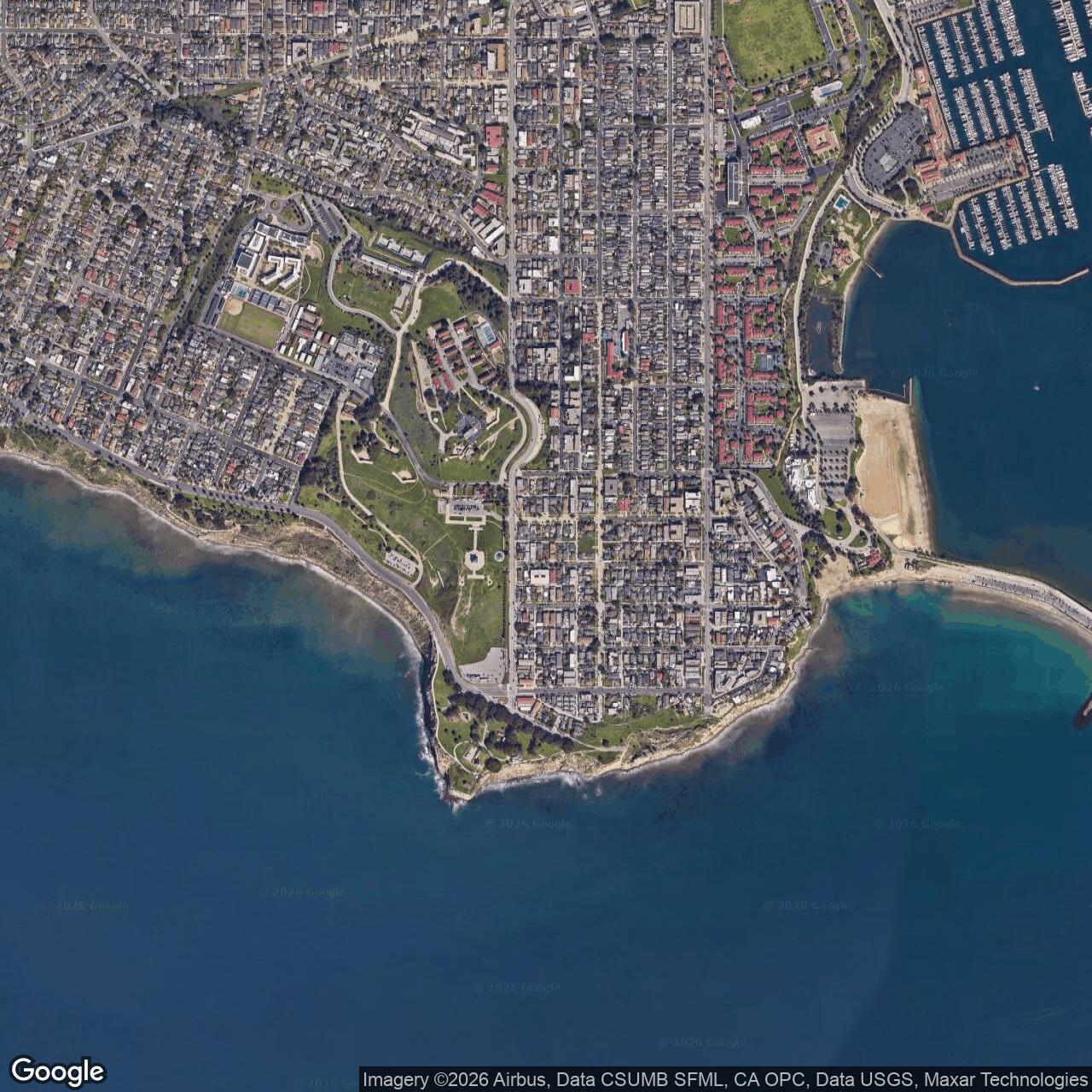
Fort MacArthur Army Base, Los Angeles California
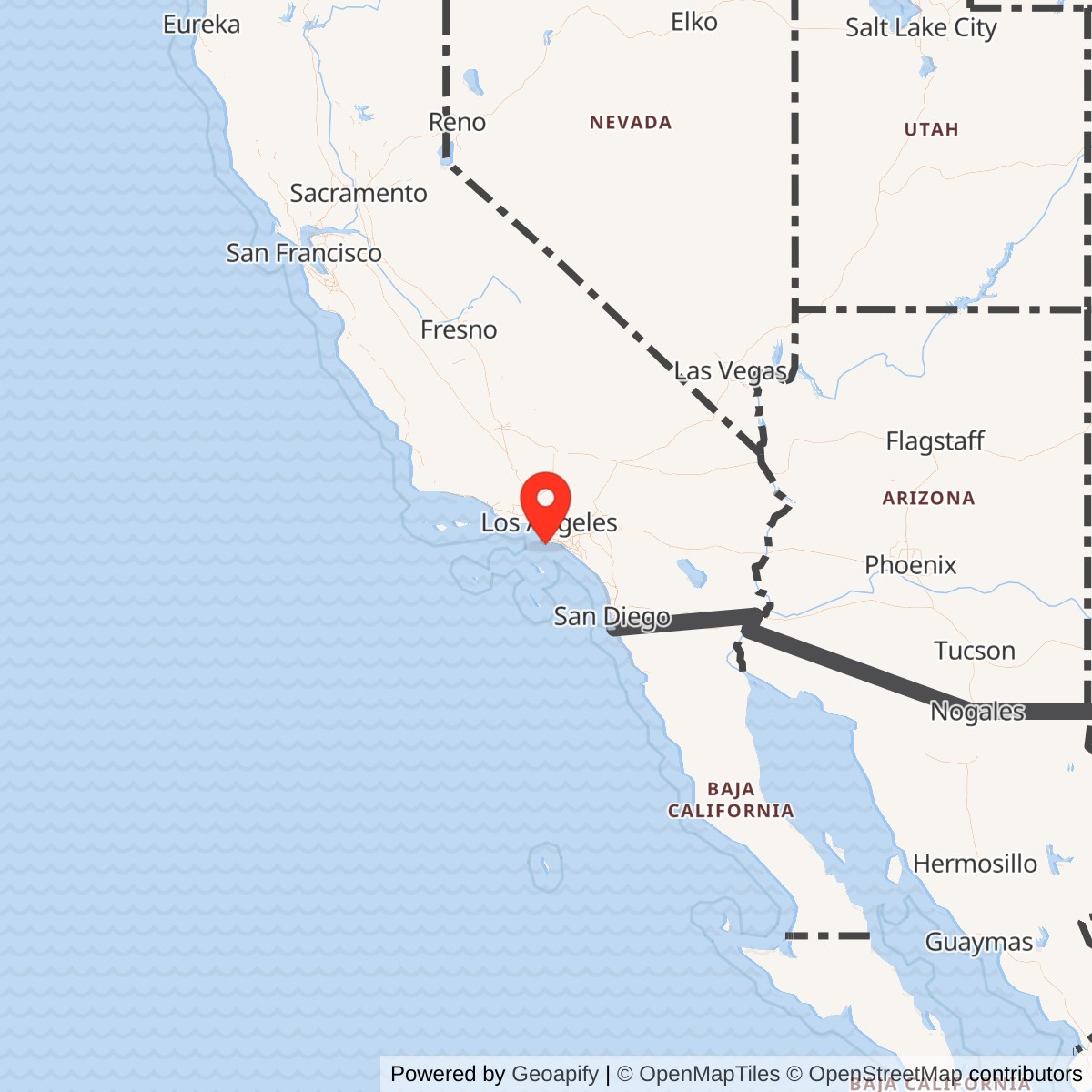
Longitude: -118.2920000
Official Base Website: Fort MacArthur
Current Role: Former Army coastal-defense and Nike air-defense post
Fort MacArthur was the Army's principal Los Angeles Harbor defense post in the twentieth century. It occupied a fragmented but strategically coherent landscape at San Pedro: high ground overlooking the Pacific approach to the harbor, a middle plateau suitable for cantonment and administration, lower ground tied to the waterfront, and outlying gun, searchlight, fire-control, and later missile-support sites positioned around the harbor approaches. The post began as a coastal defense installation created to guard the rapidly expanding harbor at San Pedro and later became a World War I training and staging center, a World War II harbor-defense and processing post, a Cold War Army air-defense command center, and finally a partially transferred military landscape whose surviving pieces are split among Los Angeles Space Force Base housing and support functions, City of Los Angeles parks, a military museum, a marina, and restored coastal open space.
The installation should be described with care because the name Fort MacArthur now refers to several overlapping things. The historic U.S. Army post is closed as an Army installation. Its heavy-gun harbor-defense mission ended after World War II, its Nike missile and Los Angeles Defense Area command role ended in 1974, and the remaining Army-controlled Middle Reservation was transferred to Air Force control in 1982. Yet a portion of the old post remains in active Department of the Air Force use as the Fort MacArthur housing and administrative annex of Los Angeles Space Force Base. Other parts of the former fort are public: the Upper Reservation is now Angels Gate Park and the Fort MacArthur Museum at Battery Osgood-Farley; the Lower Reservation became part of Cabrillo Marina; and the White Point portion survives as a park and nature preserve with visible remains of Battery 127 and Nike missile site LA-43. The correct status is therefore dual rather than simple: Fort MacArthur is a closed Army coastal-defense and Nike installation, transferred in stages after 1974, with a remaining active Air Force/Space Force annex on the former Middle Reservation.
The site mattered because Los Angeles Harbor mattered. The Port of Los Angeles and the Port of Long Beach became one of the great maritime and industrial complexes on the Pacific Coast. By the early twentieth century, federal planners understood that the harbor, shipyards, oil fields, aircraft factories, and later aerospace industry made the region militarily valuable and vulnerable. Fort MacArthur's guns were meant to keep hostile ships outside the harbor. Its mine and fire-control network was meant to make the approaches dangerous even to ships that could not be seen directly from a battery. Its World War II command posts were meant to protect shipbuilding and aircraft production. Its Cold War Nike command role was meant to protect the Los Angeles basin from bomber attack. Across those changing missions, the installation remained a defensive node for one of the most important military-industrial regions in the United States.
Mission Evolution
Fort MacArthur's roots go back before the Army post itself. In the Mexican period, the San Pedro landing was recognized as a public landing area within the Rancho de los Palos Verdes land system. In 1846, Governor Pio Pico confirmed the private rancho but required that a 500-varas-square reservation remain free at the port of San Pedro. After the United States acquired California, the federal government continued to recognize that reservation. On September 14, 1888, President Grover Cleveland formally set aside the old government reservation as a military reservation. At first the reservation was more a legal and strategic placeholder than a fully built fort, but it preserved federal control over land tied directly to the harbor.
Actual fortification planning accelerated when San Pedro's harbor improvements made Los Angeles a more important port. The federal government had already created a submarine base at San Pedro, and coastal artillery planners increasingly viewed Los Angeles as a harbor requiring permanent defense. In 1908, War Department planners began projecting a strong harbor defensive installation for San Pedro. Land acquisition followed, including the Upper Reservation at Point Fermin in 1910. Construction began in the years just before the United States entered World War I, and the reservation was named Fort MacArthur in 1914 in honor of Lieutenant General Arthur MacArthur Jr., a Medal of Honor recipient, Spanish-American War commander, military governor in the Philippines, and father of Douglas MacArthur.
The first mission was seacoast artillery. Fort MacArthur was created to house the batteries that would defend the Harbor of Los Angeles. In 1917 the Army completed major batteries of 14-inch disappearing-carriage rifles and 12-inch mortars on Point Fermin. Battery Osgood-Farley, the most famous surviving battery, represented the mature Endicott-Taft-era concept of harbor defense: large concrete works shaped into the terrain, heavy rifled guns on disappearing carriages, underground magazines and plotting rooms, communications links to observing stations, and controlled fire against ships attempting to approach the harbor. Fort MacArthur was therefore not a single wall or traditional fortification. It was a system of emplacements, fire-control stations, communications, plotting rooms, barracks, roads, utilities, and harbor-defense command functions.
World War I immediately broadened the mission. The fort guarded the harbor, but it also became a training and staging point. Temporary buildings and tents rose on the Upper Reservation during 1917 and 1918, and roughly 5,000 men passed through Fort MacArthur on their way to France. More than 4,000 soldiers were reportedly stationed there at one time before the end of the war. This made the post both a defensive installation and a mobilization camp. Its location near Los Angeles Harbor gave it access to transportation and shipping, while the available reservation land allowed the Army to house, train, and process units in wartime.
Between the world wars, Fort MacArthur remained the anchor of the Harbor Defenses of Los Angeles, but its weaknesses were already visible. Brigadier General Henry D. Todd reportedly concluded during a 1924 inspection that the big guns were too few and too short-ranged to carry out the harbor-defense mission adequately. The defense problem was changing. Aircraft, submarines, long-range naval guns, mines, radar, and mobile forces were all complicating the earlier confidence that fixed batteries alone could stop a naval attack. Fort MacArthur adapted by adding and reorganizing supporting defenses, but the basic truth remained: a harbor-defense post had to be part of a larger network rather than a few guns on a headland.
World War II brought the system to its highest defensive importance. Fort MacArthur maintained seacoast defenses, trained artillerymen, processed soldiers entering and leaving the service, and operated command posts for the protection of one of the most valuable industrial regions on the West Coast. Los Angeles was not only a harbor. It was a shipbuilding center, an aircraft-manufacturing center, an oil center, and a military transportation node. Fort MacArthur's World War II mission therefore extended beyond San Pedro Bay itself. It helped defend the port complex, CalShip and Todd Pacific shipbuilding, the Douglas, Hughes, Martin, and Northrop aircraft factories, the Huntington Beach oil field, and the wider Los Angeles metropolitan war industry.
The postwar mission changed sharply. By 1948 the big guns were obsolete, and the last major armament was decommissioned or removed for scrap. Fort MacArthur then became a major Army Reserve training center for southern California. That mission preserved an Army presence even after the harbor-defense artillery declined. In the 1950s, however, the Cold War gave the post a new strategic role. Fort MacArthur became the headquarters center for Los Angeles air defense, home to the 47th Antiaircraft Artillery Brigade and later Nike command facilities. A Nike Ajax battery was activated at the fort, later converted to Nike Hercules, and the Fort MacArthur Direction Center coordinated the Los Angeles Defense Area. By the early 1960s, the fort was no longer primarily looking seaward for enemy cruisers; it was tied into radar, missile, and communications systems intended to stop enemy bombers approaching Southern California.
The Nike era ended in 1974 as the national air-defense system changed and the Los Angeles Nike sites were deactivated. Fort MacArthur became a sub-post of Fort Ord in 1975, and the Army disposed of most of the old harbor-defense lands. The Upper and Lower Reservations were transferred to the City of Los Angeles in the later 1970s, while the remaining Middle Reservation eventually passed to Air Force control in 1982. The Air Force and later Space Force use made the site part of the Los Angeles AFB / Los Angeles SFB support system, especially as military housing for personnel tied to space and missile acquisition missions in El Segundo. That final transition is historically fitting: a post built to defend industrial Los Angeles from naval attack became an annex supporting the space and missile organizations that defined a later era of national defense.
Operational Role
Fort MacArthur's operational role was to turn Los Angeles Harbor from an open target into a defended maritime gate. In the gun-defense era, that required far more than artillery tubes. A target vessel had to be detected, tracked, plotted, ranged, assigned, fired upon, and corrected. The large batteries were supported by observing stations, plotting rooms, telephone and signal systems, power plants, shell and powder magazines, searchlights, base-end stations, harbor entrance controls, and command posts. The disappearing guns at Battery Osgood-Farley illustrate the system. Their 14-inch rifles could be loaded behind a concrete parapet, raised to fire, and then dropped back into a protected loading position. Fire direction depended on remote observation and plotting rather than on gunners simply aiming down the barrel.
The fort's physical fragmentation was part of the operational design. The Upper Reservation at Point Fermin carried the main heavy batteries and later Nike fire-control functions. The Middle Reservation held headquarters, housing, administration, and support facilities. The Lower Reservation connected the post to the waterfront. White Point and Point Vicente expanded the system's reach with additional guns, fire-control sites, and later Nike launch or support functions. This arrangement allowed the Army to distribute weapons and sensors across the harbor-defense field while using Fort MacArthur as the command and support center.
During World War I, operations combined harbor defense with mobilization. The 4th Company, 38th Artillery arrived in March 1917, and the post quickly filled with troops, temporary buildings, training activity, and departure preparations. The training center supplied a large portion of the men whom Fort MacArthur sent toward France before the Armistice. The post did not fire in anger, but it performed the essential domestic work of wartime expansion: man the harbor defenses, train soldiers, stage units, and maintain the military infrastructure that allowed the port to function under wartime conditions.
During World War II, Fort MacArthur performed as both a defensive command and a personnel-processing post. The fort maintained its defenses, trained Coast Artillery personnel, and handled soldiers entering and leaving military service. The large fixed guns were not fired at enemy targets. The Air Force historical overview notes that a small gun fired at a suspected enemy submarine in the first month of the war, illustrating the tense coastal-defense climate after Pearl Harbor. The larger significance, however, lay in the fort's command role. The installation established a Harbor Entrance Command Post and a Harbor Defense Command Post, giving the Army a command architecture for controlling the entrance to the harbor and coordinating the defense of the port-industrial complex.
The World War II modernization also exposed the end of the old system. In 1943, two 16-inch rifles were emplaced at White Point near the Upper Reservation, giving the harbor defenses a much longer-range punch than the earlier 14-inch disappearing guns. Yet even as these weapons entered service, aircraft, submarines, radar-directed fire control, and mobile warfare were making the classic fixed heavy-gun system increasingly obsolete. Between 1943 and 1948, most of Fort MacArthur's major armament was inactivated or sold for scrap. The post did not close immediately because its land, buildings, command position, and regional location still had military value.
The Cold War transformed the operational role into air defense. The 47th Artillery Brigade moved to Fort MacArthur in November 1952 and received the mission of air defense of southern California. The brigade supervised the transition from gun-controlled air defense to Nike Ajax and Nike Hercules missiles. In that role, Fort MacArthur controlled not just one battery but a regional defense area. The Direction Center integrated fire-control sites, missile batteries, radar, and communications within the Los Angeles Defense Area and coordinated with the Air Force's broader air-defense system. Fort MacArthur thus became a command-and-control post in a continental air-defense architecture.
This Nike role also explains why the Fort MacArthur Communications Annex row belongs with the parent installation history. The communications layer was not a side mission. Coastal artillery had always depended on communications among observing stations, plotting rooms, batteries, command posts, searchlights, and harbor-control points. In the Nike era, that requirement became even more complex. The Direction Center used communications links to integrate multiple Nike firing batteries and to coordinate with the larger Los Angeles Air Defense Sector. The Fort MacArthur Direction Center included high-frequency crosstell communications with the SAGE Master Direction Center at Norton Air Force Base, allowing Army missile control to fit into the Air Force's regional detection and interception system. The communications annex should therefore be read as one surviving label for a broader command-and-communications function that tied Fort MacArthur to both harbor defense and Cold War air defense.
World War I and World War II Activity
Fort MacArthur's World War I activity began before the post was fully mature. Battery Osgood-Farley was completed in the fall of 1917, the same year the first regular Army unit arrived to man the battery. The movement of the enormous gun tubes up to the Upper Reservation became a local event because each 14-inch rifle tube weighed about 100,000 pounds and could move only with difficulty through the surrounding terrain. The battery's completion gave Los Angeles Harbor a visible heavy-gun defense at the moment the United States entered a global war.
The fort's wartime population and training activity expanded rapidly. Temporary barracks and tentage filled the Upper Reservation in 1917 and 1918. Fort MacArthur trained and started thousands of men toward France before the Armistice. The post's function as a training center matters because it shows that harbor-defense posts were also manpower institutions. Soldiers learned artillery work, garrison routines, discipline, communications, coast-defense procedures, and mobilization practices in an environment that was still under construction. The same post that watched the harbor also absorbed the social and logistical strain of wartime mobilization.
The interwar years brought routine garrison life, maintenance, and adjustments to doctrine. The Army had to preserve batteries, care for concrete and steel structures exposed to ocean air, keep trained artillery personnel, and maintain relationships with a city that did not always welcome test firing. Heavy-gun firing could shatter windows and alarm nearby residents. Fort MacArthur therefore lived with a tension common to urban coastal defenses: the Army needed to train and prove its weapons, but the surrounding civilian community increasingly pressed close around the reservation.
World War II restored urgency. Southern California became one of the nation's great war-production regions. Los Angeles Harbor, Long Beach, aircraft plants, shipyards, and oil infrastructure made the area a logical target in wartime planning. Fort MacArthur's command posts, batteries, personnel-processing activity, and training mission all served that larger defense requirement. The fort was not merely defending San Pedro as a local port. It helped protect a metropolitan war machine.
The World War II role included both continuity and change. Old heavy batteries remained in the defense system, but new weapons and support systems were layered onto the landscape. White Point's 16-inch battery reflected the Army's final generation of fixed seacoast artillery. Fire-control stations and communications posts expanded the ability to coordinate batteries. Antiaircraft defense became increasingly important. Soldiers at Fort MacArthur also carried out processing and training work that connected the installation to the personnel side of the war. The post's activity therefore ranged from heavy guns to clerical processing, from artillery training to harbor command.
No Japanese landing or naval attack reached Los Angeles Harbor, but that absence should not be mistaken for inactivity. Like many continental defense posts, Fort MacArthur existed to prevent and deter as much as to fight. Its soldiers maintained watch, guarded facilities, trained replacements, operated command posts, and kept the harbor-defense system ready in case an enemy force approached. The fact that the major guns were not fired at enemy vessels is part of the history, but not evidence of irrelevance. Defensive systems are successful when the protected port continues to operate.
Coastal Defense System and Batteries
Battery Osgood-Farley is the best-known Fort MacArthur structure because it survives as the core of the Fort MacArthur Museum. The National Register documentation identifies it as a reinforced-concrete coast and harbor defense battery completed in 1917 to house 14-inch disappearing-carriage rifles. Its design represents a particular moment in U.S. seacoast fortification: the Army sought to hide guns behind terrain and concrete parapets, expose them only at the moment of firing, and coordinate their fire through remote observation and plotting. The battery's underground spaces, magazines, corridors, plotting rooms, and communications elements were as important as the gun pits themselves.
The disappearing-carriage system reflected both ingenuity and limitation. It protected the gun crew and weapon during loading, lowered the gun behind cover after firing, and reduced visibility from offshore. But it also limited elevation and therefore range compared with later barbette and casemated guns. By the 1920s, Army officers understood that Fort MacArthur's original big guns were not enough for the full harbor-defense mission. That led to additional defense planning and eventually to the White Point 16-inch battery of World War II.
Battery John Barlow and Battery Saxton, often referred to together as Battery Barlow-Saxton, added the mortar component of the early defense system. Mortars were intended to drop shells onto the decks of enemy vessels from high angles, complementing the flatter trajectories of seacoast rifles. The battery was later placed on the National Register, but preservation has been more difficult than at Osgood-Farley. Its condition and relative neglect help show how uneven military preservation can be when a former post is divided among multiple public and military owners.
Battery 127 at White Point, usually called Battery Paul D. Bunker or associated with the White Point 16-inch emplacements in local interpretation, represented Fort MacArthur's final heavy-gun generation. Built in the World War II era, it mounted 16-inch rifles capable of firing enormous shells at long range. White Point's later reuse as part of the Nike missile landscape makes it one of the strongest examples of technological layering at Fort MacArthur: the same coastal headland first received huge seacoast guns and then surface-to-air missile infrastructure.
The lower and outlying elements completed the network. Searchlights, fire-control stations, communications lines, plotting facilities, mine and harbor-control functions, and observation posts linked the guns to command. The system was spatially dispersed because no single point could see, command, and fire upon every possible approach. Fort MacArthur's history is therefore best read as the history of the Harbor Defenses of Los Angeles rather than of one isolated concrete battery.
Cold War Air Defense and Nike Missiles
Fort MacArthur's Cold War air-defense role was one of the most important chapters in the post's history. In the early 1950s, the threat to Los Angeles was no longer imagined primarily as a cruiser or battleship entering the harbor. The threat was a long-range bomber carrying nuclear weapons. Los Angeles had major ports, aircraft and aerospace plants, oil infrastructure, military facilities, and a large urban population. The Army's answer was the Nike system, built around radar, command centers, integrated fire-control sites, launch batteries, and surface-to-air missiles.
The 47th Artillery Brigade became central to that mission. The brigade transferred to Fort MacArthur in November 1952 and received responsibility for the air defense of southern California. In the first years, it managed antiaircraft gun units and the early transition to Nike Ajax. By December 1954 the brigade had several operational Nike Ajax sites, and within the next few years the Los Angeles Defense Area expanded to a regional missile network. The Brigade's role was not simply local supervision; it coordinated a defense area that stretched across mountains, urban edges, and coastal sites around the Los Angeles basin.
Nike site LA-43 was Fort MacArthur's own missile site. Its fire-control and launch elements were associated with the Upper Reservation and White Point landscape. The system began with Nike Ajax and later converted to Nike Hercules. The Hercules missile increased range, altitude, and payload options, including nuclear capability in some Nike units. The presence of Nike Hercules around Los Angeles gives the Cold War story a different tone from earlier coast artillery. The old guns were designed to stop ships outside the harbor. The Nike system was designed to stop aircraft before they could deliver nuclear weapons over the metropolitan region.
The Direction Center made Fort MacArthur more than one missile battery. Beginning in 1960, the Fort MacArthur Direction Center served as the Army Air Defense Command Post for the Project Nike batteries in the Los Angeles Defense Area. It integrated multiple fire-control sites and linked Army missile operations with the Air Force's SAGE system. The Direction Center's crosstell communications with the SAGE Master Direction Center at Norton Air Force Base allowed Army and Air Force air-defense systems to coordinate responses against targets entering the larger Los Angeles Air Defense Sector.
The Nike system declined as technology and strategy changed. The spread of intercontinental ballistic missiles, the evolution of air defense doctrine, costs associated with maintaining fixed missile sites, and broader Defense Department realignments all reduced the value of the old Nike network. Many Los Angeles-area sites were deactivated before the final end. The 47th Brigade left Fort MacArthur in 1968, the 19th Artillery Group took over air-defense command functions, and Nike operations were finally shut down in 1974. The end of Nike marked the end of Fort MacArthur's last major Army combat-defense mission.
Units, Organizations, and Systems
The Coast Artillery Corps defined the early Fort MacArthur. The first regular Army unit assigned to man the battery was the 4th Company, 38th Artillery, transferred from Fort Scott in March 1917. By 1918, the 2nd and 3rd Companies of the Coast Defenses of Los Angeles were part of the garrison structure. These units operated inside a system of batteries, observation stations, plotting rooms, fire-control equipment, and harbor command rather than as maneuver forces.
The Harbor Defenses of Los Angeles were the larger system. Fort MacArthur was the principal post, but the system included guns and support sites at the Upper Reservation, Middle Reservation, Lower Reservation, White Point, Point Vicente, and other related positions. The organization existed to coordinate guns, searchlights, mines, communications, and harbor entrance control. This kind of defense required disciplined procedures and trained specialists: artillerymen, plotters, communications personnel, power-plant operators, ordnance handlers, engineers, and support troops.
During World War II, the post also supported training and processing units. Artillerymen trained there for overseas service. Soldiers entering and leaving military service passed through post facilities. Harbor Entrance and Harbor Defense command posts tied Fort MacArthur to broader Western Defense Command and coastal-defense arrangements. The post served as both a tactical defense node and a domestic Army administrative machine.
The 47th Antiaircraft Artillery / Artillery Brigade dominated the Cold War period. The brigade's move to Fort MacArthur in 1952 made the post headquarters for southern California air defense. Its subordinate units and associated battalions operated Nike sites throughout the Los Angeles Defense Area. The 56th and 65th Artillery, along with California Army National Guard Nike units such as the 4th Battalion, 251st Artillery, formed part of the network. This made Fort MacArthur a headquarters post for regular and Guard air-defense forces rather than only a single-site missile installation.
The Fort MacArthur Direction Center was a system in itself. Its job was to coordinate missile batteries and exchange information with the Air Force air-defense sector. Missile Master and later command-and-coordination systems translated radar tracks, sector information, local command decisions, and battery readiness into a regional defense picture. The Direction Center is the best explanation for why a communications annex belongs in the Fort MacArthur history: communication was the nervous system of both the artillery and Nike eras.
Facilities and Physical Layout
Fort MacArthur was never a compact rectangular post. Its geography followed military function. The Upper Reservation at Point Fermin contained the most visible gun batteries, including Battery Osgood-Farley and associated fire-control and support works. Its high coastal position gave the Army line of sight over the ocean approaches. The Middle Reservation, built with Mission Revival and California Craftsman-style housing and headquarters buildings by about 1919, served the administrative, residential, and command needs of the post. The Lower Reservation near the waterfront connected the fort to harbor operations and later disappeared into marina development. White Point and Point Vicente extended the defense system beyond the original reservation.
Battery Osgood-Farley is the most intact interpretive facility. Its concrete structure, gun wells, magazines, corridors, plotting spaces, and operational galleries preserve the material logic of early twentieth-century harbor defense. The Fort MacArthur Museum, established in 1985, uses the battery to interpret Fort MacArthur, the Harbor Defenses of Los Angeles, Pacific War history, and Los Angeles as a military port. The battery's survival is important because most heavy-gun coast artillery sites lost their weapons, equipment, or interpretive integrity after the war.
The Middle Reservation took on a different afterlife. After the Army reduced its presence and disposed of other Fort MacArthur lands, the remaining Middle Reservation was transferred to Air Force control in 1982. The Air Force developed housing for personnel assigned to Los Angeles AFB and related space and missile programs. The Air Force historical overview describes Fort MacArthur as a 96-acre annex about thirteen miles south of the main base, serving as housing for military personnel working at Los Angeles AFB. Later housing areas at Pacific Heights, Pacific Crest, and Pacific Heights II expanded the broader Los Angeles AFB housing system.
The Upper Reservation became Angels Gate Park, a public cultural and recreational landscape. The park includes ocean views, trails, the Korean Bell of Friendship, the Fort MacArthur Museum, and surviving military structures. This reuse preserved important parts of the fort while changing their meaning. A battery that once controlled an ocean-defense sector now anchors a public history site. Former military ground now supports art, recreation, film production, ceremonies, and local memory.
White Point became another important reuse landscape. It includes the remains of World War II-era heavy coastal defense and Cold War Nike missile infrastructure within a park and nature preserve. The former Nike assembly and testing building became part of the White Point Nature Preserve interpretation and education landscape. This reuse carries the same layered pattern seen elsewhere at Fort MacArthur: military structures remain visible, but they are embedded in habitat restoration, public trails, and civic stewardship rather than active defense.
Closure, Transfer, and Current Status
The closure of Fort MacArthur was not a single-day event. The heavy coastal-defense guns were inactivated and removed between the 1940s and 1948. The post then continued as an Army Reserve training center and Cold War air-defense headquarters. The Nike and air-defense mission ended in 1974, which is the clearest closure date for Fort MacArthur as an Army combat-defense post. In 1975 it became a sub-post of Fort Ord. In the later 1970s the Army transferred or disposed of the Upper Reservation, Lower Reservation, hospital area, White Point, Point Vicente, and related lands. The remaining Middle Reservation moved from Army to Air Force control on October 1, 1982.
The Upper Reservation is now Angels Gate Park and the site of the Fort MacArthur Museum. The Lower Reservation became part of Cabrillo Marina. White Point is now a park and nature preserve with visible military remains. Point Vicente and other outlying defense-related parcels have their own reuse histories. The old Army post was therefore disassembled into a patchwork of public, municipal, cultural, environmental, and military uses.
The continuing military piece is the former Middle Reservation. It functions as Fort MacArthur, an annex associated with Los Angeles Space Force Base, including military family housing and support facilities. Current housing resources describe Fort MacArthur in San Pedro as part of Los Angeles AFB/Los Angeles SFB housing, with privatized military family housing and support offices. This means the Fort MacArthur name remains active in military administration even though the Army fort itself is closed.
Chronology
- 1846 California governor Pio Pico confirmed Rancho de los Palos Verdes while requiring a 500-varas-square reservation at the port of San Pedro.
- 1888-09-14 President Grover Cleveland set aside the old government reservation at San Pedro as a military reservation.
- 1908 War Department planners projected a stronger harbor-defense installation for San Pedro and Los Angeles Harbor.
- 1910 The Army acquired land that became the Fort MacArthur Upper Reservation at Point Fermin.
- 1912 Construction began on the heavy coastal-defense works that would become Fort MacArthur's major batteries.
- 1914 The reservation was named Fort MacArthur in honor of Lieutenant General Arthur MacArthur Jr.
- 1917-03-23 The 4th Company, 38th Artillery arrived from Fort Scott to man the Fort MacArthur battery.
- 1917 The Army completed the first large harbor-defense batteries at Fort MacArthur, including Battery Osgood-Farley.
- 1917-1918 Temporary buildings and tentage supported World War I training and staging on the Upper Reservation.
- 1918 The Coast Defenses of Los Angeles garrison structure included the 2nd and 3rd Companies at Fort MacArthur.
- 1919 Housing and headquarters buildings on the Middle Reservation were substantially complete in Mission Revival and California Craftsman styles.
- 1924 Brigadier General Henry D. Todd criticized the harbor-defense guns as too few and too short-ranged for the mission.
- 1941-12 The United States entered World War II, placing Fort MacArthur and the Harbor Defenses of Los Angeles on wartime footing.
- 1943 Two 16-inch rifles were emplaced at White Point as part of the modernization of the Los Angeles harbor defenses.
- 1943-1948 Fort MacArthur's major gun armament was progressively inactivated and sold for scrap.
- 1948 Fort MacArthur became a major Army Reserve training center for southern California.
- 1952-11-20 The 47th Artillery Brigade transferred to Fort MacArthur and assumed the mission of air defense of southern California.
- 1954 A Nike Ajax surface-to-air missile battery was activated at Fort MacArthur / White Point within the Los Angeles Defense Area.
- 1958-1963 Los Angeles-area Nike Ajax batteries were progressively converted to Nike Hercules where selected for the upgraded system.
- 1960 The Fort MacArthur Direction Center began serving as the Army Air Defense Command Post for Project Nike batteries in the Los Angeles Defense Area.
- 1961-05-12 The Los Angeles Missile Master facility was dedicated in memory of Major General Olaf Kyster Jr.
- 1968-11-15 The 19th Artillery Group replaced the 47th Artillery Brigade in Fort MacArthur's Los Angeles Defense Area command role.
- 1974 Nike operations ended, closing Fort MacArthur's last major Army combat-defense mission.
- 1975 Fort MacArthur became a sub-post of Fort Ord after the end of the Nike mission.
- 1977 The Army transferred the Upper and Lower Reservations to the City of Los Angeles for public reuse.
- 1982-10-01 The remaining Fort MacArthur Middle Reservation transferred from Army to Air Force control for Los Angeles AFB housing and support.
- 1985 The Fort MacArthur Museum opened in Battery Osgood-Farley.
- 1986 The Fort MacArthur historic district / 500 Varas Square area was listed in the National Register of Historic Places.
- 2000 Additional Los Angeles AFB housing development at the White Point/Pacific Heights II area was completed, following preservation consultation.
- Present Fort MacArthur remains a closed Army coastal-defense and Nike installation with public historic, park, marina, and nature-preserve reuse, while the former Middle Reservation remains an active Los Angeles Space Force Base housing and support annex.