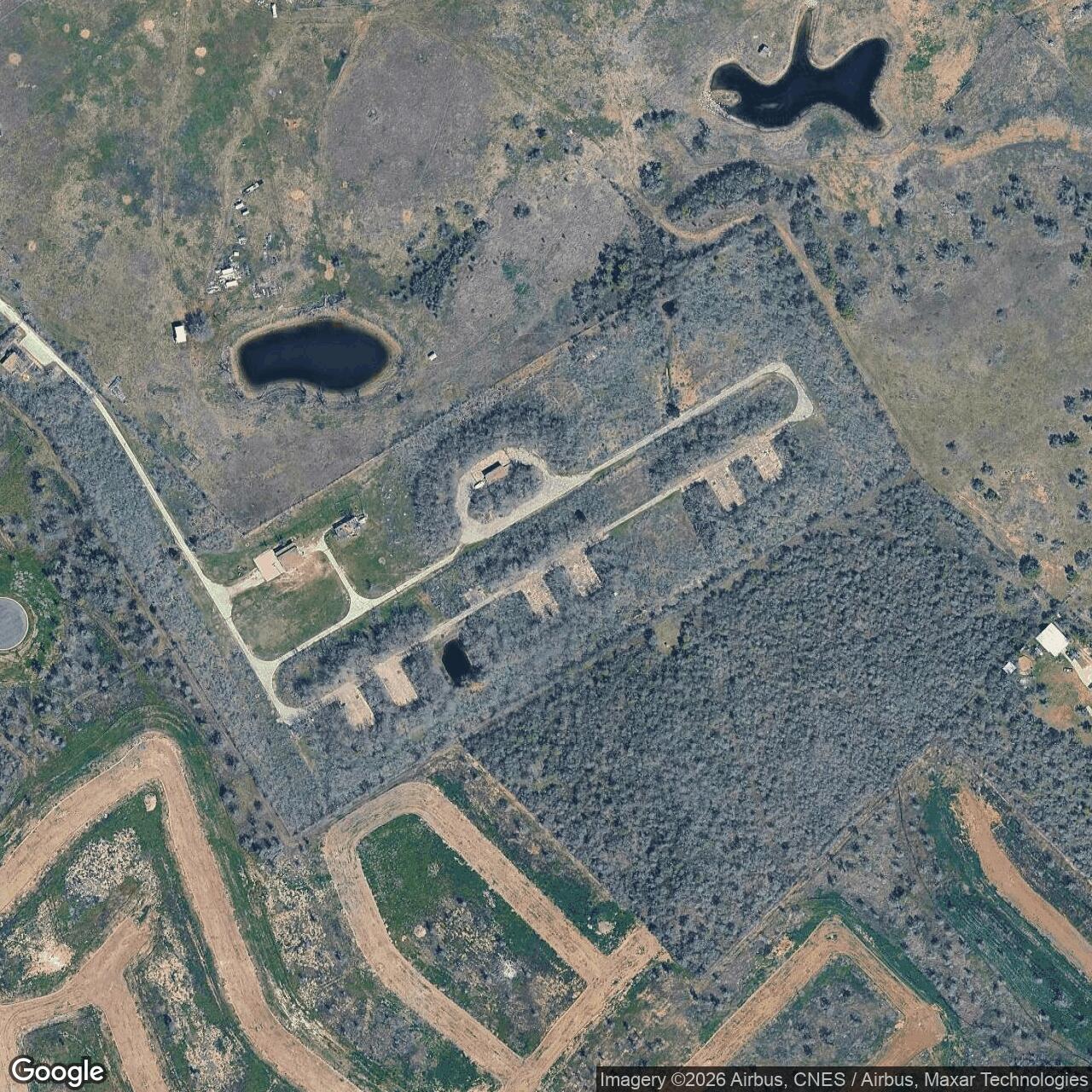
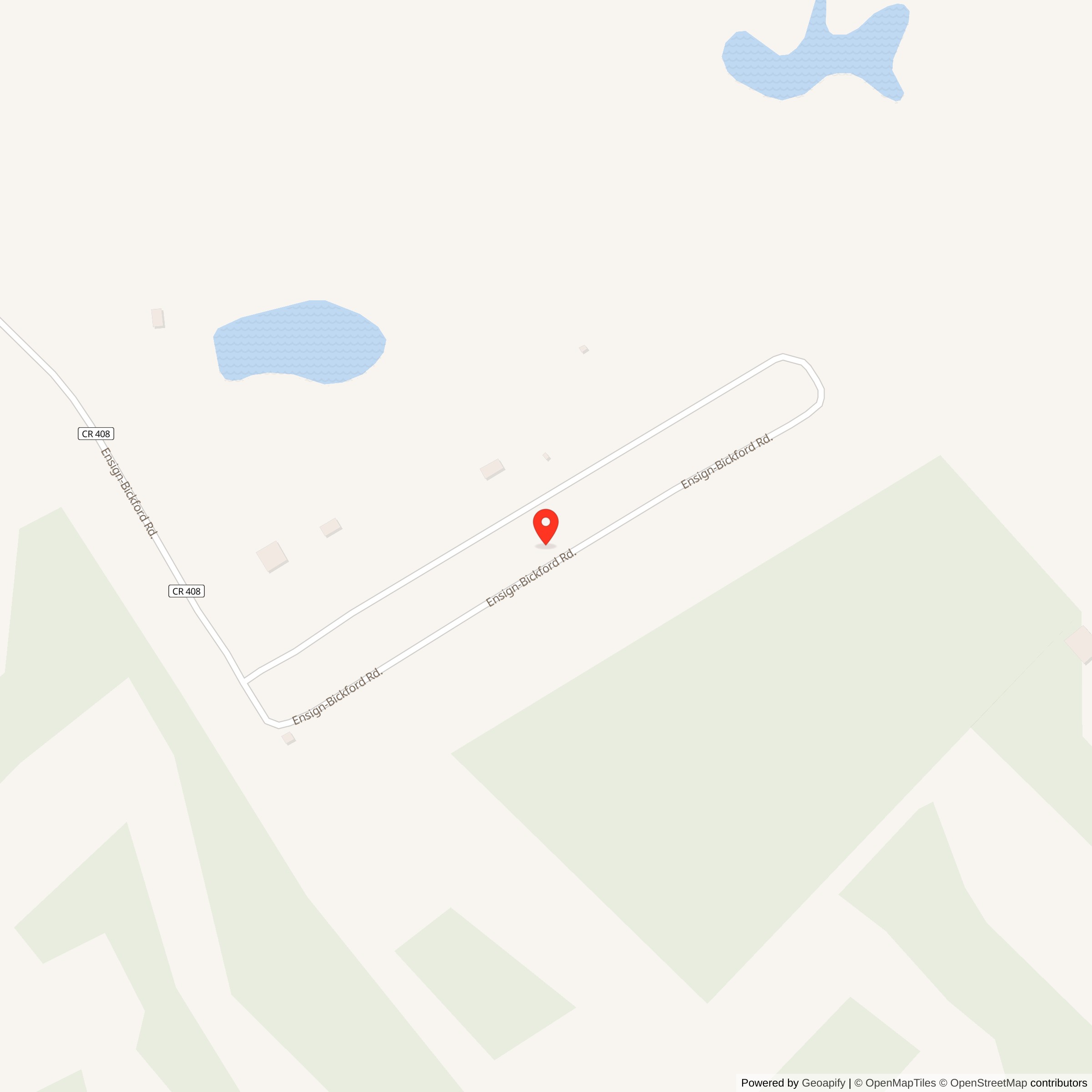
Nike Missile Site BG-40 Launcher, Elroy Texas
Longitude: -97.587847758758
This location was part of the Bergstrom Defense Area
Site ID: BG-40
The missiles at this Launch Area were controlled by the Integrated Fire Control site located here.
Site Role: Launcher
A typical Nike air defense site consisted of two separate parcels of land. One area was known as the Integrated Fire Control (IFC) Area. This site contained the Nike system's ground-based radar and computer systems designed to detect and track hostile aircraft, and to guide the missiles to their targets.
The second parcel of land was known as the Launcher Area. At the launcher area, Nike missiles were stored horizontally within heavily constructed underground missile magazines. A large, missile elevator brought the Nikes to the surface of the site where they would be pushed across twin steel rails to one of four satellite launchers.
Elaboration on how Nike worked here.
Missile Type: Hercules
The Nike Ajax was the first in the Army's family of guided missiles, and the world's first operational, guided, surface-to-air missile system. Nike Ajax had a burnout speed of Mach 2.3, a range of 25-30 miles, and a ceiling of 65,000 feet.
Designed to carry either nuclear and/or high-explosive warheads, the Nike Hercules missile could attack supersonic aircraft operating at altitudes in excess of 150,000 feet and at a range of more than 87 miles.
Battery Type: single
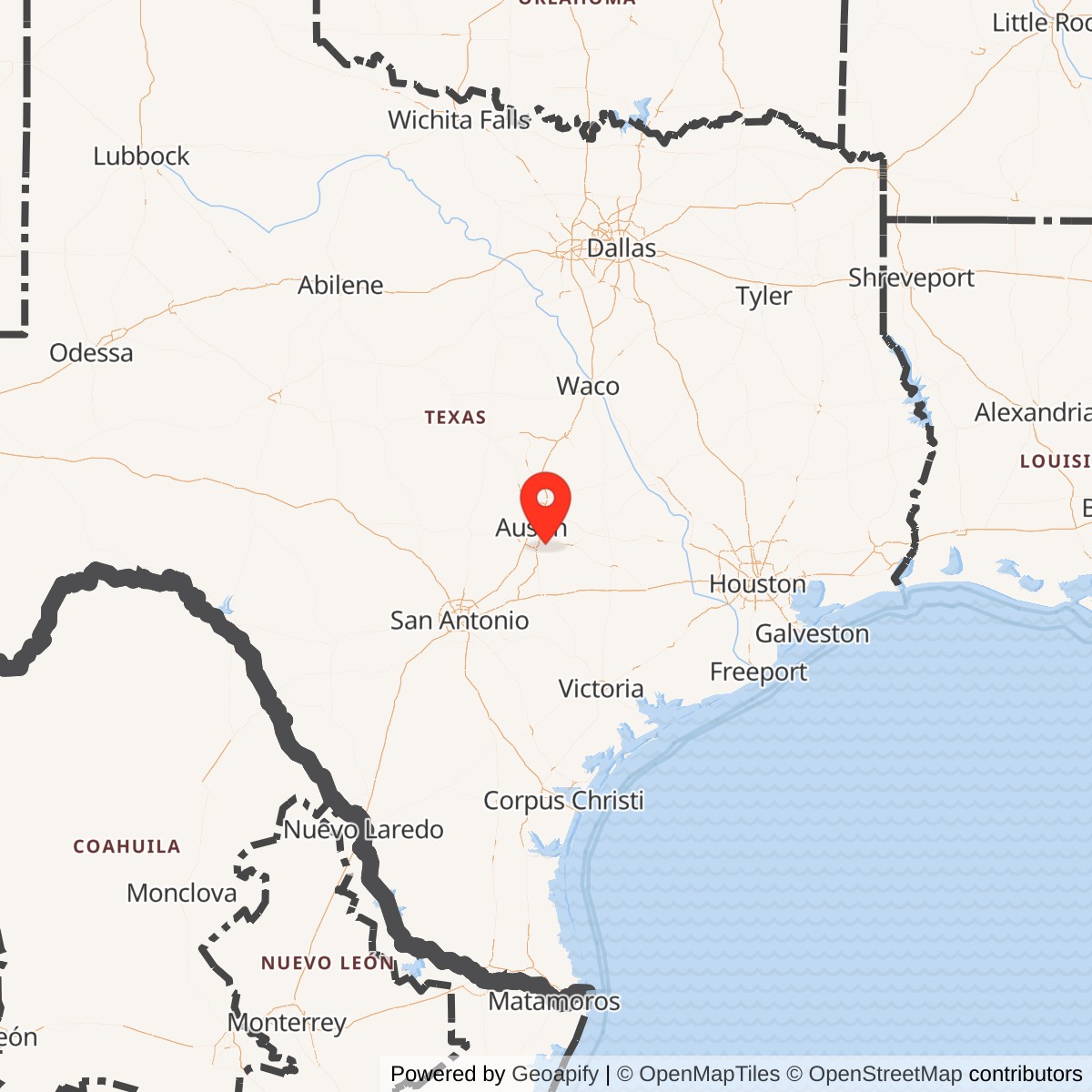
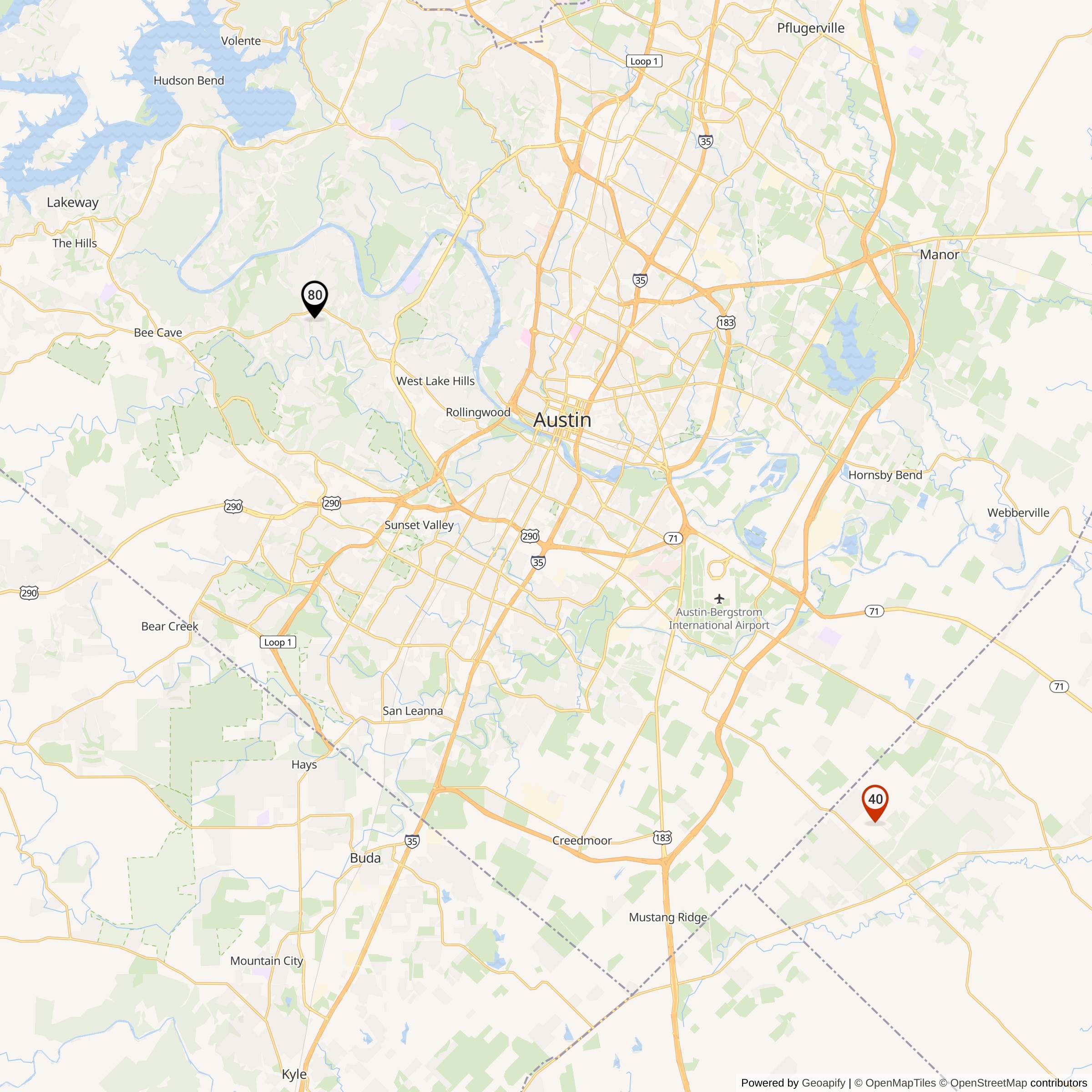
Nike Missile Site BG-40 was a U.S. Army Nike Hercules air-defense missile battery in the Bergstrom Air Force Base Defense Area near Austin, Texas. The site was located southeast of Austin near Elroy, close to the Travis County / Bastrop County side of the Bergstrom defense region. It was one of two Nike Hercules batteries assigned to defend Bergstrom Air Force Base and the Austin region during the early 1960s; the companion site was BG-80 west-northwest of Austin.
It was a Nike Hercules-only site, not a converted Ajax-to-Hercules site. Construction for the Bergstrom SAC-base Nike sites took place in 1959-1960, BG-40 became operational in November 1960, and the Bergstrom Nike batteries were deactivated in June 1966. The site's military mission ended as part of the mid-1960s contraction of continental Nike air-defense coverage around Strategic Air Command bases.
History
BG-40 existed because Bergstrom Air Force Base became a Strategic Air Command installation during the late 1950s. Bergstrom had originated during World War II and later served fighter and tactical missions, but its Cold War strategic importance increased after SAC took operational control of the base in 1958. The 910th Air Refueling Squadron was activated there, and B-52D bombers followed in 1959. That made Bergstrom part of the national nuclear-deterrent infrastructure rather than merely a regional airfield.The Nike system around Bergstrom was not built primarily to defend downtown Austin as a city defense area in the same way Nike rings defended places such as Chicago, New York, or Philadelphia. It was a SAC-base defense area. Its main purpose was to protect Bergstrom AFB, its bomber and refueling mission, and the associated Austin military-industrial region from hostile aircraft attack. In Cold War planning, SAC bases were among the most valuable and vulnerable targets in the United States. If Soviet bombers could destroy bomber and tanker bases on the ground, they could reduce the ability of the United States to retaliate. The Nike Hercules batteries around SAC bases were therefore designed to preserve the strategic deterrent force by defending critical air-base infrastructure.
The Bergstrom Defense Area was one of the smallest Nike defense areas in the country. It had only two batteries: BG-40 southeast of Elroy and BG-80 west-northwest of Austin. This small two-site arrangement reflected the purpose of the defense area. It was not a broad metropolitan ring with many batteries; it was a compact defense scheme around a high-value Strategic Air Command installation.
Relationship to Bergstrom Air Force Base
Bergstrom Air Force Base was the headquarters and support center for the Bergstrom Nike defense. Federal missile-program history states that the defense area was headquartered at Bergstrom AFB and that Army units defended both the Strategic Air Command base and the Austin region from BG-40 and BG-80. Headquarters facilities were at Bergstrom.The base's SAC role is essential to understanding BG-40. By 1958-1959, Bergstrom had become tied to long-range bomber and tanker operations. Nike Hercules sites such as BG-40 were intended to intercept enemy bombers before they could attack the base. The missile sites, base operations, Air Force radar and command channels, and Army air-defense crews together formed a local defensive layer for a national strategic mission.
Units and Manning
The Bergstrom Defense Area was defended by the 4th Missile Battalion, 7th Artillery. The 4th Missile Battalion, 7th Artillery defended the Austin / Bergstrom Air Force Base area for six years. The available open-source records identify the battalion for the defense area, but they are less consistent in assigning a specific letter battery to BG-40 itself. For that reason, the safest site-specific statement is that BG-40 was one of the firing batteries of the 4th Missile Battalion, 7th Artillery during the 1960-1966 operational period.The battalion's job was to operate and maintain the Nike Hercules air-defense system around Bergstrom. This included radar operations, launcher operations, missile maintenance, communications, security, fire-control procedures, power generation, and readiness training. Because BG-40 was a Hercules site protecting a SAC base, personnel worked in a high-consequence environment. Even though no Nike missile was ever fired in combat in the United States, the battery existed to be ready at all times.
Mission and Operation
BG-40's mission was to detect, track, and, if ordered, engage hostile aircraft approaching Bergstrom AFB and the Austin region. Unlike Nike Ajax, which had been deployed in large numbers around major cities during the mid-1950s, BG-40 was built from the beginning as a Nike Hercules site. Nike Hercules was a larger, solid-fueled, longer-range surface-to-air missile that could carry either conventional or nuclear warheads. It was designed to engage high-altitude bomber targets and, in nuclear configuration, bomber formations.The Nike system used ground-based command guidance. The missile did not independently search for its target. Radar and computer equipment in the Integrated Fire Control area tracked the target and the missile. The fire-control system calculated an intercept course and transmitted steering commands to the missile. At the intercept point, the warhead was detonated by command.
A Nike Hercules battery required several major components: acquisition radar to search for targets; tracking radar to follow the selected aircraft; missile-tracking radar to follow the missile in flight; a computer and control system to calculate the intercept; launch equipment; missile storage and handling facilities; communications links; power generators; and a secure perimeter. BG-40 contained the standard separated control and launch areas, with the IFC north-northwest of the launch area.
Because BG-40 was a SAC-base site, it was part of the late-1950s Hercules construction program for strategic air-base defense. These sites differed from many earlier Ajax sites in one major physical way: the launch facilities were aboveground rather than underground magazine sites. Appendix D of the Nike Hercules history identifies the new SAC-base sites as aboveground installations. The official record lists BG-40 as Nike 3AG/12H/12L-H, indicating three aboveground Hercules launcher groups, twelve Hercules missiles, and twelve Hercules launchers.
Site Layout
BG-40 had two principal operating areas: the Integrated Fire Control area and the launcher area.The Integrated Fire Control area was located at approximately 30.1047809590982, -97.5924486467436. This was the radar and fire-control side of the battery. It contained the radars, radar towers, electronic equipment, generators, communications facilities, and control spaces used to acquire and track targets and guide missiles after launch. Modern public summaries describe the IFC area as abandoned, mostly intact in some respects, with deteriorated buildings and radar towers visible on aerial imagery.
The launcher area was located at approximately 30.09740511621887, -97.58784775875796, southeast of Elroy. This was the missile firing side of the battery. Unlike underground Ajax launch sites, BG-40 used aboveground Hercules launch pads set within protective earthen berms. Public site descriptions identify abandoned aboveground Nike Hercules pads, protective berms, deteriorated concrete missile pads, and an apparent standing missile assembly building.
The two areas were separated to meet operational and safety requirements. The IFC needed clear radar visibility and enough distance from the launch area, while the launch area required secure missile-handling space, protective berms, and controlled firing positions. Communications linked the IFC and launcher so that target tracking and missile firing functioned as one battery.
Hercules-Only SAC-Base Construction
BG-40 belonged to the special group of new Nike Hercules sites built around Strategic Air Command bases rather than converted from existing Ajax sites. Appendix D of the History of the Nike Hercules Weapon System lists BG-40 under "SAC Base Sites," not under the table of converted defense sites. It gives the construction period as August 1959 to August 1960 and the operational date with Hercules missiles as November 2, 1960.The same Appendix D note states that the SAC-base sites were Nike Hercules sites only and that all were aboveground installations. This matters because many Nike histories assume the presence of underground magazines, elevators, and Ajax-era launcher layouts. BG-40 was different. It was built directly for Hercules with aboveground firing positions rather than being an older Ajax site modified for the larger missile.
The federal missile-program history supports the same interpretation. It identifies BG-40 and BG-80 as the two Nike Hercules sites defending Bergstrom AFB and the Austin region and states that the batteries were active from 1960 to 1966.
Command and Control
The Bergstrom Defense Area was headquartered at Bergstrom AFB. For BG-40, this meant the battery did not operate in isolation. It was part of a local defense area tied to the base it protected and to the wider Army Air Defense Command and North American air-defense structure.Unlike some larger defense areas, available open-source material does not clearly identify a separate BIRDIE or Missile Master command post for the Bergstrom pair comparable to the Dallas-Fort Worth AADCP at Duncanville or the Dyess command facility at Sweetwater. The safest statement is that the Bergstrom Nike defense was headquartered at Bergstrom AFB and that BG-40 operated under that defense-area command relationship while using its own IFC and launcher components for local fire-control operation.
Daily Life and Local Presence
BG-40 was located in the rural Elroy area, southeast of Austin. In the early 1960s, Elroy was a small community, and the missile site would have stood out as a fenced military compound with radar towers, launch berms, Army vehicles, and restricted access. Its military presence reflected the way the Cold War entered ordinary rural landscapes near strategic targets. The site was not inside the main Bergstrom base boundary, but it existed because of the base's strategic mission.Personnel assigned to BG-40 and the Bergstrom defense area would have performed the routine but demanding work typical of Nike Hercules service. Radar crews maintained and operated tracking systems. Launcher crews maintained missiles, launchers, bermed firing positions, and handling equipment. Maintenance personnel kept generators, communications equipment, fire-control systems, vehicles, and site utilities functioning. Security personnel controlled access to a site that potentially handled nuclear-capable weapons.
The site also formed part of local memory around Austin's Cold War period. Local recollections and historical summaries refer to two Nike sites near Bergstrom, including the Elroy-area site off the FM 812 / FM 2430 area. These memories often emphasize the sudden appearance of a missile base in what had been a rural landscape and the short life of the installation: active in 1960, gone as an Army defense mission by 1966.
Deactivation
BG-40 was deactivated in June 1966. This was a short operational life compared with some Nike Hercules sites around major cities that remained open into the early 1970s. The short service life reflected changing strategic priorities. By the mid-1960s, the Soviet threat had shifted increasingly from bomber attack to ballistic missiles. Nike Hercules could defend against aircraft, but it could not protect a base from a large intercontinental ballistic-missile attack. As a result, many SAC-base Nike sites were closed relatively early.The federal missile-program history states that the Bergstrom Nike Hercules batteries were active from 1960 to 1966.
Post-Closure Use and Current Condition
After deactivation, the missiles and sensitive Army equipment were removed. Public environmental and former-defense-site sources list NIKE BG-40 as a Formerly Used Defense Site in Texas. ProPublica's "Bombs in Your Backyard" database lists NIKE BG-40 in Bastrop County with response complete. A Department of Defense environmental restoration appendix identifies NIKE BG-40 / TX69799F676500 as an Army formerly used defense site entry.Public site descriptions describe the launch area as abandoned, with aboveground Hercules pads inside protective berms, deteriorated concrete missile pads, and an apparent standing missile assembly building. The IFC area is also described as abandoned, with several radar towers visible on aerial imagery and buildings in varying states of deterioration.
The current historical interpretation is that BG-40 survives mainly as an altered, abandoned Cold War missile landscape. Unlike many urban Nike sites that were fully redeveloped, BG-40 appears to retain more of the physical geometry of an aboveground Hercules battery: bermed launcher positions, pad outlines, and radar/control-area remnants. That makes it useful for understanding the SAC-base Nike Hercules layout, which differed from underground Ajax/Hercules conversion sites.
List of all Nike Installations in the Bergstrom Defense AreaList of all Nike Installations in Texas