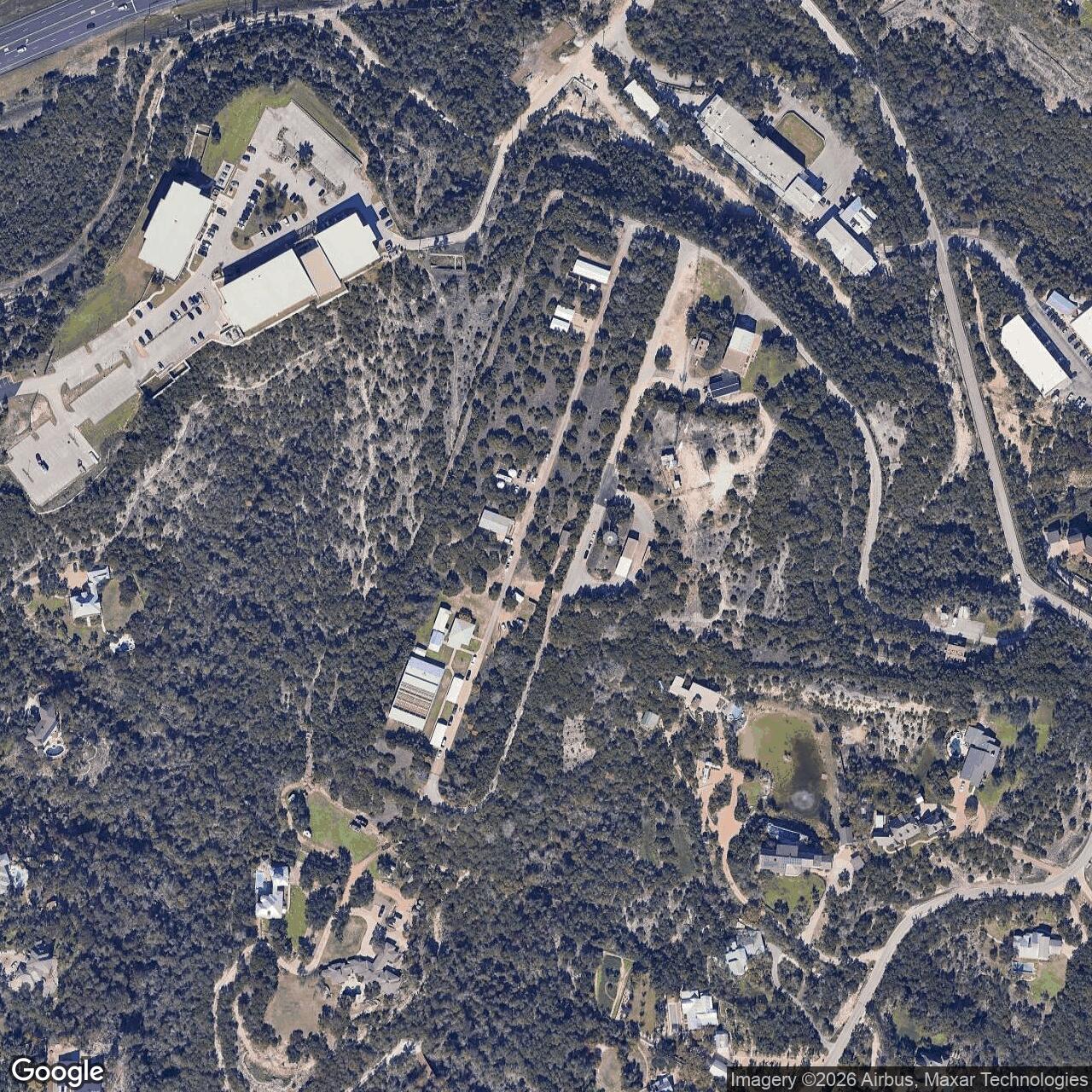
Nike Missile Site BG-80 Launcher, Bee Caves Texas
Longitude: -97.8669052304679
This location was part of the Bergstrom Defense Area
Site ID: BG-80
The missiles at this Launch Area were controlled by the Integrated Fire Control site located here.
Site Role: Launcher
A typical Nike air defense site consisted of two separate parcels of land. One area was known as the Integrated Fire Control (IFC) Area. This site contained the Nike system's ground-based radar and computer systems designed to detect and track hostile aircraft, and to guide the missiles to their targets.
The second parcel of land was known as the Launcher Area. At the launcher area, Nike missiles were stored horizontally within heavily constructed underground missile magazines. A large, missile elevator brought the Nikes to the surface of the site where they would be pushed across twin steel rails to one of four satellite launchers.
Elaboration on how Nike worked here.
Missile Type: Hercules
The Nike Ajax was the first in the Army's family of guided missiles, and the world's first operational, guided, surface-to-air missile system. Nike Ajax had a burnout speed of Mach 2.3, a range of 25-30 miles, and a ceiling of 65,000 feet.
Designed to carry either nuclear and/or high-explosive warheads, the Nike Hercules missile could attack supersonic aircraft operating at altitudes in excess of 150,000 feet and at a range of more than 87 miles.
Battery Type: single
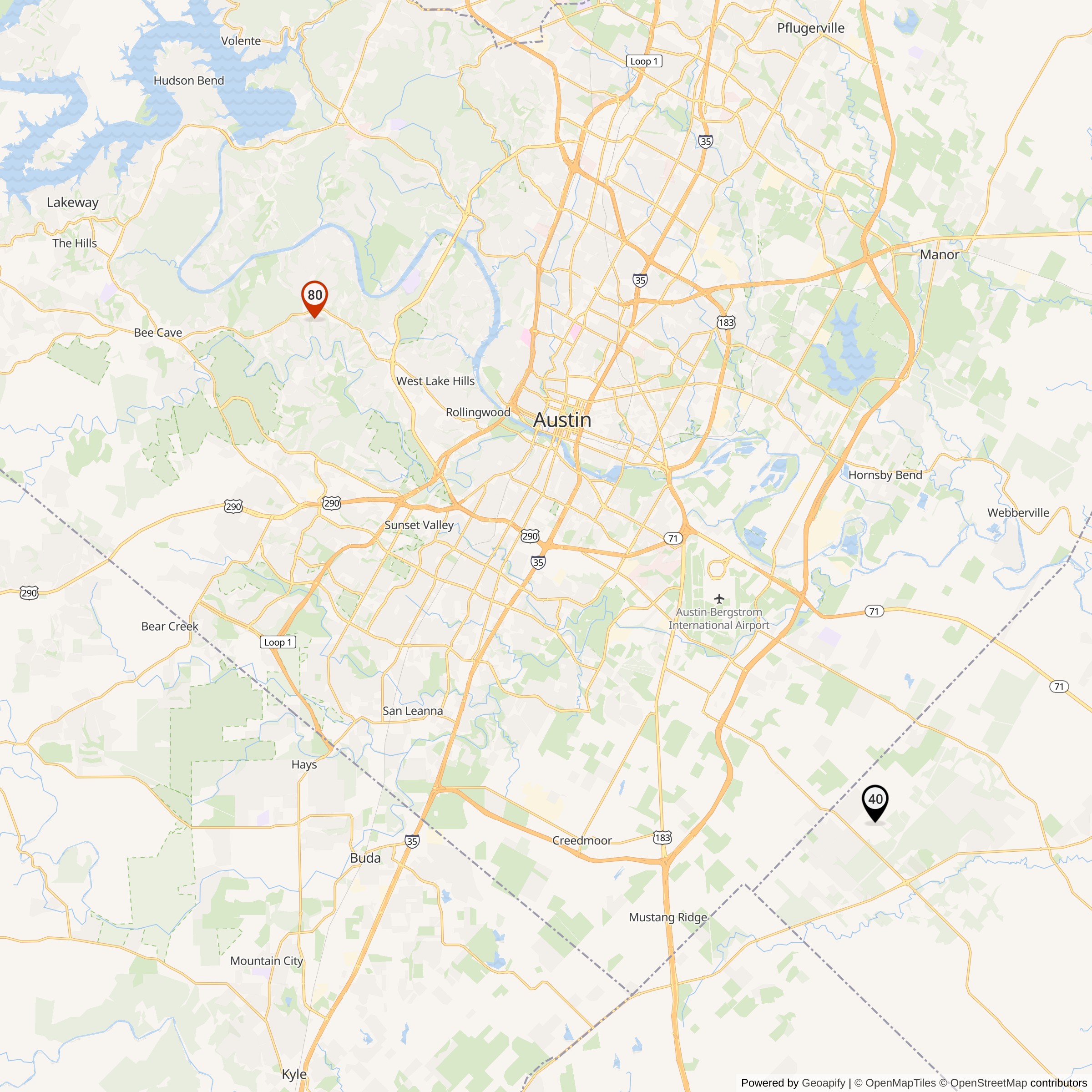
Nike Missile Site BG-80 was a U.S. Army Nike Hercules air-defense missile battery in the Bergstrom Air Force Base Defense Area near Austin, Texas. It was the western battery of the two-site Bergstrom defense system. Its companion battery, BG-40, was southeast of Austin near Elroy; BG-80 was west-northwest of Austin in the Bee Caves / West Austin area. Together, the two batteries defended Bergstrom Air Force Base, a Strategic Air Command installation, and the Austin region during the early 1960s.
It was built as a Nike Hercules site, not as a Nike Ajax site converted later. Construction of the Bergstrom Nike Hercules sites took place from August 1959 to August 1960, and BG-80 became operational with Nike Hercules missiles on November 2, 1960. The Bergstrom Defense Area Nike batteries were active from 1960 until June 1966, when the Army ended the Nike Hercules mission around Bergstrom as part of the mid-1960s contraction of continental air-defense coverage around selected Strategic Air Command bases.
History
BG-80 existed because Bergstrom Air Force Base became a Strategic Air Command installation during the late 1950s. Bergstrom had begun during World War II and served a variety of Air Force missions, but its Cold War significance increased sharply when Strategic Air Command moved into the base. SAC bombers and refueling aircraft were central to the United States nuclear deterrent, and bases that supported those forces were among the highest-value military targets in the country.The Bergstrom Nike sites should therefore be understood as SAC-base defense sites rather than as a large metropolitan missile ring like those around New York, Chicago, Philadelphia, or Pittsburgh. The primary purpose was to protect Bergstrom AFB and the associated Austin region from hostile bomber attack. In Cold War planning, an attack against SAC bomber and tanker bases could reduce the ability of the United States to retaliate after a Soviet strike. Nike Hercules batteries around SAC bases were intended to intercept enemy aircraft before they could destroy bomber, refueling, maintenance, command, and support facilities on the ground.
The Bergstrom Defense Area was compact. It had only two Nike batteries: BG-40 southeast of Elroy and BG-80 west-northwest of Austin. This was enough to provide a local defensive screen for the air base and the Austin area without the large number of batteries required for a broad city-defense ring. The DoD Legacy missile history describes the Bergstrom Defense Area as headquartered at Bergstrom AFB and states that Army units defended the Strategic Air Command base and the Austin region from BG-40 and BG-80.
Relationship to Bergstrom Air Force Base
Bergstrom AFB was the reason BG-80 existed. The base hosted SAC operations during the period when BG-80 was active. At the time, Soviet bomber attack remained a serious planning concern, even as ballistic missiles were becoming the dominant strategic threat. SAC installations needed protection because their bombers and tankers had to survive long enough to launch or disperse. Nike Hercules batteries were one part of that survival strategy.BG-80 was west-northwest of Bergstrom, giving the two-site defense area a western component. BG-40 covered the southeastern side near Elroy, while BG-80 covered the western approaches and the hill country side of Austin. The pairing illustrates the small, point-defense nature of the Bergstrom system. It was not built to ring the entire Austin urban area in depth; it was built to defend a specific high-value military target and its immediate regional environment.
Units and Manning
The Bergstrom Defense Area was defended by the 4th Missile Battalion, 7th Artillery. Open-source summaries identify the battalion as the Army Nike Hercules unit responsible for the Austin / Bergstrom Air Force Base area during the 1960-1966 operational period. The available public record is less consistent about the exact battery-letter assignment for BG-80 itself, so the safest site-specific statement is that BG-80 was one of the firing batteries assigned to the 4th Missile Battalion, 7th Artillery.BG-80 personnel would have included fire-control crews, launcher crews, missile maintenance personnel, communications personnel, power-generation and vehicle personnel, administrative staff, and security forces. Because the site used Nike Hercules, its security and technical procedures were more demanding than those of first-generation Nike Ajax sites. The missile was larger, longer-ranged, solid-fueled, and nuclear-capable. Crews had to maintain radar readiness, missile-launch readiness, warhead-control procedures, generator reliability, communications, and site security in a remote hill-country setting.
Mission and Operation
BG-80's mission was to detect, track, and, if ordered, engage hostile aircraft threatening Bergstrom AFB and the Austin region. It was part of an integrated air-defense system, not an isolated weapon. The Army Nike battery would have been tied into Air Defense Command and Army Air Defense Command channels, with regional target assignment, identification procedures, and engagement authority coordinated beyond the local site.Nike Hercules used command guidance. The missile did not independently search for and select its own target. Instead, the Integrated Fire Control area acquired and tracked the target and also tracked the missile. Fire-control computers calculated an intercept path and transmitted steering commands to the missile. When the target and missile trajectories converged, detonation would be commanded at the calculated intercept point.
Unlike the underground-magazine Nike Ajax batteries common in many city defense areas, BG-80 was one of the later Nike Hercules-only aboveground installations. Appendix D of the Nike Hercules history lists the SAC-base sites as aboveground installations. This means that the missiles were not stored in Ajax-style underground magazines with elevator launchers. Instead, the BG-80 launcher area used aboveground Hercules launch positions set within protective berms. Later accounts describe the launch area as having high berms and missiles housed in protective "globe tents," which could be dropped quickly when the site moved to a higher readiness condition.
Launcher Area
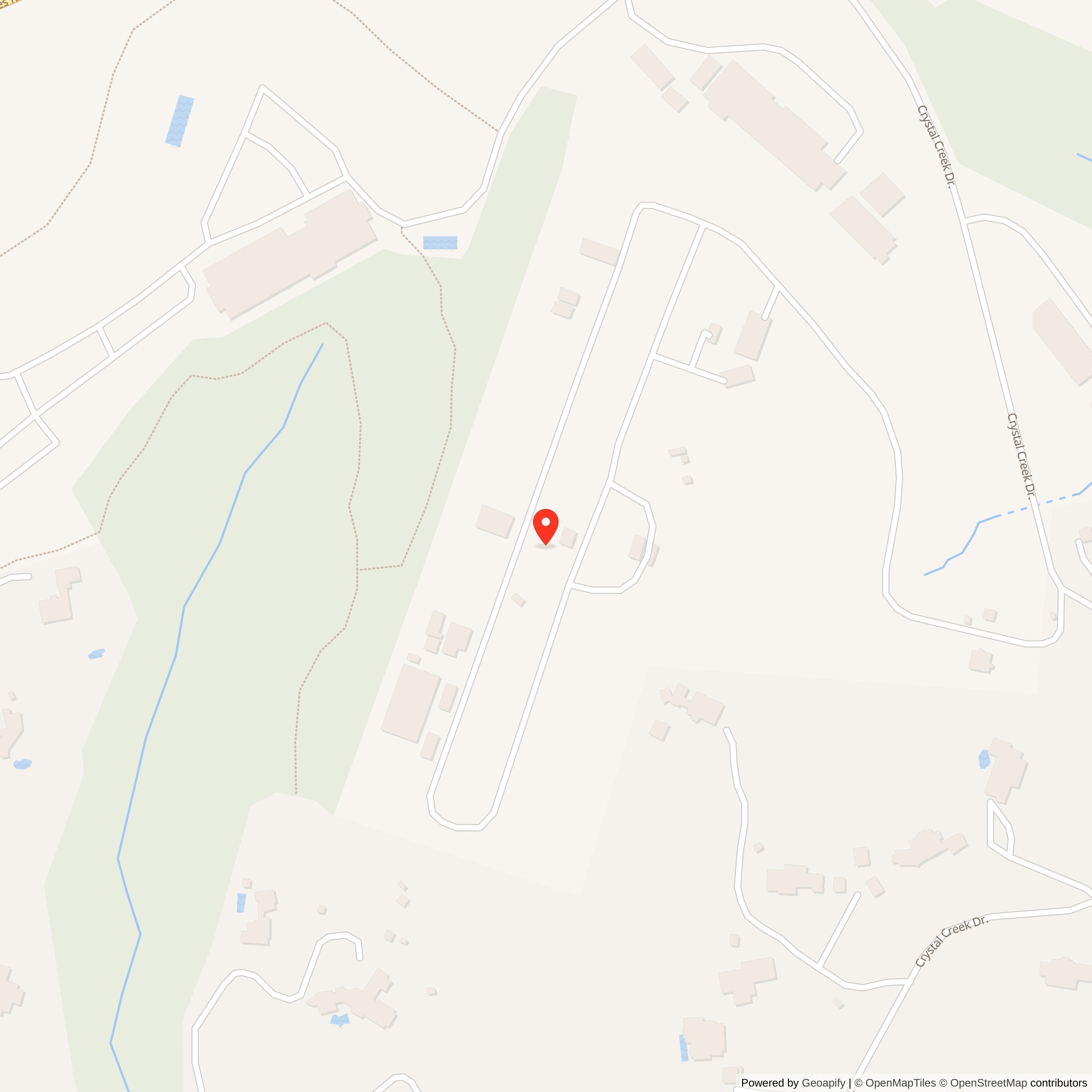
The launcher area was the missile-storage and launch side of the battery. Because BG-80 was a Hercules-only aboveground site, its physical character differed from the earlier underground-magazine Ajax sites. Open-source Nike listings describe the BG-80 launch area as having aboveground Nike Hercules pads within protective berms. The Texas Military Department's history of the Bee Caves Armory quotes a former soldier who remembered the launch area as surrounded by twenty-foot berms, with each missile inside a globe tent that concealed it from aerial view and protected it from weather. To bring the missiles to readiness, crews could drop the tent and raise the launcher.The modern launch-area reuse is tied to the University of Texas System. The UT System Police Academy states that its academy is located at the Bee Cave Research Center in western Travis County, at 506 Crystal Creek Drive, and that the site was formerly a Nike Hercules surface-to-air missile base constructed in the late 1950s. The academy's published GPS point, 30.314168, -97.863861, lies very close to the BG-80 launch-coordinate cluster. Other public site summaries also identify the former BG-80 launch area with the Bee Cave Research Center / UT System Police Academy. The launcher side is therefore best described as the former BG-80 missile-launch area, now reused within the University of Texas System police-training / Bee Cave Research Center landscape.
Integrated Fire Control Area
The BG-80 Integrated Fire Control area was on the Bee Caves Road hilltop. This was the radar, tracking, guidance, and fire-control side of the battery. It was separated from the launch area by more than a mile, a normal requirement for Nike operations. The Texas Military Department describes the Bee Caves hilltop as a 12.5-acre site that now houses the 71st Troop Command, and states that the location began by providing Austin and Bergstrom AFB with protection from aerial attack.The former fire-control area later became known as the Bee Caves Armory. A 1993 Argonne National Laboratory preliminary assessment report for the Department of Defense identified the property as the Bee Caves Armory, former Nike BG-80 Fire Control Facility, Installation 48055, Austin, Texas. That report was prepared under the Installation Restoration Program to assess possible environmental concerns associated with former Nike operations and subsequent National Guard use.
The fire-control site is one of the most historically legible parts of BG-80 because it continued in military use after the Nike mission ended. The Texas Military Department notes that visitors entering the armory see a Nike Hercules missile displayed upright, acknowledging the site's former role as the Integrated Fire Control center for the 10,000-pound missiles. The article also states that the hilltop in the 1960s had the radars, generators, tracking equipment, and troops needed to run the air-defense system, but not the missiles themselves. The missiles were located at the separate launch area.
Nike Hercules System
BG-80 was a Nike Hercules site from the beginning. Nike Hercules was the second major operational missile in the Nike family and replaced or supplemented the earlier Nike Ajax system at selected sites. It was larger and more capable than Ajax, had a greater range and altitude, and could carry a conventional or nuclear warhead. The Hercules system was suited to defending high-value targets against bomber formations, which made it appropriate for Strategic Air Command base defense.The federal inventory and public Nike coordinate sources identify BG-80 as a Nike Hercules installation with 12 Hercules launchers. Unlike many older sites, there was no Ajax period at BG-80 and therefore no Ajax-to-Hercules conversion history. The site was part of the "new defense sites" program rather than the converted-defense-site program. Appendix D lists BG-80 under SAC-base sites, with construction from August 1959 to August 1960 and a Hercules operational date of November 2, 1960.
The aboveground character of the site is important. Underground magazines were a defining feature of many Ajax-era Nike sites, but SAC-base Hercules-only sites could be constructed with aboveground launch pads and bermed positions. This reduced some of the underground construction complexity and reflected the later standardized Hercules deployment pattern at selected SAC bases.
Command and Control
BG-80 operated as part of the Bergstrom Defense Area, with headquarters facilities at Bergstrom AFB. Its local fire-control equipment could acquire and track targets, but engagement decisions and air-defense coordination were part of the larger continental air-defense system. Nike batteries were tied into regional radar coverage, identification procedures, and higher command authority. A missile crew did not simply fire on its own initiative; it operated within the tightly controlled air-defense network designed to prevent accidental engagement of friendly aircraft and to coordinate multiple defenses during an attack.The site's separation into a fire-control hilltop and a launch area reflected that system. The IFC side saw the target, tracked it, computed the solution, and issued guidance. The launcher side prepared and fired the missile. Communications between the two were essential. The Texas Military Department article's description of the hilltop having all the equipment needed to track targets and fire the missiles, but not the missiles themselves, is a good plain-language summary of the Nike architecture.
Daily Life and Readiness
BG-80's daily life would have combined routine military administration with technical readiness. Crews maintained radars, generators, fire-control equipment, launchers, communications gear, missiles, vehicles, fencing, and support buildings. They drilled repeatedly because the system depended on speed and accuracy under pressure. The site had to be ready to shift from routine status to a firing posture quickly.The Bee Caves location was remote enough in the early 1960s that it still had a hill-country character very different from modern West Austin. Former personnel remembered the area as a serious Cold War installation guarding a SAC base that could have been a Soviet target. In later decades, suburban growth and changing land use transformed the area around both the control and launch parcels. The hilltop armory, however, retained enough military continuity that the Nike mission remained visible in the form of the displayed Hercules missile and the continuing National Guard presence.
Deactivation
BG-80 was deactivated in June 1966. This short operational life was typical of many SAC-base Nike Hercules deployments. The sites were built quickly in the late 1950s and early 1960s to defend critical air bases, but the strategic environment changed rapidly. By the mid-1960s, intercontinental ballistic missiles and submarine-launched ballistic missiles had become the dominant strategic threat. A surface-to-air missile battery could protect against bombers, but it could not defend a SAC base from a large ballistic-missile attack.Defense Secretary Robert McNamara's broader reorientation of air-defense priorities, the cost of maintaining many fixed sites, and the decreasing relative importance of bomber-only defense all contributed to Nike reductions. The Bergstrom Defense Area closed after only about six years of operational use. BG-80's closure did not mean Bergstrom lost strategic importance; rather, it reflected the changing balance between bomber defense and missile-age deterrence.
Post-Closure Use and Current Condition
The post-closure history of BG-80 is split between the IFC/control side and the launcher side.The former IFC/control area became the Bee Caves Armory and remained in Texas Army National Guard use. The Texas Military Department identifies the 12.5-acre Bee Caves Road hilltop as the home of the 71st Troop Command and explicitly connects it to BG-80's air-defense mission. The 1993 preliminary assessment report also identifies the property as the former Nike BG-80 Fire Control Facility and Bee Caves Armory. It notes environmental concerns typical of former military sites, including possible hazardous materials from former Nike operations, original construction materials, underground fuel storage, hazardous materials storage or use, disposal of hazardous waste, and hazardous wastewater releases.
The former launcher area became part of the Bee Cave Research Center / University of Texas System Police Academy setting. The UT System Police Academy states that its facility is on a former Nike Hercules surface-to-air missile base constructed in the late 1950s and later transferred to the University of Texas after decommissioning. Public Nike site summaries describe the launcher area as having aboveground Hercules pads within protective berms, with the site reused by the UT System Police Academy. Older map-based summaries also identify the launch area as the Bee Cave Research Center.
Because both sides remained in institutional or training use after the Nike period, BG-80 appears to have retained more legible Cold War landscape features than many sites that were obliterated by housing or industrial redevelopment. The fire-control side remains especially important because of the National Guard continuity and the displayed Nike Hercules missile. The launcher side is important because it preserves the memory of the aboveground Hercules pad-and-berm configuration, even if the precise condition of each launch pad should be field-verified.
List of all Nike Installations in the Bergstrom Defense AreaList of all Nike Installations in Texas