
Palmdale Army Air Field / Air Force Plant 42, Palmdale California
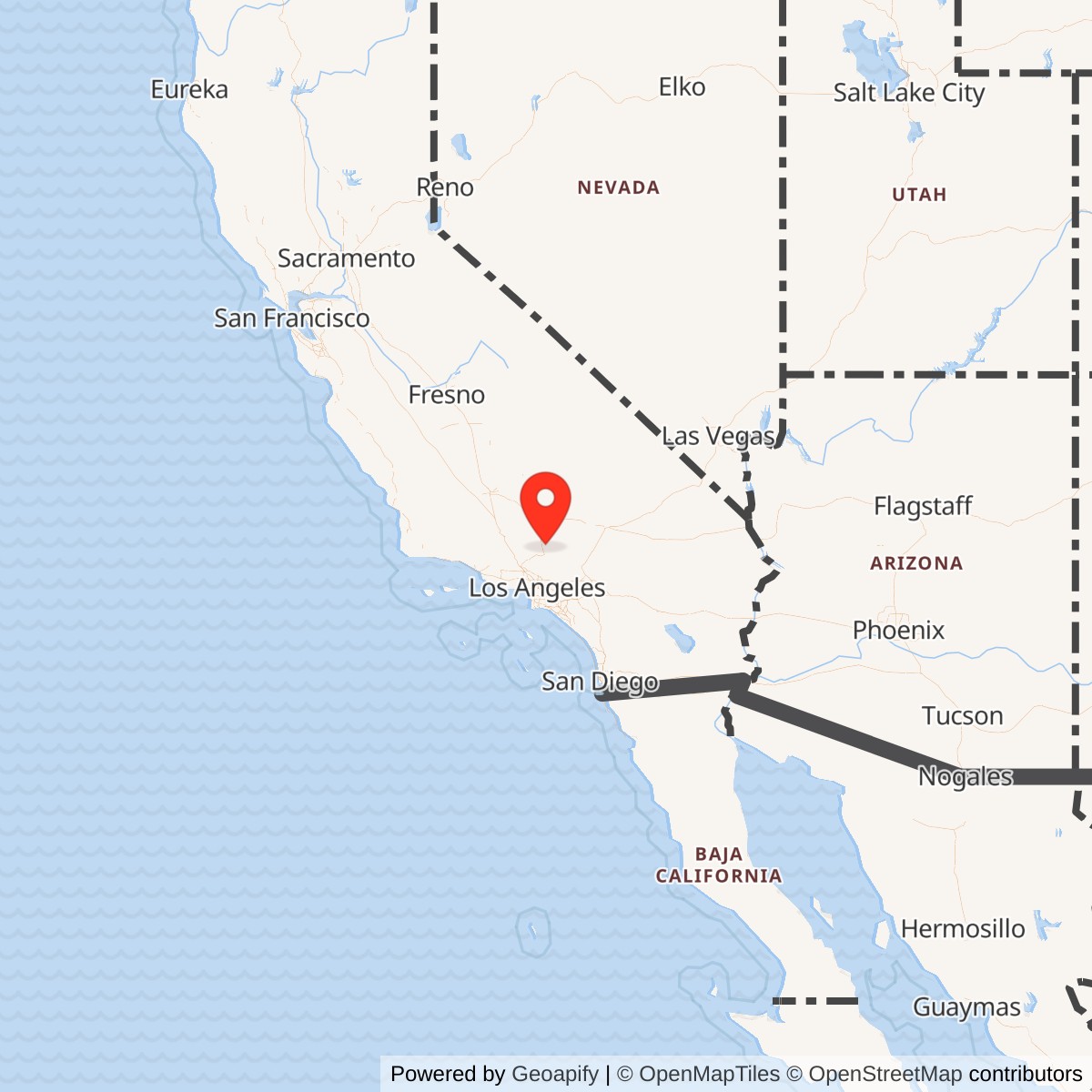
Longitude: -118.084553
Official Base Website: Air Force Plant 42
Current Role: Active aerospace design, development, production, modification, programmed depot maintenance, production flight test, first-flight, airfield, NASA aircraft-operations, and industrial support complex serving Air Force and allied systems
At Air Force Plant 42, an aircraft often leaves the factory only once. Its first takeoff begins the transition from drawings, tools, and assembly fixtures into a flight-test program at nearby Edwards Air Force Base. The B-1A, B-2 Spirit, and B-21 Raider all followed that pattern, lifting from Palmdale and landing at Edwards, where engineers and test crews began the long work of proving that the new design could perform as intended.
Plant 42 is not a conventional air base organized around an operational wing. It is an industrial military installation built around production sites, enormous assembly buildings, secure contractor compounds, two 12,000-foot runways, common utilities, and the ability to move experimental or newly completed aircraft directly from the factory into restricted test airspace. Its mission is to provide facilities for design, development, production, modification, depot maintenance, and production flight test. The current installation supports an estimated 16,000 government and contractor personnel, more than 3.5 million square feet of floor space, and industrial property with a replacement value of approximately $4.5 billion.
The plant sits at the junction of several systems. Southern California's aerospace companies provide design and manufacturing expertise. Edwards provides developmental flight-test personnel, instrumentation, range access, and test airspace. Air Force acquisition organizations provide program management and industrial-property oversight. Contractors operate production sites. The 412th Test Wing operates the common airfield and provides installation support. NASA uses facilities beside the airfield for scientific aircraft. Operational commands receive the aircraft after production, testing, and sustainment work are complete.
Plant 42's history begins before the formal industrial plant. A desert landing field was established in the 1930s as part of the federal intermediate-airfield system. The Army Air Corps leased Palmdale Airport on 1942-01-08, and Works Progress Administration labor began constructing a 9,000-foot concrete runway, a 5,000-foot auxiliary runway, and a hangar. The field supported the wartime aviation system and soon became associated with early American jet testing. In 1953 the installation formally became Air Force Plant 42. Government ownership followed, and by 1954 the plant was operating under the government-owned, contractor-operated industrial model that still defines much of the property.
The installation is sometimes described as part of Edwards because the 412th Test Wing supplies day-to-day operating support and because aircraft routinely fly between the two locations. That relationship is real, but Plant 42 remains a separate federal installation with its own land, airfield, industrial sites, management structure, history, coordinates, and installation identity. Edwards is the principal developmental test base. Plant 42 is the production, modification, depot, and first-flight complex that feeds aircraft into that test system.
Geography and Industrial Logic
Palmdale offered a rare combination of isolation and access. The Antelope Valley had open desert land, good flying weather, low population density, and direct access to the restricted airspace surrounding Edwards and the wider R-2508 test complex. Aircraft could conduct ground runs, taxi tests, first flights, and production acceptance activity without operating over the densely populated Los Angeles Basin.
At the same time, Palmdale remained close enough to Southern California's aerospace industry to draw engineers, production workers, specialized subcontractors, tooling, and management from Los Angeles-area companies. The San Gabriel Mountains separated the valley from the metropolitan core but did not isolate it from the region's industrial workforce. Highway and rail links connected the plant with Burbank, El Segundo, Downey, Hawthorne, Long Beach, and other aerospace centers.
The location also fit the Air Force's mobilization logic. During the early Cold War, the service wanted industrial capacity that could be expanded during crisis or war. A large federal site with multiple contractor areas could accommodate competing companies and different programs while sharing runways, fire protection, security, and utilities. The plant could be enlarged without forcing every new aircraft program to build a separate airfield.
This arrangement reduced duplication but required careful boundaries. Contractor compounds protect proprietary and classified work. The government common area links them through the airfield and installation infrastructure. Some contractor facilities are government-owned and contractor-operated. Others are contractor-owned and contractor-operated but retain secure access to the plant's runways. The result is less like a traditional base and more like a protected aerospace district built around a military airfield.
Early Airfield and World War II Service
The earliest aviation use grew from the federal network of intermediate landing fields established during the expansion of civil air routes. Palmdale's desert strip offered an emergency landing site for aircraft crossing Southern California before the area became an industrial center.
On 1942-01-08 the Army Air Corps leased Palmdale Airport from the Palmdale Irrigation District. Works Progress Administration workers began building a 9,000-foot concrete runway, a 5,000-foot auxiliary runway, and a hangar. The long concrete runway was a significant investment for a wartime auxiliary field and created the core around which later industrial development could occur.
The field functioned within the wartime network supporting Muroc and other California training and test installations. Aircraft could use Palmdale for diversion, staging, maintenance, and support. The official Air Force Test Center history notes that within three years the 412th Fighter Group used the hangar later designated Building 531 while testing jet aircraft.
The 412th Fighter Group had an unusual wartime mission. Rather than preparing only for overseas combat, it conducted experimental work with the Bell P-59 Airacomet and Lockheed P-80 Shooting Star and trained personnel for jet-equipped units. Palmdale's long runway and proximity to Muroc made the field useful during the transition from piston fighters to turbojet aircraft.
This activity gave the site an industrial and test identity before Plant 42 formally existed. The Army had created a runway and hangar system suited to advanced aircraft. The nearby test community had begun using those facilities. Southern California manufacturers were already developing new designs. When Cold War requirements demanded dispersed production and flight-test capacity, Palmdale possessed a foundation that could be enlarged rather than created from nothing.
The postwar drawdown reduced immediate military demand. The property moved into county and municipal airport use, but the field's military potential remained obvious. The Korean War and rapid development of high-performance jet aircraft soon reversed the trend toward disposal.
Korean War Mobilization and Creation of Plant 42
The Korean War exposed limits in the American aircraft-production system. Manufacturers needed more room for final assembly and production flight testing, while the Air Force needed facilities that could be expanded during mobilization. Testing high-performance aircraft from crowded urban airports created noise, safety, and security problems.
The Air Force and Los Angeles County moved toward restoring federal control. The service commissioned a master plan for a permanent industrial installation that could augment Southern California's airframe-production capacity. The plan envisioned a government airfield surrounded by separate contractor sites, each capable of supporting aircraft production, modification, and testing.
The Palmdale facility officially became Air Force Plant 42 in 1953. Federal ownership and industrial development continued in 1954, the year the Air Force's government-owned, contractor-operated relationship became established. The distinction between those dates matters. The installation lineage begins with the Army lease in 1942. The formal Plant 42 identity begins in 1953. The mature GOCO production model dates from 1954.
The Air Force did not create Plant 42 to house a permanent combat wing. It built an industrial reserve. Contractors could use government facilities, common runways, and protected land to assemble and test aircraft for the Air Force and allied customers. When one program ended, buildings and sites could be modified for another.
North American Aviation and Northrop received early production-site access. Lockheed later established a permanent Palmdale presence. The plant eventually supported Boeing, Lockheed Martin, Northrop Grumman, and their predecessor companies. Its industrial history reflects corporate mergers and changing programs as much as Air Force organizational change.
The production-site system proved especially valuable for classified programs. New aircraft could be assembled inside secure compounds and moved onto government runways without appearing at a public metropolitan airport. First flights could enter military-controlled airspace and proceed to Edwards. The public might know that an unusual aircraft had flown, but the plant's internal work and many program details remained protected.
Site Design and Physical Layout
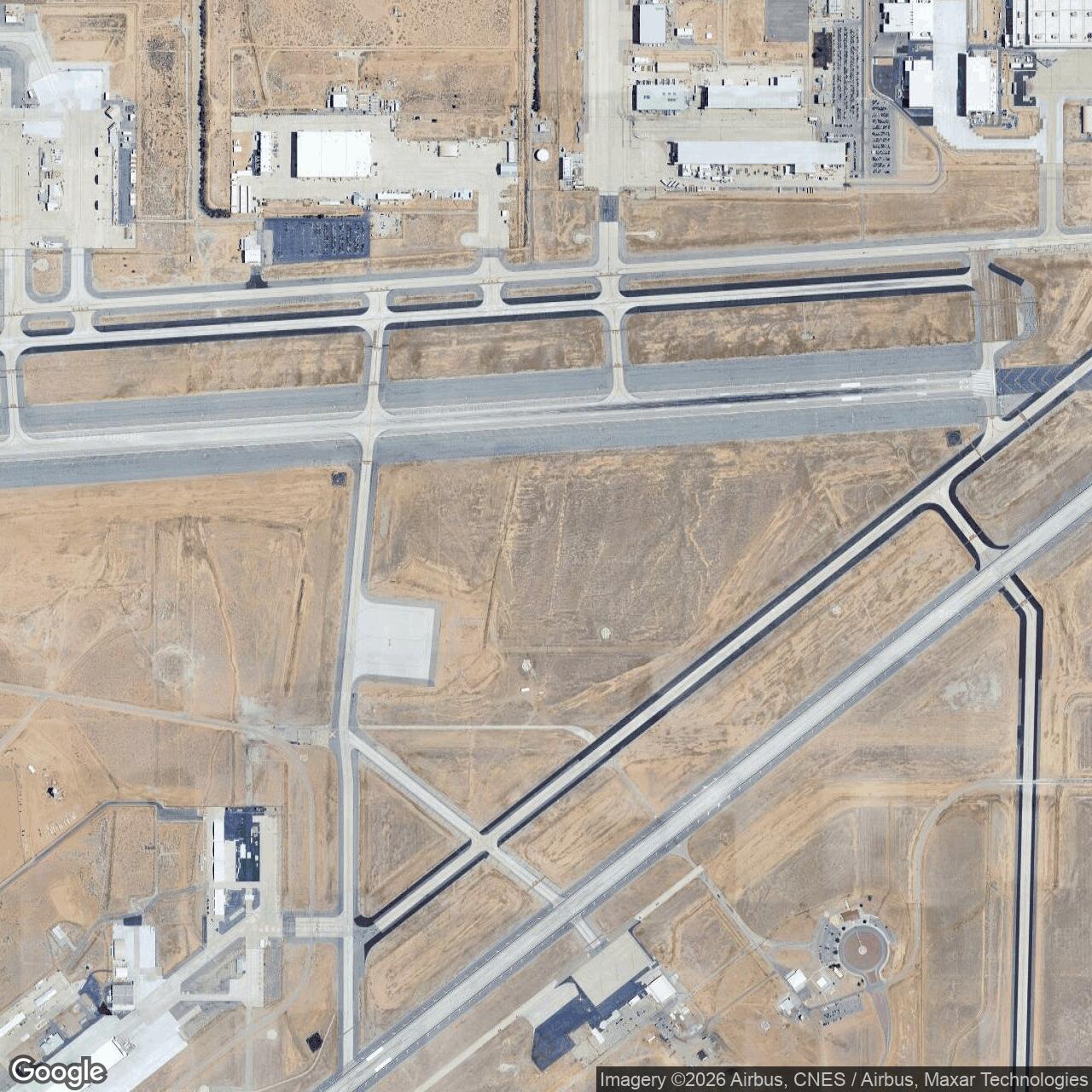
Plant 42 is organized around a common airfield and eight production sites. The current government-operated airfield contains two principal concrete runways approximately 12,000 feet long. Runway 4/22 is 150 feet wide, while Runway 7/25 is 200 feet wide. An assault landing zone provides additional military training and evaluation capability.
The runway dimensions are not excessive for the mission. Large bombers, heavily loaded test aircraft, unmanned aircraft, transports, and vehicles with uncertain developmental characteristics require generous margins. A production aircraft may make its first takeoff before engineers have accumulated extensive flight data. A wide, long runway reduces risk during rejected takeoffs, braking tests, crosswind work, and emergency returns.
The 412th Test Wing Operating Location controls the airfield complex and coordinates flight planning, scheduling, airspace, safety, fire and rescue, and recovery. Federal Aviation Administration-contracted controllers operate the tower. Weather observation is supplied through Air Force support. Current official material places typical annual traffic slightly above 30,000 operations.
The common area includes roads, utilities, security systems, communications, environmental services, fire protection, crash rescue, recovery capability, logistics, contract management, and shared flight and ground safety. These functions allow the production sites to concentrate on their aircraft programs while the government maintains the system that joins them.
The contractor sites contain large assembly bays, tooling areas, paint and coating facilities, laboratories, engineering offices, parts storage, modification docks, depot-maintenance areas, and secure flight lines. Buildings must accommodate aircraft with very different sizes and signatures. A high-altitude reconnaissance aircraft, a large flying-wing bomber, an unmanned surveillance aircraft, and a spacecraft orbiter impose different structural, electrical, environmental, and security requirements.
Some buildings outlive the programs for which they were constructed. Facilities built for one aircraft have been adapted for another, although highly specialized tooling and security can make reuse expensive. The plant's value lies partly in its ability to preserve industrial capacity between programs.
The western edge is associated with Sierra Highway and the public-facing Blackbird and Joe Davies heritage airparks. The protected installation extends eastward across Palmdale's industrial area. NASA's Building 703 complex sits beside the airfield and uses the runway while remaining a distinct NASA activity.
Early Supersonic Production Programs
Plant 42 matured during the rapid expansion of supersonic aircraft in the 1950s. The Air Force required production lines capable of building thin-winged fighters, high-temperature structures, complex engines, and new control systems. Palmdale gave manufacturers room to move final assembly and flight-test activity away from crowded urban factories.
The North American F-100 Super Sabre was among the aircraft associated with the plant. The F-100 became the Air Force's first operational fighter capable of sustained supersonic flight in level operation. Plant 42 supported the industrial work needed to move the aircraft from development into quantity service.
The Lockheed F-104 Starfighter also belonged to the Palmdale industrial story. Its extremely thin wings, high speed, and compact structure represented a different approach to supersonic flight. The current Air Force capability guide includes both the F-100C and F-104 among the Plant 42 aircraft that received Collier Trophy recognition.
Northrop production included fighters and other aircraft requiring final assembly and production testing. The F-5 family later became one of the most widely exported American fighter designs. Plant 42's ability to support allied production and modification linked the installation to foreign military sales as well as United States forces.
These early programs established patterns that would continue. Components could be manufactured at multiple plants, brought to Palmdale for mating and final assembly, checked on the ground, flown from the common runway, and delivered after production acceptance. Engineers and Air Force representatives remained near the line to resolve problems quickly.
U-2 and High-Altitude Reconnaissance
The U-2 Dragon Lady became one of Plant 42's longest-lived missions. Lockheed developed the aircraft under extraordinary secrecy to provide high-altitude intelligence over denied territory. Although the earliest flight testing occurred at a remote Nevada site, Palmdale became a major location for production, modification, sensor integration, depot maintenance, and acceptance flight testing.
The aircraft's operational importance was demonstrated during the Cold War, including the 1960 shootdown of Francis Gary Powers over the Soviet Union. U-2s later supported reconnaissance during crises and conflicts worldwide. The aircraft continued serving through the Persian Gulf War, the Balkans, Afghanistan, Iraq, and other operations.
Plant 42's role has been to sustain and modernize the aircraft rather than operate the reconnaissance missions. Air Force Life Cycle Management Center Detachment 4 is the current responsible test organization for U-2 flight-test programs at the plant. It plans, conducts, and reports developmental and operational mission-support tests, performs post-depot-maintenance acceptance flights, oversees quality assurance, and validates technical changes.
Lockheed Martin performs programmed depot maintenance and modification work. Aircraft return to Palmdale for major inspection, structural work, new sensors, wiring, coatings, and other changes. The small U-2 fleet makes each aircraft important. Depot work must preserve airframe life while integrating equipment that may not have existed when the aircraft was built.
In 2024 a two-seat TU-2S that had suffered serious damage at Beale Air Force Base was restored sufficiently to fly to Plant 42. AFLCMC Detachment 4 oversaw its acceptance into the normal Palmdale depot process. The event showed how the plant's industrial mission supports individual aircraft recovery as well as scheduled maintenance.
Blackbird Family and Mach 3 Aviation
Plant 42 is closely tied to the Lockheed Blackbird family. The A-12, YF-12, and SR-71 represented a leap in speed, altitude, materials, propulsion, and reconnaissance capability. Their titanium structures, special fuels, high-temperature seals, inlet systems, and low-observable features required unusual manufacturing and maintenance methods.
The first SR-71 flight occurred from Plant 42 on 1964-12-22. Lockheed test pilot Robert Gilliland took the aircraft into flight from Palmdale and reached supersonic speed. The first operational SR-71 later entered service at Beale Air Force Base in January 1966.
Plant 42 supported production, service, and maintenance across the Blackbird era. The aircraft's operational missions included strategic reconnaissance over or near hostile regions. Its speed and altitude allowed it to gather intelligence while avoiding interception.
Although the SR-71 retired from regular Air Force service, the Palmdale connection remains publicly visible at Blackbird Airpark. The airpark is an annex of the Air Force Flight Test Museum and displays aircraft linked to the local reconnaissance history. It stands outside the secure plant fence, allowing the public to see machines whose development and support once occurred behind it.
XB-70, X-15 Support, and Specialized Research Aircraft
The North American XB-70 Valkyrie was assembled at Palmdale during the early 1960s. Its six engines, large delta wing, folding wingtips, and Mach 3 design demanded advanced fabrication and heat-resistant structures. Photographs of the fuselage assembly show the scale of Plant 42's industrial capability.
The XB-70 flew from Palmdale into the Edwards test system. Although the bomber program did not proceed into operational production, the aircraft supported high-speed research. The second XB-70 was lost in a 1966 midair collision during a formation flight after a research mission, killing NASA pilot Joseph Walker and Air Force Major Carl Cross.
Plant 42 also supported X-15 carrier-aircraft modification. A B-52A arrived at Palmdale in 1957 and was modified with an underwing pylon, systems for monitoring the X-15, and equipment to support its rocket propulsion needs. The modified NB-52A became part of the program that launched the X-15 over the Edwards range.
This work illustrates an important Plant 42 function. The installation did not only build complete production aircraft. It modified existing aircraft into highly specialized test vehicles and support platforms. Such work required close cooperation among contractors, the Air Force Flight Test Center, NASA, and research organizations.
B-1 Lancer
The B-1 program brought large-bomber production back to Palmdale. North American Rockwell won the B-1 full-scale development contract in 1970. The B-1A was publicly displayed at Plant 42 on 1974-10-26 and made its first flight from Palmdale to Edwards on 1974-12-23.
The aircraft combined variable-sweep wings, high speed, low-level flight, large weapons capacity, and sophisticated avionics. Its development reflected changing strategic requirements as Soviet defenses made high-altitude penetration increasingly difficult.
The original B-1A production plan was canceled, but flight testing continued. The Reagan administration later revived the aircraft in the modified B-1B form. Palmdale facilities supported the new bomber's production and flight-test work.
The B-1B became an operational conventional bomber and eventually served in Desert Fox, Allied Force, Enduring Freedom, Iraqi Freedom, and later operations. Plant 42 did not operate those missions, but the aircraft's production and initial test lineage passed through Palmdale.
The B-1 program also strengthened the industrial connection between Plant 42 and Edwards. Aircraft left the production site for flight test, returned for changes, and moved through a combined government-contractor process that would be repeated with the B-2 and B-21.
Space Shuttle Assembly and Modification
Plant 42 became a spacecraft factory during the Space Shuttle program. Rockwell's Site 1 assembly facility received major orbiter sections and systems from contractors across the United States. Workers joined the components into complete orbiters, installed systems, performed checkout, and prepared the vehicles for delivery to NASA.
Enterprise was the first orbiter completed at Palmdale. It rolled out on 1976-09-17. On 1977-01-31 it was transported 36 miles overland from Plant 42 to NASA's Dryden Flight Research Center at Edwards for the Approach and Landing Test program.
The route required road preparation and slow movement through the Antelope Valley. At Edwards, Enterprise conducted captive and free flights that proved the orbiter's ability to separate from the Shuttle Carrier Aircraft and land without engine power.
Operational orbiters were also assembled at Plant 42. Major structures arrived from Downey, San Diego, Long Island, Tulsa, Columbus, St. Louis, and other contractor locations. Building 150 served as the final assembly plant where the distributed national production system became one spacecraft.
Plant 42 continued supporting the fleet after initial assembly. Orbiters returned for major modification and down periods. Workers installed structural changes, avionics updates, safety improvements, airlocks, docking equipment, and other modifications. Palmdale shared this work with Kennedy Space Center until the early 2000s, when shuttle overhaul and modification activity consolidated in Florida.
The shuttle mission required unique transportation arrangements. Orbiters could be moved overland to Edwards or loaded onto a Shuttle Carrier Aircraft. The relationship among Plant 42, Edwards, NASA, and contractor facilities made the Antelope Valley a major western center of the Shuttle program.
The public often associates Edwards with Shuttle landings, but Plant 42 performed a different and equally important role. It assembled the spacecraft and carried out major modifications. The orbiter's path from factory to flight test began at Palmdale.
Stealth and the F-117
Stealth technology deepened Plant 42's relationship with classified development. The Lockheed Have Blue demonstrators and F-117 Nighthawk were tested through remote sites and Edwards organizations, while Palmdale became important for later maintenance, modification, and test.
The 410th Flight Test Squadron's lineage began with the classified F-117 Joint Test Force formed in 1980. The first disassembled YF-117A prototype reached the test organization in January 1981. The unit later became a Combined Test Force.
In April 1992 the organization moved to Air Force Plant 42. Operational control transferred to the 412th Test Wing in 1993, and the unit became the 410th Flight Test Squadron. Plant 42 gave the squadron secure contractor access, an airfield, and proximity to Lockheed support.
The 410th performed F-117 flight tests for more than twenty-seven years and accumulated approximately 8,000 test hours before inactivation in 2008. Its work covered aircraft changes, weapons, mission systems, low-observable maintenance, and continuing operational suitability.
The squadron's official history directly links its work to combat. It supported contingency operations during the 1989 invasion of Panama, Operation Desert Storm, Operation Allied Force, and Operation Iraqi Freedom. The F-117's precision strikes during those conflicts depended on continuing test and modification, not only the original aircraft design.
The 410th's Plant 42 period demonstrates that industrial sites and assigned military test units could operate together. Contractor engineers and maintainers worked beside Air Force test crews, while the 412th system connected Palmdale flights to Edwards support.
B-2 Spirit
The B-2 Spirit became Plant 42's most visible large classified program of the late Cold War. Northrop built all Air Force B-2s at Palmdale. The public first saw the aircraft during its rollout on 1988-11-22.
On 1989-07-17 the first B-2 took off from Plant 42 and flew to Edwards. The two-hour flight began the engineering and manufacturing development test program. The flying-wing aircraft required evaluation of low-observable performance, flight controls, propulsion, structures, mission systems, weapons, and maintainability.
Plant 42 was the B-2 birthplace, but the installation's role did not end with production. The fleet returns to the Northrop Grumman facility for programmed depot maintenance, generally on a nine-year cycle. Depot work includes structural inspection, repair, low-observable restoration, systems modification, and preparation for return to operational service.
The B-2 became an operational strategic bomber at Whiteman Air Force Base. It proved its combat capability during Operation Allied Force over Serbia in 1999, Operation Enduring Freedom over Afghanistan, and Operation Iraqi Freedom. Later operations extended the aircraft's combat history.
Plant 42 directly sustains that operational capability. Every depot cycle restores aircraft condition and incorporates changes needed to keep the small fleet credible. In 2024 the Spirit of Nebraska completed programmed depot maintenance at Palmdale ninety-one days ahead of schedule, returning capability to the operational force earlier than planned.
The plant also handles exceptional repair. A damaged B-2 can require unique engineering, temporary flight authorization, structural restoration, and low-observable work before returning to service. Such cases show why the government preserved specialized industrial capacity rather than relying on an ordinary commercial maintenance facility.
Unmanned and Surveillance Aircraft
Plant 42 became a major unmanned-aircraft production center as remotely piloted systems expanded. Northrop Grumman built Global Hawk aircraft at its Palmdale facility.
The first production RQ-4A rolled out at Plant 42 on 2003-08-01. The event occurred only slightly more than two years after formal acquisition began, reflecting the Air Force's effort to accelerate a system already demonstrating operational value.
The seventh Global Hawk development aircraft flew from Plant 42 to Edwards in February 2003. The Block 20 version made its first flight from Palmdale to Edwards on 2007-03-01, and the first Block 40 aircraft rolled out at Plant 42 in 2009.
Global Hawk provided high-altitude, long-endurance intelligence, surveillance, and reconnaissance. Its operational use supported combatant commands and post-2001 military operations. Plant 42's production line transformed prototype capability into an operational fleet.
The plant also supported NATO Alliance Ground Surveillance aircraft, the MQ-4C Triton naval surveillance system, X-47 unmanned demonstrators, and other unmanned aircraft. These programs required large composite structures, satellite communications, advanced sensors, autonomous flight systems, and new production-test methods.
Unmanned aircraft changed airfield operations. A first flight still required range safety, chase or support aircraft, telemetry, and emergency planning, but the control crew might operate from a ground station rather than a cockpit. Plant 42 and Edwards adapted their test system accordingly.
Joint Strike Fighter and Advanced Tactical Aircraft
Plant 42 supported the competition that produced the F-35 Lightning II. Boeing's X-32 and Lockheed Martin's X-35 demonstrators were among the aircraft associated with the installation and Edwards test system.
Northrop Grumman Palmdale facilities later supported F-35 work, including assembly and integration of major structures. The industrial relationship connected Plant 42 to a multinational fighter program operated by the Air Force, Navy, Marine Corps, and allied services.
The F-22 Raptor also appears in the plant's official aircraft history. Production, modification, and test support drew on Palmdale facilities and contractor expertise. Both aircraft later entered operational deployments and combat use.
Plant 42's role in these programs illustrates how the production-site concept can support competing contractors and then adapt after a selection. The plant provides secure land and airfield access, but the individual contractor sites preserve company-specific tools, processes, and intellectual property.
NASA Aircraft Operations
NASA's Palmdale presence expanded beyond the Shuttle. Building 703 became the Dryden, later Armstrong, Aircraft Operations Facility. The large hangar and supporting laboratories housed major scientific aircraft.
NASA's DC-8 flying laboratory, ER-2 high-altitude aircraft, Gulfstream research aircraft, and the Stratospheric Observatory for Infrared Astronomy used the Palmdale complex. SOFIA was a modified Boeing 747SP carrying a large infrared telescope. It operated worldwide science missions from the Plant 42 airfield.
NASA aircraft supported atmospheric science, Earth observation, wildfire mapping, astronomy, polar research, and disaster response. During the 2020 wildfire season, NASA aircraft from Palmdale mapped fire damage and landslide risk. The facility also supported delivery of medical supplies during the COVID-19 emergency.
Building 703 is a NASA operation rather than an Air Force unit, but it depends on the same runway and protected aerospace environment. Its presence broadens Plant 42 from a defense-production complex into a joint federal aviation center.
B-21 Raider
The B-21 Raider returned Plant 42 to the center of strategic-bomber development. Northrop Grumman received the Engineering and Manufacturing Development contract in 2015 and built the first test aircraft at its Palmdale facilities.
The program used production-representative tooling and processes for the test articles. This approach allowed workers to identify production problems while building the aircraft that would enter flight test. The factory therefore became part of the test program before the first takeoff.
The Air Force publicly unveiled the B-21 at Plant 42 on 2022-12-02. The rollout was the first public presentation of a new American strategic bomber in more than three decades.
The first B-21 flew from Plant 42 to Edwards on 2023-11-10. The aircraft joined the B-21 Combined Test Force, an integrated organization including the 420th Flight Test Squadron, Northrop Grumman, and Air Force Operational Test and Evaluation Center Detachment 5.
A second test aircraft made its first flight from Plant 42 on 2025-09-11 and landed at Edwards after several hours of testing. Multiple aircraft allow the test program to work on flight sciences, mission systems, weapons integration, and sustainment in parallel.
The B-21 mission shows the Plant 42-Edwards relationship in its most mature form. Palmdale builds the aircraft using production processes. The common airfield supports ground taxi and first flight. Edwards conducts developmental and integrated testing. Operational bases and depot facilities prepare to receive the system. Data from test and production feed back into the factory.
The aircraft is intended to become the backbone of the future bomber force alongside the B-52. Plant 42 is therefore not simply preserving historic industrial capacity. It is actively building the next generation of strategic airpower.
Current Organizations and Assigned Activities
Air Force Plant 42 is managed by the Acquisition Environmental and Industrial Facilities Division within the Air Force Life Cycle Management Center at Wright-Patterson Air Force Base. That organization is responsible for the industrial property and its program.
The 412th Test Wing Operating Location Air Force Plant 42 provides base-operations support for the common area. The operating location supplies command and control of the airfield complex and personnel supporting the industrial facilities.
Its functions include airfield management, business integration, civil engineering, contract management, environmental services, fire protection, crash rescue, recovery, information technology, logistics, security, ground safety, weapons safety, and flight safety. The organization operates much like a small air base wing even though the production contractors run their own program areas.
Air Force Life Cycle Management Center Detachment 4 is the principal assigned U-2 test organization. It conducts U-2 developmental and operational mission support, post-depot-maintenance acceptance flights, quality assurance oversight, and validation of changes to aircraft and technical publications.
The 412th Security Forces Squadron maintains a Plant 42 detachment and integrated base-defense responsibility. Its personnel protect classified programs, industrial assets, aircraft, runways, and thousands of workers. Security work at an aerospace plant includes access control, restricted-area management, investigations, anti-terrorism, flight-line protection, and coordination with contractor security forces.
The 410th Flight Test Squadron was the major historical flying unit assigned at Plant 42 during the F-117 period. It moved to Palmdale in 1992, became a formal 412th Test Wing squadron in 1993, and inactivated in 2008.
The 419th Flight Test Squadron and Global Power Bomber Combined Test Force are based within the Edwards system but have close operational relationships with Plant 42 through B-2 depot maintenance and bomber test activity. The 420th Flight Test Squadron and B-21 Combined Test Force receive B-21 aircraft from the Palmdale production line.
The Boeing Company, Lockheed Martin Corporation, and Northrop Grumman Corporation are the three major current defense contractors. Their program work changes over time and includes classified activity that cannot be fully described in public sources.
NASA Armstrong operates Building 703 and associated aircraft activities beside the airfield. The Federal Aviation Administration-contracted control tower, Air Force weather support, local emergency agencies, and regional aerospace suppliers complete the operating network.
Operational Role and Conflict Involvement
Plant 42 has rarely been a deployment base for an assigned combat wing. Its military effect occurs before and between deployments. The plant builds aircraft, integrates systems, conducts first flights, performs depot maintenance, and modifies operational fleets.
That industrial role has had direct wartime consequences. The 410th Flight Test Squadron's F-117 work supported Operation Just Cause in Panama, Operation Desert Storm, Operation Allied Force, and Operation Iraqi Freedom. The squadron tested and sustained the aircraft's precision-strike and stealth capabilities while it was operating in combat.
The B-2 fleet was built at Plant 42 and returns there for programmed depot maintenance. B-2s flew combat during Allied Force, Enduring Freedom, and Iraqi Freedom. The plant's continuing maintenance and modification work sustains the same small fleet.
U-2 aircraft receive depot maintenance and flight testing at Palmdale. The operational U-2 force supported Desert Shield and Desert Storm, Balkan operations, Afghanistan, Iraq, and continuing global intelligence missions. Plant 42 maintains and modernizes the aircraft used by those operational units.
B-1 aircraft developed and produced through the Palmdale system later flew major conventional combat missions. Global Hawk aircraft built at Plant 42 supported post-Cold War and post-2001 intelligence requirements. Fighters and systems associated with the plant entered operational service across multiple commands and allied forces.
Plant personnel also support contingency needs through security, repair, and rapid modification. When combat experience reveals a vulnerability or new requirement, the plant can incorporate structural, sensor, software, weapons, or survivability changes. The industrial response may be invisible to the public but directly affects operational readiness.
Security, Secrecy, and Public Visibility
Plant 42's mission requires unusual security because multiple classified programs and private contractors share one installation. Government and contractor security organizations protect different compounds while coordinating across the common airfield.
Physical security includes perimeter control, restricted areas, badges, vehicle screening, flight-line protection, surveillance, emergency response, and anti-terrorism planning. Program security limits what can be photographed or publicly discussed inside contractor areas.
The installation's location in a growing city creates a sharp boundary between visible and invisible aerospace history. Residents can see aircraft arriving or departing, but the production work remains behind fences and large windowless buildings. The public airparks display retired aircraft outside the perimeter, while their successors may be assembled nearby under strict security.
Unauthorized drone and private-aircraft overflight is restricted when the plant's airfield is active for Defense Department or mission-partner use. The restrictions protect flight safety and sensitive programs.
Community and Economic Role
Plant 42 is one of the Antelope Valley's largest employment centers. Current official estimates place the combined government and contractor workforce near 16,000. The plant supports additional jobs through suppliers, construction, transportation, professional services, and local businesses.
The installation helped transform Palmdale from a small desert community into a major aerospace city. Workers moved to the Antelope Valley for aircraft programs, and the region's housing, schools, roads, and services expanded around the defense industry.
Employment has fluctuated sharply with program cycles. The end of one aircraft, budget reductions, or corporate consolidation can remove thousands of jobs. A new bomber, unmanned aircraft, or major depot program can reverse the decline. Plant 42's local history therefore follows the rhythm of defense acquisition.
Palmdale has preserved the public side of this identity through Blackbird Airpark and Joe Davies Heritage Airpark. The displays include aircraft designed, assembled, tested, or maintained in the Antelope Valley. The museums provide a counterpoint to the active plant, where current work remains largely inaccessible.
The plant also shares its airfield environment with civilian and regional aviation interests. Palmdale Regional Airport development has been proposed and attempted in different forms, but military production flight test remains the defining airfield mission.
Current Status
Air Force Plant 42 remains active. The current Air Force capability guide describes more than 5,700 acres, more than 3.5 million square feet of floor space, an estimated 16,000 workers, and a replacement value of approximately $4.5 billion.
The plant hosts Boeing, Lockheed Martin, and Northrop Grumman. It remains one of four Air Force industrial plants. Its mission is to support design, development, production, modification, depot maintenance, and production flight test.
The 412th Test Wing operating location continues to control and support the common airfield. Current capabilities include two 12,000-foot runways, an assault landing zone, airfield management, flight planning, airspace coordination, fire and crash rescue, security, logistics, environmental services, and support for first flights of manned and unmanned aircraft.
Air Force Life Cycle Management Center Detachment 4 continues U-2 test and depot-acceptance work. B-2 programmed depot maintenance continues at the Northrop Grumman facility. B-21 production and flight-test aircraft continue moving from Palmdale into the Edwards test program.
NASA Armstrong continues using its Palmdale aircraft-operations facility. Some former programs have ended, while active and classified work changes the internal site roster. Public sources should not be treated as a complete inventory of every current aircraft or program.
Chronology
- 1933-08-24 Federal activity began toward establishing an intermediate landing field at Palmdale, creating the pre-military airfield lineage later used by Plant 42.
- 1935 Federal aviation records identified the Palmdale strip within the intermediate-airfield system.
- 1942-01-08 The Army Air Corps leased Palmdale Airport from the Palmdale Irrigation District, and Works Progress Administration labor began constructing a 9,000-foot concrete runway, a 5,000-foot auxiliary runway, and a hangar.
- 1942-1945 Palmdale Army airfield functions supported the wartime California aviation network, including Muroc and other training and test activities.
- 1944-1945 The 412th Fighter Group used the hangar later designated Building 531 while conducting experimental jet-aircraft work.
- 1946 Postwar military use contracted, and the field returned to county and municipal airport functions.
- 1951 Korean War mobilization and expanding jet-aircraft production led the Air Force to move toward reacquiring and developing the Palmdale property.
- 1953 The Palmdale facility formally became Air Force Plant 42 after approval of the industrial master plan.
- 1954 The installation entered the government-owned, contractor-operated industrial model associated with Plant 42.
- 1956 Lockheed established a permanent Palmdale production and flight-test presence under Air Force arrangements.
- 1950s Plant 42 supported production and engineering work associated with aircraft including the F-100, F-104, U-2, and other early jet programs.
- 1957-11-29 A B-52A arrived at Plant 42 for modification into an X-15 carrier and support aircraft.
- 1960s Plant 42 supported U-2, Blackbird, XB-70, F-5, and other advanced aircraft programs.
- 1962-04-22 Official photographs documented major XB-70 fuselage assembly work at Palmdale.
- 1964-12-22 The first SR-71 Blackbird flight departed Air Force Plant 42.
- 1970 North American Rockwell received the B-1 full-scale development contract, beginning a major new Plant 42 bomber program.
- 1974-10-26 The B-1A made its public debut at Plant 42.
- 1974-12-23 The first B-1A flew from Plant 42 to Edwards Air Force Base.
- 1976-09-17 Space Shuttle Enterprise rolled out of Rockwell's Plant 42 Site 1 assembly facility.
- 1977-01-31 Enterprise completed a 36-mile overland move from Plant 42 to NASA Dryden at Edwards for approach and landing tests.
- 1970s-1980s Plant 42 assembled Space Shuttle orbiters and supported major modification periods.
- 1980 The classified F-117 Joint Test Force formed, beginning the lineage of the later 410th Flight Test Squadron.
- 1988-11-22 The B-2 Spirit was publicly rolled out at Air Force Plant 42.
- 1989-07-17 The first B-2 flew from Plant 42 to Edwards.
- 1992-04 The F-117 combined test organization moved to Plant 42.
- 1993 The F-117 test organization became the 410th Flight Test Squadron under the 412th Test Wing.
- 1993-12-17 The first operational B-2 was delivered to Whiteman Air Force Base after the Plant 42 production and Edwards test phase.
- 1996-1997 Space Shuttle Endeavour underwent a major modification period that included extensive work at Palmdale.
- 1998-2003 Shuttle modification work shifted progressively from Plant 42 to Kennedy Space Center.
- 2003-02-14 A Global Hawk development aircraft flew from Plant 42 to Edwards.
- 2003-08-01 The first production RQ-4A Global Hawk rolled out at Plant 42.
- 2006 Warner Robins Air Logistics Center Detachment 2 was publicly identified at Plant 42 as responsible for U-2 depot maintenance, repair, and developmental testing.
- 2007-03-01 The first Global Hawk Block 20 made its first flight from Plant 42 to Edwards.
- 2008-08-01 The 410th Flight Test Squadron inactivated after more than twenty-seven years and approximately 8,000 F-117 test hours.
- 2009-04-09 NASA dedicated the Dryden Aircraft Operations Facility in Building 703 at Palmdale.
- 2009-06-25 The first Global Hawk Block 40 was rolled out at Plant 42.
- 2014-05-01 Initial operating capability began for the transfer of Plant 42 base-operations support to the 412th Test Wing.
- 2014-10-01 Full operating capability was scheduled for the 412th Test Wing Operating Location Air Force Plant 42 alignment.
- 2020-02-14 Plant 42 security forces formally became a detachment of the 412th Security Forces Squadron.
- 2020 Official Air Force reporting described Plant 42 as a $4.4 billion, 5,700-plus-acre enterprise supporting more than 8,000 workers at that time.
- 2022-12-02 The B-21 Raider was publicly unveiled at the Northrop Grumman facility at Plant 42.
- 2023-11-10 The first B-21 flew from Plant 42 to Edwards to begin its flight-test phase.
- 2024-02-29 A restored TU-2S flew from Beale to Plant 42 for normal programmed depot maintenance and final coating work.
- 2024-10-15 The B-2 Spirit of Nebraska completed programmed depot maintenance at Plant 42 ninety-one days ahead of schedule.
- 2025-09-11 The second B-21 flight-test aircraft made its first flight from Plant 42 and joined the Edwards test program.
- 2025-2026 Current 412th Test Wing capability materials described an estimated 16,000-person Plant 42 workforce, more than 3.5 million square feet of floor space, more than 5,700 acres, two 12,000-foot runways, and annual airfield activity slightly above 30,000 operations.
- Present Air Force Plant 42 remains an active government-owned aerospace industrial and production flight-test installation supporting Boeing, Lockheed Martin, Northrop Grumman, the Air Force Life Cycle Management Center, the 412th Test Wing, NASA Armstrong, and current classified and unclassified aerospace programs.
Information sources (33)
- WEBAir Force Test Center
August 24, 1933: Beginning of Palmdale Airport
- WEBAir Force Test Center
January 8, 1942: Palmdale Airport Becomes Plant 42
- PDFEdwards Air Force Base
412th Test Wing Test Capabilities Guide
- WEBEdwards Air Force Base
Operating Location AF Plant 42 welcomed into 412th Test Wing family
- WEBEdwards Air Force Base
Plant 42 changes leadership
- WEBEdwards Air Force Base, "Plant 42 security forces now officially part of Team Edwards"
https://www.edwards.af.mil/News/Article/2085381/plant-42-security-forces-now-officially-part-of-team-edwards/
- WEBAF Plant 42 Supports Earth Day
https://www.edwards.af.mil/News/Article/2597022/af-plant-42-supports-earth-day/
- WEBFlight Test Historical Foundation celebrates 50 years of Cold War spy planes
https://www.edwards.af.mil/News/Article/829216/flight-test-historical-foundation-celebrates-50-years-of-cold-war-spy-planes/
- WEBThis week in Edwards history, B-1 first flight
https://www.edwards.af.mil/News/Article/1400227/this-week-in-edwards-history/
- WEBB-2 Spirit marks 30th anniversary of first flight
https://www.edwards.af.mil/News/Article/1939377/b-2-spirit-marks-30th-anniversary-of-first-flight/
- WEBB-2 Returns to Edwards on 35th Anniversary of First Flight
https://www.edwards.af.mil/News/Display/Article/3884552/b-2-returns-to-edwards-on-35th-anniversary-of-first-flight/
- WEBPlant 42 gears up Spirit of Pennsylvania for next mission
https://www.edwards.af.mil/News/Article/2365748/plant-42-gears-up-spirit-of-pennsylvania-for-next-mission/
- WEBHow Air Force and Plant 42 overcame odds to revive damaged B-2
https://www.edwards.af.mil/News/Display/Article/4354180/how-air-force-and-plant-42-overcame-odds-to-revive-damaged-b-2/
- WEB410th FLTS Baja Scorpions closes historic chapter
https://www.edwards.af.mil/News/Article/396005/410th-flts-baja-scorpions-closes-historic-chapter/
- WEBPalmdale detachment takes testing to new heights
https://www.edwards.af.mil/News/Article/396549/palmdale-detachment-takes-testing-to-new-heights/
- WEBAF Plant 42 keeps the U-2 Dragon Lady flying at 60
https://www.beale.af.mil/News/Article-Display/Article/667054/af-plant-42-keeps-the-u-2-dragon-lady-flying-at-60/
- WEBTU-2S Dragon Lady 1078's Resurrection
https://www.beale.af.mil/News/Article-Display/Article/3716515/tu-2s-dragon-lady-1078s-resurrection-rebirth-of-the-silver-dragon/
- WEBOL Plant 42 breathes new fire into TU-2S Dragon Lady
https://www.afmc.af.mil/News/Article-Display/Article/3724920/ol-plant-42-breathes-new-fire-into-tu-2s-dragon-lady/
- WEBFirst production Global Hawk rolls out
https://www.af.mil/News/Article-Display/Article/138735/first-production-global-hawk-rolls-out/
- WEBAir Force receives newest Global Hawk
https://www.af.mil/News/Article-Display/Article/139974/air-force-receives-newest-global-hawk/
- WEBEnhanced Global Hawk to be rolled out June 25
https://www.wpafb.af.mil/News/Article-Display/Article/400516/enhanced-global-hawk-to-be-rolled-out-june-25/
- WEBGlobal Hawk completed scientific research flight
https://www.aftc.af.mil/News/On-This-Day-in-Test-History/Article-Display-Test-History/Article/2548677/april-24-2010-global-hawk-completed-scientific-research-flight-to-the-arctic-an/
- WEBB-2 Spirit fact sheet
https://www.afgsc.af.mil/About/Fact-Sheets/Article/630717/b-2-spirit/
- WEBNorthrop B-2 Spirit
https://www.nationalmuseum.af.mil/Visit/Museum-Exhibits/Fact-Sheets/Display/Article/195832/northrop-b-2-spirit/
- WEBhttps://www.afgsc.af.mil/About/Fact-Sheets/Display/Article/3910438/b-21-raider/
Air Force Global Strike Command
- WEBhttps://www.afgsc.af.mil/News/Article-Display/Article/2601097/b-21-flight-test-aircraft-build-progresses-while-b-21-combined-test-force-takes/
Edwards Air Force Base
- WEBhttps://www.edwards.af.mil/News/Display/Article/4303045/2nd-b-21-expands-412th-test-capabilities/
NASA
- WEBhttps://www.nasa.gov/reference/the-space-shuttle/
NASA
- WEBhttps://www.nasa.gov/image-article/enterprise-overland-transport-plant-42-site-1-nasa-dryden-5/
NASA
- WEBhttps://www.nasa.gov/gallery/building-703/
NASA
- WEBhttps://www.nasa.gov/centers-and-facilities/armstrong/nasa-armstrong-marks-milestones-in-2020/
NASA
- WEBhttps://www.nasa.gov/wp-content/uploads/2015/12/2.pdf
U.S. Environmental Protection Agency
- WEBhttps://cumulis.epa.gov/supercpad/cursites/csitinfo.cfm?id=0902787
City of Palmdale