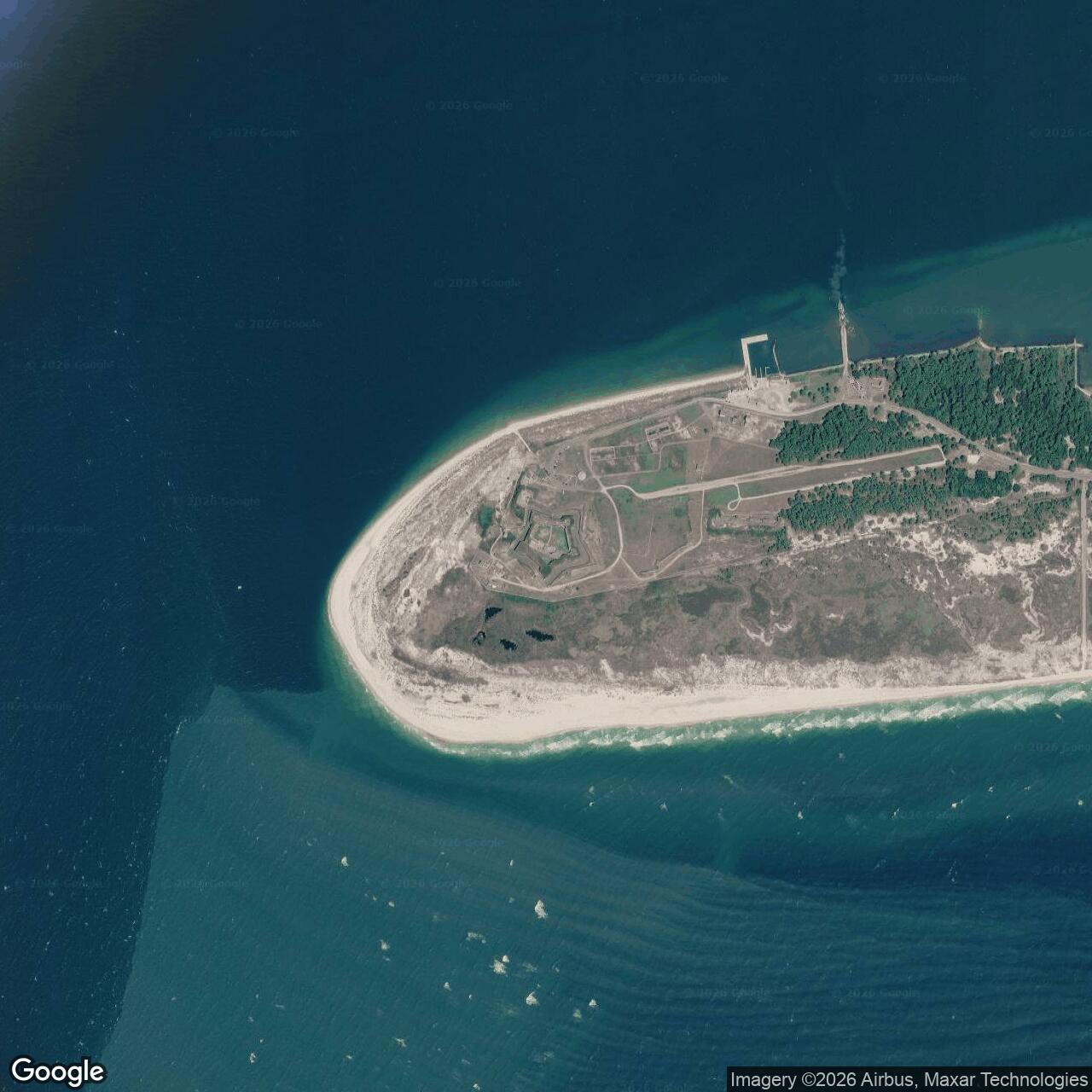
Fort Morgan Army Base, Gulf Shores Alabama
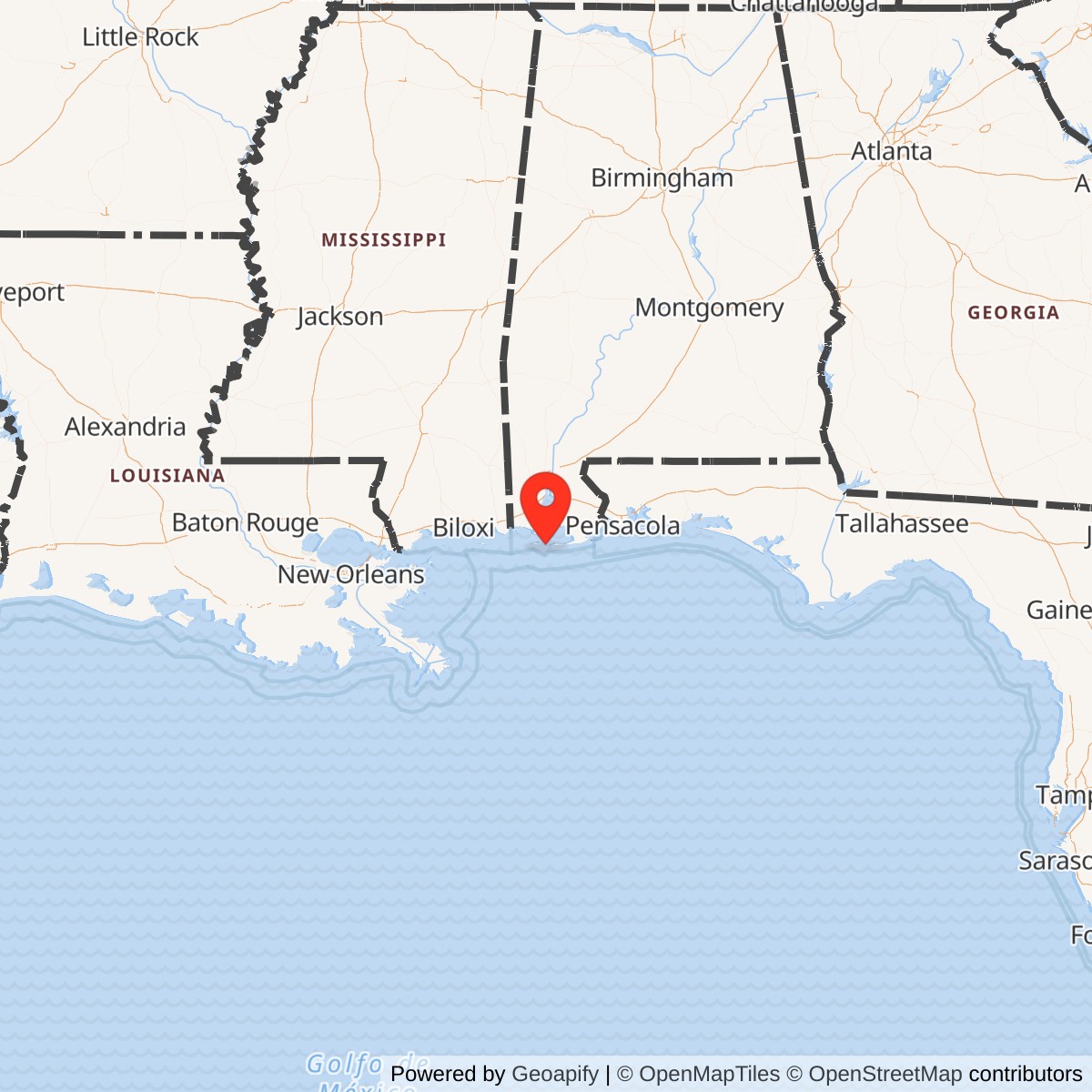
Longitude: -88.023
Official Base Website: https://ahc.alabama.gov/properties/ftmorgan/ftmorgan.aspx
Current Role: Fort Morgan State Historic Site; Alabama Historical Commission-operated National Historic Landmark with preserved Third System fort, Endicott-era concrete batteries, surviving 1898-1910 military buildings, museum exhibits, living-history interpretation, coastal landscape, and Battle of Mobile Bay resources.
Fort Morgan was the Army's long-lived seacoast-defense installation at the mouth of Mobile Bay. It replaced the War of 1812-era Fort Bowyer and became the eastern guardian of the bay entrance, working across the channel from Fort Gaines on Dauphin Island. The geography explains the post's importance. Mobile Bay was the water approach to Mobile, one of the Gulf Coast's major ports, and the deep-water ship channel passed close to Mobile Point. A hostile navy that could force the entrance could threaten the bay, the city, shipping, military stores, and the wider lower Alabama river system. Fort Morgan existed to make that passage costly or impossible.
The installation should be understood in several layers. The first layer was Fort Bowyer, the small log-and-sand fort built by the U.S. Army in 1813 and fought over in the War of 1812. The second was the masonry Third System fortification begun in 1819 and completed in 1834, a pentagonal brick work with bastions and heavy gun positions designed for the age of sailing warships and smoothbore artillery. The third layer was the wider Fort Morgan military reservation, where the Army later built barracks, officers' quarters, support buildings, mine-defense facilities, concrete batteries, seawalls, roads, communications systems, and other elements of a modern Coast Artillery post. The fourth layer is the preserved state historic site, where the old brick fort, Endicott-era batteries, surviving post buildings, museum collections, coastal landscape, and battlefield memory remain visible to the public.
Fort Morgan's Army identity was complicated by the Civil War. The fort was built by the United States, seized by Alabama state troops in January 1861, held by Confederate forces during the war, and recaptured by U.S. Army and Navy forces during the 1864 Battle of Mobile Bay campaign. It makes it one of the clearest examples of a federal seacoast fort whose ownership, garrison, and mission were transformed by secession, blockade warfare, and joint Army-Navy operations. Fort Morgan was a U.S. Army coastal defense post, a Confederate harbor fort, a Union siege objective, a Coast Artillery reservation, a World War II temporary defense post, and finally a preserved state historic site.
The post is also significant because its story stretches from the War of 1812 through World War II. The Alabama Historical Commission summarizes Fort Morgan as active during the Civil War, Spanish-American War, World War I, and World War II. That long operating span makes it much more than a single-battle fort. Its brick walls record the Third System era. Its concrete batteries record the Endicott modernization. Its World War II guns and harbor-command use record the final phase of fixed coastal defense before aircraft, submarines, radar, and mobile joint defense made old harbor forts obsolete.
Mission Evolution
Fort Morgan's mission began with the problem revealed by the War of 1812: the United States needed stronger permanent defenses at important harbor entrances. Fort Bowyer had shown both the value and limits of the Mobile Point position. In September 1814, the small fort defeated a British naval and land attack, sinking HMS Hermes and forcing the attackers to withdraw. In February 1815, a much larger British force overwhelmed the fort, but the Treaty of Ghent ended the war before the British could exploit the victory. The site had proven its strategic value, but the old fortification was too weak for the long term.
After the war, the federal government turned to the Third System of permanent brick coastal forts. Fort Morgan was one of those works. Construction began in 1819 on Mobile Point, using plans shaped by French-trained military engineering ideas and the U.S. Army Corps of Engineers. The work was slow because the site was remote, exposed, and logistically difficult. Building materials had to be brought by water, labor had to be organized in an isolated coastal environment, and the work required large quantities of brick, masonry skill, drainage, earthwork, and ordnance preparation. Enslaved African American labor was part of the construction history, making the fort's physical fabric inseparable from the forced-labor system that shaped much of the antebellum South.
When completed in 1834, Fort Morgan's first mission was harbor deterrence. It stood ready to fire on enemy vessels attempting to enter Mobile Bay, but it was not continuously filled with a large permanent garrison during all peacetime years. The Army briefly garrisoned the fort, and Company B, 2d U.S. Artillery was associated with the first active garrison period. The post then moved in and out of caretaker status. Like many coastal forts, its main peacetime purpose was presence, readiness, and deterrence rather than constant combat activity.
The Civil War transformed the mission. Alabama militia seized Fort Morgan in January 1861, just before the state formally seceded. Confederate forces then made the fort the eastern anchor of Mobile Bay's defenses. Its purpose was to protect the main ship channel, support the Confederate naval force in the bay, cover blockade runners, and work with mines, obstructions, Fort Gaines, and other harbor defenses to keep Union forces out. The fort's Confederate mission was therefore both defensive and economic: hold open one of the last Gulf approaches available to blockade-running commerce.
After U.S. forces recaptured the fort in August 1864, its mission changed again. Union troops repaired and occupied the position, used the area as a base and staging ground, and integrated Mobile Bay into the broader federal campaign against the remaining Confederate defenses around Mobile, Spanish Fort, and Blakeley. Fort Morgan's surrender helped close Mobile Bay to Confederate use, even though the city of Mobile itself remained in Confederate hands until the 1865 campaign.
After the Civil War, Fort Morgan entered a long period of partial use, deterioration, repair, and modernization. Rifled artillery and armored steam warships had shown that masonry forts were no longer reliable against modern firepower. The Army did not immediately abandon the site, however, because the position at Mobile Point remained strategically valuable. In the 1890s the Endicott-era modernization program brought new concrete batteries, fire-control systems, mine-defense planning, and support buildings to the reservation. The mission shifted from a single brick fort firing from walls and casemates to a dispersed coast-defense installation built around modern guns, mortars, submarine mines, range-finding, communications, electricity, and garrison support.
The Spanish-American War and World War I made the modernized post active again. During the Spanish-American War, Fort Morgan's new batteries and temporary armament helped guard Mobile Bay against a possible Spanish naval threat. In World War I, the fort served as a Coast Artillery training base and harbor-defense post. By then, however, naval guns had again outranged many harbor batteries, and Fort Morgan's fixed defenses were nearing obsolescence. The War Department declared the post obsolete in the 1920s, and the State of Alabama acquired the property for park use in 1927.
World War II produced the final military reactivation. German submarine activity in the Gulf of Mexico and the need to protect shipbuilding, port activity, and coastal approaches brought the Army, Navy, and Coast Guard back to Mobile Point. Fort Morgan served as a harbor command station, patrol and support point, ammunition and coast-defense site, and temporary harbor-defense position. Battery F, 50th Coast Artillery Regiment, is closely associated with this last Army occupation, manning 155 mm guns placed in concrete Panama mounts, including positions on or near the old fort. The wartime mission lasted only a few years. After the war, the reservation returned to Alabama, and the era of military coastal defense at Mobile Bay ended.
Operational Role
Fort Morgan's operational role was always tied to the ship channel. The fort sat where Mobile Bay narrowed at its entrance, and the main navigable approach passed close enough that heavy guns at Mobile Point could threaten vessels moving into the bay. Its shape was not decorative. The bastions, walls, casemates, barbette positions, ditch, land defenses, and later batteries were arranged so the fort could fire toward the channel and also resist an attack from landward sides of the peninsula. The fort had to watch both water and land because a hostile force might attempt to pass the channel, bombard the fort, land troops nearby, or besiege it from the rear.
During the War of 1812, Fort Bowyer performed the first version of this mission. The 1814 victory showed that Mobile Point could prevent or delay a British attempt to move against Mobile. The February 1815 surrender showed that an isolated small fort could be overwhelmed by a coordinated expedition. These two experiences directly informed the later decision to build Fort Morgan as a stronger permanent work. The operational lesson was clear: Mobile Point mattered, but it needed more than a temporary sand-and-log fort.
In the antebellum period, Fort Morgan operated mostly as a deterrent and occasional garrison station. Its large brick work symbolized federal control of Mobile Bay and gave the Army a permanent ordnance platform at the harbor mouth. It was also part of a larger coastal-defense doctrine that expected enemy fleets to be stopped at harbor entrances before they could threaten ports, navy yards, arsenals, and trade networks farther inland. Fort Morgan's value was therefore strategic even when its daily garrison was small.
The Civil War gave Fort Morgan its defining combat role. Confederate defenders used the fort as part of a layered harbor-defense system. The fort's heavy guns covered the channel. Fort Gaines covered Dauphin Island. Confederate naval forces, including CSS Tennessee and smaller gunboats, operated inside the bay. Underwater mines, then commonly called torpedoes, restricted the approach. Earthworks and trenches protected landward sides. This system made the bay dangerous enough that Union naval commanders delayed a direct attack until they could assemble a powerful fleet and supporting troops.
On August 5, 1864, Rear Admiral David G. Farragut led Union warships past Fort Morgan and into Mobile Bay. The monitor USS Tecumseh struck a mine and sank, but the fleet pressed on, passed the fort, fought the Confederate squadron, and took control of the bay waters. Fort Morgan did not fall that day. Instead, it became the object of a land-and-sea siege by U.S. forces under Major General Gordon Granger and the Navy. Confederate Brigadier General Richard L. Page held the fort until August 23, after bombardment, breached walls, disabled guns, fire, and siege pressure made further defense impossible. The surrender of Fort Morgan closed the lower bay as a Confederate harbor-defense position.
After its recapture, the fort became a Union base. U.S. forces repaired damage, occupied the reservation, and used Mobile Point as a staging area for operations connected to the later Mobile Campaign. In that sense, Fort Morgan's operational role shifted from blocking entry into Mobile Bay to enabling Union control of the same waterway. The fort had not moved; the strategic system around it had changed hands.
The Endicott-era operational role was more technical. Battery Bowyer, Battery Duportail, Battery Dearborn, Battery Thomas, Battery Schenk, submarine mines, fire-control stations, power and communications systems, and barracks all made Fort Morgan part of a modern harbor-defense system. The old brick fort was no longer the only weapon. The installation operated as a network of guns, mines, observers, signal systems, ammunition supply, plotting, and trained coast artillerymen. The purpose was to engage different kinds of threats: heavy warships, smaller fast vessels, mine sweepers, and vessels attempting to use the channel under cover of speed or darkness.
World War I made Fort Morgan a training and readiness site for coast artillery. Units trained on heavy weapons, harbor-defense procedures, and related military skills. The post's practical military value by then was declining, but the reservation still had gun positions, support buildings, open training ground, and a strategic location. That kept it useful even as newer naval technology reduced the old batteries' combat value.
During World War II, the operational role became temporary harbor defense and coastal surveillance. Mobile was a wartime industrial and port city, and German submarines operated in the Gulf of Mexico. Fort Morgan's reactivation was therefore part of a wider coastal-security response rather than a return to nineteenth-century fort warfare. The 155 mm guns were more mobile and flexible than the old fixed guns, and the presence of Army, Navy, and Coast Guard functions reflected a joint wartime environment. The fort's last military role was not a great siege or naval duel. It was watch, patrol, command, and deterrence against submarines and surface threats in a modern coastal war.
Civil War Service and the Battle of Mobile Bay
Fort Morgan's Civil War history began before the shooting war itself. Alabama militia seized the fort in January 1861 as secession approached. That action deprived the federal government of its principal Mobile Bay fort and gave the future Confederacy a major coastal stronghold. Fort Morgan then became a Confederate work, with guns repositioned and defenses strengthened to control the channel.
Mobile Bay remained important because Mobile was one of the Confederacy's remaining Gulf ports. Blockade runners could use the bay to move goods through Mobile and onward by rail and river connections. The Union blockade sought to strangle that trade. Fort Morgan therefore mattered because it helped protect access to the bay and made a direct naval attack risky. As other Confederate ports fell or became harder to use, Mobile's importance increased.
The Union attack of August 5, 1864 was one of the war's major joint Army-Navy operations. Farragut's fleet had to pass Fort Morgan, avoid mines, survive Confederate gunfire, and defeat the Confederate naval force inside the bay. The loss of USS Tecumseh showed that the minefield was not an imaginary threat. Farragut's decision to continue the run became one of the most famous moments in U.S. naval history. Once past the fort, Union ships defeated the Confederate squadron and gained control of the water.
The fort's surrender required a separate siege. Federal land forces established siege positions, while naval guns and land artillery bombarded the work. The National Register documentation and historical summaries emphasize that Fort Morgan endured heavy bombardment and that its walls, guns, citadel, and defensive capacity were severely damaged. Page surrendered on August 23, 1864. That surrender ended the Confederate hold on Mobile Point and marked a decisive turning point in the military geography of lower Mobile Bay.
The battle's importance extended beyond the fort itself. Mobile Bay had been one of the Confederacy's last major Gulf access points. Closing the bay weakened blockade running, improved Union control of the Gulf Coast, and set the conditions for later operations against the remaining land defenses protecting Mobile. Fort Morgan therefore belongs not only to Civil War fortification history but also to naval blockade history, joint operations history, and the late-war collapse of Confederate coastal defense.
Site Design and Physical Plant
The original Fort Morgan was a masonry Third System fort. It was a large five-sided work with bastions, thick brick walls, casemates, gun positions, magazines, interior parade space, and landward defenses. Its design reflected the belief that permanent masonry forts could dominate harbor entrances with heavy cannon. The fort had to defend the water approach and also protect itself against siege from the landward side of Mobile Point.
The engineering problem was severe. Mobile Point was isolated, sandy, exposed to storms, and difficult to supply. The fort required enormous quantities of brick and other materials, much of it brought by water. The Alabama Historical Commission and other sources emphasize the scale of the masonry work and the role of skilled masons, many of whom were enslaved African Americans. The result was one of the Gulf Coast's most imposing masonry fortifications.
Fort Morgan's interior included the citadel, quarters, magazines, protected passages, and work spaces needed to house and supply a garrison. During the Civil War, the citadel and other wooden or vulnerable portions suffered heavy damage. After Union recapture, the Army repaired the fort, and later work altered the interior. The surviving brickwork, passages, bastions, and parade ground still make the old Third System layout legible.
The late nineteenth-century reservation was much larger than the brick fort. Beginning in the 1890s, the Army built new concrete batteries around and within the older work. Battery Bowyer was constructed in 1895. Battery Duportail was completed inside the fort in 1898. Batteries Dearborn, Thomas, and Schenk followed around 1900, with later additions and modifications into the early twentieth century. These batteries mounted modern breech-loading guns and mortars and were supported by magazines, fire-control systems, communications, electricity, and other technical infrastructure.
The Army also built a full Coast Artillery post. Surviving buildings and historical descriptions identify officers' quarters, staff quarters, a hospital steward's quarters, a post bakery, administrative structures, barracks, and other support buildings from the 1898-1910 expansion period. At its height in the early twentieth century, the reservation was a substantial permanent post, not just an old fort with a few guns. It supported soldiers, officers, families, maintenance, training, supply, medical needs, administration, and communications.
Coastal erosion and storms shaped the physical plant. The Army Corps of Engineers built a seawall beginning in the 1890s and completed major work in the early twentieth century to protect the fort and reservation from the Gulf and bay environment. Hurricanes damaged wooden buildings, especially those along officers' row. Salt air, shifting sand, storms, and shoreline change were constant enemies. Fort Morgan's preservation history is therefore also a coastal-engineering history.
The World War II layer was smaller and more temporary. The Army mounted 155 mm guns, used Panama mounts, adapted parts of the old fort and reservation, and supported harbor-control and patrol functions. Some of that wartime footprint was removed or became difficult to read after the war, but the preserved site still contains evidence of multiple military periods. The visitor today sees not one frozen date but a layered military landscape: Fort Bowyer memory, Third System brickwork, Civil War damage and repair, Endicott batteries, Coast Artillery buildings, World War II gun positions, and state historic-site interpretation.
Units, Organizations, and Systems
The U.S. Army Corps of Engineers was central to Fort Morgan's creation. The fort was part of the Corps' national seacoast-fortification work after the War of 1812. Engineers, contractors, military officers, skilled masons, enslaved workers, soldiers, and laborers all shaped the physical installation. The design is commonly associated with Simon Bernard's influence on American fortification planning and with the Corps officers who carried the work forward on the ground.
The first U.S. Army garrison included Company B, 2d U.S. Artillery, under Captain F. S. Belton. The unit's early presence gave the completed fort its initial operating identity. In the antebellum decades, the post was not always heavily garrisoned, but ordnance personnel, caretakers, and periodic troops kept it within the Army system.
During the Civil War, the garrison identity shifted. Alabama volunteer companies seized the fort, and Confederate forces held it until August 1864. Brigadier General Richard L. Page commanded Fort Morgan during the final siege. The Confederate defense also depended on the wider Mobile Bay system, including Fort Gaines, Confederate naval forces under Admiral Franklin Buchanan, mines, obstructions, and landward earthworks.
The Union side brought together U.S. Navy forces under Admiral David G. Farragut and U.S. Army forces under Major General Gordon Granger. Fort Morgan's fall was not the result of naval gunfire alone or land siege alone; it was a joint operation. The battle and siege show Fort Morgan's place in an interservice system where forts, ships, infantry, engineers, artillery, mines, and coastal geography all mattered.
In the Coast Artillery period, Fort Morgan belonged to the Army's seacoast-defense and harbor-defense establishment. Coast Artillery companies manned batteries, maintained guns and mines, operated fire-control and communications equipment, and trained for harbor defense. The Endicott batteries were part of a national system of modernized coastal works built at major ports from the 1890s into the early twentieth century.
World War II brought the 50th Coast Artillery Regiment into the Fort Morgan story, especially Battery F. Army Historical Foundation coverage identifies Battery F, 50th Coast Artillery Regiment, as manning guns at Fort Morgan for about two years during the reactivation. Navy and Coast Guard functions also operated from Mobile Point during the war. That combination reflected the last phase of the harbor-defense system, when old coastal forts were no longer standalone Army gun platforms but pieces of a joint coastal-security network.
No post-World War II combat unit has been assigned to Fort Morgan as an active Army installation because the military post closed and returned to state historic use. Since the late 1940s, the site's active organizations have been preservation, interpretation, maintenance, tourism, living-history, and state historic-site management organizations rather than operational military units. Its postwar "activity" has been cultural, educational, preservation-related, and coastal-resource related, not deployment or combat training.
Role in the Wider Military Network
Fort Morgan belonged first to the national Third System network of coastal fortifications. After the War of 1812, the United States invested in permanent forts at key Atlantic and Gulf harbors. These works were intended to prevent hostile fleets from repeating the kind of coastal incursions that had threatened American cities during the war. Fort Morgan was the Mobile Bay member of that network.
Within Mobile Bay, Fort Morgan belonged to a local harbor-defense system. Fort Morgan guarded the channel from Mobile Point. Fort Gaines guarded the Dauphin Island side. Fort Bowyer's earlier experience explained why Mobile Point needed stronger defenses. Later batteries, mines, seawalls, fire-control structures, and support buildings made the reservation a node in a much larger system of coastal defense. Fort Morgan's mission never made sense in isolation; it always depended on the channel, Fort Gaines, Mobile, the bay, the Gulf, and the ships it was meant to stop.
During the Civil War, Fort Morgan belonged to the Confederate Gulf Coast defense and blockade-running system until its capture. It helped protect Mobile Bay, which remained a critical Confederate port and logistical outlet. Once captured, it became part of the Union blockade and Gulf Coast control system. This dual role makes Fort Morgan unusually valuable for interpreting how the same military landscape could serve opposing systems during a civil war.
During the Endicott and Coast Artillery era, Fort Morgan belonged to the national modernization of harbor defenses. The Board of Fortifications recommended modern gun batteries and mines at Fort Morgan, and the batteries constructed between 1895 and 1904 mirrored the same technological shift occurring at Boston, New York, San Francisco, Pensacola, Charleston, Galveston, and other harbors. The transition from brick walls to dispersed concrete batteries was not local improvisation. It was a national military-technical program.
During World War II, Fort Morgan belonged to the Gulf Coast security network. Mobile's shipbuilding and port facilities mattered to the war effort, and German submarine activity in the Gulf made coastal defense and patrol functions urgent. Fort Morgan's reactivation linked the old harbor fort to modern wartime concerns: submarine warfare, harbor command, convoy protection, air and sea surveillance, and joint Army-Navy-Coast Guard coordination.
After closure, Fort Morgan entered a different network: state and federal historic preservation. Its National Historic Landmark status, National Register documentation, Alabama Historical Commission stewardship, HABS/NPS documentation, and battlefield interpretation connect it to the wider preservation system that protects former military sites as public history. The fort's military network ended, but its public-memory network continued.
Closure, Transfer, and Current Status
Fort Morgan's first major deactivation came after World War I. The War Department declared the fort obsolete in 1923, and Alabama acquired the old fort and reservation for state park purposes in 1927. That transfer reflected a national pattern: many older coastal-defense sites lost military value as naval weapons outranged them and as defense doctrine changed.
The Depression-era years brought preservation and repair rather than military expansion. State and federal relief programs helped clean up the reservation, improve access, repair brickwork, restore parts of the fort, and develop public use. The road to the site and the cleanup of old military features made Fort Morgan more accessible as a historic place.
World War II interrupted that preservation phase. The military reoccupied Mobile Point for more than two years, using the site for harbor defense, patrol, and related coastal-security functions. After the war, the military returned the fort to the state. Sources differ slightly in whether they emphasize the 1946 transfer/return or the Army's final abandonment in 1947.
Fort Morgan today is Fort Morgan State Historic Site, operated by the Alabama Historical Commission. The preserved 479-acre site includes the brick fort, concrete batteries built between the 1890s and early 1900s, remaining military buildings from the 1898-1910 expansion period, museum exhibits interpreting military history from Fort Bowyer and the War of 1812 through World War II, and a coastal landscape tied to the Battle of Mobile Bay. It is a National Historic Landmark and one of Alabama's most important preserved military landscapes.
The site remains vulnerable to the same forces that always shaped it: hurricanes, salt air, erosion, water intrusion, heat, vegetation, and coastal development pressure. Its current mission is preservation and interpretation. The public can tour the fort, view batteries and exhibits, attend living-history programs, and understand how Mobile Point functioned as a strategic military landscape for more than a century.
Chronology
- 1813 The U.S. Army built Fort Bowyer, a log-and-sand fortification on Mobile Point, to guard the entrance to Mobile Bay.
- 1814-09-15 Fort Bowyer defeated a British naval and land attack during the War of 1812; HMS Hermes was lost and the attackers withdrew.
- 1815-02 A larger British expedition forced Fort Bowyer to surrender, but the Treaty of Ghent soon ended the war and the British returned the site to the United States.
- 1819 Construction began on Fort Morgan as part of the federal Third System of coastal defenses.
- 1820s Work proceeded slowly because of the site's isolation, difficult logistics, labor demands, and engineering challenges.
- 1834 Fort Morgan was completed and received its first U.S. Army garrison.
- 1834-1835 Company B, 2d U.S. Artillery, under Captain F. S. Belton, was associated with the fort's first active garrison period.
- 1837 Fort Morgan was used as a staging point connected to the removal of Creek Indians to Indian Territory, according to Encyclopedia of Alabama coverage.
- 1840s-1850s The fort was only intermittently garrisoned and maintained, functioning mainly as a deterrent and reserve coastal-defense work.
- 1861-01-05 Alabama militia seized Fort Morgan as secession approached, placing the federal fort under state and later Confederate control.
- 1861-1864 Confederate forces used Fort Morgan as the main Mobile Point defense of the ship channel into Mobile Bay.
- 1864-08-05 Admiral David G. Farragut's Union fleet ran past Fort Morgan during the Battle of Mobile Bay; USS Tecumseh struck a mine and sank, but Union naval forces entered the bay and defeated the Confederate naval force.
- 1864-08-05 to 1864-08-23 Union land and naval forces besieged Fort Morgan after the fleet had passed into Mobile Bay.
- 1864-08-23 Brigadier General Richard L. Page surrendered Fort Morgan to U.S. forces after the fort was heavily damaged and its guns largely disabled.
- 1864-09 U.S. forces used Mobile Point and Fort Morgan as a base and staging area for operations connected to the later campaign against remaining Mobile-area defenses.
- 1867 U.S. Army engineers had repaired major Civil War damage to the fort.
- 1870s The Army attempted postwar improvements and added or planned heavier rifled artillery, but modernization remained incomplete.
- 1890 Severe shoreline erosion near the fort led the U.S. Army Corps of Engineers to begin major seawall work to protect the Mobile Point reservation.
- 1895 Battery Bowyer was constructed as the first major Endicott-era concrete battery at Fort Morgan.
- 1898 Fort Morgan was reactivated for the Spanish-American War era and became a larger military training and harbor-defense base.
- 1898 Battery Duportail was completed inside the old brick fort.
- 1898-1910 The Army expanded the support complex with barracks, officers' quarters, hospital steward's quarters, post bakery, administration buildings, and other frame structures.
- 1900 Batteries Dearborn, Thomas, and Schenk were completed, expanding the modern Coast Artillery system on the reservation.
- 1900-1923 Fort Morgan functioned as one of Alabama's largest permanent military posts and a Coast Artillery installation.
- 1904 The Endicott-era battery program at Fort Morgan was substantially complete, with modern batteries and mine-defense capability.
- 1906 Major seawall work protecting Fort Morgan and the reservation was completed.
- 1916 Hurricane damage affected the Fort Morgan reservation, especially vulnerable wooden structures.
- 1917-1918 Fort Morgan served as a World War I Coast Artillery training and harbor-defense site.
- 1923 The War Department declared Fort Morgan obsolete and moved toward abandonment of the post as an active defense installation.
- 1927 The State of Alabama acquired Fort Morgan for state park use.
- 1930s State and federal relief programs repaired, cleaned, and improved the fort and reservation for public use.
- 1937 Dixie Graves Parkway to Fort Morgan was completed, improving access to the former post.
- 1941 The military began returning to Mobile Point as World War II coastal-security concerns increased.
- 1942 Fort Morgan was reoccupied for World War II harbor-defense and coastal-security purposes; Army, Navy, and Coast Guard functions were present.
- 1942-1944 Battery F, 50th Coast Artillery Regiment, manned 155 mm guns at Fort Morgan as part of the temporary harbor-defense mission.
- 1944 Mobile's Fort Morgan defenses were being reduced as the immediate coastal artillery mission declined.
- 1945 The World War II military use of the Fort Morgan reservation ended, and the site returned toward state historic use.
- 1946 Sources describe the War Department returning Fort Morgan to Alabama after World War II.
- 1947 The Army's final abandonment/transfer period ended.
- 1960 Fort Morgan was designated a National Historic Landmark.
- 1966 Fort Morgan was listed in the National Register of Historic Places.
- 1975 National Register documentation for Fort Morgan and associated resources, including USS Tecumseh, recorded the site's military significance.
- Present Fort Morgan remains a closed Army installation preserved as Fort Morgan State Historic Site, operated by the Alabama Historical Commission as a National Historic Landmark, museum, battlefield, coastal defense landscape, and public historic site.
- Visual and Reference Resources
- The Alabama Historical Commission Fort Morgan page is the best official public starting point because it provides the current historic-site identity, location, National Historic Landmark status, and concise overview of Fort Bowyer, Fort Morgan, and the Battle of Mobile Bay. The AHC Fort Morgan history page is the best compact official summary of construction, major wars, Battle of Mobile Bay significance, Endicott batteries, World War II reoccupation, and surviving buildings.
- The Library of Congress HABS record is especially useful for photographs, location metadata, and an official preservation summary. Its significance note identifies Fort Morgan as a primary fortification at the mouth of Mobile Bay, a major nineteenth-century U.S. coastal-defense work, a Confederate-held fort besieged and recaptured by U.S. forces in August 1864, a Spanish-American War training base, and a World War II coastal artillery and naval-base site.
- The National Register / National Historic Landmark documentation is the best preservation-context source for the historic reservation, Civil War siege, Endicott batteries, World War II use, USS Tecumseh, remaining buildings, and state park transition. The National Park Service Teaching with Historic Places lesson on Fort Morgan and the Battle of Mobile Bay is useful for explaining how the fort fit into the broader Union blockade, Confederate torpedo/mine defense, and joint Army-Navy action of 1864.
- The Encyclopedia of Alabama and Army Historical Foundation article are the best interpretive secondary sources for a concise account of Fort Morgan and Fort Gaines together, including the Third System context, Fort Morgan's Mobile Point mission, the 1864 battle, the Endicott batteries, the 1920s sale to Alabama, and the World War II reactivation.