
Mines Field / Los Angeles Army Airfield, California
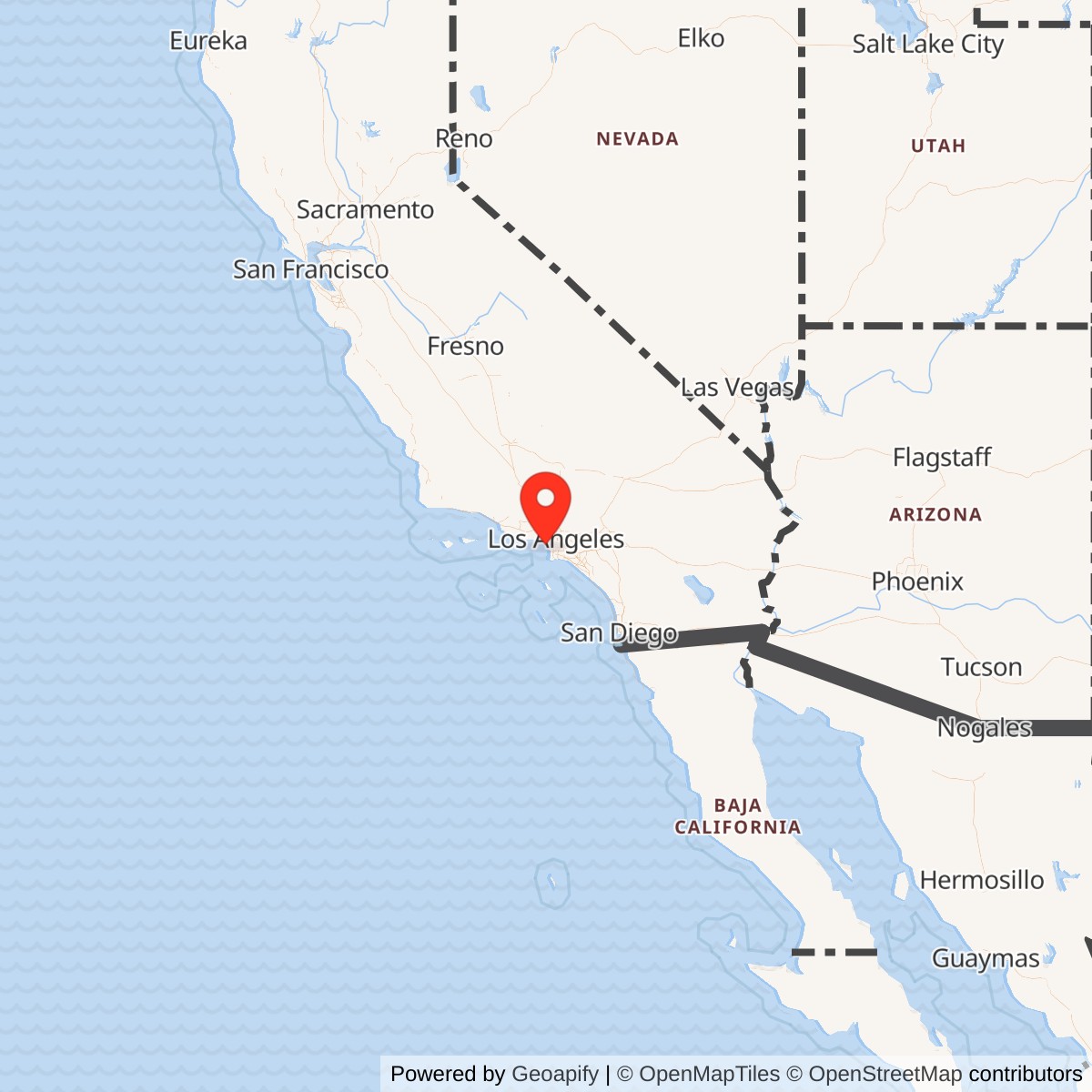
Longitude: -118.4080486
Airport ICAO ID: KLAX
Official Base Website: Los Angeles International Airport (LAX)
Current Role: Los Angeles International Airport (LAX), a publicly owned civilian airport operated by Los Angeles World Airports for the City of Los Angeles.
Before LAX became terminals, traffic loops, jet bridges, and one of the world's best-known airport codes, it was a wartime airfield wrapped in camouflage and surrounded by aircraft factories working at full speed. Mines Field began as Los Angeles's municipal airport in a bean-and-barley landscape near Inglewood and Westchester. During World War II that civilian airport became part of the Army Air Forces' Los Angeles defense and air-transport system. Fighter aircraft stood ready on the field, barracks and military offices appeared on the north side of the property, and the airport's greatest military value came from the factories on and around its edges turning out combat aircraft for the Allied war effort.
The installation was not a permanent Army post in the way that March Field, Hamilton Field, or McClellan Field became long-lived military bases. It was a municipal airport temporarily pulled into the national defense system. After the war, control returned to the City of Los Angeles and the airport moved rapidly toward its modern civilian identity as Los Angeles International Airport.
The site's military usefulness came from geography and industry. Mines Field sat southwest of downtown Los Angeles, close to the ocean, the Los Angeles aircraft-manufacturing belt, the Los Angeles Harbor defense system, and the dense industrial region that made Southern California one of America's most important wartime aviation centers. The airfield could support transport, ferrying, training, and defense activity, but its larger strategic meaning came from being embedded in a production ecosystem. North American Aviation operated on the airport property itself; Douglas and Interstate Aircraft operated nearby. Aircraft could be built, modified, accepted, moved, or staged from the same industrial-airfield landscape.
Mission Evolution
Mines Field's first mission was civic aviation. Los Angeles selected the Mines Field site in 1928 and began operating Los Angeles Municipal Airport there on October 1 of that year. The first permanent structure, Hangar No. 1, was built in 1929, and the airport was formally dedicated on June 7, 1930. For much of the 1930s the airport served general aviation, flying schools, air races, and local aviation development rather than airline passenger traffic. Los Angeles wanted the field to become its principal airport, but the airlines initially favored other regional fields such as Burbank and Glendale.
The 1930s nevertheless laid the foundation for wartime use. The City purchased the airport property in 1937, giving Los Angeles firmer control over the field. Works Progress Administration improvements, runway development, and the clustering of aviation businesses around the airport made Mines Field more useful than it had been during its early dirt-strip years. North American Aviation established a major plant at the southeast corner of the property in 1935, while Northrop and then Douglas activity developed just south of the airport. By the time World War II reached the United States, Mines Field was no longer just an underused municipal airport; it was an airport tied directly to aircraft manufacturing.
The decisive military shift came in 1942, after Pearl Harbor. Federal control and Army Air Corps / Army Air Forces use turned the airport into a wartime military field. Sources describe the field as falling under military control, with Army and Navy use centered on Air Transport Command functions and related defense activity. Barracks, classrooms, offices, and support buildings were added on the north side of the property. Military personnel and aircraft operated beside civilian aviation facilities and aircraft factories. A detachment of Lockheed P-38 Lightning fighters from Fourth Air Force was stationed at the field, reflecting the emergency West Coast air-defense posture of early 1942.
The field also became part of the wider Los Angeles coastal-defense system. Naval gun batteries were built west of the airport in the dunes along the Pacific, including the El Segundo Battery, which formed part of the Harbor Defenses of Los Angeles under Fort MacArthur. Mines Field itself was not a seacoast fort, but it sat in the same emergency-defense landscape. The airport, aircraft plants, searchlights, barrage balloons, antiaircraft guns, camouflaged factories, and coastal batteries all belonged to the same wartime problem: protecting the Los Angeles aircraft and harbor region from feared Japanese attack.
By 1945 the military emergency had passed, and Mines Field moved quickly back into civilian development. The war delayed the airport's planned passenger-airline future, but it also forced runway, industrial, and logistical improvements that made the postwar transition possible. Commercial airline service began on December 5, 1946. In 1949 the airport was officially renamed Los Angeles International Airport. The wartime Army Air Forces field did not survive as a military installation, but the airport it helped enlarge became one of the defining transportation nodes of postwar Los Angeles.
Operational Role
Mines Field's World War II role was a blend of air transport, air defense, industrial support, technical training, and aircraft delivery. Its daily military activity was not the same as a contract primary flying school or a large basic-training airfield. It was a wartime airport under military control, with Army and Navy activity layered onto a municipal field and adjacent aircraft plants. That made its function more complicated than a single unit assignment. It served as an air-transport hub, a delivery and staging point, a local defense field, and a support platform for aircraft production.
The Air Transport Command connection was central. Mines Field appears in wartime California airfield lists as an aerial port of embarkation and Air Transport Command field. This meant the airport supported movement rather than only local flying. Personnel, aircraft, equipment, and supplies could be staged through the field as part of the domestic and Pacific-facing air-transport system. Its proximity to Long Beach, Santa Monica, Burbank, Los Angeles Harbor, and the Southern California aircraft factories gave it a useful position in the wartime aviation logistics network.
The field also supported tactical defense. In early 1942, Army Air Forces tactical units moved to several California municipal airports, including Mines Field. A P-38 detachment from Fourth Air Force was stationed there. The P-38's presence was a visible sign of the post-Pearl Harbor emergency. Los Angeles officials and military planners feared that Southern California's shipyards, oil facilities, harbor, aircraft plants, and airfields might be attacked. Mines Field's fighters were one piece of that short-lived but intense coastal-defense posture.
The most important operational fact, however, was production. Mines Field sat beside the aviation factories that made the Los Angeles basin a military-industrial engine. North American Aviation's plant on the airport property first produced large numbers of AT-6 Texan trainers and later became a major source of B-25 Mitchell bombers and P-51 Mustang fighters. The nearby Douglas plant produced large numbers of SBD Dauntless dive bombers, while Interstate Aircraft built L-5 Grasshopper liaison aircraft and TDR assault drones. The airport's military function therefore cannot be separated from factory output. Aircraft needed to be tested, moved, accepted, modified, and ferried; Mines Field helped make that possible.
Camouflage turned the airfield and surrounding factories into one of the more dramatic home-front scenes in Southern California. Hangars and adjacent production plants were covered with netting and camouflage patterns intended to disguise industrial targets from the air. From the ground this produced a strange patchwork landscape. From above, the goal was to blur aircraft plants, runways, and hangars into the appearance of ordinary agricultural or suburban terrain. That camouflage program captured the fear and scale of the moment: Los Angeles was not only building airplanes, it was trying to hide the places where they were built.
Facilities and Physical Layout
The original Mines Field was a 640-acre municipal airport site. It began with simple dirt and improved landing strips, then developed permanent aviation buildings in the late 1920s and 1930s. Hangar No. 1, completed in 1929, became the first major permanent structure and remained the strongest architectural link to the airport's prewar origins. Additional hangars followed along the south side of the field. The airport was dedicated as Los Angeles Municipal Airport in 1930, but the Mines Field name remained widely used, especially in aviation and local memory.
By the World War II period the layout had become a hybrid civilian-military-industrial airfield. The landing area and runways occupied the core of the airport. Aircraft manufacturers and support companies lined the margins. The North American Aviation plant stood at the southeast corner of the airport property. Douglas and Interstate facilities operated nearby, just beyond the field's edge. Army Air Corps / Army Air Forces barracks, classrooms, and offices were built on the north side of the airport. The result was not a neatly isolated Army base; it was a working airport whose military, municipal, and private-industrial functions overlapped.
Runway improvements increased the field's wartime utility. In 1942 the main runway was extended to about 4,600 feet, and the government began testing an instrument landing system that became operational the following year. These improvements mattered because Mines Field was supporting larger, faster, and more operationally important aircraft than the sport and training planes of the 1930s. The field had to support military movement, factory delivery, instrument operations, and emergency defense functions.
The coastal defenses west of the airfield were physically separate but strategically connected. The El Segundo Battery and related coastal positions were placed near the Pacific dunes west of Mines Field. Their mission was harbor and coastline defense, not airport management, but they were part of the protective ring around the Los Angeles aircraft-production and port complex. They show that Mines Field's wartime landscape extended beyond the airport fence into a larger integrated defense zone.
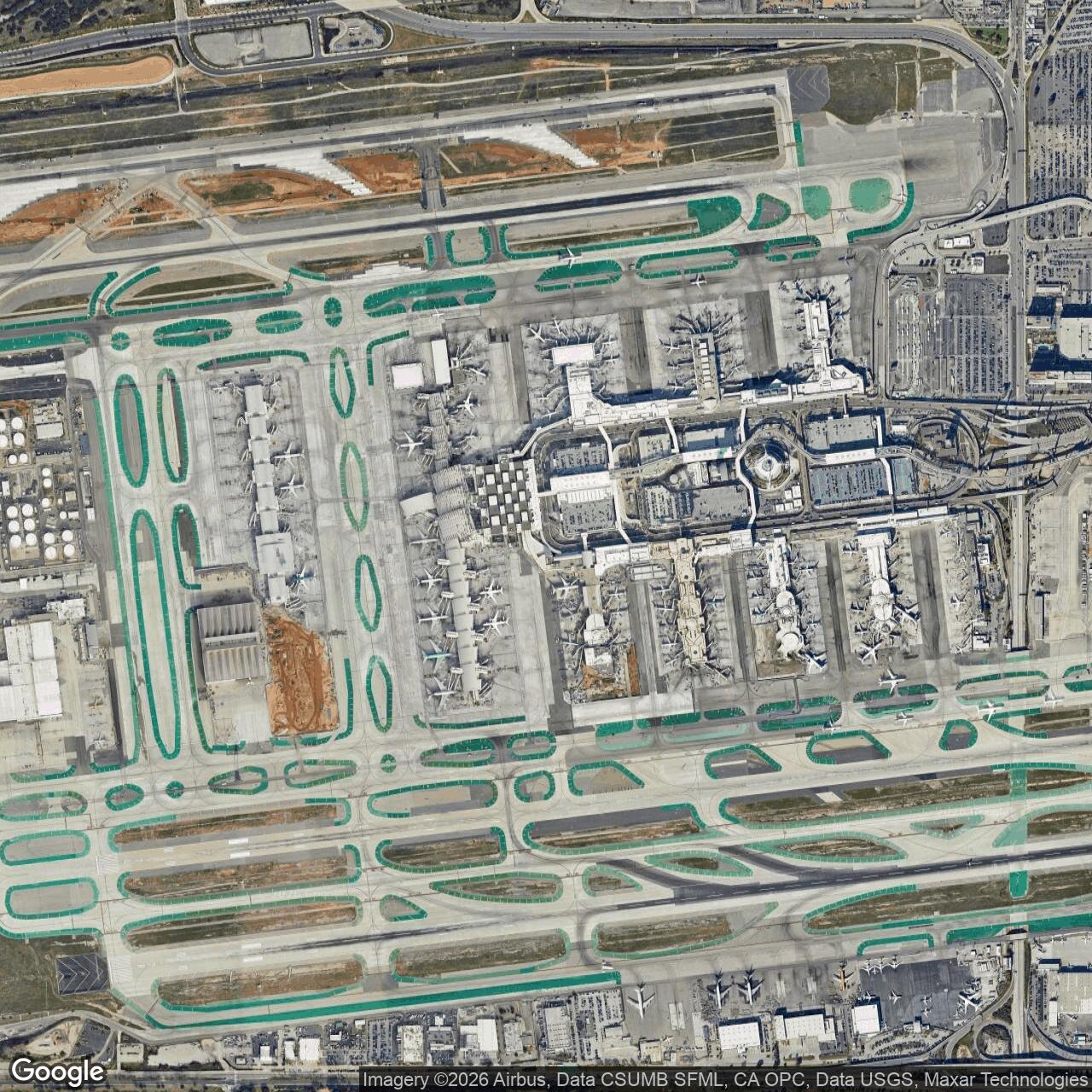
Today's Los Angeles International Airport is much larger and more complex than wartime Mines Field. AirNav lists LAX with four major runways and public ownership by the City of Los Angeles. The wartime Mines Field core lies within the modern LAX property, especially toward the eastern and cargo-related portions of the airport. Hangar No. 1 survives as the clearest early-airport physical landmark, while most of the military support buildings and wartime industrial landscape have been removed, rebuilt, or absorbed into later airport expansion.
Units, Organizations, and Systems Mines Field was tied to several overlapping military systems rather than to one long-term resident Army organization. The first was the Army Air Corps / Army Air Forces airfield system in California. In early 1942, tactical air units moved to municipal airports around the state, including Mines Field, as part of the emergency response after Pearl Harbor. Fourth Air Force was central to West Coast air defense, and the reported P-38 detachment at Mines Field linked the airport directly to that system.
The second system was Air Transport Command. Mines Field's wartime use as an air-transport hub and aerial port connected it to the broader movement of aircraft, supplies, and personnel. Southern California was one of the principal aircraft-production regions in the United States, and ATC's work depended on connecting factories, modification centers, ferrying fields, depots, and ports of embarkation. Mines Field was valuable because aircraft-producing plants were on or near the field and because the airport could connect local output to national and overseas movement.
The third system was aircraft production and modification. North American, Douglas, Interstate, and other firms around Los Angeles formed the industrial side of the Army Air Forces' wartime power. Mines Field was not just near this system; it was embedded in it. The factory-airfield relationship meant that the airport functioned as an operating edge of the production line. Military aircraft could move from factory work to field activity with comparatively little distance between shop floor, hangar, runway, and ferrying system.
The fourth system was the Los Angeles coastal-defense network. Fort MacArthur, antiaircraft units, searchlights, barrage balloons, beach defenses, and naval gun batteries all responded to the same perceived threat. Mines Field's air-defense and camouflage history belongs to that system. Its protection mattered because the loss or disruption of aircraft-production facilities in the Los Angeles basin would have had consequences far beyond the city.
Postwar Closure and Reuse
The Army Air Forces did not retain Mines Field as a postwar base. Once the war ended, military control receded and the City of Los Angeles resumed the airport-development plan that the war had interrupted. This was the major turning point in the site's identity. Mines Field did not become Los Angeles Air Force Base or a military reserve field. Instead, it became the civilian airport that Los Angeles had wanted before the war.
Commercial airline service began at the airport on December 5, 1946, after airlines finally shifted service from older regional airports. The timing is historically important. The war delayed passenger-airport development, but the wartime buildout and postwar bond-funded planning helped create the conditions for Los Angeles Municipal Airport to become the region's dominant commercial field. On October 11, 1949, the airport was officially renamed Los Angeles International Airport, placing the former Mines Field into a new global identity.
The postwar airport swallowed most evidence of the wartime Army installation. Runways were lengthened and multiplied. Terminals, cargo areas, maintenance facilities, roads, parking, and airline infrastructure transformed the landscape. The aircraft factories that had defined the wartime setting changed, closed, merged, or were redeveloped. What remained was not a preserved Army airfield but a vast civilian airport whose World War II military use is mostly hidden beneath later expansion.
Current Status
Mines Field / Los Angeles Army Airfield is closed as a military installation. The site is now Los Angeles International Airport, a publicly owned airport operated by Los Angeles World Airports for the City of Los Angeles. LAX remains an active public airport, with modern FAA records listing the field open to public aviation operations. The current airport bears little physical resemblance to the 640-acre municipal field that the Army and Navy used during World War II.
The most visible early-site survivor is Hangar No. 1, built in 1929 and recognized as an important historic remnant of the airport's Mines Field era. It is not a surviving Army barracks or wartime command building, but it anchors the deeper aviation history that made wartime military use possible. The World War II Army Air Forces role is therefore best interpreted through layered context: airport origins, aircraft production, camouflaged factories, air transport, emergency defense, and the postwar rise of LAX.
Chronology
- 1927 Mines Field was selected as the site for the 1928 National Air Races, helping draw attention to the field as a possible municipal airport location.
- 1928-07-25 The City of Los Angeles selected Mines Field as the location for its first municipal airport.
- 1928-08-13 The Los Angeles City Council authorized an ordinance to lease the 640-acre Mines Field property for the Los Angeles Municipal Airport.
- 1928-10-01 Los Angeles Municipal Airport, originally known as Mines Field, began operation.
- 1929-06 Hangar No. 1, the first permanent airport structure, was built.
- 1930-06-07 The airport was officially dedicated as Los Angeles Municipal Airport, though the Mines Field name continued in common use.
- 1935 North American Aviation established a major aircraft-production facility on the southeast corner of the airport property.
- 1937 The City of Los Angeles purchased the Mines Field property outright, strengthening municipal control and enabling further improvement.
- 1941 Los Angeles planning for a modernized airport continued, but the coming of war redirected the field toward military and industrial use.
- 1942 The federal government assumed wartime control of the airport, and Army Air Corps / Army Air Forces personnel and aircraft operated from the field.
- 1942 Army and Navy use of Mines Field centered on Air Transport Command and related air-defense and production-support functions.
- 1942 A detachment of P-38 Lightning fighters from Fourth Air Force was stationed at the field.
- 1942 Barracks, classrooms, offices, and support buildings were built on the north side of the airport property for Army Air Corps / Army Air Forces use.
- 1942 The main runway was extended to about 4,600 feet, and instrument landing-system testing began.
- 1942 Coastal-defense works, including the El Segundo Battery west of the airfield, formed part of the Harbor Defenses of Los Angeles.
- 1943 The instrument landing system became operational, improving the field's wartime utility.
- 1943 Los Angeles airport planners completed a master plan for postwar development even while wartime military use continued.
- 1945 World War II ended, and Mines Field began transitioning out of direct military control.
- 1946-12-05 Commercial airline service began at Los Angeles Airport.
- 1949-10-11 The airport was officially renamed Los Angeles International Airport.
- 1992-07-30 Hangar No. 1 was accepted/listed as a historic property, preserving the strongest visible connection to the Mines Field era.
- Present The former Mines Field / Los Angeles Army Airfield site is Los Angeles International Airport, with its wartime Army Air Forces role absorbed into the larger history of LAX and Southern California aviation.
Information sources (6)
- WEBLos Angeles World Airports
Just the Facts
- WEBAirNav
KLAX - Los Angeles International Airport
- WEBWorld War II Database
Mines Field
- WEBCalifornia Military Department / California State Military Museum
Major Army Air Force Installations During World War II
- WEBPBS SoCal / Lost LA
From Mines Field to LAX: The Early History of L.A. International Airport
- PDFLos Angeles World Airports
LAX Historic/Architectural and Archaeological Resources PDF