Atlas F Site 550-4 Missile Silo, Carlton Kansas
Longitude: -97.322758
Site Type: Atlas F vertical silo launch facility
Missile Type: SM-65F Atlas
Missile Assigned to this Silo: GD mfg no. 30F; GD serial no. 60-5553; AF tail no. 553; accepted 1961-11-28; delivered 1962-03-07; 550th SMS Site 4; not launched; assigned W-38 thermonuclear warhead for operational ICBM mission; on display at NASA Cape Canaveral Space Museum configured as an Atlas-Agena.
Number of Launchers/Missiles: 1
Parent Base: Schilling AFB
Missile Wing: 310th Strategic Aerospace Wing
Missile Squadron: 550th Strategic Missile Squadron
Corps of Engineers Site ID: 3
Approximate Base Size: 18.7 acres.
Current Site Use: Former Atlas F silo complex southwest of Carlton; public real-estate listings describe 549 Daisy Rd as an off-market 18.7-acre former Atlas F missile silo property with below-ground control/living area, utilities, fencing/gate, and post-military residential/secure-storage potential; current use and owner require parcel-level verification.
Site Ownership: Private ownership; 2021/2022 public real-estate records/listings describe the property as off market, with current owner not independently verified.
Accessible: No public access confirmed; private former missile/FUDS site. Do not enter without owner permission.
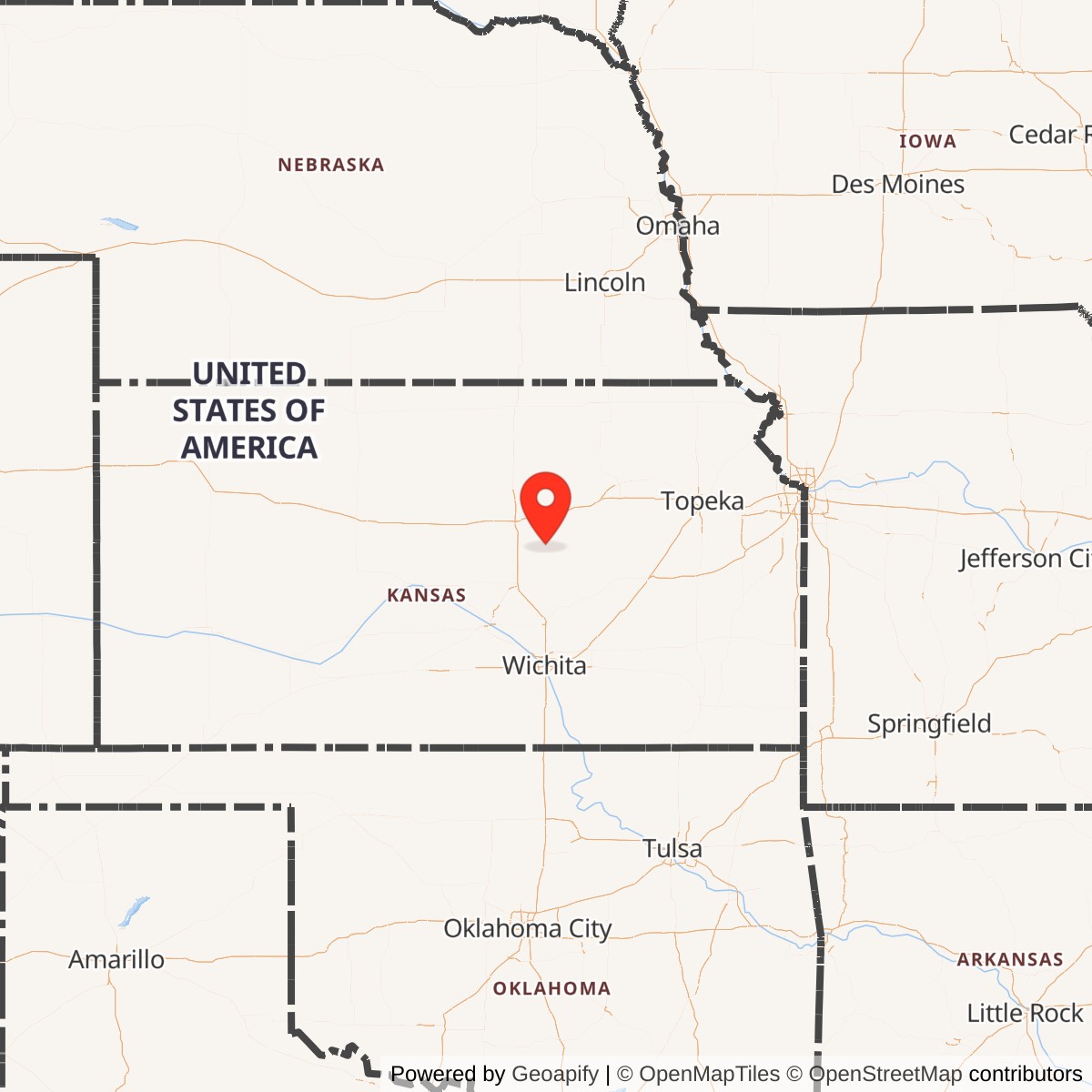
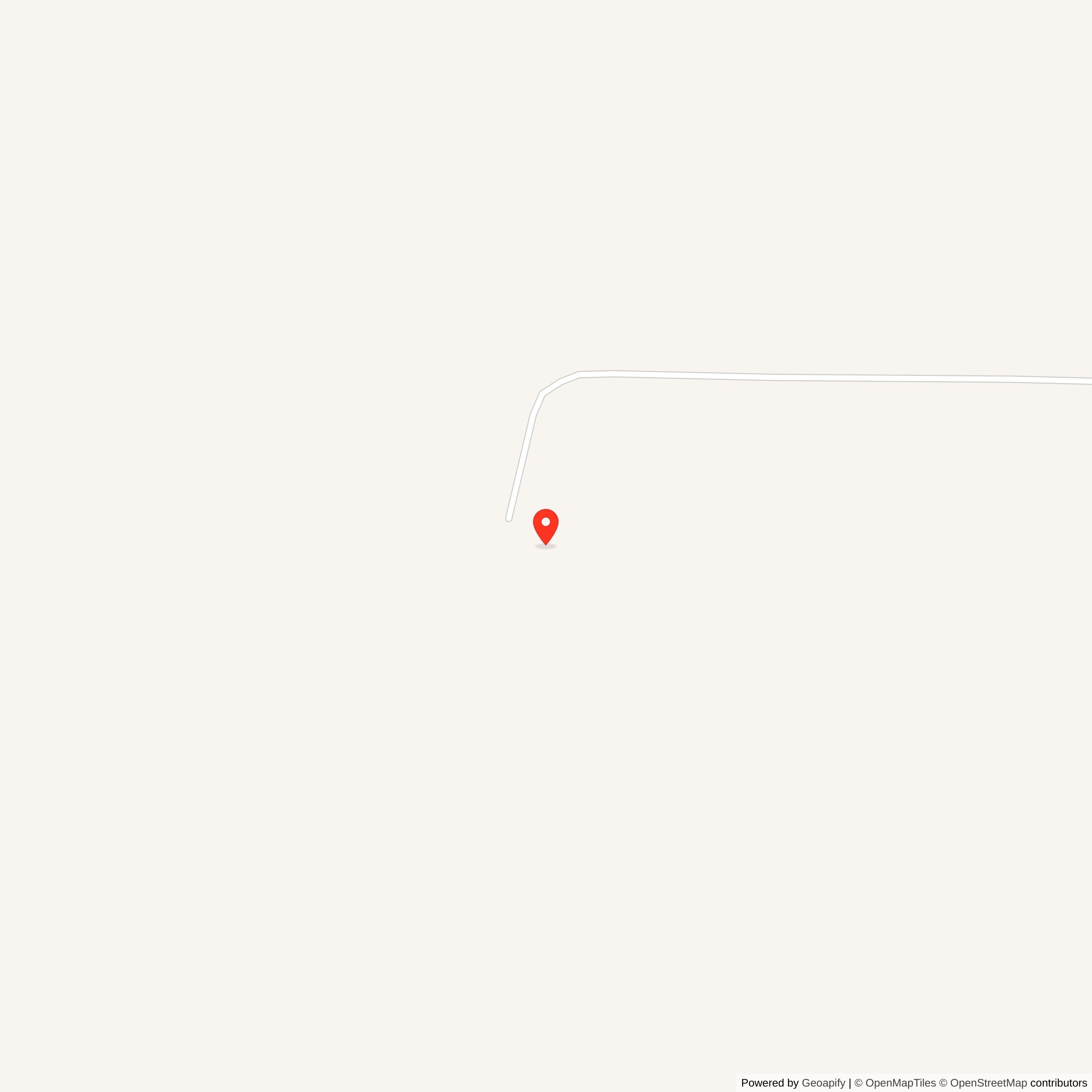
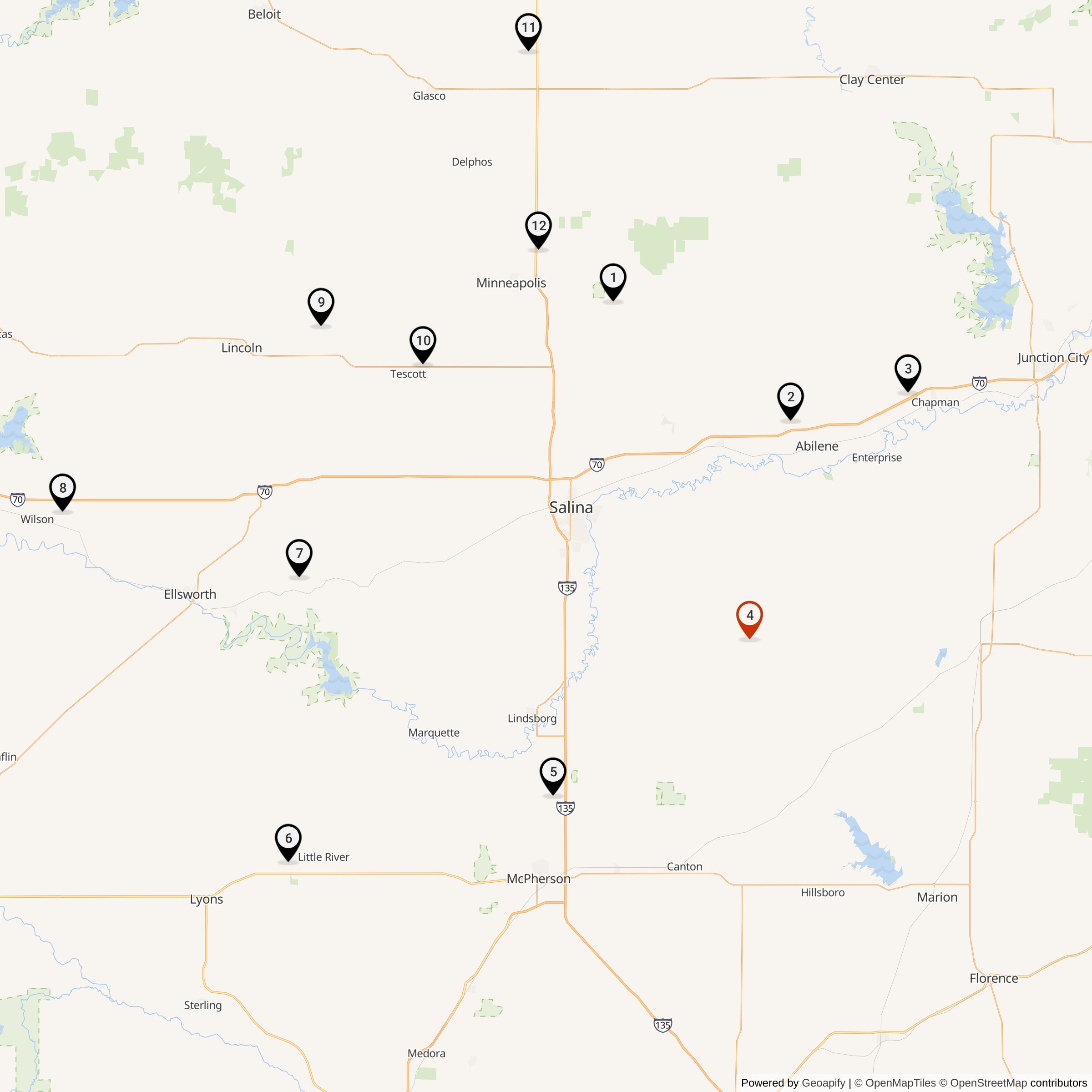
A quiet rural property southwest of Carlton, Kansas, carries one of the stranger afterlives of the Cold War: a buried Atlas F missile complex that once held an intercontinental ballistic missile on nuclear alert and later became a private, partly converted underground property. Atlas F Site 550-4 was one of twelve hardened Atlas F launch complexes built for the 550th Strategic Missile Squadron around Schilling Air Force Base near Salina. Today the missile is gone, the squadron is long inactivated, and the former launch complex is no longer an active military installation, but the site remains a vivid physical trace of the brief, intense first generation of American silo-based ICBM alert duty.
Atlas F Site 550-4 was an SM-65F Atlas launch complex associated with Schilling Air Force Base, the 310th Strategic Aerospace Wing, and the 550th Strategic Missile Squadron. It was not a Minuteman-style Launch Facility remotely controlled by a separate Launch Control Center; as an Atlas F complex, it had its own hardened underground launch, control, and support spacese. The site was located near Carlton in Dickinson County, Kansas.
The site was part of the operational Atlas F force during the early 1960s. The 550th Strategic Missile Squadron was declared operational in September 1962. The squadron itself was discontinued on 1965-06-25. The site is inactive, decommissioned, privately owned, and not open to the public.
Location, Landscape, and Site Description
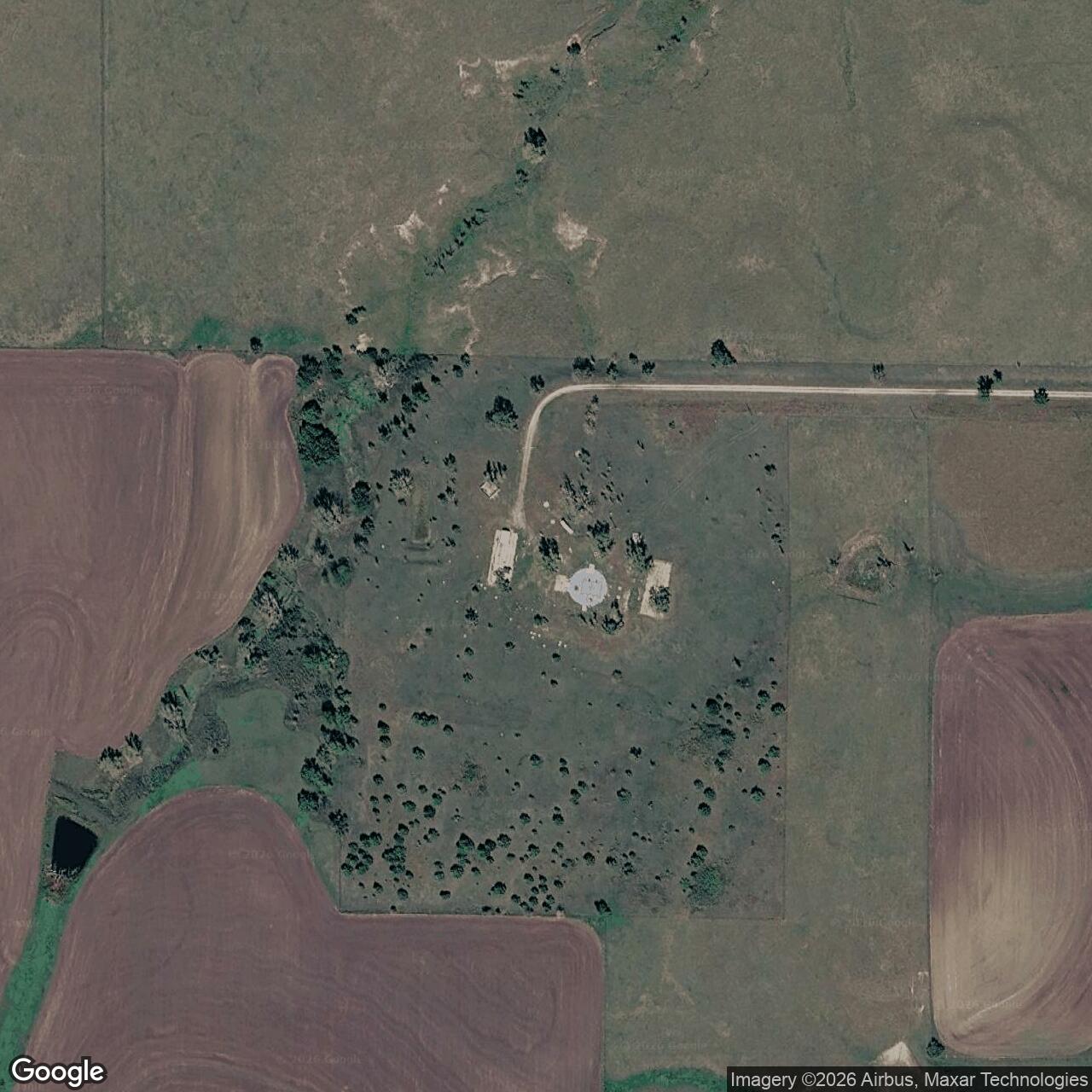
Site 550-4 lies in rural Dickinson County, southwest of Carlton, Kansas. The EPA Superfund/CERCLA listing for the environmental site identifies the property as the former Schilling Air Force Atlas Facility S-4, estimated two miles southwest of Carlton, Kansas. Public real-estate reporting associates the former missile property with 549 Daisy Road, Carlton, Kansas 67448, and describes it as an 18.7-acre off-market former Atlas F missile silo property. The landscape is agricultural Kansas: open fields, rural roads, and widely spaced farm and homestead parcels rather than an active military reservation.The Atlas F design made Site 550-4 more than a concrete hole in the ground. Each Atlas F site was a self-contained launch complex. Its principal components included a deep cylindrical launcher-silo structure for the missile, underground control and equipment spaces, propellant and utility systems, access tunnels and entryways, a surface access road, security fencing, power and communications equipment, and support features needed for maintenance, fueling, crew access, and alert operations. The missile was stored vertically in the hardened underground silo and would be raised for launch. This was a major difference from the earlier Atlas D semi-hardened complexes and Atlas E horizontal "coffin" launchers.
Public real-estate descriptions of the post-military property indicate that portions of the underground complex survived and were later adapted or prepared for private reuse. The 2021/2022 listing described below-ground secure living or storage space, a two-story control area prepared for future finishes, fresh water, electric service, sewage system, high-speed fiber internet, security fencing, a gated entrance, and a security system.
Strategic and Cold War Context
Site 550-4 existed because the United States needed a survivable, dispersed, land-based nuclear deterrent during the high-pressure years of the early Cold War. Atlas was the first operational American intercontinental ballistic missile. The Atlas F variant represented the most hardened and dispersed version of the Atlas family: each missile was placed in its own vertical underground launch complex rather than being grouped closely in aboveground or semi-hardened arrangements.The underlying strategic logic was dispersal and survivability. A single parent base such as Schilling AFB could support a squadron of launch complexes spread across a broad rural area. That arrangement complicated enemy targeting, reduced the risk that one strike could eliminate an entire missile force, and gave Strategic Air Command multiple launch-ready weapons that could be maintained and guarded outside the base fence. The 550th Strategic Missile Squadron's emblem later captured this idea visually: twelve stars represented the twelve missile complexes of the squadron, and the unit history explained the missiles "blasting off in different directions" as symbols of dispersal and targeting capability.
Atlas F still belonged to the first generation of American ICBMs. It was a liquid-fueled missile using RP-1 kerosene fuel and liquid oxygen oxidizer. That made it powerful but operationally demanding. Liquid oxygen could not be kept loaded indefinitely in the same way later solid-fueled Minuteman missiles could remain ready. Atlas crews, maintenance teams, and support personnel therefore had to maintain the missile and its ground systems in a state that could transition rapidly from alert to launch preparation. When Atlas F sites were placed in an operational launch-ready alert posture, that did not mean the missile was continuously raised or continuously loaded with liquid oxygen. It meant the missile, guidance, communications, crew procedures, power, propellant-support systems, and launch complex were maintained in a ready condition so SAC could proceed through the necessary launch-preparation sequence if ordered.
Construction and Activation
The 550th Strategic Missile Squadron was redesignated and activated on 1960-07-22, organized at Schilling AFB on 1961-04-01, and assigned to Strategic Air Command under the 310th Bombardment Wing, later the 310th Strategic Aerospace Wing.The Atlas F complexes at Schilling were built during the rapid expansion of SAC's first generation of ICBM bases. Schilling AFB, located near Salina, Kansas, became the parent base for twelve dispersed Atlas F sites. The squadron's Atlas F weapon system was officially associated with the 550th from 1961 to 1965, and the USAF unit history records that the first Series F Atlas ICBM operational sites at the 550th Strategic Missile Squadron, Schilling AFB, and the 551st Strategic Missile Squadron, Lincoln AFB, were accepted by Strategic Air Command in June 1962. The same unit history states that turnover to SAC occurred on 1962-09-07 and that Headquarters SAC declared the 550th Strategic Missile Squadron operational in September 1962.
Missile System and Technical Role
Site 550-4 was designed for the SM-65F Atlas, the silo-based version of the Atlas ICBM. The Atlas F was a first-generation, liquid-fueled intercontinental ballistic missile. The Atlas E and F force used the W-38 thermonuclear warhead.The assigned missile for Site 550-4 was Atlas 30F. It was General Dynamics manufacturing number 30F, General Dynamics serial number 60-5553, Air Force tail number 553, accepted on 1961-11-28, delivered on 1962-03-07, assigned to the 550th Strategic Missile Squadron at Site 4, and assigned to an operational ICBM mission. Atlas 30F is on display at NASA's Cape Canaveral Space Museum and is currently configured as an Atlas-Agena.
Operational History
During its short active life, Site 550-4 belonged to one of the earliest hardened, dispersed ICBM forces in the United States. The 550th Strategic Missile Squadron's twelve Atlas F complexes encircled the Schilling AFB support area across central Kansas. Each site had to function as both an isolated launch complex and part of a coordinated SAC missile squadron. Missile crews, security personnel, maintenance teams, communications specialists, propellant handlers, and support personnel worked through procedures that were far more complicated than those later associated with solid-fueled Minuteman alert.Site 550-4's day-to-day operational history would have involved a mixture of alert duty, maintenance, equipment checks, security patrols, communications checks, inspections, and periodic exercises. The missile was not normally "on display" above ground. In the Atlas F configuration, it was stored in the underground silo and would have been raised as part of launch preparation. The launch complex was therefore designed around a demanding contradiction: the missile had to be protected underground and yet capable of being brought into a launch sequence quickly if national command authorities issued an order.
The 550th SMS history provides the main confirmed operational milestones. The squadron was organized at Schilling AFB on 1961-04-01. It operated the SM-65F Atlas from 1961 to 1965. SAC accepted the first Series F operational sites at Schilling and Lincoln in June 1962. The 550th turned over to SAC on 1962-09-07 and was declared operational in September 1962. Its operational career lasted less than three years, reflecting the speed with which Minuteman and Titan systems overtook Atlas in the land-based missile force.
The Cuban Missile Crisis occurred soon after the squadron entered operational status. For Atlas F sites, a launch-ready posture during such a crisis meant crews and support systems were prepared to proceed through the launch sequence if ordered, not that the missile sat continuously elevated or continuously loaded with liquid oxygen. The operational burden of keeping a liquid-fueled ICBM force ready was one reason the Atlas program disappeared quickly once solid-fueled Minuteman missiles became widely available.
Deactivation and Disposal
Atlas F Site 550-4 left active missile service during the rapid drawdown of the Atlas ICBM force. The squadron record shows the larger sequence: the first 550th SMS ICBM was removed from alert on 1965-02-01, the last was removed from alert on 1965-03-05, and the last ICBM was shipped on 1965-03-11. Headquarters SAC discontinued the 550th Strategic Missile Squadron on 1965-06-25.The end of Atlas service was not the same thing as the physical disappearance of the site. The missile was removed and the launch complex was decommissioned, but the underground structure remained. The exact property disposal instrument, buyer, and transfer date for Site 550-4 were not identified. The broader Schilling Atlas properties were later disposed of as former military real estate, and Site 550-4 eventually entered private ownership.
Although Atlas deactivation predated the later Cold War arms-control demolition programs that visibly destroyed many Minuteman and Peacekeeper facilities, Site 550-4 still entered the post-military environmental and cleanup universe. The U.S. Army Corps of Engineers Formerly Used Defense Sites inventory lists "SCHILLING AFB ATLAS S-04" at Carlton, Dickinson County, Kansas, under property number B07KS0262, with site 01 categorized as HTRW and site 02 categorized as CON/HTRW. The EPA Superfund/CERCLA listing identifies the site as "SCHILLING (EX) AIR FORCE ATLAS FAC S-4," EPA ID KSN000703286, with a location estimated two miles southwest of Carlton, and states that it is not on the National Priorities List and has a Non-NPL status of "Referred to Removal - NFRAP." KDHE's Bureau of Environmental Remediation inventory identifies the site as Schilling Atlas Missile S-04 under project C502103052.
Older GAO cleanup tables listed the Schilling AFB Facility S-4 project as a formerly used defense site with HTRW and CON/HTRW work.
Current Status and Site Use
Site 550-4 is no longer an active military site. It is a decommissioned former Atlas F launch complex in private ownership. Public real-estate reporting and listing mirrors describe the property at 549 Daisy Road, Carlton, Kansas, as an off-market former Atlas F missile silo property on 18.7 acres. The description states that the former complex had undergone a "large-scale overhaul," with room above ground and in the underground secure area, a two-story control area prepared for custom finishes, utilities, fresh water, sewage, high-speed fiber internet, security fencing, a gated entrance, and a security system. Those details indicate substantial survival and adaptive reuse of the former complex.
Chronology
- 1960-07-22 The 550th Strategic Missile Squadron was redesignated and activated.
- 1961-04-01 The 550th Strategic Missile Squadron was organized at Schilling AFB, Kansas.
- 1961-11-28 Atlas 30F, the missile associated with Site 550-4, was accepted.
- 1962-03-07 Atlas 30F was delivered.
- 1962-06 The first Series F Atlas ICBM operational sites at the 550th Strategic Missile Squadron, Schilling AFB, and the 551st Strategic Missile Squadron, Lincoln AFB, were accepted by Strategic Air Command.
- 1962-09-07 The 550th Strategic Missile Squadron turned over to SAC.
- 1962-09 Headquarters SAC declared the 550th Strategic Missile Squadron operational.
- 1965-02-01 The first 550th SMS ICBM was removed from alert.
- 1965-03-05 The last 550th SMS ICBM was removed from alert.
- 1965-03-11 The last 550th SMS ICBM was shipped.
- 1965-06-25 The 550th Strategic Missile Squadron was discontinued with other remaining Atlas ICBM squadrons.
- 2015-09-30 The USACE Kansas FUDS inventory listed Schilling AFB Atlas S-04 at Carlton, Dickinson County, Kansas, property number B07KS0262, with HTRW and CON/HTRW project categories.
- 2021-06-20 Public real-estate reporting described the former Site 550-4 property at 549 Daisy Road, Carlton, Kansas, as an off-market Atlas F missile silo property on 18.7 acres.
Read about the Atlas at Schilling AFB
All Atlas Missile Silo Locations