
Atlas E Site 567-4 Missile Silo, Sprague Washington
Longitude: -117.903250531671
Site Type: Atlas E single-missile coffin launcher complex
Missile Type: SM-65E Atlas
Number of Launchers/Missiles: 1
Parent Base: Fairchild AFB
Missile Wing: 92d Bombardment Wing; 92d Strategic Aerospace Wing after 1962-02-15
Missile Squadron: 567th Strategic Missile Squadron
Approximate Base Size: 24.5 acres (current private parcel/listing; original acquired acreage not verified)
Current Site Use: Former Atlas E launch complex near Sprague reused as Washington Missile Base / 50342 Brown Rd E; private residential, storage, workshop, and adaptive-reuse real-estate property with underground structures and short airstrip.
Site Ownership: Private ownership after post-1965 federal disposal; EPA lists the CERCLA record as not a federal facility.
Accessible: No public access / private property; access only with owner or listing permission.
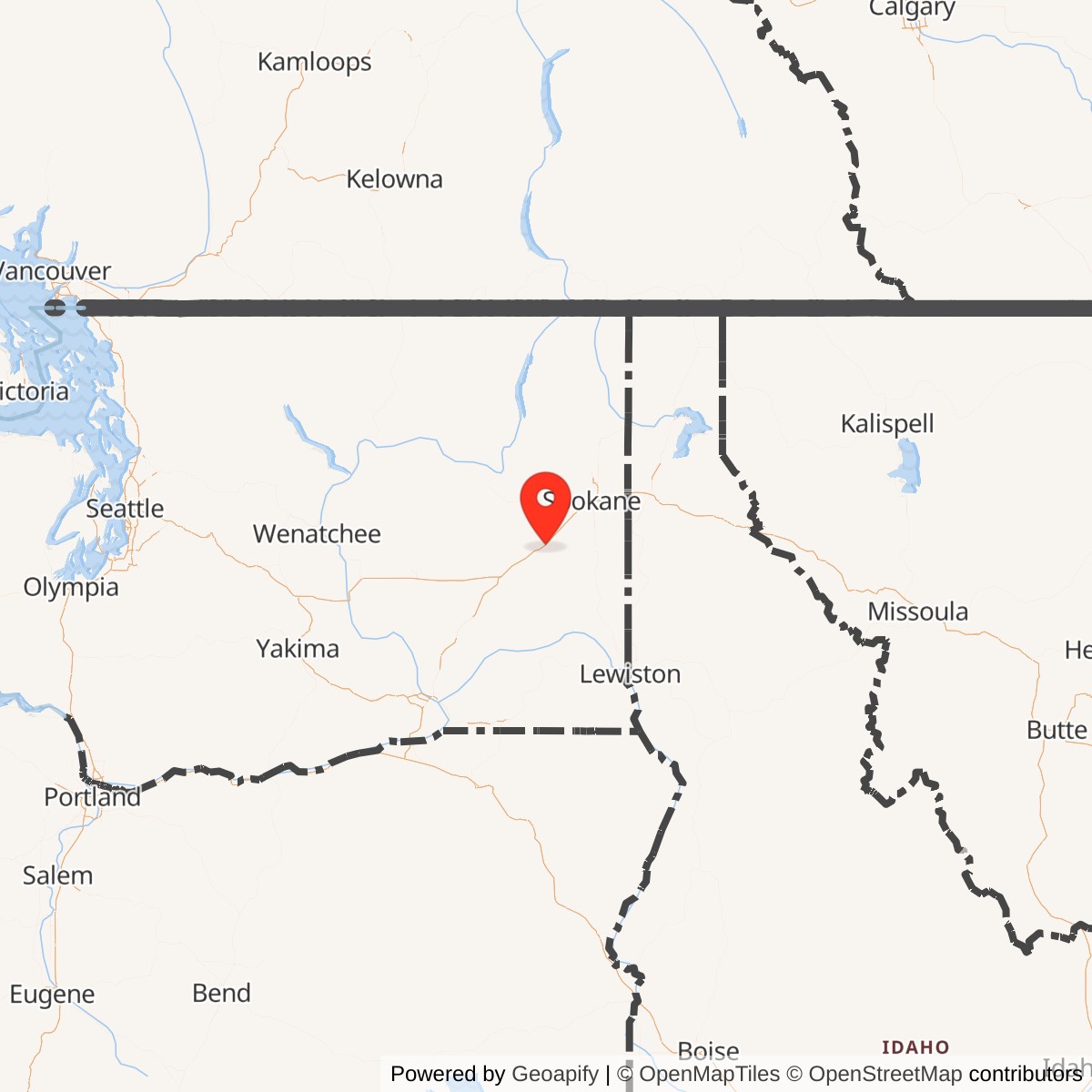
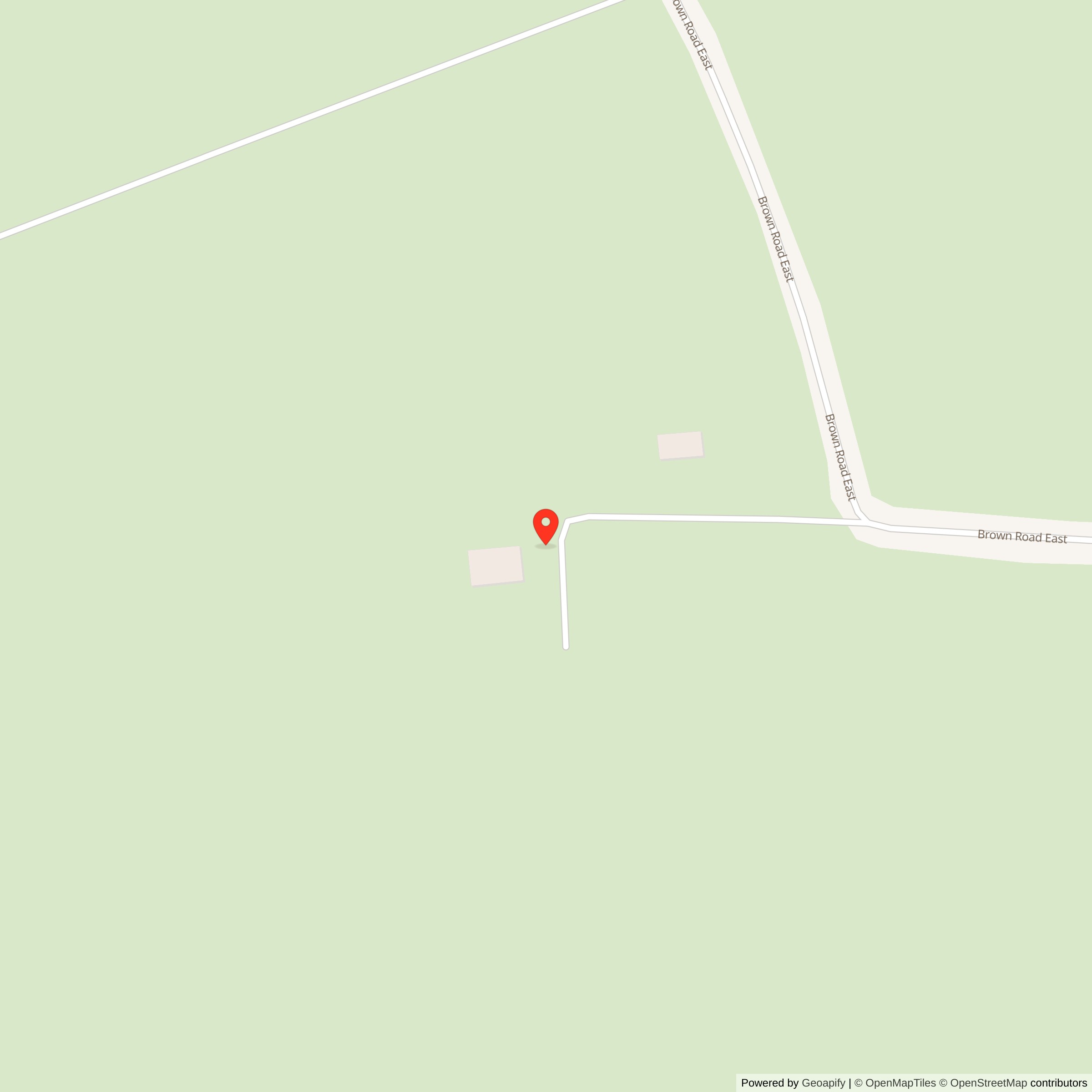
Atlas E Site 567-4 was a single-missile SM-65E Atlas intercontinental ballistic missile launch complex operated by the 567th Strategic Missile Squadron in the Fairchild Air Force Base missile field. It was one of nine Atlas E "coffin launcher" sites dispersed around Fairchild Air Force Base near Spokane, Washington. Its parent base was Fairchild Air Force Base. Its parent wing was the 92d Bombardment Wing during the early deployment period and the 92d Strategic Aerospace Wing after the wing was redesignated on 1962-02-15. The operating squadron was the 567th Strategic Missile Squadron. The site did not have a separate parent Launch Control Center in the later Minuteman sense.
The site was Air Force Operational Site Number 4 of the 567th Strategic Missile Squadron and is best identified as Atlas E Site 567-4, Sprague, Washington. It was near Sprague in eastern Washington, on the high prairie north and northeast of town. The Washington State Department of Health's 1999 health consultation describes the former Sprague missile complex as constructed on 238 acres of high prairie four miles north of Sprague, Washington. EPA identifies the CERCLA property record as the Former Fairchild Atlas E Missile S-4 Site, EPA ID WA0001101971, at "3 miles NE of city," Sprague, Washington.
The site is inactive and decommissioned. The 567th Strategic Missile Squadron was activated at Fairchild on 1960-04-01. Construction of the Fairchild Atlas E field began in 1959 and continued into 1961. The 567th Strategic Missile Squadron's Site 4 page gives 1960 as the construction-start year for the Sprague complex, 1961 as the year it was turned over to the Air Force, and 1965-03-25 as the site decommissioning date. The first Fairchild Atlas E missile went on alert on 1961-10-01, the bulk of the Fairchild missile force was on alert by November 1961, and the squadron was inactivated on 1965-06-25. The former missile site is now private property and has been substantially reused as a residential, storage, workshop, and real-estate/adaptive-reuse property marketed as the Washington Missile Base.
Location, Landscape, and Site Description
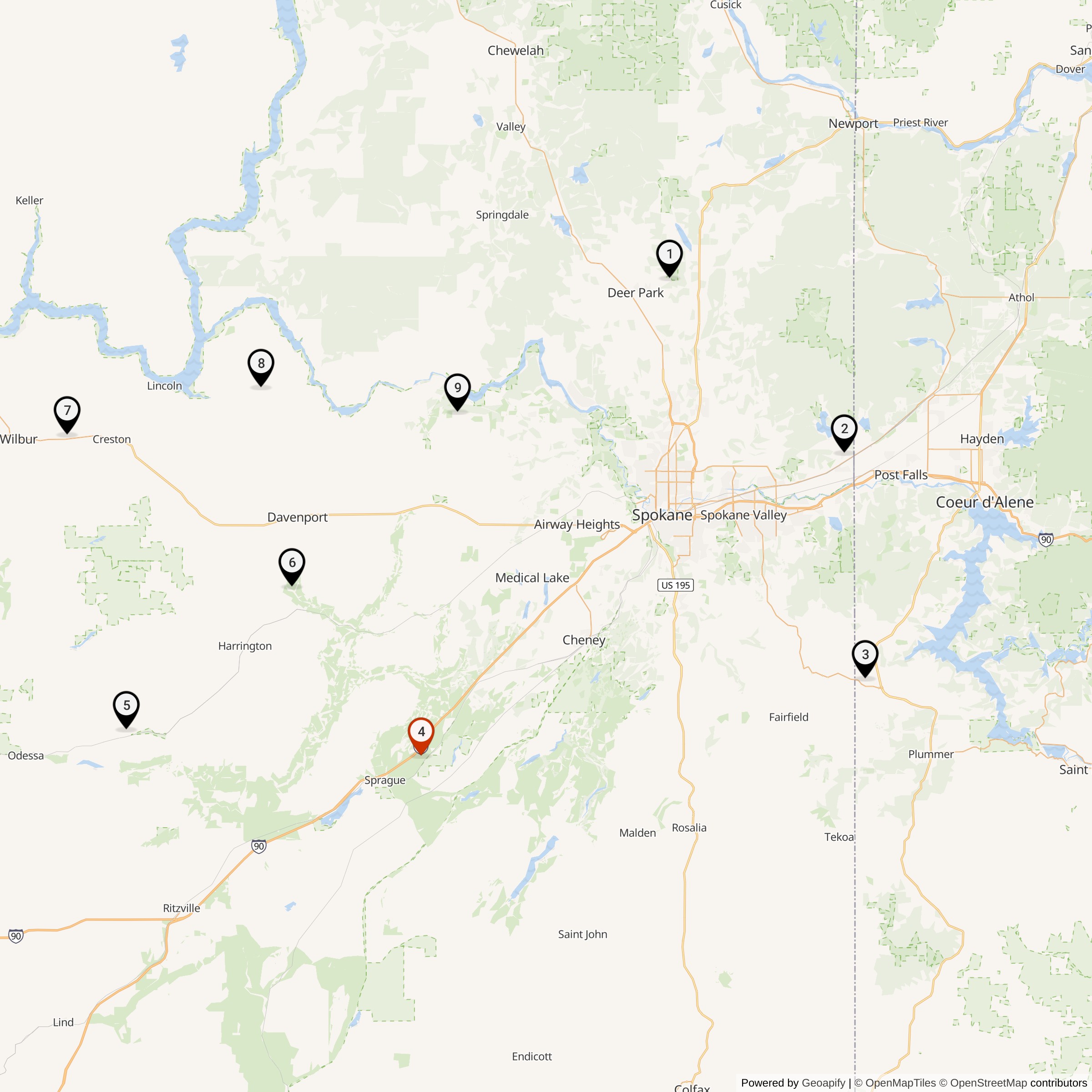
Site 567-4 occupied a rural Palouse and channeled-scablands setting north and northeast of Sprague, a small community along the Interstate 90 corridor between Spokane and Ritzville. The Washington State Department of Health described the missile complex as 238 acres of high prairie located four miles north of Sprague. Present-day marketing materials for the reused property identify the current private property as 50342 Brown Road E, Sprague, Washington, and describe a 24.5-acre former Atlas E missile base with underground living and storage space, aboveground buildings, fenced acreage, a short airstrip, and large concrete and workshop areas. The former launch complex therefore remains legible in the landscape even though it no longer has its missile, military support equipment, or Air Force mission.The site's location followed the same strategic logic as the other Fairchild Atlas E sites. It was close enough to Fairchild Air Force Base for command, maintenance, weapons-handling, supply, communications, and security support, but far enough from the base and from the other launch complexes to reduce the chance that a single attack could destroy the whole missile force. The Fairchild Atlas E field formed a ring or dispersed pattern around the Spokane region, with launch complexes at or near Deer Park, Newman Lake, Rockford/Worley, Sprague, Lamona, Davenport, Wilbur, Egypt, and Reardan. Site 567-4 was therefore not part of Fairchild AFB's main cantonment. It was an off-base hardened launch complex embedded in rural civilian land use.
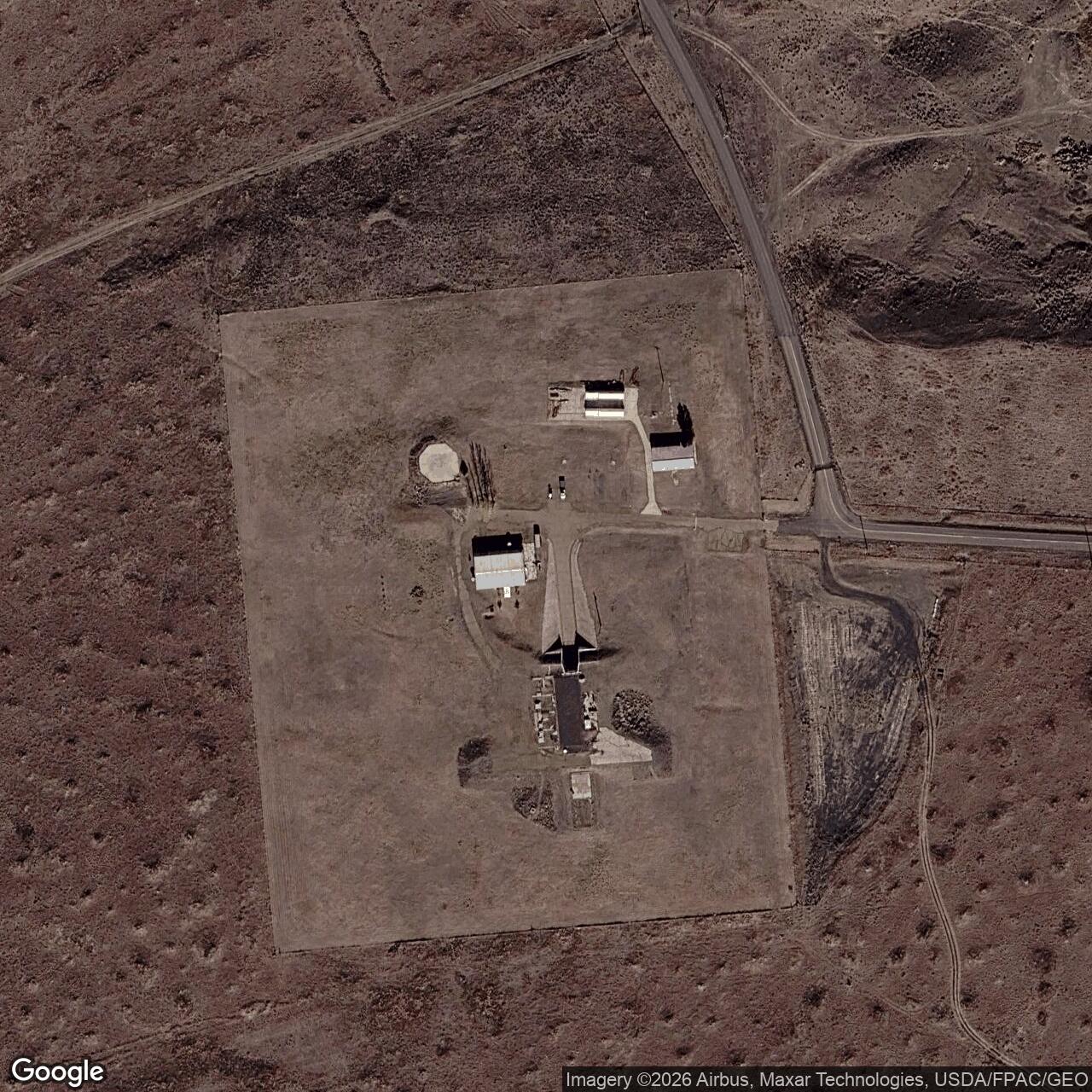
The Fairchild Atlas E sites followed a common semi-hardened design. Each Fairchild Atlas E site was a roughly 20-acre facility with an inner launch-and-control area. The inner area originally contained a reinforced-concrete launch-operations building, crew areas, power equipment, control consoles, a tunnel connecting the operations building to the missile structure, a missile-launch structure measuring about 105 by 100 feet, adjacent propellant storage, a metal storage building, fencing, security patrols, and support roads. The missile was stored horizontally in the launcher bay. This horizontal storage arrangement gave the Atlas E its common "coffin launcher" description.
Site 567-4 was not a vertical Minuteman-style Launch Facility. It was an Atlas E coffin launcher. The missile was stored horizontally in a below-grade reinforced-concrete bay under a heavy roof or door. To launch, the roof was moved aside, the missile was raised to vertical position, fueled with liquid oxygen and RP-1 kerosene, checked, and fired from the open launcher. The arrangement gave the missile more protection than an exposed pad, but it still required the missile to be uncovered, raised, fueled, and launched from the surface. This made Atlas E a transitional system between the earliest exposed Atlas launch pads and later solid-fueled missiles stored ready-to-launch in hardened vertical silos.
The post-military site remains unusually visible because the former underground structures have been reused rather than erased. Public listing materials describe two living areas, an underground former missile structure, storage and workshop space, operational or retained heavy doors, an aboveground metal garage/shop, and a short airstrip. The present real-estate footprint is smaller than the original 238-acre Air Force reservation because the federal government later disposed of the launch-complex parcel separately from the full acquisition area. The current property is private, and the survival of underground military structures does not imply public access or safe entry without the owner's permission and appropriate inspection.
Strategic and Cold War Context
Atlas E Site 567-4 existed because the United States moved rapidly in the late 1950s and early 1960s to field an operational intercontinental ballistic missile force. The Atlas program was the first operational American ICBM program. It was developed under urgent Cold War pressure after the Soviet Union demonstrated long-range missile and space-launch capability. Strategic Air Command needed missiles that could threaten targets at intercontinental range and contribute to deterrence alongside manned bombers and other strategic systems.The Sprague site's mission was national nuclear deterrence, not local air defense. Its crew and missile were part of Strategic Air Command's retaliatory force. If ordered through authenticated emergency channels, the launch crew at the site would prepare and launch the missile against a preassigned target. The site's separation from Fairchild and from the other Fairchild launch complexes was central to its purpose. Dispersal forced an attacker to strike many individual hardened sites rather than one compact missile base.
Washington's Atlas E field also reflected geography. Eastern Washington and nearby north Idaho offered open land, existing Strategic Air Command infrastructure at Fairchild, and inland basing away from the more vulnerable Pacific coast. The Fairchild sites show how strategic nuclear policy reached into agricultural and rural road landscapes. A small town like Sprague became part of the national nuclear alert system because the missile force required dispersal, access, communications, and enough land for hardened launch complexes.
The Atlas E's strategic value was real but short-lived. It used liquid oxygen and RP-1 kerosene, not solid fuel. The missile could not remain indefinitely fueled in the launcher. Before launch, crews had to open the launcher, raise the missile, load cryogenic oxidizer, complete checks, and initiate the launch sequence. Public sources commonly describe the launch response time as about fifteen minutes. By 1964 and 1965, solid-fueled Minuteman missiles had made the Atlas E obsolete. Minuteman could remain sealed, fueled, and ready in hardened silos, reducing launch time, lowering operational hazards, and improving survivability.
Construction and Activation
Fairchild's Atlas E missile field was built during the intense early ICBM construction program that followed the decision to deploy Atlas as an operational strategic weapon. A Fairchild Air Force Base history article states that work on the nine Fairchild Atlas E missile complex sites began on 1959-05-12. The 567th Strategic Missile Squadron was activated at Fairchild on 1960-04-01. The first Atlas E missile arrived at Fairchild on 1960-12-03. Work on the last of the nine Fairchild launch sites was completed on 1961-02-10, Strategic Air Command accepted the first Fairchild Atlas E complex on 1961-07-29, and operational readiness training began in August 1961.The 567th Strategic Missile Squadron's Site 4 page identifies the Sprague complex as Air Force Operational Site Number 4. It lists construction as beginning in 1960, turnover to the Air Force in 1961, and decommissioning on 1965-03-25. The page does not give a precise construction-start month or day, nor does it give a precise turnover date. The Washington State Department of Health health consultation likewise states that the missile complex was constructed in 1959 on 238 acres of high prairie, but that statement appears to describe the beginning of the overall federal construction/acquisition period rather than the precise completion date of the Site 4 launcher.
Construction required excavation, reinforced-concrete placement, underground utility installation, communications work, road access, fencing, propellant systems, power systems, and installation of the launch-control and missile-handling equipment. Atlas E sites were large engineering works even though each contained only one missile. The missile-launch building, launch-operations building, tunnel, support structures, propellant systems, security fencing, power systems, and drainage features created a self-contained off-base military installation. For rural communities around Fairchild, the construction period brought federal activity, construction traffic, survey work, contracts, and the long-term presence of armed Air Force sites in formerly agricultural landscapes.
By late 1961, the Fairchild missile field was operational. Headquarters Strategic Air Command declared the 567th Strategic Missile Squadron operational on 1961-09-28. The first Fairchild Atlas E missile was placed on alert on 1961-10-01, making Fairchild's wing the first aerospace wing in the country under the Air Force's terminology at the time. By November 1961, most of the Fairchild Atlas E force was on alert. Public sources do not prove that the first missile placed on alert was Site 567-4; the event should be treated as a squadron and missile-field milestone rather than a site-specific Sprague event.
Missile System and Technical Role
Site 567-4 housed the SM-65E Atlas, later associated with the CGM-16E designation. Atlas was a one-and-one-half-stage liquid-fueled ICBM built by Convair/General Dynamics. The Atlas E used an all-inertial guidance system rather than the earlier radio-inertial guidance approach. That change allowed individual missiles to be deployed singly in dispersed launch complexes. The National Park Service describes Atlas E as a system based in individual launch complexes, using inertial guidance, deployed in below-ground coffins with improved blast protection, and capable of a roughly fifteen-minute launch response time.The missile's technical role at Sprague was to remain on strategic alert under the control of the 567th Strategic Missile Squadron. Unlike later Minuteman launch facilities, the Atlas E site itself was crewed. The Association of Air Force Missileers describes Atlas E crews as including two officers and three enlisted members, with a new crew departing the main base each morning to replace the crew on duty. The crew worked within the launch complex, maintained continuous alert, and could receive and authenticate emergency war orders. Support personnel from the squadron and parent wing handled maintenance, electronics, power production, propellant, nuclear weapons support, communications, and real-property equipment tasks.
The launch sequence reflected the limitations of first-generation liquid-fueled ICBMs. The missile was kept horizontal in its coffin launcher. If an authenticated launch order was received, the crew would open the launcher roof or door, erect the missile, load liquid oxygen and RP-1, complete countdown procedures, and launch. The Atlas airframe required internal pressurization because of its thin stainless-steel balloon-tank design. These requirements made the system demanding to maintain and potentially hazardous to operate. The use of cryogenic liquid oxygen also meant that the missile could not remain fully fueled on long-term alert the way later solid-fueled missiles could.
Public sources identify the Atlas E as carrying a Mark IV reentry vehicle and W-38 thermonuclear warhead. The 567th Strategic Missile Squadron historical site describes the Atlas E as equipped with a Mark IV reentry vehicle and a W-38 nuclear warhead with a yield of approximately 3.8 megatons and a range of approximately 6,000 miles. A public W-38 summary gives a nominal yield of 3.75 megatons, identifies the Avco Mark 4 ablative reentry vehicle, and notes that the W-38 was deployed on Atlas E, Atlas F, and Titan I launchers.
Operational History
Atlas E Site 567-4's active service was brief but intense. It belonged to a missile force that was created quickly, placed on alert quickly, and retired quickly. The 567th Strategic Missile Squadron became the first Strategic Air Command E-series Atlas missile unit. The squadron's nine missiles gave Fairchild a strategic missile mission in addition to the base's bomber and tanker activities. For the Sprague site, operational life meant continuous crew presence, security control, maintenance visits, inspections, communications checks, power and environmental control, propellant readiness, and the constant discipline of handling a liquid-fueled nuclear weapon system in a remote launch complex.The site's crews operated under Strategic Air Command's alert culture. The launch crew was not simply guarding an empty structure; it was responsible for a combat-ready ICBM assigned to national strategic plans. Crew duty involved checklists, authentication procedures, equipment monitoring, security coordination, emergency drills, and coordination with Fairchild. The crew also lived and worked in a confined engineered structure that combined launch-control functions with crew-support spaces. The presence of two officers and three enlisted members at Atlas E sites distinguished these early launch complexes from later unmanned Minuteman launch facilities.
The Cuban Missile Crisis in October 1962 was the most important operational alert event during the site's service life. Public sources describe the Fairchild Atlas E sites as on high alert during the crisis and the 567th missile force as ready to launch if ordered. The target boards at Washington Atlas sites were changed during the crisis to target Cuba rather than the Soviet Union. This was a squadron and missile-field event, not a documented unique event at Site 567-4 alone, but Site 567-4 was part of the operational Fairchild Atlas E force during that period.
The 567th Strategic Missile Squadron also built a notable operational record. In April 1963, the squadron passed its first Operational Readiness Inspection and was recognized as the first Strategic Air Command missile squadron to pass an ORI. Fairchild's history article lists several squadron-level awards and recognitions, including safety awards, material performance awards, missile-unit recognition, and the Outstanding Unit Award. These are important for understanding the squadron that operated Site 567-4, but they should not be mistaken for unique events at the Sprague complex unless a source specifically ties an event to Site 4.
Operationally, the Atlas E was already becoming obsolete while the Fairchild field was still young. Solid-fueled Minuteman missiles offered faster response, safer handling, simpler alert posture, and greater survivability. Secretary of Defense Robert McNamara announced the closing of the older Atlas E and Titan I systems in February 1964. The national phaseout of early liquid-fueled missile sites moved quickly. Fairchild's Atlas E missiles began coming off alert in early 1965, and by the end of March 1965 the last Fairchild Atlas E missile had been taken off alert and shipped to storage.
In 1999 the Washington State Department of Health prepared a health consultation for the former Fairchild Air Force Base Atlas E Missile Site at Sprague. The consultation was prepared at the request of the Washington State Department of Ecology to evaluate potential health hazards to residents living at or near the former site. It summarized earlier USACE and EPA work, described 1998 sampling, and evaluated PCBs, petroleum hydrocarbons, VOCs, and metals detected in limited sampling locations. The report concluded that a potential public health hazard existed for residents exposed to PCBs in soil at the maximum detected levels, although the estimated risk was very low and the maximum sample came from a debris-pile area not expected to be a high-contact area. It also concluded that no public health hazard existed from contaminants found in on-site water because those contaminants were not expected to be frequently contacted and no VOCs were found in the drinking-water supply well.
Deactivation and Disposal
Atlas E Site 567-4 left service as part of the rapid retirement of the first generation of American liquid-fueled ICBM systems. The 567th Strategic Missile Squadron's Site 4 page gives 1965-03-25 as the site's decommissioning date. Fairchild's broader Atlas E phaseout was complete by the end of March 1965, and the 567th Strategic Missile Squadron was formally inactivated on 1965-06-25. This sequence shows why dates differ among sources: the individual site decommissioning date, the last missile removed from alert in the field, and the squadron inactivation date are related but not identical milestones.The missile itself did not remain at Sprague. Public histories of the Fairchild field state that, when the Atlas E sites closed, equipment and salvageable material were removed and the sites were auctioned or sold. Fairchild's history article states that by 1965-03-31, the last Atlas E missile had been taken off alert and shipped to storage. With the closings, equipment and salvageable material was removed and the sites were auctioned to the highest bidder. For Site 567-4 specifically, the Washington State Department of Health records that the Air Force dismantled and salvaged the site in 1967. The removal of the missile, launch equipment, salvageable material, and federal operational control made the Sprague location a surplus military property rather than an active strategic site.
The General Services Administration sold a 33-acre parcel containing the former launch complex buildings for private use in 1970. The remaining federal acquisition area was no longer needed for missile operations. Later private reuse converted the launch complex from a military site to a residential and storage property. The Washington State Department of Health records that the launch-complex parcel was used for unknown purposes until 1991, when it was sold and converted to private residential use. The launch operations building was used as a home, the launch service building as a garage and storage area, and a metal storage shed was also present.
The site's environmental history followed from the practical realities of decommissioning and salvage. USACE investigations began in 1986 after inspection found large amounts of debris left from salvage operations and evidence of an oil spill in the launch operations building. EPA's 1996 preliminary assessment concluded that no further action was necessary, but the Washington State Department of Health noted that the assessment did not include environmental sampling. Additional investigation was pursued because similar former missile installations had shown soil and groundwater contamination. November 1998 sampling found contaminants in limited surface-water and soil locations, including VOCs, PCBs, total petroleum hydrocarbons, and metals. The on-site drinking-water well did not show VOCs, and metals detected in the well were described as consistent with background.
The site is not known to have been demolished in the manner of later arms-control treaty silo eliminations. Atlas E Site 567-4 had already been retired decades before the Strategic Arms Reduction Treaty implementation period that visibly eliminated many later missile silos. Its post-service process was instead an earlier Cold War surplus-property sequence: missile removal, equipment removal, salvage, federal disposal, private sale, environmental investigation, residential conversion, and later adaptive reuse. The surviving underground and aboveground structures make the site different from a fully removed launch facility. It is a decommissioned missile complex reused as private property rather than a preserved public museum or an active military installation.
Current Status and Site Use
Atlas E Site 567-4 is a privately owned, inactive, decommissioned former missile launch complex. Public current-use materials market it as the Washington Missile Base, an Atlas E Missile Base near Sprague with underground living and storage, two living areas, aboveground and underground rooms, large storage and workshop areas, a 40-ton blast door, a 1,600-foot airstrip, and 24.5 fenced acres. A 2026 LoopNet listing identifies the address as 50342 Brown Road E, Sprague, Washington, and describes a former Atlas E Missile Base on approximately 24.5 private acres with an airstrip, underground reinforced facility, living/workshop improvements, and Opportunity Zone potential.The current use is therefore best described as private adaptive reuse with residential, storage, workshop, and real-estate redevelopment potential. The property is no longer a federal missile installation and does not retain an operational military role. Unlike some former missile sites where the structures were sealed or destroyed, Site 567-4's former launch-complex buildings and underground spaces remain significant enough to be marketed as the property's central feature. Listing photographs and the Washington Missile Base site show the airstrip, access road, underground tunnel, missile-bay interior, storage spaces, living areas, garage or workshop spaces, and the overall parcel layout.
EPA's public CERCLA profile lists the Former Fairchild Atlas E Missile S-4 Site as not on the National Priorities List and NFRAP, meaning it did not qualify for the NPL based on existing information. The Washington State Department of Health health consultation provides more detailed site-specific environmental context for the residential parcel: it identified limited contamination in soil and surface water samples, found no VOCs in the drinking-water well, and recommended avoiding debris-pile soils and further PCB sampling around the launch operations building. These records are important because underground missile sites were industrial and military facilities before they became private properties.
Public access is not available. The former missile site is private property, and its current real-estate marketing does not create a right to enter. Former missile structures can have confined-space hazards, fall hazards, electrical hazards, water intrusion, asbestos, lead-based paint, petroleum residues, solvent residues, or other hazards.
Chronology
- 1959-05-12 Work began on the nine Fairchild Atlas E missile complex sites.
- 1959 The Washington State Department of Health later described the Sprague missile complex as constructed in 1959 on 238 acres of high prairie north of Sprague.
- 1960 The 567th Strategic Missile Squadron historical Site 4 page gives 1960 as the construction-start year for Site 567-4.
- 1960-04-01 The 567th Strategic Missile Squadron was organized at Fairchild Air Force Base.
- 1960-12-03 The first Atlas E missile arrived at Fairchild Air Force Base.
- 1961-02-10 Work on the last of the nine Fairchild Atlas E launch sites was completed.
- 1961 Site 567-4 was turned over to the Air Force, according to the 567th Strategic Missile Squadron.
- 1961-07-29 Strategic Air Command accepted the first Fairchild Atlas E complex.
- 1961-08 Operational readiness training began in the Fairchild Atlas E missile field.
- 1961-09-28 Headquarters Strategic Air Command declared the 567th Strategic Missile Squadron operational.
- 1961-10-01 The first Fairchild Atlas E missile went on alert.
- 1961-11 Most of the Fairchild Atlas E missile force was on alert.
- 1962-02-15 The 92d Bombardment Wing was redesignated the 92d Strategic Aerospace Wing.
- 1962-10 The Fairchild Atlas E missile field was placed in a heightened alert posture during the Cuban Missile Crisis.
- 1963-04 The 567th Strategic Missile Squadron passed its first Operational Readiness Inspection and was recognized as the first Strategic Air Command missile squadron to pass an ORI.
- 1964-02 Secretary of Defense Robert McNamara announced the closing of the older Atlas E and Titan I missile sites as part of a national phaseout of first-generation liquid-fueled ICBMs.
- 1965-03-25 The 567th Strategic Missile Squadron historical Site 4 page lists Site 567-4 as decommissioned on this date.
- 1965-03-31 Fairchild's last Atlas E missile had been taken off alert and shipped to storage.
- 1965-06-25 The 567th Strategic Missile Squadron was inactivated; The Military Standard lists this as the deactivation date for Atlas E 567-4.
- 1967 The Washington State Department of Health recorded that the Air Force dismantled and salvaged the Sprague site.
- 1970 The General Services Administration sold a 33-acre parcel containing the former launch complex buildings for private use.
- 1986 USACE site investigations began after inspection found debris from salvage operations and evidence of an oil spill in the launch operations building.
- 1991 The launch-complex parcel was sold and converted to private residential use, according to the Washington State Department of Health.
- 1996-02 EPA's preliminary assessment concluded that no further action was necessary, though the Washington State Department of Health noted that the assessment did not include environmental sampling.
- 1998-11 Sampling found limited surface-water and soil contamination with VOCs, PCBs, total petroleum hydrocarbons, and metals at selected site locations.
- 1999-05-14 The Washington State Department of Health issued a health consultation for the former Fairchild Air Force Base Atlas E Missile Site at Sprague.
- 2026 EPA's public CERCLA profile listed the Former Fairchild Atlas E Missile S-4 Site as not on the NPL and NFRAP.
- 2026 Public real-estate materials marketed the former Sprague Atlas E site as the Washington Missile Base, a 24.5-acre private property with underground living, storage, workshop, and adaptive-reuse potential.
Read about the Atlas at Fairchild AFB
All Atlas Missile Silo Locations