
Minuteman Missile Alert Facility P-01 (Papa-01 MAF), Hillsdale Wyoming
Longitude: -104.467500
Site Type: Missile Alert Facility (MAF) - Launch Control Center (LCC)
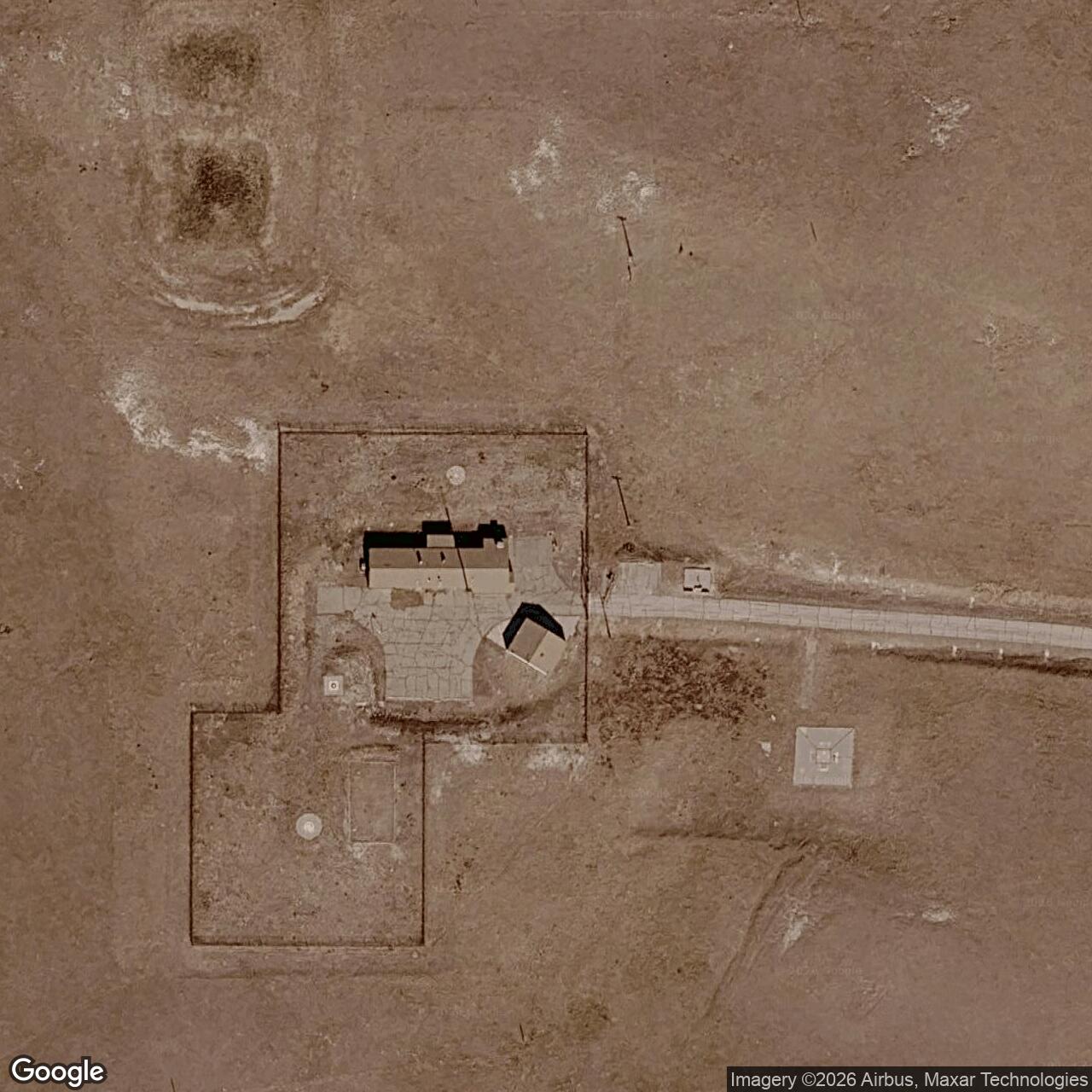
A MAF is located within a fenced area averaging about 5.5 acres. All facilities are enclosed by a security fence, except for a helicopter pad and a buried antenna consisting of two intersecting rings (each about four feet in diameter) buried four feet below surface. The sewage lagoon is enclosed by a separate fence. Top-side structures include a launch control support building (LCSB) and a detached garage. Subsurface structures include a launch control center (LCC) and a launch control equipment building (LCEB). Each MAF Controlled 10 Launch Facilities and their missile.
Missile Type: LGM-30B Minuteman I; LGM-30G Minuteman III; LGM-118A Peacekeeper
Missile Assigned to this Silo: No missile housed at MAF; Papa Flight control facility for former LGM-30B/LGM-30G/LGM-118A launch facilities
Parent Base: F.E. Warren AFB
Missile Wing: 90th Missile Wing; 90th Strategic Missile Wing during SAC era
Missile Squadron: 400th Missile Squadron / 400th Strategic Missile Squadron (Peacekeeper-converted field; inactive after 2005)
Current Site Use: Former Minuteman/Peacekeeper Missile Alert Facility; Peacekeeper mission ended in 2005 and New START dismantlement/fill actions addressed the inactive MAF. Surface MAF buildings may remain; current reuse/parcel disposition not verified.
Site Ownership: Former U.S. Air Force missile field property; post-New START disposition/ownership not verified from public parcel records
Accessible: No public access confirmed; view only from public roads where legal; do not enter without landowner permission
On 19 September 2005, the Peacekeeper era ended not with a launch, but with a confirmation from underground. At Papa One Launch Control Center, a missile combat crew officer confirmed that no Peacekeeper ICBMs remained on strategic alert in the 400th Missile Squadron. That made P-01 more than one more fenced compound on the Wyoming plains. It was the control site tied to the final official moment of the most powerful land-based ICBM ever placed on U.S. alert.
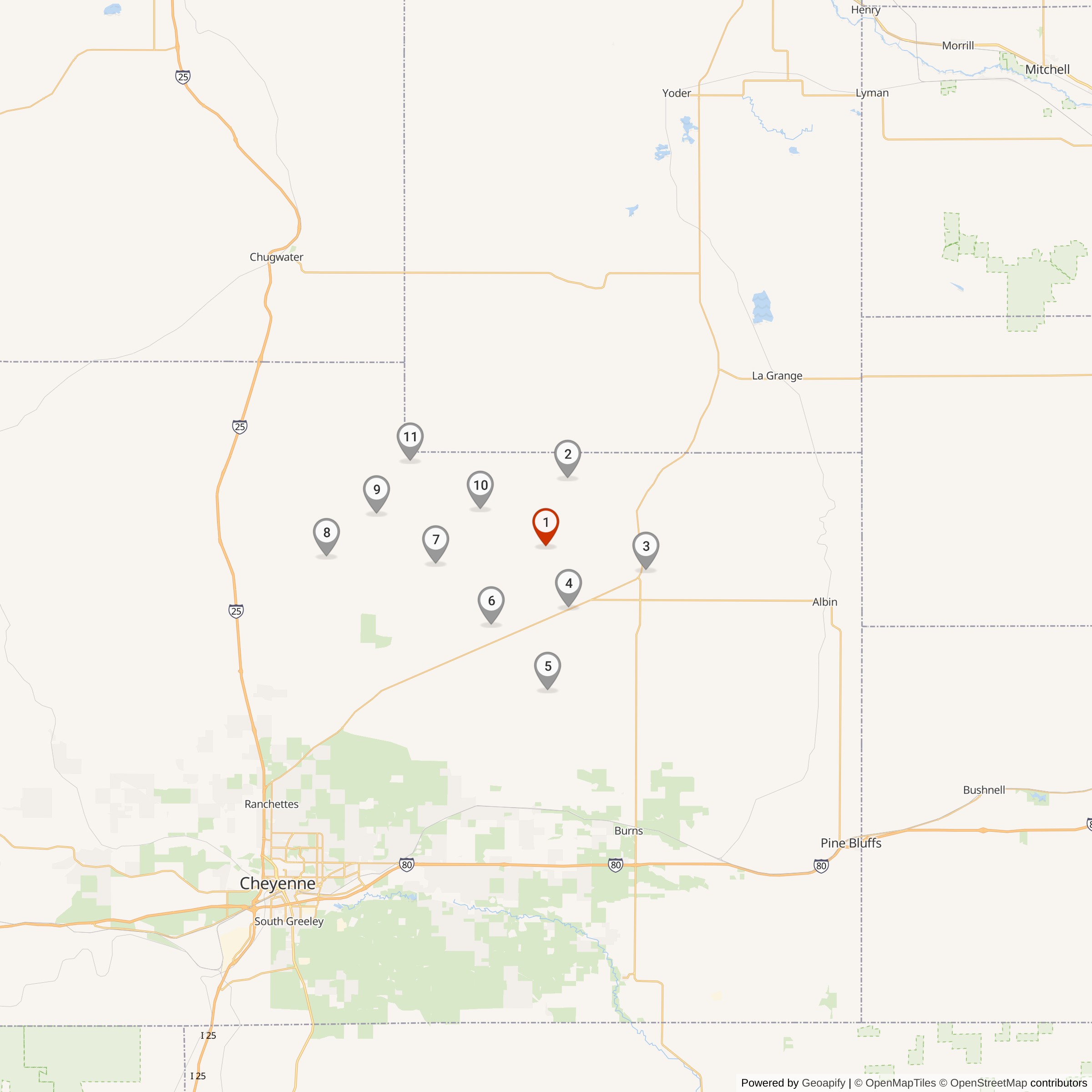
P-01, also known as Papa One, was a Missile Alert Facility / Launch Control Center associated with Papa Flight in the F.E. Warren Air Force Base missile field. It served the 400th Strategic Missile Squadron, later the 400th Missile Squadron, under the 90th Strategic Missile Wing / 90th Missile Wing. The facility controlled and supported the Papa Flight group of ten dispersed launch facilities, P-02 through P-11. It was originally part of the F.E. Warren Minuteman force and later became part of the only operational Peacekeeper missile field in the United States.
The site is inactive and decommissioned.
Location, Landscape, and Flight Layout
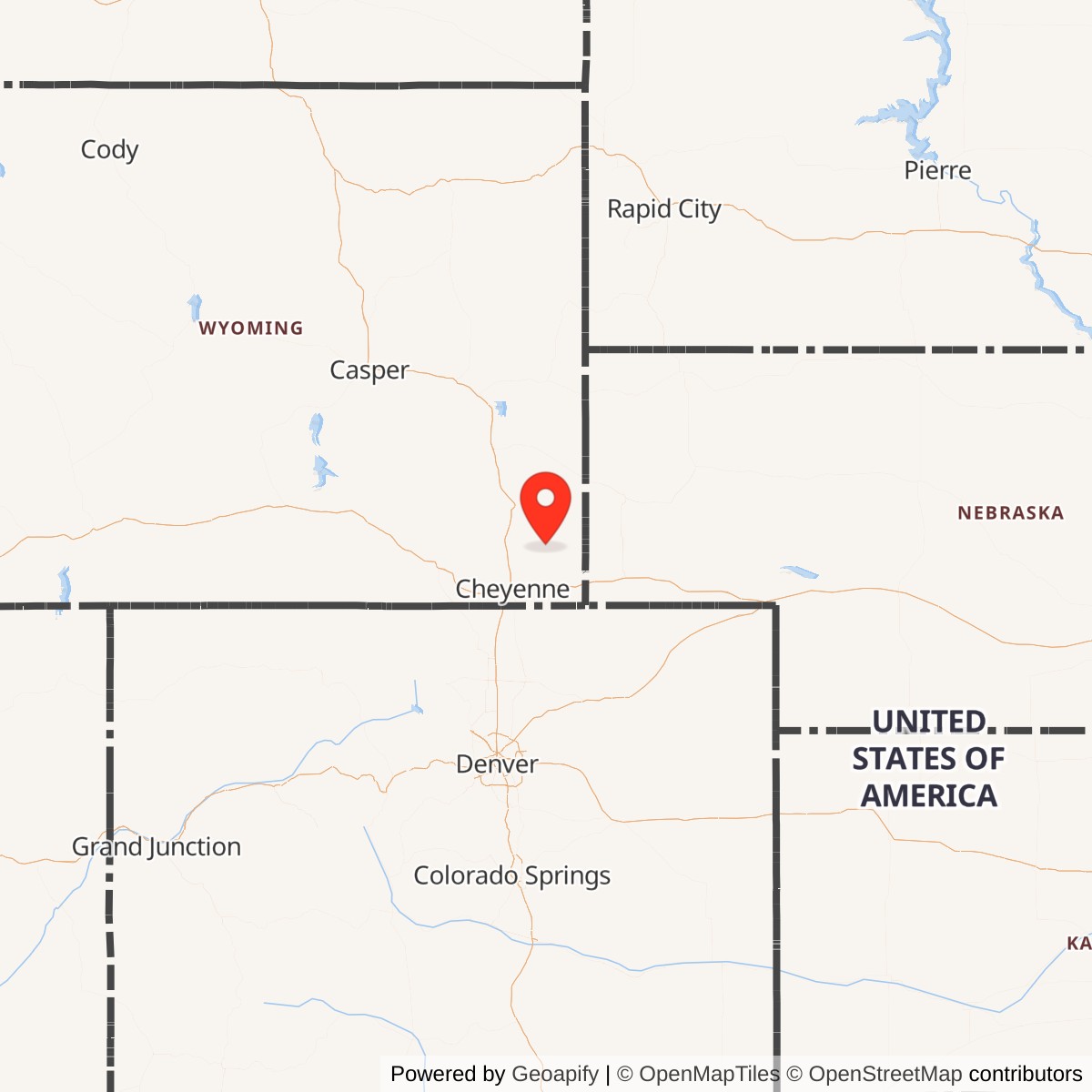
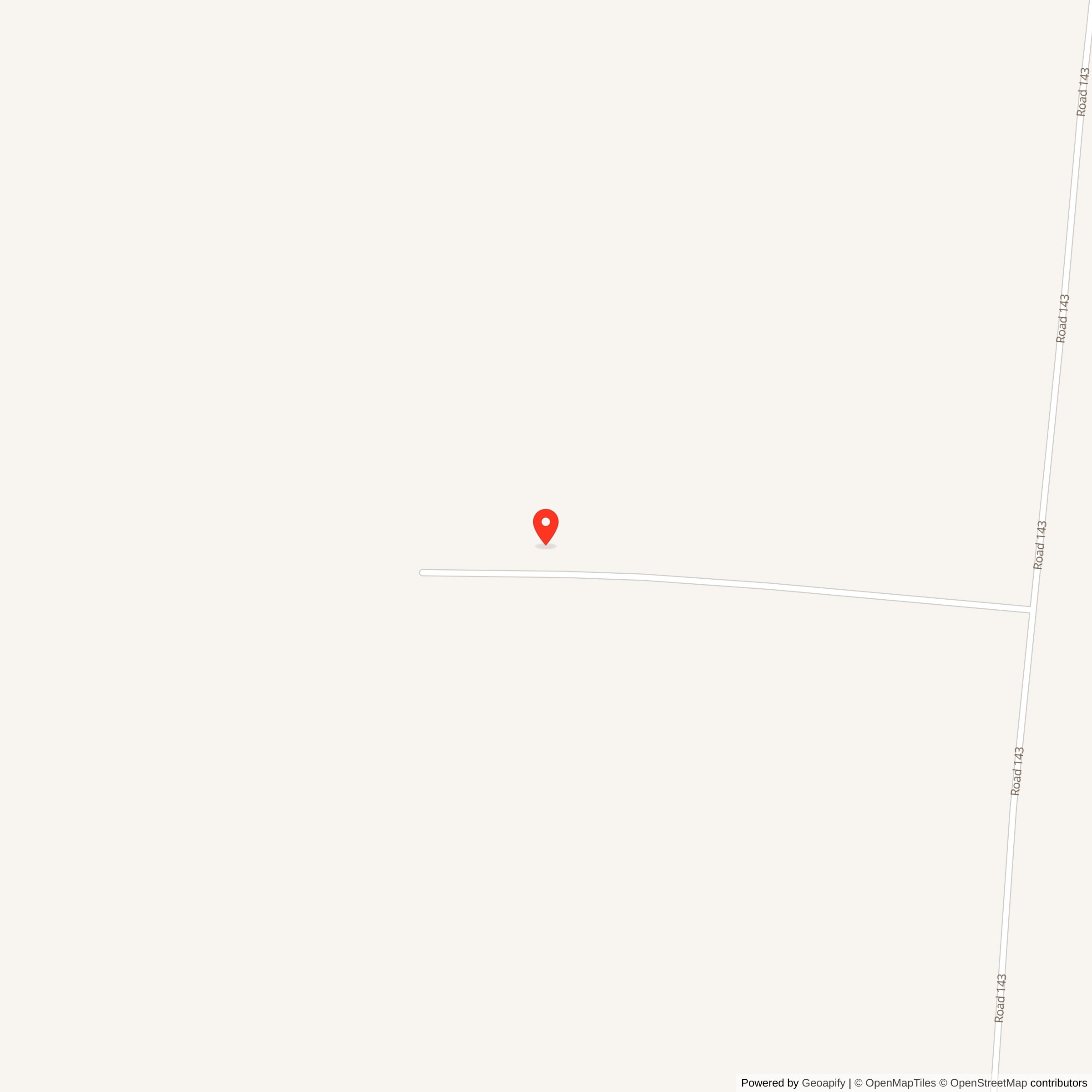
P-01 sat in the open agricultural and ranching country east and northeast of Cheyenne, a landscape that was well suited to the Minuteman concept of dispersed, hardened, remotely monitored missile sites. From the road, a Missile Alert Facility could look like a small utilitarian Air Force compound: a support building, fenced grounds, communications and utility features, and a hardened underground launch-control capsule reached through the facility. Its significance lay in the invisible network around it. Papa Flight's launch facilities were spread across miles of rural roads and private land so that no single attack could destroy the whole flight at once.Papa Flight included P-01 as the crewed alert and control facility and ten unmanned launch facilities.
P-01 Missile Alert Facility / Launch Control Center
P-02 Launch Facility
P-03 Launch Facility
P-04 Launch Facility
P-05 Launch Facility
P-06 Launch Facility
P-07 Launch Facility
P-08 Launch Facility
P-09 Launch Facility
P-10 Launch Facility
P-11 Launch Facility
The launch facilities were not crewed on a day-to-day basis. Missile combat crews served in the underground launch-control center at P-01, while security, maintenance, communications, and support teams traveled to the launch facilities as required. This distinction matters because the Minuteman and Peacekeeper systems were not collections of independent manned silos. They were dispersed networks tied together by crews, command-and-control links, maintenance organizations, and the larger F.E. Warren missile field.
Strategic and Cold War Context
The Minuteman system was created to solve a problem that the first generation of U.S. ICBMs could not solve well enough: how to keep a nuclear deterrent on constant alert without the fueling delays, hazardous propellants, and exposed launch postures of Atlas and Titan I. Minuteman was solid-fueled, stored underground, remotely monitored, and designed for rapid response. Instead of placing a small number of large, liquid-fueled weapons in a few concentrated complexes, the Air Force distributed hundreds of smaller solid-fueled missiles across the northern and central plains.F.E. Warren's role in that transition was unusually important. The base had been central to the early Atlas era and then became one of the major Minuteman missile fields. Public Air Force history states that 200 Minuteman I missiles replaced the earlier Atlas systems at F.E. Warren in the early 1960s. The first F.E. Warren Minuteman missiles were B models with one reentry vehicle. Unlike several other Minuteman fields, F.E. Warren did not deploy Minuteman II; Minuteman III replaced Minuteman I at the base in 1975.
The Peacekeeper added a second layer to that history. Originally known as MX, the missile became one of the most debated nuclear weapons programs of the late Cold War. The controversy was not only about the missile itself, but about where and how it should be based. Various basing schemes were proposed, including mobile and protective-shelter concepts, before the United States chose to place the operational Peacekeeper force in modified former Minuteman silos at F.E. Warren. In that decision, Papa Flight became part of a compromise between strategic modernization and political, environmental, and budgetary reality: a new missile placed inside an older dispersed Minuteman infrastructure.
Construction and Activation
The F.E. Warren Minuteman missile field was built as part of the nationwide Minuteman expansion of the early 1960s. The 90th Strategic Missile Wing was activated on 1 July 1963, and the base's Minuteman deployment replaced the earlier Atlas mission. Public historic-preservation documentation for Quebec-01, another 400th Strategic Missile Squadron control facility in the same Peacekeeper-converted group of flights, identifies construction in 1963-1964 and operational service beginning in 1965. P-01 belonged to the same broader 400th squadron / F.E. Warren Minuteman field.As built, P-01 was not a launch silo. It was the Missile Alert Facility and Launch Control Center for Papa Flight. Above ground, the facility supported the alert crew and security posture. Below ground, the launch-control center provided the hardened crew location from which two missile combat crew members monitored the assigned launch facilities. The ten Papa Flight launch facilities were constructed separately across the surrounding countryside.
Missile System and Technical Role
P-01's technical role changed as the missiles in its flight changed. In the Minuteman era, Papa Flight was part of F.E. Warren's LGM-30 Minuteman force, first with Minuteman I and later Minuteman III. F.E. Warren's Minuteman I missiles were LGM-30B models with a single reentry vehicle. Minuteman III brought the next generation of solid-fueled ICBM technology to the field in 1975.During the Peacekeeper era, P-01 controlled launch facilities converted for the LGM-118A Peacekeeper. Public Air Force sources describe Peacekeeper as the Air Force's most powerful, accurate, and advanced ICBM during its operational life from 1986 to 2005. The missile was approximately 71 feet long, weighed about 195,000 pounds, used inertial guidance, and had a range greater than 6,000 miles. It could carry up to ten Avco MK-21 reentry vehicles and was designed for a cold-launch sequence from modified Minuteman silos: the missile was ejected from the launch tube before first-stage ignition.
The conversion did not turn P-01 itself into a missile silo. Its role remained that of a crewed control and support facility for the flight. The operational change was in the missiles, equipment, procedures, training, and modified launch facilities tied to the control center. Papa Flight's launch facilities became part of the 50 former Minuteman silos used for the Peacekeeper force at F.E. Warren.
Launch Control, Alert Duty, and Daily Operations
Like other Minuteman and Peacekeeper Missile Alert Facilities, P-01 functioned as both a surface support site and the access point to an underground launch-control center. Alert crews rotated through the facility for duty periods, while facility managers, security forces, maintenance teams, cooks, communications personnel, and other support personnel made the alert site work as a remote operating post. The launch facilities assigned to the flight remained unmanned except when visited by authorized teams.The 400th Missile Squadron operated the Peacekeeper force in Papa, Quebec, Romeo, Sierra, and Tango Flights. Each flight consisted of one control facility and ten launch facilities, giving the squadron its 50-missile Peacekeeper force. The Air Force brought the first ten Peacekeepers on alert at F.E. Warren in 1986, and all 50 were in service by 1988. In that period, P-01 became one of five control centers tied to the nation's entire operational Peacekeeper inventory.
Operational History
Papa Flight began as part of F.E. Warren's Minuteman field. In that role, P-01 supported the solid-fueled missile alert system that replaced the older Atlas mission and made F.E. Warren part of the massed Minuteman deterrent of the 1960s and 1970s. The missileers underground did not "fly" the missile in the aviation sense; they monitored the status of the assigned launch facilities, maintained alert readiness, and stood prepared to execute lawful orders through the national command system.The Peacekeeper conversion gave Papa Flight a more specialized place in Cold War history. The 400th Missile Squadron's converted flights were the only operational Peacekeeper missile field. The decision to place Peacekeeper in existing Minuteman silos reflected years of debate over MX basing, survivability, arms-control concerns, cost, and public opposition. The final field at F.E. Warren was smaller than many earlier proposals but technologically formidable: 50 missiles, each capable of carrying multiple independently targetable reentry vehicles.
Peacekeeper operations at P-01 and its sister flights lasted from the late 1980s into the early 2000s. During that time, the Cold War ended, Strategic Air Command was inactivated, U.S. Strategic Command assumed strategic nuclear responsibilities, and the 90th became part of the post-Cold War missile force. Peacekeeper, conceived as a late-Cold-War modernization weapon, remained on alert after the Soviet Union collapsed but became increasingly tied to arms-control reductions and changing strategic requirements.
P-01 has one documented event of special importance. On 19 September 2005, during the ceremony marking the end of the Peacekeeper mission, a missile combat crew officer at Papa One Launch Control Center confirmed that no Peacekeeper ICBMs remained on strategic alert in the 400th Missile Squadron. The Air Force described that confirmation as the final step that closed the Peacekeeper era.
Deactivation, Disposal, Preservation, and Arms-Control Context
Peacekeeper deactivation began after the United States decided to reduce the missile force in the early 2000s. Air Force reporting states that the first Peacekeeper was deactivated on 4 October 2002 and that the remaining missiles were removed from strategic alert by September 2005. The final phase ended on 19 September 2005, when the Air Force formally said farewell to the missile. Missileers, maintenance personnel, and security forces associated with the 400th Missile Squadron were retrained, reassigned, or shifted into other missions as the system left service.The physical afterlife of the Peacekeeper field was shaped by arms control. Under New START implementation, the Air Force addressed deactivated ICBM launch facilities and associated missile alert facilities at F.E. Warren and Malmstrom. Public Air Force and Federal Register records describe the planned elimination of 50 former Peacekeeper launch facilities and five associated missile alert facilities at F.E. Warren. Environmental review documents stated that launch facilities would be eliminated in a manner visible to treaty verification, while associated missile alert facility subsurface portions could be filled with concrete and clean fill. AFCEC reporting also stated that MAF surface buildings would remain after the dismantlement process.
F.E. Warren announced in 2013 that 50 previously deactivated Peacekeeper launch facilities north of Cheyenne would be permanently eliminated under New START, with completion planned by December 2014. The release also stated that, after elimination, the land would become available for purchase under a disposal process that gave adjacent landowners the first opportunity, followed by state and local governments, and then public auction if needed.
Current Status and Site Use
P-01 is decommissioned. The former Missile Alert Facility / Launch Control Center is not an active missile site and is not a public historic site. Public sources did not verify current public access, current ownership, or a P-01-specific reuse.
Chronology
- 1958 F.E. Warren became the first operational U.S. ICBM base with Atlas missiles.
- 1963-1964 Public historic-preservation documentation for Quebec-01, another 400th Strategic Missile Squadron control facility, identifies construction of that facility in this period; P-01 was part of the same broader Minuteman field context, but a separate P-01 construction-completion date was not found.
- 1965 The 400th Strategic Missile Squadron's Minuteman control facilities, including the flight group to which P-01 belonged, entered the operational Minuteman era; exact P-01 day/month not verified.
- 1975 Minuteman III replaced Minuteman I at F.E. Warren. Minuteman II was not deployed at F.E. Warren.
- 1982-11 President Ronald Reagan renamed the MX missile the Peacekeeper.
- 1983-06-17 The first Peacekeeper test launch took place.
- 1985 Congress capped the Peacekeeper deployment at 50 missiles.
- 1986-12 The first Peacekeepers were deployed at F.E. Warren; the 400th Missile Squadron assumed control of the Peacekeeper force.
- 1988 The 400th Missile Squadron's full 50-missile Peacekeeper complement was on line at F.E. Warren.
- 2002-10-04 The first Peacekeeper was deactivated.
- 2005-09-19 The Peacekeeper mission ended; a missile combat crew officer at Papa One Launch Control Center confirmed that no Peacekeeper ICBMs remained on strategic alert in the 400th Missile Squadron.
- 2011-02-05 New START entered into force.
- 2011-11-17 The Air Force published notice of intent to prepare an environmental assessment for dismantling deactivated ICBM launch facilities, including 50 Peacekeeper launch facilities and five associated missile alert facilities at F.E. Warren.
- 2013-03-22 AFCEC announced the final environmental assessment and draft finding of no significant impact for dismantling deactivated Minuteman III and Peacekeeper launch facilities under New START.
- 2013-08-23 F.E. Warren announced that 50 previously deactivated Peacekeeper launch facilities would be permanently eliminated under New START.
- 2014-12 F.E. Warren's 2013 release identified December 2014 as the planned completion point for elimination of the former Peacekeeper launch facilities north of Cheyenne.
- 2018-02-04 New START implementation required elimination of covered deactivated ICBM facilities by this deadline.
Read about the Peacekeeper Missile at F.E. Warren AFB
All Peacekeeper Missile Silo Locations
All Minuteman/Peacekeeper Missile Silo Locations