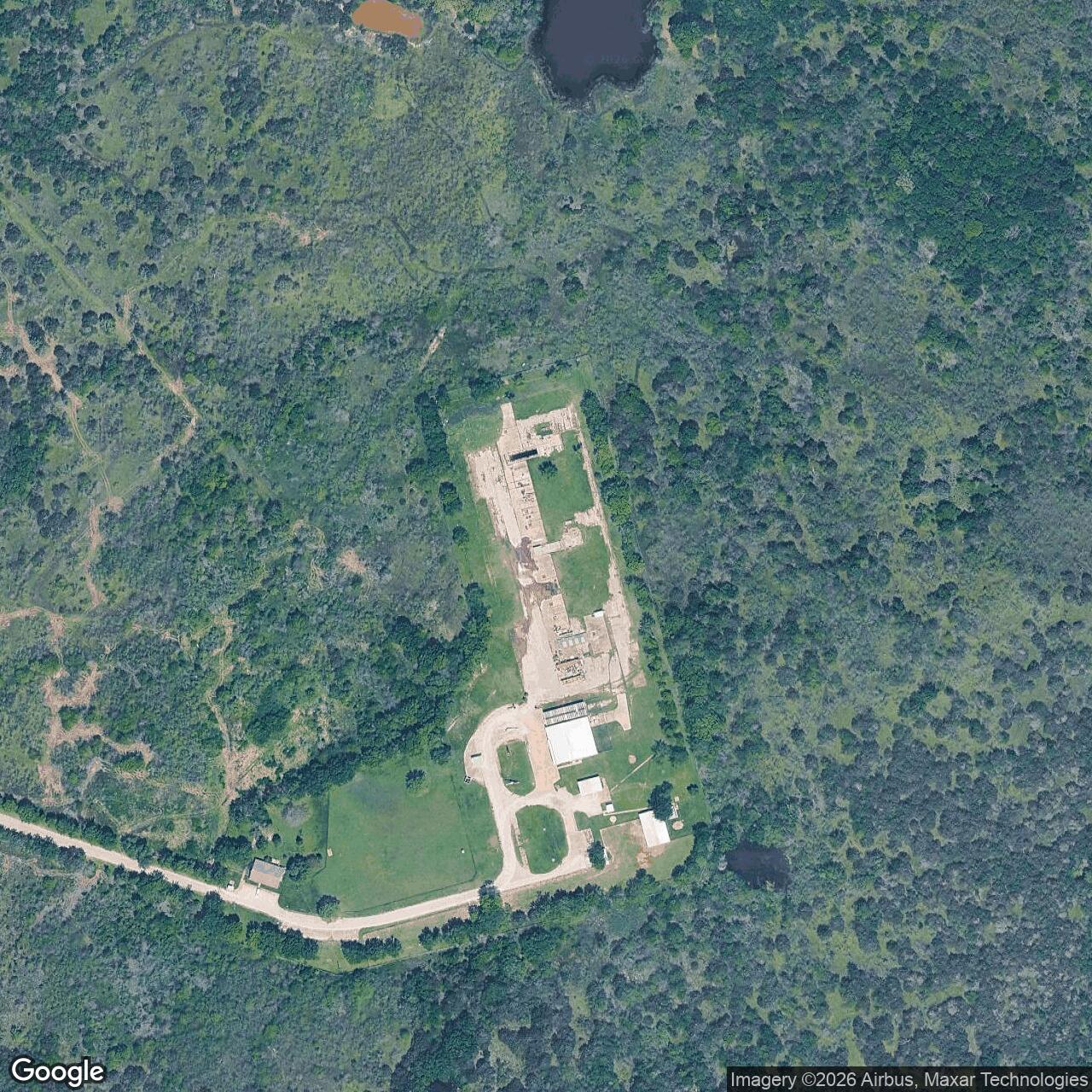
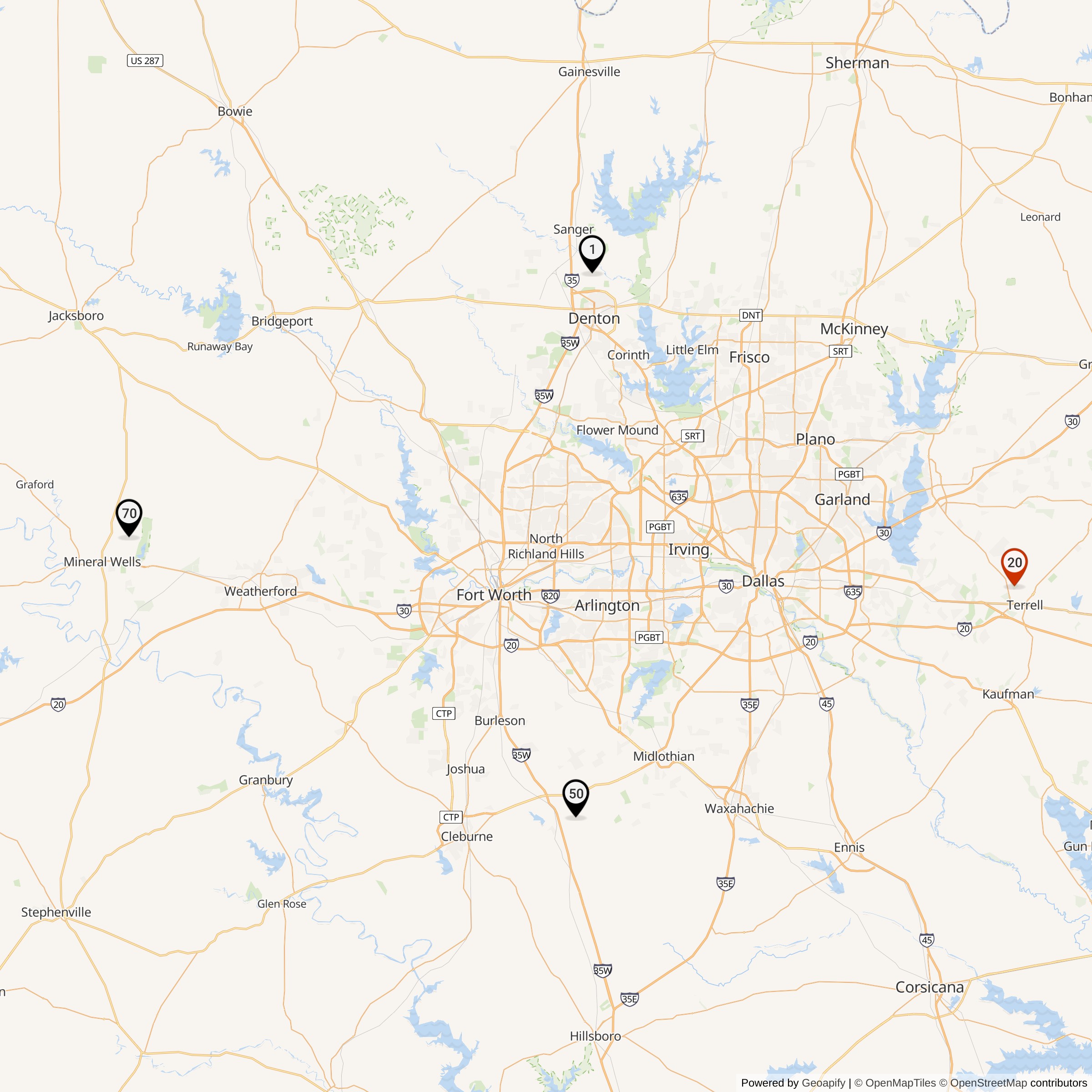
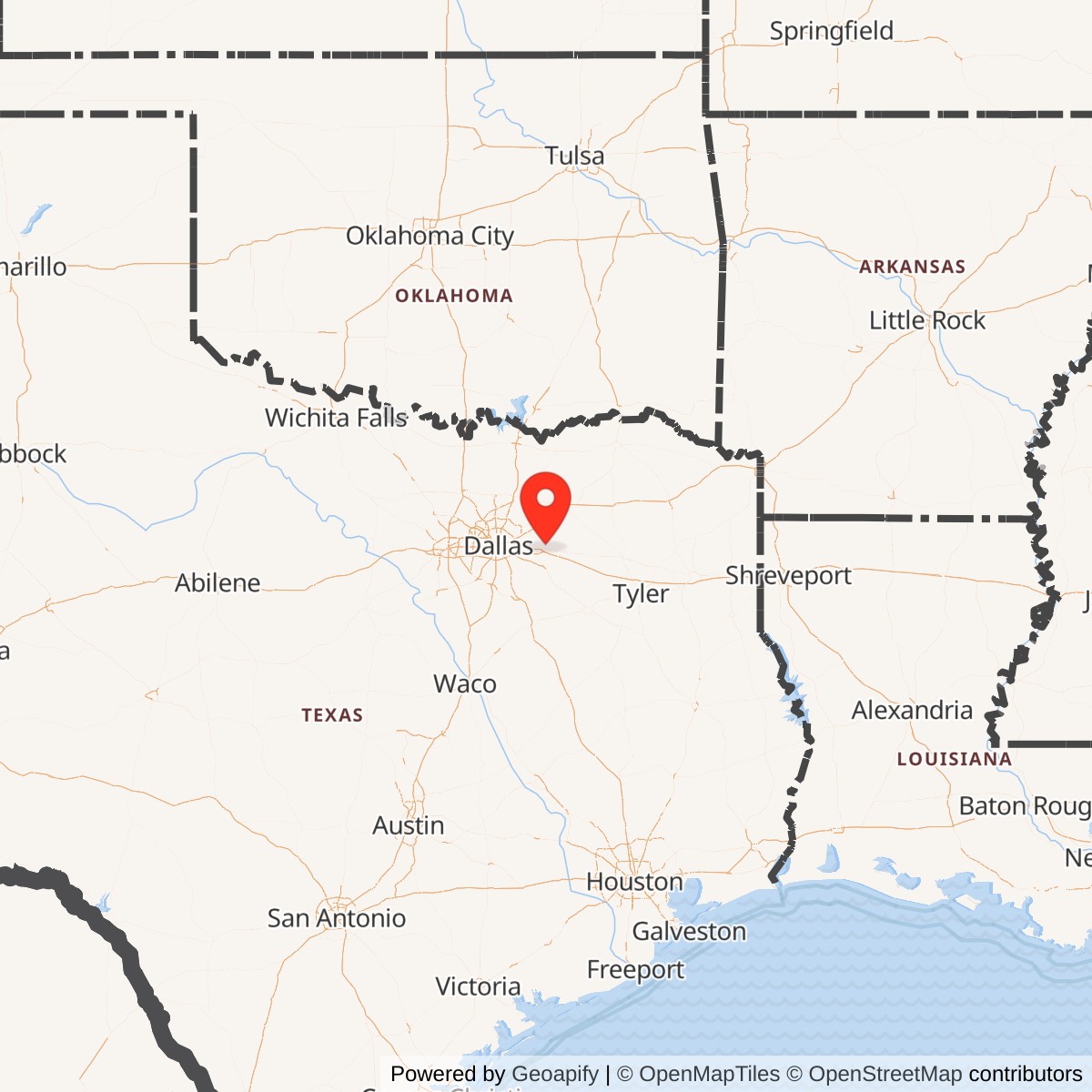
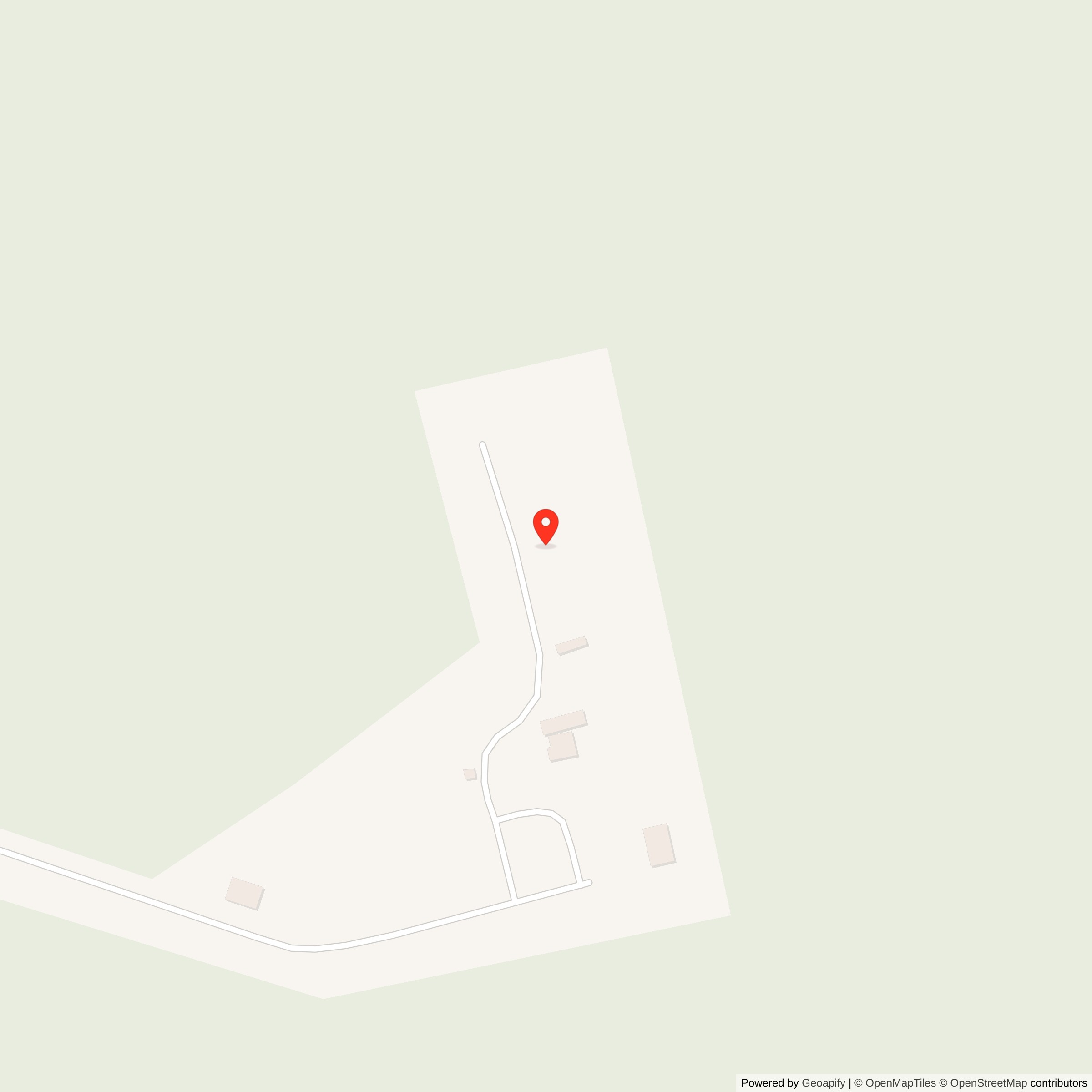
Nike Missile Site DF-20 Launcher, Terrell Texas
Longitude: -96.2951939868311
This location was part of the Dallas-Fort Worth Defense Area
Site ID: DF-20
The missiles at this Launch Area were controlled by the Integrated Fire Control site located here.
Site Role: Launcher
A typical Nike air defense site consisted of two separate parcels of land. One area was known as the Integrated Fire Control (IFC) Area. This site contained the Nike system's ground-based radar and computer systems designed to detect and track hostile aircraft, and to guide the missiles to their targets.
The second parcel of land was known as the Launcher Area. At the launcher area, Nike missiles were stored horizontally within heavily constructed underground missile magazines. A large, missile elevator brought the Nikes to the surface of the site where they would be pushed across twin steel rails to one of four satellite launchers.
Elaboration on how Nike worked here.
Missile Type: Ajax/Hercules
The Nike Ajax was the first in the Army's family of guided missiles, and the world's first operational, guided, surface-to-air missile system. Nike Ajax had a burnout speed of Mach 2.3, a range of 25-30 miles, and a ceiling of 65,000 feet.
Designed to carry either nuclear and/or high-explosive warheads, the Nike Hercules missile could attack supersonic aircraft operating at altitudes in excess of 150,000 feet and at a range of more than 87 miles.
Battery Type: single
Current site status: demolished
Nike Missile Site DF-20, also written in Army disposal records as Nike Hercules Site D-FW-20, was a former U.S. Army Nike Hercules air-defense battery northeast of Terrell in Kaufman County, Texas. It was part of the Dallas-Fort Worth Defense Area, the short-lived ring of Nike Hercules sites built to defend the Dallas-Fort Worth metropolitan region, its defense industries, and nearby military installations during the Cold War. Available Nike site listings record active service from August 1960 to February 1964; Army excess records show the property being processed for disposal in 1968 and available for excess on 10 January 1969.
The EPA identifies the former Terrell Nike Missile Site as being about one-half mile east of Highway 205 in Terrell, Texas, ZIP 75160, in Kaufman County.
DF-20 was not a large base in the sense of an airfield or depot. It was a fixed missile battery made up of separated functional areas: an Integrated Fire Control area, where radars and fire-control equipment detected and tracked targets and directed engagements, and a launch area, where missiles were stored, serviced, raised from magazines, and fired if ordered. In the Nike system, this physical separation was essential. The IFC needed a clear radar view and line-of-sight relationship with the launcher, while the launcher needed enough isolated land for missile magazines, launchers, explosives safety, security fencing, and support buildings.
Mission Evolution
DF-20 was built for a very specific Cold War mission: to help protect the Dallas-Fort Worth region against Soviet long-range bomber attack. The site belonged to a Nike Hercules network rather than the earlier first-generation Nike Ajax network. Its recorded missile configuration was Nike 3D/18H/12L-U, meaning a Hercules-era battery with three Type D magazines, eighteen Hercules missiles, and twelve universal launchers. Unlike many older urban Nike sites elsewhere in the United States, DF-20 appears in the record as a new Hercules site rather than as an older Ajax battery converted to Hercules.The Dallas-Fort Worth Defense Area was one of several interior U.S. Nike defenses added after the Army moved from Ajax point-defense sites toward longer-range, nuclear-capable Hercules coverage. The broader Nike Hercules program reflected the Army's concern that massed Soviet bomber formations might overwhelm conventional antiaircraft defenses. Hercules had much greater range than Ajax, used solid propellants, and could carry either a high-explosive fragmentation warhead or a nuclear warhead. That capability allowed a smaller number of Hercules batteries to cover larger areas than Ajax batteries, but it also tied the sites to strict command, control, security, and nuclear-weapons procedures.
The Dallas-Fort Worth sites guarded more than population alone. Contemporary historical context for the region emphasizes its defense-production and military value: Carswell Air Force Base, aircraft manufacturing, electronics production, naval aviation facilities, and other Cold War defense infrastructure made North Texas a meaningful target set in U.S. air-defense planning. DF-20's position northeast of Terrell gave it coverage on the eastern side of the defense area, complementing other Dallas-Fort Worth batteries at Denton, Alvarado, and Fort Wolters.
Operational Role and Command Relationships
The Dallas-Fort Worth Nike Hercules system was integrated through an Army air-defense command-and-control structure associated with Duncanville Air Force Station. The defense area's headquarters and command facilities were at Duncanville, and missile defense was coordinated through a BIRDIE system collocated with Air Force tracking radars. Radomes' radar/Nike command-control table identifies Duncanville Air Force Station as the Dallas-Fort Worth BIRDIE command site associated with the Nike defense area.Within this network, DF-20 would have operated as a battery rather than as an independent missile base. Its IFC radars detected, acquired, and tracked assigned targets; its missile-tracking radar tracked the missile after launch; and its computer and command equipment calculated the intercept solution. The launch area then executed the engagement under the battery's fire-control instructions. The Radar Course Directing Central was the technical name for the Integrated Fire Control area, and all command and control of the missile, including firing, originated from that area.
The exact battery designation for DF-20 is not stated in every public listing, but Army unit tables for the Dallas-Fort Worth Nike defense identify the 4th Battalion, 562nd Artillery, with headquarters and batteries A, B, C, and D tied to the Dallas-Fort Worth sites. Nearby corroborating histories identify Battery A with Denton and Battery C with Alvarado; by site order and available unit-table context, DF-20/Terrell is best treated as the Terrell battery of that battalion, likely Battery B, 4th Missile Battalion, 562nd Artillery, unless a more explicit unit roster is located.
Site Layout and Facilities
The available excess-property report gives unusually useful detail about what DF-20 physically contained near the end of its Army life. The report describes Nike Hercules Site D-FW-20 as consisting of 24.15 acres held in fee and 77.84 acres held by easement. The easement acreage is important because Nike sites required more than the fenced building pads: line-of-sight, access, utilities, restricted areas, and safety/security relationships could require land interests outside the core fee parcel.The IFC/control side included radar and command-related improvements. The excess report lists an interconnect building, an ABAR building, a ready building, an antenna tower, a target-ranging radar pad, and communication or utility features. The ABAR reference is especially significant because Alternate Battery Acquisition Radar equipment was part of the Hercules-era radar suite and provided backup acquisition capability.
The launch side included the facilities needed to store, test, assemble, fuel-service, secure, and launch the missiles. The excess report identifies a missile assembly and test building, generator building, paint and oil storage, acid storage, ready building, fencing, sentry station, kennel, intrusion detection system, and acid fueling station. Although the Hercules missile itself used solid propellant, Nike installations inherited many site-support and safety features from the earlier Nike family and retained specialized chemical, electrical, and maintenance facilities. As late as the excess report, many DF-20 improvements were described as being in good condition.
The public Nike site table describes DF-20's control site as intact but abandoned under FDS status, and its launch site as partially intact, with Terrell FFA and school-bus storage or maintenance use. That is consistent with many former Nike properties after closure: the highly specialized military equipment was removed, but roads, fencing, magazines, buildings, hardstands, and support structures often survived long enough to be reused by schools, local governments, or private owners.
List of all Nike Installations in the Dallas-Fort Worth Defense AreaList of all Nike Installations in Texas