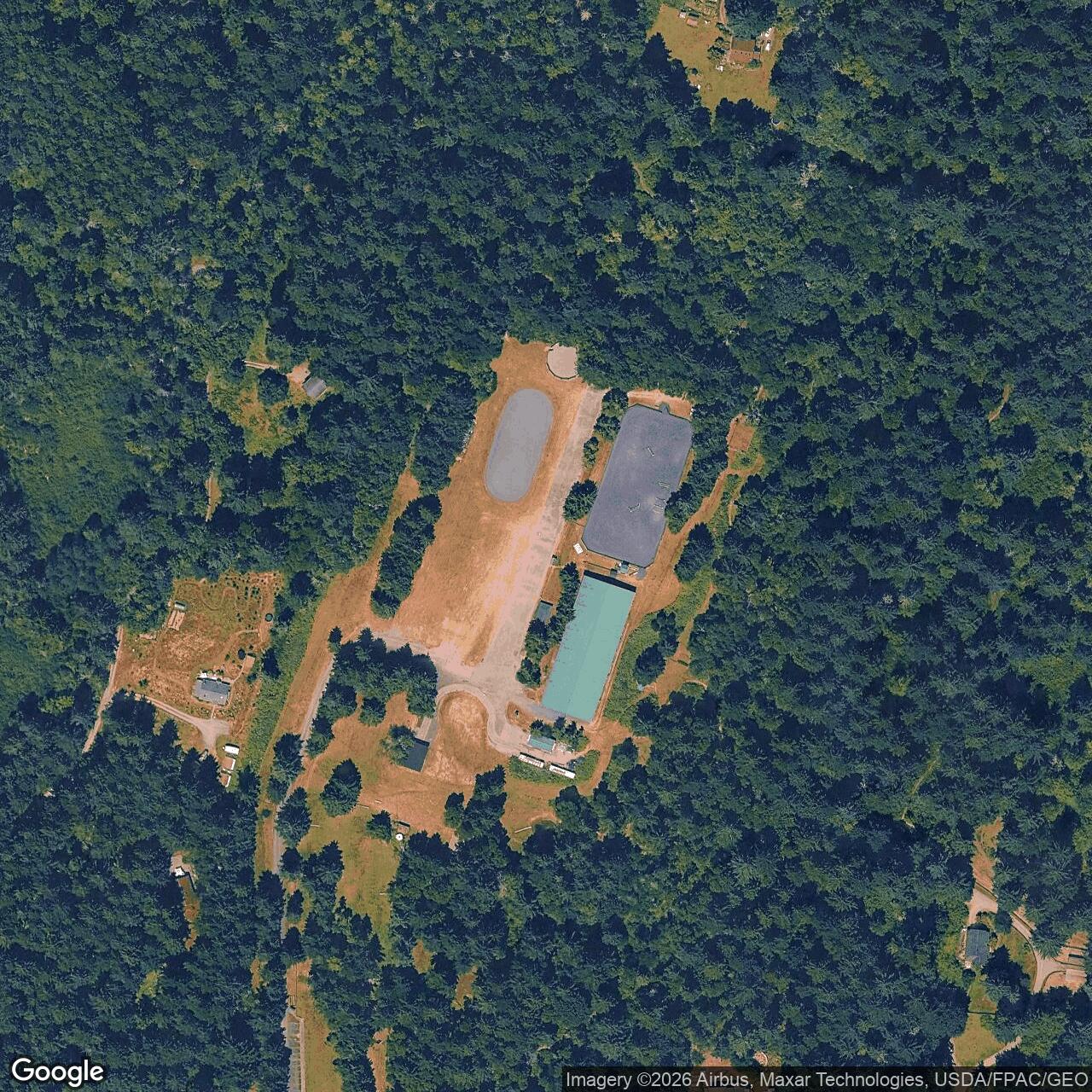
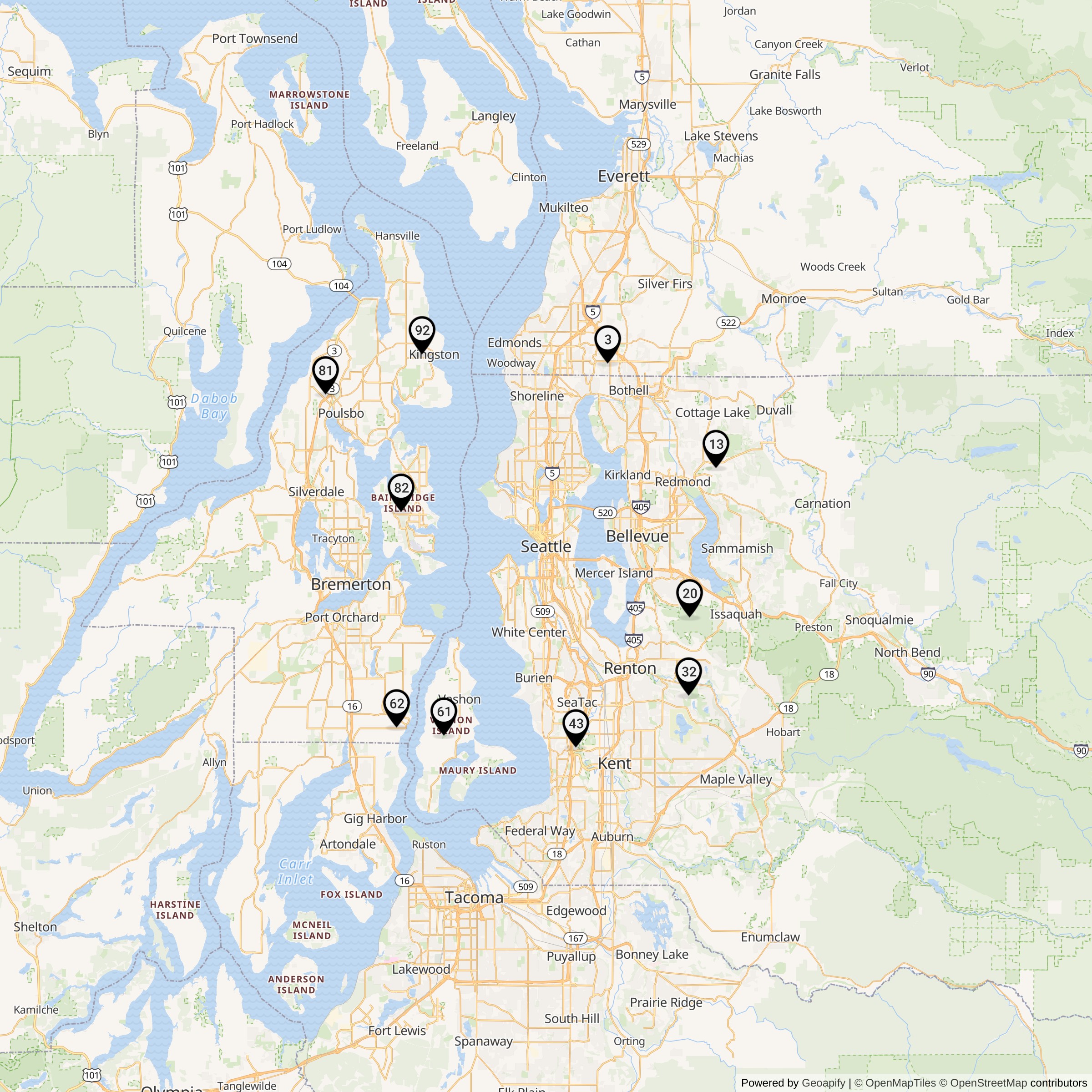
Nike Missile Site S-61 Launcher, Vashon Island Washington
Longitude: -122.48360548576300
This location was part of the Seattle Defense Area
Site ID: S-61
The missiles at this Launch Area were controlled by the Integrated Fire Control site located here.
Site Role: Launcher
A typical Nike air defense site consisted of two separate parcels of land. One area was known as the Integrated Fire Control (IFC) Area. This site contained the Nike system's ground-based radar and computer systems designed to detect and track hostile aircraft, and to guide the missiles to their targets.
The second parcel of land was known as the Launcher Area. At the launcher area, Nike missiles were stored horizontally within heavily constructed underground missile magazines. A large, missile elevator brought the Nikes to the surface of the site where they would be pushed across twin steel rails to one of four satellite launchers.
Elaboration on how Nike worked here.
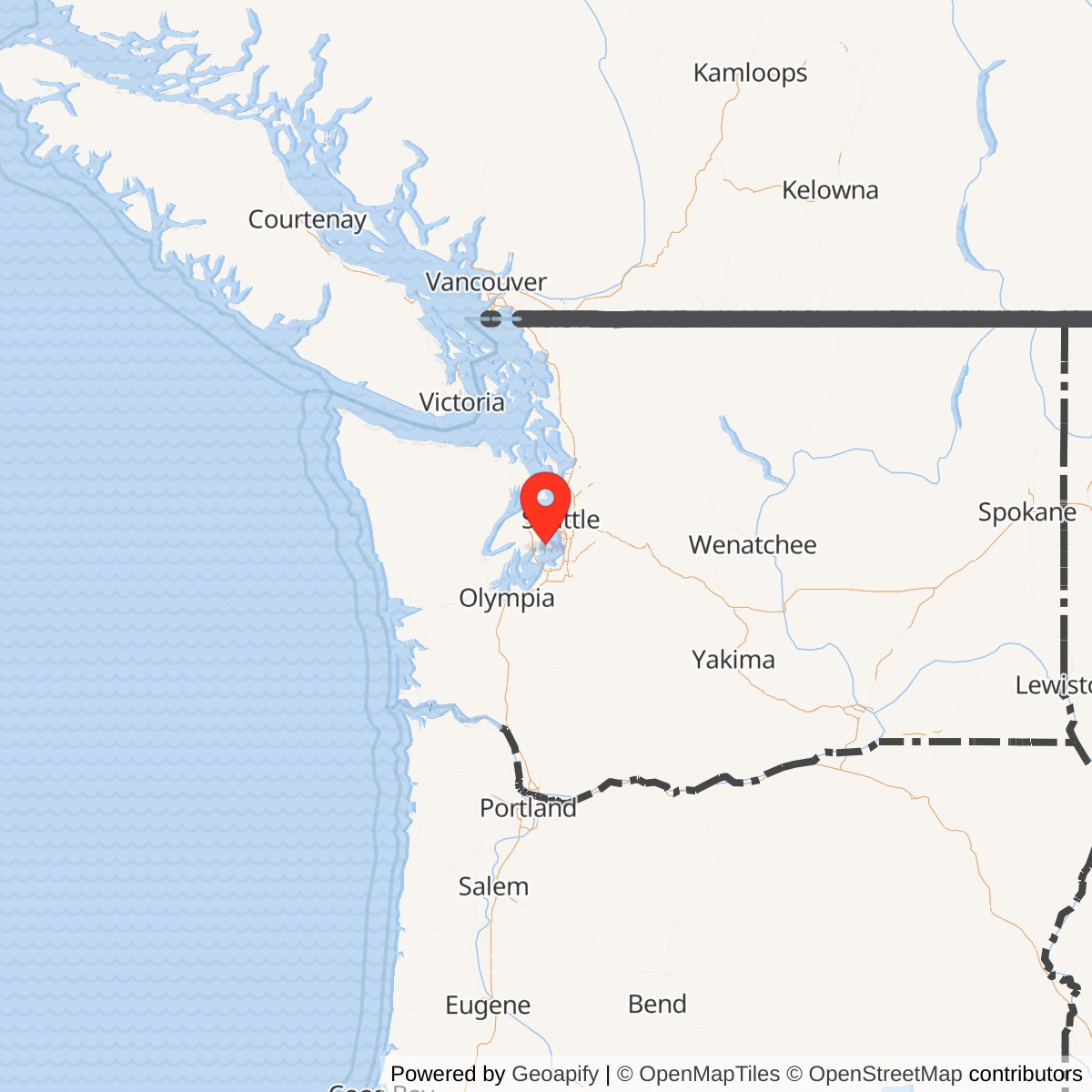
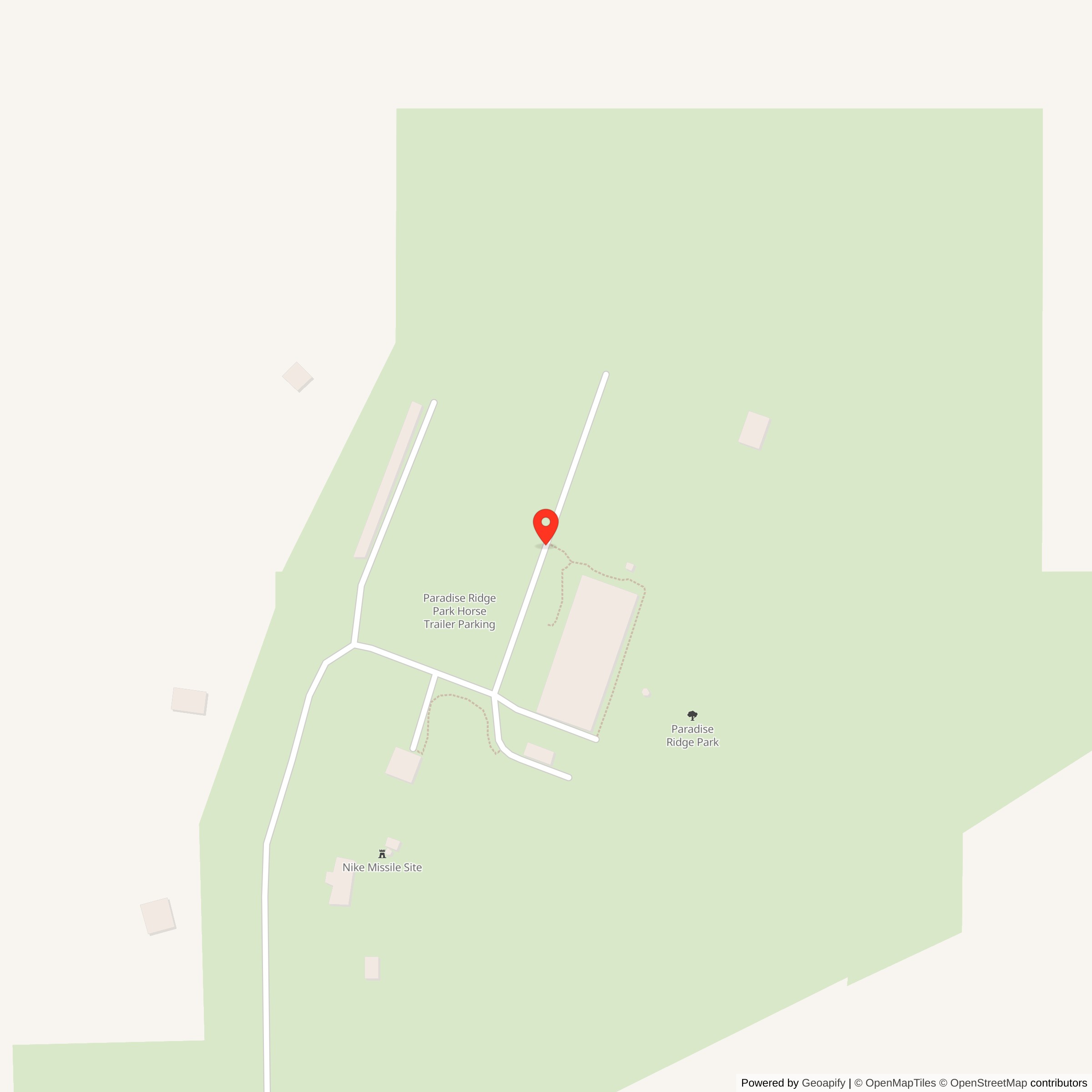
Nike site S-61 was the Vashon Island Nike missile battery in the Seattle Defense Area. It was a Cold War U.S. Army air-defense installation built to help defend the Seattle metropolitan region, Puget Sound, Boeing-related aerospace production, port and naval facilities, military installations, and the population and industrial center of western Washington against Soviet long-range bomber attack. S-61 began as a Nike Ajax battery and was later converted to Nike Hercules, making it one of the selected Seattle-area sites that survived after most Ajax batteries were closed.
The battery closed in March 1974, at the end of the Seattle Nike Hercules period. The former Nike complex did not disappear all at once; its components passed into different post-military uses. The former IFC/control and administrative area at Sunrise Ridge became a community-service and institutional landscape associated with the Vashon Health Center / Sea Mar Vashon Medical Clinic, Voice of Vashon Radio, community organizations, fields, and related local uses. The former launch area at Paradise Ridge became public park and equestrian/recreation land under Vashon Park District use. Oakwood Terrace, the former Nike housing area, passed into private residential reuse.
S-61 was built because the Seattle region was a major Cold War target complex. Seattle and Puget Sound contained aircraft and aerospace industry, shipbuilding and port infrastructure, Navy and Air Force installations, Army facilities, transportation corridors, and a dense urban population. In the early Cold War, the primary feared threat to the continental United States was a Soviet bomber attack carrying atomic or thermonuclear weapons. Nike sites were built around key American cities and military-industrial targets to form the inner defensive layer of the national air-defense system.
Nike was not an offensive missile system and S-61 was not an intercontinental ballistic missile base. It was a surface-to-air missile battery. If hostile bombers penetrated outer warning and fighter-interceptor defenses, Nike batteries were intended to engage them near the defended area. The Seattle Defense Area therefore functioned as a ring of Army missile batteries around the target complex rather than a single isolated base.
Vashon Island was a logical location for one of these batteries. It occupied a central position in Puget Sound, west-southwest of Seattle and close to approaches across the sound. The island had enough land for a separated control site, launch area, and housing area, while the topography allowed the Army to place the control/IFC functions on higher ground at Sunrise Ridge and the launcher functions at Paradise Ridge. Local Vashon historical accounts describe the Vashon base as part of a wider "Metropolitan Defense Ring" of Nike sites surrounding Seattle.
Local Military Background Before Nike
Vashon's Cold War Nike history followed an earlier pattern of military use on the island. During World War II, Army units were assigned to Vashon as part of the Puget Sound defense system. Local history records that in 1942 the Army used Center School as a headquarters, established air-observation posts, conducted air-raid drills, and supported volunteer Aircraft Observation Corps work. After the war, the perceived vulnerability of Seattle to atomic attack led to renewed local air-defense measures. In 1952 a Ground Observer post was established, and in 1953 Air Defense Anti-Aircraft Battery C, "Charlie Battery," of the 513th Air Defense Battalion was stationed on Vashon with conventional antiaircraft guns.That gun-era battery represented the transition between World War II-style antiaircraft defense and the guided-missile era. Once Nike missiles became available, the Army moved from conventional gun positions to a more complex missile installation requiring radars, fire-control computers, underground magazines, missile handling and fueling facilities, security systems, and trained missile crews.
Land Acquisition and Local Impact
The Vashon Nike site was not simply placed on unused federal land. Local historical accounts state that in 1956 the federal government purchased or condemned land for three connected pieces of the Nike installation: the Sunrise Ridge administrative and IFC/control site, the Paradise Ridge launch area, and the Oakwood Terrace housing complex. The Sunrise Ridge site had been a strawberry farm associated with the Harmeling family and, in the 1930s, with the Matsumoto family. By the time of government acquisition, the land had been subdivided and was owned by seven families.The local land history matters because it shows how the national air-defense program reached into rural and semi-rural communities. For island residents, S-61 was not an abstract Cold War system. It brought federal acquisition, Army buildings, military housing, security restrictions, soldiers and their families, local employment and social contacts, and the long-term reuse questions that followed closure.
Physical Layout and Site Components
The S-61 installation had three principal physical components: the Sunrise Ridge IFC/control and administrative site, the Paradise Ridge launch area, and the Oakwood Terrace housing area.The Sunrise Ridge site contained the control and administrative functions of the battery. In Nike terminology, the control area was the Integrated Fire Control, or IFC, site. At an IFC site, soldiers operated the radars, analog fire-control computers, plotting equipment, communications systems, and command facilities needed to detect, track, and engage hostile aircraft. The IFC typically included acquisition radar, target-tracking radar, missile-tracking radar, radar towers or pads, generator and support equipment, operations buildings, barracks, mess facilities, administrative buildings, and security features. Local sources describe Sunrise Ridge as holding administration, search and tracking radar, launch control, barracks, and mess-hall functions.
The Paradise Ridge launch area contained the missile storage and launching equipment. Nike missiles were not stored in vertical ICBM-style silos. They were stored horizontally in underground launch magazines and brought to the surface on elevators before firing. Local accounts often refer to "silos," but the technical Nike term is underground magazines with elevator launchers. S-61's federal missile-type code, Nike 1B,2C/18H,30A/12L-UA, (7L-H), indicates a mixed magazine and launcher history: an Ajax-era three-magazine configuration, twelve launchers, and later partial conversion for Nike Hercules. The parenthetical Hercules note indicates that seven launchers were converted for Hercules use.
The launch area also needed a missile assembly building, fueling and oxidizer handling facilities for Ajax-era operations, warhead storage/handling spaces, generator and utility systems, security fencing, and vehicle access. Local history states that the Paradise Ridge site included underground launch features, magazines for warheads, a missile assembly building, and fueling facilities. After the Hercules conversion, solid-propellant Nike Hercules reduced some Ajax liquid-fuel handling burdens but introduced larger missiles, different launcher and magazine modifications, higher security, and nuclear-warhead procedures.
Oakwood Terrace was the family housing component. Local sources describe it as a 16-unit housing complex north of Sunrise Ridge along Vashon Highway. This housing was part of the practical infrastructure of a missile battery. Nike sites operated around the clock, and the Army needed soldiers and support personnel close enough for alert duty, maintenance, training, and emergency response.
Nike Ajax Period
S-61 began as a Nike Ajax site. Nike Ajax was the Army's first operational surface-to-air guided missile system. It used a solid booster and liquid-fueled sustainer, carried conventional high-explosive warheads, and was designed primarily to destroy individual high-altitude bomber targets. The system required close coordination between the IFC and launcher areas. The IFC radars acquired and tracked the target, tracked the missile after launch, and used analog computation and command guidance to steer the missile toward the intercept point.At Vashon, the Ajax battery was part of the wider Seattle Nike network. The battery's location on an island did not mean it operated independently. It was connected to the regional air-defense command structure and formed one part of a larger network that included other Seattle Defense Area Nike sites and the Air Force/NORAD warning and control system.
Nike Hercules Conversion
S-61's most important operational change was its conversion from Nike Ajax to Nike Hercules. Nike Hercules was a larger, solid-propellant missile with greater range, higher altitude capability, and the ability to carry either a conventional or nuclear warhead. Its nuclear capability was central to its Cold War purpose. Instead of requiring a direct hit or near-hit on one bomber, Hercules could be used against formations of high-altitude bombers.Appendix D of History of the Nike Hercules Weapon System places S-61 in the national Hercules conversion program. The table lists S-61 as a converted Seattle Defense Area site, with construction/conversion from June 1960 to March 1961 and a Hercules operational date of June 5, 1961.
The local impact of the Hercules conversion was significant. The missile was larger and more powerful, the battery's security implications increased, and Vashon became one of the few Seattle-area sites where nuclear-capable air-defense missiles were based. The Vashon Beachcomber history states that few islanders knew at the time that Vashon had become a depository for nuclear warheads. That statement is consistent with the general secrecy surrounding nuclear warhead storage at Nike Hercules sites.
Operational History
S-61 was active from 1956 to March 1974. It began in the Nike Ajax era, was converted for Nike Hercules, and remained active after most Seattle-area Ajax batteries were phased out. The Seattle Ajax sites were generally phased out from 1960 to 1963, while S-13 Redmond, S-61 Vashon Island, and S-92 Kingston were upgraded to Nike Hercules and survived until 1974.The battery therefore belongs to the final operational tier of Seattle's Nike defenses. The sites that closed earlier represented the first-generation Ajax network. The sites that survived into the 1970s represented the reduced, longer-ranged, nuclear-capable Hercules phase. S-61's survival until March 1974 indicates that it remained part of the Army's late Cold War air-defense posture in the Pacific Northwest.
Local sources identify Battery A of the 433rd Anti-Aircraft Artillery Missile Battalion as stationed on Vashon and operating the base until closure in 1974. A later local memory article identifies a July 19, 1962 photograph as Battery B, 4th Missile Battalion (Nike Hercules), at what is now Sunrise Ridge and the Vashon Medical Clinic. Because the consulted sources do not provide a full official unit lineage for S-61, the safest project treatment is to record the confirmed local 433rd AAA Missile Battalion association while noting that later 4th Missile Battalion Hercules-era references also appear in local memory sources.
Command and Control
S-61 depended on a layered command-and-control system. Locally, the IFC site at Sunrise Ridge tracked targets and missiles and directed launches from Paradise Ridge. Regionally, the battery was part of the Seattle Defense Area. By the 1960s, Seattle Nike command-and-control was tied to Fort Lawton, where the Army Air-Defense Command Post supported Nike missile command functions. The wider air-defense environment also included Air Force radar warning and NORAD/SAGE-era command systems.This layered structure is important because a Nike site was only one part of a national air-defense machine. S-61's radars and launchers mattered because they could receive warning, target information, and engagement orders from the larger network while maintaining local fire-control capability. The IFC/launcher split was not an accident of land use; it was the physical expression of the Nike system itself.
Life at the Vashon Nike Base
S-61 had a stronger local community footprint than many Nike sites because it operated on an island. Soldiers and families interacted with local institutions, businesses, schools, and neighborhoods. Local memory accounts describe soldiers marrying island residents, raising families, and leaving behind "Nike children" who became part of the Vashon community. The Oakwood Terrace housing area and Sunrise Ridge administrative area made the site visible in daily life.The post also had the typical social and practical features of a small Army installation: barracks, mess hall, guard facilities, storage, maintenance areas, sewage and utility systems, and a canine/security presence. A local memory article recalls a sentry guardhouse, mess hall, storage areas, sewage facilities, and a dog kennel area at Sunrise Ridge. The existence of these support features is important because Nike sites were not just launch pads; they were staffed military installations that needed housing, logistics, food service, security, administration, communications, training, and maintenance.
Closure and Property Disposal
S-61 closed in March 1974 with the final Seattle Nike Hercules drawdown. Closure reflected national changes in air defense. By the 1970s, the strategic threat had shifted heavily toward intercontinental ballistic missiles and submarine-launched ballistic missiles, against which Nike Hercules bomber-defense sites were not an adequate defense. Many continental Nike sites closed as the Army reduced and then ended its nationwide Nike air-defense mission.After closure, the Vashon Nike property followed several paths. The Sunrise Ridge property was quitclaimed by the federal government in 1976 to the Vashon-Maury Health Services Center under a thirty-year-plus-one-year arrangement, according to local history. The property was officially deeded to the VMHSC board in 2007. Vashon Health Clinic became established there, and Granny's Attic used the site for fundraising for the clinic before later moving into Vashon town.
The Paradise Ridge launch area was deeded to King County. In 1983, when King County proposed returning the site to the federal government, Vashon residents mobilized to create a park and recreation district. Voters approved that proposal in 1984, and the newly created Vashon Park District acquired the Paradise Ridge property from King County in 1985. The property was then developed for equestrian and recreational use.
The Oakwood Terrace housing area and parts of Sunrise Ridge not quitclaimed to the health center were sold to private individuals and subdivided.
Current Status and Reuse
The former S-61 IFC/control and administrative landscape at Sunrise Ridge remains in community use. Vashon historical sources state that Sunrise Ridge became home to Vashon Health Center, the Vashon Food Bank, Voice of Vashon Radio, and sports fields. The current Sea Mar Vashon Medical Clinic operates at 10030 SW 210th Street, Vashon, Washington, close to the former IFC/control coordinate. The original military buildings have been altered, but local photo comparisons and historical writing emphasize that the outlines of some buildings remain recognizable.The former S-61 launch area is now associated with Paradise Ridge. Vashon Park District describes Paradise Ridge as a 43.0-acre park developed as an equestrian park and now functioning as a multi-use and large event center, located off Southwest 220th Street. The park district explicitly identifies portions of the park as part of the former Nike missile site and notes second-growth woodland conservation, equestrian facilities, training and showing rings, trails, and event use. Ed Thelen field notes describe the launch area as partially intact in 1989, leveled and covered with dirt for riding use, with a missile assembly building still standing at that time.
Chronology
- 1942 Army units were assigned to Vashon Island as part of the Puget Sound defense system during World War II.
- 1942 Air observation posts, air-raid drills, and Aircraft Observation Corps activity were established on Vashon.
- 1943 Local volunteer observation posts were closed and Army Fighter Command took charge.
- 1949 The Soviet Union's first atomic test intensified U.S. concern over continental air defense.
- 1952 A Ground Observer post was established on Vashon and trained local air-defense volunteers.
- 1953 Air Defense Anti-Aircraft Battery C, "Charlie Battery," of the 513th Air Defense Battalion was stationed on Vashon with antiaircraft guns.
- 1953 The Nike Ajax missile entered the Army air-defense era, leading to replacement of many gun defenses with missile batteries.
- 1956 The federal government purchased or condemned land for the Sunrise Ridge IFC/administrative site, the Paradise Ridge launch site, and the Oakwood Terrace housing complex.
- 1956 S-61 began active service in the Seattle Defense Area, according to the active-service date used in federal and site summaries.
- 1957 Local history states that Oakwood Terrace housing was constructed.
- 1957 Local Vashon history states that Battery A and several other Seattle-area batteries were declared "best in the nation" after launch trial tests.
- June 1960 Appendix D of History of the Nike Hercules Weapon System records the beginning of S-61's Nike Hercules conversion construction period.
- March 1961 Appendix D records the end of S-61's Hercules conversion construction period.
- June 5, 1961 Appendix D records S-61's operational date with Nike Hercules missiles.
- July 19, 1962 A Vashon local memory source identifies a photograph of Battery B, 4th Missile Battalion (Nike Hercules), at what is now Sunrise Ridge and the Vashon Medical Clinic.
- 1960-1963 Most Seattle Defense Area Nike Ajax sites were phased out, while S-13 Redmond, S-61 Vashon Island, and S-92 Kingston survived as Nike Hercules sites.
- March 1974 S-61 closed as an operational Nike Hercules battery.
- September 22, 1976 The U.S. government quitclaimed the Sunrise Ridge property to the Vashon-Maury Health Services Center under a long-term arrangement.
- 1983 King County proposed returning the Paradise Ridge launch-area property to the federal government.
- 1984 Vashon voters approved creation of a park and recreation district, part of the community response to the future of the former launch property.
- 1985 The newly created Vashon Park District acquired the Paradise Ridge property from King County.
- 1989 Ed Thelen field notes described the S-61 control area as intact except for radar platforms and the launch area as partially intact, leveled and covered for riding use.
- 2007 Local history states that the Sunrise Ridge property was officially deeded to the Vashon-Maury Health Services Center board.
- Present S-61 is closed as a military installation. The former IFC/administrative area is in community-service and institutional reuse, while the former launch area is Paradise Ridge park/equestrian/multi-use land.
List of all Nike Installations in Washington