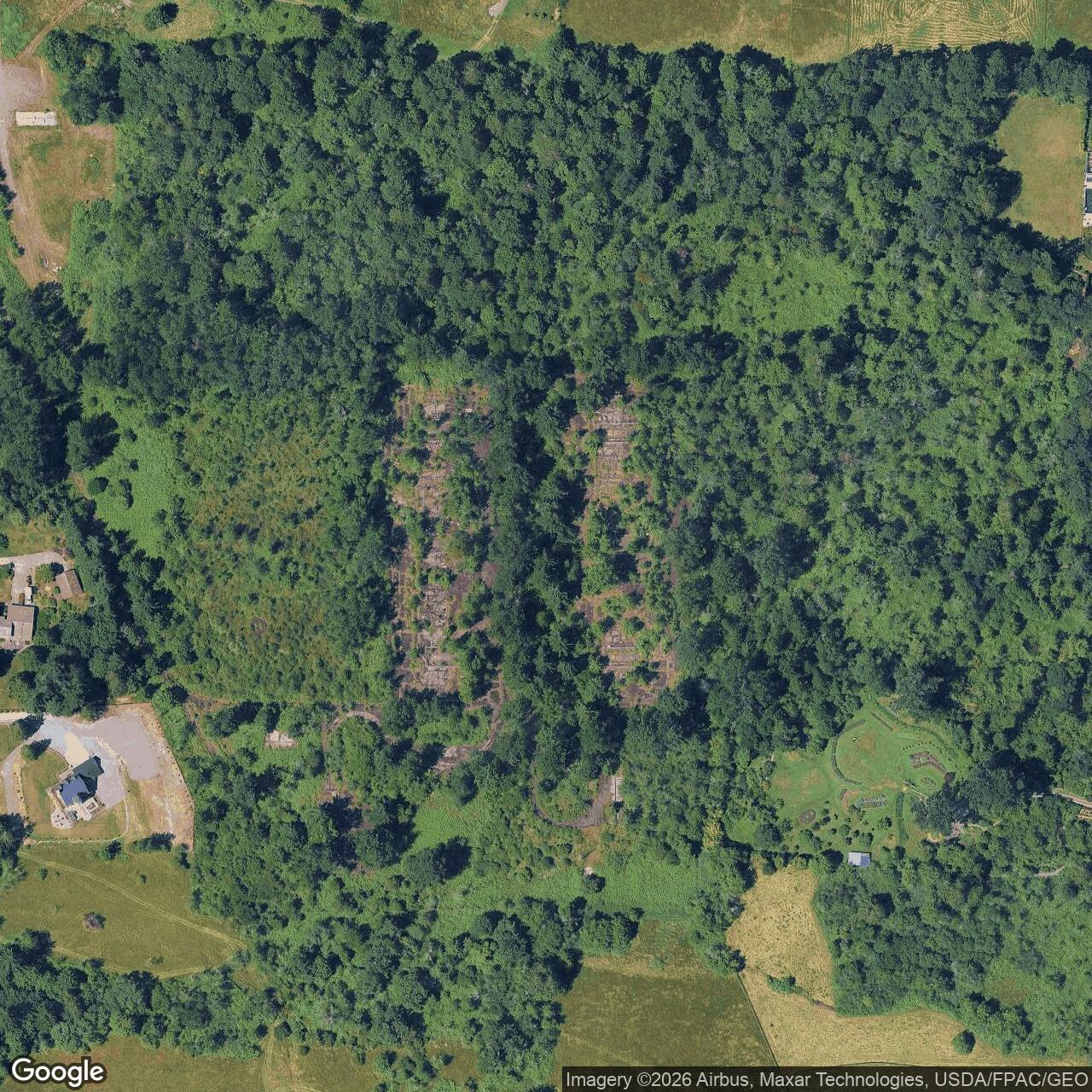
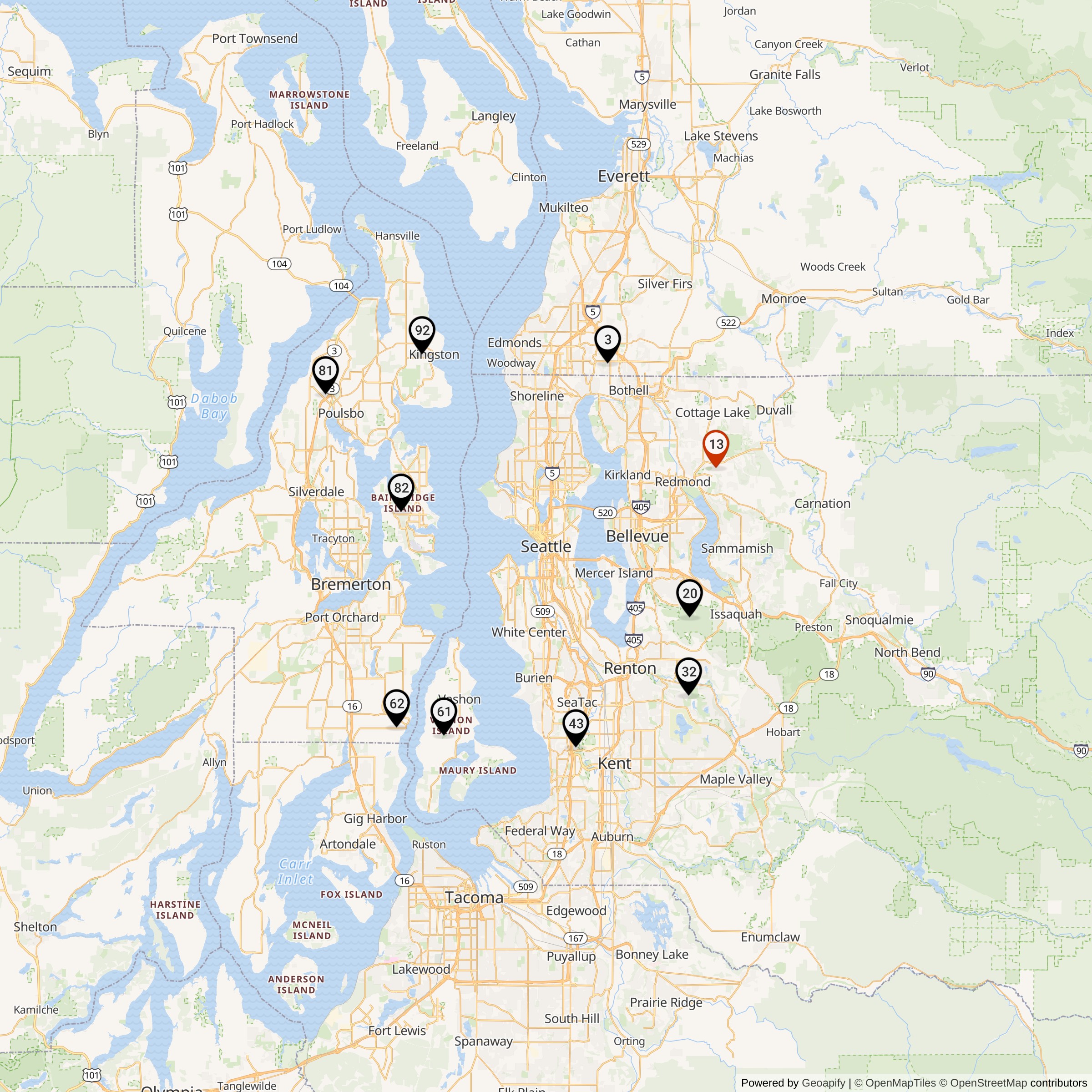
Nike Missile Site S-13/14 Launcher (shared/double), Redmond Washington
Longitude: -122.07343573649100
This location was part of the Seattle Defense Area
Site ID: S-13/14
The missiles at this Launch Area were controlled by the Integrated Fire Control site located here.
This particular Nike Site was a double battery, it had two separated IFC's, the second IFC was located here.
Site Role: Launcher (shared/double)
A typical Nike air defense site consisted of two separate parcels of land. One area was known as the Integrated Fire Control (IFC) Area. This site contained the Nike system's ground-based radar and computer systems designed to detect and track hostile aircraft, and to guide the missiles to their targets.
The second parcel of land was known as the Launcher Area. At the launcher area, Nike missiles were stored horizontally within heavily constructed underground missile magazines. A large, missile elevator brought the Nikes to the surface of the site where they would be pushed across twin steel rails to one of four satellite launchers.
Elaboration on how Nike worked here.
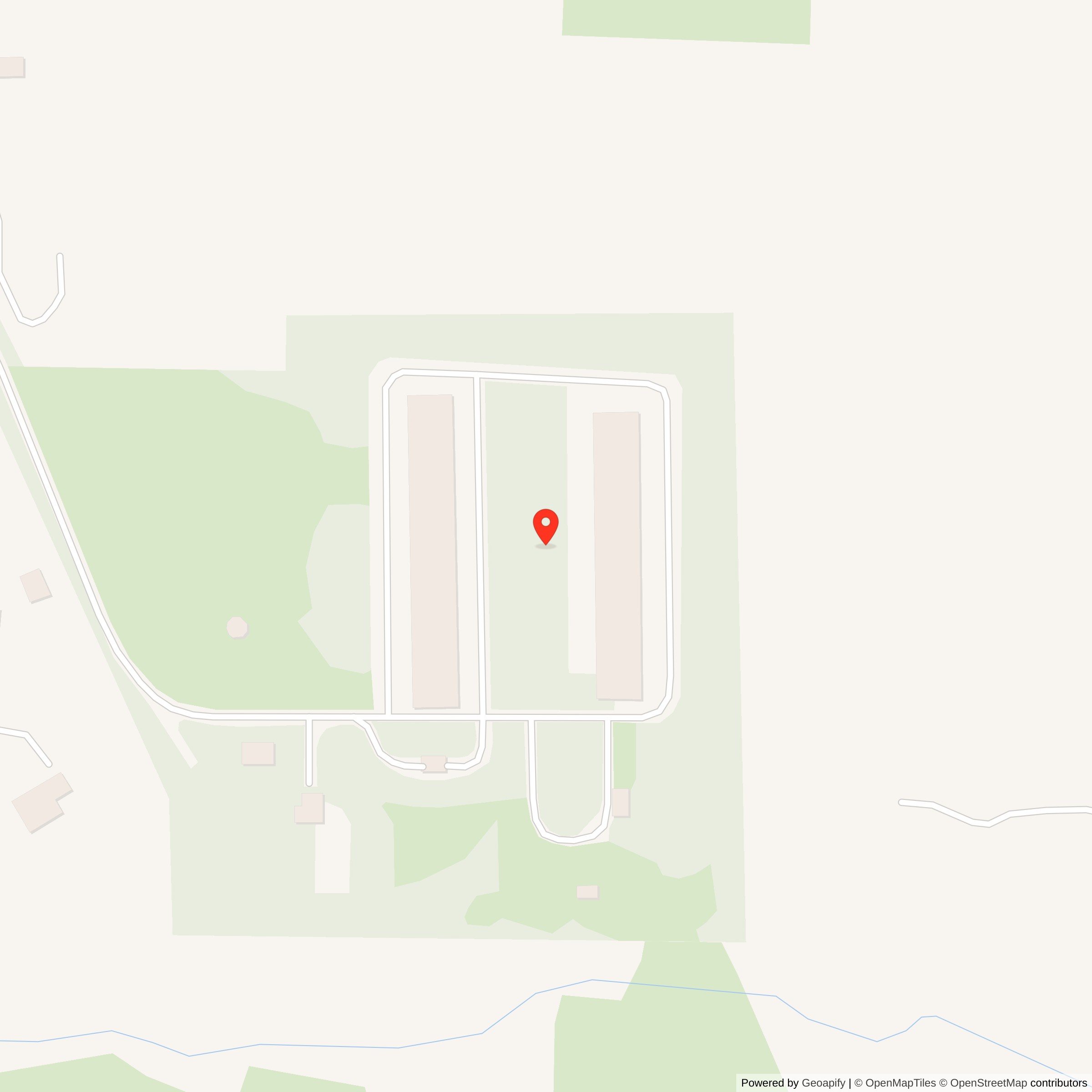
Nike site S-13 was one half of the Redmond S-13/S-14 dual Nike missile complex in the Seattle Defense Area. The site was a Cold War U.S. Army air-defense installation built to defend the Seattle metropolitan region, Boeing-related aerospace production, military installations, Puget Sound approaches, and the broader industrial and population center around Seattle from Soviet long-range bomber attack. S-13 is best understood not as an isolated single-battery site, but as the S-13 half of a large Redmond dual complex: S-13 and S-14 used separate fire-control identities but shared a common double launch area in the Sammamish/Redmond area.
The site was closed as an operational Nike missile battery in March 1974, when the remaining Seattle Defense Area Nike Hercules batteries were deactivated. The former control/IFC area and surrounding property passed into post-military public and institutional reuse, including Washington National Guard/Lake Washington School District/City of Redmond-related uses. The former shared launch area is no longer an active missile facility and has been heavily altered since deactivation.
Why the Site Was Built
The Redmond Nike site was part of the Seattle Defense Area, a ring of U.S. Army surface-to-air missile batteries established in the 1950s as the Army replaced conventional antiaircraft gun defenses with guided missiles. The Seattle region was a logical high-priority target area in Cold War planning. It contained Boeing aircraft and aerospace facilities, major port and industrial infrastructure, naval and air installations around Puget Sound, and a large metropolitan population. The surrounding geography also made fixed air-defense locations practical: radar/control areas could be placed on high ground for acquisition and tracking, while launch areas could be placed on larger tracts with room for magazines, launchers, assembly buildings, security fences, and blast-safety separations.Nike was a point-defense system. Its purpose was to intercept incoming enemy bombers after warning and direction from the national air-defense network. The Seattle Nike batteries were not offensive missile bases and were not intercontinental ballistic missile sites. They were defensive antiaircraft missile sites designed to protect the Seattle target complex if long-range Soviet bombers penetrated the outer layers of North American air defense.
S-13/S-14 was especially important because it was a double site. Most Nike batteries had one launch area and one IFC area supporting a standard missile battery. Redmond had a much larger shared launch complex serving the S-13/S-14 paired battery arrangement. Federal Nike inventory data lists S-13 as a Redmond dual site, and field-history summaries describe Redmond as having six magazines and twenty-four launchers, roughly twice the launcher capacity of a normal Nike launch facility. During the Nike Hercules conversion, not all launchers were converted for the larger Hercules missile; field notes report that eleven of the launchers were modified for Hercules service.
Physical Layout and Site Components
The Redmond S-13/S-14 complex was divided into the two major functional parts common to Nike installations: the IFC/control area and the launcher area.The S-13 IFC/control area was on higher ground in northeast Redmond, near the Education Hill area. Eastside Heritage Center describes the fire-control area as being about two miles uphill from the launcher in the valley below. This separation was deliberate. The IFC site needed radar line-of-sight, clear observation, and enough distance from the launcher area to allow the radars and computers to guide missiles during engagement. At a Nike IFC area, soldiers operated the acquisition radar, target-tracking radar, missile-tracking radar, fire-control equipment, communications systems, and administrative/support buildings required to detect a target, assign it to a battery, track it, and guide the missile after launch.
The shared S-13/S-14 launcher area was east of the IFC/control area, near the 95th Avenue NE / Avondale Road / NE 195th Street area. The launcher area contained the underground magazines and launch equipment where missiles were stored, raised to the surface, prepared, and fired if ordered. At Ajax-era sites, missiles were stored horizontally in underground magazines and brought up on elevator launchers. The Redmond double launch complex had a much larger magazine and launcher layout than a standard single battery.
The original Nike Ajax configuration required separate storage and handling arrangements for missile components, fueling and oxidizer safety, assembly and checkout, and warhead handling. Nike Hercules simplified some handling because it used solid propellant, but it also required changes to launchers, magazines, elevators, security, warhead storage/handling procedures, and operating doctrine because Hercules was larger, longer-ranged, and nuclear-capable.
Operational History
The Seattle Defense Area grew quickly in the mid-1950s. Federal historical context states that the first Seattle missile sites were activated in 1956 and that by 1959 the number had grown to ten. S-13/S-14 at Redmond and S-32/S-33 at Lake Youngs were the double sites in the Seattle system. Other Seattle-area Nike batteries included Kenmore/Bothell, Cougar Mountain/Issaquah, Kent/Midway, Vashon Island, Olalla, Poulsbo, Winslow/Bainbridge Island, and Kingston.S-13 entered active service as a Nike Ajax battery in the second half of the 1950s. Some local summaries state that the Redmond double site was in operation from September 1954 to March 1974, and an archival University of Washington/Eastside Heritage Center photo identifies a Redmond Nike launch pad on July 30, 1955. However, 1957 is the date used because the federal inventory list the site as active from 1957 to March 1974. The 1954-1955 dates are best treated as land-acquisition, construction, early-site, or local-context dates unless additional primary operational records prove an earlier tactical activation.
S-13 began with Nike Ajax. Nike Ajax was the Army's first operational surface-to-air guided missile system. It used a liquid-fueled sustainer and solid booster, carried a conventional high-explosive warhead package, and was designed to destroy individual aircraft targets. At Redmond, as at other Nike sites, the Ajax battery relied on the IFC radars and analog fire-control computers to track both target and missile and to steer the missile by radio command guidance.
The Redmond site's significance increased when it was converted for Nike Hercules. Nike Hercules was larger, had greater range and altitude capability, used solid propellant, and could carry either conventional or nuclear warheads. The nuclear warhead made the missile suitable for attacking bomber formations rather than a single aircraft. Appendix D of History of the Nike Hercules Weapon System for Nike Hercules site construction and deployment lists S-13 under converted defense sites, with a conversion construction period from June 1958 to April 1959 and a Hercules operational date of August 17, 1959. The Appendix D entry indicates that the construction/conversion work began in June 1958 and that Hercules operational status followed on August 17, 1959.
The Redmond site was one of only three Seattle-area sites that survived into the final Nike Hercules period. Federal and local histories state that the Seattle Nike Ajax sites were phased out from 1960 to 1963, while Redmond S-13, Vashon Island S-61, and Kingston S-92 were upgraded to Nike Hercules and remained until 1974. This pattern reflects a national shift in Army air defense. By the early 1960s, the large ring of Ajax batteries was no longer considered necessary or efficient, while selected Hercules batteries with longer range and nuclear capability remained on alert around high-priority target areas.
Command, Control, and Units
The Seattle Nike batteries were manned by both Regular Army and Washington Army National Guard personnel. Federal historical context notes that Seattle-area Nike units developed a strong performance reputation, with Seattle-based Army batteries earning the Army Air Defense Command Commander's Trophy in 1956, 1957, and 1958 for annual service practice performance at McGregor Range. After the Washington National Guard takeover, the Seattle Guard batteries continued to score highly, that all Seattle-area National Guard batteries made the 1963 honor roll, and that in April 1973 the Redmond Nike Hercules Army National Guard battery was named best in the Army.For the final ARADCOM period, an Ed Thelen field-history summary identifies the surviving Seattle Defense Area batteries as S-13 Redmond, manned by Washington Army National Guard Battery A, 2nd Battalion, 205th Artillery; S-61 Vashon, manned by Washington Army National Guard Battery B, 2nd Battalion, 205th Artillery; and S-92 Kingston, manned by Battery C, 1st Battalion, 4th Artillery. This aligns with the broader Seattle pattern of National Guard operation of selected Nike batteries during the later Cold War.
Seattle's Nike command-and-control system also changed over time. Federal history records headquarters facilities at McChord AFB, Fort Lawton, Redmond, Phantom Lake, O'Brien, and Kent, with a radar section at Fort Worden. In 1960, a Missile Master command-and-control complex was built at Fort Lawton. After the deactivation of the Nike Ajax batteries, the less complex BIRDIE system took over missile-defense coordination duties. This means S-13's tactical role was not simply a local Redmond function; it was integrated into a wider regional network that coordinated Army Nike batteries with the Air Force/NORAD air-defense system.
Daily Function and Operating Environment
A Nike Hercules battery such as S-13 operated around readiness. The missile crews, radar crews, communications personnel, guards, maintenance personnel, mechanics, cooks, clerks, and command staff formed a self-contained operating unit whose purpose was to remain ready at all hours. The Eastside Heritage Center notes that the Redmond base operated on a twenty-four-hour, 365-days-a-year basis. A battery could not perform its mission unless the IFC crew, launcher crew, security force, communications network, maintenance personnel, and command chain all functioned together.The site's location also shaped daily life. The IFC area sat on higher ground, while the launch area lay in the valley below. Personnel moved between radar/control spaces, administrative buildings, barracks, mess and support facilities, and the launcher area as mission duties required. Unlike a large fort, a Nike site was small, specialized, and security-conscious. Nearby residents knew the base was there, but the details of nuclear-capable Nike Hercules operation were not public knowledge. Eastside Heritage Center notes that residents knew the site by its 95th Avenue/Avondale-area association, but many knew little about what occurred there during its years of operation.
The presence of nuclear-capable Hercules missiles also made S-13 part of the highest-tension layer of local Cold War history. The missiles were defensive weapons, but their nuclear capability meant that a defensive engagement over or near the region would have been a catastrophic event in its own right. No missile from Redmond was fired in combat. Like other Nike sites, S-13 existed to deter and defend rather than to conduct routine launches from its operational base. Live-fire training and annual service practices occurred at established ranges, not from the Redmond launcher against real targets.
Post-Closure History and Current Status
S-13/S-14 closed in March 1974 as part of the final drawdown of the continental United States Nike system. By then, the strategic threat had shifted from massed bomber attack toward ballistic missiles, and fixed Nike Hercules sites around cities were no longer central to national air defense.After closure, the Redmond properties entered a complicated period of reuse, vacancy, deterioration, and partial public use. The federal inventory recorded the control site as intact and associated with the Washington Army National Guard, with development planned, and the launch site as intact/private ownership/nursery. HistoryLink states that the control site at 95th Avenue NE and 172nd became a National Guard facility with former barracks and administrative buildings in use, while the launch site near 95th Avenue and 195th NE became private property. Eastside Heritage Center states that after decommissioning the National Guard continued to have a base nearby at the control site and that the collective property was about forty acres and passed into the hands of the Lake Washington School District.
The former control-area landscape is also connected to Nike Park. The City of Redmond identifies Nike Park at 17207 NE 92nd Street as formerly part of the Cold War Nike missile-base system. The current city park is a five-acre public facility with open space, natural areas, trails, walking, playground, picnic tables, basketball, and pickleball facilities. This is not a preserved operational Nike installation, but it preserves the Nike name and anchors public memory of the former military use in the Education Hill/Bear Creek neighborhood landscape.
The former launch area has been more heavily altered and has had a more complicated public-history life. Ed Thelen's 1990 field notes described the magazines and support buildings as intact at that time, with the magazine area terraced into the hill and a two-story observation tower across the access road. Atlas Obscura later described the launch site as abandoned and overgrown, with most of the large site rundown and only small areas connected to Nike Park; it also carried a January 2019 update saying the launch area had recently been bulldozed and that only foundations remained.
Chronology
- 1949 The Soviet Union's first successful atomic test intensified U.S. concern about continental air defense and helped drive the expansion of guided missile defenses around major American cities and industrial regions.
- Early 1950s The U.S. Army began replacing conventional antiaircraft-gun defenses with Nike guided missile sites around priority target areas.
- 1954 Local and secondary sources connect the Redmond Nike project to the mid-1950s development period; HistoryLink gives September 1954 as the start of the Redmond double site's period of operation, though federal active-service listings use 1957.
- July 30, 1955 A University of Washington/Eastside Heritage Center archival photograph identifies a Nike missile launch pad at Redmond, showing that site construction or launch-area development was present by summer 1955.
- 1956 Federal Seattle Defense Area history states that the first Seattle-area Nike missile sites were activated in 1956.
- 1957 Federal inventory and The Military Standard list S-13/S-14 Redmond as activated/active in 1957.
- 1958 Seattle-based Regular Army Nike batteries had earned the Army Air Defense Command Commander's Trophy in 1956, 1957, and 1958 through annual service-practice scores.
- June 1958 Appendix D of History of the Nike Hercules Weapon System records the start of the S-13 Hercules conversion construction period; HistoryLink summarizes this period by saying S-13 and S-14 became Nike Hercules sites in June 1958.
- April 1959 Appendix D records completion of the S-13 Hercules conversion construction period.
- August 17, 1959 Appendix D records S-13's Nike Hercules operational date.
- 1959 Federal Seattle Defense Area history states that by 1959 the Seattle Nike network had grown to ten sites; Redmond S-13/S-14 and Lake Youngs S-32/S-33 were the double sites.
- 1960 A Missile Master command-and-control complex was built at Fort Lawton to support Seattle Nike missile command-and-control functions.
- 1960-1963 Seattle-area Nike Ajax batteries were phased out, while S-13 Redmond, S-61 Vashon Island, and S-92 Kingston survived as Nike Hercules sites.
- 1963 HistoryLink records that all Seattle-area National Guard batteries earned honor-roll listing at annual firing practice, the only Guard unit grouping in the country to do so.
- April 1973 HistoryLink records that the Redmond Nike Hercules Army National Guard battery was named best in the Army.
- March 1974 S-13/S-14 Redmond was deactivated with the final Seattle Defense Area Nike Hercules shutdown.
- Post-1974 The control-site area remained associated with National Guard and public/institutional reuse, while the launch area entered private ownership and later deteriorated.
- 1990 Ed Thelen field notes described the Redmond launch magazines and support buildings as intact, with a terraced magazine area and visible observation tower.
- 2006 Eastside Heritage Center/Redmond local-history accounts recorded veteran and community memory of the Redmond Nike site and its post-closure deterioration.
- 2018 Atlas Obscura described the Redmond S-13/S-14 launch site as abandoned and largely overgrown, with Lake Washington School District ownership and small areas converted into Nike Park.
- January 2019 Atlas Obscura updated its site note to state that the launch site had recently been bulldozed and that only foundations remained.
- Present S-13 is closed as a military installation. The former Nike landscape survives chiefly through altered property remnants, public memory, local-history collections, and Redmond's Nike Park.
List of all Nike Installations in Washington