
Naval Air Station Lemoore, California
Longitude: -119.951944
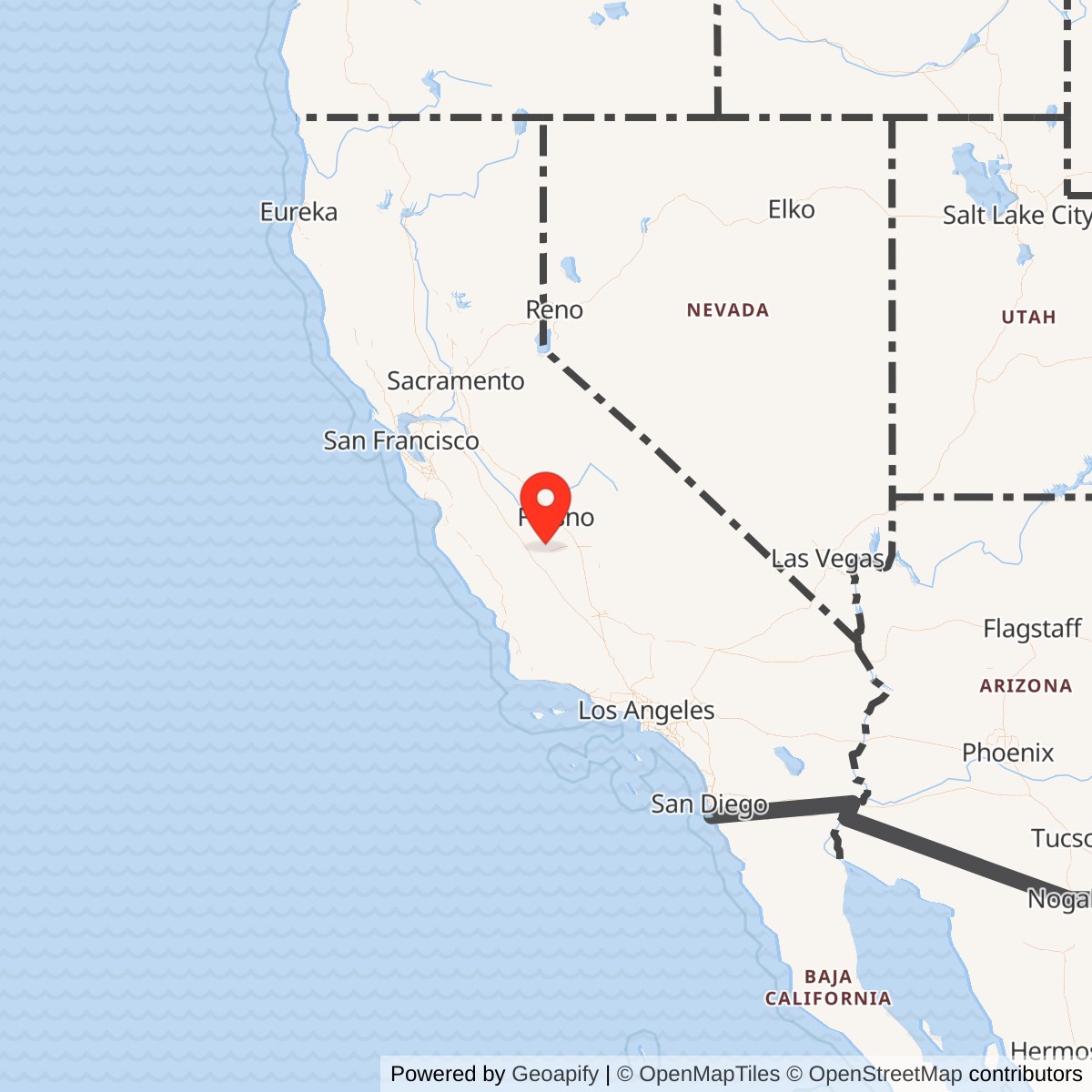
Naval Air Station Lemoore is what the Navy built when the jet age outgrew the older coastal airfields. The base sits in the flat agricultural country of California's San Joaquin Valley, far enough from dense urban development to give carrier jets room to launch, recover, circle, train, and expand, but close enough to West Coast fleet logistics to remain tied to the Pacific Fleet's seaport infrastructure. That combination was the point. NAS Lemoore was not an inherited World War II field patched for new aircraft; it was purpose-built as a Cold War master jet base, opened on 8 July 1961, and designed around the speed, noise, maintenance, runway length, and training tempo of modern carrier aviation.
The installation's setting is central to its meaning. Naval Air Station Moffett Field, near the southern end of San Francisco Bay, could not easily expand because urban growth had begun to squeeze the airfield. The Navy's mid-1950s site-selection logic therefore looked inland, where land could be acquired at scale and where surrounding agricultural zoning could protect flight operations from immediate residential encroachment. Lemoore offered level terrain, room for a large operations side and separate administrative/housing side, access to Central Valley transportation, and enough distance from coastal metropolitan areas to let the Navy build for the next generation rather than merely adapt for the last one.
NAS Lemoore remains active. It is the Navy's largest master jet base and the principal West Coast hub for Pacific Fleet strike-fighter aviation. The station supports Commander Strike Fighter Wing Pacific, Commander Joint Strike Fighter Wing, operational F/A-18E/F Super Hornet and F-35C Lightning II squadrons, fleet replacement training, search and rescue, carrier air wing staffs, Fleet Readiness Center West, aviation technical training, medical support, public works, and family/community infrastructure. In practical terms, Lemoore is where a large share of the Navy's carrier-based tactical aviation force is generated, maintained, trained, and prepared for deployment.
Mission Evolution
The decision to build NAS Lemoore grew out of a post-Korean War and early Cold War reassessment of naval aviation basing. Jet aircraft were heavier, faster, louder, and more demanding than the propeller aircraft and early jets that older naval air stations had been built around. Carrier aviation needed longer concrete runways, larger maintenance spaces, more fuel and ordnance handling capacity, modern arresting systems, safety clear zones, and training airspace that could support a high tempo without colliding with urban expansion. Lemoore was selected in 1954 as the best overall site for a new master jet base in the Central Valley. Congress appropriated funds in 1957, land and easements were acquired, and construction began that year.The station was commissioned on 8 July 1961. At opening, the Navy described it as the largest and most modern master jet base in the nation and the first base designed solely for light attack fighter jets, meaning A4D Skyhawks in the pre-1962 naval aircraft designation system. It was also a major regional construction and economic event. The Navy anniversary account noted that the new base cost about $100 million at the time and employed more than 5,000 people when commissioned. The initial mission was not simply to park aircraft; it was to create a modern shore platform for Pacific Fleet carrier aviation and to keep that platform clear of the urban constraints already pressing older air stations.
Through the 1960s and 1970s, Lemoore matured as an attack and strike-training center. The arrival of VA-122 from San Diego in 1963 tied the new base to the training of replacement aircrew and maintainers. VA-122 later became closely associated with the A-7 Corsair II; the squadron's own history records that the first A-7 arrived in November 1966 and that "Corsair College" graduates began combat operations from USS Ranger at Yankee Station a little over two years later. That was Lemoore's Vietnam-era role in miniature: the base itself was in California, but the pilots, maintainers, squadrons, and replacement pipeline it supported moved into the carrier war at sea.
The 1980s and 1990s pushed Lemoore deeper into the strike-fighter era. F/A-18 Hornets became the dominant aircraft family, and the base became a central west coast home for Navy strike-fighter squadrons. The post-Cold War shift was especially important. When NAS Miramar transferred to the Marine Corps, the Navy's West Coast fighter/attack force consolidated more heavily at Lemoore. In 1998 the base was selected as the central West Coast home port for Navy air wings and the F/A-18E/F Super Hornet. Navy environmental-history material records that this move added ninety-two aircraft, 1,850 military personnel, and about 3,000 family members, along with major facility improvements. From 2001 to 2004 additional specialized fighter and technical aviation training units came to the station. Lemoore was no longer simply a modern jet base; it had become the central shore infrastructure for the Navy's West Coast strike-fighter community.
The next transformation was the F-35C. On 25 January 2017 four F-35C Lightning II aircraft arrived at NAS Lemoore, marking the first deployment of the carrier-variant Joint Strike Fighter to a West Coast squadron, the reactivated VFA-125 "Rough Raiders." The arrival did not replace Lemoore's older mission; it extended the same basic mission into fifth-generation carrier aviation. The air station had been built for the A4D Skyhawk, adapted to the A-7 and Hornet, reshaped for the Super Hornet, and then became the Navy's only installation to house the F-35C. That continuity is the installation's main historical theme: Lemoore has repeatedly absorbed the next aircraft generation while remaining focused on the same basic task of producing deployable carrier strike-fighter capability.
Operational Role
NAS Lemoore's operational role is shore-based carrier aviation generation. The base provides runways, hangars, maintenance shops, simulators, training classrooms, ordnance and fuel support, air traffic control, security, utilities, housing, medical care, family services, and administrative infrastructure so that squadrons can train and deploy aboard aircraft carriers. The tactical action occurs at sea, but the readiness engine is ashore. Lemoore turns aircrew, aircraft, maintainers, weapons specialists, squadron staffs, and carrier air wing relationships into a deployable force.The installation's daily tempo is high. Official Navy Region Southwest manpower information describes Lemoore as hosting sixteen operational strike-fighter squadrons, two fleet replacement squadrons, one search-and-rescue squadron, and four West Coast carrier air wing commands and staffs, with an average of about 210,000 flight operations annually. The NAVFAC environmental-history page similarly identifies Commander Strike Fighter Wing Pacific and Commander Joint Strike Fighter Wing as core commands and notes that more than half of the Navy's F/A-18E/F Super Hornet aircraft are based there. Those numbers explain why Lemoore is more than a local airfield. It is a national-level aviation-production site where the ordinary repetition of flight operations is itself a strategic activity.
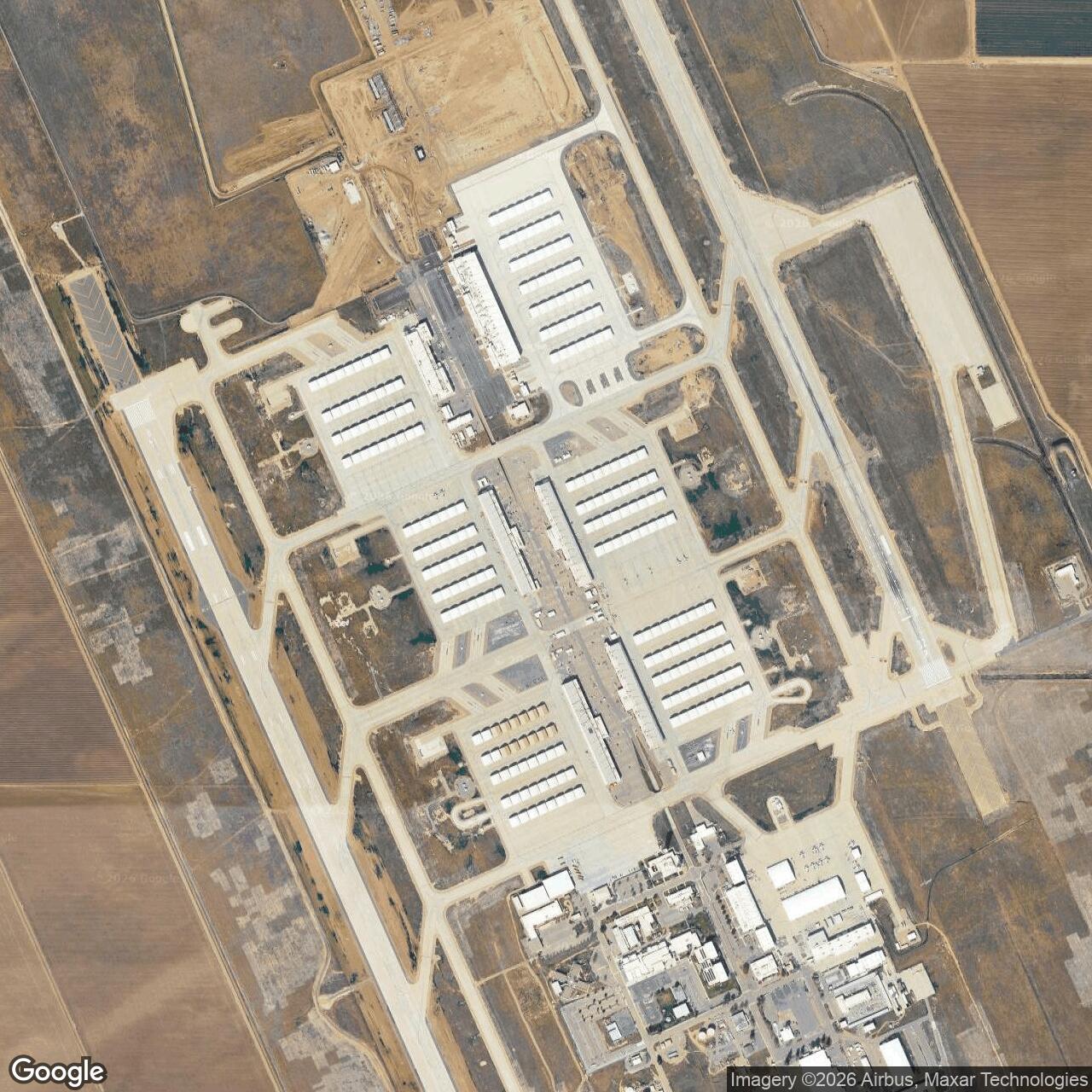
The base's operational geography supports that role. The installation is divided into an operations area to the north and an administration/housing area to the south. The operations side contains the runways, hangars, aircraft maintenance, flight-line support, and aviation infrastructure. The administrative and housing side supports personnel, families, command functions, schools, and community services. This separation reflects the hazards and rhythms of a high-performance jet base: loud, fuel-intensive, ordnance-capable flight operations are kept physically distinct from the human support community that sustains the crews and maintainers.
Lemoore's runways are built for carrier aviation. Reeves Field, listed by airport sources as KNLC/NLC, has two parallel concrete runways, each more than 13,500 feet long, and runway arresting gear. The base also operates in a region where high-intensity jet operations extend beyond the runway environment into surrounding airspace, approach corridors, and land-use compatibility zones. That is why flight-safety easements and agricultural land control are historically important. The base was not simply built on open land; it was surrounded by land-use controls meant to protect the air station from the type of encroachment that had constrained Moffett Field.
Since the 1960s, the most visible output of NAS Lemoore has been trained carrier aviators and maintainers. VA-122's A-7 training fed Vietnam-era carrier operations. Later VFA-122 became the first squadron to operate the F/A-18E/F Super Hornet and served as the Super Hornet fleet replacement squadron. VFA-122's official history states that its trained aircrews flew combat missions supporting Operation Iraqi Freedom and Operation Enduring Freedom. VFA-125 now serves as the F-35C fleet replacement squadron. These unit histories show how Lemoore's operational role has always been larger than the fences around the base. The base is where future deployed combat capability is assembled before it appears on a carrier deck.
Units, Commands, and Systems
Commander Strike Fighter Wing Pacific is the central aviation command at NAS Lemoore. Its role is to train, man, and equip West Coast strike-fighter squadrons for fleet tasking. That means Lemoore is not merely a landlord for squadrons; it is a command center for the Pacific strike-fighter force. The wing connects individual squadrons, carrier air wings, Naval Air Forces, maintenance systems, and fleet commanders.Commander Joint Strike Fighter Wing gives Lemoore its fifth-generation aviation role. The command structure around the F-35C reflects that the aircraft is not simply another fighter parked at a familiar base. It requires a specialized training, maintenance, data, logistics, and security ecosystem. Lemoore's selection as the West Coast F-35C home established the station as a critical node in the Navy's carrier-based stealth aircraft transition.
VFA-122 "Flying Eagles" represents the Super Hornet training layer. The squadron's history reaches back to earlier attack and all-weather aviation missions, moved to Lemoore in 1963, trained A-7 crews during the Vietnam era, closed as VA-122 in 1991, returned as VFA-122 in 1999, and became the first squadron to operate the F/A-18E/F Super Hornet. Its continuing role at Lemoore is to train replacement aircrew and maintainers for the fleet.
VFA-125 "Rough Raiders" represents the F-35C layer. Reactivated at NAS Lemoore for the F-35C mission, it became the West Coast fleet replacement squadron for the Lightning II. The arrival of the first Pacific-based F-35Cs in January 2017 made VFA-125 a visible symbol of Lemoore's transition from fourth-generation to fifth-generation strike-fighter aviation.
Fleet Readiness Center West is part of the maintenance and sustainment system that makes the base operationally valuable. Strike-fighter basing is not only about squadrons and runways; it is also about aircraft inspection, repair, modification, component work, corrosion control, technical support, and the industrial workforce required to keep aircraft flyable. FRC West places Lemoore inside the Navy's aviation maintenance network.
Other tenant and support organizations are also important. The official tenant list includes Naval Health Clinic Lemoore, Navy Operational Support Center Lemoore, Center for Naval Aviation Technical Training Unit, Strike Fighter Wing Pacific Joint Strike Fighter Fleet Introduction Team, NAVFAC Southwest Public Works Department Lemoore, Personnel Support Detachment Lemoore, and related aviation and support activities. Together they make Lemoore a self-contained aviation town as much as an airfield.
Site Design, Facilities, and Physical Layout
The physical design of NAS Lemoore reflects the deliberate planning of a Cold War master jet base. The Navy did not simply acquire an old field and lengthen a runway. It acquired a large Central Valley site, protected it with easements and compatible agricultural zoning, and built an installation with separate operations, administration, and housing zones. The NAVFAC history describes 18,784 acres of land, much of it leased for agricultural use, plus 11,039 acres of flight-safety easements. That combination of owned land, leased agricultural land, and easements is one of the installation's defining features.The operations side is the base's aviation core. It contains the parallel runways, aircraft parking aprons, squadron hangars, aircraft maintenance spaces, flight planning facilities, ordnance and munitions support areas, crash/fire/rescue support, and air operations functions. AirNav lists the two concrete runways as 14L/32R and 14R/32L, both approximately 13,500 feet long. Arresting gear and carrier-deck lighting support military jet operations. The runway system gives squadrons the ability to conduct repeated high-performance approaches, departures, and training patterns without the physical constraints of a smaller civilian-style airfield.
The administrative and housing side is the human counterpart to the flight line. It includes command offices, personnel support, family housing, bachelor housing, schools, recreation, religious support, medical care, retail services, and community infrastructure. This side of the base is historically important because Lemoore is remote by Navy standards. Unlike bases embedded in San Diego or Norfolk, Lemoore had to sustain a large military community in an agricultural valley location. The base therefore grew as both a tactical aviation plant and a social infrastructure system for sailors, civilians, contractors, dependents, and students.
The surrounding agricultural landscape is also part of the design. NAS Lemoore has long used agricultural outleasing and compatible land-use planning to preserve open space around the airfield. Early agricultural zoning protected roughly 108 square miles in the two counties around the base from incompatible residential development. That was not incidental. It was a direct response to the Navy's experience with encroachment at older air stations. Lemoore's ability to continue heavy jet operations depends on the continued relationship among base planning, county planning, agricultural use, easements, and noise/safety compatibility.
Modern facilities continue to evolve with mission growth. The F-35C transition required hangar, maintenance, training, munitions, security, and infrastructure changes. A 2020 project milestone for Hangar Six described the facility as the first Lemoore hangar built from the ground up specifically for the F-35C, including aircraft maintenance modules, flight pre-planning spaces, work bays, cranes, shops, offices, associated pavement, and operational and munitions storage. That construction pattern illustrates the continuing physical reinvention of the base. The master jet base built for the A4D Skyhawk is still being rebuilt for the aircraft that followed.
Role in the Wider Military Network
NAS Lemoore is a shore node in the Pacific carrier aviation system. Carrier strike groups deploy from the coast, but their air wings are trained, maintained, manned, and equipped through shore infrastructure before they deploy. Lemoore's squadrons and fleet replacement squadrons feed the flight decks of West Coast aircraft carriers and, through the F-35C and Super Hornet communities, help shape the Navy's ability to project air power from the sea.The base also sits inside a regional Navy network. Its inland location works because it remains tied to coastal logistics and fleet concentration areas such as San Diego and the broader Pacific Fleet system. The original site-selection rationale required precisely that balance: close enough to seaport support, far enough from dense population centers. Lemoore therefore complements coastal bases rather than replacing them. It is the inland aviation arm of a larger West Coast naval system.
Within naval aviation, Lemoore is the West Coast strike-fighter counterpart to other specialized aviation hubs. It connects to NAS Fallon for advanced tactical training, to carrier air wings and aircraft carriers for deployment, to Fleet Readiness Centers for maintenance, to Naval Air Systems Command and F-35 program logistics for aircraft sustainment, and to Naval Air Forces Pacific for force generation. Its value lies in the fact that all of those systems converge there.
The installation also intersects with civilian and regional systems. Its economic impact in the San Joaquin Valley is substantial, and its flight operations shape land-use planning in Kings and Fresno Counties. The Joint Land Use Study process, agricultural leasing, easements, environmental restoration, and local employment all show that Lemoore is not isolated from its region. It is a large federal aviation installation embedded in an agricultural economy, and its long-term viability depends on maintaining that working relationship.
Environmental and Land-Use Context NAS Lemoore's environmental history is inseparable from its long operation as a large jet base. Aircraft maintenance, fuel storage, fire training, landfills, industrial wastewater, plating, solvents, pesticides, petroleum releases, and modern PFAS concerns have all required investigation or control. NAVFAC identifies twenty-one Installation Restoration Program sites at NAS Lemoore, with seven closed and fourteen open, along with five underground storage tank sites. The Navy's Environmental Restoration Program is managed by NAVFAC Southwest with state oversight from California's Department of Toxic Substances Control and the Central Valley Regional Water Quality Control Board.
Several sites show typical Cold War and postwar aviation-base environmental patterns. The base landfill began operating in 1961 and received municipal and some industrial wastes before hazardous-waste segregation improved. The old fire-training area was used between 1961 and 1965 to simulate aircraft crash fires using waste fuel and an old aircraft fuselage. Former fuel and service-station areas required underground tank removal, soil investigation, and groundwater monitoring. PFAS preliminary assessment and site inspection work was completed in 2020 and 2022, identifying PFAS-impacted areas at several IRP sites and new areas of interest.
This restoration context does not reduce Lemoore's military importance; it helps explain the full cost of sustaining high-tempo jet aviation over decades. A master jet base is an industrial landscape. It handles fuel, solvents, hydraulic fluids, paint, plating materials, firefighting agents, munitions support, and large-scale maintenance. Environmental restoration is therefore part of the base's continuing history, especially because Lemoore remains active rather than being converted to a closed-base cleanup property.
Land use is the other long-term environmental issue. Lemoore was built to avoid encroachment, and the surrounding agricultural landscape remains a strategic buffer. The base's own viability depends on continued compatibility among noise contours, accident potential zones, easements, agricultural operations, county planning, and regional growth. In that sense, land-use planning is not merely local politics. It is a form of operational protection for carrier aviation.
Events, Accidents, and Operational Significance
NAS Lemoore's history includes the ordinary danger of naval aviation. Training bases generate combat capability, but they also carry risk. Naval History and Heritage Command's casualty listing records that on 26 June 2006 a pilot was killed when two VFA-125 F/A-18 Hornets collided in midair during a training mission at NAS Lemoore. That event belongs in the installation's history because it reflects the hazardous reality behind the base's readiness mission. The same training system that prepares aviators for carrier operations necessarily involves high-speed, high-performance flight.A more recent public incident occurred on 30 July 2025, when an F-35C attached to VFA-125 went down near NAS Lemoore. Public reports quoting the base statement said the pilot successfully ejected, was safe, and that no additional personnel were affected; the cause was under investigation in the public information available at the time. This was not a combat event, but it was historically relevant because it involved the F-35C fleet replacement squadron that symbolizes Lemoore's fifth-generation mission.
The base's wider conflict connection is primarily through the squadrons it trains and supports. Lemoore-based or Lemoore-trained aircrews have deployed aboard carriers for Vietnam, Cold War presence operations, the Gulf War era, post-9/11 operations, and contemporary Indo-Pacific deterrence. The installation itself did not become a battlefield, but its output has been combat-relevant from the A-7 era through the F/A-18 and F-35C era. That distinction matters: NAS Lemoore's military history is not a history of ground combat on the site, but a history of aviation readiness created there and expended elsewhere.
Current Status
NAS Lemoore remains an active Navy installation under Commander, Navy Region Southwest. It is the Navy's largest master jet base and a primary center of Pacific Fleet strike-fighter aviation. The base supports Commander Strike Fighter Wing Pacific, Commander Joint Strike Fighter Wing, more than half of the Navy's F/A-18E/F Super Hornets, the Navy's F-35C basing and training infrastructure, operational strike-fighter squadrons, fleet replacement training, search and rescue, carrier air wing staffs, and major aviation support tenants.The airfield remains active as Lemoore Naval Air Station / Reeves Field, airport identifier KNLC/NLC. Its two long parallel concrete runways, arresting gear, military communications, and high-intensity jet-operating environment support the station's core mission. The surrounding land remains a mix of Navy-controlled airfield, administrative and housing areas, agricultural leases, and flight-safety easements.
The current base is also a major regional employer and economic actor. Navy public information notes that Lemoore generated major economic benefit in Kings, Tulare, and Fresno Counties and supports thousands of military, civilian, contractor, dependent, and student lives. It also continues to manage environmental restoration sites and land-use compatibility responsibilities while modernizing for F-35C and other future mission requirements.
Chronology
- 1954 The Navy decided to construct a new master jet base after concluding that NAS Moffett Field could not expand sufficiently because of urban encroachment. A site-selection survey recommended Lemoore as the best overall location.
- 1957 Congress appropriated funds for the new base, the Navy acquired property and easements, and construction began.
- 1961-07-08 Naval Air Station Lemoore was commissioned as a purpose-built master jet base.
- 1961 The base opened as the Navy's largest and most modern master jet base, designed specifically for light attack jet operations with aircraft such as the A4D Skyhawk.
- 1961-11-20 Reeves Field at NAS Lemoore was dedicated in honor of Rear Admiral Joseph M. Reeves, a pioneer of carrier aviation.
- 1963 VA-122 moved to the newly completed NAS Lemoore, giving the base an important replacement-training role.
- 1966-11 VA-122 received its first A-7 Corsair II and became closely associated with the "Corsair College" training mission.
- Late 1960s VA-122 graduates began combat operations from USS Ranger at Yankee Station, connecting Lemoore's training output to Vietnam War carrier operations.
- 1971 VA-122 adopted the "Flying Eagles" identity while continuing replacement training for pilots and maintainers.
- 1991-05 VA-122 closed after decades of training pilots and maintainers for combat operations including Vietnam and the Gulf War era.
- 1998 NAS Lemoore was selected as the central West Coast home port for Navy air wings and the F/A-18E/F Super Hornet, bringing major aircraft, personnel, family, and facility growth.
- 1999-01 VFA-122 was established as the first squadron to operate the F/A-18E/F Super Hornet.
- 2001-2004 Additional fighter and technical aviation training units came to NAS Lemoore.
- 2006-06-26 A pilot was killed when two VFA-125 F/A-18 Hornets collided during a training mission at NAS Lemoore.
- 2010-10 VFA-125 merged into VFA-122 during Super Hornet and Hornet training consolidation.
- 2016-02 NAS Lemoore no longer operated the F/A-18A-D Legacy Hornet; VFA-122 began solely operating the F/A-18E/F Super Hornet.
- 2017-01-25 Four F-35C Lightning II aircraft arrived at NAS Lemoore, marking the first West Coast deployment of the new strike-fighter variant to VFA-125.
- 2019 Navy public information reported that NAS Lemoore generated $947 million in regional economic benefit in the Kings, Tulare, and Fresno county region of influence.
- 2020 and 2022 Basewide preliminary assessment and site inspection work for PFAS was completed as part of the environmental restoration process.
- 2025-07-30 An F-35C attached to VFA-125 went down near NAS Lemoore; the pilot ejected safely and no additional personnel were reported affected in public Navy statements.
- Present NAS Lemoore remains an active Navy master jet base supporting Pacific Fleet strike-fighter readiness, F/A-18E/F and F-35C operations, fleet replacement training, carrier air wing staffs, search and rescue, aircraft maintenance, environmental restoration, and regional land-use compatibility.
Sources & References
- WEB Commander, Navy Region Southwest Naval Air Station Lemoore
- WEB Commander, Navy Region Southwest About NAS Lemoore
- WEB Commander, Navy Region Southwest Tenant Commands
- WEB Commander, Navy Region Southwest Total Force Manpower
- WEB U.S. Navy NAS Lemoore Celebrates 60th Anniversary
- WEB NAVFAC Lemoore NAS
- WEB NAVFAC Naval Air Station Lemoore - Site Descriptions
- WEB AirNav KNLC - Lemoore Naval Air Station (Reeves Field)
- WEB Naval Air Force, U.S. Pacific Fleet VFA-122 Squadron History
- WEB Naval Air Force, U.S. Pacific Fleet VFA-125 About Us
- WEB Naval Air Force, U.S. Pacific Fleet Joint Strike Fighter Wing About Us
- WEB DVIDS First Pacific-based F-35C Fighters arrive at NAS Lemoore
- WEB Naval History and Heritage Command Casualties: US Navy and Marine Corps Personnel Killed and Injured in Selected Accidents and Other Incidents
- WEB USNI News F-35C Crashes Near NAS Lemoore, Pilot Ejects
- WEB Associated Press Pilot safe after F-35C crashes near a central California Naval installation