
Naval Air Station Moffett Field, Mountain View California
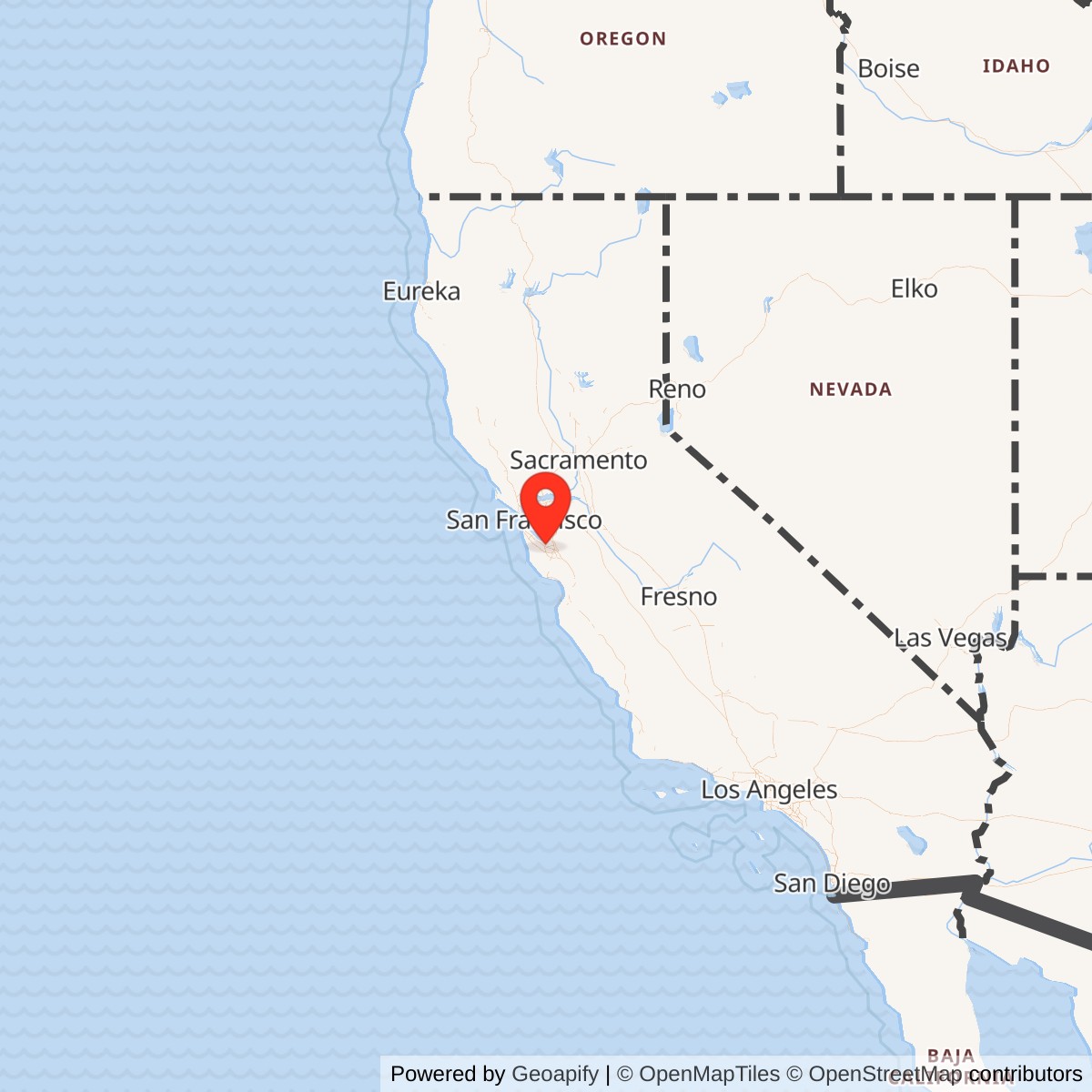
Longitude: -122.049129
Current Role: Moffett Federal Airfield at NASA Ames; federal aviation, research, Air National Guard rescue, historic preservation, leased airfield/R&D, and Navy/NASA cleanup uses.
Moffett Field is one of the rare naval air stations whose silhouette became part of a region's identity. Long before Silicon Valley became shorthand for software, venture capital, and private technology campuses, the immense shell of Hangar One announced a different kind of innovation on the bay shore: the Navy's bet that giant airships could extend American sea power over the Pacific. The base began as Naval Air Station Sunnyvale, commissioned in 1933 to berth USS Macon and support the Navy's lighter-than-air aviation program. It later became Moffett Field, passed briefly to the Army Air Corps, returned to the Navy during World War II, and then spent the Cold War shifting from airships to transports, jets, helicopters, and finally long-range anti-submarine patrol aircraft.
The former naval air station occupied a strategically useful position at the southern end of San Francisco Bay. It was close to the Pacific, the Bay Area's industrial and scientific labor pool, and the maritime approaches to Northern California, yet it offered enough open land for runways, dirigible operations, hangars, magazines, workshops, housing, and training. The original 1,000-acre Rancho Yaigo tract was acquired by a Bay Area consortium and transferred to the Navy for $1 in 1931. By the BRAC era the former station's acreage was described differently by different agencies because the operational base, transferred parcels, cleanup areas, and lease areas were not identical. Navy BRAC material lists a 3,097-acre former installation; EPA describes a 1,500-acre Superfund site; NASA's post-closure Moffett Federal Airfield lease area covers about 1,000 acres; and the Department of Defense transferred 1,875 acres of former naval-air-station property to NASA in 1994.
The correct identity is therefore layered. As a Navy installation, it was a former naval air station and maritime patrol base closed under the 1991 BRAC round and decommissioned in 1994. As a continuing federal aviation landscape, it survives as Moffett Federal Airfield at NASA Ames Research Center, with NASA as landowner, Planetary Ventures operating the airfield under a long-term lease, and the California Air National Guard's 129th Rescue Wing maintaining a major rescue and personnel-recovery presence. The former base is not an active Navy installation, but it is not simply abandoned military land either. It remains a federal aviation, research, rescue, historic-preservation, environmental-cleanup, and adaptive-reuse landscape built directly on the Navy's former infrastructure.
Mission Evolution
Moffett Field's first mission was to serve the Navy's rigid-airship program. In the early 1930s, Rear Admiral William A. Moffett, the influential chief of the Bureau of Aeronautics, championed large dirigibles as long-range scouts for the fleet. The Navy needed two coastal airship home ports for USS Akron and USS Macon. Lakehurst, New Jersey, served the Atlantic side; Sunnyvale became the Pacific Coast counterpart. Congress authorized acceptance of the 1,000-acre site in February 1931, construction began in October, and Naval Air Station Sunnyvale and Hangar One were commissioned for use on April 12, 1933. Hangar One was completed that July, the airfield was named for Admiral Moffett in September, and USS Macon arrived from Lakehurst on October 15, 1933.That first mission was spectacular but short. Macon was a flying aircraft carrier, operating Curtiss F9C Sparrowhawk parasite fighters as part of the Navy's effort to test long-range aerial scouting concepts. On February 12, 1935, Macon crashed off Point Sur, California. Two men died, but most of the crew survived. The loss shattered the practical case for the Navy's expensive rigid-airship program at Sunnyvale. Later that year the Navy transferred Moffett Field to the Army in exchange for the Army's Rockwell Field on North Island in San Diego. The site became Moffett Field, U.S. Army Air Corps Base, and was used for training aircraft and cadet activity rather than as a rigid-airship home port.
The Army period gave Moffett a second aviation identity and helped create a neighboring scientific one. In 1939 the National Advisory Committee for Aeronautics established the Ames Aeronautical Laboratory on land northwest of the field. That decision ultimately made the area one of the country's major aeronautical and space-research campuses. Moffett's military airfield and NACA's wind-tunnel and laboratory work grew side by side, so that the site's later NASA future was already planted before the Navy returned during World War II.
The decisive wartime turn came in 1942. After Pearl Harbor, the need for Pacific Coast patrol and anti-submarine coverage revived lighter-than-air operations. The field was transferred back to the Navy and officially designated Naval Air Station Moffett Field. The West Coast's first lighter-than-air squadron, ZP-32, launched patrol activity from Moffett in February 1942. The Navy built Hangars 2 and 3 to support the expanded blimp program, and the base's Assembly and Repair Department began assembling L-class and K-class blimps. Moffett became headquarters for West Coast lighter-than-air training and operations, connected to other LTA bases and patrol stations along the Pacific coast.
After World War II, the blimp mission faded. ZP-32 was decommissioned in November 1945, and Moffett's lighter-than-air program ended in 1947 after the final blimp flight crashed off Cape Mendocino without casualties. The base then shifted to heavier-than-air naval aviation. Hangars 2 and 3 supported Naval Air Transport Service aircraft, Moffett became a helicopter overhaul and repair base, and by 1950 it was recognized as the Navy's first all-weather naval air station. During the Korean War era, carrier-based fighter and attack squadrons arrived, support squadrons were commissioned, and in 1953 Moffett became one of the Navy's nine master jet stations. The Navy widened and improved runways, aprons, fueling systems, magazines, ordnance handling, maintenance spaces, and support buildings for faster, heavier aircraft.
The jet era did not last forever. By 1961, noise, air traffic, and operational priorities pushed Navy jet activity away from Moffett, while Naval Air Station Lemoore became the more appropriate Central Valley master jet base. Moffett then entered its final and most durable Navy mission: anti-submarine warfare and maritime patrol. In November 1962 the Navy selected Moffett as the West Coast training center for Pacific anti-submarine operations. In 1964 it designated Moffett the Pacific headquarters for P-3 Orion anti-submarine aircraft, and in 1973 the base became the headquarters of the Commander, Patrol Wing, U.S. Pacific Fleet. During this period Moffett was widely associated with P-3 Orion squadrons, long-range ocean surveillance, patrol crew training, acoustic and magnetic detection, and Cold War submarine-hunting missions across the Pacific.
The 1991 Base Realignment and Closure process ended Moffett's Navy future. As the Cold War wound down, P-3 squadrons were retired or relocated to Naval Air Station Whidbey Island and Naval Air Station Jacksonville. The last active-duty P-3 squadron departed Moffett on December 21, 1993. On July 1, 1994, Naval Air Station Moffett Field was decommissioned, renamed Moffett Federal Airfield, and transferred into NASA custody. The Navy BRAC page separately lists a July 30, 1994 closure date, while NASA's historic timeline uses July 1, 1994 for the decommissioning and transfer milestone. The operational Navy base ended, but aviation, federal research, and military rescue activity continued.
Operational Role
Moffett Field's operational story began with a bold but fragile concept: fleet scouting by giant airship. USS Macon used Hangar One as its Pacific home and represented the Navy's effort to extend scouting range beyond the horizon of surface ships and conventional aircraft. The operational logic was maritime. A rigid airship could range far over the ocean, search for enemy forces, communicate with the fleet, and launch small parasite aircraft for additional reconnaissance. Moffett was therefore not merely a hangar site. It was the Pacific test bed for a vision of aerial scouting tied directly to sea control.World War II gave Moffett a more practical and sustained coastal-defense role. Blimps operating from the base and related West Coast LTA stations patrolled for submarines, mines, and suspicious surface activity. They were slow, long-endurance aircraft that could loiter over the water, observe visually, and operate at low altitude. Moffett's airship training taught aviation cadets how to handle balloons, gases, ballast, engines, mooring, ground-crew coordination, navigation, patrol discipline, and emergency procedures. The base also assembled and maintained airships, making it a production-support and repair node as well as an operational station. The wartime mission was not glamorous in the way carrier aviation became glamorous, but it was a direct response to coastal vulnerability after Pearl Harbor.
Postwar operations moved Moffett into the Navy's transport and maintenance system. Naval Air Transport Service and later Military Air Transport Service aircraft used the field and its massive hangar spaces for long-range personnel, cargo, mail, and fleet-support missions. Hangars 2 and 3 sheltered large four-engine aircraft and supported overhaul and repair. Moffett's runway and maintenance plant were adapted repeatedly, showing how a base built for airships could be reworked for aircraft generations that its original planners never anticipated.
The Korean War and early Cold War jet period made Moffett a high-tempo tactical aviation station. Carrier-based fighter and attack squadrons operated from the field, Fleet Aircraft Service Squadrons supported jet aircraft, and the base handled types that ranged from F3D Skyknights and F2H Banshees to FJ Furies, F7U Cutlasses, A-4 Skyhawks, F8U Crusaders, and F11F Tigers. Moffett's all-weather and master-jet-station designations reflected a Navy trying to train and support fast aircraft in the Bay Area. The very success of that mission helped create its limits: jet noise, population growth, regional air traffic, and new Navy basing patterns pushed the mission elsewhere.
The P-3 Orion era became Moffett's defining Cold War service. The P-3 was built for long, low-altitude, over-water missions using radar, sonobuoys, magnetic anomaly detection, acoustic processing, and torpedoes or other ordnance to find and track submarines. Moffett served as the West Coast training and command center for that system. NASA's Hangar 3 history identifies nine P-3 patrol squadrons associated with Moffett from 1963 to 1993: VP-31, VP-9, VP-19, VP-40, VP-46, VP-47, VP-48, VP-50, and reserve squadron VP-91. The base's "Orion University" training environment around Hangars 2 and 3 prepared pilots, naval flight officers, sensor operators, technicians, and crews for Pacific maritime patrol operations.
Moffett's Cold War operational role reached beyond routine training. P-3 squadrons from the base deployed throughout the Pacific and other overseas operating areas, tracking Soviet submarines, supporting fleet exercises, monitoring sea lanes, and providing maritime reconnaissance. Headquarters staffs at the station tied squadron training, deployments, maintenance, intelligence, and fleet coordination into Pacific Fleet anti-submarine operations. The base did not command the ocean by itself, but it produced and sustained the aircrews and aircraft that helped make the Pacific submarine-tracking system work.
The 129th Rescue Wing added a continuing military mission before and after Navy closure. The California Air National Guard unit moved to Moffett in 1984. Its mission is personnel recovery and search and rescue, with federal duties supporting combatant commanders and state duties supporting California emergency response, including rescue and aerial firefighting capabilities. The wing's history includes flood response, earthquake support after the 1989 Loma Prieta earthquake, and many civil and military rescues. Its presence means that Moffett's aviation-military story did not stop in 1994; it changed services and missions, from Navy maritime patrol to Air National Guard rescue.
Facilities and Physical Layout
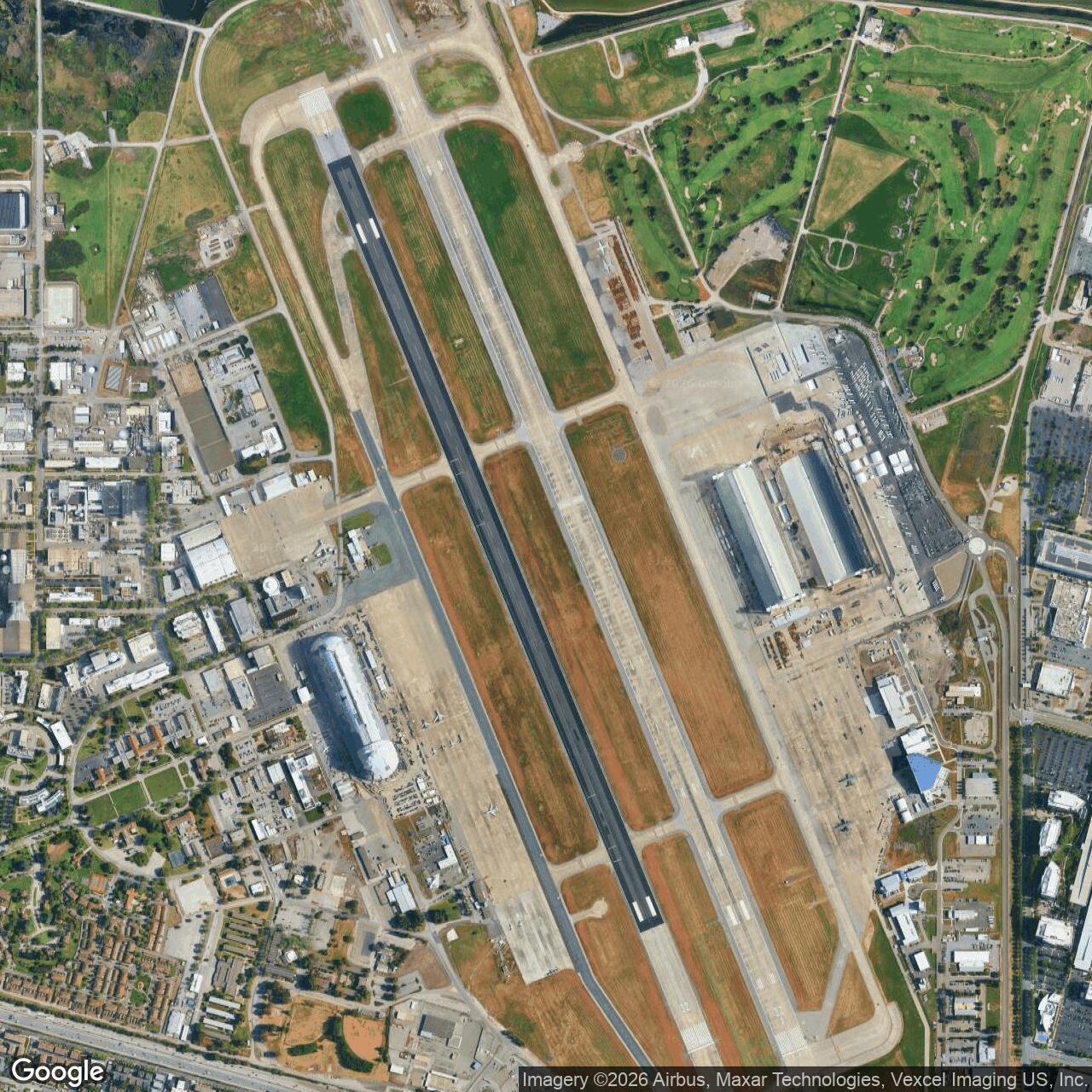
Moffett Field's physical layout is dominated by its airship origins. The central ceremonial and administrative core, known as Shenandoah Plaza, was organized around a formal approach to Hangar One. The early buildings used Spanish Colonial Revival design favored in federal and California civic architecture of the period, while the colossal airship hangar broke the scale of everything around it. The U.S. Naval Air Station Sunnyvale Historic District, listed in the National Register of Historic Places in 1994, includes Hangar One, Hangars 2 and 3, Shenandoah Plaza, and related historic resources that preserve the early airship and naval-aviation landscape.Hangar One is the installation's signature structure. Built from 1931 to 1933 for USS Macon, it measured roughly 1,133 feet long, 308 feet wide, and 198 feet high, with an eight-acre floor. Its steel frame, curved form, and huge "orange peel" doors made it one of the most recognizable aviation structures in the United States. It functioned first as a rigid-airship hangar, then as a military aviation and storage landmark, then as a major environmental and preservation challenge. PCBs, asbestos, lead paint, and contaminated materials led to the removal of its exterior skin by the Navy from 2010 to 2013. Under the NASA-Planetary Ventures lease, the building was remediated, structurally upgraded, reclad, and restored, with NASA reporting full remediation and restoration completed on December 1, 2025.
Hangars 2 and 3 were World War II structures built for the Navy's renewed LTA program. Construction began on Hangar 2 in August 1942 and on Hangar 3 in November 1942, with both completed in August 1943. Unlike Hangar One's steel airship form, these were enormous wood-frame blimp hangars built under wartime material constraints. They housed L-class and K-class blimps, supported airship training and maintenance, and later became essential to heavier-than-air transport, jet-support, P-3 Orion, and Air National Guard activities. Hangar 2 was restored by 2019. Hangar 3, after long deterioration and life-safety concerns, was deconstructed in 2024 after NASA, Planetary Ventures, preservation agencies, and local stakeholders developed documentation to preserve its history.
The runways, taxiways, aprons, fuel systems, magazines, maintenance shops, and support buildings changed with each mission. Airship operations required mooring and hangar clearance, wide open maneuvering space, and specialized ground handling. Jet operations required longer and stronger runways, expanded parking, high-speed fueling, ordnance handling, magazines, and modernized taxiways. The P-3 era relied on hangar maintenance, training spaces, squadron administration, acoustic and mission-training facilities, and apron areas large enough for patrol aircraft. The current Moffett Federal Airfield lease area includes Hangars One, Two and Three, the flight operations building, two runways, taxiways, buffer areas, and associated support facilities, while NASA Ames occupies adjacent research land.
Environmental cleanup is also part of the physical story. EPA identifies the Moffett Field Naval Air Station Superfund site as a former military site where groundwater, soil, and wetlands were contaminated with volatile organic compounds, PCBs, pesticides, and other materials. Cleanup is conducted through federal actions with EPA as lead regulatory agency, the regional water board as state support agency, and both the Navy and NASA carrying responsibilities for areas tied to their activities. The former base therefore remains an active environmental-management landscape even after Navy closure.
Units, Organizations, and Systems
The earliest operational "unit" associated with Moffett was USS Macon and its supporting Navy airship organization. Macon's presence from 1933 to 1935 gave the base national attention and tied the installation to the Navy's final major rigid-airship experiment. The base also supported the small aircraft carried by Macon and the specialized crews, riggers, mechanics, ground handlers, and officers required to operate a flying aircraft carrier.During World War II, ZP-32 and Fleet Airship Wing Three made Moffett a West Coast LTA hub. The station supported airship patrol, assembly, training, and maintenance. The Naval Airship Training Command also used Moffett, making the base a national center for a specialized aviation skill set at a time when the Navy had to rebuild lighter-than-air capability quickly after years of decline.
The postwar transport and repair period brought Naval Air Transport Service, Military Air Transport Service, fleet aircraft service organizations, and helicopter overhaul missions. These organizations connected Moffett to global fleet logistics rather than to only local Bay Area defense. The jet era added carrier fighter and attack squadrons and Fleet Aircraft Service Squadrons, especially in the early 1950s.
The P-3 era brought the base's most important late-Navy organizations. VP-31 became especially important as the P-3 training squadron at Moffett. Other active patrol squadrons associated with the base included VP-9, VP-19, VP-40, VP-46, VP-47, VP-48, and VP-50, while VP-91 represented the reserve patrol presence. Commander, Patrol Wing, U.S. Pacific Fleet, and related patrol-wing headquarters made the station a command as well as training and operating base. These units tied Moffett to Cold War maritime patrol, anti-submarine warfare, surveillance, and fleet support.
The California Air National Guard's 129th Rescue Wing is the principal continuing military tenant. The wing traces its presence at Moffett to 1984 and became the 129th Rescue Wing in 1995. It operates as a rescue and personnel-recovery organization with federal combat search-and-rescue and state emergency-response missions. Its aircraft and Guardian Angel personnel have supported military operations, maritime rescue, mountain rescue, disaster response, firefighting support, and interagency civil missions. It is not a Navy unit, but it is essential to understanding why Moffett remains a military aviation site after Navy closure.
NASA Ames Research Center is the central post-Navy federal organization at the former base. Its roots go back to the 1939 NACA Ames Aeronautical Laboratory. Since 1994 NASA has served as custodian of Moffett Field / Moffett Federal Airfield, while the site's research, aircraft, wind-tunnel, planetary science, airborne science, astrobiology, supercomputing, and technology missions connect former Navy land to the national aerospace research system. Planetary Ventures, a Google subsidiary, became the long-term lessee for the airfield and hangar rehabilitation in 2014, preserving federal title while shifting airfield management and major restoration obligations to a private operator.
Role in the Wider Military Network
Moffett Field's meaning changes when seen as a node in larger military systems. In the 1930s it was the Pacific half of the Navy's rigid-airship home-port system, paired conceptually with Lakehurst. It was built because the Navy wanted long-range aerial scouts to support fleet operations in an era before radar, satellites, or modern maritime patrol aircraft. The failure of the rigid-airship program did not erase the importance of the idea. Moffett's later P-3 mission performed, with different technology, the same essential task: finding threats over enormous ocean distances.During World War II, Moffett was part of the Pacific Coast defense system. Its LTA patrols, training, and assembly functions supported a network of airship bases, coastal patrol routes, naval districts, repair systems, and anti-submarine defenses stretching along the West Coast. It did not fight the Pacific War alone; it trained, maintained, and launched aircraft that made the coast harder to penetrate and supported the Navy's broader maritime-security posture.
In the early Cold War, Moffett became part of the Navy's transition to jet and all-weather aviation. Its master-jet-station designation placed it inside a national basing system that had to adapt runways, maintenance, fuel, ordnance, and squadron support to aircraft that were faster, louder, and more demanding than the World War II generation. When that system outgrew the Bay Area location, Lemoore absorbed the master-jet function and Moffett moved into anti-submarine warfare.
The ASW mission made Moffett a Pacific Fleet node of exceptional importance. P-3 Orions based and trained there linked West Coast bases to ocean surveillance, fleet exercises, Cold War submarine tracking, deployed patrol sites, intelligence systems, and allied maritime operations. Moffett's command, training, and squadron infrastructure helped sustain the Pacific maritime-patrol community for three decades. Its closure therefore reflected not a lack of historical significance, but a post-Cold War restructuring of the Navy's patrol-aircraft basing system.
After 1994, Moffett remained part of wider federal systems even though it left the Navy network. NASA Ames tied the field to aerospace research and airborne science. The 129th Rescue Wing tied it to Air National Guard personnel recovery and civil-emergency response. EPA and Navy cleanup tied it to the national legacy of military environmental restoration. Planetary Ventures' 60-year lease tied it to a new model of federal-property reuse in which a private technology entity operates and rehabilitates former military infrastructure while federal title and government needs remain in place. Few former Navy air stations show that transition as visibly as Moffett.
Closure, Transfer, and Reuse
Moffett's closure came through the post-Cold War BRAC process. The 1991 BRAC recommendation reflected changes in Navy force structure, the drawdown of Cold War maritime patrol needs, and consolidation of P-3 operations at fewer installations. Active-duty P-3 squadrons left before the base formally closed. The last active-duty P-3 squadron departed on December 21, 1993. The air station was decommissioned on July 1, 1994, transferred to NASA, and renamed Moffett Federal Airfield. Navy BRAC documentation lists a July 30, 1994 closure date; both dates should be understood as part of the same closure-transfer process.Reuse was unusually federal rather than purely local. Many closed Navy bases became municipal airports, ports, housing, or private redevelopment districts. Moffett became a NASA-controlled federal airfield and research landscape. NASA Ames had already been adjacent to the Navy installation for decades, so the transfer preserved aviation and research uses that fit the site's history. The Moffett Field Historical Society Museum also preserved public memory of the Navy and Army aviation eras.
The 2014 NASA lease with Planetary Ventures reshaped reuse again. NASA signed a 60-year lease for approximately 1,000 acres that included Hangars One, Two, and Three, the airfield flight operations building, two runways, and a private golf course. NASA stated that the lease would save about $6.3 million annually in maintenance and operating costs and provide $1.16 billion in rent over the initial term, while the federal government retained title. Planetary Ventures took on responsibility for operating the airfield and rehabilitating Hangar One.
The environmental legacy remains central. The Navy continues BRAC environmental actions, and EPA oversight continues at the Moffett Field Naval Air Station Superfund site. Cleanup has addressed groundwater contamination, soil, wetlands, PCB issues, pesticides, and other contaminants associated with decades of military and federal operations. Hangar One's restoration is one of the most visible examples of how preservation and remediation intersected: contaminated materials had to be removed and controlled before the historic structure could be returned to a usable exterior form.
Current Status
Naval Air Station Moffett Field is closed as a Navy installation. The site now functions as Moffett Federal Airfield at NASA Ames Research Center, with federal ownership, NASA custody, and airfield management under the long-term Planetary Ventures lease. The former Navy landscape supports aviation, research, Air National Guard rescue operations, historic preservation, limited private and federal airfield use, environmental cleanup, and public-history interpretation.Hangar One has been restored after decades of contamination, stripping, and uncertainty. NASA reported that Planetary Ventures completed remediation and restoration on December 1, 2025. Hangar 2 remains preserved, while Hangar 3 was deconstructed in 2024 after being determined unsafe and unsalvageable. The loss of Hangar 3 makes the documentation of its history especially important, but the remaining historic district and the restored Hangar One still make Moffett one of the most visually powerful former Navy air stations in the country.
The 129th Rescue Wing continues to give the field an active military role. Its presence links Moffett to combat search and rescue, civil search and rescue, disaster response, aerial firefighting support, and state emergency missions. NASA Ames gives the former station a continuing aerospace-research role, while the Moffett Field Museum, NASA historic-preservation program, NPS historic-district material, Library of Congress HAER documentation, and Navy BRAC records keep the naval and Army aviation history accessible.
Chronology
- 1928 The Navy signed a contract with Goodyear-Zeppelin for the construction of USS Akron and USS Macon.
- 1931-02-20 President Herbert Hoover signed legislation authorizing acceptance of a 1,000-acre Rancho Yaigo site for Naval Air Station Sunnyvale.
- 1931-07-31 The Bay Area Landholders Commission purchased the 1,000-acre property.
- 1931-08-02 The property was transferred to the Navy for $1, and Naval Air Station Sunnyvale was officially established.
- 1931-10-05 Construction began on Naval Air Station Sunnyvale and Hangar One.
- 1933-04-04 USS Akron crashed off the New Jersey coast, killing Rear Admiral William A. Moffett and many others.
- 1933-04-12 Naval Air Station Sunnyvale and Hangar One were commissioned for use.
- 1933-07-01 Hangar One was officially completed.
- 1933-09-01 The Navy named the airfield at Naval Air Station Sunnyvale for Rear Admiral William A. Moffett.
- 1933-10-15 USS Macon arrived at Naval Air Station Sunnyvale after flying from Lakehurst, New Jersey.
- 1935-02-12 USS Macon crashed off Point Sur, California; two crewmen died.
- 1935-10-25 The Navy transferred Moffett Field to the U.S. Army in exchange for the Army's North Island field in San Diego, and the site became Moffett Field, U.S. Army Air Corps Base.
- 1937 The Army Air Corps ended its airship program and transferred lighter-than-air materials back to the Navy.
- 1939 NACA established Ames Aeronautical Laboratory northwest of Moffett Field.
- 1942 The Army transferred Moffett Field back to the Navy, and the site was officially designated U.S. Naval Air Station Moffett Field, California.
- 1942-02-04 ZP-32 launched TC-14 on the West Coast's first wartime lighter-than-air patrol flight from Moffett Field.
- 1942-08-22 Construction began on Hangar 2.
- 1942-11-03 Construction began on Hangar 3.
- 1942-11-30 Moffett's Assembly and Repair Department began assembling and erecting L-class and K-class blimps.
- 1943-08-28 Hangars 2 and 3 were completed.
- 1944-01-20 The last K-class airship was delivered to Moffett for assembly.
- 1945-01 Moffett Field was designated a Major Overhaul and Repair Base.
- 1945-11 ZP-32, Moffett's first airship squadron, was decommissioned.
- 1947-08 Moffett Field's lighter-than-air program ended after the final blimp flight crashed off Cape Mendocino without casualties.
- 1947 The Navy used Hangars 2 and 3 as the home for Naval Air Transport Service operations.
- 1948-03-17 NAS Moffett Field was designated a helicopter overhaul and repair base.
- 1949-10-27 Naval Air Transport Service overhaul and repair operations at Moffett closed.
- 1950-02-14 NAS Moffett Field became the Navy's first all-weather naval air station.
- 1950 Carrier-based fighter and attack squadrons began operating from Moffett during the Korean War era.
- 1951-03 Two new Fleet Aircraft Service Squadrons were commissioned to support jet aircraft at Moffett.
- 1953 Moffett Field was designated one of the Navy's nine master jet stations.
- 1958 NACA Ames became NASA Ames Research Center.
- 1961 Jet operations at Moffett ended as the Navy shifted fighter-jet operations away from the Bay Area.
- 1962-11 Moffett Field was selected as the West Coast training center for Navy anti-submarine warfare in the Pacific.
- 1964 The Navy designated Moffett Field as the Pacific headquarters for P-3 Orion anti-submarine aircraft.
- 1966 Hangar One was designated a U.S. Navy Historic Site.
- 1973 Moffett became headquarters of the Commander, Patrol Wing, U.S. Pacific Fleet and the largest P-3 Orion base in the world.
- 1984 The California Air National Guard's 129th Rescue Wing moved to Moffett Field.
- 1991 BRAC recommended closure of Naval Air Station Moffett Field.
- 1993-12-21 The last active-duty P-3 squadron departed Moffett Field.
- 1994-02-24 The Shenandoah Plaza / U.S. Naval Air Station Sunnyvale Historic District, including Hangars 1, 2, and 3, was added to the National Register of Historic Places.
- 1994-07-01 NAS Moffett Field was decommissioned, renamed Moffett Federal Airfield, and transferred to NASA custody.
- 1994-07-30 Navy BRAC documentation lists this as the formal closure date.
- 1994 Hangar 3 became home to the 129th Rescue Wing of the California Air National Guard.
- 2008 Hangar One was a major preservation and environmental concern because of PCB, asbestos, and lead contamination.
- 2010-06 to 2013-06 The Navy removed Hangar One's contaminated roof, siding, windows, doors, and exterior components, then sealed the frame.
- 2014-11-10 NASA signed a 60-year lease with Planetary Ventures to manage Moffett Federal Airfield and rehabilitate Hangar One.
- 2016-05 A facilities exchange agreement with Planetary Ventures supported new facilities for the 129th Rescue Wing.
- 2019 Restoration of Hangar 2 was completed.
- 2019-08 Hangar 3 was deemed unoccupiable, uninsurable, and unsalvageable.
- 2022-03 Hangar One rehabilitation work began.
- 2024 Hangar 3 was deconstructed.
- 2025-12-01 Planetary Ventures completed full remediation and restoration of Hangar One.
- Present The former NAS Moffett Field remains Moffett Federal Airfield at NASA Ames, with federal aviation, research, Air National Guard rescue, historic-preservation, leased airfield, and environmental-cleanup functions.
Sources & References
- WEB NASA Ames Research Center Archives Moffett Field History
- WEB NASA Ames Historic Preservation Office Moffett Field History
- WEB NASA / Planetary Ventures Moffett Field Hangar 3
- WEB NASA / Planetary Ventures Moffett Field Hangar 3 - Lighter-Than-Air Era
- WEB NASA / Planetary Ventures Moffett Field Hangar 3 - Heavier-Than-Air Era
- WEB NASA / Planetary Ventures Moffett Field Hangar 3 - 129th Rescue Wing of the California Air National Guard
- WEB NASA NASA Signs Lease with Planetary Ventures LLC for Use of Moffett Airfield and Restoration of Hangar One
- WEB NASA Hangar One Restoration Project
- WEB NASA Ames Historic Preservation Office Hangar One / Property Overview
- WEB U.S. Navy BRAC Program Management Office Former Naval Air Station Moffett Field
- WEB U.S. Environmental Protection Agency Moffett Field Naval Air Station Superfund Site Profile
- WEB National Park Service U.S. Naval Air Station, Sunnyvale, California, Historic District
- WEB Library of Congress Naval Air Station Moffett Field, Hangar No. 1
- PDF Library of Congress / HAER data pages Naval Air Station Moffett Field, Hangar No. 1
- WEB AirNav KNUQ / Moffett Federal Airfield
- WEB 129th Rescue Wing History
- WEB 129th Rescue Wing Welcome to the 129th Rescue Wing
- WEB Air National Guard 129th Rescue Wing Signs Facilities Exchange Agreement with Google's Planetary Ventures
- WEB Naval History and Heritage Command S-211 Naval Air Station Moffett Field, California Photo Collection
- WEB Naval History and Heritage Command UA 51.01 NAS Sunnyvale/Moffett Field Photo Collection