
Joint Forces Training Base Los Alamitos / Los Alamitos Army Airfield, California
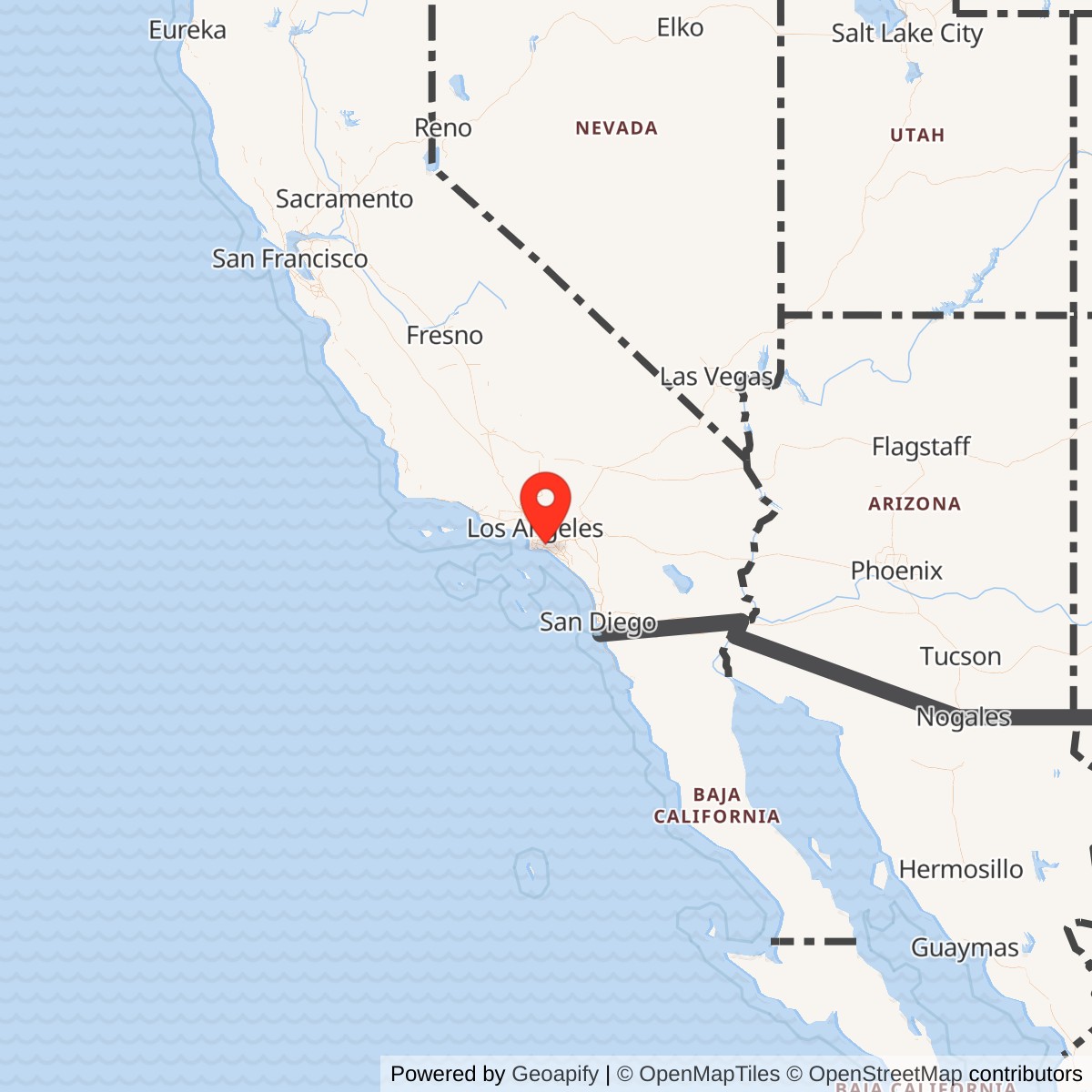
Longitude: -118.0514200
Official Base Website: Joint Forces Training Base Los Alamitos
Current Role: Active California National Guard joint training base and Los Alamitos Army Airfield; supports California Army National Guard, Army Reserve, other DoD users, Army aviation, regional emergency-response and DSCA coordination, and state/federal emergency partners.
In the middle of one of the most densely built regions in the United States, Los Alamitos still has something rare: a long military runway, controlled federal land, helicopter units, emergency-response partners, Army Reserve headquarters, and a National Guard division headquarters all behind the fence line. That is why Joint Forces Training Base Los Alamitos is not just another former World War II airfield that survived on inertia. It is a working military island in coastal Orange County, close enough to Los Angeles to be useful in a crisis and large enough to land heavy aircraft, stage forces, train units, and keep regional response organizations operating when Southern California is under stress.
The installation began as a Navy base, not an Army post. It was commissioned in 1942 as Naval Air Station Los Alamitos, a wartime aviation training field for Navy and Marine Corps pilots. The Army identity came later, after the naval air station's active Navy role declined and Army Reserve and California Army National Guard aviation assets began moving onto the base. In 1973 the installation was transferred to the Army and redesignated as an Armed Forces Reserve Center. The California Army National Guard took on the airfield role, and the post became Los Alamitos Army Airfield. In July 2000 the name changed again to Joint Forces Training Base Los Alamitos, reflecting the reality that the installation had become a multi-component, multi-agency training and response platform rather than a single-service air station.
Today JFTB Los Alamitos is an active California National Guard joint training base containing Los Alamitos Army Airfield. It remains under U.S. Army ownership and California Army National Guard operation, with major Army Reserve and emergency-response tenants. The base covers about 1,319 acres and supports a full-time work force, thousands of Guard and Reserve personnel, and a mixture of state, federal, and local users. Its official mission is to support component commands, provide capabilities that improve readiness, and facilitate training and coordination for city, state, and federal agencies in defense support of civil authorities. In plain terms, Los Alamitos is one of Southern California's most useful military support platforms because it combines a real airfield, deployable units, command-and-control functions, emergency partners, and urban-region access on one controlled site.
Mission Evolution
Los Alamitos was built for speed because World War II demanded pilots faster than the peacetime Navy could produce them. The Navy selected the flat Orange County site in 1942 and developed it as a Naval Air Reserve Base / Naval Air Station for advanced aviation training. It supported Navy and Marine Corps fighter pilot training and drew on outlying fields and the dense Southern California aircraft and defense-industrial ecosystem. The first mission was therefore naval aviation training: put pilots into military aircraft, prepare them for carrier and fleet work, and feed the Pacific war's demand for trained aviators.
After World War II the installation's emphasis shifted from emergency wartime pilot production to Naval Reserve aviation. Demobilized aviators and enlisted aircrewmen affiliated with the Naval Reserve, and Los Alamitos became one of the West Coast locations that sustained reserve aviation capability through the early Cold War. The station was still militarily important during the Korean War and Vietnam era, but its role was increasingly connected to reserve-component aviation rather than new wartime expansion. The Navy history layer also produced one nationally remembered aviation event: on 16 July 1957, Marine Corps Major John H. Glenn Jr. launched from NAS Los Alamitos in an F8U Crusader on Project Bullet, a transcontinental record flight to Floyd Bennett Field in New York that averaged supersonic speed and produced the first continuous panoramic photographic coverage across the country.
The major institutional turn came in the 1970s. In 1972 Army Reserve and California Army National Guard aviation assets moved to the installation. In 1973 the Navy transferred the site to the Army, and the installation became an Armed Forces Reserve Center. The airfield itself became Los Alamitos Army Airfield, operated by the California Army National Guard. By 1977 the broader base was under California Army National Guard control. The mission had changed from naval reserve aviation to joint reserve-component readiness, Army aviation, and regional support.
The July 2000 Joint Forces Training Base designation captured that new mission more accurately than the older Armed Forces Reserve Center label. Los Alamitos became a place where California Army National Guard, California Air National Guard, Army Reserve, other DoD users, emergency-management agencies, public-safety organizations, and selected civilian partners could train, stage, operate, and coordinate. The base's current official mission emphasizes readiness support and DSCA capacity, meaning that the post is designed not only to prepare military units for federal missions but also to support domestic-response operations when civil authorities need military capabilities.
The twenty-first-century mission has continued to broaden. Los Alamitos remains an aviation field, but it is also a command headquarters site, a disaster-response platform, a training environment, an emergency-operations location, and an energy-resilience test case. The 2022 Army / Cal Guard solar and microgrid project reflected that role: the base was described as a hub of emergency operations in Southern California, with a long runway, emergency-response tenants, 40th Infantry Division headquarters, a Black Hawk aviation battalion, the 9th Civil Support Team, California Governor's Office of Emergency Services facilities, and FEMA regional disaster supplies on the installation. That is the modern Los Alamitos mission in one sentence: keep the region's military and emergency-response infrastructure ready when normal systems are strained or broken.
Navy Predecessor and Aviation Legacy
The Navy origins remain central to understanding the physical installation. Naval Air Station Los Alamitos was one of the wartime fields that helped convert Southern California's flat agricultural landscapes into military aviation infrastructure. The base's runways, open approach areas, hangars, support buildings, and aviation support functions were created for a Navy training mission, then carried forward into the Army period. In this sense, the Army did not create Los Alamitos from empty land. It inherited a mature aviation base and gave it a new reserve-component and National Guard purpose.
The World War II mission was tied to pilot production for naval war in the Pacific. Southern California had aircraft factories, ports, shipyards, marine and naval air stations, and good flying weather. Los Alamitos fit that system. Its outlying fields and training operations supported the rapid expansion of aviation manpower. Like many wartime air stations, it was built for a specific emergency but left behind a runway complex valuable enough to survive the emergency.
After the war the Naval Reserve mission kept the base relevant. Naval aviation was changing quickly, and reserve squadrons required facilities, aircraft, maintenance support, and training locations. Los Alamitos was large enough and well-located enough to support that reserve function. It also remained visible in aviation culture because of Project Bullet. Glenn's 1957 record flight began at Los Alamitos, placing the station in the story of Cold War jet aviation and in the pre-astronaut career of one of the best-known American aviators of the twentieth century.
The Navy-to-Army transfer did not erase that aviation identity. Instead, it preserved it in a different form. Los Alamitos Army Airfield still has two major runways, an FAA identifier, a military control tower, aviation fuel and operations support, and enough runway capacity to receive large military transport aircraft. The current Army airfield therefore carries forward the most important physical inheritance of the Navy base: a rare military runway complex in the Los Angeles / Orange County urban region.
Army and National Guard Era
The Army / National Guard era began because the installation's value matched emerging reserve-component needs. The Navy no longer needed Los Alamitos in the same way it had during World War II and the early Cold War. The Army Reserve and California Army National Guard, however, needed aviation, training, headquarters, and mobilization space in Southern California. The 1973 transfer and Armed Forces Reserve Center redesignation gave the Army and Guard a large, already-built installation inside a region with a massive population, complex disaster risk, and fewer large military airfields than during the Cold War peak.
The base became home to California Army National Guard aviation and later broader Guard missions. Its airfield allowed Black Hawk and other Army aircraft to operate close to the Los Angeles Basin, Orange County, ports, freeways, fire-risk terrain, and emergency-management centers. Helicopters based or staged there could support wildland firefighting, passenger airlift, hoist rescue, military training, and disaster response. Fixed-wing and large-transport compatibility also made the runway important for mobility and staging.
The Armed Forces Reserve Center identity also brought Army Reserve significance. Today the 79th Theater Sustainment Command is headquartered at Joint Forces Training Base Los Alamitos. The 79th TSC is an Army Reserve theater-level sustainment command that provides operational-level sustainment support to Army, joint, multinational, and combatant-command requirements, including missions connected to Europe, Africa, and broader global operations. Its headquarters presence makes Los Alamitos more than a local National Guard post. It is also an Army Reserve command node with global logistics relevance.
The 11th Military Police Brigade, another Army Reserve command, is also located at Los Alamitos. Its presence connects the installation to military police command-and-control, detention, security, and law-enforcement-support competencies within the reserve structure. Alongside these Army Reserve headquarters, the California Army National Guard's 40th Infantry Division maintains headquarters functions on the base. The combination of 40th Infantry Division, 79th TSC, 11th MP Brigade, aviation support, and civil-support units gives Los Alamitos a unusually dense headquarters and readiness profile for a relatively small urban installation.
The 2000 Joint Forces Training Base name recognized that the installation had become a shared platform. It supports not only Army Guard and Army Reserve units but also other DoD users and agencies. Its official mission includes support to component commands and training and coordination for city, state, and federal agencies responding to DSCA requirements. The installation's identity is therefore not simply "airfield," "armory," or "reserve center." It is a joint training and response base.
Operational Role
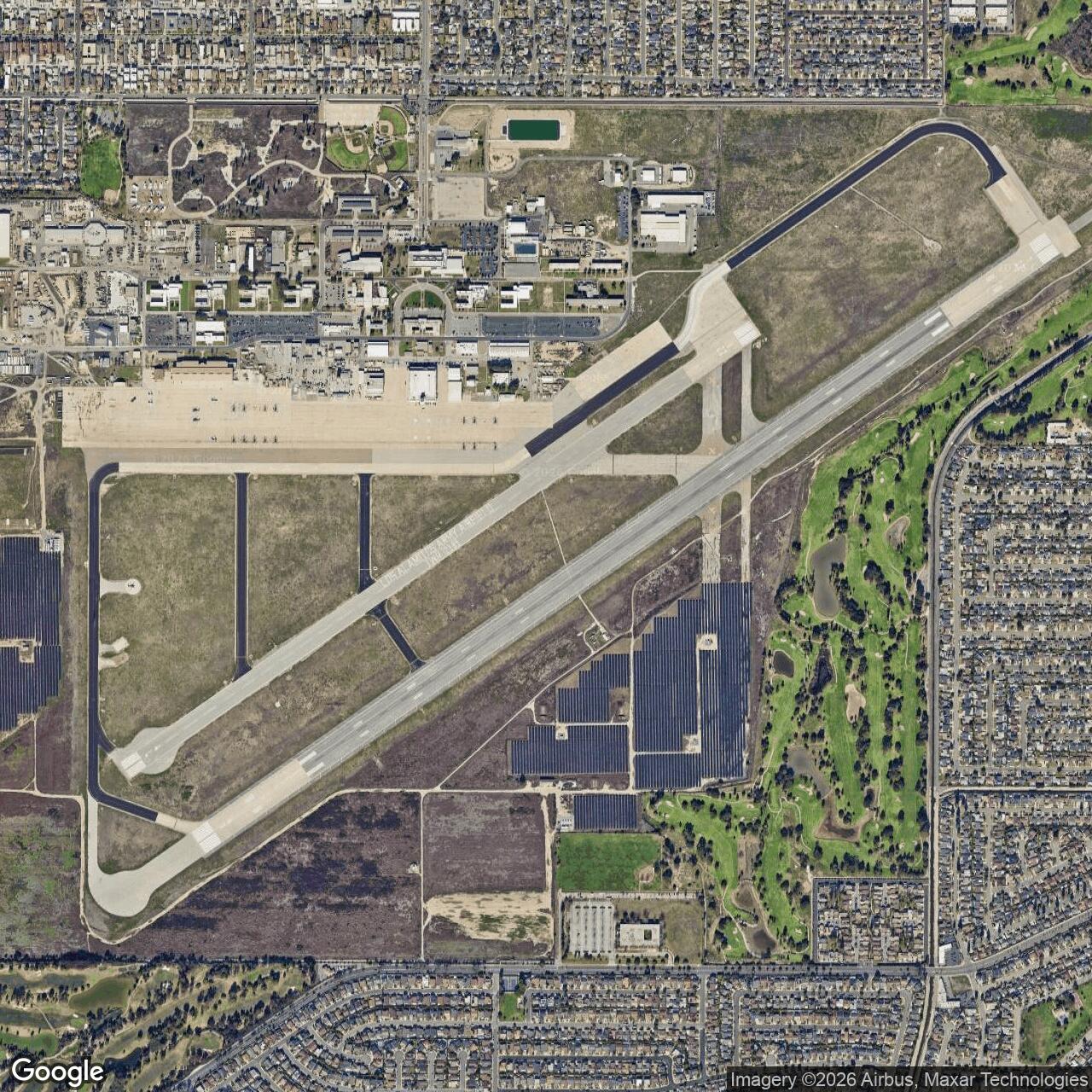
Los Alamitos' operational role is built around readiness, aviation access, and emergency response. The airfield gives the post its most visible capability. AirNav / FAA data identify Los Alamitos Army Airfield as KSLI, a private-use U.S. Army airfield requiring permission before landing. Its primary runway, 4R/22L, is about 7,999 feet by 200 feet, while runway 4L/22R is about 5,901 feet by 150 feet. That runway system is the reason the base remains strategically useful in Southern California. A large military aircraft can land there even though the surrounding region is intensely urbanized.
The airfield supports Army aviation and transient military aviation. Black Hawk aircraft connected to California National Guard missions give the base a state-response capability, including firefighting, transport, rescue, and military support. The 2022 National Guard reporting on the base's energy-resilience project described the installation's runway as capable of accepting the military's largest cargo aircraft for passenger transport or supply drops. That detail is operationally important. It means Los Alamitos can serve as an air bridge, not merely a local helicopter pad.
Training is the second major operational role. The 2008 Army Operational Range Assessment described the base as a training area for the California Army National Guard, other DoD active-duty and reserve-component units, and federal, state, and local law-enforcement agencies. It identified 12 operational range areas totaling 407.88 acres and emphasized non-live-fire training areas and runway-related use. This is not a desert combat-training center. It is an urban-region training and coordination platform, useful because it places soldiers, air crews, law-enforcement partners, and emergency-response agencies close to the population centers they may have to support.
Emergency response is the third and perhaps most distinctive operational role. Los Alamitos has repeatedly been described as a Southern California emergency operations hub. The base has hosted or supported disaster-preparedness exercises, emergency-management functions, civil-support capabilities, and state/federal staging functions. The California Governor's Office of Emergency Services Southern Regional Emergency Operations Center and FEMA regional disaster supply storage have been associated with the installation. USACE's 2022 Building 4 environmental assessment explained that Los Angeles District emergency-response employees could use rehabilitated space at JFTB for a continuity-of-operations center, backup emergency-operations center, and reservoir-operations center. In an earthquake, wildfire, flood, civil disturbance, or infrastructure failure, the value of a secure base with a runway, communications, billeting, parking, and command space becomes obvious.
The base's modern operations also include energy resilience. The 2022 solar project was not merely an environmental project. It was designed around mission continuity, with a solar array, battery storage, backup generators, and a microgrid control system intended to let the installation operate autonomously if the larger power grid fails. That project made sense at Los Alamitos precisely because the base's emergency-response mission depends on remaining functional when the surrounding region is not.
Units, Organizations, and Systems
The 40th Infantry Division is the best-known California Army National Guard headquarters associated with Los Alamitos. The division's modern headquarters functions at the base connect the installation to one of the Army National Guard's major division-level organizations. In 2023 the 40th Infantry Division held a deployment ceremony at JFTB Los Alamitos before mobilizing to support Operation Spartan Shield and Operation Inherent Resolve. National Guard reporting described that deployment as historically significant because the division had not deployed as a division since the Korean War. This gives Los Alamitos a direct connection to post-9/11 overseas operations, not just domestic support.
The 79th Theater Sustainment Command is a major U.S. Army Reserve tenant. Headquartered at JFTB Los Alamitos, it was activated on 1 December 2009 and later received an operational theater-sustainment designation. The command provides sustainment mission command and supports Army, joint, multinational, and combatant-command requirements. Its presence gives the base a logistics and theater-support identity that reaches well beyond California.
The 11th Military Police Brigade is another Army Reserve headquarters tenant. Army Reserve contact information places it at Building 18 on Yorktown Avenue at Los Alamitos. The brigade brings military-police command, security, and reserve-component law-and-order capabilities into the installation's tenant mix. Its presence also fits the base's broader emergency-response and civil-support environment.
The 9th Civil Support Team is one of the key civil-support organizations associated with the base. The team specializes in chemical, biological, radiological, nuclear, and high-yield explosive response support to civil authorities. Public Guard reporting describes the 9th CST as Los Alamitos-based and as one of the specialized teams ready to support civil authorities in WMD or hazardous-materials incidents. This unit is a practical expression of why Los Alamitos is so important to Southern California: the base hosts capabilities designed to operate at the seam between military expertise and civilian emergency need.
Army aviation is another major system. National Guard reporting describes Black Hawk helicopter capability on the base used for wildland firefighting, passenger airlift, hoist rescues, and military missions. Those aircraft give the base a daily operational connection to California's recurring emergencies, especially wildfire and disaster response. Aviation also supports military training, troop movement, VIP movement, and regional contingency missions.
State and federal emergency organizations complete the system. Cal OES functions, FEMA disaster supply storage, USACE continuity and response planning, and other interagency connections show that Los Alamitos is not only a military tenant base. It is part of Southern California's emergency-management architecture. The installation's value lies in the overlap: military units, aviation, command posts, emergency agencies, and logistics assets all occupy the same secure property.
Facilities and Physical Layout
JFTB Los Alamitos is roughly 1,319 acres of near-flat terrain within the city of Los Alamitos. The surrounding area is urban and suburban, with residential neighborhoods, commercial uses, golf courses, the Los Alamitos Race Course, and major road networks nearby. This setting makes the base unusual. It is large enough to function as a military airfield, yet embedded in an urban region where every open acre is politically and economically valuable.
The airfield dominates the layout. KSLI has two main runways: runway 4R/22L, approximately 7,999 by 200 feet with asphalt/concrete surface, and runway 4L/22R, approximately 5,901 by 150 feet. The field has airfield operations, tower services, Army aviation support areas, fuel functions, aprons, hangars, and approach/clear-zone constraints that shape surrounding land-use debates. The runway is the installation's most strategically important physical asset because Southern California has few remaining military airfields that can perform comparable state and federal emergency support functions.
The administrative and headquarters areas sit around roads named for naval and national themes, preserving traces of the Navy predecessor. Buildings on Lexington Drive, Yorktown Avenue, Saratoga Avenue, Doolittle Avenue, and Constitution Avenue house headquarters, logistics, billeting, services, public works, security, and tenant functions. Building 1000 is associated with 40th Infantry Division classroom and headquarters use in current Cal Guard training materials. Building 18 houses the 11th Military Police Brigade, and 4201 Saratoga Avenue is listed for the 79th Theater Sustainment Command.
Training areas are dispersed across the installation rather than concentrated in a large maneuver box. The 2008 operational range assessment identified 12 operational ranges totaling 407.88 acres, used primarily for runway / multiple-use operations and non-live-fire training. It found that live-fire training was not conducted there and that munitions use was limited primarily to smoke rounds in drop zones. This distinguishes Los Alamitos from remote Army training bases. Its training role is not about artillery, heavy maneuver, or live-fire combat ranges; it is about controlled aviation, mission rehearsal, urban-region readiness, tactical lanes, simulation, emergency operations, and joint-use coordination.
Billeting, MWR, conference, and support facilities help make the base usable as a training and staging site. Cal Guard pages list billeting, logistics, public works, emergency services, barber shop, credit union, RV/storage, and other services. Those functions are not incidental. A base that supports Guard, Reserve, interagency, and emergency users needs places to house personnel, feed them, park vehicles, stage equipment, run communications, and coordinate with external agencies.
The solar and microgrid project adds a modern infrastructure layer. The 100-acre, 26-megawatt project, battery storage, backup generation, and microgrid control system were intended to strengthen the base's ability to operate during broader grid disruptions. That infrastructure sits alongside the older runway and reserve-center landscape, showing how the installation has continued to adapt from wartime aviation to Cold War reserve aviation, to National Guard readiness, to twenty-first-century resilience.
Post-World War II Activity, Conflicts, and Events
Although the Army era began after the Vietnam period, the base's post-World War II importance has been continuous. During the Navy period it supported Naval Reserve aviation and mobilization needs through the Cold War. The transfer to the Army and California Army National Guard preserved the site as a reserve-component military asset at a time when other Southern California military lands were being reduced, closed, or redeveloped.
Los Alamitos has been repeatedly tied to domestic-support operations. Older airfield summaries and local military-history accounts describe the base as an assembly or support area during the 1984 Los Angeles Olympics, the 1992 Los Angeles civil disturbance, and the 1994 Northridge earthquake. The 2022 National Guard account of the base's energy-resilience work reinforced the same theme by describing the installation as a hub of emergency operations in Southern California and noting its emergency-response tenants and runway. The common thread is that Los Alamitos gives civil authorities and military responders a secure staging area in the urban region.
The base has also supported overseas military operations through its tenant commands. The 40th Infantry Division's 2023 mobilization to support Operation Spartan Shield and Operation Inherent Resolve connected JFTB Los Alamitos to contemporary Middle East operations. National Guard reporting emphasized that the division headquarters had spent the prior year preparing with annual training and warfighter exercises and that the deployment was historically important for the division. That makes the base a current mobilization and sendoff point for overseas operational missions.
In 2025, National Guard reporting identified JFTB Los Alamitos in connection with a federal Title 10 mobilization of more than 2,000 soldiers from the California Army National Guard's 79th Infantry Brigade Combat Team to support federal agencies in the greater Los Angeles area. The article described civil-disturbance operations training at the base and noted that the brigade's activation was a first for the unit as a consolidated federal mission. Because this is a current and politically sensitive domestic mission, it should be treated in the history as a documented operational event rather than as a policy endorsement. It shows that Los Alamitos remains a live staging and training site for domestic military missions.
The 9th Civil Support Team's exercises and readiness activities add another post-9/11 event stream. The team's mission is tied to CBRN and WMD response, and public reporting shows training at Los Alamitos and in regional multi-agency scenarios. These events place the base in the homeland-security and emergency-response world that expanded after 2001.
Current Status
Joint Forces Training Base Los Alamitos remains active. It is operated by the California Army National Guard and contains Los Alamitos Army Airfield, an active U.S. Army airfield with FAA identifier KSLI. The field is private-use, requires prior permission, and is listed in FAA-derived data as owned by the U.S. Army. The airfield remains one of the few military runway complexes in the greater Los Angeles / Orange County region.
The base's current mission is readiness and response. It supports California Army National Guard units, Army Reserve commands, other DoD users, and state/federal emergency agencies. Its official Cal Guard page states that the base supports component commands and provides units and DoD entities the capabilities and capacity to improve and maintain readiness. It also emphasizes training and coordination for city, state, and federal agencies in DSCA-related requirements.
The installation is also a land-use and regional-planning force. A 1,319-acre airfield base inside Los Alamitos affects zoning, noise, safety zones, emergency planning, and local development. Because the base is one of the few large military facilities left in the urban corridor, it is both valuable and contested. Its runways create constraints for surrounding cities, but those same runways are exactly why the base remains strategically useful.
Chronology
- 1942 The Navy commissioned the Los Alamitos air station / Naval Air Reserve Base for wartime Navy and Marine Corps aviation training.
- 1943 The installation became Naval Air Station Los Alamitos and expanded its role in supporting naval aviation training and fleet air groups.
- 1945 World War II ended, and the station shifted from emergency wartime training toward Naval Reserve aviation support.
- 1950-1953 During the Korean War era, Los Alamitos remained part of the Naval Reserve aviation system.
- 1957-07-16 Major John H. Glenn Jr., USMC, departed NAS Los Alamitos on Project Bullet, setting a transcontinental speed record in an F8U Crusader and producing continuous panoramic photography across the United States.
- 1960s The station continued to support Naval Reserve aviation during the Cold War and Vietnam era.
- 1972 California Army National Guard and U.S. Army Reserve aviation assets began moving to NAS Los Alamitos.
- 1973 NAS Los Alamitos was transferred to the Army and redesignated as an Armed Forces Reserve Center; the Army / California Guard period began.
- 1977 The broader base came under California Army National Guard control, and the Army airfield identity became established.
- 1984 Los Alamitos supported regional planning and staging associated with the Los Angeles Olympic Games, according to legacy airfield-history summaries.
- 1992 The base was used as an assembly / support area during the Los Angeles civil disturbance response, according to legacy airfield-history summaries.
- 1994 The base supported response activity connected to the Northridge earthquake, according to legacy airfield-history summaries.
- 1999 The 9th Civil Support Team was established; it later became one of the Los Alamitos-based civil-support capabilities for CBRN / WMD response.
- 2000-07 The Los Alamitos Armed Forces Reserve Center / Army airfield complex adopted the Joint Forces Training Base Los Alamitos name to reflect its multi-component and joint-use role.
- 2008 The Army Operational Range Assessment Program reported that JFTB Los Alamitos consisted of about 1,300 acres and served as a training area for the California Army National Guard, other DoD units, reserve-component units, and federal, state, and local law-enforcement agencies.
- 2009-12-01 The 79th Theater Sustainment Command was activated and headquartered at Joint Forces Training Base Los Alamitos.
- 2017-09-16 The 79th Theater Sustainment Command received its operational theater-sustainment-command designation.
- 2022-05-19 A 100-acre solar and microgrid energy-resilience project broke ground at JFTB Los Alamitos.
- 2022 USACE's Building 4 environmental assessment described JFTB Los Alamitos as a 1,319-acre base transferred to the Army in 1973, containing Los Alamitos Army Airfield and supporting about 850 full-time employees and more than 6,000 National Guard and Reserve personnel.
- 2023-06-11 The 40th Infantry Division held a deployment ceremony at JFTB Los Alamitos before mobilizing to support Operation Spartan Shield and Operation Inherent Resolve.
- 2025-06 More than 2,000 soldiers of the California Army National Guard's 79th Infantry Brigade Combat Team were mobilized under Title 10 orders for a federal protective mission in the greater Los Angeles area, with training and base support centered at JFTB Los Alamitos.
- Present Joint Forces Training Base Los Alamitos remains an active California National Guard joint training base and U.S. Army airfield supporting National Guard, Army Reserve, DoD, emergency-response, and interagency missions in Southern California.
- Visual and Reference Resources
- The best official current installation source is the California Military Department / Cal Guard Joint Forces Training Base Los Alamitos page because it states the current mission, services, and base support functions.
- The most useful official compact history source is the JFTB NAF-MWR history page because it summarizes the 1942 NAS origin, 1973 Army transfer, Armed Forces Reserve Center period, and July 2000 JFTB redesignation.
- For verified coordinates and runway data, AirNav's KSLI page is the best public FAA-derived source, listing the current Los Alamitos Army Airfield coordinate point, Army ownership, private-use status, runway dimensions, and operational restrictions.
- For acreage and current installation context, the 2022 USACE environmental assessment for Building 4 gives a concise official summary of the 1,319-acre base, 1973 Army transfer, two-runway airfield, and personnel-support role.
- For current mission context, the National Guard article on the 2022 solar project is especially useful because it explains the base's emergency-response value, 40th Infantry Division headquarters, Black Hawk aviation role, 9th Civil Support Team, Cal OES / FEMA connection, runway utility, and energy-resilience project.
- For current Army Reserve tenant context, the U.S. Army Reserve pages for the 79th Theater Sustainment Command and the 11th Military Police Brigade provide official command-location and mission information.
Information sources (13)
- WEBCalifornia Military Department / Cal Guard
Joint Forces Training Base - Los Alamitos
- WEBJoint Forces Training Base NAF-MWR
History
- WEBAirNav
KSLI - Los Alamitos Army Airfield
- WEBU.S. Army Corps of Engineers, Final Environmental Assessment and Finding of No Significant Impact
Rehabilitation of Building 4, Joint Forces Training Base, Los Alamitos, California, May 2022
- PDFDepartment of Defense / DENIX, U.S. Army Operational Range Assessment Program
Phase I Qualitative Assessment Report, Joint Force Training Base Los Alamitos, California, May 2008
- WEBNational Guard
Solar project begins on Los Alamitos joint base
- WEBNational Guard
40th Infantry Division Soldiers Mobilize to Middle East
- WEBU.S. Army Reserve
79th Theater Sustainment Command - About Us
- WEBU.S. Army Reserve
200th Military Police Command - Unit Contact Us
- WEBAir National Guard
California Guard Team Trains for Hazmat Event
- WEBNational Guard
California Guard's 79th IBCT Activated as Brigade for First Time in History
- WEBSouthern California Aviation United Working Group
Los Alamitos Army Airfield, KSLI, Joint Forces Training Base
- WEBSmithsonian Air & Space Magazine
John Glenn's Project Bullet