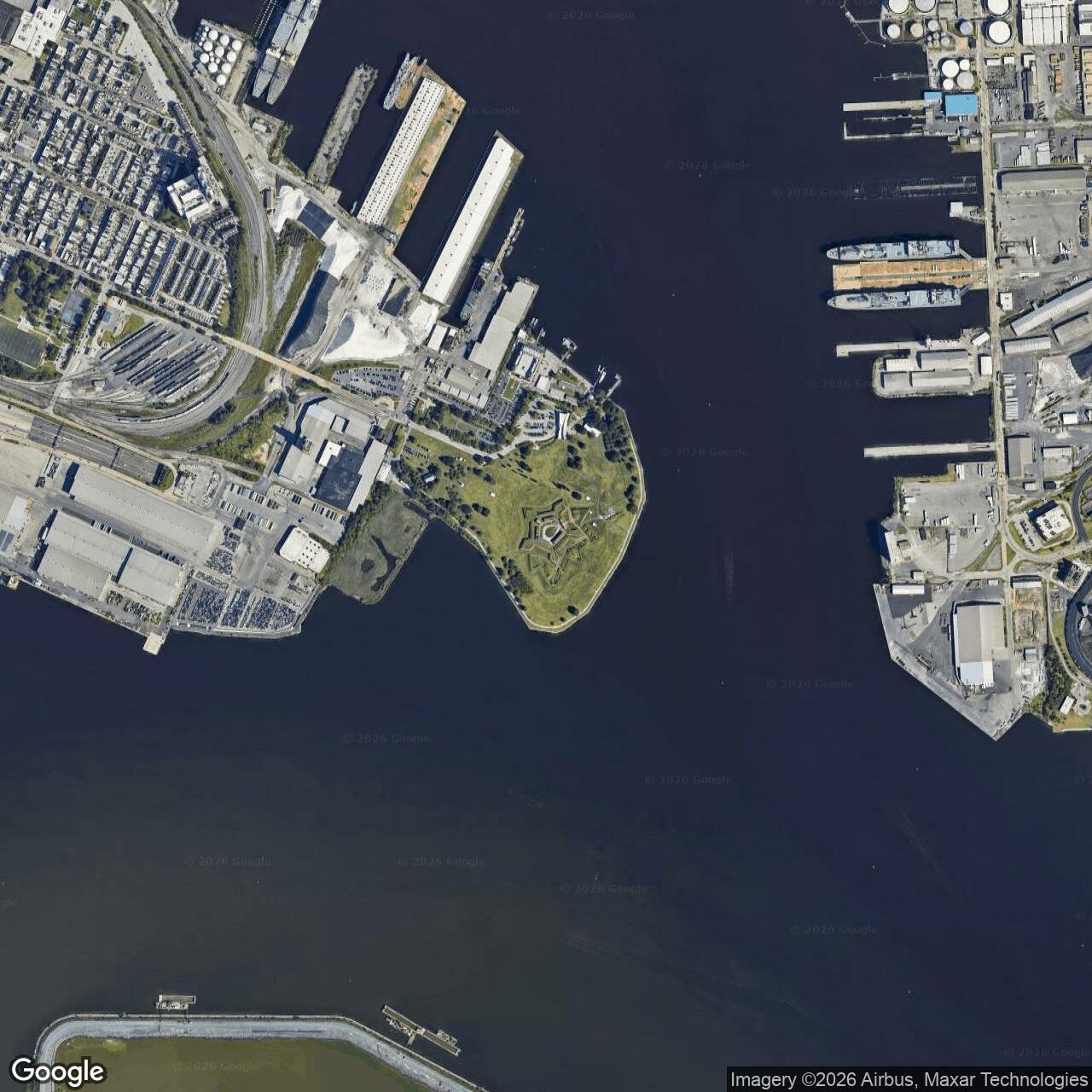
Fort McHenry Army Base, Baltimore Maryland
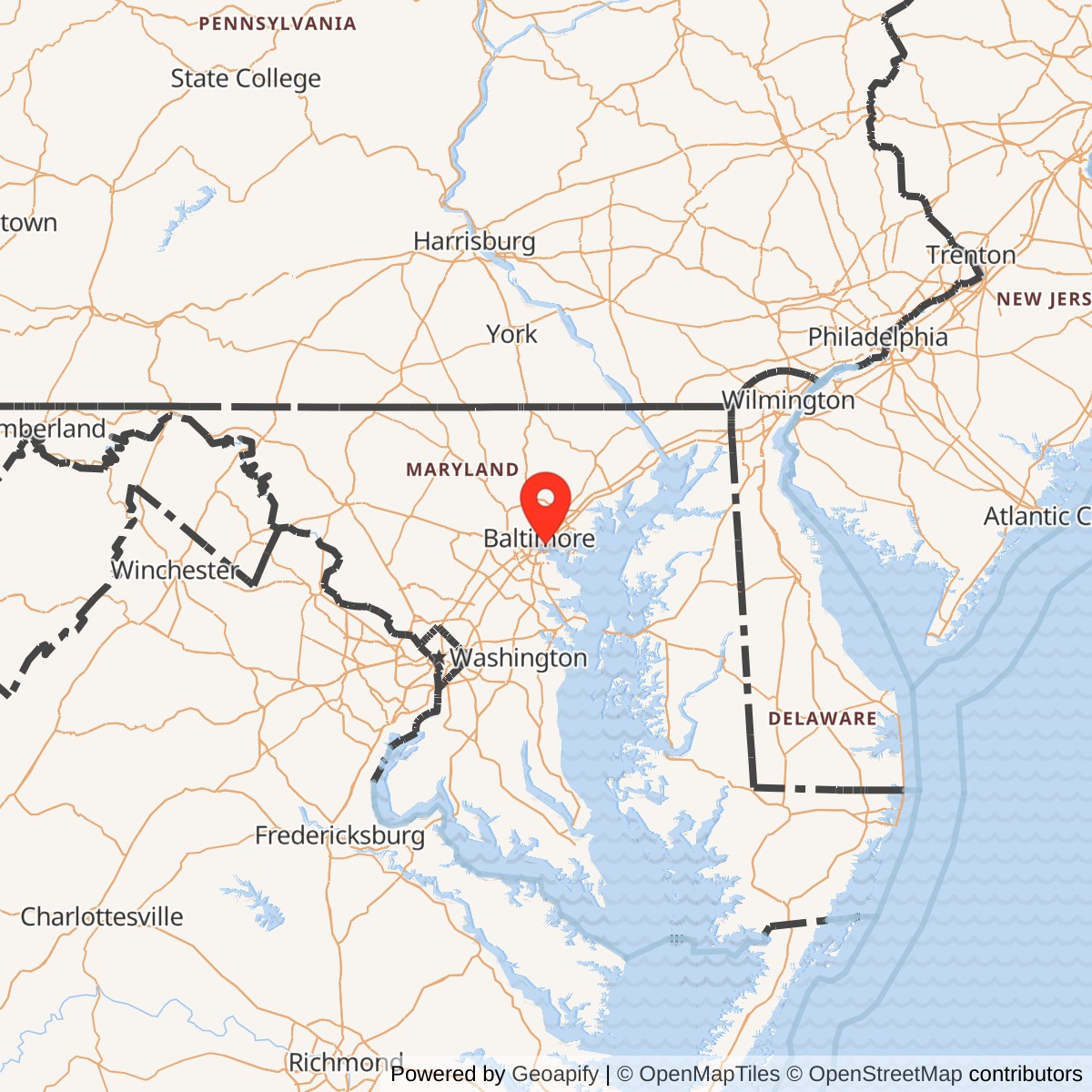
Longitude: -76.58
Current Role: National Monument
Fort McHenry represents one of the most continuous and symbolically powerful military sites in United States history, evolving from an early national coastal defense fortification into a layered military installation whose operational, technological, and cultural significance spans more than two centuries. Unlike many Army installations that were built for a single conflict or era, Fort McHenry's importance derives from its adaptability, its ability to remain relevant through successive transformations in military doctrine, technology, and national priorities, before ultimately transitioning into one of the most important preserved military landscapes in the country.
Strategic Origins - The Chesapeake and Early National Defense
The origins of Fort McHenry must be understood within the broader geopolitical vulnerability of the early United States. Following independence, the nation lacked a robust standing military and faced persistent threats from major naval powers, particularly Great Britain. The Chesapeake Bay, providing deep inland access to Baltimore, Washington, and other economic centers, represented one of the most dangerous avenues for attack.
During the late 18th century, American coastal defense policy coalesced into a series of fortification programs known as the First System of coastal defenses. These early works were often temporary or lightly constructed, but they established the principle that key harbors required fixed defensive positions. Baltimore, already one of the nation's most important ports, became a priority.
Construction of Fort McHenry began in 1798, replacing earlier defensive works at Whetstone Point. Named after James McHenry, Secretary of War under George Washington, the fort was designed as a five-pointed star-shaped bastioned work, a geometry derived from European military engineering principles intended to maximize defensive fire coverage and minimize blind spots.
From the outset, Fort McHenry was conceived not merely as a local defensive structure, but as part of a national strategy to deny enemy fleets access to critical inland waterways.
War of 1812 Operational Validation and National Symbolism
Fort McHenry's defining moment came during the War of 1812, when British forces launched a coordinated campaign against the Chesapeake region. After successfully capturing and burning Washington, D.C. in August 1814, British planners turned their attention to Baltimore, whose shipyards and privateering fleet posed a significant threat to British maritime operations.
The attack on Baltimore in September 1814 consisted of both a land assault and a naval bombardment. Fort McHenry was the centerpiece of the harbor defense system, positioned to block British ships from entering the inner harbor.
On September 13 and 14, 1814, the fort endured a sustained bombardment lasting approximately 25 hours. British forces employed Congreve rockets and mortar shells, weapons designed to arc over the fort's walls and cause internal damage. Despite the intensity of the attack, the fort's design and the discipline of its garrison allowed it to withstand the assault.
Critically, the British were unable to neutralize the fort's artillery or force a surrender. As a result, they could not advance into Baltimore Harbor, and the broader attack failed.
The aftermath of the bombardment produced one of the most enduring symbols in American history. The sight of the American flag still flying over the fort inspired Francis Scott Key to compose a poem that later became "The Star-Spangled Banner." This moment elevated Fort McHenry from a military installation to a national symbol of resilience and defense.
Post-War Development
Following the War of 1812, the United States undertook a major expansion and modernization of its coastal defenses under what became known as the Second and Third Systems. These programs emphasized larger, more durable masonry fortifications capable of resisting improved naval artillery.
While Fort McHenry was not completely rebuilt like some newer Third System forts, it was upgraded, maintained, and integrated into this evolving defensive framework. Its continued use reflected both its strategic location and the Army's recognition that existing fortifications could still play a role alongside newer constructions.
Throughout the early to mid-19th century, Fort McHenry functioned as a coastal defense installation, a garrison post, and a training and administrative site. Its role during this period was steady but not always prominent, reflecting the absence of major coastal threats after 1815.
Civil War - Reorientation and Internal Security Role
The Civil War marked a significant shift in Fort McHenry's function. Maryland's status as a border state made Baltimore strategically critical to Union control. Ensuring loyalty and suppressing dissent in the region became a priority.
Rather than serving as an active coastal defense fort, Fort McHenry was repurposed as a military prison, detention facility for Confederate soldiers and suspected sympathizers, and a base for maintaining Union authority in the region.
Technological Obsolescence - Late 19th Century Transformation
By the late 19th century, advances in artillery technology, particularly rifled guns and explosive shells, rendered traditional masonry forts increasingly vulnerable. In response, the Army initiated a new coastal defense modernization effort under the Endicott Board, emphasizing reinforced concrete batteries and modern systems.
Fort McHenry was incorporated into this new system, but its historic structure declined in tactical importance relative to newer installations.
World War I and World War II - Administrative and Support Roles
Despite its declining defensive role, Fort McHenry remained active during both World Wars. During World War I, it served as a training and mobilization site. In World War II, it was used by the U.S. Coast Guard and other units for administrative and harbor defense purposes.
Deactivation and Preservation
By the mid-20th century, Fort McHenry's military role ended. Recognizing its significance, it was designated a national park in 1925 and later redesignated as Fort McHenry National Monument and Historic Shrine in 1939 under the National Park Service.
Physical and Cultural Continuity
Fort McHenry retains its original star-shaped layout and much of its masonry structure, making it one of the best-preserved early American forts and a tangible example of early military engineering.
Current Status
Fort McHenry is no longer an active military installation but remains preserved as a National Park Service site, serving as a historic monument and educational resource while retaining its identity as a former U.S. Army installation.