
Atlas F Site 551-10 Missile Silo, York Nebraska
Longitude: -97.685544
Site Type: Atlas F vertical silo launch facility
Missile Type: SM-65F Atlas
Missile Assigned to this Silo: GD mfg 38F; GD serial 61-2524; AF tail 524
Number of Launchers/Missiles: 1
Parent Base: Lincoln AFB
Missile Wing: 98th Strategic Aerospace Wing
Missile Squadron: 551st Strategic Missile Squadron
Approximate Base Size: 6.38 acres (including launch facility and launch control center)
Current Site Use: Former Atlas F silo on private/restricted property; abandoned/junk-yard reuse reported by Lincoln AFB Online Museum; FUDS soil and groundwater remediation infrastructure and monitoring associated with TCE plume.
Site Ownership: Former USAF; excessed to GSA and conveyed to private individuals in 1965 per USACE 2008 fact sheet; current parcel ownership not deed-verified.
Accessible: No public access / private or restricted property; environmental remediation area.
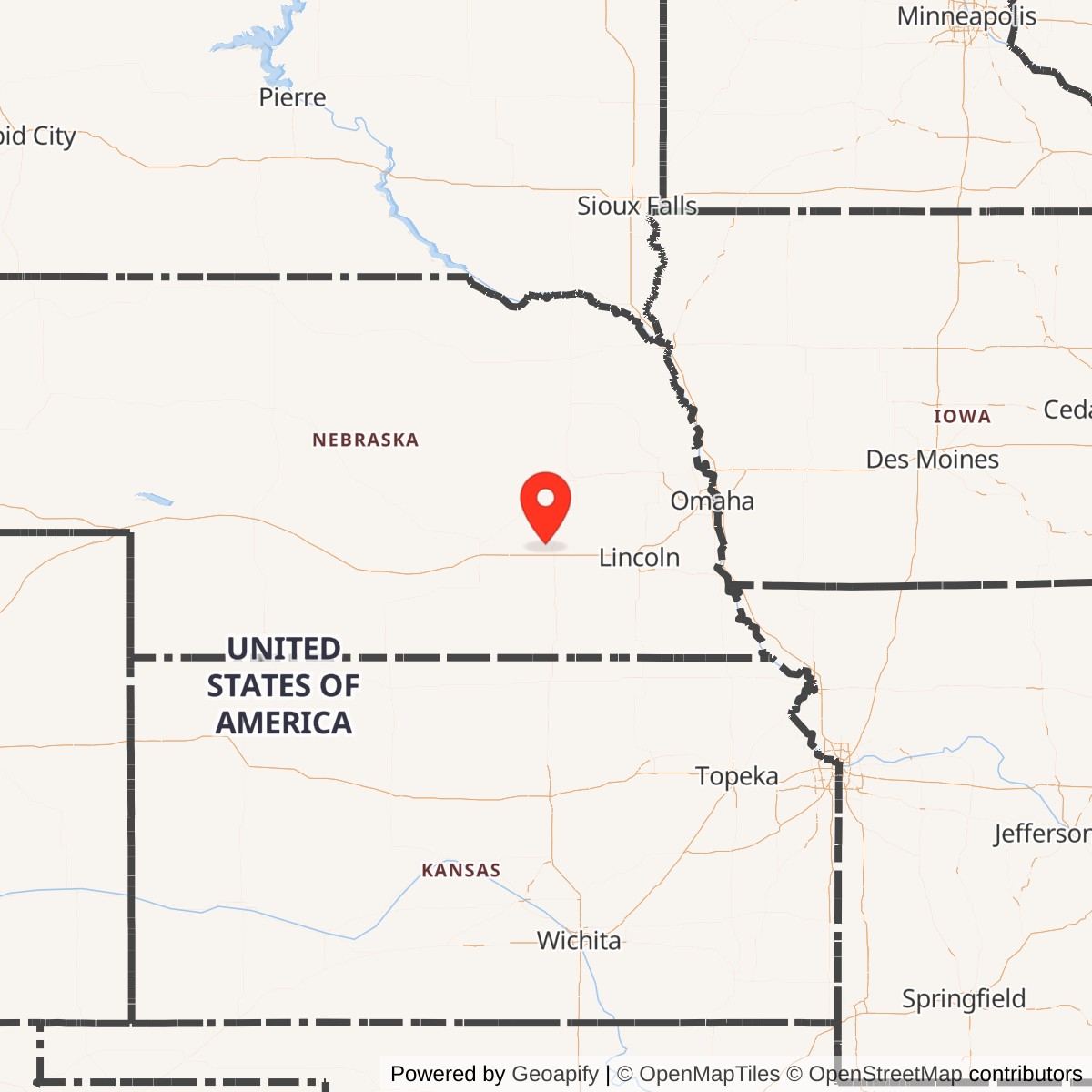
Five miles west of York, Nebraska, Atlas F Site 551-10 became more than a buried launch point in the 551st Strategic Missile Squadron's ring of Cold War silos. It was the squadron's reported Alternate Command Post, a hardened rural complex where the Air Force could keep a nuclear missile on alert and preserve a command function outside the main base. Decades later, the site is still not just a relic in a field: it is one of the Lincoln Atlas locations with a documented trichloroethylene plume, treatment systems, and long-running Formerly Used Defense Sites cleanup work that carried the Cold War into the groundwater record.
Atlas F Site 551-10 was a single-missile SM-65F Atlas launch complex assigned to the 551st Strategic Missile Squadron at Lincoln Air Force Base, Nebraska. The site was located in York County, Nebraska, about five miles west of York and roughly east-northeast of Bradshaw. The parent organization during the missile period was Strategic Air Command under the 98th Strategic Aerospace Wing and the 551st Strategic Missile Squadron. Because Atlas F complexes were self-contained crewed launch complexes, rather than Minuteman-style unmanned launch facilities controlled from a separate remote Launch Control Center, the parent LCC field is not applicable.
The site is inactive and decommissioned. Squadron records show that the 551st Strategic Missile Squadron's final Atlas F missiles were removed from alert by 1965-04-12, that the last Series F Atlas to leave a SAC operational base was shipped from the 551st SMS on 1965-04-20, and that the 551st SMS was inactivated on 1965-06-25. The former launch complex is not an active military installation. It is private property / restricted former military property with documented FUDS environmental-cleanup history.
Location, Landscape, and Site Description
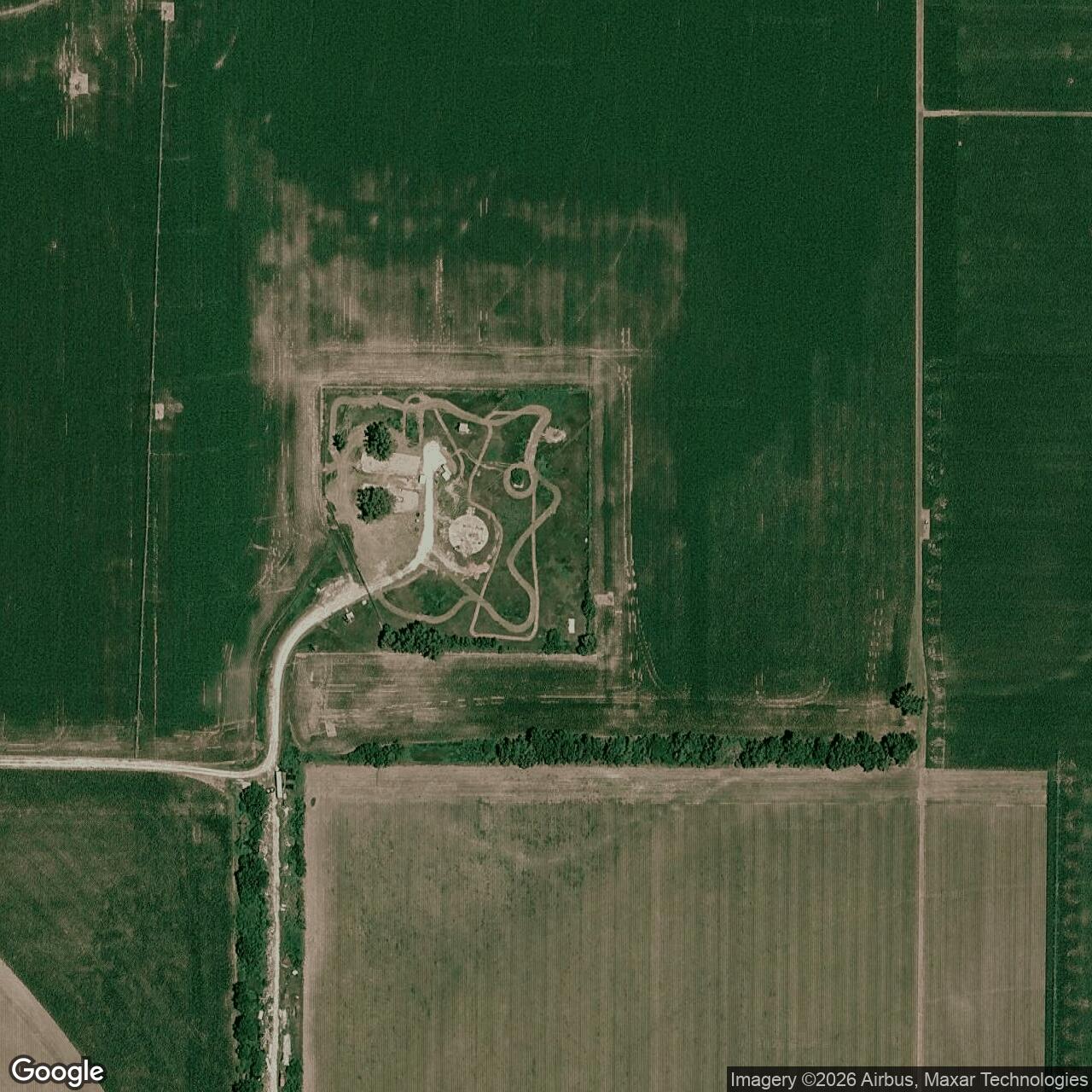
Site 551-10 is in York County farm country, about one-half mile north of U.S. Highway 34 and about five miles west of York. The surrounding landscape is open agricultural land, rural roads, and scattered farm properties.USACE's 2008 fact sheet describes the former Site 10 parcel as a 6.38-acre site, including the launch facility and launch control center. The main underground missile silo was 174 feet deep and 52 feet in diameter, built of reinforced concrete and designed to hold an 82.5-foot-long, 10-foot-diameter Atlas missile. The fact sheet states that the silo contained the critical missile elements, with the space below the missile used for propellant storage, missile support, and fuel-loading equipment. It also describes multiple operational levels adjacent to the missile, including levels associated with the lifting system, hydraulic power, air handling, launch control electronics, and heating, ventilation, and cooling.
USACE's later site description lists the complex facilities as an underground reinforced-concrete launch silo, connecting underground launch control center, water treatment plant, two water wells, cooling tower, septic tank with subsurface sand filter, water treatment holding pond, two corrugated steel igloos, and two underground fuel tanks. This was the standard Atlas F concept: not just a hole in the ground, but a complete hardened launch complex with its own crew area, support utilities, and hazardous propellant-handling infrastructure.
The Lincoln AFB Online Museum describes Site 10 today as abandoned, with a junk yard on site. Photographs hosted by the museum show a fenced former compound, gate, scattered surface structures, concrete remains, open agricultural surroundings, and later remediation-related infrastructure nearby. USACE photographs show treatment-system buildings and equipment associated with soil-vapor extraction and groundwater treatment rather than missile operations.
Strategic and Cold War Context
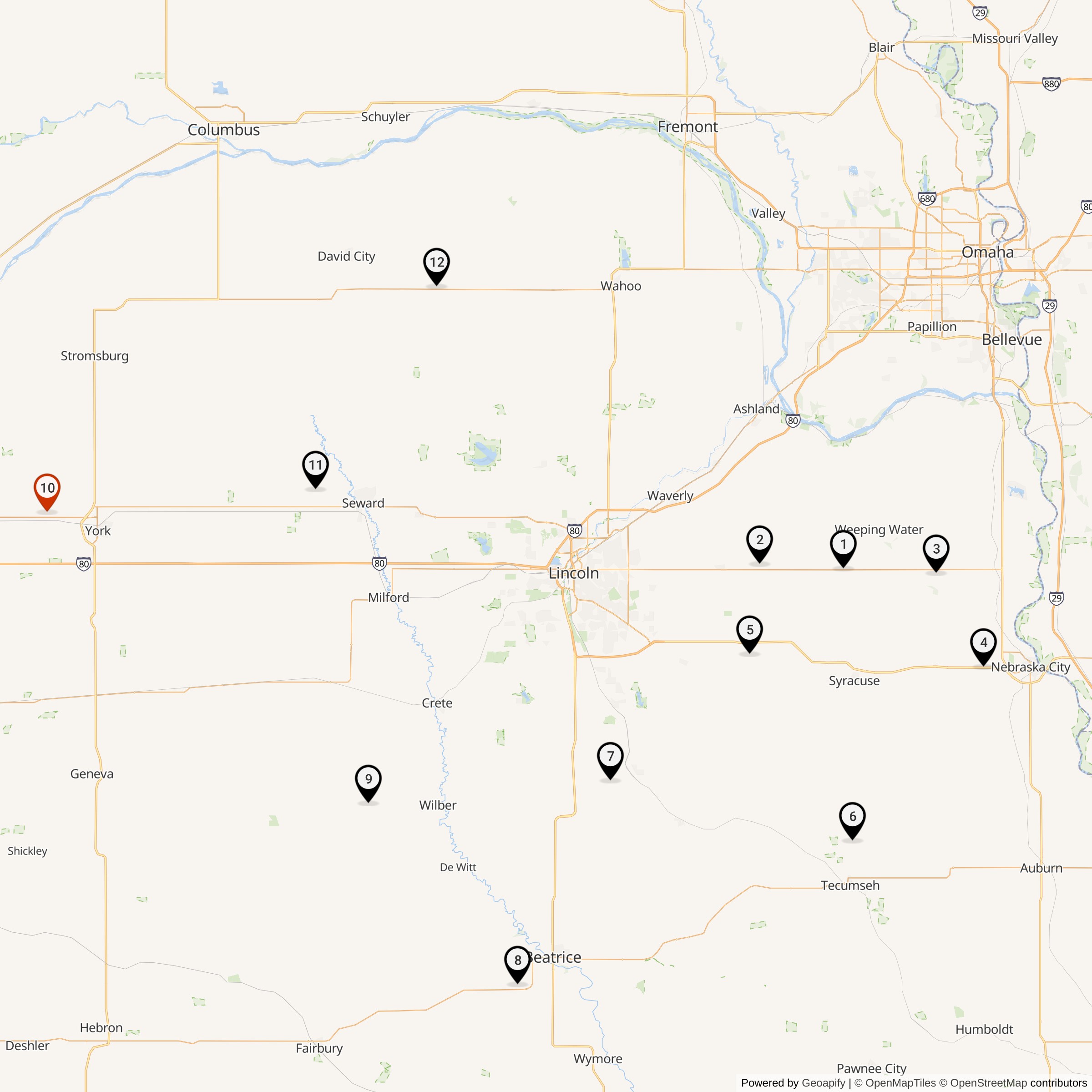
Atlas F Site 551-10 existed because the United States was trying to solve the survivability problem of its first operational ICBM generation. Early Atlas missiles gave Strategic Air Command a nuclear weapon that could reach intercontinental targets, but aboveground and lightly protected launchers were vulnerable. Atlas F placed the missile vertically in a hardened underground silo and dispersed individual complexes around a parent base, forcing a potential enemy to target many separate sites rather than one concentrated missile installation.The Lincoln Atlas F field was part of that rapid hardening and dispersal effort. In 1959, the Air Force designated Lincoln as a missile base. The initial plan called for nine silos, then three more were added to bring the squadron to the standard twelve-site Atlas F arrangement. Those twelve sites spread across eastern Nebraska, placing nuclear launch complexes near communities such as Elmwood, Eagle, Avoca, Nebraska City, Palmyra, Tecumseh, Firth/Cortland, Beatrice, Wilber, York, Seward, and Brainard/David City.
The Atlas F remained a transitional system. It used storable RP-1 kerosene fuel but required liquid oxygen before launch. The missile was not continuously raised above the silo, and it was not continuously loaded with liquid oxygen. In an operational launch-ready alert posture, the missile was protected underground with its support systems, crew, communications, power, and security ready. If a valid launch order or exercise procedure required launch preparation, the crew would open the heavy silo doors, prepare and raise the missile on its elevator, load liquid oxygen, complete checks, and launch. This was quicker and more survivable than the earlier Atlas D and E arrangements, but it still required hazardous cryogenic oxidizer handling and exposed the missile during the final countdown.
Construction and Activation
The Lincoln Atlas F program moved quickly. The Lincoln AFB Online Museum's 551st history states that the Air Force designated Lincoln for missile-base development in 1959, that the original construction contract called for nine silos, and that three more sites were later added. It describes construction from 1959 to 1962, with peak work involving about 1,900 workers building the silos around the clock because of the international tension of the period. Construction finally ended in June 1962, and Atlas F missiles were then shipped from their production plants and emplaced in the Lincoln field.The USACE 2008 fact sheet states that construction of the 6.38-acre site was completed in 1961. T
USACE states that the former site was excessed to the General Services Administration and conveyed to private individuals in 1965. That transfer statement is important because it explains why the site appears in later FUDS records rather than as an active Air Force property. It also shows how quickly the first-generation Atlas F sites moved from national-priority construction to excess property.
Missile System and Technical Role
Site 551-10 housed one SM-65F Atlas intercontinental ballistic missile. The Atlas F was built by General Dynamics / Convair and was the final operational Atlas ICBM variant. Public-source descriptions identify the Atlas F as a liquid-fueled ICBM using all-inertial guidance, carrying a thermonuclear warhead, and having a range of more than 7,000 miles. Open sources commonly associate the Atlas F weapon system with the W-38 thermonuclear warhead and Mark IV reentry vehicle.The assigned missile for Site 551-10 was General Dynamics manufacturing number 38F, General Dynamics missile serial number 61-2524, and Air Force missile tail number 524. The missile acceptance date was 1961-11-29 and delivery date was 1962-02-13.
Unlike some Atlas missiles later converted for space-launch service, missile 38F / AF tail 524 was not later launched, it was salvaged as scrap. That makes Site 551-10 different from sites whose assigned Atlas missiles later carried weather, navigation, or surveillance payloads. Here, the missile's known career appears to have ended with operational ICBM service and salvage.
Operational History
The 551st Strategic Missile Squadron operated the Lincoln Atlas F force during its brief operational life. The Lincoln AFB Online Museum states that the 551st SMS was assigned to maintain and operate part of America's first-generation ICBM family and stood on constant guard in eastern Nebraska against the Soviet threat. Its 551st history describes Atlas F crews working 24-hour shifts at the sites, with a five-person crew consisting of a missile combat crew commander, deputy missile combat crew commander, ballistic missile analysis technician, missile facility technician, and electric power production technician. Two guards remained on the surface to protect the site against sabotage or trespassers.Site 551-10 belonged to that crewed Atlas F environment. The crew did not operate from a distant Minuteman-style Launch Control Center; it served at the individual complex, directly connected to the missile, its elevator, launch-support systems, communications, power plant, and hazardous propellant equipment. The work was physically and technically demanding. Atlas missiles were powerful but delicate, with thin stainless-steel structures that depended on internal pressure. Liquid oxygen handling, RP-1 fuel, nitrogen pressurization, and underground launch equipment made every alert tour a combination of nuclear deterrence, industrial safety, and military readiness.
The Lincoln AFB Online Museum's history states that by the Cuban Missile Crisis in October 1962, most of Lincoln's Atlas F missiles were operational and that 551st members pulled long two-day shifts because only a limited number of crews had been trained on the system. The operational 551st sites were kept at a high alert level during the crisis and ready to launch if necessary. For Atlas F, that high alert posture did not mean the missile was permanently raised or continuously loaded with liquid oxygen. It meant the site, missile, crew, communications, and support systems were maintained in a condition to move quickly through launch preparation if a valid order came.
The Air Force and SAC chronology place the Lincoln Atlas F force within the broader rise and fall of first-generation ICBMs. The 551st SMS was one of the first Atlas F squadrons, part of SAC's effort to put hardened silo-based missiles on operational alert while Minuteman and Titan systems were still entering service. The same chronology shows how fast the system became obsolete, by early 1965, SAC was removing Atlas F missiles from alert, and by June 1965 the last Atlas squadrons were gone from the active operational ICBM force.
The Lincoln AFB Online Museum's Site 10 page identifies the York site as known to be the 551st SMS Alternate Command Post. The public page does not explain the exact command-post equipment, manning plan, continuity procedures, or whether the role was active throughout the site's operational life or assigned during a particular period.
Deactivation and Disposal
The squadron phaseout continued into April and June 1965. SAC chronology entries show that the last Atlas F ICBMs at the 551st Strategic Missile Squadron were removed from alert on 1965-04-12, completing the operational phaseout of the Atlas F weapon system. The last Series F Atlas ICBM to leave a SAC operational base was shipped from the 551st SMS at Lincoln AFB to storage for future launch-vehicle use on 1965-04-20. The 551st SMS was inactivated on 1965-06-25.Atlas F deactivation was not a Strategic Arms Reduction Treaty demolition program. It happened before the late-Cold War arms-control era that shaped many Minuteman and Peacekeeper site eliminations. The reason was technological and operational replacement. Solid-fueled Minuteman missiles could remain ready with far less maintenance and could launch more quickly from within their silos. Titan II also offered a more modern liquid-fueled silo-launched capability. The first-generation Atlas force, including the Lincoln sites, was too maintenance-intensive, too hazardous, and too vulnerable during final launch preparation to remain in the force once the newer systems were available.
USACE's 2008 fact sheet states that Site 551-10 was excessed to the General Services Administration and conveyed to private individuals in 1965.
Current Status and Site Use
Site 551-10 is a decommissioned former Atlas F missile complex on private or restricted property. It is not open to the public. The Lincoln AFB Online Museum describes it as abandoned, with a junk yard on site. Public imagery from the museum shows the fenced former compound, gate, concrete remains, and scattered post-military materials in an agricultural setting. USACE imagery shows later environmental remediation infrastructure rather than missile equipment.The site is one of the more heavily documented environmental-response sites in the Lincoln Atlas field. USACE states that TCE was used during operation and decommissioning of the former missile site. Investigations between 1994 and 2008 included a two-phase site investigation, remedial investigation/feasibility study, and supplemental remedial investigation/feasibility study. The 2008 fact sheet records groundwater contamination above the drinking-water maximum contaminant level, a plume originating at the missile silo and extending east to Road I, and later information showing a groundwater TCE concentration as high as 1,440 micrograms per liter.
The selected cleanup approach included soil vapor extraction for contaminated soil and groundwater extraction, treatment, and reinjection for the plume. In 2008, USACE modified a remediation contract to install a soil vapor extraction treatment system and three groundwater intercept, treatment, and reinjection systems. A June 2009 contract supported treatment-system operations. USACE reported that source-area soil remediation was completed in December 2014, that government and contractor equipment associated with the soil vapor extraction system was removed from the landowner's property, and that ongoing activities included treatment-system operation, monitoring, installation of wells, plume capture, and vapor-intrusion evaluations.
EPA's Superfund search listing identifies the site as LINCOLN (EX) ATLAS "F" FAC S-10, York, York County, Nebraska, EPA ID NESFN0703245, and Not NPL. The coordinate 40.895283, -97.685544 identifies the former missile complex, not a public viewing point. The site should be treated as private/restricted property with environmental hazards and no public access.
Chronology
- 1959 The Air Force designated Lincoln AFB for missile-base development; the plan eventually became a twelve-site Atlas F field.
- 1961 USACE states that construction of the 6.38-acre Site 10 launch facility / launch control center site was completed.
- 1961-04-01 The 551st Strategic Missile Squadron was activated for the Atlas F mission at Lincoln AFB.
- 1961 Assigned missile 38F / AF tail 524 was accepted by General Dynamics.
- 1962 Assigned missile 38F / AF tail 524 was delivered for the Lincoln AFB Atlas F force.
- 1962-10 During the Cuban Missile Crisis, most Lincoln Atlas F missiles were operational, and 551st crews pulled extended shifts because trained crews were limited.
- 1964-1965 USACE describes Site 10 as operational between 1964 and 1965; this conflicts with 551st Squadron sources indicating operational use beginning earlier in the Lincoln field.
- 1965-04-12 The last Atlas F ICBMs at the 551st Strategic Missile Squadron were removed from alert, completing the operational phaseout of the Atlas F weapon system.
- 1965-04-20 The last Series F Atlas ICBM to leave a SAC operational base was shipped from the 551st SMS at Lincoln AFB to storage for future launch-vehicle use.
- 1965-06-25 The 551st Strategic Missile Squadron was inactivated.
- 1965 USACE states that Site 10 was excessed to GSA and conveyed to private individuals.
- 1994 Phase I environmental site inspection work identified solvent contamination concerns at Site 10.
- 1998 Phase II environmental site inspection work continued investigation of soil and groundwater contamination.
- 2002 The remedial investigation/feasibility study identified a groundwater plume originating at the missile silo and extending east to Road I.
- 2005 A supplemental RI/FS provided additional groundwater information and reported TCE as high as 1,440 micrograms per liter; the Corps awarded a cleanup contract.
- 2006 Additional soil and groundwater sampling indicated TCE-contaminated soil and a groundwater plume extending southeast toward York.
- 2008 USACE modified the remediation contract to install soil vapor extraction and three groundwater intercept/treatment/reinjection systems.
- 2009-06 A contract was awarded to operate the treatment systems.
- 2010-10-21 A public meeting was held in York to present the proposed plan for contaminated soil and groundwater remediation.
- 2014-12 USACE reported that source-area soil remediation was completed.
- 2015 USACE described continued treatment-system operation and maintenance, installation of new injection and monitoring wells, and vapor-intrusion evaluations.
- 2017 USACE's Atlas Site 10 page described proposed continued treatment-system operation, maintenance, and long-term monitoring.
Read about the Atlas at Lincoln AFB
All Atlas Missile Silo Locations