
Atlas F Site 551-6 Missile Silo, Tecumseh Nebraska
Longitude: -96.1890364142006
Site Type: Atlas F vertical silo launch facility
Missile Type: SM-65F Atlas
Missile Assigned to this Silo: GD mfg 19F; GD serial 60-5542; AF tail 542
Number of Launchers/Missiles: 1
Parent Base: Lincoln AFB
Missile Wing: 98th Strategic Aerospace Wing
Missile Squadron: 551st Strategic Missile Squadron
Approximate Base Size: 4.25
Current Site Use: Former Atlas F launch complex on private rural property north of Tecumseh; documented USACE FUDS Site 6 with TCE groundwater contamination and ongoing/unresolved response significance.
Site Ownership: Former USAF/DOD; Lincoln AFB Online Museum lists private ownership; FUDS environmental response remains documented through USACE/DOD records.
Accessible: No public access / private property
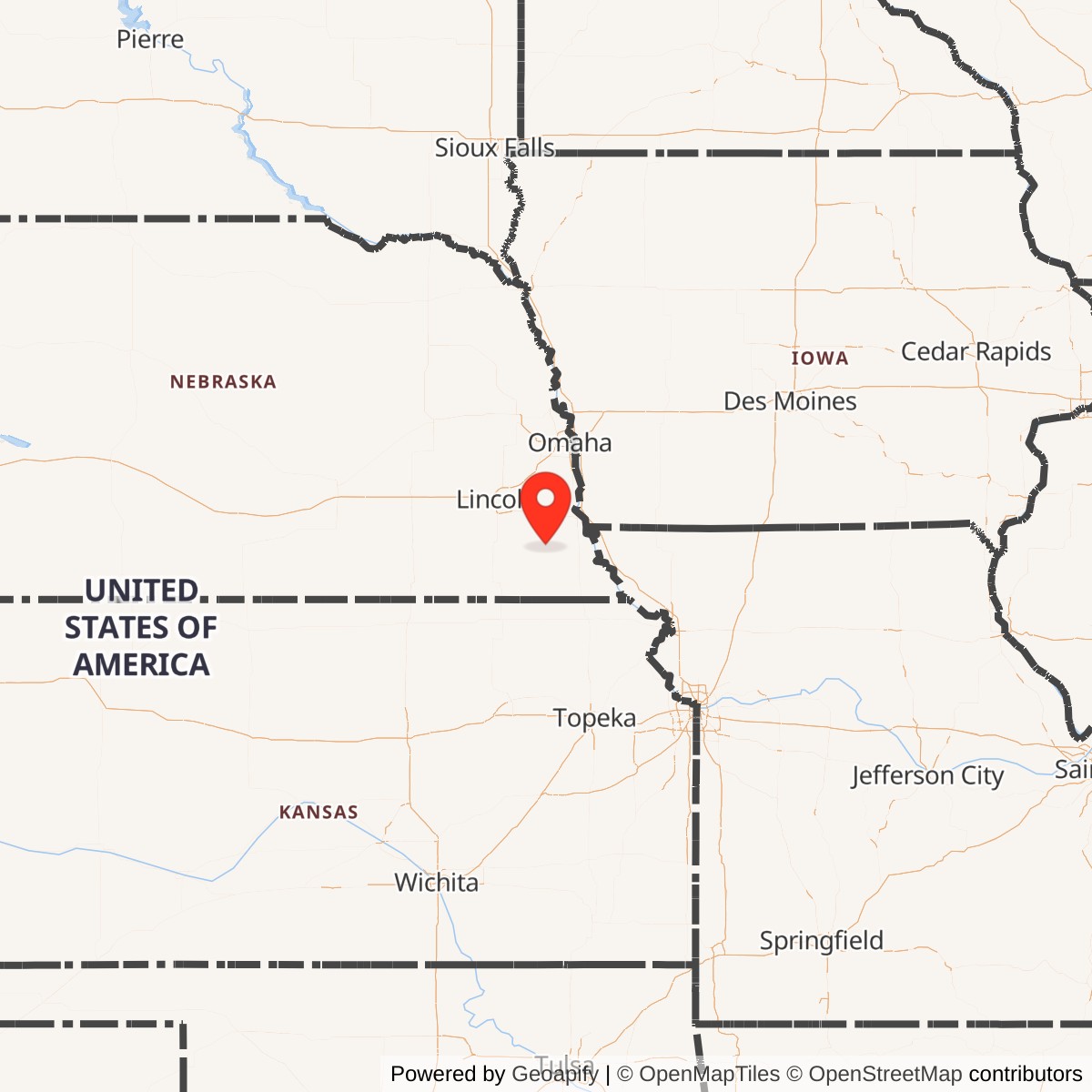
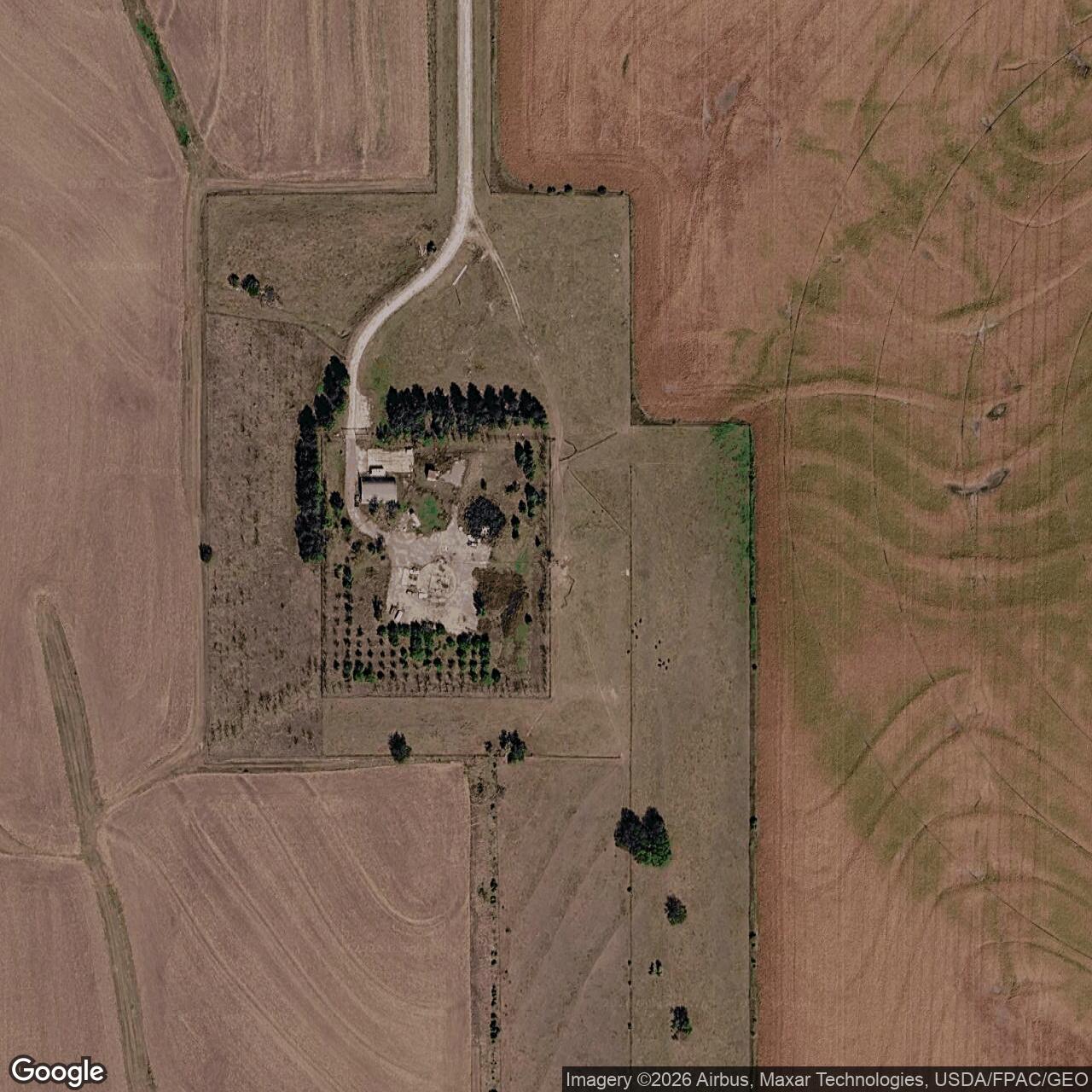
Atlas F Site 551-6 is where the Atlas story becomes both buried and visible: four miles north of Tecumseh, Nebraska, a Cold War launch complex still shows the unmistakable square footprint of a hardened missile site, while its most important later history lies underground in a plume of trichloroethylene-contaminated groundwater. This was not simply an abandoned silo. It was a manned nuclear-alert station, a short-lived first-generation ICBM base, a later source of environmental investigation, and the former home of an Atlas airframe that tried one last time to reach orbit as a weather-satellite booster.
Atlas F Site 551-6 was one of the twelve SM-65F Atlas intercontinental ballistic missile launch complexes operated by the 551st Strategic Missile Squadron at Lincoln Air Force Base, Nebraska. The site is near Tecumseh in Johnson County. It appears in sources as Atlas F Site 551-6, 551st Strategic Missile Squadron Site 6, Air Force Operational Site Number 6, Construction Site Number 3, and LINCOLN AFB AF FAC S-6 in FUDS / DERP records.
The parent base was Lincoln AFB. The operational missile unit was the 551st Strategic Missile Squadron, associated with the 98th Strategic Aerospace Wing during the final Atlas F period. Atlas F launch complexes did not use a Minuteman-style remote Launch Control Center. Each Atlas F site was a self-contained, manned launch complex with an underground launch-control area connected to the missile silo, so the parent LCC field is not applicable for this site.
The missile assigned to Site 551-6 was General Dynamics manufacturing number 19F, General Dynamics serial number 60-5542, and Air Force tail number 542. The missile was delivered on 1961-10-12. The missile later flew from Vandenberg AFB on 1980-05-29 carrying the NOAA-B weather satellite, but the launch failed and left the spacecraft in an unusable orbit.
Site 551-6 is no longer an active missile installation. The 551st Strategic Missile Squadron inactivated on 1965-06-25 after the Atlas F phaseout. The former launch complex is now private property and a FUDS environmental site associated with documented TCE groundwater contamination. It is not open to the public.
Location, Landscape, and Site Description
Site 551-6 lies in the rural agricultural landscape north of Tecumseh, Nebraska, in Johnson County.The site's location north of Tecumseh was part of the Lincoln Atlas F ring. Like the other eleven 551st SMS launch complexes, Site 551-6 was far enough from Lincoln AFB to complicate an enemy attack plan, but close enough for missile crews, maintenance personnel, security forces, and support vehicles to reach it from the base and the surrounding road network. The site occupied farmland, not a traditional air-base cantonment, because dispersal was central to the Atlas F concept.
The U.S. Army Corps of Engineers describes Site 6 as a typical Atlas F design. Its facilities included an underground reinforced-concrete launch silo; a connecting underground launch control center; a water-treatment plant with four underground water-storage tanks; a cooling tower; a septic tank with subsurface sand filter; a holding pond; an incinerator; two Quonset huts; one underground fuel tank; a helicopter landing pad outside the fence east of the site; and an industrial waste pond built to hold overflow material from the bottom of the missile silo. The Corps states that the portion of the site within the security fence encompassed approximately 4.25 acres.
That official site description is unusually valuable because it confirms that the former launch complex was more than a silo hole. Atlas F launch sites were small industrial and military plants built around a single missile. They needed power, water, environmental control, propellant support, communications, crew spaces, security facilities, waste handling, and access for heavy vehicles. The post-military surface remains seen in satellite imagery are only the visible portion of a much larger buried complex.
Satellite photographs and the Lincoln Air Force Base Online Museum image show the same basic footprint: a curving access road entering a fenced or tree-lined former launch property, a central concrete launch area, and surviving surface features amid cultivated fields and pasture. The visible remains should not be read as evidence of safe access. Former Atlas silos can be flooded, oxygen-deficient, structurally unstable, contaminated, or otherwise hazardous.
Strategic and Cold War Context
Site 551-6 existed because Strategic Air Command needed a dispersed, hardened, intercontinental missile force before second-generation solid-fueled missiles could fully take over the nuclear-alert mission. Atlas was the first operational American ICBM family. Atlas D and Atlas E provided an initial intercontinental capability, but Atlas F was the final operational Atlas ICBM variant and the one most closely associated with the transition to vertical, hardened silo launchers.The Lincoln missile field was designed to spread twelve Atlas F missiles around eastern Nebraska rather than concentrate them on Lincoln AFB. Each launch complex was a separate target, a separate guarded facility, and a separate operational node. This dispersion was central to deterrence: an attacker would have to account for multiple hardened sites, each capable of launching a thermonuclear weapon if a valid order came through the command system.
Atlas F was also a transitional weapon. It was more survivable than earlier Atlas systems, but it was not yet the kind of solid-fueled, remotely monitored, near-instant-launch missile represented by Minuteman. Atlas F used RP-1 kerosene fuel and liquid oxygen oxidizer. The missile could be stored vertically in the silo with RP-1 aboard, but liquid oxygen had to be loaded during the launch sequence. The missile was then raised out of the silo on an elevator and launched from the surface position.
That distinction matters when describing alert posture. When a Lincoln Atlas F site was placed in an operational launch-ready alert posture, that did not mean the missile was continuously raised above the silo or continuously loaded with liquid oxygen. It meant the assigned missile, launch crew, power systems, environmental systems, command-and-control links, authentication procedures, communications, fuel and oxidizer equipment, maintenance posture, and security force were kept ready so the site could proceed through the Atlas F launch sequence as quickly as the system allowed after receipt of a valid launch order.
The Cuban Missile Crisis gave that posture real urgency. Lincoln AFB Online Museum history states that by October 1962 most of Lincoln's Atlas F missiles were operational and that members of the 551st pulled long two-day shifts because the number of crews trained on the system was limited. Site 551-6 should be understood within that crisis environment: a rural Nebraska launch complex held ready by people working inside a volatile first-generation missile system.
Construction and Activation
The broader 551st SMS record gives the construction context. The 551st Strategic Missile Squadron was organized at Lincoln AFB on 1961-04-01 and inactivated on 1965-06-25. The Air Force Historical Research Agency unit history, as reproduced by USAF Unit History, records the 551st SMS as assigned to the 818th Air Division beginning 1961-04-01 and lists Atlas as the squadron's weapon system in 1962. The same history states that construction of the Lincoln sites occurred around the towns of Eagle, Elmwood, Avoca, Nebraska City, Palmyra, Tecumseh, Cortland, Beatrice, Wilber, York, Seward, and Brainard, with work forces operating under the pressure of Cold War urgency.The Lincoln Air Force Base Online Museum describes the construction effort as a 1959-to-1962 program and states that construction finally ended in June 1962. It also notes that the 551st began in a small building on the west edge of the base before moving to Building 310, the Missile Assembly and Maintenance Shop, where missiles were maintained, crews trained, administrative functions operated, and crews received briefings before going to their sites.
Site 551-6's assigned missile was General Dynamics manufacturing number 19F, General Dynamics serial number 60-5542, and Air Force tail number 542.
As with other Atlas F sites, delivery of the missile did not by itself make the launch complex operational. The silo structure, launch-control spaces, elevator, propellant systems, power plant, environmental controls, communications, security arrangements, trained crew procedures, and support infrastructure all had to be complete before the site could stand alert. By 1962, Site 551-6 had become one of the twelve Lincoln Atlas F launch complexes available to SAC's first-generation ICBM force.
Missile System and Technical Role
The missile system at Site 551-6 was the SM-65F Atlas. The 551st SMS overview describes the Atlas F as a silo-launcher system in which the missile was kept vertically in the silo, raised out of the silo before launch, and powered by RP-1 and liquid oxygen. RP-1 remained aboard the missile during alert, while liquid oxygen was loaded as part of the launch sequence. The same source describes Atlas F as carrying a General Electric Mark IV reentry vehicle with a W-38 nuclear warhead and an approximate 3.8-megaton yield, with a range of roughly 6,000 miles.Site 551-6 was a manned Atlas F launch complex. Its crew operated from the underground launch-control area attached to the silo, rather than from a distant Minuteman-style Launch Control Center. Lincoln AFB Online Museum history describes the Atlas F crew as five people: a missile combat crew commander, deputy missile combat crew commander, ballistic missile analysis technician, missile facility technician, and electric power production technician. It also notes that two guards remained on the surface to protect the site against sabotage or trespassers.
The assigned missile, 19F / AF tail 542, is one of the cases where the airframe's later career can be tracked. After its ICBM service ended, missile 19F was not simply forgotten in storage. It eventually became an Atlas E/F space-launch vehicle. On 1980-05-29, it launched from Vandenberg AFB's Space Launch Complex 3 West carrying NOAA-B, a weather satellite intended for the TIROS-N / NOAA polar-orbiting weather-satellite series. The launch failed, a loose seal flooded the B-1 turbopump, reduced thrust, caused the sustainer engine to compensate by burning longer, and resulted in upper-stage ignition while still attached to the Atlas, leaving the payload in a useless orbit.
That later launch history gives Site 551-6 an unusual afterlife. For roughly three years the airframe belonged to a nuclear-alert complex north of Tecumseh. Nearly fifteen years after the site was decommissioned, the same missile body flew again as part of the nation's space-launch inventory. Its NOAA-B failure does not erase its importance; instead, it shows how first-generation ICBM hardware was repurposed for satellite missions and how old Atlas systems continued to shape U.S. space operations long after SAC no longer needed them as nuclear weapons.
Operational History
Operationally, Site 551-6 was part of the 551st Strategic Missile Squadron at Lincoln AFB. The 551st SMS was activated in missile form during the rapid early-1960s ICBM buildup and assigned to Strategic Air Command. The squadron's mission was to operate twelve Atlas F launch complexes dispersed around Lincoln AFB. Each site held one missile and was manned continuously during its active alert period.At a site like 551-6, routine alert was labor-intensive. Crews lived and worked in the launch complex, monitored the missile and its support systems, maintained readiness, and remained prepared to authenticate and execute orders. Maintenance teams supported mechanical, electrical, propellant, communications, and environmental systems. Security personnel guarded the surface facilities. The missile itself was hazardous: Atlas was thin-skinned, liquid-fueled, and dependent on precise pressure, fuel, oxidizer, guidance, and launch-support systems.
The 551st SMS's operational life was brief. The Air Force and SAC moved quickly from Atlas toward Minuteman, whose solid fuel, remote launch-control arrangement, and faster launch capability made it far more suitable for long-term alert. USAF unit-history material records that the last Series F Atlas ICBMs were removed from alert at the 551st Strategic Missile Squadron on 1965-04-12 and that the last Series F Atlas ICBM, also the last Atlas and the last first-generation liquid-fuel ICBM to leave a SAC operational base, was shipped from the 551st SMS on 1965-04-20 for future use as a launch vehicle. Headquarters SAC inactivated the remaining Atlas squadrons, including the 551st SMS, on 1965-06-25.
Deactivation and Disposal
Site 551-6 left active missile service during the rapid 1965 phaseout of the Atlas F system. USAF unit-history material and SAC chronology context place the larger phaseout in the same spring: first-generation Atlas missiles were being removed from alert, and the 551st SMS inactivated on 1965-06-25. The 551st history specifically notes that the last Series F Atlas missiles were removed from alert at Lincoln on 1965-04-12 and that the final Series F Atlas ICBM left a SAC operational base on 1965-04-20.The missile assigned to Site 551-6 did not remain at Tecumseh after the Atlas F phaseout. Missile 19F later became part of the space-launch inventory and flew from Vandenberg in 1980. The site itself, however, became surplus to the operational missile mission.
What can be said with confidence is that the former launch complex remained physically present. The Corps of Engineers' 2015 FUDS fact sheet identifies the former site, describes the remaining historical facilities, and treats the area as a formerly used defense site. The Lincoln Air Force Base Online Museum describes Site 6 as under private ownership. The visible surface pattern in public imagery shows that the former launch footprint remained recognizable decades after the Atlas F program ended.
Site 551-6's deactivation predates the major late-Cold War arms-control demolition programs that later affected Minuteman and Peacekeeper facilities. Its disposal was instead part of the early retirement of first-generation liquid-fueled ICBMs. Some Atlas hardware was reused for research and space launch, as missile 19F demonstrates. The launch complex itself became a private, inactive, environmentally monitored remnant of the first ICBM era.
Current Status and Site Use
Atlas F Site 551-6 is inactive, decommissioned, and privately owned. It is not a public historic site and should not be entered without lawful permission. The coordinates 40.431726, -96.189036 identify the former launch-complex location near Tecumseh, not a public-access point.The current use is best described as a former Atlas F launch complex on private rural property with ongoing or unresolved environmental-response significance. The Lincoln Air Force Base Online Museum identifies the site today as private ownership. USACE identifies the site as a FUDS property and documents TCE groundwater contamination, investigations, and planned remedial work. EPA identifies LINCOLN (EX) ATLAS "F" FAC S-6 as EPA ID NEN000703242, not on the National Priorities List, with no further federal Superfund action planned under that EPA listing; that EPA status should not be confused with the separate FUDS environmental-response record managed through the Department of Defense and USACE.
The site remains dangerous as a potential physical environment even if viewed only as an abandoned Cold War artifact. Former Atlas F launch complexes may contain confined spaces, unsafe underground structures, contaminated water, unstable concrete, hazardous debris, oxygen-deficient areas, chemical residues, and private-property restrictions.
Chronology
- 1961-04-01 The 551st Strategic Missile Squadron was organized at Lincoln AFB.
- 1961 Missile 19F / AF tail 542 was accepted.
- 1961-10-12 Missile 19F / AF tail 542 was delivered for the Lincoln AFB / 551st SMS operational ICBM mission.
- 1962 The Lincoln AFB Online Museum history states that construction of the Lincoln Atlas F silos was completed in June and that most Lincoln Atlas F missiles were operational by the Cuban Missile Crisis.
- 1962-10 During the Cuban Missile Crisis, operational Lincoln Atlas F sites were held in a heightened launch-ready alert posture; for Atlas F, this did not mean continuous aboveground or liquid-oxygen-loaded status.
- 1965-04-12 USAF unit-history material states that the last Series F Atlas ICBMs were removed from alert at the 551st Strategic Missile Squadron, completing the operational phaseout of the Atlas F weapon system.
- 1965-04-20 USAF unit-history material states that the last Series F Atlas ICBM left a SAC operational base when shipped from the 551st Strategic Missile Squadron to storage for future use as a launch vehicle.
- 1965-06-25 The 551st Strategic Missile Squadron was inactivated.
- 1980-05-29 Former Site 551-6 missile 19F / AF tail 542 launched NOAA-B from Vandenberg AFB's SLC-3W; the launch failed and the payload was left in an unusable orbit.
- 1992 GAO records list the FUDS HTRW project for LINCOLN AFB AF FAC S-6 as beginning in 1992.
- 2010 A USACE-summarized site inspection report found TCE groundwater contamination at 1,500 micrograms per liter, above the maximum contaminant level.
- 2012 USACE states that a remedial investigation was completed for the Site 6 FUDS property.
- 2015 USACE states that a data-gap investigation was completed in early 2015, including monitoring wells at approximately 50-foot and 150-foot depths.
- 2015 The USACE FUDS Inventory for Nebraska listed LINCOLN AFB AF FAC S-6 at Tecumseh, Johnson County, as B07NE0095, site number 01, HTRW.
- 2023 DOD/DENIX Table 7 listed LINCOLN AFB AF FAC S-6 / NE79799F047000 among FUDS properties with a cleanup-completion target year of 2046 and remaining projected cost.
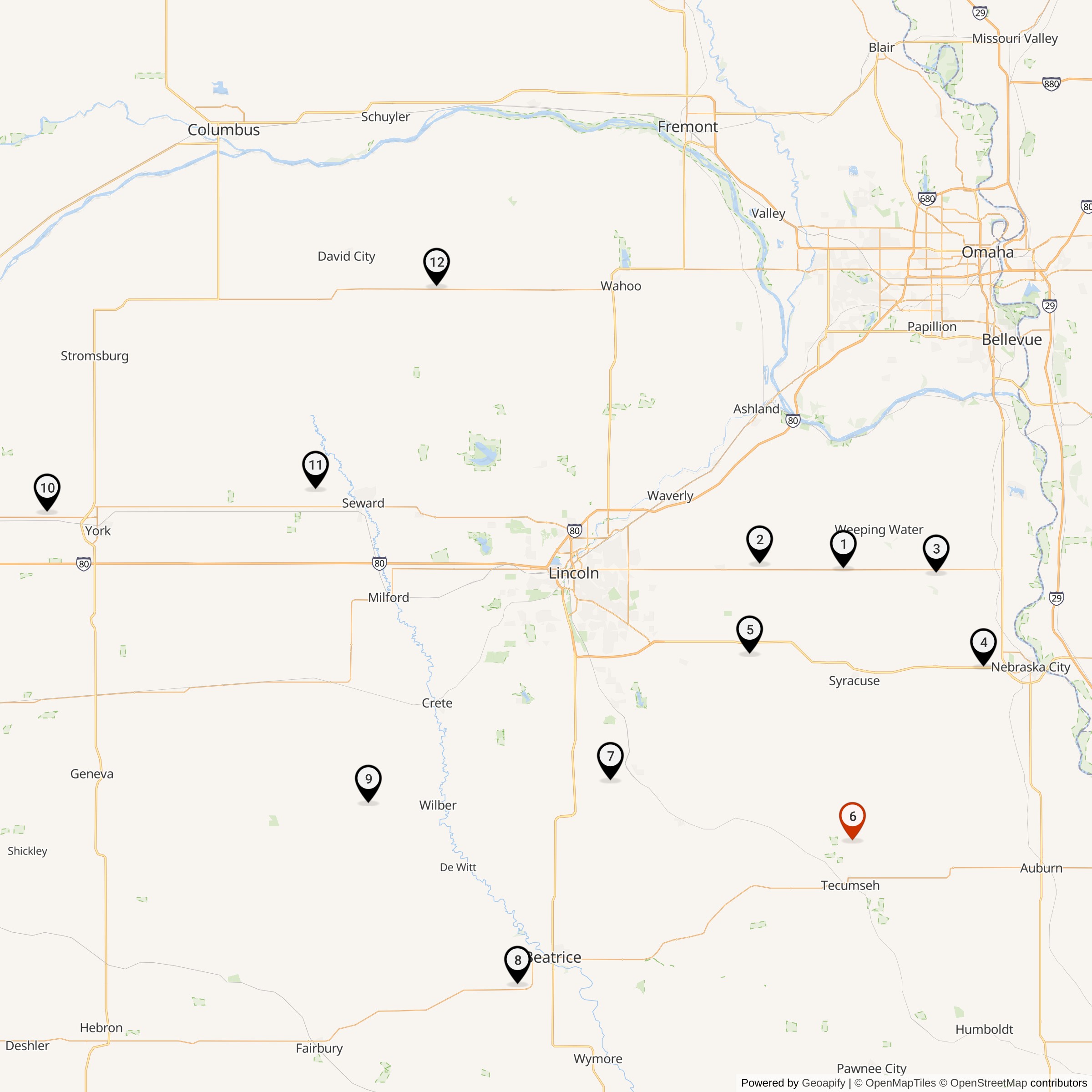
Read about the Atlas at Lincoln AFB
All Atlas Missile Silo Locations