
Atlas F Site 578-11 Missile Silo, Anson Texas
Longitude: -99.90946944
Site Type: Atlas F vertical silo launch facility
Missile Type: SM-65F Atlas
Number of Launchers/Missiles: 1
Parent Base: Dyess AFB
Missile Wing: 96th Strategic Aerospace Wing
Missile Squadron: 578th Strategic Missile Squadron
Current Site Use: Private former Atlas F silo complex
Site Ownership: Private ownership; Atlas Missile Museum of Texas identifies Steve Savage as owner of the Site 11 Atlas F facility in Anson in 2026 tour context; current deed ownership not independently verified.
Accessible: Private property / controlled access only; not open for casual public access.
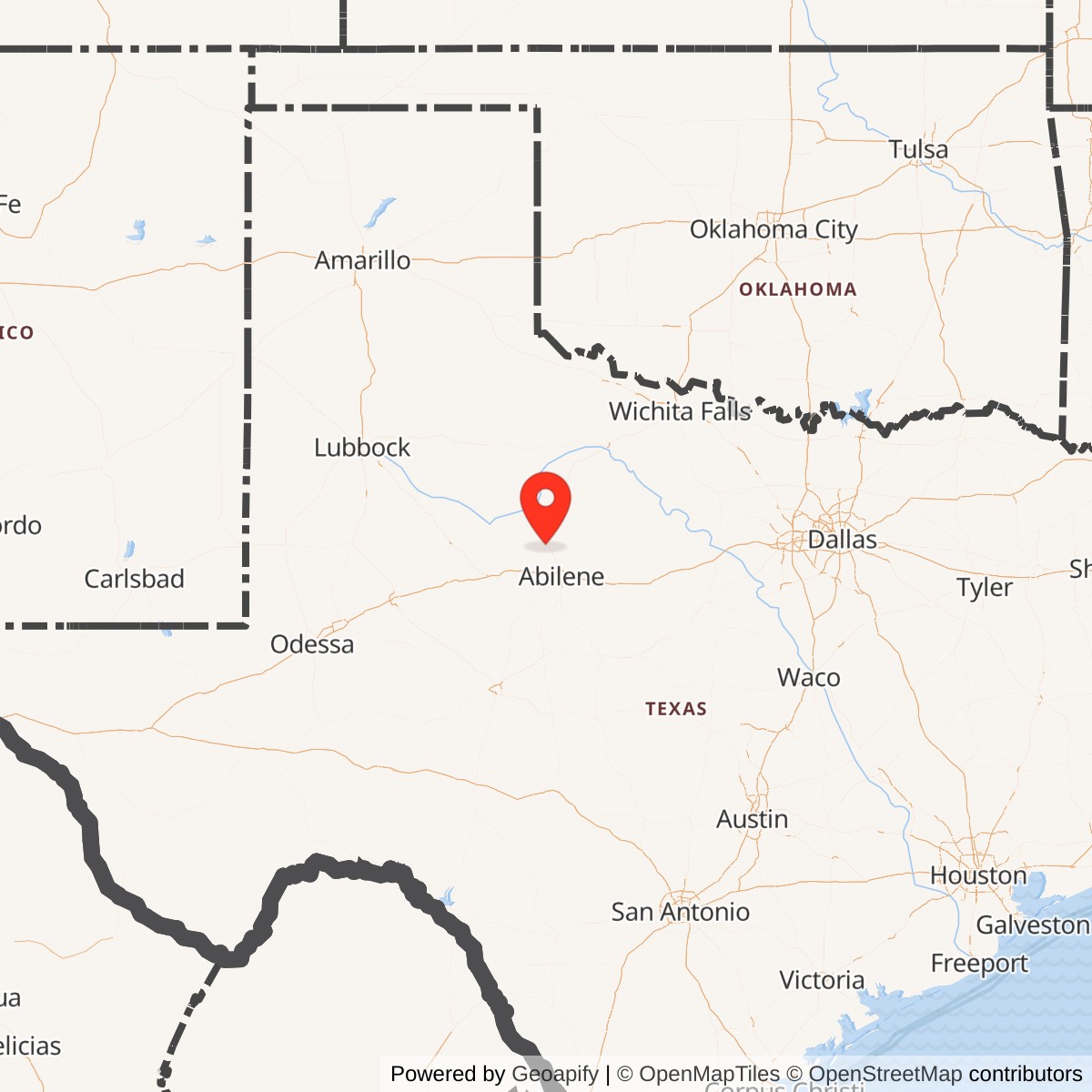
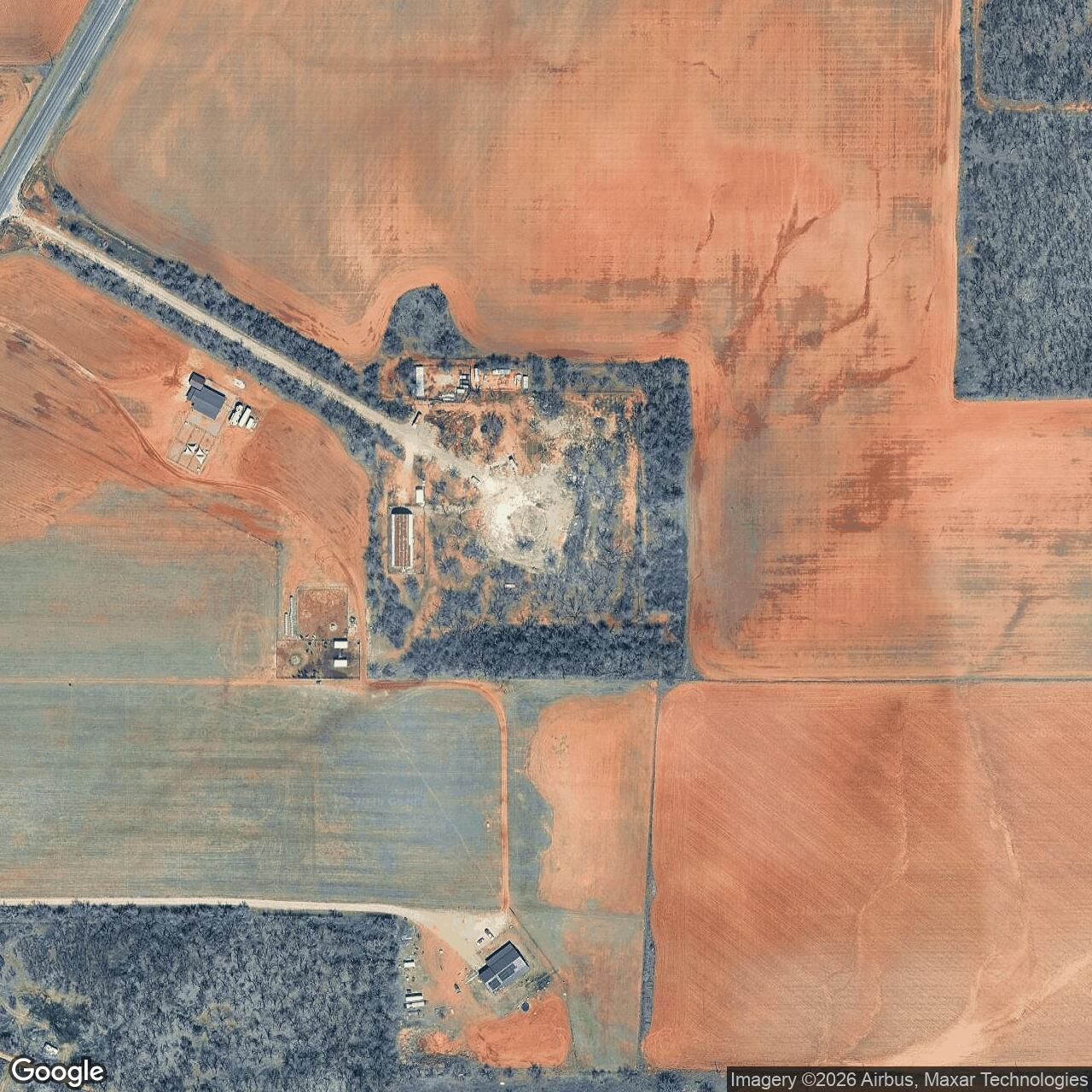
North of Abilene, in the open country around Anson, Atlas F Site 578-11 was one of the Dyess missile field's hidden underground machines. The site looked from the surface like a remote fenced compound in Jones County farm and ranch country. Beneath that rural appearance, however, was a hardened vertical silo, a buried launch-control center, an access tunnel, power and environmental-control systems, liquid-oxygen and fuel support equipment, communications circuits, and the machinery needed to raise a first-generation American intercontinental ballistic missile from underground shelter to launch position.
Site 578-11 is especially useful for telling the Atlas F story because it is more than a coordinate on an old missile map. The site is identified in public records as the Anson launch complex of the 578th Strategic Missile Squadron. Its assigned missile was Atlas 80F, serial number 61-2566, Air Force tail number 566, the missile later flew again after its nuclear-alert career, launching on 1974-09-08 with a re-entry-vehicle test payload identified as ACE-3. A site that once existed to hold a thermonuclear-armed Atlas F on alert therefore also connects to the later reuse of retired Atlas missiles as test and space-launch vehicles. The Anson complex is also represented by a site-specific construction-photo set that shows the hard, physical work of building a deep silo in West Texas: the circular excavation, cranes, heavy steel, interior work platforms, concrete forms, and the missile itself standing within the launch machinery.
Installation / Site Identity
Atlas F Site 578-11 was a single SM-65F Atlas intercontinental ballistic missile launch complex assigned to the 578th Strategic Missile Squadron at Dyess Air Force Base, Texas. The site code is 578-11. It was one of twelve Atlas F launch complexes operated around Dyess by the 96th Bombardment Wing, later the 96th Strategic Aerospace Wing, through the 578th Strategic Missile Squadron.Like the other Dyess Atlas F complexes, Site 578-11 did not have a separate Minuteman-style remote Launch Control Center. The launch complex itself contained its own underground launch-control center and associated support spaces.
Official 578th Strategic Missile Squadron unit-history material states that the squadron was organized at Dyess Air Force Base on 1961-07-01, that construction of the Dyess missile-field project began on 1960-06-07, that the squadron was turned over to Strategic Air Command on 1962-11-04, and that the squadron became operational on 1962-11-15.
Atlas F Site 578-11 is inactive and decommissioned as a military installation. It is not an active missile facility. The 578th Strategic Missile Squadron was inactivated on 1965-03-25 during the accelerated phaseout of the Atlas E, Atlas F, and Titan I first-generation ICBMs. The former Site 578-11 property is private property. Atlas Missile Museum of Texas material identifies Steve Savage as owner of the Site 11 Atlas F facility in Anson in connection with owner-facilitated tours. Public access should be treated as private and controlled rather than open.
Location, Landscape, and Site Description
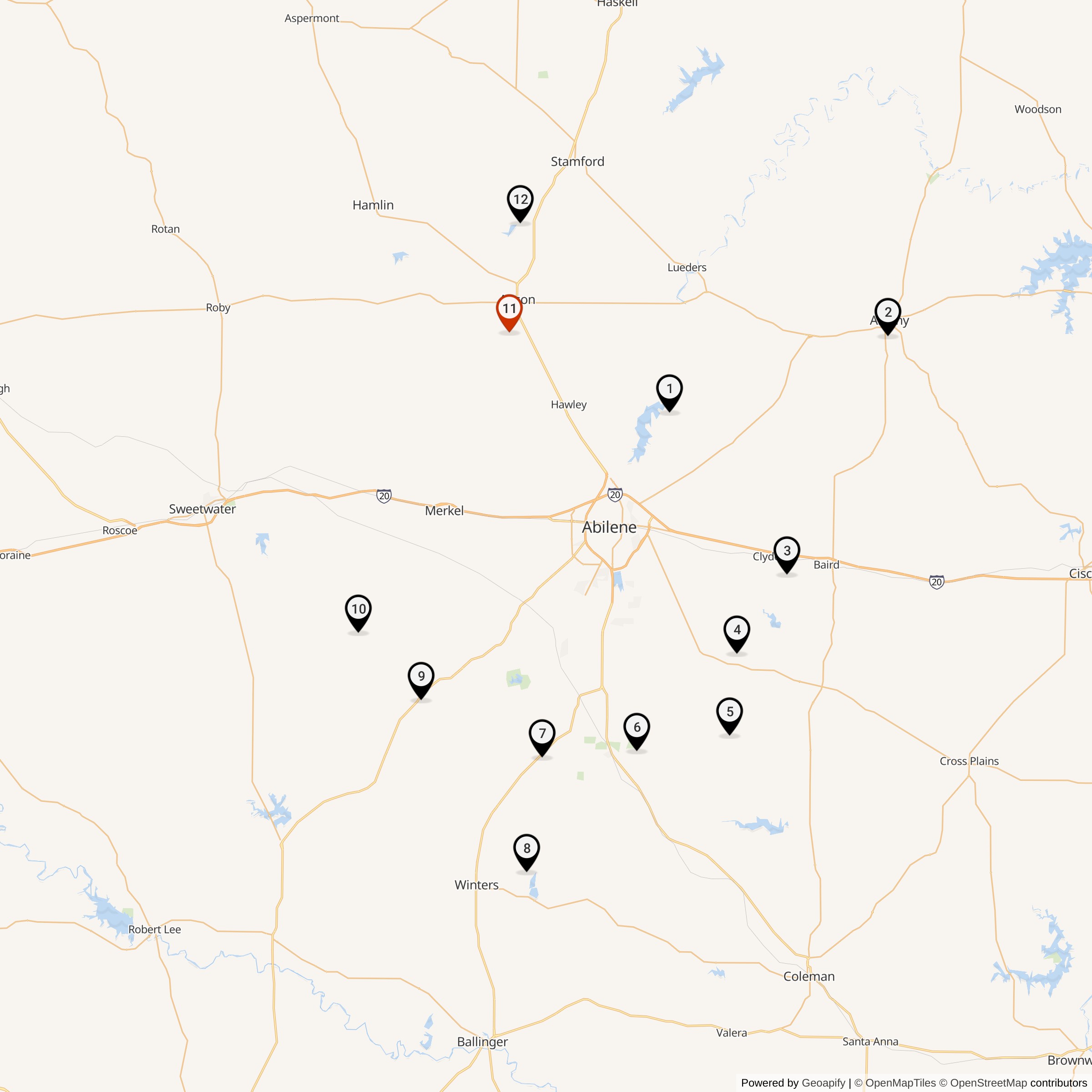
Site 578-11 lies in rural Jones County, northwest of Abilene and near Anson, Texas. Its coordinates, 32.71120556, -99.90946944, place it in open West Texas farm and ranch country, north of the central Dyess Air Force Base area and within the dispersed ring of Atlas F launch complexes assigned to the 578th Strategic Missile Squadron. This was exactly the kind of landscape the Atlas F basing program needed: open enough to provide separation between launchers, close enough to be supported from the parent base, and rural enough for security buffers, access roads, utility corridors, and construction staging.The Dyess missile field was not a single fenced missile base. It was a ring of individual, hardened launch complexes spread across several counties around Abilene. Official 578th SMS unit-history material lists the twelve lift-launcher locations as Abilene, Albany, Clyde, Denton County, Oplin, Lawn, Bradshaw, Winters, Shep, Nolan, Anson, and Corinth. Site 578-11 was the Anson location in that system. It was operationally connected to Dyess Air Force Base, but physically separated from it, making the site one of the remote outposts of Strategic Air Command's early land-based ICBM force.
As built, Site 578-11 followed the Atlas F silo-lift configuration. The missile was stored vertically in a hardened underground silo. It did not launch directly from inside the silo. In a launch sequence, the overhead doors opened, the missile was raised by an elevator-like launcher to the surface, and the missile was then fired from the raised launch platform. The site therefore combined underground protection with a surface launch method. This arrangement required a deep silo, heavy doors, a vertical launcher platform, a suspended steel crib, propellant and pressurization systems, environmental controls, electrical equipment, communications equipment, access tunnels, and the underground launch-control center.
The standard Atlas F complex was dominated by the silo itself, but the operational site was more than a tube in the ground. Above ground, a visitor during the missile era would have seen a fenced compound, access roads, security features, ventilation and utility structures, support buildings, antennas or communications-related equipment, and hardstands or work areas. Underground, the site contained the launch-control spaces, equipment rooms, and passageways necessary to monitor and prepare the missile. Atlas Missile Museum of Texas Site 11 images show the type of internal and construction detail that made these properties so substantial: concrete and steel inside the silo, work platforms, structural framing, interior rooms and utility spaces, and missile/launch hardware documented during the active or construction period.
The site's present condition should be treated cautiously from public sources. Atlas Missile Museum of Texas includes a Site 11 construction-photo page and later news material indicating that the Site 11 owner helped facilitate tours at the Oplin museum site. Those records show that Site 578-11 remains a recognized private former Atlas F property, but they do not establish general public access. It should be treated as private land with underground confined-space hazards and possible environmental or structural risks.
Strategic and Cold War Context
Site 578-11 existed because the United States wanted a survivable, rapid-reaction land-based nuclear deterrent in the years when intercontinental ballistic missiles were still new. The Atlas was the United States Air Force's first operational intercontinental ballistic missile. It emerged from the early Cold War competition to build weapons capable of reaching targets across continents, and it became one of the first practical links between nuclear deterrence, missile engineering, and dispersed hardened basing.The National Park Service describes Atlas as the Air Force's first operational ICBM and notes that Atlas E and Atlas F sites were deployed across the United States. At their peak, 132 Atlas sites were operational from December 1962 through May 1964. That peak coincided almost exactly with the active life of the Dyess Atlas F field. Site 578-11 was therefore not a late, marginal remnant of the Atlas program; it was part of the system's full operational deployment at the moment when first-generation ICBM forces were most visible in Strategic Air Command planning.
Atlas F was the final and most hardened operational Atlas variant. Earlier Atlas D sites relied on aboveground launchers or aboveground coffin-type shelters. Atlas E introduced dispersed individual coffin sites with improved blast protection. Atlas F moved the missile into a vertical underground silo. The U.S. Army Corps of Engineers described Atlas F as the most advanced Atlas series configuration, stored vertically in hard silo sites. The silos were heavily reinforced and designed to protect the missile against much higher overpressure than earlier Atlas configurations, while still requiring the missile to be fueled, raised to the mouth of the silo, and fired from the raised position.
The Atlas F system was powerful but transitional. It used liquid propellants and a thin stainless-steel pressure-stabilized airframe. The missile required constant maintenance and carefully managed pressurization; National Park Service material compares the unsupported unpressurized Atlas structure to a deflated balloon. The Atlas F was more survivable and faster-reacting than earlier Atlas variants, but it still demanded complex propellant loading, environmental control, guidance, communications, and mechanical-launch systems. Solid-fueled Minuteman missiles soon made that kind of first-generation liquid-fueled ICBM operation obsolete.
For the Dyess missile field, Site 578-11's strategic role was direct. It was one of twelve dispersed launch complexes assigned to the 578th SMS. The sites were placed in a ring around Abilene so a single attack could not easily destroy the entire squadron. Each site placed a nuclear-capable Atlas F into a hardened rural launch complex, while Dyess Air Force Base supplied the wing, squadron, maintenance, security, logistics, propellant, command, and communications support. During the Cuban Missile Crisis, official 578th SMS unit-history material states that the squadron and its twelve missiles were all placed on alert status. That alert posture places Site 578-11 squarely inside one of the most intense operational moments of the Cold War.
Construction and Activation
The construction of Site 578-11 was part of a much larger, urgent engineering program to turn the Atlas F from a missile design into an operational weapon system. The U.S. Army Corps of Engineers Office of History notes that the Air Force turned to the Corps in early 1958 to build launch sites for the Atlas, the first American ICBM. The Corps had to construct facilities while the missile and its basing concepts were still evolving. Design changes to the missile could force changes to the launch facilities, and the Corps eventually built several different Atlas configurations before the hard Atlas F silo sites were completed.For the Dyess field specifically, official 578th SMS unit-history material states that initial responsibility for constructing the twelve Atlas F silos fell to the Corps of Engineers Fort Worth District. The Fort Worth District also received responsibility for nationwide procurement of the Atlas F propellant loading system. With the formation of the Corps of Engineers Ballistic Missile Construction Office, or CEBMCO, in 1960, the Fort Worth District was relieved of silo-construction oversight. The shift reflected the scale and urgency of the missile program: this was not a conventional base-building effort, but a national ballistic-missile construction campaign.
On 1960-05-26, six bids were opened at Abilene for the Dyess Atlas F silo construction project. The low bid, about $20 million, was submitted by a joint venture composed of the H. B. Zachry Company and Brown & Root, Inc. Official 578th SMS unit-history material states that construction commenced on 1960-06-07. That date is best treated as the beginning of the Dyess missile-field construction program rather than a proven exact first day of work at Site 578-11.
The Corps of Engineers later summarized the technical challenge of Atlas F construction. Unlike earlier Atlas launchers, the Atlas F was stored vertically in hard silo sites. The Corps described Atlas F silos as 174 feet deep and 52 feet in diameter, with massive doors, heavily reinforced concrete walls, and a steel framework called the crib suspended inside the silo on large spring systems. During the firing sequence, the missile was fueled, lifted by an elevator to the mouth of the silo, and fired. That design gave Atlas F sites substantial protection but made them among the most difficult and expensive Atlas launch facilities to build.
Site 578-11's own construction-photo set gives the engineering record a visual, site-specific dimension. The Atlas Missile Museum of Texas Site 11 Anson page includes images showing large-scale excavation and concrete work, heavy steel construction, cranes and construction vehicles, silo framing, interior work levels, and equipment areas. One image shows heavy steelwork and construction staging marked as Site 11; another shows the interior vertical construction environment of the silo; other views show platforms, crib-like framing, utility/equipment spaces, and the missile or missile hardware associated with tail number 566. These images are important because they show that the Anson site was not just poured concrete buried in a field. It was a large industrial construction site requiring excavation, shoring, concrete placement, steel erection, crane work, machinery installation, and later missile/launcher integration.
The construction work was dangerous. Official 578th SMS unit-history material states that the Dyess project was completed on time and had no work stoppages due to labor unrest, but it also records three fatalities and thirty-three disabling injuries associated with the project. The source does not tie those casualties to Site 578-11 specifically. They should be understood as casualties of the Dyess Atlas F construction program as a whole. Even so, they help explain the human cost behind the rapid construction schedule. Building an Atlas F field meant deep excavations, heavy lifting, reinforced-concrete work, steel erection, around-the-clock pressure, and the constant need to keep pace with a strategic weapons program.
Activation followed construction in stages. The 578th Strategic Missile Squadron was organized at Dyess on 1961-07-01. Official 578th SMS unit-history material lists turnover to Strategic Air Command on 1962-11-04 and the squadron as operational on 1962-11-15. Those dates are the best-supported operational dates for the squadron's Atlas F alert mission.
Missile System and Technical Role
Site 578-11 was built for the SM-65F Atlas, commonly called Atlas F. The Atlas F was the final operational Atlas ICBM variant and the one associated with the most hardened Atlas basing configuration. The Smithsonian National Air and Space Museum describes the Atlas F as the last version of the first ICBM in the U.S. nuclear arsenal. It was deployed from 1962 to 1965, used liquid fuel, had all-inertial guidance, carried a thermonuclear warhead, and had a range of more than 7,000 miles. After withdrawal from ICBM service, Atlas F missiles were refurbished and used for more than twenty years as space-launch vehicles.The Atlas F technical system shaped every part of Site 578-11. Unlike a later solid-fueled Minuteman launch facility, an Atlas F site had to manage a pressure-stabilized liquid-fueled missile. The Atlas F was housed in a silo-launcher complex, kept vertical, lifted out of the silo for launch, and powered by RP-1 and liquid oxygen. RP-1 fuel was kept aboard the missile during alert, while liquid oxygen had to be loaded before the missile was lifted to launch position. Gaseous nitrogen maintained internal pressure. This combination of underground protection, liquid oxygen loading, missile pressurization, door opening, elevator lift, and above-silo launch made Atlas F operations mechanically complex and maintenance-intensive.
Site 578-11's assigned missile was General Dynamics serial number 61-2566, General Dynamics manufacturing number 80F, and Air Force tail number 566. The missile acceptance date was 1962-05-17 and the missile delivery date was 1962-06-03. Those dates indicate that the missile associated with the Anson site was accepted and delivered months before the 578th SMS was listed as operational in November 1962. That pattern fits the overall activation process: construction, site turnover, missile delivery, installation or checkout, crew training, and final assumption of operational alert capability were related but separate steps.
The Smithsonian describes the Atlas F as carrying a thermonuclear warhead. The 578th SMS Atlas F used a Mark IV reentry vehicle and W-38 nuclear warhead.
The launch complex was not simply a storage location. It was a working alert machine. The missile crew and site personnel had to monitor systems, maintain readiness, respond to alarms, support inspections, and execute checklists. Maintenance and security teams from Dyess supported the launch complex. Propellant and technical teams had to support fueling and mechanical systems. Communications tied the site to higher command authority. The site's underground launch-control center provided the protected local command environment for monitoring and launch functions. In that sense, Site 578-11 was both a hardened structure and a complex technical workplace.
Operational History
Site 578-11's active missile career was brief but intense. The 578th Strategic Missile Squadron was organized at Dyess Air Force Base on 1961-07-01 and assigned to the 96th Bombardment Wing, later the 96th Strategic Aerospace Wing. The squadron's weapon system was the SM-65F Atlas. Its twelve launch complexes formed a ring around Abilene, with Site 578-11 serving the Anson area. The active missile period extended from the squadron's operational status in November 1962 to the deactivation and inactivation of the Atlas F force at Dyess in March 1965.The Atlas F system demanded continuous attention. The 578th SMS sites were manned 24 hours a day, seven days a week, 365 days a year while the squadron was active. The launch complex contained crewed underground control and support spaces, unlike later Minuteman launch facilities where individual silos were normally unmanned and remotely monitored from a separate launch-control center. The Atlas F sites required on-site people and frequent technical support because the missile, propellant, pressurization, environmental-control, electrical, mechanical, and communications systems all had to remain ready.
The most consequential known operational episode for the squadron was the Cuban Missile Crisis in October 1962. Official 578th SMS unit-history material states that, as construction continued and the squadron became operational in 1962, the 578th and its twelve missiles were all placed on alert status during the Cuban Missile Crisis. That statement connects Site 578-11 to the most dangerous nuclear confrontation of the early Cold War. It does not provide a site-by-site log, and it does not prove a unique Anson-specific incident. But because Site 578-11 was one of the twelve 578th SMS launch complexes, it was part of the squadron alert posture described by the official unit-history source.
Routine operations at Site 578-11 would have involved the same kinds of tasks found across the Dyess Atlas F field: alert watch, system status monitoring, preventive maintenance, security control, periodic inspections, propellant-system readiness, emergency exercises, communications checks, and coordination with Dyess-based support organizations. Atlas F readiness was labor-intensive. The missile's pressure-stabilized structure, use of RP-1 and liquid oxygen, gaseous-nitrogen pressurization, mechanical launch platform, silo doors, and environmental-control systems all required trained personnel and carefully controlled procedures.
Deactivation and Disposal
The active life of Site 578-11 ended quickly because the entire Atlas system was overtaken by newer missile technology. Official 578th SMS unit-history material states that on 1964-05-16, Secretary of Defense Robert S. McNamara directed the accelerated phaseout of Atlas and Titan I ICBMs. The first Atlas F missile at Dyess was removed from alert on 1964-12-01, ahead of schedule, to avoid costly maintenance expenditures. The last 578th SMS ICBM was removed from alert on 1965-02-03, and the last ICBM was shipped on 1965-02-10. The squadron was inactivated on 1965-03-25.Those dates are important because they separate several different events that are often collapsed into the word "decommissioned." Site 578-11's source record includes the squadron's operational date, the beginning of phaseout, removal of the first and last Dyess missiles from alert, shipment of the last Dyess missile, and the squadron inactivation/decommissioning date.
Dyess Air Force Base history states that after decommissioning in 1965, the Atlas missiles were removed and all sites were demilitarized. The U.S. Army Corps of Engineers historical vignette on Atlas construction states more generally that after Atlas was retired, launch sites were stripped of salvageable materials and abandoned or reused. For Site 578-11, the exact sequence of equipment removal, salvage, transfer, sale, sealing, alteration, and private reuse was not fully documented. The surviving site-specific sources confirm decommissioning, later private-property status, construction-photo documentation, and FUDS/environmental listing, but they do not provide a complete disposal file.
The deactivation of Site 578-11 was not a result of later strategic arms-control demolition requirements such as START-era Minuteman or Peacekeeper elimination. The Atlas F force had already left service by 1965, well before those later treaty-verification processes. Its phaseout reflected technological obsolescence and cost: first-generation liquid-fueled systems such as Atlas and Titan I were being replaced by newer missiles, especially solid-fueled Minuteman, that were easier to keep on alert and better suited for long-term silo deployment.
Former Atlas F sites often entered a complex post-military life. Some became storage sites, residences, museums, scuba-diving sites, communications facilities, or abandoned private properties. Some retained major underground structures; others lost internal equipment or were flooded, stripped, sealed, or altered. Site 578-11's public record places it in the category of private former missile property with ongoing historical interest rather than a publicly managed museum or active government site.
The U.S. Army Corps of Engineers 2015 Formerly Used Defense Sites inventory lists ANSON ATLAS AF FACILITY S-11 in Jones County, Texas, with property number K06TX0116. It lists Site 02 with the category CON/HTRW and Site 03 with the category HTRW. In the FUDS inventory legend, CON/HTRW refers to containerized hazardous, toxic and/or radioactive waste, while HTRW refers to hazardous, toxic and/or radioactive waste. This listing does not, by itself, describe present conditions at every part of the former launch complex, but it confirms that the Anson Atlas facility has a recognized FUDS/environmental-program record.
Current Status and Site Use
Atlas F Site 578-11 is inactive, decommissioned, and no longer a military missile site.The current site is not documented as an open public museum. Atlas Missile Museum of Texas material identifies Steve Savage as owner of the Site 11 Atlas F facility in Anson in connection with owner-facilitated tours at the Oplin museum event, and the Site 11 construction-photo page preserves images related to the site. Those sources show that Site 11 remains known within the regional Atlas preservation community. They should not be read as an invitation to visit the Anson property without permission. Public access should be treated as private, controlled, and subject to owner consent.
Chronology
- 1958 The Air Force turned to the U.S. Army Corps of Engineers to build launch sites for the Atlas ICBM program.
- 1960-05-26 Six bids were opened at Abilene for the Dyess Atlas F silo construction project; the low bid of about $20 million came from the H. B. Zachry Company and Brown & Root, Inc. joint venture.
- 1960-06-07 Official 578th SMS unit-history material states that construction commenced on the Dyess Atlas F missile-field project.
- 1961-07-01 The 578th Strategic Missile Squadron was organized at Dyess Air Force Base.
- 1962-05-17 Acceptance date for Site 578-11's assigned missile, Atlas 80F / serial 61-2566 / tail 566.
- 1962-06-03 Delivery date for Atlas 80F.
- 1962-10 During the Cuban Missile Crisis, official unit-history material states that the 578th SMS and its twelve missiles were placed on alert status.
- 1962-11-04 Official unit-history material lists turnover of the 578th Strategic Missile Squadron to Strategic Air Command.
- 1962-11-15 Official unit-history material lists the 578th Strategic Missile Squadron as operational.
- 1964-05-16 Secretary of Defense Robert S. McNamara directed accelerated phaseout of Atlas and Titan I ICBMs.
- 1964-12-01 The first Atlas F missile at Dyess was removed from alert ahead of schedule.
- 1965-02-03 The last 578th SMS ICBM was removed from alert.
- 1965-02-10 The last 578th SMS ICBM was shipped.
- 1965-03-25 The 578th Strategic Missile Squadron was inactivated.
- 1974-09-08 Site 578-11's assigned missile, launched with a re-entry-vehicle test payload identified as ACE-3.
- 2015 The U.S. Army Corps of Engineers Texas FUDS inventory listed ANSON ATLAS AF FACILITY S-11, K06TX0116, in Jones County with CON/HTRW and HTRW categories.
- 2026 Atlas Missile Museum of Texas material identified Steve Savage as owner of the Site 11 Atlas F facility in Anson, Texas, in connection with owner-facilitated tours at an Oplin museum event.
Read about the Atlas at Dyess AFB
All Atlas Missile Silo Locations