
Atlas F Site 579-1 Missile Silo, Roswell / Frazier / Acme area New Mexico
Longitude: -104.339925176549
Site Type: Atlas F vertical silo launch facility
Missile Type: SM-65F Atlas
Number of Launchers/Missiles: 1
Parent Base: Walker AFB
Missile Wing: 6th Strategic Aerospace Wing
Missile Squadron: 579th Strategic Missile Squadron
Corps of Engineers Site ID: 1
Approximate Base Size: 269.92 reported disposal/acquisition acres (component acreages; OCR conflict noted)
Current Site Use: Former Atlas F launch complex; accident-damaged, stripped/sealed, disposed; current use not confirmed from public sources
Site Ownership: Former USAF; disposed through GSA/BLM actions; later/private ownership not confirmed
Accessible: No public access; treat as private property and hazardous former missile site
For most former missile sites, the drama is hidden underground. At Atlas F Site 579-1, the story broke violently into the open on the evening of June 1, 1963. What had been a buried Cold War launch complex northeast of Roswell became a column of smoke, flame, thrown debris, and emergency vehicles when a propellant-loading exercise went wrong inside the silo. Contemporary Roswell newspaper coverage described a five-man crew escaping safely, the missile catching fire but not detonating, heavy debris and tanks thrown from the silo, and the site's massive blast doors hurled away from the opening. The accident permanently ended Site 579-1's short operational life and made it one of the most vivid examples of both the engineering ambition and the operational danger of America's first generation of liquid-fueled ICBMs.
That accident is the reason this place matters. The quiet surface at 33.59717842391969, -104.3399251765491 marks a site built to represent survivability, speed, and deterrence, but remembered because liquid oxygen, fuel handling, pressurized missile systems, and an underground launch environment combined into a destructive failure. Atlas F Site 579-1 was part of the 579th Strategic Missile Squadron's twelve-site Walker AFB missile field, but its history is not simply a row in a Cold War deployment table. It is a complete life cycle in miniature: rapid construction, brief alert service, a spectacular training accident, emergency response, abandonment, disposal, and the long afterlife of a damaged missile complex in the New Mexico landscape.
Installation / Site Identity
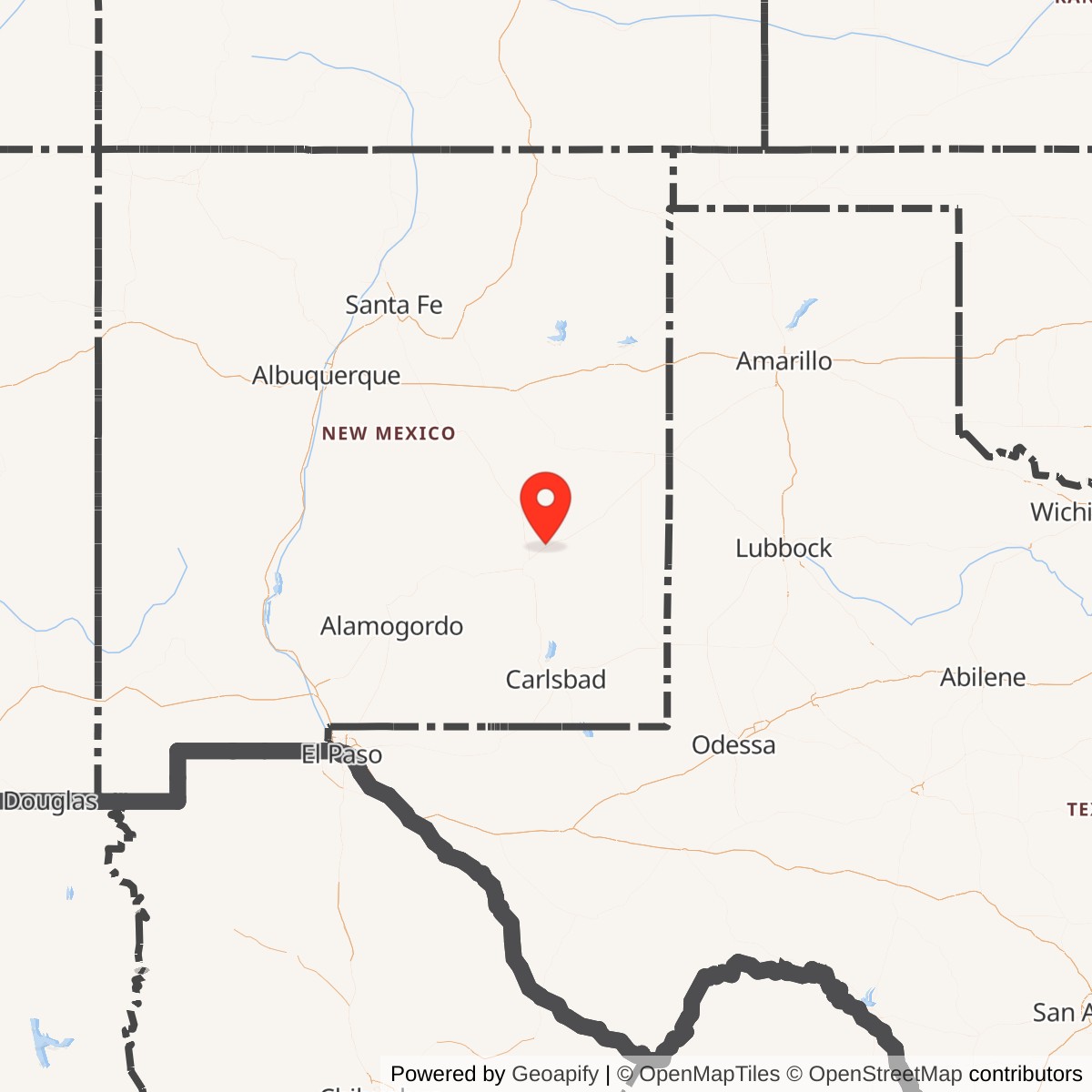
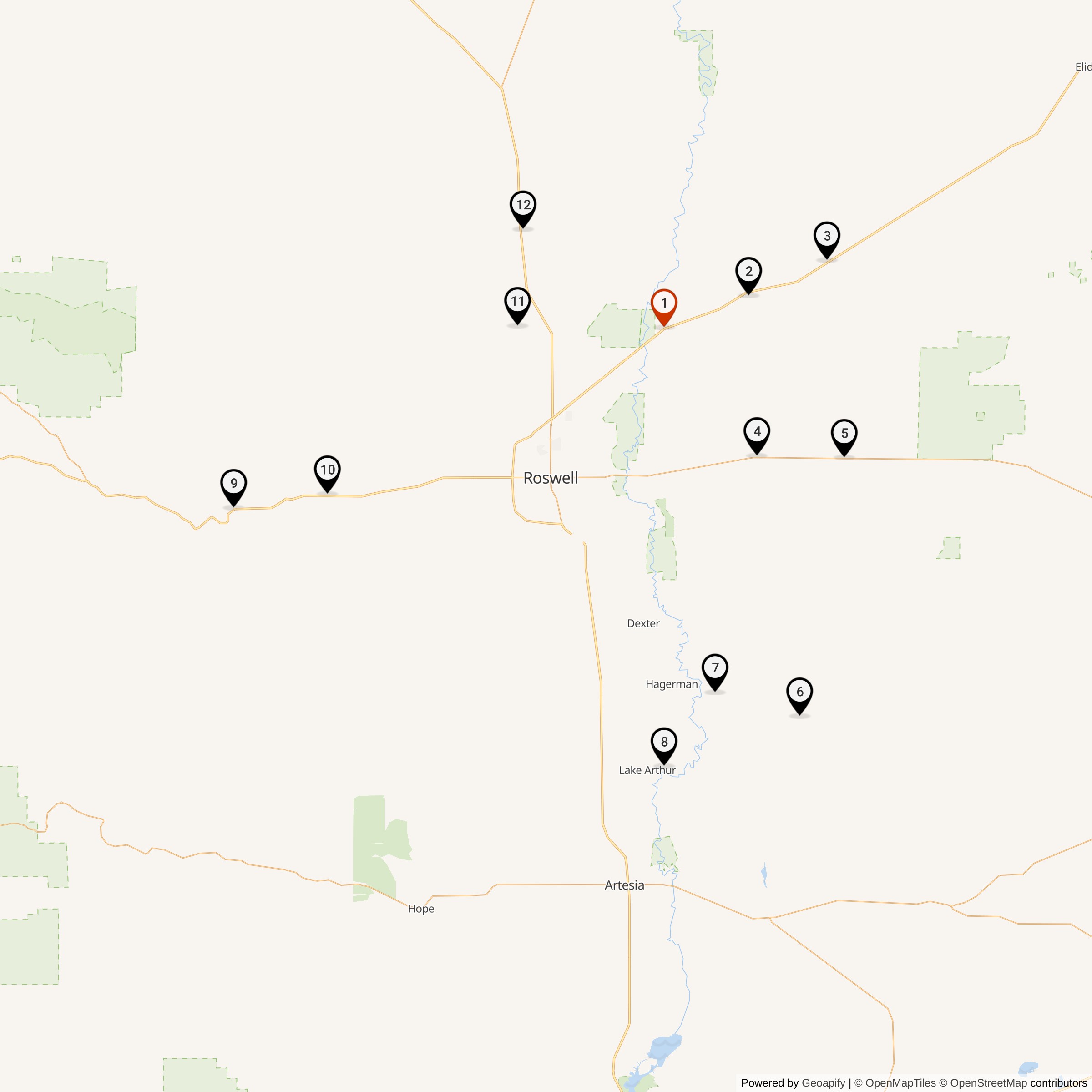
Atlas F Site 579-1 was a one-missile Atlas F vertical-silo launch complex assigned to the 579th Strategic Missile Squadron at Walker Air Force Base, New Mexico. The parent wing was the 6th Bombardment Wing, later the 6th Strategic Aerospace Wing. The site was part of the Walker AFB missile field, a ring of twelve Atlas F launch complexes around Roswell, New Mexico.The site is in Chaves County, New Mexico, northeast of Roswell, near the U.S. Highway 70 corridor and the Frazier / Acme area.
Atlas F Site 579-1 is inactive and decommissioned. It was destroyed by a propellant-loading explosion and fire on June 1, 1963, and was not rehabilitated for further missile service. The 579th Strategic Missile Squadron as a unit remained active until the Atlas F phaseout in 1965, but Site 579-1's own active launch-site career effectively ended with the 1963 accident. The site later entered the excess-property and disposal process, and USACE Formerly Used Defense Sites records identify it as WAFB FAC SITE #1 / K06NM0479.
Location, Landscape, and Site Description
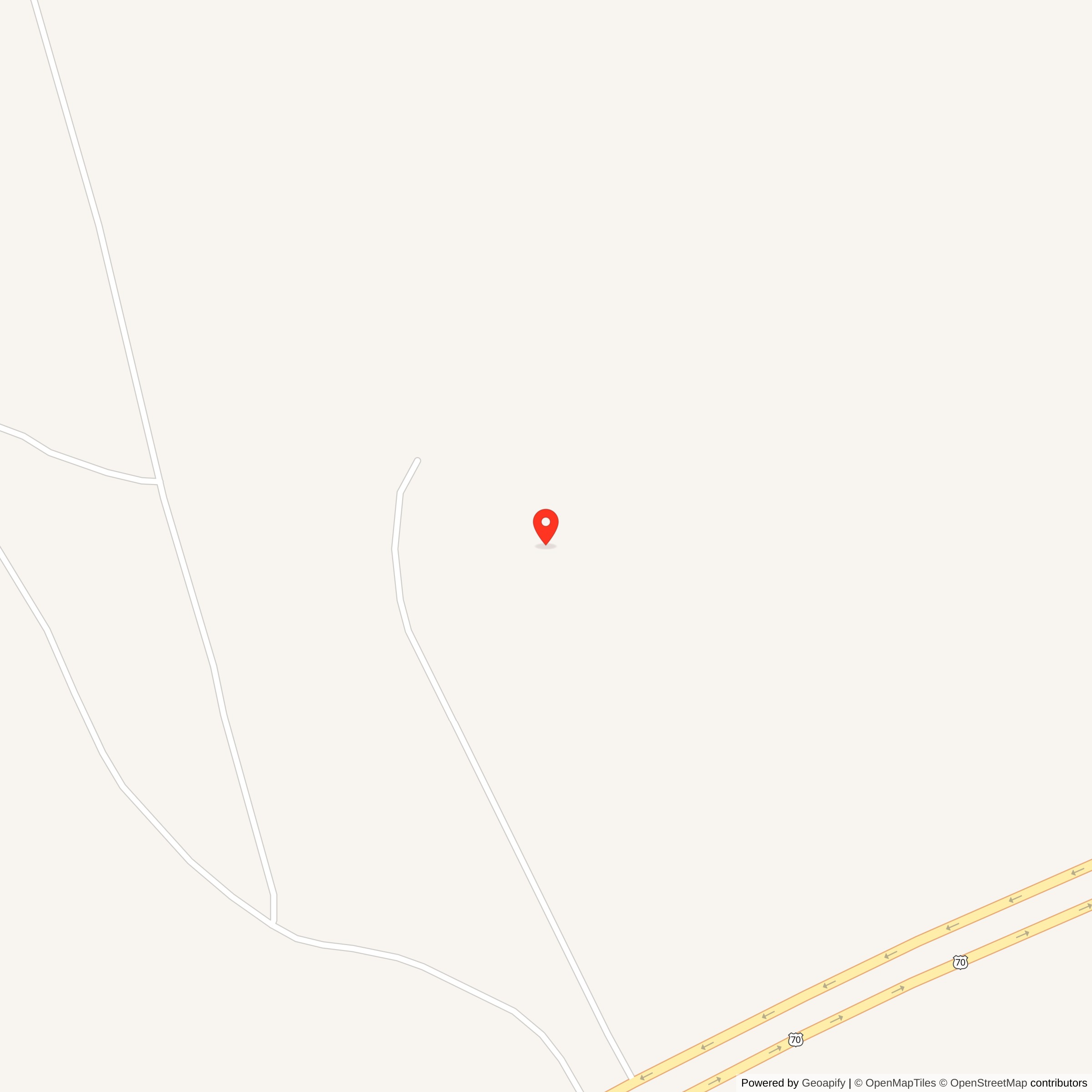
Site 579-1 was built northeast of Roswell in the open Chaves County landscape, on the high plains east of the Pecos River valley. The location placed it far enough from Walker Air Force Base to be part of a dispersed missile field while still close enough for construction, maintenance, security, and support from the parent base. Contemporary excess-property reporting placed the site roughly eighteen miles northeast of Roswell, in the vicinity of Frazier, New Mexico, and near U.S. Highway 70. Newspaper accounts of the 1963 accident described the complex as being about a quarter mile from the highway.The site was a single Atlas F launch complex rather than a multiple-launcher installation. Its central feature was a deep reinforced-concrete launch silo that housed the missile vertically. Adjacent underground spaces included the launch-control center and support areas. Surface features originally included access roads, a fenced and controlled compound, hardstands, utilities, fuel and oxidizer support systems, antennas, and other equipment needed to support an Atlas F missile on alert or in training status.
The Atlas F design did not launch the missile from deep inside the silo. Instead, the missile was stored vertically below ground, protected by hardened structures and large overhead doors. For launch, the doors opened, an elevator raised the missile to the surface, and the missile was then fired from the elevated position. The Walker AFB / 579th Strategic Missile Squadron public histories describe the silo as having two approximately seventy-five-ton doors. At Site 579-1, the 1963 explosion and fire damaged or destroyed key underground equipment and reportedly blew the large doors away from the silo opening.
The site's current appearance is that of a former missile property on private land. The coordinate identifies the launch-complex location rather than a public interpretive site. Public access should not be assumed, and the former military industrial character of the property makes trespass unsafe as well as inappropriate.
Strategic and Cold War Context
Atlas F Site 579-1 existed because the United States was racing to field operational intercontinental ballistic missiles during the most dangerous years of the Cold War. The Atlas program was the nation's first operational ICBM program, and the Atlas F was the most hardened and survivable of the deployed Atlas variants. Earlier Atlas sites used aboveground launchers or semi-hardened coffin launchers, but Atlas F placed each missile in a separate vertical silo, dispersed across rural terrain, and connected to Air Force command-and-control systems through hardened local facilities.The strategic logic was direct. A dispersed missile field complicated an enemy's attack planning. A hardened silo increased the chance that a missile might survive long enough to be launched. A separate launch complex reduced the chance that one attack, fire, or accident would disable an entire squadron. For the 579th Strategic Missile Squadron, this meant twelve widely separated Atlas F sites around Roswell, each able to support one SM-65F Atlas missile.
The Atlas F was still a first-generation liquid-fueled missile. It used RP-1 kerosene fuel and liquid oxygen oxidizer. The RP-1 could be stored aboard the missile, but liquid oxygen could not be kept loaded for long periods and had to be pumped into the missile before launch. The missile's tanks also required pressurization. This made Atlas F far more complex to operate on alert than later solid-fueled Minuteman missiles. The system represented a major step toward hardened ICBM basing, but it retained the operational burdens and hazards of cryogenic oxidizer, propellant transfer, pressurized structures, and large ground-support systems.
During the Cuban Missile Crisis in October 1962, the 579th Strategic Missile Squadron was part of SAC's ICBM alert posture. The squadron's surviving histories state that the Roswell-area Atlas F sites were kept on a twenty-four-hour, seven-day alert footing and that all operational sites were ready during the crisis. Site 579-1's later destruction in 1963 did not erase that broader context: it had been built as part of one of SAC's early hardened ICBM fields during the period when the United States was trying to make nuclear deterrence faster, more survivable, and less dependent on bombers alone.
Construction and Activation
The Walker AFB Atlas F construction program began during the rapid expansion of the Air Force's ICBM infrastructure in 1960. The decision to construct the Walker launch facilities was reached in early January 1960. The Albuquerque District of the U.S. Army Corps of Engineers was asked to perform soils investigations, and Spencer J. Buchanan Company and Gordon Herkenhoff & Associates carried out investigations that were considered favorable for construction. Design was initiated in early March 1960 and assigned to Bechtel Corporation.The Walker Area Office was established on May 15, 1960, under the Albuquerque District to supervise, inspect, and administer construction of the twelve Atlas missile sites in the Roswell area. Bids were advertised on May 16, 1960, and opened on June 15, 1960. The successful bidder was a joint venture consisting of Macco Corporation, Raymond International, Inc., The Kaiser Company, and Puget Sound Bridge and Dry Dock Company. The basic contract amount was $22,115,828. The contract was awarded on June 16, 1960; the Notice to Proceed followed on June 20, 1960; and work began on June 23, 1960.
The construction program soon became part of a larger national effort to centralize and speed ballistic-missile construction. The Corps of Engineers Ballistic Missile Construction Office, known as CEBMCO, was established in Los Angeles on August 1, 1960, to streamline, strengthen, and expedite ICBM site construction. Responsibility for the Walker Area Office was transferred from the Albuquerque District to CEBMCO on November 22, 1960. The Walker Area Office was led throughout the construction period by Lt. Col. Joseph G. Kimble and reached a peak staff of eight officers and 168 civilian personnel.
The construction history for the Walker Atlas F sites describes the work as covering twelve unitary silo launch complexes and related support facilities. It did not include the missiles themselves or all site-activation equipment, which were handled under separate Air Force site-activation arrangements. Still, the civil works were massive. Each launch complex required excavation, reinforced concrete, underground utilities, mechanical and electrical systems, blast-resistant structures, and specialized facilities that could accept the later installation of missile and launch equipment.
The basic Atlas F silo design was immense. The launch silo had a minimum inside radius of about twenty-six feet, an inside diameter of roughly fifty-two feet, and an inside height of about 165 feet. Its reinforced-concrete wall was generally about two feet six inches thick, flaring to about nine feet near the top, with a heavy concrete cap. The adjacent launch-control center was an underground cylindrical structure about forty feet in inside diameter and twenty-seven feet high, with thick reinforced-concrete walls, floor, and roof. Inside the silo, a steel crib structure suspended by four shock-absorbing hangers supported multiple levels of launch and support equipment. The design was intended to survive shock, isolate critical systems, and allow the missile to be raised for launch.
Site 579-1 also illustrates the geological and groundwater problems that complicated Atlas F construction around Roswell. The Walker construction history notes that considerable water was encountered at Sites 1, 2, 4, and 5, producing contractor claims. The same report states that water for Sites 1 and 10 was supplied by pipeline from Site 2, while other sites relied on wells or municipal sources. This detail matters because it shows that Site 579-1 was not simply a hole dug in dry desert ground. It was part of a demanding underground construction project in a region where subsurface water, limestone, and site-specific geology affected schedule, engineering, and claims.
This facility was Corps construction site number 1 and Air Force operational site number 1. Construction began in 1960 and site turnover occurred in 1962. The 579th Strategic Missile Squadron received its first ICBM on January 24, 1962. The missile associated with Site 579-1 was Atlas 77F, Air Force serial number 61-2563, tail number 563. It was accepted on May 1, 1962, and delivered on May 27, 1962. The 579th SMS unit history lists November 30, 1962, as the date the squadron's Atlas F missile operations were turned over to SAC and became operational.
Missile System and Technical Role
Site 579-1 was built for the SM-65F Atlas, commonly called Atlas F. The Atlas F was a liquid-fueled intercontinental ballistic missile designed by Convair / General Dynamics and deployed by Strategic Air Command. It was an improvement over earlier Atlas basing concepts because each missile was placed in an individual hardened vertical silo rather than on an exposed launcher or in a horizontal coffin launcher.The missile used RP-1 kerosene fuel and liquid oxygen oxidizer. Because liquid oxygen is cryogenic and boils away, it had to be loaded before launch rather than stored indefinitely in the missile. The Atlas missile also depended on tank pressurization to maintain structural rigidity. The Walker AFB and 579th SMS histories describe the Atlas F launch sequence as storing the missile vertically underground, opening two large doors, raising the missile by elevator, and launching from above the silo.
Public histories of the 579th SMS identify the Atlas F as carrying a General Electric Mark IV reentry vehicle with a W-38 thermonuclear warhead. These sources describe the W-38 as having an approximate yield of 3.8 to 4 megatons and describe the missile's range as approximately 6,000 miles. This information is historical and publicly documented; it does not imply that Site 579-1 contained a nuclear warhead at the time of the 1963 training accident. Contemporary newspaper accounts of the accident specifically stated that the missile at Site 1 did not have a nuclear warhead or nuclear capability during the exercise.
The launch complex's technical role was to keep one Atlas F missile in a protected ready condition, maintain the site's propellant, power, communications, and launch systems, and allow trained SAC crews to prepare the missile for launch if ordered. Atlas F sites required more hands-on preparation than later solid-fueled systems. Maintenance, security, propellant handling, and crew training were central to daily operations.
Operational History
The 579th Strategic Missile Squadron was activated on March 14, 1961, and organized at Walker Air Force Base on September 1, 1961. It was assigned to the 6th Bombardment Wing, which later became the 6th Strategic Aerospace Wing. The squadron's weapon system was the SM-65F Atlas from 1962 to 1965.The 579th SMS operated twelve Atlas F launch complexes around Roswell. The sites were manned, maintained, guarded, inspected, and exercised as part of SAC's broader nuclear-alert system. The Air Force's task was not simply to possess missiles; it had to keep them ready, keep crews trained, and keep complicated liquid-fueled systems reliable under intense time pressure. The day-to-day history of Site 579-1 would have included site security, equipment checks, communications readiness, power and environmental-control maintenance, propellant-system inspections, emergency drills, and launch-preparation training.
The squadron's first ICBM arrived on January 24, 1962. Site 579-1's assigned missile, Atlas 77F / serial 61-2563 / tail 563, was accepted in May 1962 and delivered later that month. By November 30, 1962, the 579th SMS was listed as operational under SAC. This placed the Roswell missile field in service during one of the most dangerous periods of the Cold War. The squadron's surviving histories emphasize that the missile sites were maintained on continuous alert and that the squadron was at the ready during the Cuban Missile Crisis.
Site 579-1's operational life was unusually short. On June 1, 1963, less than a year after the missile's delivery and only months after the squadron became operational, the site was destroyed during a propellant-loading exercise. The accident permanently removed the complex from the active launch force, and later Air Force disposal records state that Site 1 was never rehabilitated.
June 1, 1963 Explosion
The defining event in the history of Atlas F Site 579-1 occurred on Saturday evening, June 1, 1963. During a propellant-loading or training exercise, an explosion and fire destroyed the launch complex. The event was serious enough that it became part of the official Strategic Air Command missile chronology, which recorded the destruction of Atlas F launch complex 579-1 of the 6th Strategic Aerospace Wing at Walker Air Force Base during a propellant-loading exercise. The missile involved was Atlas 77F, General Dynamics serial number 61-2563, Air Force tail number 563, accepted on May 1, 1962, and delivered on May 27, 1962. Because the site was destroyed, the missile was never launched on a later test or space mission.The contemporary local reporting gives the clearest narrative picture of what happened at the site. The Roswell Daily Record reported that the explosion occurred at about 5:32 p.m. while the crew was engaged in a normal maintenance procedure that brought the missile to a standby position with a dummy warhead. The newspaper account said the five-man crew escaped safely and that the missile itself caught fire but did not detonate. The same report quoted Walker public-information officer Lt. H. M. Childress as saying that the men were in the underground control room, protected by several feet of concrete, when alarms functioned and allowed them to leave. The article also stated that the immediate cause was unknown and that investigators were trying to determine what equipment inside the 180-foot-deep silo had exploded.
The surviving accounts make clear that the accident was dramatic well beyond the fence line. The blast and fire were reported in Roswell, roughly twenty miles away, and the smoke column was visible from the Walker control tower at a much greater distance. Firefighters at the scene described debris and tanks being blown out of the silo, and one account said material continued shooting into the air after the explosion. State Police temporarily blocked traffic on U.S. Highway 70 near the site, while ambulances, fire trucks, police units, Walker AFB fire crews, and Roswell fire personnel responded. The site's location near a public highway made the accident a community event as well as a military emergency: it was a missile-squadron mishap that nearby civilians could see, hear, and read about almost immediately.
The fire response lasted into the following morning. Newspaper coverage described firefighters working around the blast doors through Saturday night and early Sunday, pouring large quantities of foam into the silo to cool the underground structure and control the fire. The Roswell Daily Record account stated that the explosion blew the two 32-ton steel-and-concrete doors more than fifty yards from the top of the silo. It also described tanks containing liquid oxygen and high-grade diesel fuel in the silo area, with both blamed for heavy flame and black smoke during the emergency. The reporting distinguished the propellant and training hazards from nuclear danger: it said Site No. 1 was a training complex at the time, did not contain nuclear capability during the accident, and that a nuclear explosion or radiation hazard was not possible.
The five men identified in the local accident coverage were Capt. James P. O'Pry, Lt. Thomas M. Coynes, Sgt. Sigmund E. Kolody, Sgt. Marvin R. Lane, and A2C Gorie T. Lewis, all associated with the 579th Strategic Missile Squadron. Their survival is an important part of the site's history. The accident destroyed a major launch complex, but contemporary reporting indicates that the underground control-room protection, alarms, and evacuation procedures worked well enough to get the crew out. One report noted that a service member received minor scratches while leaving the area, but it did not describe fatalities from the June 1 accident itself.
The accident also had a longer operational meaning. Walker's Atlas F field suffered three major silo losses in less than a year: Site 579-1 on June 1, 1963; Site 579-5 on February 13, 1964; and Site 579-2 on March 9, 1964. The 579th Strategic Missile Squadron unit history summarized that "bad luck" followed the squadron and noted that three of its twelve sites were lost in explosions. Air Force excess-property documentation later stated that Sites 1, 2, and 5 had been partially destroyed by explosion and fire and had never been rehabilitated. Site 579-1 therefore was not merely damaged and repaired; it was permanently removed from operational service.
The exact initiating failure at Site 579-1 was not identified in the public newspaper accounts reviewed. That uncertainty should remain visible. The available sources support the broad facts: a propellant-loading or standby-position training operation, a dummy-warhead configuration, an explosion in or near the silo equipment environment, fire involving the missile and propellant-support systems, no nuclear detonation or radiation hazard, safe escape of the five-man crew, a large multi-agency fire response, major structural damage including displaced silo doors, and permanent loss of the launch complex. What the public record does not yet provide is a complete Air Force accident-board reconstruction of the mechanical or procedural chain that caused the explosion.
Site 579-1 is one of the clearest examples of the system's paradox. The launch complex was hardened against attack and built at enormous cost, yet the routine act of training with liquid oxygen, fuel systems, pressure systems, and a missile in a confined underground structure could destroy it. That danger helps explain why Atlas F and the other first-generation liquid-fueled ICBMs had such brief operational lives and why the Air Force moved quickly toward solid-fueled Minuteman missiles that could remain on alert without cryogenic oxidizer loading.
Deactivation and Disposal
For Site 579-1, deactivation began before the formal Atlas F phaseout because the site was destroyed on June 1, 1963. Air Force disposal records later stated that the silos at Sites 1, 2, and 5 had been partially destroyed by explosions or fire and were never rehabilitated. For Site 1, that meant the accident was not an interruption in service but the end of the site's active missile career. The launch complex remained part of the real-property inventory, but it no longer functioned as an operational Atlas F alert site.The broader phaseout of the 579th SMS followed the Department of Defense decision to retire liquid-fueled Atlas and Titan I missiles. The unit history states that Secretary of Defense Robert McNamara announced in November 1964 that all Atlas and Titan I missiles would be phased out by June 1965. The 579th SMS began taking missiles off alert in January 1965. Its first ICBM came off alert on January 5, 1965; its last ICBM came off alert on February 4, 1965; its last ICBM was shipped on February 9, 1965; and the squadron was inactivated on March 25, 1965.
Site 579-1's own disposal record is unusually useful. Air Force excess-property reporting for the Walker Atlas F missile complexes identifies Site No. 1 as a government-owned Atlas F missile site near Roswell, New Mexico. The report states that the property had been acquired in 1960 and 1961 for the Atlas F program, that the sites were excess because of the Atlas F phaseout, and that Site 1's silo and special fuel storage tank had been destroyed by fire or explosion. It described the remaining permanent construction as reinforced concrete and the property as non-operational.
The disposal documentation also described the underground facilities after military use. It stated that the reinforced-concrete launch silo was about 174 feet deep and 52 feet in diameter, with an underground launch-control center adjacent to the silo. It stated that underground facilities had been stripped of usable equipment and material, closure gates had been closed and sealed, and the door between the launch-control center and the silo had been closed and sealed. The report suggested possible post-military uses such as fuel storage, water storage, or livestock feed storage, but those were proposed possibilities rather than confirmed long-term uses.
The public-domain acreage was returned to the Bureau of Land Management in the mid-1960s and that the 6.83 fee acres and 2.03 acres of road right-of-way easement were sold by the General Services Administration on December 6, 1966, to C. J. and Annie L. Whigham for $1,795.
USACE FUDS inventory records identify the former property as WAFB FAC SITE #1 / K06NM0479 in Chaves County, New Mexico, with CON/HTRW and HTRW categories. Those categories indicate a Formerly Used Defense Sites environmental/cleanup record rather than public access or preservation status.
Current Status and Site Use
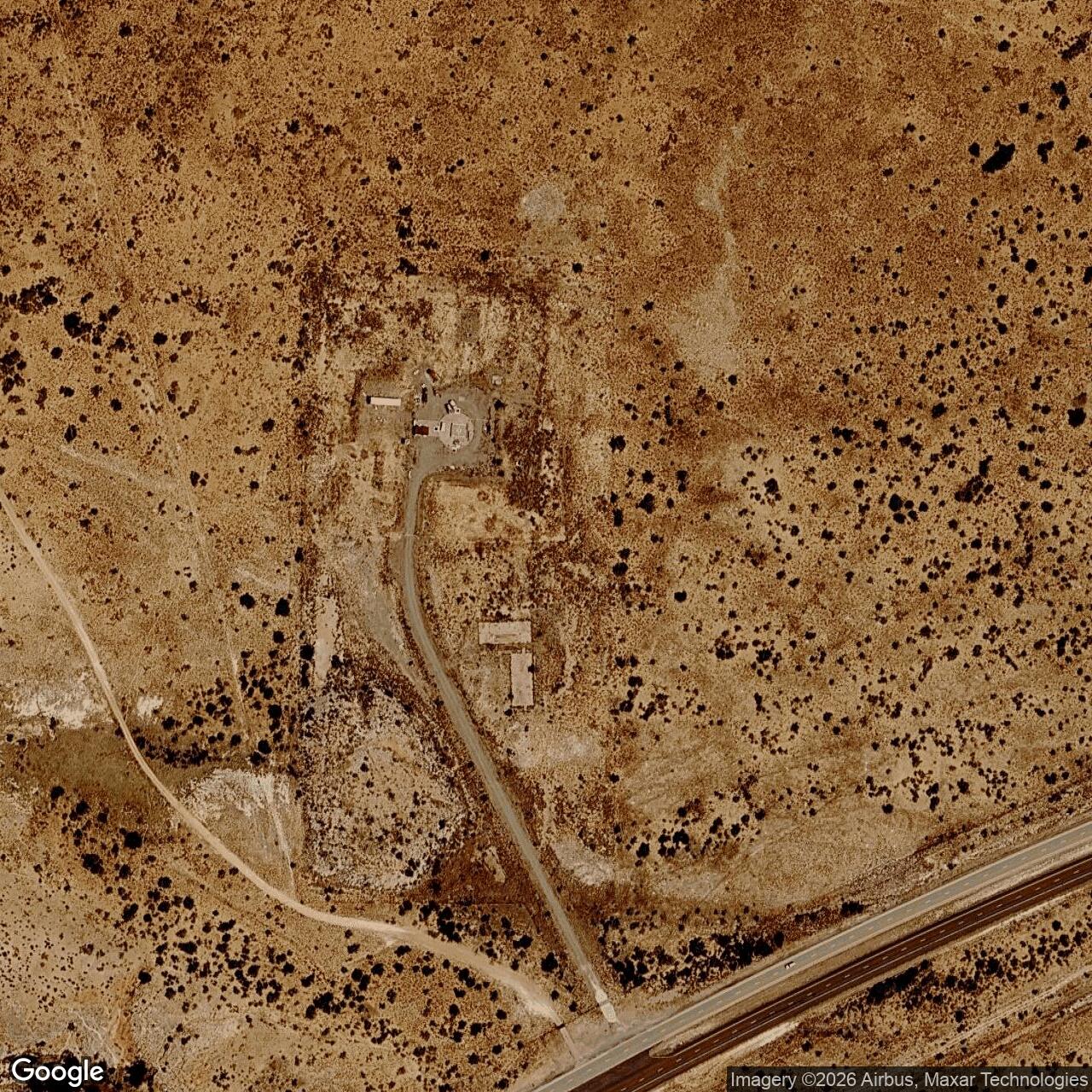
Atlas F Site 579-1 is a decommissioned and accident-damaged former missile launch complex on private or otherwise non-public land northeast of Roswell, New Mexico. The site is not an active military installation and is not a staffed public historic site.The former launch complex was damaged by the 1963 explosion, later stripped of usable military equipment, sealed, and moved through the federal excess-property process. Surface remains and disturbed ground may be visible in aerial imagery and site photographs, but the property should be treated as private and potentially hazardous. Former missile sites can include open shafts, unstable structures, contaminated materials, confined spaces, and other dangers not visible from the road.
Chronology
- 1960-01 The decision was reached to construct Atlas F launch facilities in the Walker AFB / Roswell area, and soils investigations were requested.
- 1960-03 Design work for the Walker Atlas F launch facilities was initiated and assigned to Bechtel Corporation.
- 1960-05-15 The Corps of Engineers Walker Area Office was established to supervise, inspect, and administer construction of the twelve Roswell-area Atlas missile sites.
- 1960-05-16 The Walker Atlas F construction contract was advertised for bids.
- 1960-06-15 Bids were opened for the Walker Atlas F construction contract.
- 1960-06-16 The basic construction contract was awarded to the Macco Corporation, Raymond International, Inc., The Kaiser Company, and Puget Sound Bridge and Dry Dock Company joint venture.
- 1960-06-20 The Notice to Proceed was issued for the Walker Atlas F construction contract.
- 1960-06-23 Work began on the Walker Atlas F launch-facility construction program.
- 1960-08-01 The Corps of Engineers Ballistic Missile Construction Office, or CEBMCO, was established to centralize and expedite ballistic-missile construction.
- 1960-11-22 Responsibility for the Walker Area Office was transferred from the Albuquerque District to CEBMCO.
- 1961-03-14 The 579th Strategic Missile Squadron was activated.
- 1961-09-01 The 579th Strategic Missile Squadron was organized at Walker Air Force Base, New Mexico.
- 1962-01-24 The 579th Strategic Missile Squadron received its first ICBM.
- 1962-05-01 Atlas 77F, Air Force serial number 61-2563 and tail number 563, was accepted.
- 1962-05-27 Atlas 77F / 61-2563 / tail 563 was delivered for Site 579-1.
- 1962-10 During the Cuban Missile Crisis, the 579th Strategic Missile Squadron's operational missile sites were maintained in SAC's heightened alert posture.
- 1962-11-30 The 579th Strategic Missile Squadron's Atlas F missile operations were listed as turned over to SAC and operational.
- 1963-06-01 Atlas F Site 579-1 was destroyed by an explosion and fire during a propellant-loading / standby-position training exercise; contemporary reporting said the five-man crew escaped safely, the missile caught fire but did not detonate, and the heavy silo doors were blown away from the silo opening.
- 1963-06-02 Firefighting crews from Walker Air Force Base and the Roswell Fire Department brought the Site 579-1 fire under control after working through the night and using foam to cool the underground structure.
- 1964-11 The Department of Defense announced the phaseout of liquid-fueled Atlas and Titan I missiles.
- 1965-01-05 The first 579th Strategic Missile Squadron ICBM was removed from alert during the Atlas F phaseout.
- 1965-02-04 The last 579th Strategic Missile Squadron ICBM was removed from alert.
- 1965-02-09 The last 579th Strategic Missile Squadron ICBM was shipped out.
- 1965-03-25 The 579th Strategic Missile Squadron was inactivated.
- 1965-06-18 Air Force excess-property documentation described the Walker Atlas F missile complexes, including Site No. 1, as excess to military needs.
- 1966-12-06 The fee-owned portion of Site 579-1 and related road easement acreage were sold by the General Services Administration to C. J. and Annie L. Whigham.
- 2015-09-30 The USACE FUDS inventory listed WAFB FAC SITE #1 / K06NM0479 in Chaves County, New Mexico, with CON/HTRW and HTRW categories.
Read about the Atlas at Walker AFB
All Atlas Missile Silo Locations