
Atlas F Site 579-4 Missile Silo, Roswell / Highway 380 East / Rio Hondo area New Mexico
Longitude: -104.188581
Site Type: Atlas F vertical silo launch facility
Missile Type: SM-65F Atlas
Missile Assigned to this Silo: GD mfg 95F; GD serial 62-12131; AF tail 131
Number of Launchers/Missiles: 1
Parent Base: Walker AFB
Missile Wing: 6th Strategic Aerospace Wing
Missile Squadron: 579th Strategic Missile Squadron
Corps of Engineers Site ID: 11
Approximate Base Size: 12.5 facility acres (actual missile facility incl. road easement and evaporation ponds); approx. 250 DOD-acquired development acres noted separately
Current Site Use: Former Atlas F launch complex; privately owned/restored; LCC and silo/tunnel areas reused as an immersive historic lodging/visitor experience by owner arrangement; no active missile role.
Site Ownership: Former USAF; GSA conveyed 12.5-acre fee property to W.L. Pennington and Cliff C. Henderson on 1967-06-21; 2005 USACE/HGL report identifies George E. Baker and Frances L. Baker as owners.
Accessible: Private property; no casual public access; limited access only by owner permission or booking; former missile site hazards/trespass risk.
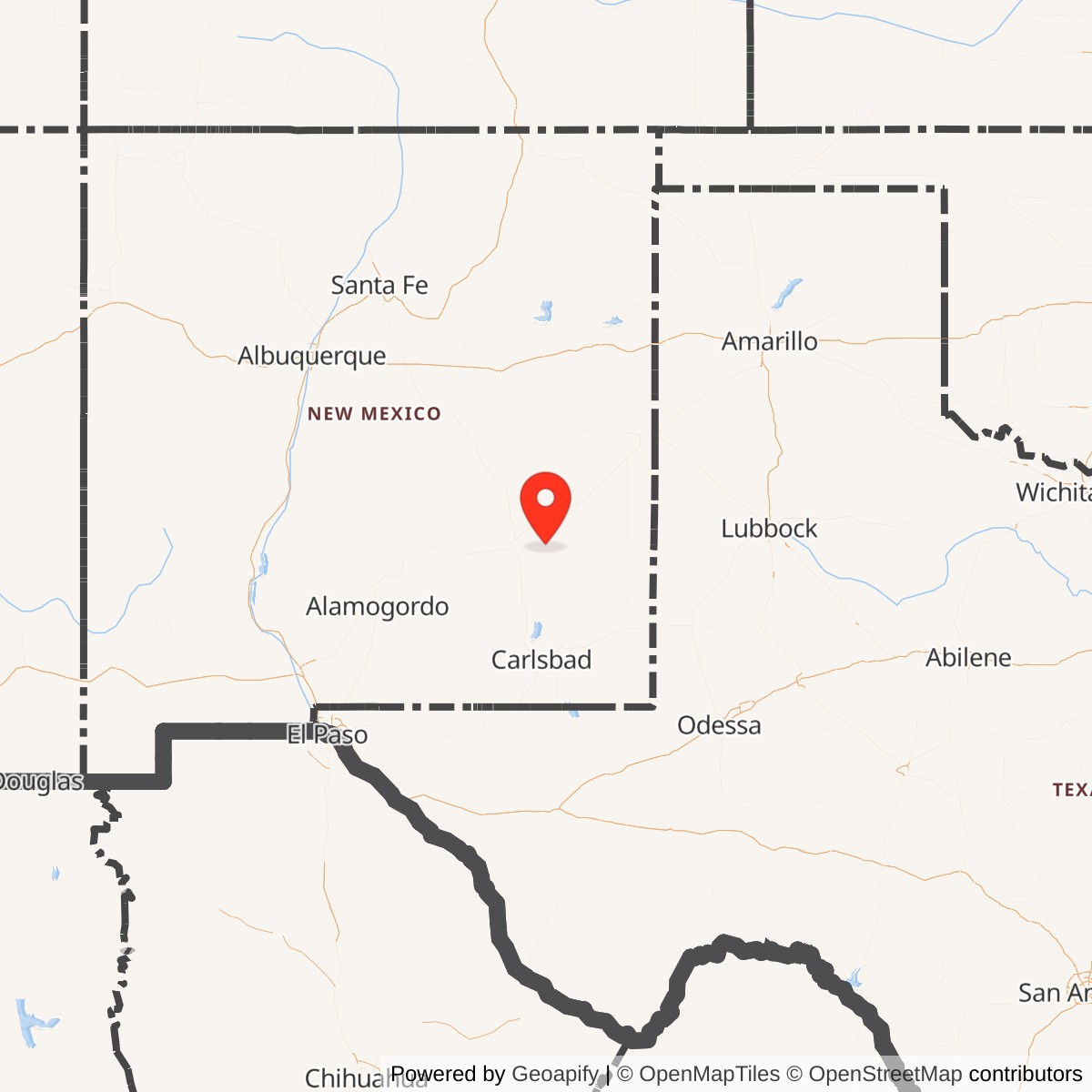
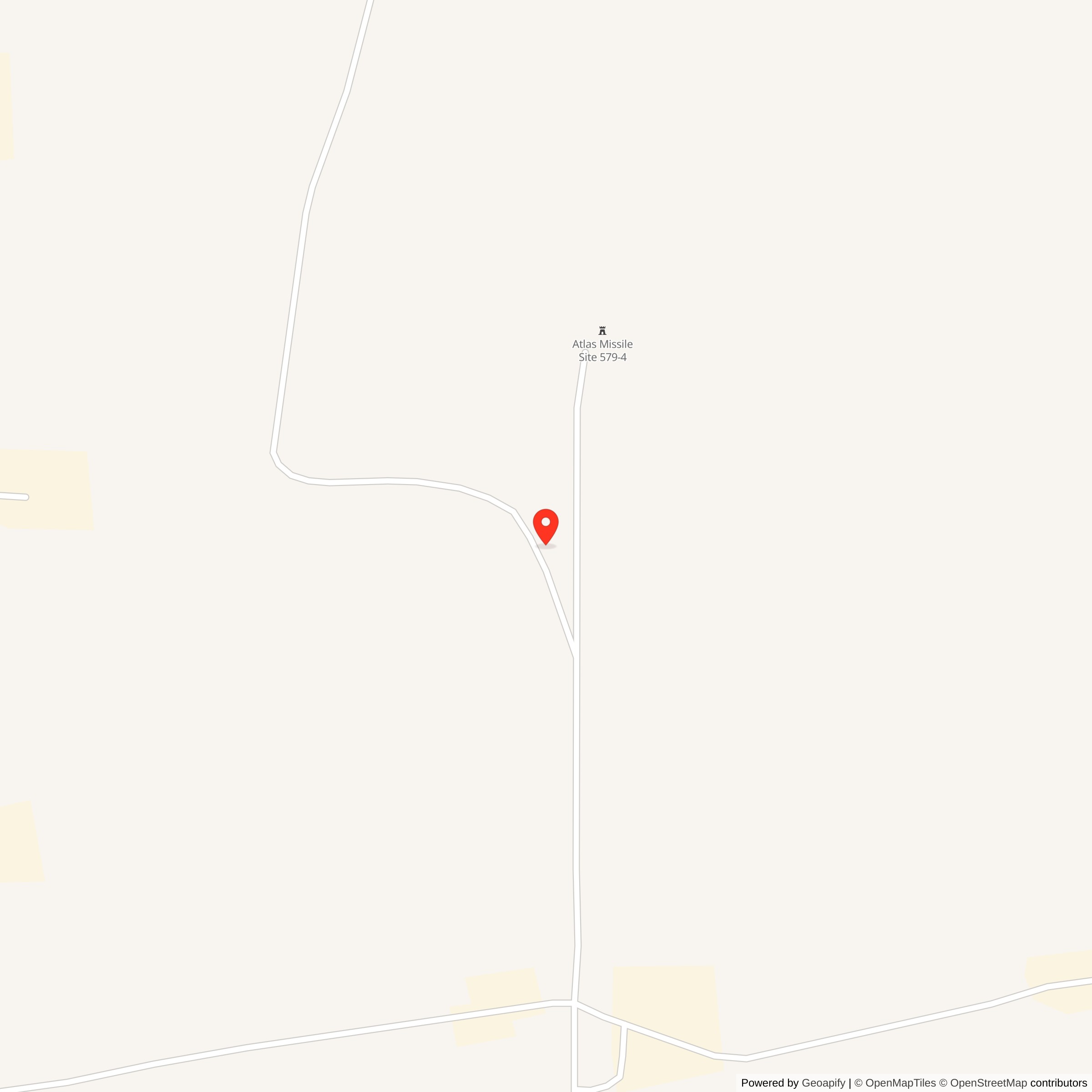
Atlas F Site 579-4 is one of the Walker missile field's most compelling survivors. East of Roswell, beneath a high-desert landscape of brush, grazing land, oil-and-gas activity, and long highway distances, this former launch complex once held an Atlas F intercontinental ballistic missile in a deep underground silo. It belonged to the same 579th Strategic Missile Squadron field that lost three of its twelve sites to propellant-loading explosions, but Site 579-4 survived its short alert career, passed through federal disposal, and later became one of the best-known privately reused Atlas F complexes in the Roswell area.
That survival is what makes the site worth reading about. Site 579-4 was not simply an abandoned hole in the ground; it was a hardened Cold War machine built at national-priority speed, with a 178-foot-deep silo, a buried launch-control center, a shock-mounted steel crib, cryogenic oxidizer equipment, high-pressure systems, diesel power, water treatment, communications, security systems, and round-the-clock crews. Decades later, the same underground spaces that once existed to support nuclear alert duty became part of a private preservation and lodging experience, a rare example of a first-generation ICBM site that remained recognizable enough to tell its story from inside the structure itself.
The site was built as Corps of Engineers Construction Site Number 11 and operated as Air Force Operational Site Number 4. It was part of the Walker AFB Atlas F ring around Roswell, New Mexico, and its history runs from urgent 1960-1961 construction, through 1962-1965 nuclear alert service, to dismantling, federal disposal, environmental investigation, private ownership, and modern interpretive reuse.
Installation / Site Identity
Atlas F Site 579-4 was a one-missile Atlas F vertical-silo launch complex assigned to the 579th Strategic Missile Squadron at Walker Air Force Base, New Mexico. The parent wing was the 6th Bombardment Wing, later redesignated the 6th Strategic Aerospace Wing. The site was part of the Walker AFB missile field, a ring of twelve Atlas F launch complexes around Roswell. Because Atlas F complexes included their own launch-control and support facilities at the individual launch complex, the parent launch-control-center field is best treated as not applicable rather than as a separate Minuteman-style remote LCC.
The site is in Chaves County, New Mexico, roughly east of Roswell along the U.S. Highway 380 East corridor. A USACE/HydroGeoLogic site-inspection report describes the former Site 4 property as being in central Chaves County, Township 10 South, Range 27 East, Section 22, approximately 20 miles east of Roswell on U.S. Highway 380, at an average elevation of about 3,855 feet above mean sea level.
The assigned missile was General Dynamics Missile Serial Number 62-12131, General Dynamics Manufacturing Number 95F, and Air Force Missile Tail Number 131. That missile was accepted on June 15, 1962, delivered on June 22, 1962, and later launched on May 3, 1968 with an ABRES Penaid TVX payload after its military alert career had ended.
Site 579-4 is inactive and decommissioned. November 30, 1962 is when the 579th Strategic Missile Squadron history lists missile operations as turned over to Strategic Air Command and operational. The inactivation date of the 579th Strategic Missile Squadron was on March 25, 1965. A site-specific USACE/HydroGeoLogic report adds important disposal milestones: the last Atlas F missile was removed from alert readiness on February 4, 1965; the site was declared excess to the General Services Administration on June 25, 1965; general dismantling began after July 31, 1965; easements expired on June 24, 1966; and the GSA conveyed the 12.5-acre fee property to private owners on June 21, 1967.
Location, Landscape, and Site Description
Site 579-4 was built in the high plains east of Roswell, in a landscape that today includes rural land use, livestock grazing, and active oil and natural gas production. The setting fit the Atlas F deployment concept: individual missile sites were dispersed away from Walker AFB and away from one another so that a single attack could not destroy the whole missile force. At the same time, the site remained close enough to the parent base for maintenance, security, supply, communications, inspections, and emergency response.
The site was not designed to look like a conventional base. It was a hardened launch complex hidden in plain sight: an access road, fenced surface features, utility buildings, service structures, antennas or communications equipment, and hardstands above ground, with the decisive equipment buried underground. Its main elements were the launch silo, the underground launch-control center, the connecting tunnel, the equipment areas, propellant and oxidizer systems, electrical and generator systems, water and wastewater systems, sump systems, security features, and support facilities.
A USACE/HydroGeoLogic report gives unusually useful site-specific physical detail. It states that each Walker Atlas F site included an underground missile silo and launch-control center, plus typical support features such as a septic system and leachfield, a silo sump pump system, one or two Quonset-style buildings, underground fuel and water storage tanks, a water-treatment system, and a nearby evaporation pond. Aboveground water-treatment facilities included a diesel-generator cooling tower, filtration shed, well pump-house shed, and small water storage tanks.
The same report states that the Department of Defense acquired approximately 250 acres for the development of Silo Site 4, while the actual missile facility occupied 12.5 acres including a road easement and evaporation ponds. This distinction matters because the large acquisition/development area was not the same thing as the later core facility parcel. The launch complex itself was the controlled industrial footprint containing the silo, launch-control center, roads, utility areas, and support systems.
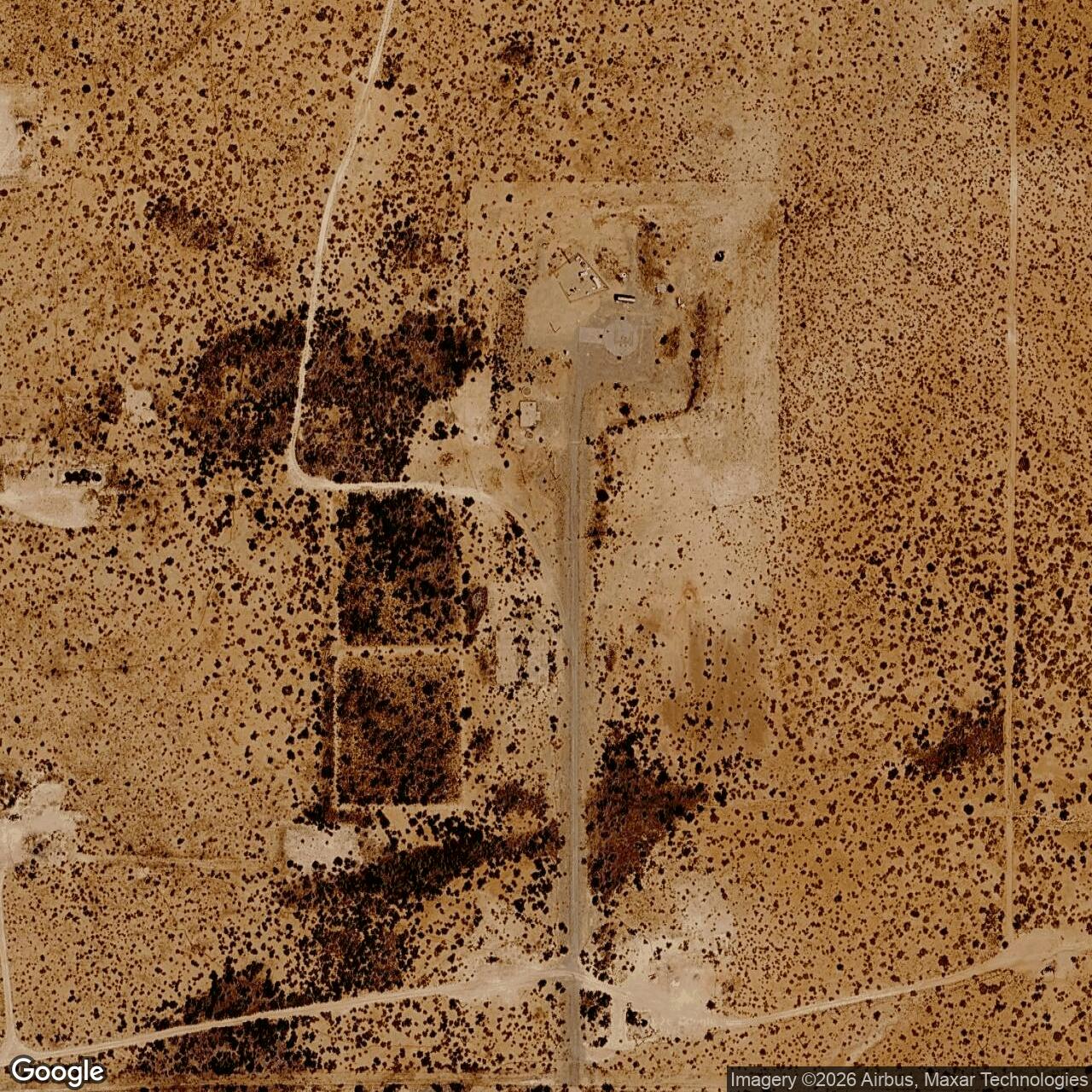
By the time of the 2005 site inspection, many original features had been altered by salvage, weathering, vandalism, and private reuse. Still, substantial remains were documented. The original 70-foot-diameter concrete silo pad remained intact, while the surrounding 170-foot-square asphalt area was heavily weathered. Concrete foundations from the former water-treatment facility, including a pump house and two water tanks, remained southwest of the silo pad. The report found no remaining evidence of the evaporation ponds. The stairwell entrance to the launch-control center and underground structures, northwest of the silo pad, had been restored to near-original condition, and the launch-control center and tunnel into the silo were being restored by the property owner.
The report also describes several site features with environmental relevance. The septic system and leachfield were intact, operational, and in use. The silo sump outfall pipe and drainage swale had been exposed during grading by the owner. A large excavation north of the silo pad and northeast of the launch-control-center entrance was being filled with soil from a nearby spoils pile. Monitoring Well MW-4, which had been vandalized, was abandoned in March 2005 to eliminate a possible migration pathway.
Strategic and Cold War Context
Site 579-4 existed because the United States was racing to deploy survivable intercontinental ballistic missiles during the most dangerous years of the Cold War. Atlas was the first operational American ICBM. Atlas F was the final and most hardened operational Atlas variant: a one-missile-per-site system in which each missile was stored vertically underground in a hardened silo and raised above ground before launch.
The site's strategic purpose was deterrence. A dispersed Atlas F field around Walker AFB made it harder for an enemy to destroy the entire missile force at once. Each launch complex was separated from the others and from the parent base. Each site had its own crewed control and support functions. The design was meant to preserve retaliatory capability by combining distance, hardening, redundancy, and constant readiness.
Site 579-4 also illustrates the limits of first-generation ICBM technology. Atlas F was a liquid-fueled missile. It used RP-1 kerosene fuel and liquid oxygen oxidizer. RP-1 could remain aboard the missile during alert, but liquid oxygen was cryogenic and had to be handled as part of launch preparation, training, or propellant-loading operations. The Atlas missile's thin stainless-steel balloon-tank structure also depended on internal pressure. Those features gave the missile strategic reach but made the system complex, hazardous, and procedurally demanding.
During the Cuban Missile Crisis, the 579th Strategic Missile Squadron history says the Walker-area sites were manned continuously and that all operational sites were at a high level of alert and ready to launch if necessary. For Atlas F, that phrase needs explanation. "Placed in an operational launch-ready alert posture" did not mean that the missile sat continuously above ground, continuously raised on its elevator, or continuously loaded with liquid oxygen. It meant that the site, crew, communications, authentication procedures, security posture, launch equipment, support systems, RP-1 fuel condition, oxidizer availability, electrical power, hydraulic systems, and checklists were in a condition from which a valid launch order could be executed through the Atlas F launch sequence.
In practical terms, an operational launch-ready alert posture meant the missile remained protected underground, the crew and equipment were ready, command-and-control channels were active, support systems were lined up, the missile could receive liquid oxygen as part of the launch sequence, the silo doors could open, the launcher could raise the missile to the firing position, and the crew could continue through final steps if the order remained valid. It was readiness to execute, not a permanent raised-and-fueled display state. That distinction is essential for Atlas F histories because the phrase "launch configuration" can otherwise suggest an inaccurate image of a missile standing above the desert or sitting indefinitely full of liquid oxygen.
Construction and Activation
The Walker AFB Atlas F construction program began during the national sprint to build an operational ICBM force. In early January 1960, the decision was made to construct Atlas launching facilities around Walker Air Force Base. The Corps of Engineers Albuquerque District was asked to perform soils investigations to determine whether local geologic conditions would support the proposed underground launch complexes. Those investigations were performed by Spencer J. Buchanan Company and Gordon Herkenhoff & Associates and were considered favorable.
Design work began in early March 1960 after the geologic investigations. The facilities were advertised for bids on May 16, 1960, and bids were opened on June 15, 1960. The construction contract, in the amount of approximately $22.1 million, was awarded on June 16, 1960 to a joint venture consisting of Macco Corporation, Raymond International, Inc., The Kaiser Company, and Puget Sound Bridge and Dry Dock Company. Notice to Proceed was issued on June 20, 1960, and work was initiated on June 23, 1960. A USACE/HydroGeoLogic site report states that construction on Site 4 began in June 1960 and was completed on December 5, 1961.
The Corps of Engineers acted as construction agent for the Air Force. The Roswell Area Office was activated in May 1960 and expanded into a substantial engineering and inspection organization. The work was carried out under the pressure of concurrency: the sites were being built while missile-system development, equipment fabrication, installation procedures, and operational doctrine were still being refined. That approach accelerated deployment but demanded intensive coordination among designers, contractors, fabricators, inspectors, construction trades, and Air Force users.
The launch complex was a major underground civil-engineering project. The Walker construction-tour document describes an Atlas F launching facility as consisting of a launch silo with a 26-foot, 1-inch inside radius and a depth of 178 feet, plus a launch-control center with a 40-foot inside diameter. The silo had reinforced concrete walls 2 feet 6 inches thick in much of the structure, flaring to a much greater thickness near the upper section. The launch-control center also had thick reinforced walls, floor, and roof. The silo and launch-control center were connected by an underground tunnel.
The construction sequence began with a large open-cut excavation to a depth of roughly 38 feet. This excavation was large enough for silo and launch-control-center construction, work space, and a ramp down into the work area. Solid material was broken by dynamite placed in drilled holes; lighter material was ripped by bulldozer; and excavated material was hauled to waste areas with powered scrapers. After the open-cut excavation was completed, crews excavated the silo shaft down to approximately 178 feet below original ground surface.
Silo-shaft excavation was difficult work. The contractor drilled blast holes, loaded them with dynamite, broke 10 to 15 feet of material at a time, and removed the broken material with cranes, clamshell buckets, muck buckets, dump trucks, and other heavy equipment. As the shaft deepened, steel ring beams were placed at regular vertical intervals. Wire mesh and gunite concrete stabilized the wall surface, and wood lagging was used where heavy water seepage made it necessary. These details are important because the finished silo was not a simple bored cylinder. It was a carefully staged excavation, shoring, concreting, equipment-installation, and alignment project.
Concrete placement was another major effort. A typical Walker Atlas F site required roughly 6,000 cubic yards of concrete. Major silo concrete placement, launch-control-center concrete, miscellaneous pours, and the silo cap were coordinated as construction advanced. The Walker construction-tour document emphasizes close tolerances for the interior silo surface across the deep concrete structure. Concrete was placed by cranes using buckets; tremies were used within forms; vibrators consolidated the concrete; heated water could be used in winter; and ice could be added in summer to control placement temperature. The upper portion of the silo was heavily reinforced, reflecting the need to support doors, launch equipment, and blast-resistant structure.
The steel crib was one of the defining pieces of Atlas F construction. Inside the silo, the crib supported the missile launcher and much of the silo equipment. It was suspended from shock mounts so that the missile and critical systems could ride within the hardened structure rather than being rigidly tied to the surrounding concrete. Macco Corporation erected the launch-control-center cribs and some of the silo cribs; Owl Transportation and Trucking Company erected other silo cribs. Long columns were preassembled at the surface, lowered into the silo, then connected by beams and braces. The tolerances were extremely close because the launcher, piping, tanks, generators, platforms, and missile-support equipment all had to align within the shaft.
Mechanical and electrical installation was equally complex. Piping, pumps, pressure vessels, ventilation, air conditioning, electrical power, control wiring, alarm systems, and related equipment were installed after and during crib erection. The propellant loading system required especially strict cleanliness. The Walker construction-tour document warns that the system was subject to extreme temperature variations and pressures exceeding 3,500 pounds per square inch, and that foreign particles or hydrocarbons could create serious explosion hazards or prevent proper system function. In hindsight, that warning is central to understanding why propellant-loading operations at Atlas F sites demanded such discipline.
The scale of construction was immense. The Walker construction-tour document estimated that one Atlas F site involved about 48,000 cubic yards of open-cut excavation and about 24,000 cubic yards of silo-shaft excavation, for a combined excavation/backfill figure of about 72,000 cubic yards. The crib steel alone weighed about 600 tons. When the crib steel, fueling vessels, motor generators, propellant-loading skids, and other equipment were suspended and balanced on the shock system, the combined weight approached 1.8 million pounds. These figures help explain why a former Atlas F site remains physically impressive decades after decommissioning.
Site 579-4 entered the operational sequence as the 579th Strategic Missile Squadron matured. The squadron was activated as an ICBM unit in 1961 and organized at Walker AFB on September 1, 1961. It received its first ICBM on January 24, 1962. The squadron history lists SAC missile operations as turned over to Strategic Air Command and operational on November 30, 1962. Site 579-4's assigned missile, Atlas 95F / serial 62-12131 / tail number 131, was accepted on June 15, 1962 and delivered on June 22, 1962, placing it within the period when the Walker field was moving from construction and installation into operational alert service.
Missile System and Technical Role
Site 579-4 supported the SM-65F Atlas, commonly called Atlas F. Atlas was the first operational American ICBM, and the F model was the most hardened operational Atlas version. Unlike Atlas D gantry launchers and Atlas E coffin launchers, the Atlas F used a vertical silo-lift launcher. The missile was stored vertically underground in the silo, protected by heavy doors and the hardened structure. If ordered to launch, the missile was brought through a sequence that included oxidizer loading, opening the silo doors, raising the missile and launcher, locking the launcher, and firing the missile from the raised position.
The Atlas F used RP-1 kerosene fuel and liquid oxygen oxidizer. The 579th Strategic Missile Squadron source explains that RP-1 fuel remained aboard the missile during alert. Before the missile was lifted to launch position, it was loaded with liquid oxygen. Internal pressure was maintained by gaseous nitrogen. Once the missile was up and locked, the crew could top off liquid oxygen during a short hold before the "Missile Away" command. This gave Atlas F a faster response time than earlier Atlas D and E versions, but it remained a demanding liquid-fueled weapon system.
The missile used all-inertial guidance. Public 579th SMS material identifies the Atlas F as carrying a General Electric Mark IV reentry vehicle and a W-38 nuclear warhead, with a yield described in public sources as approximately 3.8 to 4 megatons and a range of about 6,000 miles.
The launch complex was crewed, but not in the way later Minuteman launch facilities were arranged. Atlas F sites had their own launch-control center at the individual launch complex. Missile crews occupied and monitored the site, maintained launch readiness, performed checks, and responded to orders through Strategic Air Command channels. Maintenance teams, security personnel, civil-engineering support, propellant specialists, communications personnel, and other base-support functions were essential to keeping the site operational.
The USACE/HydroGeoLogic report describes active operations in practical terms. It says the missile crew's mission was to maintain missile launch readiness, with activities consisting mainly of instrument and equipment inspections and readiness training exercises. Liquid oxygen was stored in large amounts in a tank inside the silo and was loaded into the missile during launch or propellant-loading exercises, then vented to the atmosphere after the exercise. The site used diesel generator power during normal operations, with commercial power also available; the diesel generators were especially important during missile exercises. Diesel fuel was pumped from underground storage into a day tank inside the silo. Maintenance crews performed daily equipment work and brought needed materials to the site rather than keeping large stores of repair material at the launch complex.
Operational History
Site 579-4's operational history was brief but intense. The 579th Strategic Missile Squadron was based at Walker AFB from 1961 to 1965 and operated twelve Atlas F launch complexes around Roswell. The squadron's sites were manned continuously during active service. Site 579-4's missile, Atlas 95F / serial 62-12131 / tail 131, was accepted and delivered in June 1962, during the final rush to bring the Walker field into service.
The squadron became operational in the shadow of the Cuban Missile Crisis. The 579th SMS history states that the squadron became fully operational during the crisis period and that all operational sites were at a high level of alert. Site 579-4 therefore belongs to the group of Atlas F complexes that were not merely theoretical deterrents; they entered service at a moment when Strategic Air Command was responding to a real nuclear confrontation.
Everyday operations at Site 579-4 were built around readiness. Crews monitored instrumentation, checked equipment, practiced procedures, maintained communications, and kept the missile and support systems ready to respond. A launch-ready posture depended on far more than the missile itself. The site's diesel generators, hydraulic systems, propellant-loading equipment, high-pressure gas systems, sump systems, ventilation, doors, elevator, alarms, launch-control equipment, security procedures, and communications links all had to remain reliable.
The USACE/HydroGeoLogic report preserves details about the practical hazards of those operations. It notes that spills or leaks in the silo primarily involved hydraulic fluid, diesel, and occasionally lubricating oil, often due to seepage or larger spills. Diesel leaks could occur if personnel forgot to turn off the switch while filling the day tank. Hydraulic fluid used to operate silo doors, crib locks, and elevators was under great pressure and had to be replenished because of leaks. Water frequently leaked into the silo and collected in the sump at the bottom, and hydraulic oil could enter the sump as well. The sump pumps could then discharge accumulated fluids through an outfall ditch when fluid reached a certain level.
These details make Site 579-4's operational history more concrete. The site was not a static monument during its Air Force years. It was an active industrial weapons facility, occupied by crews, inspected by maintenance teams, supplied with diesel and other fluids, affected by water infiltration, and dependent on daily discipline to keep a liquid-fueled ICBM ready.
Unlike Sites 579-1, 579-2, and 579-5, Site 579-4 was not destroyed by a propellant-loading explosion. That fact does not make it less important. Instead, it makes the site one of the surviving witnesses to the same system that produced those accidents. The cleanliness, pressure, cryogenic, fuel-handling, and maintenance concerns documented in construction and environmental records show why the Walker Atlas F field combined strategic urgency with real operational risk.
Deactivation and Disposal
The Atlas F system was overtaken by newer solid-fueled missiles before it could have a long service life. Secretary of Defense Robert S. McNamara announced in 1964 that liquid-fueled Atlas systems would be phased out earlier than planned because solid-fueled Minuteman and submarine-launched Polaris missiles had become more reliable and militarily attractive. The 579th Strategic Missile Squadron history states that the first ICBM came off alert on January 5, 1965, the last ICBM came off alert on February 4, 1965, and the last ICBM was shipped on February 9, 1965. The squadron was inactivated on March 25, 1965.
For Site 579-4 specifically, the USACE/HydroGeoLogic report states that the site was declared excess to the General Services Administration on June 25, 1965. General dismantling began after July 31, 1965. Easements expired on June 24, 1966 after nonuse for a period exceeding one year, as stipulated in the acquisition documents. On June 21, 1967, the General Services Administration conveyed the 12.5-acre fee property to W. L. Pennington and Cliff C. Henderson. This sequence separated several distinct events: the missile leaving alert, the squadron inactivation, the site being declared excess, physical dismantling, easement expiration, and eventual property conveyance.
The disposal process removed the site from the active nuclear-alert network, but it did not erase the underground complex. Like many Atlas F sites, Site 579-4 remained physically present after salvage. Equipment and reusable materials were removed, but the main concrete and underground structures survived. That survival later made private reuse possible.
Site 579-4 also entered the Formerly Used Defense Sites environmental program. The 2015 USACE New Mexico FUDS inventory lists WAFB FAC SITE #4, property number K06NM0482, in Chaves County, Roswell, with Site 02 categorized as HTRW, or Hazardous, Toxic and/or Radioactive Waste. The site-specific 2005 investigation focused on potential source areas including the former underground storage tank area and the silo sump outfall. Previous monitoring-well data were considered unusable because the analytical laboratory involved in earlier work had potentially compromised data. The 2005 field work included soil borings, sampling, a survey, and abandonment of a vandalized monitoring well.
This environmental record is part of the site's post-military history. Atlas F sites were not only strategic structures; they were industrial facilities with fuels, solvents, oils, hydraulic fluids, wastewater systems, tanks, sumps, and disposal features. Site 579-4's FUDS record reflects that legacy.
Current Status and Site Use
Site 579-4 is inactive, decommissioned, privately owned, and reused. It is no longer an active military installation and has no missile, warhead, or operational launch role. The former launch complex remains a privately controlled property. Public access should not be assumed; any access depends on lawful owner permission, booking, or arranged visitation.
The site's current public identity is unusual among Atlas F complexes. By 2005, the USACE/HydroGeoLogic report documented private restoration of the launch-control-center entrance, launch-control center, and tunnel area under Baker ownership. Later media coverage reported that Gary "Siloman" Baker had transformed a decommissioned Roswell missile silo into an Airbnb-style lodging and historical experience, and The Times identified the converted site as silo number four. KOAT described the visitor experience as immersive rather than ordinary lodging, with access to the facility and a large first-generation ICBM photo collection.
The known physical remains include the former launch-complex surface pad and underground structures. The 2005 report documented the intact circular concrete silo pad, weathered asphalt, water-treatment foundations, launch-control-center entrance, underground launch-control center, tunnel, septic/leachfield features, and exposed sump outfall/drainage features. The present condition may have changed since that report because private restoration and reuse have continued, but the report confirms that major structural elements survived well after decommissioning.
Because the site is private property and a former industrial military facility, the appropriate public note is simple: do not trespass, do not enter without permission, and do not assume that visible remains are safe. Former missile sites can contain confined spaces, open shafts, unstable structures, residual contamination, sharp metal, deteriorated concrete, wildlife hazards, and other risks.
Chronology
- 1960-01 The decision was made to build Atlas launch facilities around Walker Air Force Base, and the Corps of Engineers Albuquerque District was asked to conduct soils investigations.
- 1960-03 Design work for the Walker Atlas F facilities began after the geologic investigations.
- 1960-05-16 The Walker Atlas F facilities were advertised for bids.
- 1960-06-15 Bids were opened for the Walker Atlas F construction contract.
- 1960-06-16 The construction contract was awarded to the Macco Corporation, Raymond International, Inc., The Kaiser Company, and Puget Sound Bridge and Dry Dock Company joint venture.
- 1960-06-20 Notice to Proceed was issued for the Walker Atlas F construction program.
- 1960-06-23 Work was initiated on the Walker Atlas F construction program.
- 1960-06 Construction began on Site 579-4, according to the site-specific USACE/HydroGeoLogic report.
- 1961-09-01 The 579th Strategic Missile Squadron was organized at Walker Air Force Base as an ICBM unit under the 6th Bombardment Wing.
- 1961-12-05 Construction of Site 579-4 was completed, according to the site-specific USACE/HydroGeoLogic report.
- 1962-01-24 The 579th Strategic Missile Squadron received its first ICBM.
- 1962-06-15 The Site 579-4 assigned missile, Atlas 95F / serial 62-12131 / tail 131, was accepted.
- 1962-06-22 Atlas 95F / serial 62-12131 / tail 131 was delivered.
- 1962-10 During the Cuban Missile Crisis, operational Walker Atlas F sites were placed at a high level of alert; for Atlas F this meant operational launch-ready alert posture, not continuous raised or continuous LOX-loaded status.
- 1962-11-30 The 579th Strategic Missile Squadron history lists SAC missile operations as turned over to Strategic Air Command and operational.
- 1963-06-01 Walker Atlas F Site 579-1 was destroyed by an explosion during a propellant-loading exercise, underscoring hazards present in the same missile field.
- 1964-02-13 Walker Atlas F Site 579-5 was destroyed by an explosion during a propellant-loading exercise.
- 1964-03-09 Walker Atlas F Site 579-2 was destroyed by an explosion during a propellant-loading exercise.
- 1964-05-16 The Department of Defense announced that the Atlas F missile program would be phased out.
- 1965-01-05 The first 579th SMS ICBM came off alert.
- 1965-02-04 The last Atlas F missile in the 579th SMS came off alert readiness.
- 1965-02-09 The last 579th SMS ICBM was shipped.
- 1965-03-25 The 579th Strategic Missile Squadron was inactivated.
- 1965-06-25 Site 579-4 was declared excess to the General Services Administration.
- 1965-07-31 General dismantling of Site 579-4 began after this date.
- 1966-06-24 Easements expired after nonuse for more than one year.
- 1967-06-21 The General Services Administration conveyed the 12.5-acre Site 579-4 fee property to W. L. Pennington and Cliff C. Henderson.
- 1968-05-03 The former Site 579-4 assigned missile, Atlas 95F / serial 62-12131 / tail 131, was launched with an ABRES Penaid TVX payload.
- 1994-1997 USACE site investigations included Site 579-4; Monitoring Well MW-4 was installed during this period.
- 2005-03-14 Monitoring Well MW-4 was abandoned by pressure grouting after vandalism.
- 2005 A USACE/HydroGeoLogic site inspection documented Site 579-4's physical condition, remaining features, environmental source areas, and Baker ownership.
- 2015 The USACE New Mexico FUDS inventory listed WAFB FAC SITE #4 / K06NM0482 in Chaves County with an HTRW category.
- 2025 Media coverage described the Baker-owned decommissioned Roswell missile silo as an Airbnb-style immersive historical lodging experience.
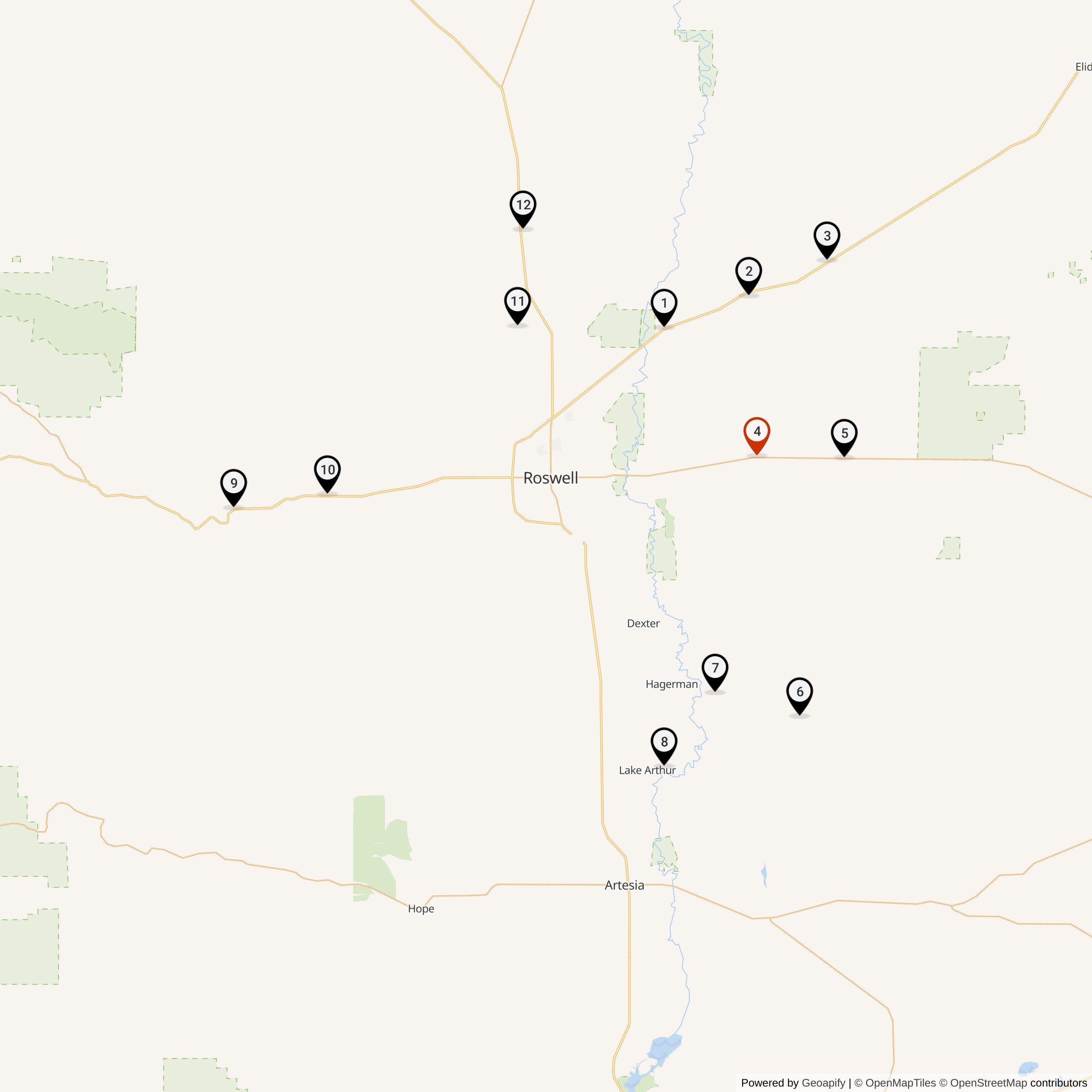
Read about the Atlas at Walker AFB
All Atlas Missile Silo Locations