
Atlas F Site 579-2 Missile Silo, Roswell / Elkins / Acme area New Mexico
Longitude: -104.202545739314
Site Type: Atlas F vertical silo launch facility
Missile Type: SM-65F Atlas
Missile Assigned to this Silo: GD mfg 90F; GD serial 62-12126; AF tail 126
Number of Launchers/Missiles: 1
Parent Base: Walker AFB
Missile Wing: 6th Strategic Aerospace Wing
Missile Squadron: 579th Strategic Missile Squadron
Corps of Engineers Site ID:
Approximate Base Size: approx. 250 acquired/development acres (PA-report searchable text; not a modern parcel survey)
Current Site Use: Former Atlas F launch complex; accident-damaged, stripped/salvaged and disposed; current use not confirmed from official public sources
Site Ownership: Former USAF; later/private ownership indicated by secondary sources but current owner not verified.
Accessible: No public access; treat as private property and hazardous former missile site
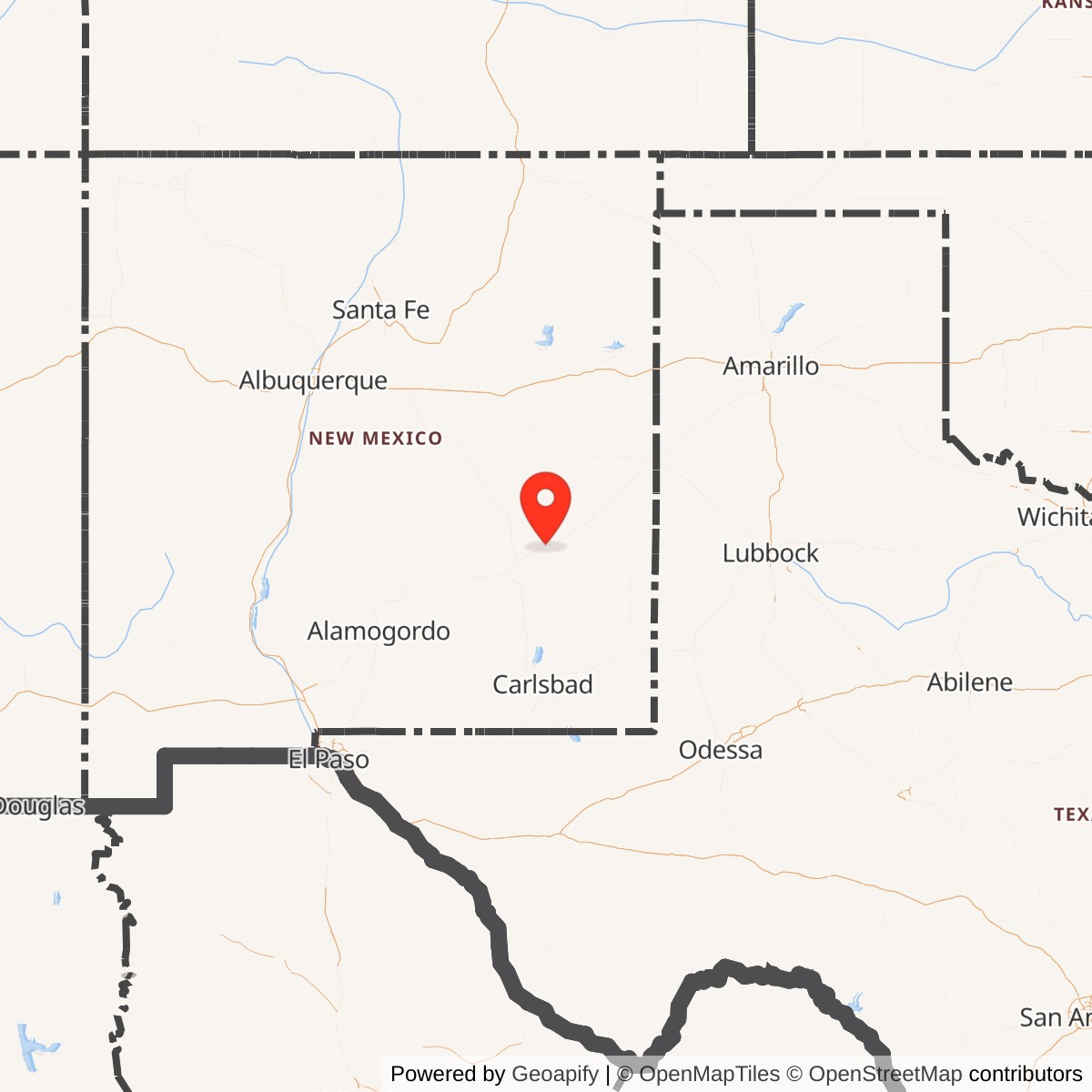
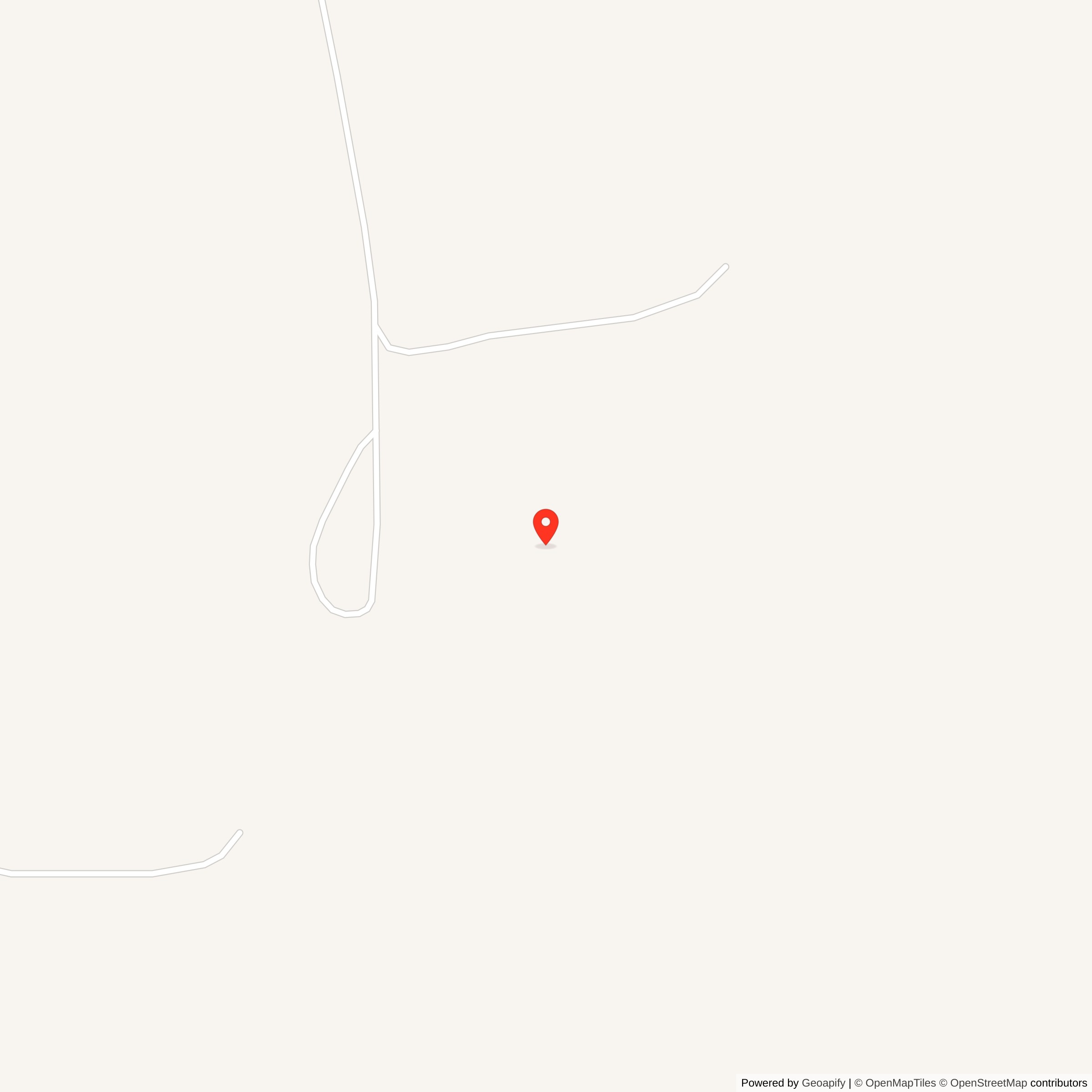
On the afternoon of March 9, 1964, Atlas F Site 579-2 became one of the clearest examples of both the power and the danger of America's first generation of silo-based ICBMs. The complex, hidden northeast of Roswell along the U.S. Highway 70 corridor, was supposed to keep a nuclear-capable Atlas F protected underground and ready for Strategic Air Command alert duty. Instead, a routine propellant-loading exercise turned into a liquid-oxygen pressure emergency. The assigned missile, Atlas 90F / serial 62-12126 / tail 126, was destroyed by fire and explosions, and the launch complex never returned to service. That accident gives Site 579-2 a story larger than a simple Cold War inventory entry. It was one of twelve hardened Atlas F sites built around Walker Air Force Base, one of three Walker sites lost in explosions, and one of the operational accidents that revealed how demanding the Atlas F system was in daily field service. The site's history moves quickly from urgent Corps of Engineers construction, to around-the-clock missile alert during the Cuban Missile Crisis era, to a March 1964 accident during a propellant-loading exercise, and finally to the accelerated 1965 retirement of the liquid-fueled Atlas force. What happened there was not an operational launch and, according to the public accident summaries, not a nuclear detonation or a warhead accident. It was a field-operating disaster rooted in the technical reality of Atlas F: a vertical missile in a deep silo, RP-1 fuel stored aboard on alert, liquid oxygen loaded only when needed for launch or training, pressurized tanks that had to remain stable, and crews working through complex procedures inside a hardened launch facility.
Installation / Site Identity
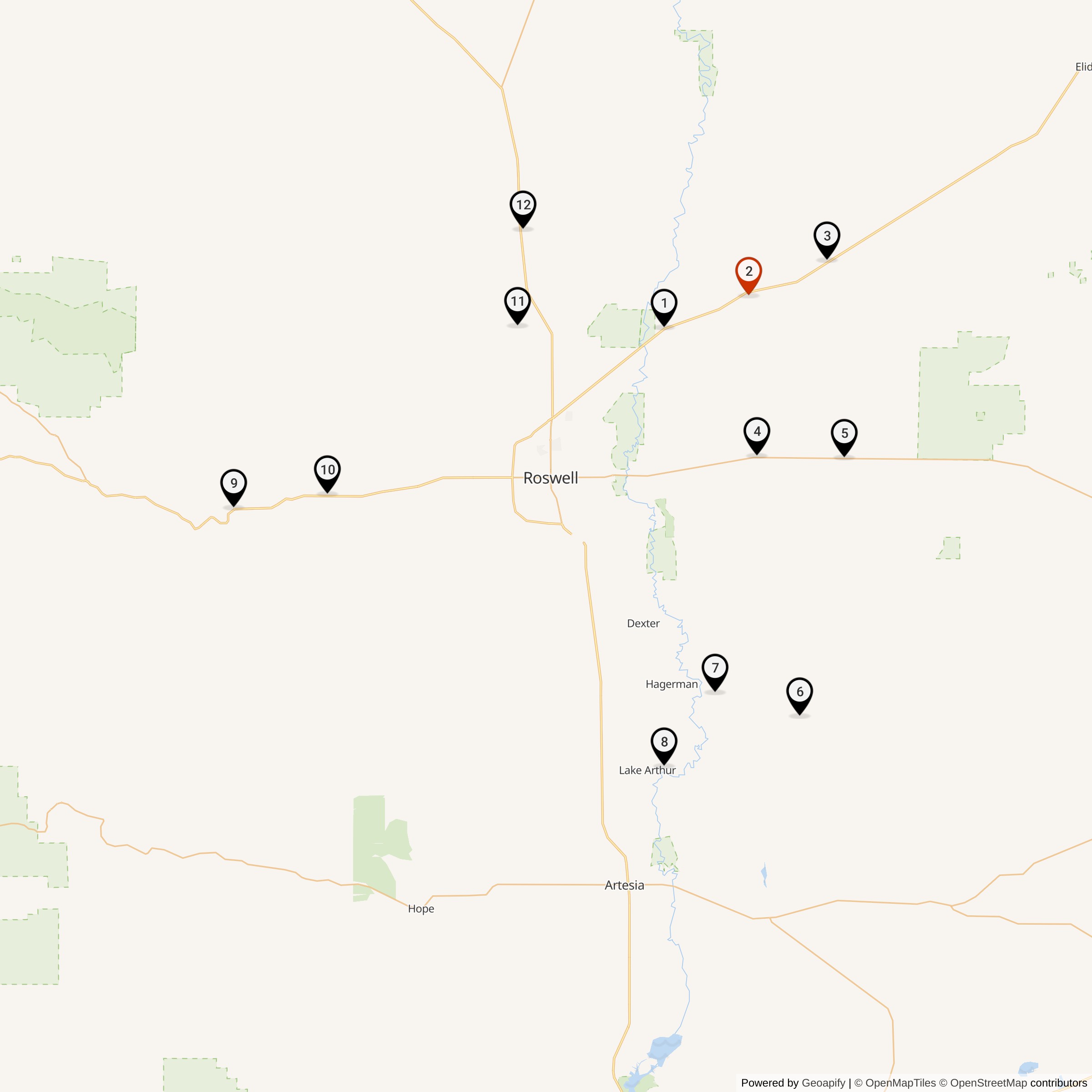
Atlas F Site 579-2 was a one-missile Atlas F vertical-silo launch complex assigned to the 579th Strategic Missile Squadron at Walker Air Force Base, New Mexico. The parent wing was the 6th Bombardment Wing, later redesignated the 6th Strategic Aerospace Wing. The site was part of the Walker AFB missile field, a ring of twelve Atlas F launch complexes around Roswell, New Mexico. The site is in Chaves County, New Mexico, northeast of Roswell, near the Elkins / Acme area and the U.S. Highway 70 North corridor. Atlas F Site 579-2 is inactive and decommissioned. The site was destroyed by an explosion during a propellant-loading exercise on March 9, 1964. The missile assigned to the site was Atlas 90F, General Dynamics serial number 62-12126, Air Force tail number 126. The missile was accepted on July 26, 1962, delivered on July 27, 1962, and never launched because it was destroyed in the Site 2 accident. The broader 579th Strategic Missile Squadron continued in service until the Atlas F phaseout in 1965, but Site 579-2's own operational life effectively ended on March 9, 1964.Location, Landscape, and Site Description
Site 579-2 was built in the open Chaves County landscape northeast of Roswell. The site lay in the high-plains country east of the Pecos River valley, near the U.S. Highway 70 route leading away from Roswell toward the east and northeast. Its location fit the Atlas F deployment model: separated from the parent base, dispersed from the other launch complexes, close enough for support by Walker Air Force Base, and isolated enough that a single attack or accident would not disable the whole squadron.The complex was a single Atlas F launch site. Its principal feature was a deep reinforced-concrete launch silo, roughly comparable to other Atlas F silos: a massive cylindrical underground structure designed to hold the missile vertically on an elevator-like launcher. Adjacent underground spaces included the launch-control center, access tunnel, utility areas, support systems, and equipment rooms. Surface elements originally included access roads, fencing, controlled entry, hardstands, antennas, propellant and oxidizer support facilities, and aboveground utility structures.
The Atlas F launch method shaped the entire site. Unlike Minuteman, the Atlas F was not fired from the bottom of the silo. The missile was stored vertically underground, protected by the hardened silo and two massive overhead doors. For launch, the silo doors opened and the missile was raised above ground on its launcher. Liquid oxygen was loaded before launch, the missile's tanks had to remain pressurized, and launch crews had to manage a complicated sequence involving propellant transfer, missile pressurization, power, communications, and safety systems.
This operating concept explains why the March 1964 accident was so consequential. Site 579-2 was not merely a storage hole; it was an integrated underground machine. When a propellant-loading exercise went wrong, the accident affected the missile, silo, launch equipment, and support systems together. Later historical summaries describe the site as destroyed, while secondary present-day and FUDS listings indicate that structural remains of the former complex continued to exist after deactivation, salvage, and disposal. The coordinate should be treated as the launch-complex location, not as a public access point.
Strategic and Cold War Context
Atlas F Site 579-2 existed because the United States was trying to field survivable intercontinental ballistic missiles at the height of Cold War nuclear competition. Atlas was the first operational American ICBM, and the Atlas F was the most hardened of the operational Atlas versions. Earlier Atlas D and Atlas E facilities used aboveground gantries or semi-hardened coffin launchers. Atlas F placed each missile in a separate, hardened, vertical silo.The strategic idea was simple but demanding. Each launch complex would be dispersed so that one enemy weapon, accident, or sabotage event could not disable the entire force. The hardened silo would improve survivability. A local underground launch-control facility would allow crews to monitor and prepare the missile from within the complex. The missile field around Walker AFB placed twelve such complexes in a wide ring around Roswell, supported by the base but not concentrated on it.
The Atlas F was still a first-generation liquid-fueled missile. It used RP-1 kerosene fuel and liquid oxygen oxidizer. RP-1 could be stored aboard the missile while on alert, but liquid oxygen was cryogenic and had to be loaded before launch or during propellant-loading exercises. The missile's thin stainless-steel "balloon" tanks also depended on pressurization. This gave Atlas impressive performance but made operations more complicated and hazardous than later solid-fueled Minuteman missiles. The launch site had to support fuel, oxidizer, high-pressure gases, power systems, ventilation, communications, fire detection, elevator machinery, and missile checkout equipment.
During the Cuban Missile Crisis in October 1962, the Walker AFB Atlas F sites were part of SAC's heightened nuclear alert posture. The 579th Strategic Missile Squadron history states that the Roswell-area sites were manned continuously and that operational sites were ready to launch if necessary. For Atlas F, "ready to launch" or "launch configuration" should be understood carefully. It did not mean the missile sat continuously raised above the silo or continuously filled with liquid oxygen. It meant that the missile, crew, communications, procedures, support equipment, and propellant availability were placed in an operational launch-ready posture so that a valid launch order could be executed through the Atlas F sequence. RP-1 was normally aboard while the missile sat on alert; liquid oxygen was loaded as part of the countdown; the missile was then raised by the silo elevator and launched if the order proceeded.
That distinction matters for Site 579-2. A site could be on alert, ready for launch, or undergoing a propellant-loading exercise without being in the same physical condition at every moment. The March 1964 accident happened during a propellant-loading exercise, a procedure that practiced or performed the dangerous steps required to move the missile toward launch readiness. Site 579-2's later destruction therefore belongs to a larger story: the site served during the most intense early operational period of the ICBM age, when the United States relied on a mixture of bombers and first-generation missiles while rapidly building the more reliable solid-fueled systems that would replace Atlas.
Construction and Activation
The Walker AFB Atlas F construction program began during the rapid national expansion of ballistic-missile infrastructure. In January 1960, the decision was made to construct Atlas lift-silo facilities around Walker Air Force Base. The Corps of Engineers Albuquerque District commissioned soil investigations to determine whether the Roswell-area geology could support the underground complexes. Spencer J. Buchanan Company and Gordon Herkenhoff & Associates conducted investigations that were considered favorable for construction. Design work began in March 1960 and was assigned to Bechtel Corporation.The Corps of Engineers established the Walker Area Office on May 15, 1960, under the Albuquerque District to supervise, inspect, and administer the construction of the twelve Roswell-area Atlas missile sites. The construction contract was advertised for bids on May 16, 1960, and bids were opened on June 15, 1960. The successful bidder was a joint venture of Macco Corporation, Raymond International, Inc., The Kaiser Company, and Puget Sound Bridge and Dry Dock Company. The basic contract amount was $22,115,828. The contract was awarded on June 16, 1960; the Notice to Proceed was issued on June 20, 1960; and work began on June 23, 1960.
The Walker construction effort soon became part of a larger national reorganization of missile-site construction. The Corps of Engineers Ballistic Missile Construction Office, known as CEBMCO, was established in Los Angeles on August 1, 1960, to centralize and accelerate ICBM construction. Responsibility for the Walker Area Office transferred from the Albuquerque District to CEBMCO on November 22, 1960. The Walker Area Office was led by Lt. Col. Joseph G. Kimble and, at its peak, included eight officers and 168 civilian personnel.
The Walker Atlas F work included twelve unitary silo launch complexes and associated support facilities. The civil construction contract did not include the missiles themselves or all later site-activation equipment, but it created the enormous underground shells and supporting infrastructure that made missile installation possible. Each complex required major excavation, reinforced concrete, structural steel, utilities, access construction, blast-resistant spaces, drainage, mechanical and electrical systems, and provisions for the later installation of missile-support equipment.
The construction history describes the Atlas F launch complex as an unusually large and difficult underground structure. The launch silo was approximately 51 feet 6 inches in diameter and roughly 174 feet deep from the silo door level to the base. The launch-control center was approximately 40 feet in diameter, two stories high, and buried near the silo. The silo and launch-control center were connected by a tunnel. Major underground features were shock-isolated to reduce the effect of blast and ground shock, and the complex was designed to support the elevator, propellant systems, power distribution, environmental control, and communications equipment required by the Atlas F weapon system.
Excavation at Walker was a major engineering challenge. Each site required open-cut excavation for the access and launch-control areas and deep silo excavation through local subsurface materials. Excavated material had to be removed, the silo had to be stabilized, and reinforced-concrete work had to proceed while schedules, design changes, safety hazards, and concurrency pressures continued. "Concurrency" meant that design, construction, missile production, and site activation overlapped; changes in missile or support-equipment requirements could affect sites already under construction.
The Walker construction program was not smooth. The last site was completed on January 6, 1962, fifty-seven days behind schedule. Later summaries attribute delay to constant design changes under the concurrency concept and to labor-management problems. The construction effort experienced six walkouts, causing a reported 2,512 man-days lost. Accidents during the project caused fatalities, and seventy-four disabling injuries contributed to 51,086 lost man-days. Those numbers help explain the physical and human scale of Atlas F construction: these were not small installations, but deep, difficult, high-risk industrial projects built quickly in remote locations.
The 579th Strategic Missile Squadron was activated on March 14, 1961, and organized at Walker AFB on September 1, 1961. The squadron received its first ICBM on January 24, 1962. Site 579-2's own missile, Atlas 90F / serial 62-12126 / tail number 126, was accepted on July 26, 1962, and delivered on July 27, 1962. The squadron history contains a date conflict common in Atlas records: it states that the squadron became fully operational on June 30, 1962, while also listing missile operations turnover to SAC and operational status as November 30, 1962.
Missile System and Technical Role
Site 579-2 supported the SM-65F Atlas, also known as Atlas F. The Atlas F was a liquid-fueled, first-generation intercontinental ballistic missile developed by Convair / General Dynamics. Public summaries for the 579th Strategic Missile Squadron describe the Atlas F as carrying a General Electric Mark IV reentry vehicle and a W-38 nuclear warhead with a yield of approximately four megatons. The missile's range is commonly described in 579th SMS sources as about 6,000 miles. This capability made the Atlas F a strategic deterrent weapon able to reach intercontinental targets from launch sites in the continental United States.The Atlas F site's technical role was to keep one missile in a protected vertical storage condition, maintain it on alert, and support a launch sequence if ordered through Strategic Air Command channels. The site included the underground launch-control center, silo, support equipment, power systems, communications, missile checkout equipment, propellant and oxidizer systems, high-pressure gas systems, and security features required for this mission. Crews were present at the Atlas F complex itself; this differed from later Minuteman operations, in which unmanned launch facilities were controlled remotely from separate launch-control centers.
Operationally, Atlas F sat between earlier exposed or semi-hardened Atlas sites and later solid-fueled missile systems. It was more survivable than earlier Atlas configurations, but it remained operationally demanding. The missile sat vertically on an elevator inside the silo. While on alert, it could contain RP-1 fuel, but the liquid oxygen was not a long-term stored onboard oxidizer in the same way because it was cryogenic and boiled off. When launch procedures moved forward, crews loaded liquid oxygen, opened the heavy silo doors, raised the fueled missile to ground level, locked the elevator, and proceeded through the launch sequence.
The same systems that made Atlas F fast for a first-generation liquid-fueled ICBM also made training hazardous. A propellant-loading exercise was not a classroom drill. It involved missile tanks, cryogenic oxygen, pressure-control equipment, venting and boiloff systems, ground-support equipment, checklists, crew coordination, and emergency procedures. Site 579-2's destruction during such an exercise demonstrates how the Atlas F system's technical role and its operational risk were inseparable.
Operational History
Site 579-2 entered service as part of the 579th Strategic Missile Squadron's Walker AFB Atlas F field. The squadron had deep lineage from World War II, but its missile role began in the early 1960s. It was assigned to the 6th Bombardment Wing, later the 6th Strategic Aerospace Wing, and operated twelve Atlas F launch complexes around Roswell.The missile field became operational in the same period as the Cuban Missile Crisis. The 579th SMS public history emphasizes that the sites were manned twenty-four hours a day, seven days a week, and that during the crisis the operational Walker sites were at a high level of alert and ready to launch if ordered. For Site 579-2, this meant a brief but intense operational life. Its missile was accepted and delivered in July 1962; the field reached operational status in 1962; the Cuban Missile Crisis followed in October; and less than two years later the site was destroyed.
Routine operations at Site 579-2 would have included crew alert duty, missile checkout, maintenance, security, communications checks, propellant-system maintenance, safety procedures, readiness exercises, and crew standardization. Atlas F crews worked inside the launch complex for their alert tours, while maintenance, propellant, power, electronics, and real-property installed-equipment specialists supported the missile and ground systems. The site's operating environment was complex: crews worked in hardened underground spaces, with a deep missile silo nearby, while managing systems that included liquid oxygen, RP-1, high-pressure gases, electrical equipment, ventilation systems, and heavy mechanical structures.
Propellant-loading exercises were a particularly consequential part of that operating world. They existed because Atlas F readiness depended on crews being able to load liquid oxygen, manage tank pressure, respond to abnormal indications, and move the missile through launch-preparation procedures. These exercises also exposed the site to some of the most dangerous conditions short of an actual launch: cryogenic oxidizer in motion, vent and boiloff equipment in use, pressure limits being approached or controlled, and crews making decisions under procedural discipline.
The Walker missile field acquired an unfortunate reputation because three of its twelve Atlas F sites were destroyed in accidents. Site 579-1 was destroyed on June 1, 1963. Site 579-5 was destroyed on February 13, 1964. Site 579-2 followed on March 9, 1964. These were not isolated from the larger history of early liquid-fueled missile operations. Atlas and Titan I sites elsewhere also faced hazards associated with propellant loading, cryogenic systems, oxidizer leaks, pressurization, and complex procedures. The Walker accidents helped show why the Air Force and Department of Defense were eager to move toward solid-fueled Minuteman and more advanced missile systems.
March 9, 1964 Site Explosion
The defining event at Atlas F Site 579-2 occurred on March 9, 1964, when the launch complex was destroyed during a propellant-loading exercise. Strategic Air Command's missile chronology identifies Atlas F launch complex 579-2 of the 6th Strategic Aerospace Wing at Walker AFB as destroyed by an explosion during a propellant-loading exercise.The accident was not a launch attempt. It occurred during a PLX, or propellant-loading exercise. In Atlas F operations, that distinction is important but not reassuring: the exercise still involved the systems and hazards that made the missile launchable. Atlas F used RP-1 fuel and liquid oxygen. RP-1 could remain aboard the missile during alert. Liquid oxygen, because it was cryogenic, had to be loaded as part of countdown or training activity. The missile's tanks also had to remain pressurized. A PLX therefore brought together the missile tankage, liquid-oxygen system, pressure-control system, boiloff/venting equipment, ground-support equipment, and crew checklists in a live operating environment.
The most useful publicly available technical sequence comes from later preliminary-assessment reporting for former Walker Atlas F missile sites. That text describes the Site 579-2 event as a routine PLX conducted by standardization crew S-02 and ready operational crew RO-27, and it indicates that both crews were alert-ready. The wording suggests a standardization/training setting: one crew was likely being evaluated or standardized, while the ready operational crew was also present for the exercise.
According to that later report, the missile tank pressure at Site 579-2 remained normal for about an hour before the liquid-oxygen tank pressure began to rise. The same source says that at about 2:39 p.m. the LOX tank pressure had reached emergency-release pressure levels, after which the system automatically switched to an emergency mode that enabled the boiloff valve to open. Those details point to a pressure-control emergency during liquid-oxygen operations, but they do not by themselves prove the initiating mechanical failure, human factor, valve condition, instrumentation problem, or procedural breakdown that began the accident sequence.
After the emergency-pressure condition, the accident escalated into fire and explosions that destroyed the missile at the silo. The launch complex itself was not rehabilitated and returned to alert service. In practical terms, March 9, 1964 ended Site 579-2's active missile-service life.
A complete Air Force accident-board report for Site 579-2 was not located. Therefore the precise root cause is not known.
The accident was part of a disturbing Walker pattern. The 579th Strategic Missile Squadron history states that three of the squadron's twelve sites were lost in explosions on June 1, 1963; February 13, 1964; and March 9, 1964. Broader Walker AFB historical summaries state that the missiles involved in the Walker accident sequence were not mated with their warheads at the time of the incidents, and that the only reported injury in those accidents was a crewman injured by barbed wire while fleeing a site.
The site existed for only a brief active period: its assigned missile was accepted on July 26, 1962, delivered on July 27, 1962, and destroyed on March 9, 1964. It was part of the nation's operational ICBM alert force during the Cuban Missile Crisis era, but it is remembered chiefly because its liquid-fueled Atlas F was lost during the dangerous work of keeping such missiles ready.
Deactivation and Disposal
Site 579-2's deactivation history differs from sites that simply reached the 1965 Atlas phaseout intact. Its active launch role ended with the March 9, 1964 accident. The 579th SMS continued to operate its remaining missiles, but Site 579-2 was no longer a functioning launch complex. The site therefore entered the disposal story as an accident-damaged former launch facility rather than as an intact Atlas F site removed from alert in 1965.The national phaseout of liquid-fueled Atlas and Titan I missiles accelerated later in 1964. In November 1964, Secretary of Defense Robert McNamara announced that remaining first-generation Atlas and Titan I ICBMs would be phased out ahead of the earlier schedule, in favor of more reliable solid-fueled systems such as Minuteman and Polaris. The 579th Strategic Missile Squadron's first ICBM was removed from alert on January 5, 1965. Its last ICBM came off alert on February 4, 1965. The last 579th SMS ICBM was shipped out on February 9, 1965, and the squadron was inactivated on March 25, 1965.
The phaseout of Atlas E, Atlas F, and Titan I followed a structured process. SAC retained accountability for missile assets while preparing missiles for shipment, securing launch facilities, and continuing care-and-custody functions at deactivated sites. Air Force Logistics Command handled overall program guidance, missile shipments, and disposition of missile assets. Deactivation actions included removal and preparation for shipment of reentry vehicles, missiles, classified components, and excess mobile equipment; disposal or transfer of propellants and gases; shutdown of unnecessary power and equipment; protection of systems that remained in use; and eventual reporting of sites as excess to the General Services Administration.
For damaged Site 579-2, the exact post-accident sequence of equipment removal, sealing, salvage, transfer, and private reuse has not been found in a c Air Force excess-property report. However, the general Walker and Atlas F disposal pattern is clear. Once military need ended, reusable or classified equipment was removed, missiles were shipped away, ground equipment was screened or salvaged, and real property moved into disposal or private ownership channels. USACE FUDS records later listed the former site as WAFB FAC SITE #2 / K06NM0480 in Chaves County, with HTRW and CON/HTRW categories. A later preliminary-assessment search result also describes the former Site 2 property as having approximately 250 acres acquired by the Department of Defense for site development.
Current Status and Site Use
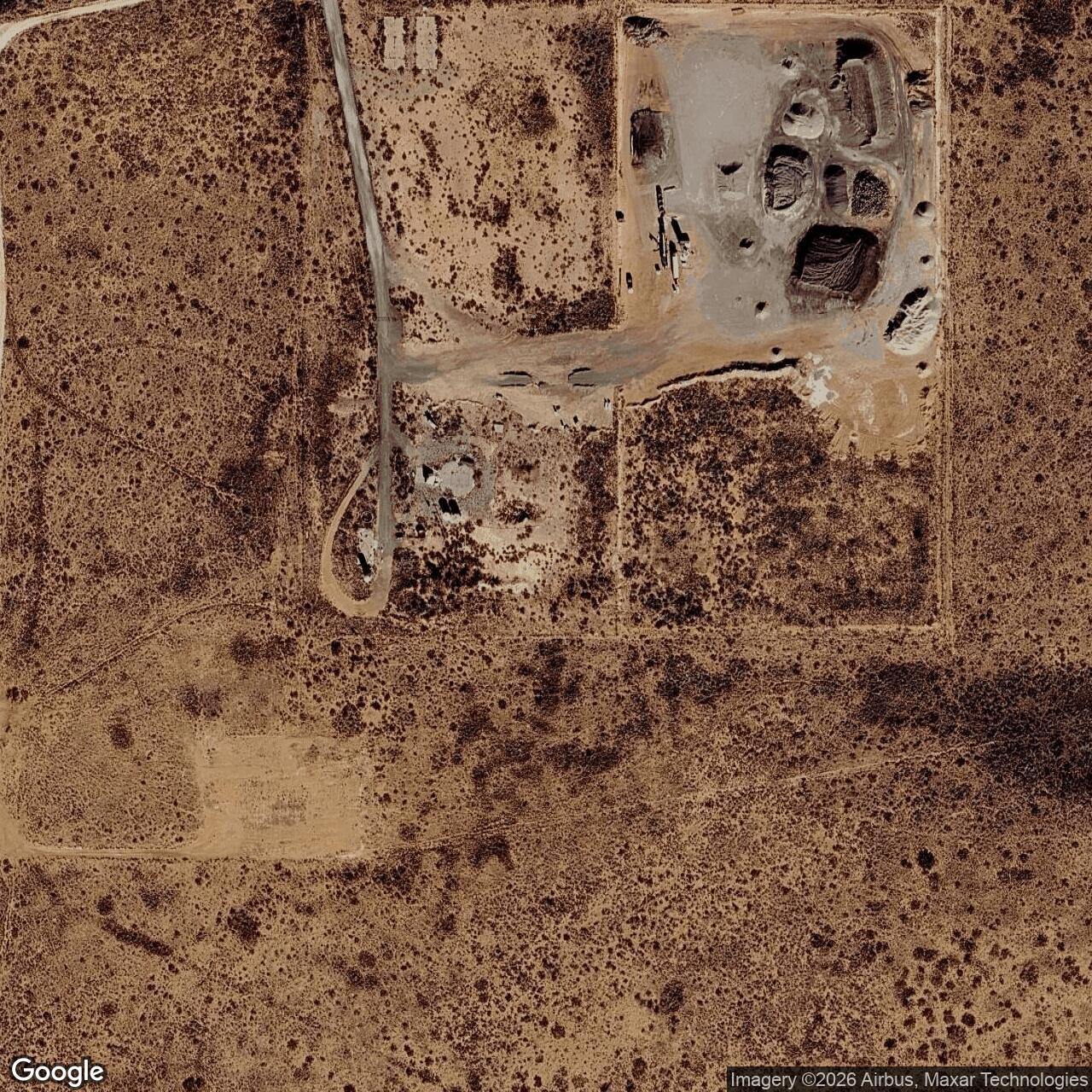
Atlas F Site 579-2 is a decommissioned, accident-damaged former missile launch complex on private or non-public property. Public access should not be assumed. The site should be treated as a former military industrial facility with potential hazards from confined spaces, damaged structures, debris, contaminated materials, fall hazards, and unstable underground areas.Satellite images identify visible surface traces of the former launch complex, including the road layout and disturbed surface area. Secondary listings indicate that materials were salvaged before disposal and that structural remains persisted after the Air Force era. The exact present ownership and current use were not confirmed from an official parcel or owner source. It is therefore safest to describe the site as former USAF property now outside active military use, likely private property, with no public access.
Chronology
- 1960-01 The decision was reached to construct Atlas F lift-silo facilities in the Walker AFB / Roswell area, and soil investigations were requested.
- 1960-03 Design work for the Walker Atlas F launch facilities began and was assigned to Bechtel Corporation.
- 1960-05-15 The Corps of Engineers Walker Area Office was established to supervise, inspect, and administer construction of the twelve Roswell-area Atlas missile sites.
- 1960-05-16 The Walker Atlas F construction contract was advertised for bids.
- 1960-06-15 Bids were opened for the Walker Atlas F construction contract.
- 1960-06-16 The basic construction contract was awarded to the Macco Corporation, Raymond International, Inc., The Kaiser Company, and Puget Sound Bridge and Dry Dock Company joint venture.
- 1960-06-20 The Notice to Proceed was issued for the Walker Atlas F construction contract.
- 1960-06-23 Work began on the Walker Atlas F launch-facility construction program.
- 1960-08-01 The Corps of Engineers Ballistic Missile Construction Office, or CEBMCO, was established to centralize and expedite ballistic-missile construction.
- 1960-11-22 Responsibility for the Walker Area Office was transferred from the Albuquerque District to CEBMCO.
- 1961-03-14 The 579th Strategic Missile Squadron was activated.
- 1961-09-01 The 579th Strategic Missile Squadron was organized at Walker Air Force Base, New Mexico.
- 1962-01-06 The last Walker Atlas F construction site was completed, fifty-seven days behind schedule.
- 1962-01-24 The 579th Strategic Missile Squadron received its first ICBM.
- 1962-07-26 Atlas 90F, General Dynamics serial number 62-12126 and Air Force tail number 126, was accepted.
- 1962-07-27 Atlas 90F / serial 62-12126 / tail number 126 was delivered for Site 579-2.
- 1962-10 During the Cuban Missile Crisis, the 579th Strategic Missile Squadron's operational missile sites were maintained in SAC's heightened alert posture; in Atlas F terms, this meant operational launch readiness, not continuous aboveground or fully liquid-oxygen-loaded status.
- 1962-11-30 The 579th Strategic Missile Squadron's Atlas F missile operations were listed as turned over to SAC and operational.
- 1964-03-09 A routine propellant-loading exercise was conducted at Site 579-2; later indexed preliminary-assessment text describes standardization crew S-02 and ready operational crew RO-27 as involved in the exercise.
- 1964-03-09 During the exercise, later preliminary-assessment says missile tank pressure remained normal for about an hour before liquid-oxygen tank pressure began to rise.
- 1964-03-09 2:39 p.m. Later indexed preliminary-assessment text says the LOX tank pressure reached emergency-release pressure levels and the system automatically switched to emergency mode to enable the boiloff valve to open.
- 1964-03-09 Atlas 90F / serial 62-12126 / tail 126 was destroyed at Site 579-2 by fire and explosions during the propellant-loading exercise; the launch complex was not returned to alert service.
- 1964-11-18 Secretary of Defense Robert S. McNamara announced accelerated phaseout of remaining first-generation Atlas and Titan I ICBMs.
- 1965-01-05 The first 579th Strategic Missile Squadron ICBM was removed from alert during the Atlas F phaseout.
- 1965-02-04 The last 579th Strategic Missile Squadron ICBM was removed from alert.
- 1965-02-09 The last 579th Strategic Missile Squadron ICBM was shipped out.
- 1965-03-25 The 579th Strategic Missile Squadron was inactivated.
- 2015-09-30 The USACE FUDS inventory listed WAFB FAC SITE #2 / K06NM0480 in Chaves County, New Mexico, with HTRW and CON/HTRW categories.
Read about the Atlas at Walker AFB
All Atlas Missile Silo Locations