
Atlas F Site 579-7 Missile Silo, Hagerman New Mexico
Longitude: -104.257354976014
Site Type: Atlas F vertical silo launch facility
Missile Type: SM-65F Atlas
Missile Assigned to this Silo: GD mfg 92F; GD serial 62-12128; AF tail 128
Number of Launchers/Missiles: 1
Parent Base: Walker AFB
Missile Wing: 6th Strategic Aerospace Wing
Missile Squadron: 579th Strategic Missile Squadron
Corps of Engineers Site ID: 3
Current Site Use: Former Atlas F launch complex near Hagerman; surface and underground remains indicated by satellite/photo sources; no public reuse verified; FUDS/DERP records list response complete for HTRW.
Site Ownership: Former USAF; post-federal/private ownership not independently reverified.
Accessible: No public access; treat as private property and a hazardous former missile/industrial site.
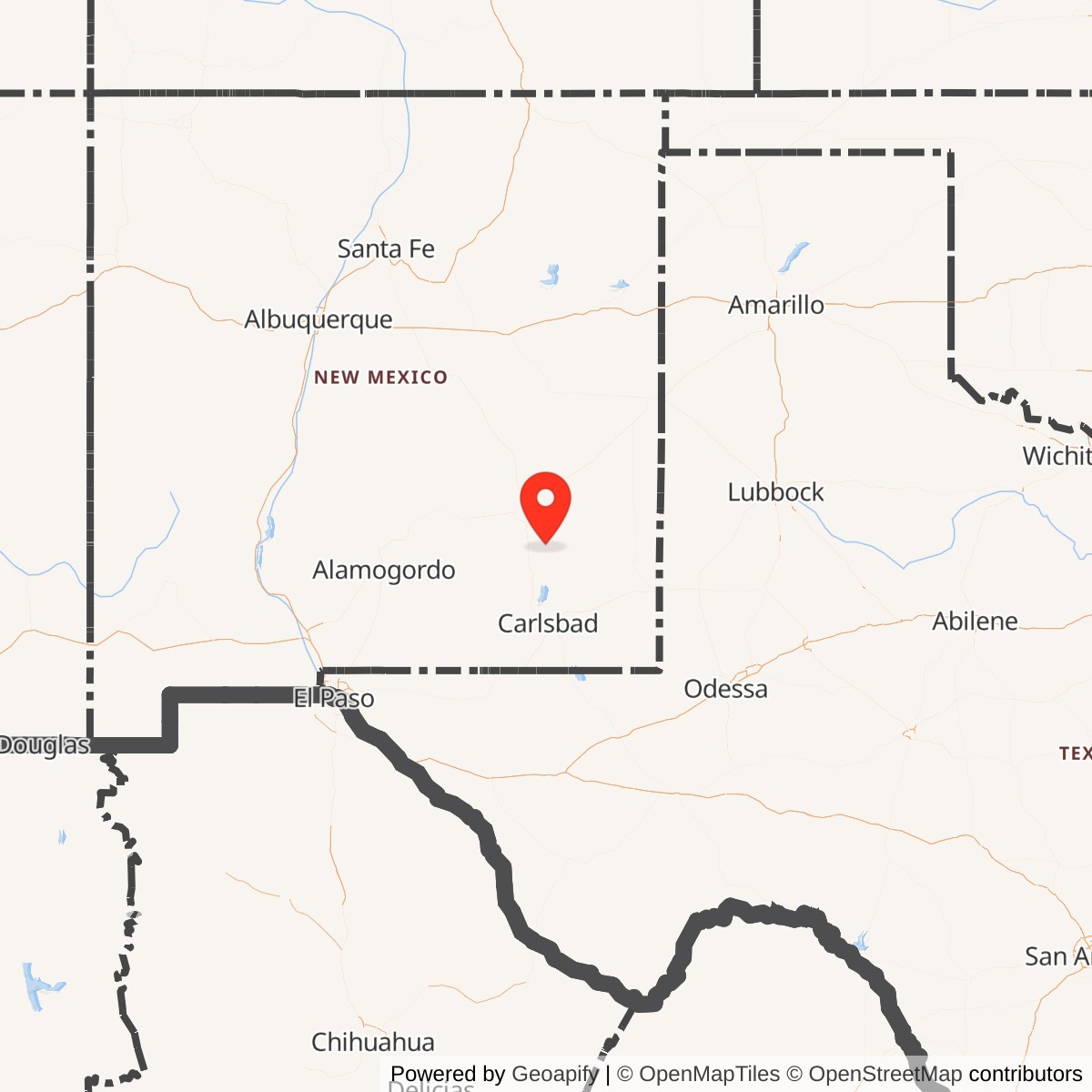
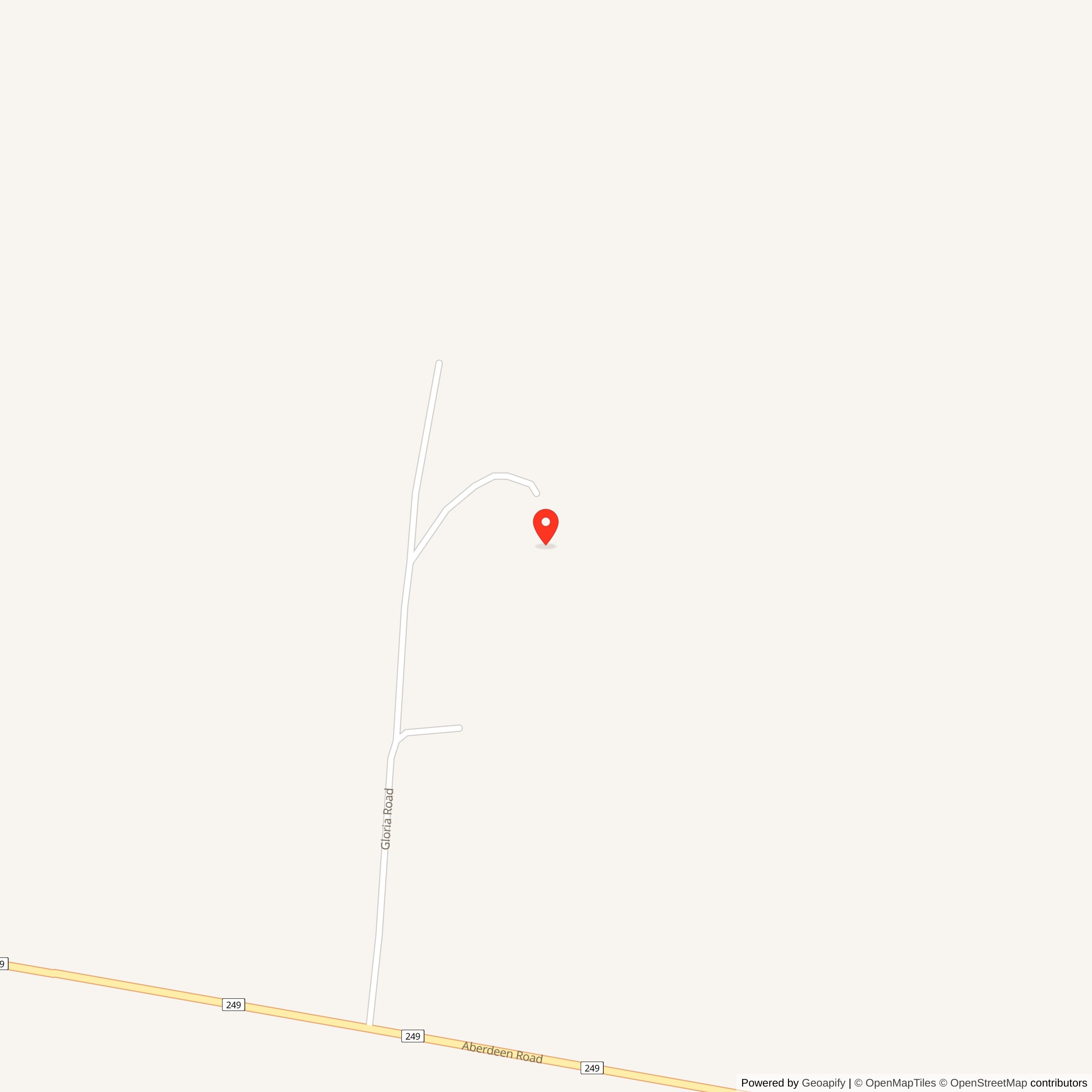
South of Roswell and near Hagerman, New Mexico, Atlas F Site 579-7 looks today like another quiet remnant of Cold War engineering hidden in open Chaves County country. In the early 1960s, however, this was a hardened underground launch complex built around a weapon that required almost theatrical precision: a pressurized Atlas missile, two massive silo doors, an elevator launcher, RP-1 fuel, cryogenic liquid oxygen, an underground control center, security forces, maintenance teams, and communications links that all had to work when national leaders had only minutes to make decisions. Site 579-7 was not one of the three Walker Atlas F sites destroyed in accidents, but it still tells the larger story of the Walker missile field: rapid construction, brief operational alert service, the Cuban Missile Crisis, early Atlas phaseout, post-service environmental cleanup, and the strange afterlife of a missile whose assigned booster later flew from Vandenberg in a reentry-vehicle test.
Atlas F Site 579-7 was an SM-65F Atlas intercontinental ballistic missile launch facility assigned to Walker Air Force Base near Roswell, New Mexico. It belonged to the 579th Strategic Missile Squadron, under the 6th Bombardment Wing, later the 6th Strategic Aerospace Wing. The site code was 579-7. Its missile system was the SM-65F Atlas, the final operational Atlas ICBM variant and the Atlas model deployed in hardened silo-lift launch complexes.
The site entered the Walker Atlas F operational story during 1962. The 579th Strategic Missile Squadron history contains both a 1962-06-30 narrative statement that the squadron became fully operational and a 1962-11-30 entry for turnover to Strategic Air Command and operational status; the exact individual Site 579-7 turnover date was not found. It was decommissioned in 1965.
Location, Landscape, and Site Description
Site 579-7 stood in the rural missile belt around Roswell, New Mexico. Its nearest town was Hagerman, and the surrounding landscape is open Chaves County country: semi-arid, agricultural and ranching land mixed with desert scrub, long rural roads, and scattered oil-and-gas and utility corridors. The apparent emptiness was part of the design. Atlas F sites were spread around Walker Air Force Base so that the twelve missiles of the 579th Strategic Missile Squadron would not be concentrated in one vulnerable cluster.A Walker Atlas F tour bulletin from 1962 included a vicinity plan for the twelve sites and listed Site 7 as 27.2 miles from Walker Air Force Base and 21.1 miles from a reference crossroads identified in the bulletin as the intersection of Highways 380 and 83. The same plan placed the site in relation to Dexter, Hagerman, Walker Air Force Base, and the other Walker Atlas F launch complexes. That distance from the parent base illustrates the basic Cold War logic of the missile field: crews, maintenance, security, and command functions were supported from Walker, but the weapons themselves were dispersed into a wide ring around the Roswell area.
The physical complex was not a simple hole in the ground. The 1962 Walker tour bulletin described the typical Atlas F launching facility as consisting of a deep cylindrical launch silo, a launch control center, and an underground connecting tunnel. The launching silo had a 26-foot, 1-inch inside radius, producing an inside diameter of roughly 52 feet, 2 inches, and was about 178 feet deep. The launch control center was about 40 feet in inside diameter. The silo used heavily reinforced concrete walls, and the missile-support structure inside the silo was a steel crib suspended from shock mounts. The launch control center also used suspended floors for equipment and personnel. These design features reflected the Atlas F requirement for a hardened, self-contained, blast-resistant launch complex.
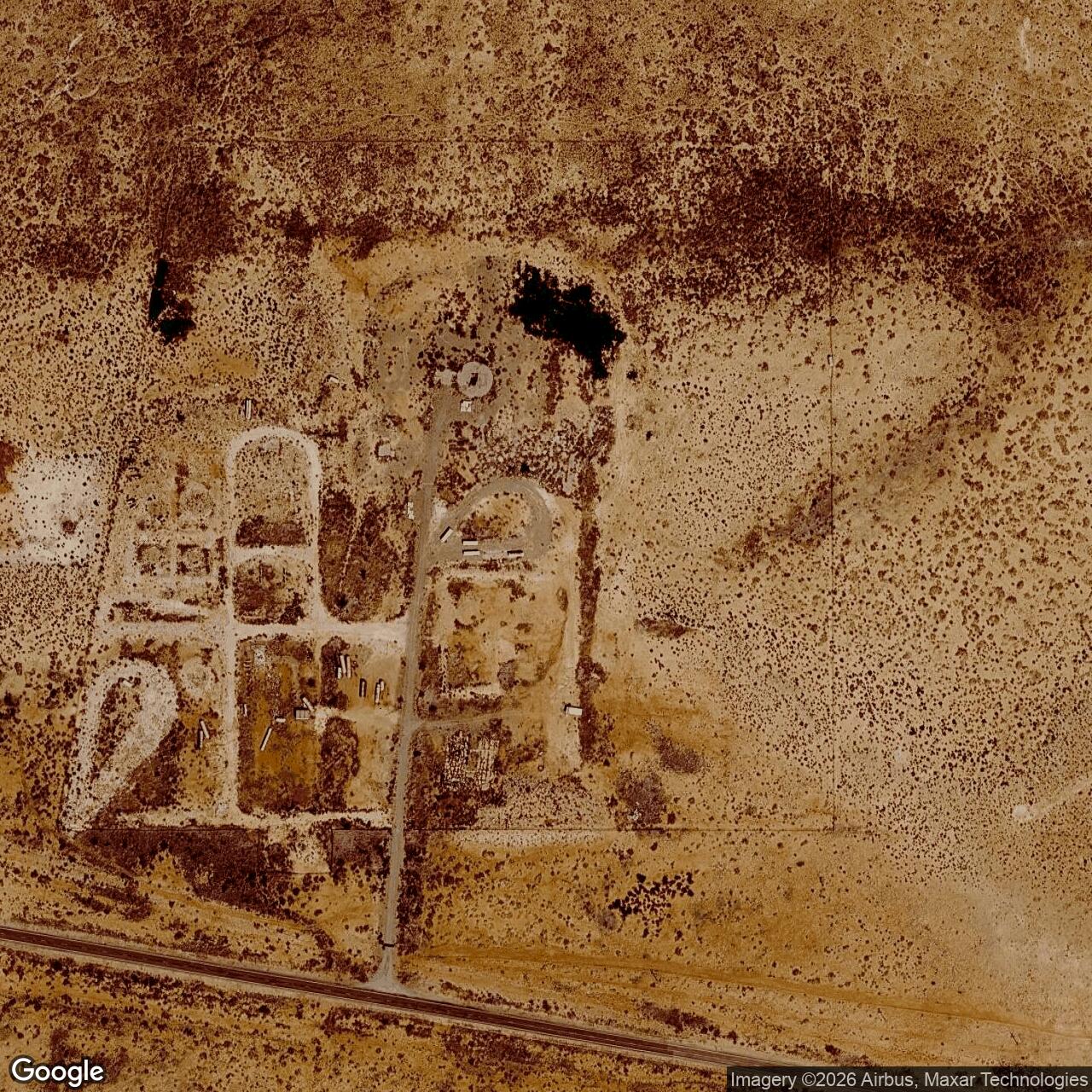
Above ground, Site 579-7 would have included the visible elements common to Atlas F launch complexes: an access road, security fencing, surface entries and hatches, utility and ventilation features, antennas or communications-related surface equipment, hardstand and parking areas, and the large silo-door structure. The site was built to be guarded, maintained, and operated as a technical industrial installation, not merely as a storage vault.
Strategic and Cold War Context
Atlas F Site 579-7 existed because the United States was trying to make nuclear deterrence survivable, fast, and credible during the most dangerous years of the early Cold War. Atlas was the Air Force's first operational intercontinental ballistic missile family. It gave the United States an ICBM that could reach intercontinental targets, but the early Atlas systems were demanding machines. Their thin stainless-steel airframes had to be pressurized, and their propulsion systems used RP-1 kerosene fuel and liquid oxygen oxidizer. Atlas could do what earlier bombers alone could not do, but it required constant technical attention and complex launch preparation.The Atlas F was the last and most advanced operational Atlas type. Unlike Atlas D gantry and coffin-launcher arrangements, Atlas F was stored vertically in a hardened underground silo-lift complex. The National Park Service summarizes Atlas F as an 82-foot missile held in a blast-proof silo-lift configuration and capable of launch in approximately ten minutes. Seventy-two Atlas F missiles were deployed, including twelve based from Walker Air Force Base in New Mexico.
Site 579-7 was therefore not a local defense installation for Hagerman, Dexter, or Roswell. It was part of the national strategic retaliatory force. Its isolated location, hardened underground silo, on-site launch control center, security fence, communications links, and dispersal from the other Walker sites all reflected one problem: how to keep enough missiles alive and launchable that an adversary could not confidently destroy the U.S. retaliatory force in a first strike.
The phrase "operational launch-ready alert posture" needs careful explanation for Atlas F. It did not mean the missile was continuously raised above ground. It also did not mean the missile was continuously loaded with liquid oxygen. In normal alert conditions, the Atlas F sat vertically underground on its elevator launcher. RP-1 fuel was kept aboard, the missile and launch facility were maintained in readiness, pressure systems were monitored, crews and security forces were on duty, and communications links had to remain functional. Liquid oxygen would be loaded as part of the launch sequence. The silo doors would open, the launcher would raise the missile, and the launch crew could top off liquid oxygen during a hold before the final launch command. During a crisis, readiness meant that crews, security, communications, propellant systems, and missiles were brought to the highest practical state of serviceability within the limits of the Atlas F design. It did not mean a continuously exposed or continuously LOX-loaded missile waiting above the silo.
Construction and Activation
Planning for the Walker Atlas F missile field moved quickly. A 1962 Army Corps of Engineers tour bulletin stated that the decision to build Atlas launching facilities in the Roswell area was reached in early January 1960. The Albuquerque District Office was asked to perform soil investigations to determine whether the geology would support the proposed installations, and investigations by Spencer J. Buchanan Company and Gordon Herkenhoff & Associates produced favorable results.Design began in early March 1960. The project was advertised for bids on 1960-05-16, bids were opened on 1960-06-15, and the construction contract was awarded on 1960-06-16. The contract, valued at $22,125,828, went to a joint venture of Macco Corporation, Raymond International, Inc., The Kaiser Company, and Puget Sound Bridge & Dry Dock Company. Notice to proceed was issued on 1960-06-20, and work began on 1960-06-23.
The 1962 tour bulletin gives a rare sense of the scale of this work. For each Atlas F launching facility, about 48,000 cubic yards of material were excavated by open-cut methods and another 24,000 cubic yards by silo shafting. About 6,000 cubic yards of Portland cement concrete were placed at each site. The suspended steel crib inside the silo weighed about 600 tons; with the fuel vessels, motor generators, propellant-loading skids, and associated equipment, the suspended interior load reached approximately 1,800,000 pounds. The complex was not just a hardened storage structure. It was a heavy civil-engineering project combined with a cryogenic propellant plant, power plant, communications node, security post, and launch-control facility.
Site 579-7 appears in the tour bulletin as part of that construction sequence. The bulletin notes that major silo concrete placement began at Site #2 on 1960-09-06 and was completed at Site #7 on 1961-02-15, except for the silo cap. Secondary concrete placement for the launch control center and miscellaneous smaller pours continued until the completion date of 1962-03-15. This does not by itself establish the exact operational turnover date for Site 579-7, but it does document a site-specific construction milestone: by mid-February 1961, the major silo concrete placement for Site 7 had been completed except for the cap.
Missile System and Technical Role
The missile associated with Site 579-7 was the SM-65F Atlas, a liquid-fueled ICBM developed by General Dynamics. The Atlas F used a vertical silo-lift arrangement. The missile stood upright underground on an elevator launcher, protected by heavy overhead doors. In a launch sequence, those doors opened, the missile was raised to the surface, liquid oxygen loading and topping procedures were completed as required, and the missile launched from the elevated launcher.The 579th Strategic Missile Squadron history describes the Atlas F operation in plain terms. The missile required RP-1 and liquid oxygen. RP-1 fuel was kept aboard the missile during alert. Liquid oxygen was loaded before the missile was lifted to launch position. Internal pressure was maintained with gaseous nitrogen, and the crew could top off liquid oxygen during a hold before the final launch command. This process was faster and more protected than the earlier Atlas D and E arrangements, but it remained far more complicated than the later solid-fueled Minuteman system.
Public sources describe the Atlas F warhead and reentry vehicle in slightly different shorthand terms. The 579th squadron history says the Atlas F used a General Electric Mark IV reentry vehicle with a W-38 warhead and a yield of approximately four megatons, with a range of about 6,000 miles. The Smithsonian National Air and Space Museum identifies the Mark 4 reentry vehicle used on Atlas E/F and Titan I missiles as carrying a W-38 nuclear warhead with a yield of about 3.75 megatons. The National Park Service describes the Atlas F as an 82-foot missile in a blast-proof silo-lift configuration. Taken together, the public sources place Site 579-7 in the early Atlas E/F generation: a high-yield thermonuclear payload in a Mark 4 ablative reentry vehicle, carried by a first-generation liquid-fueled ICBM.
Unlike later Minuteman launch facilities, which were normally unmanned silos controlled from separate launch control centers, an Atlas F launch complex included its own underground launch control center. That is why Site 579-7 is not assigned a separate parent LCC in the Minuteman sense. The crewed control area, launch equipment, support machinery, communications, and missile silo were all part of the same hardened complex. The site required launch crews, security personnel, maintenance crews, propellant specialists, communications technicians, electrical and mechanical support, and strict procedural discipline.
Operational History
The 579th Strategic Missile Squadron was activated as an ICBM unit in 1961 and organized at Walker Air Force Base on 1961-09-01. It was assigned to the 6th Bombardment Wing, later the 6th Strategic Aerospace Wing. Its missile weapon system was the SM-65F Atlas, used from 1962 until the squadron's inactivation in 1965.Site 579-7 became part of the operational Walker missile field during the same brief and intense period. Its assigned missile, 92F / tail number 128, was accepted on 1962-08-30 and delivered on 1962-09-04. The 579th squadron history records the squadron's first ICBM arriving earlier in 1962 and states that the squadron became fully operational during the Cuban Missile Crisis period. The same history separately lists turnover to Strategic Air Command and operational status on 1962-11-30.
The Cuban Missile Crisis was the first major strategic test for the Walker Atlas F force. Squadron-level historical sources state that all operational 579th sites were held at a high level of alert and were ready to launch if required. For Site 579-7, this should be understood as participation in the squadron-wide alert posture rather than evidence of a unique site-specific launch event. It meant crew readiness, communications readiness, security posture, missile servicing, propellant-system readiness, and maintenance discipline were pushed to the limits of what the Atlas F system could safely sustain.
Routine operational life at Site 579-7 was demanding. Atlas F alert operations required constant attention to pressure systems, electrical systems, propellant-loading equipment, environmental controls, communications, security, and nuclear-weapons procedures. The 1962 Walker tour bulletin emphasized the cleanliness and close tolerance required by the propellant-loading system. That requirement mattered because the Atlas F combined cryogenic oxidizer, fuel, high-pressure systems, and confined underground machinery.
Those hazards were not theoretical in the Walker missile field. Three of the twelve 579th Strategic Missile Squadron sites were lost in explosions: Site 579-1 on 1963-06-01, Site 579-5 on 1964-02-13, and Site 579-2 on 1964-03-09. The reviewed sources did not document a comparable accident at Site 579-7. Its significance is partly that it survived the operational period intact while sister complexes demonstrated how dangerous first-generation liquid-fueled ICBM operations could be.
Site 579-7 also has an unusual post-operational missile connection, its assigned missile, 92F / tail 128, was later launched on 1970-06-09 from Vandenberg Air Force Base, using Gantry A-1, with the payload listed as ABRES RVTO-1A7, a reentry-vehicle test.
Deactivation and Disposal
Site 579-7's active service ended because the Atlas F system itself was overtaken by newer solid-fueled missiles. By 1964, Minuteman and Polaris had made liquid-fueled Atlas less attractive as an operational deterrent. Atlas required liquid oxygen loading, complex maintenance, and continuous attention to pressure and propellant systems. Solid-fueled Minuteman missiles could sit in dispersed silos on alert with much faster and simpler launch preparation.The 579th Strategic Missile Squadron history states that on 1964-11-18, Secretary of Defense Robert S. McNamara announced that liquid-fueled missiles would be phased out three years early because of the increased reliability of solid-fueled missiles such as Minuteman and Polaris. The same source records the first 579th ICBM off alert on 1965-01-05, the last ICBM off alert on 1965-02-04, and the last ICBM shipped on 1965-02-09. The squadron inactivated on 1965-03-25.
The exact sequence of missile removal, equipment removal, property transfer, and underground disposal for Site 579-7 was not fully documented in the reviewed public sources. The assigned missile did not simply disappear into scrap records immediately. Missile 92F was later used in a Vandenberg launch on 1970-06-09 for a reentry-vehicle test. That indicates at least the missile associated with Site 579-7 was removed from operational alert service and ultimately redirected to a post-operational test role.
The site later entered the Formerly Used Defense Sites and environmental-restoration record. The 2015 USACE FUDS inventory lists WAFB FAC SITE #7, property number K06NM0485, in Hagerman, Chaves County, with Site 02 categorized as HTRW, meaning Hazardous, Toxic and/or Radioactive Waste. Defense Environmental Restoration Program reporting lists WAFB FAC SITE #7 / NM69799F628000 with one Installation Restoration Program site and no Military Munitions Response Program site, and includes it in the table of installations and FUDS properties that achieved final response complete before fiscal year 2021. This does not mean the site is open to the public or free of physical hazards. It means the environmental restoration program recorded a final response-complete status for the listed site.
Current Status and Site Use
Atlas F Site 579-7 is a decommissioned former missile launch complex. It is no longer an active military installation. The site is associated with former Walker Air Force Base and the 579th Strategic Missile Squadron, but it is not part of any active publicly accessible military museum or park.The current site should be treated as private property with no public access. Former Atlas F complexes can contain dangerous underground structures, confined spaces, unstable openings, old utilities, debris, and environmental or industrial hazards. Even when environmental-response records list a site as response complete, that status does not make the property safe for casual entry.
Visible remains appear to correspond to the former hardened launch complex footprint, as shown in public satellite and site-photo references, but the exact condition of underground structures, backfill, demolition, or sealing was not independently verified. The USACE FUDS and DERP records establish that the site was recognized as a former defense property with environmental program tracking. The site's present ownership and detailed current land use were not independently verified.
Chronology
- 1960-01 The decision to build Atlas launching facilities in the Walker/Roswell area was reached, and the Albuquerque District was asked to perform soil investigations.
- 1960-03 Design work for the Walker Atlas launching facilities began after favorable soil investigations.
- 1960-05-16 The Walker Atlas F construction project was advertised for bids.
- 1960-06-15 Bids for the Walker Atlas F construction project were opened.
- 1960-06-16 A $22,125,828 construction contract was awarded to the joint venture of Macco Corporation, Raymond International, Inc., The Kaiser Company, and Puget Sound Bridge & Dry Dock Company.
- 1960-06-20 Notice to proceed was issued for the Walker Atlas F construction project.
- 1960-06-23 Work began on the Walker Atlas F launching facilities.
- 1960-09-06 Major silo concrete placement began at Site #2 in the Walker Atlas F construction program.
- 1961-02-15 Major silo concrete placement was completed at Site #7, except for the silo cap.
- 1961-09-01 The 579th Strategic Missile Squadron was organized at Walker Air Force Base, New Mexico.
- 1962-03-15 Secondary concrete placement for the launch control center and miscellaneous smaller pours in the Walker Atlas F project continued to the recorded completion date.
- 1962-06-30 A 579th Strategic Missile Squadron narrative history states that the squadron became fully operational on this date.
- 1962-08-30 Missile 92F, serial number 62-12128 and Air Force tail number 128, associated with Site 579-7, was accepted.
- 1962-09-04 Missile 92F / tail number 128 was delivered.
- 1962-10 During the Cuban Missile Crisis, operational 579th Strategic Missile Squadron sites were held at a high level of alert.
- 1962-11-30 The 579th Strategic Missile Squadron history records turnover to Strategic Air Command and operational status on this date.
- 1963-06-01 Walker Atlas F Site 579-1 was lost in an explosion; this was a sister-site event, not a Site 579-7 event.
- 1964-02-13 Walker Atlas F Site 579-5 was lost in an explosion; this was a sister-site event, not a Site 579-7 event.
- 1964-03-09 Walker Atlas F Site 579-2 was lost in an explosion; this was a sister-site event, not a Site 579-7 event.
- 1964-11-18 The Defense Department announced early phaseout of liquid-fueled missiles such as Atlas because of the increased reliability of solid-fueled systems.
- 1965-01-05 The first 579th Strategic Missile Squadron ICBM was taken off alert.
- 1965-02-04 The last 579th Strategic Missile Squadron ICBM was taken off alert.
- 1965-02-09 The last 579th Strategic Missile Squadron ICBM was shipped.
- 1965-03-25 The 579th Strategic Missile Squadron was inactivated.
- 1970-06-09 Missile 92F / tail number 128, associated with Site 579-7, was launched successfully from Vandenberg Air Force Base for the ABRES RVTO-1A7 reentry-vehicle test.
- 2015-09-30 The USACE FUDS inventory listed WAFB FAC SITE #7 / K06NM0485 in Hagerman, Chaves County, New Mexico, as Site 02 HTRW.
- 2021 Defense Environmental Restoration Program reporting listed WAFB FAC SITE #7 / NM69799F628000 among properties achieving final response complete before fiscal year 2021.
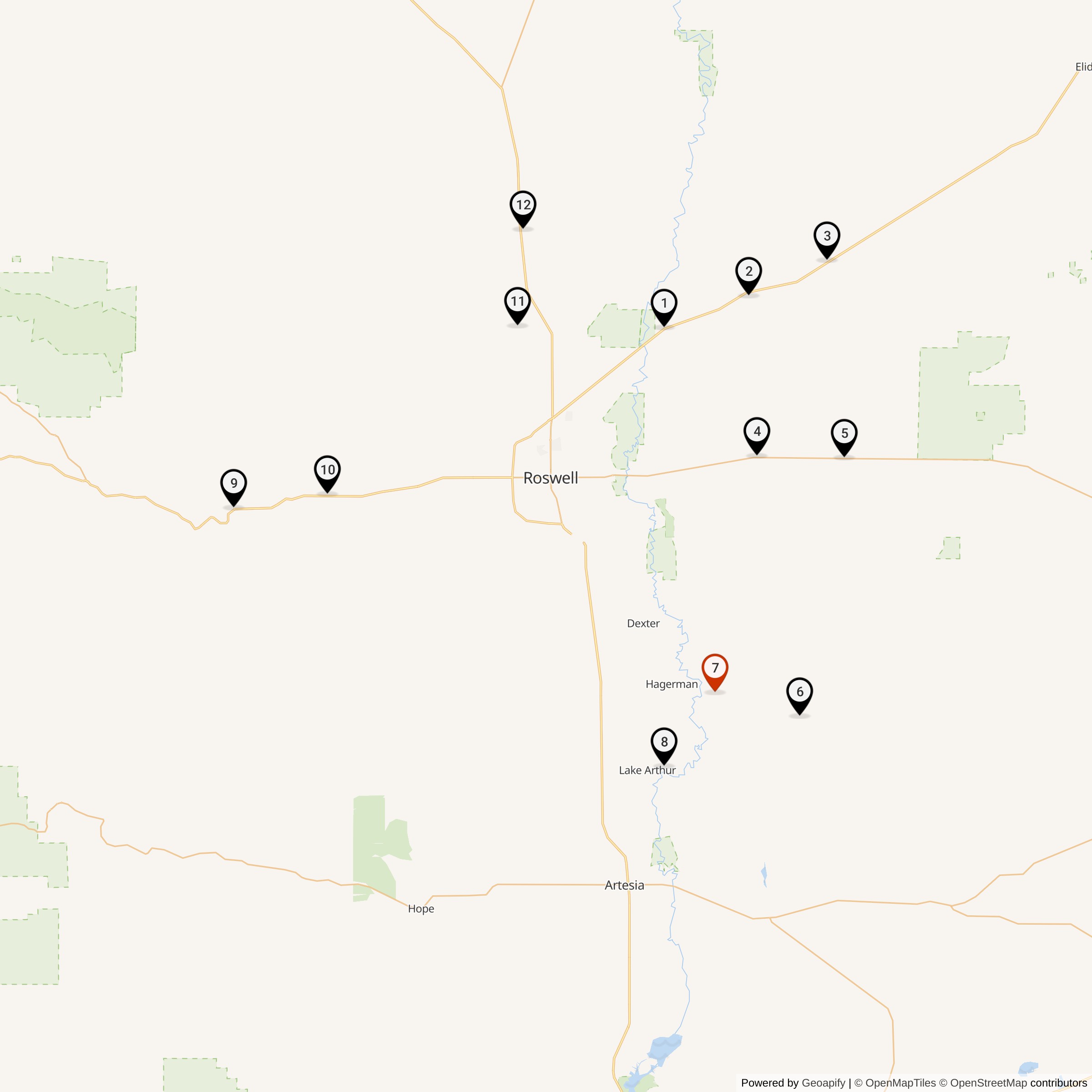
Read about the Atlas at Walker AFB
All Atlas Missile Silo Locations