
Nike Missile Site BR-15 Launcher, Orange / West Haven Connecticut
Longitude: -72.9792608181636
This location was part of the Bridgeport Defense Area
Site ID: BR-15
Missile / battery configuration: Nike 1B,2C/30A/12L-A
The missiles at this Launch Area were controlled by the Integrated Fire Control site located here.
Site Role: Launcher
A typical Nike air defense site consisted of two separate parcels of land. One area was known as the Integrated Fire Control (IFC) Area. This site contained the Nike system's ground-based radar and computer systems designed to detect and track hostile aircraft, and to guide the missiles to their targets.
The second parcel of land was known as the Launcher Area. At the launcher area, Nike missiles were stored horizontally within heavily constructed underground missile magazines. A large, missile elevator brought the Nikes to the surface of the site where they would be pushed across twin steel rails to one of four satellite launchers.
Elaboration on how Nike worked here.
Missile Type: Ajax
The Nike Ajax was the first in the Army's family of guided missiles, and the world's first operational, guided, surface-to-air missile system. Nike Ajax had a burnout speed of Mach 2.3, a range of 25-30 miles, and a ceiling of 65,000 feet.
Designed to carry either nuclear and/or high-explosive warheads, the Nike Hercules missile could attack supersonic aircraft operating at altitudes in excess of 150,000 feet and at a range of more than 87 miles.
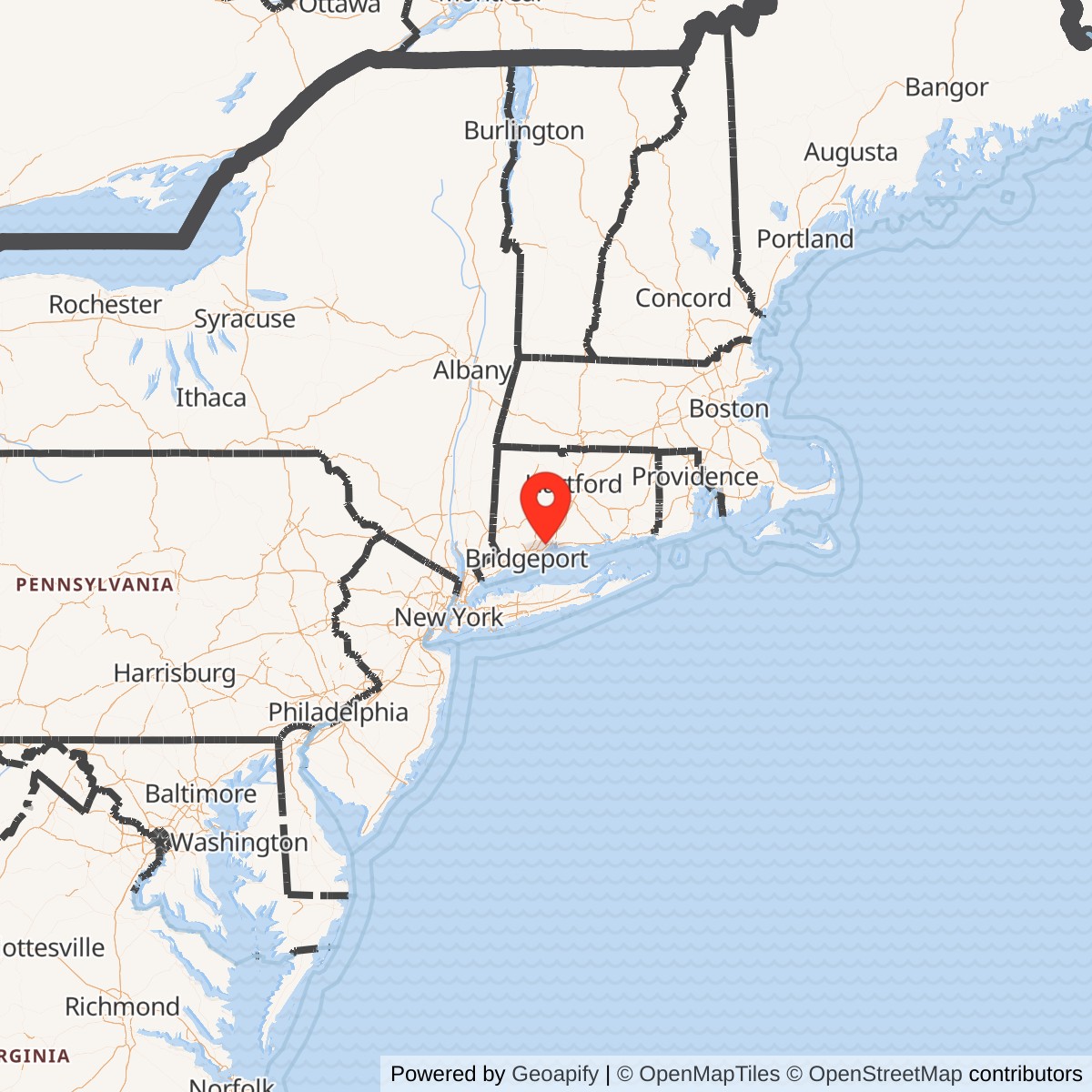
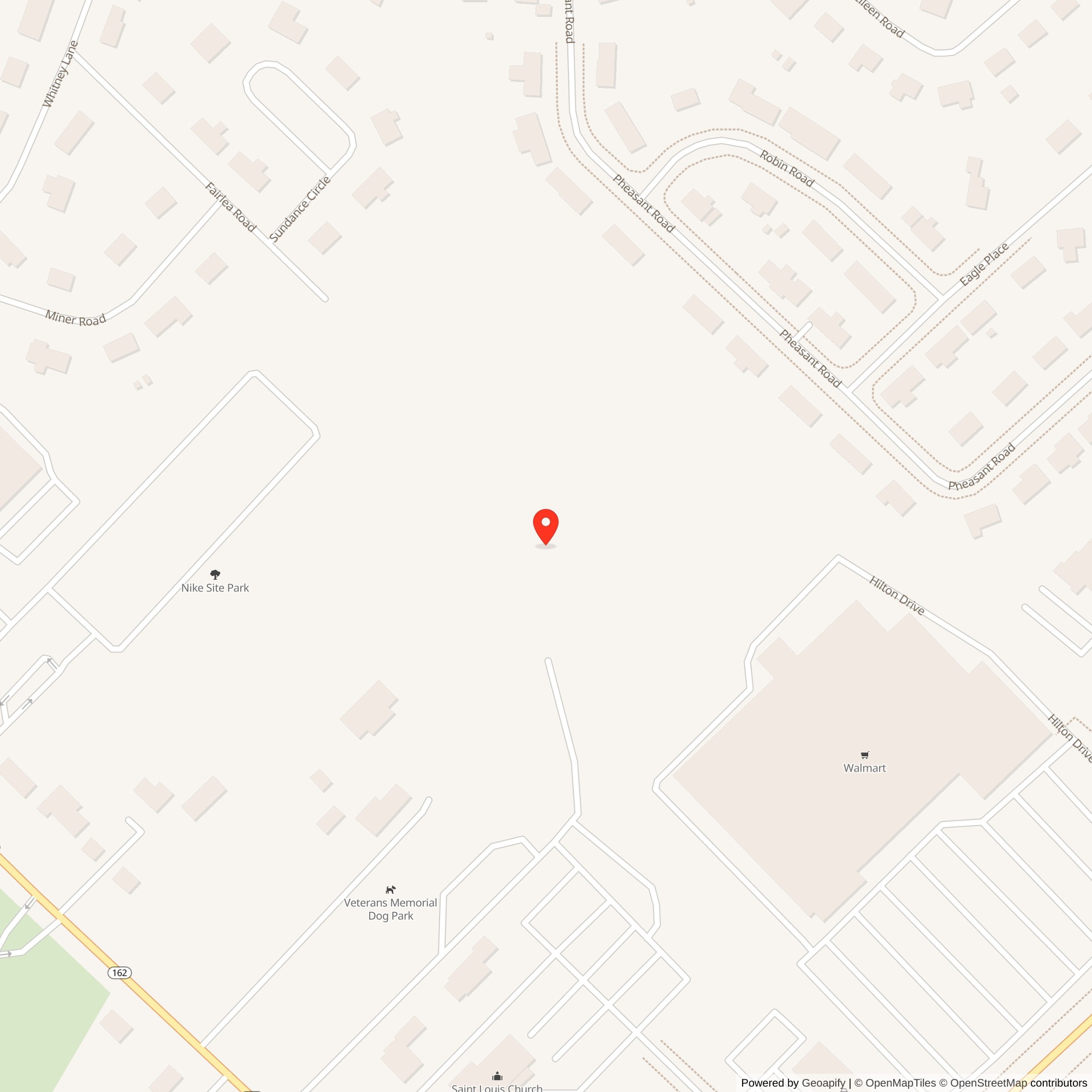
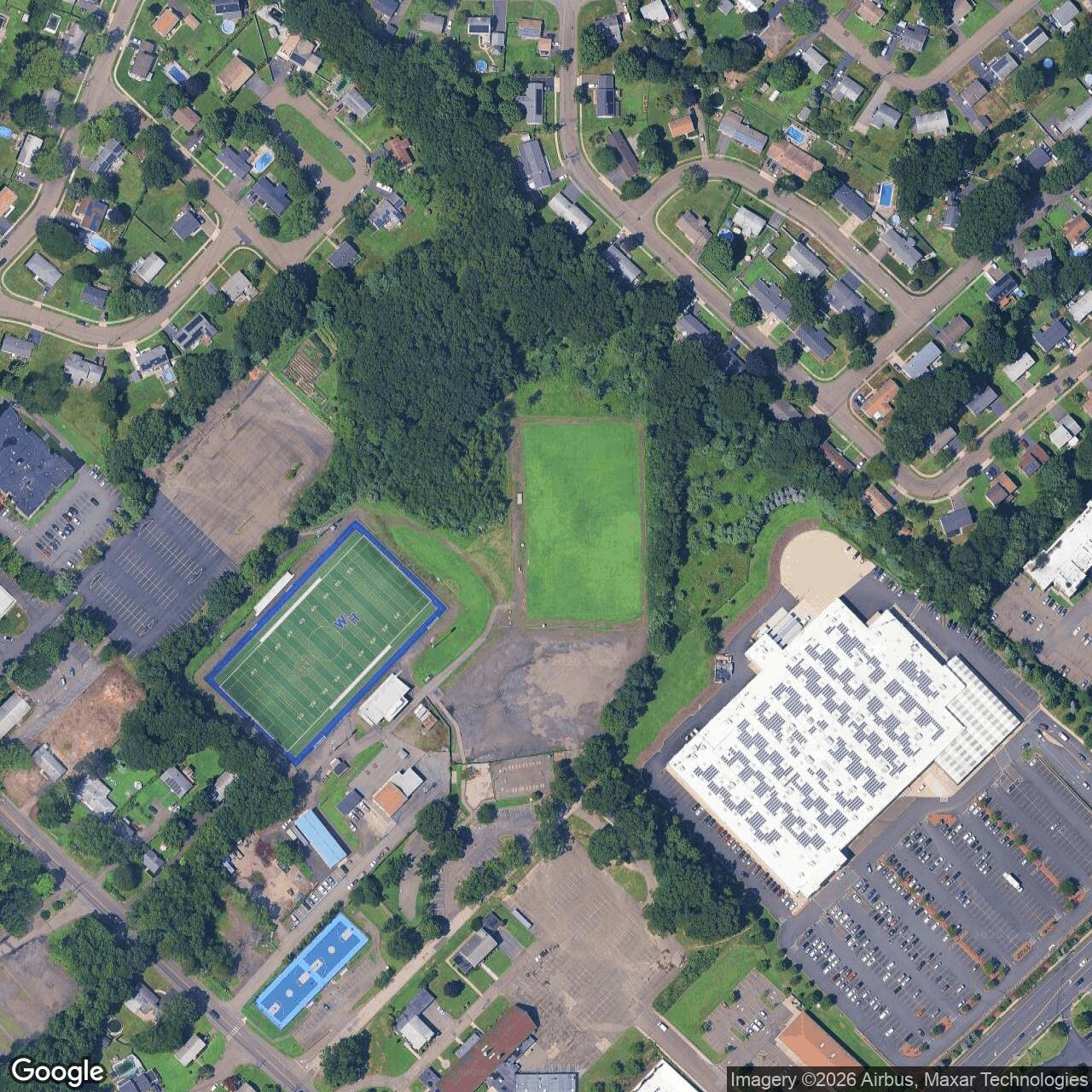
BR-15 did not disappear when its missiles left. Its launcher property became a West Haven recreation complex, while its Orange control hill continued as a military radar and command-and-control station. The divided afterlife closely echoes the original Nike installation. One component had stored and launched missiles. The other had searched the sky, tracked aircraft, computed intercepts, and guided the battery's weapon. Today one serves fields, courts, a dog park, and municipal work. The other remains an active Air National Guard station whose 103rd Air Control Squadron manages radar information and air operations.
That continuity has also produced a major date error. The official Department of Defense inventory prints an operating period of 1956 through September 1971 while identifying BR-15 as an Ajax battery. The same official history says that BR-04 Ansonia was the Bridgeport Defense Area's only Hercules conversion. The Army's technical history says the last domestic Ajax batteries closed by 1963. A period Army announcement, a national Nike history, and the Air Force property-use record instead place the West Haven missile battery's end in 1961. September 1971 cannot be accepted as an Ajax operating date.
The most likely explanation is that the inventory joined two different histories. BR-15's missile mission ended in 1961, but the Orange control property continued in military radar and communications use. By 1975 it was listed as Orange Air National Guard Communications Station, and it remains active. This history therefore distinguishes the missile battery's service period from the much longer life of one former component as an Air National Guard installation.
Why Bridgeport needed BR-15
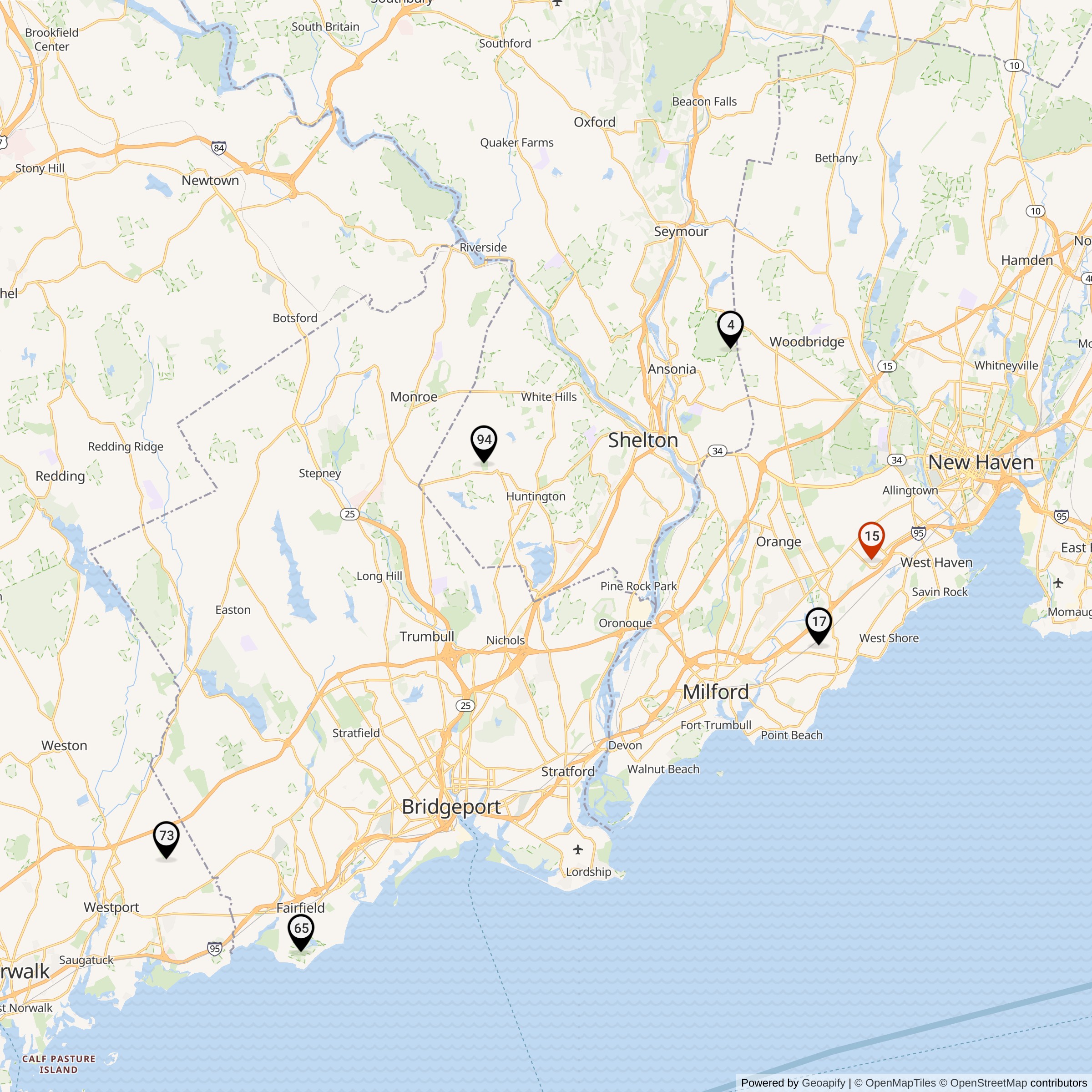
The Army built six Nike batteries around the Bridgeport area in 1956 and 1957. They were BR-04 Ansonia, BR-15 West Haven, BR-17 Milford, BR-65 Fairfield, BR-73 Westport, and BR-94 Shelton. Defense headquarters was in Bridgeport. The sites formed overlapping sectors across southern Connecticut rather than six self-contained shields.
BR-15 occupied the eastern side of the ring. Its Orange control hill and West Haven launcher gave the defense a radar viewpoint and firing position near the industrial and transportation corridor along Long Island Sound. The battery contributed to the protection of Bridgeport and the surrounding coastal region against the Cold War threat of Soviet long-range bombers. The reviewed records do not identify a BR-15 target list, so particular factories, bridges, ports, or cities should not be presented as formally assigned targets.
Nike was the last local layer of a larger continental system. Air Force warning radars and fighter-interceptors were expected to detect and attack hostile bombers at greater distance. If aircraft penetrated those layers, Army command posts assigned targets to Nike defenses. BR-15's own acquisition radar searched for aircraft, tracking radars followed a selected target and missile, and a computer generated the intercept. The separate launcher could not conduct an engagement without the control component.
Selecting and building a two-part installation
The Integrated Fire Control component was on March Hill at what is now Orange Air National Guard Station on Boston Post Road in Orange. The launcher was to the east along Bull Hill Lane in West Haven, within what is now Veterans Memorial Park and was long known locally as Nike Site Park.
The separation was deliberate. Radar and computer equipment needed a clear operating position away from the blast, movement, and storage functions of the launcher. Army histories describe typical Nike control and launch components as approximately 1,000 to 6,000 yards apart, within reliable line-of-sight communications where terrain allowed. BR-15's two components were in different municipalities but operated as one battery.
At the IFC, the Army installed acquisition, target-tracking, and missile-tracking radars, an analog computer, control and radar vans, generators, maintenance space, communications, and administrative support. At Bull Hill Lane, reinforced underground magazines stored Ajax missiles horizontally. Elevators raised them to the surface, where crews moved them on rails to launcher positions. Assembly, fueling, maintenance, power, security, vehicle, and personnel functions supported the launch sections.
No BR-15 land-acquisition file, construction contract, final project map, or building-completion schedule was found. The official inventory supports a 1956 opening year. A future real-estate file could establish parcel acreage, acquisition dates, construction milestones, easements, housing, and the original relationship among launcher, administration, and support areas.
Battery D and the 967th
The strongest site-specific unit evidence assigns BR-15 to Battery D, 967th Antiaircraft Artillery Missile Battalion. A 1958 national amateur-radio callbook lists the 967th headquarters in West Haven and identifies Battery D as the West Haven Nike battery. The same listing places Battery A at Milford, Battery B at Fairfield, and Battery C at Westport. Contemporary Lower Naugatuck Valley reporting also describes the 967th as based in West Haven while its personnel manned positions elsewhere in the Bridgeport defense.
The Army later reorganized Nike units under the Combat Arms Regimental System. The 1984 Army Nike overview associates the former 967th with the 3rd Missile Battalion, 56th Artillery. The reviewed material does not include the specific order that redesignated Battery D or the exact effective date. The defensible unit sequence is therefore Battery D, 967th Antiaircraft Artillery Missile Battalion, followed by a 3rd Missile Battalion, 56th Artillery lineage during the final period. It is not appropriate to invent a precise handover date.
A Nike veterans directory preserves one BR-15 personal entry. William King reported service at the West Haven IFC as an acquisition-radar operator and computer operator from March 1958 to January 1960. The entry is not a complete roster or official personnel record, but it supplies rare human evidence of the technical work on March Hill.
No evidence was found that a Connecticut Army National Guard missile battery assumed BR-15's Ajax alert mission before closure. The later use of the control property by the Connecticut Air National Guard was a different service, unit, and mission. Conflating those two Guard stories would incorrectly extend the Nike battery's life.
Nike Ajax operations
Nike Ajax was the first operational guided surface-to-air missile deployed on a broad national scale. The Army history gives it an approximate range of 25 to 30 miles, a speed around Mach 2.3, and an engagement ceiling near 70,000 feet. It had a solid-propellant booster and a liquid-fueled sustainer. Three high-explosive fragmentation warheads were intended to damage or destroy a single bomber through a commanded burst near the predicted intercept point.
Ajax was conventional only. BR-15 was not a nuclear missile site on the reviewed evidence. Nike Hercules could use nuclear or high-explosive warheads, but the official Bridgeport history says only BR-04 Ansonia converted to Hercules. BR-15's recorded configuration is Ajax-specific, and no Hercules conversion construction record, operational date, universal-launcher notation, Hercules allowance, or warhead-custody record was found for West Haven.
An engagement depended on continuous teamwork. The acquisition radar searched and passed a selected track to the target-tracking radar. The missile-tracking radar followed the outgoing Ajax. The analog computer compared target and missile positions, calculated steering commands, and determined the burst point. The launcher crews prepared the selected round, raised it from below grade, moved it onto a surface launcher, erected it, and executed the firing sequence after authorization.
Ajax's liquid sustainer imposed demanding handling and maintenance requirements. Fuel, oxidizer, hydraulic equipment, generators, batteries, vehicles, electronics, and radar alignment all required trained specialists. The absence of a launch in combat does not mean inactivity. Alert duty consisted of readiness checks, maintenance, tracking exercises, communications drills, security, inspections, and recurring training intended to make a real engagement possible on short notice.
What the configuration code means
The official inventory records BR-15 as "Nike 1B,2C/30A/12L-A." The notation describes the launcher plant and its recorded Ajax allowance:
- 1B: One B-type underground missile magazine. The letter identifies a magazine design, not a missile model.
- 2C: Two C-type underground missile magazines.
- 30A: A recorded allowance of thirty Nike Ajax missiles.
- 12L-A: Twelve Ajax launcher positions.
The configuration does not prove that thirty missiles were present on every date. Rounds could be undergoing maintenance, in transit, assigned for training, or otherwise unavailable. The count is best treated as the recorded site allowance rather than a day-specific inventory.
The underground structures were horizontal magazines, not vertical missile silos. Elevators brought missiles to surface rails and launchers. That distinction matters because later descriptions of buried or filled Nike "silos" can mislead readers about the physical plant. No current engineering survey was found that establishes the condition of BR-15's three magazines or elevator openings beneath the park landscape.
The battery and its community
BR-15 operated beside established communities rather than on an isolated Army reservation. Soldiers worked and lived in the Orange-West Haven area, traveled between the two components, used local roads and services, and made the installation part of the daily landscape. The Bull Hill Lane battery and its headquarters in West Haven also made the 967th a visible local institution.
Bridgeport Mayor Samuel Tedesco proclaimed 19 April 1958 as Nike Day. Events honored the 741st Antiaircraft Artillery Missile Battalion and the missilemen of the Bridgeport area. Contemporary local histories record that area batteries were associated with dedications to local war dead. No reviewed source identifies BR-15's honoree or reproduces a West Haven dedication plaque, so this history does not assign a memorial name to the battery.
The available BR-15 community record is much thinner than Ansonia's. No West Haven open-house program, parade record, family-housing file, school relationship, civic-assistance account, or newspaper photo sequence was found. The gap should not be read as evidence that such activity did not occur. West Haven newspapers, municipal records, unit newsletters, and oral histories are the most promising next sources.
Why the Missile Battery closed in 1961
On 16 December 1960, the Army announced that the Nike sites at Shelton, West Haven, Fairfield, Plainville, and Manchester would be decommissioned in 1961. The announcement also said that Avon, Portland, Westport, and Milford would be taken over by the Army National Guard as a full-time mission. This placed West Haven among the Ajax positions selected for closure rather than Guard operation or Hercules conversion.
The Air Force property-history compilation independently dates the BR-15 control facility's Nike use to approximately 1956 through 1961. The Army's 1984 national overview also places the West Haven unit history in the 1956-1961 period. Together these sources outweigh the later September 1971 inventory entry, especially because an Ajax battery could not remain operational eight years after the Army's last domestic Ajax sites closed.
The exact BR-15 deactivation day or month remains unresolved. March 1961 is possible because the nearby Fairfield and Shelton Ajax batteries have March closing dates in the official inventory, but that parallel is not proof.
Consolidation reflected weapon capability and force planning. Hercules had greater range, altitude, speed, and destructive potential than Ajax. Ansonia's converted BR-04 could cover a broader region, allowing the Army to remove several shorter-ranged batteries. Budget, manpower, maintenance, and the changing bomber threat also shaped the national reduction. No BR-15 closure memorandum was found that ranks those factors for West Haven.
The closure removed missiles, launch equipment, and Army fire-control equipment from the operational battery. It did not end military activity on March Hill. That difference is the central fact needed to understand BR-15's later history.
March Hill's second radar life
After Nike, the Orange control property remained valuable because it was already a secured hilltop communications and radar site near Long Island Sound. The exact transfer date from the Army to the Air Force has not been found. The Air Force property-history compilation says the installation was listed by 15 December 1975 as Orange Air National Guard Communications Station, an active detached installation.
Other unit-history compilations place the 103rd Aircraft Control and Warning Squadron at Orange in 1961. Connecticut administrative reports from the 1980s identify the successor 103rd Tactical Control Squadron as headquartered in Orange and conducting thousands of weapons-controller events in mock battle scenarios. These records suggest a rapid transition from the Army's local missile-guidance mission to an Air National Guard radar and aircraft-control mission, but they do not yet supply the real-estate transfer instrument or an uninterrupted year-by-year station lineage.
Today Orange Air National Guard Station hosts the 103rd Air Control Squadron, known as Yankee Watch. Official Connecticut National Guard material describes its mission as air battle management, radar surveillance, airspace control, long-haul communications, and support to state authorities during emergencies. The 103rd Airlift Wing describes the site as a hillside facility adjacent to Long Island Sound and ties its work to combat operations and homeland defense.
The technological continuity is striking but should not be overstated. Nike radar operators used local acquisition and tracking radars and an analog computer to guide a battery's missiles. The modern squadron uses networked radar feeds, tactical operations modules, communications, and air battle management systems to create and control a much larger air picture. The place remained associated with seeing, identifying, and directing activity in the sky, but the equipment, command relationships, geography, and mission changed fundamentally.
The station has continued to modernize. On 25 October 2014, the 103rd Air Control Squadron installed a fiber-composite radome over a radar antenna on its tower. In 2018 the squadron field-tested the AN/TYQ-23A Tactical Air Operations Module. In 2019 official imagery documented the squadron controlling aircraft in Georgia from its Orange home station. In 2023 the unit became the first Air National Guard organization to complete conversion to the consolidated mission-systems-operator specialty and prepared to test Tactical Operations Center-Light and TPY-4 radar equipment.
The 103rd's modern operational record extends far beyond Connecticut. An official 2023 account says the unit was the first and last Air Force organization to control airspace over Afghanistan during the post-2001 conflict, first taking responsibility in 2003 and later supporting the 2021 Kabul airlift. In March 2024, part of the squadron remained at Orange operating the legacy AN/TYQ-23A while another team tested the lighter TOC-L system during Exercise Agile Panda.
These achievements belong to the 103rd Air Control Squadron, not to BR-15's Nike battery. They are included because they explain the continuing military use of the former IFC property and the persistence of radar and command-and-control work at March Hill.
From Bull Hill Launcher to Veterans Memorial Park
The Bull Hill Lane property followed a civic path. Specialist inventories identify it as West Haven's Nike Site Park, owned by the municipal Parks and Recreation Department. Current City of West Haven notices call the larger property Veterans Memorial Park and explicitly describe it as former federal Nike site property.
By October 2013, newspaper photographs showed soccer and football activity on the former launcher property. The landscape no longer read as an operational missile plant. Fields, pavement, park buildings, and recreation had replaced or covered the launch surfaces.
The city continued to invest in the site. In 2017, a city notice documented a new Department of Park Maintenance headquarters at 129 Bull Hill Lane. It said the department's former park facility, which had previously housed the federal Nike site, had been converted into locker rooms and a bathroom during Veterans Memorial Field upgrades. The wording confirms adaptive municipal use but does not provide enough architectural detail to identify which part of the building is Army-period fabric.
In September 2020, West Haven reopened two refurbished basketball courts at the park. The project added a new playing surface, LED lighting, benches, and fencing. In March 2021, the city opened a larger dog park on the former playground area and improved landscaping, lighting, benches, tables, and parking. The same city account lists Veterans Field as home to the West Haven Seahawks and Notre Dame High School football, soccer, and lacrosse teams.
Cold War CT's photographic survey identifies several low buildings at the former launcher as original Nike structures, including possible motor-pool and generator buildings, and shows interior municipal storage. Those identifications are plausible field observations, not a professional architectural survey. They should be verified against Army plans before individual buildings receive firm historic names.
Present condition and preservation
The two components now have opposite preservation problems. Orange Air National Guard Station remains an active, secure military installation. Current radar and command structures clearly document continued use, but public evidence conflicts over the survival of Nike-era buildings. One field inventory describes portions of the IFC and administrative area as surviving. Other inventories call the property fully redeveloped. No recent authorized building-by-building survey was found. The safest description is "redeveloped active military site; Nike-era fabric unverified."
At the launcher, recreation has preserved the public memory of a Nike property through the long-used park name, but it has obscured the combat plant. Fields, courts, parking, a dog park, municipal facilities, and support buildings dominate the site. Some Nike support buildings may survive in altered form. The condition of the three underground magazines, elevator pits, rails, launcher pads, fueling areas, and utilities has not been established in a current professional report. The safest description is "heavily redeveloped public park and municipal-service property; possible altered Nike support buildings."
Neither component should be treated as abandoned. Orange is an active military installation with controlled access. Veterans Memorial Park is an active public recreation and municipal work site. Historical research does not authorize entry into restricted areas, municipal storage, buildings, utility spaces, or any below-grade structure.
BR-15 has strong interpretive potential precisely because the two components still perform different forms of public service. A park panel could explain the one-B, two-C magazine configuration, Battery D of the 967th, the 1961 missile closure, and the Orange radar site's continuing military use. The Air National Guard station could preserve an internal property chronology linking Nike fire control, aircraft control and warning, tactical control, and modern air battle management.
Environmental and safety record
Nike Ajax sites handled liquid missile fuel and oxidizer, hydraulic fluid, fuels for vehicles and generators, solvents, batteries, oils, and other maintenance materials. Those general system characteristics establish possible lines of inquiry, not BR-15 contamination.
A 1988 Air National Guard Installation Restoration Program preliminary assessment exists for the 103rd Tactical Control Squadron at Orange and West Haven together with the 103rd Tactical Fighter Group at Bradley. The accessible catalog record confirms the report's existence but does not expose enough of its findings to support site-specific conclusions here. The full report, identified as ADA231853, is a high-priority research source.
The Army Corps of Engineers' recent statewide Connecticut FUDS summaries list completed Nike work at Ansonia, Fairfield, and Westport but do not list a completed West Haven Nike project. That absence does not prove that no federal, municipal, or military environmental work occurred. It means the reviewed statewide list does not supply a BR-15 cleanup history.
Chronology
- 1956 BR-15 entered service as a Nike Ajax battery in the Bridgeport Defense Area.
- 1956 Battery D, 967th Antiaircraft Artillery Missile Battalion is the best-supported initial operating unit at West Haven.
- March 1958 A veterans directory records William King beginning service at the BR-15 IFC as an acquisition-radar and computer operator.
- 19 April 1958 Bridgeport observed Nike Day in honor of area missile personnel and the 741st Antiaircraft Artillery Missile Battalion.
- Summer 1958 A national amateur-radio callbook listed the 967th headquarters and Battery D in West Haven and identified the battalion's Milford, Fairfield, and Westport batteries.
- January 1960 The veterans directory records the end of William King's reported BR-15 service interval.
- 16 December 1960 The Army announced that the West Haven Nike site would be decommissioned in 1961.
- 1961 BR-15's Nike Ajax missile mission ended; the exact deactivation day and month remain unresolved.
- 1961 A unit-history compilation places the 103rd Aircraft Control and Warning Squadron at Orange, indicating an early Air National Guard radar mission at March Hill.
- 15 December 1975 An Air Force property-history source records Orange ANG Communications Station as an active detached installation by this date.
- 1986-1987 Connecticut's administrative report identified the 103rd Tactical Control Squadron as headquartered in Orange and conducting more than 6,200 weapons-controller events during the reporting year.
- 1988 An Air National Guard Installation Restoration Program preliminary assessment examined the 103rd Tactical Control Squadron property at Orange and West Haven.
- 8 October 2013 Newspaper photographs documented soccer and football use at Nike Site Park on the former Bull Hill launcher property.
- 25 October 2014 The 103rd Air Control Squadron installed a fiber-composite radome over a radar antenna at Orange Air National Guard Station.
- 2017 West Haven documented park-maintenance and locker-room reuse of facilities at Veterans Memorial Park on the former federal Nike property.
- 1 February 2019 Official imagery documented the 103rd Air Control Squadron controlling aircraft in Georgia from its Orange home station.
- September 2020 West Haven reopened two refurbished basketball courts at Veterans Memorial Park.
- 27 March 2021 West Haven opened a new dog park and completed related improvements on the former Nike property.
- 2021 The 103rd Air Control Squadron supported airspace control during the Kabul airlift, continuing a mission first performed over Afghanistan in 2003.
- 31 October 2023 The 103rd Air Control Squadron completed the Air National Guard's first mission-systems-operator conversion and trained at Orange.
- 5 March 2024 During Exercise Agile Panda, one 103rd team operated the legacy AN/TYQ-23A from Orange while another tested the deployable TOC-L system.
List of all Nike Installations in Connecticut
Information sources (21)
- PDFJohn C. Lonnquest and David F. Winkler, To Defend and Deter: The Legacy of the United States Cold War Missile Program
The official Department of Defense history identifies the Bridgeport ring, BR-15's Ajax configuration, component owners, and the conflicting September 1971 date.
- WEBB. N. McMaster and others, Historical Overview of the Nike Missile System
The Army-sponsored 1984 technical and environmental history supplies Nike battery design, Ajax operation, site dates, unit lineage, and national deactivation context.
- WEBNike Historical Society, Bridgeport Site BR-04 Ansonia, Connecticut
The regional chronology preserves the 16 December 1960 Army announcement that West Haven and four other Connecticut Ajax sites would close in 1961.
- WEBSummer 1958 Radio Amateur Callbook, First District
The directory identifies the 967th headquarters and Battery D in West Haven and places Batteries A, B, and C at Milford, Fairfield, and Westport.
- WEBNike People, Connecticut
The veterans directory preserves William King's reported March 1958-January 1960 BR-15 service as an acquisition-radar and computer operator.
- WEBU.S. Army Aviation and Missile Command History Office, Nike Ajax
The official technical history explains Ajax performance, conventional fragmentation warheads, liquid sustainer, command guidance, underground magazines, and final domestic closure.
- WEBConnecticut Guardian, Nike Missiles in Connecticut
The Connecticut National Guard history explains the paired control and launcher functions and confirms that all domestic Ajax sites closed by 1964.
- WEBNike Sites with Earlier or Later Use by the Air Force
The Air Force property-history compilation dates BR-15's Nike use to approximately 1956-1961 and records Orange ANG Communications Station as active by 15 December 1975.
- WEBConnecticut National Guard, 103rd Air Control Squadron
The official unit page defines the current Orange mission in air battle management, radar surveillance, airspace control, long-haul communications, and emergency response.
- WEB103rd Airlift Wing, About Us
The official wing history identifies Orange Air National Guard Station, Yankee Watch, its hillside location near Long Island Sound, and its combat and homeland-defense responsibilities.
- WEB103rd Airlift Wing, Inside the 103rd Air Control Squadron
The official 2018 feature explains the squadron's command-and-control radar mission and field testing of the AN/TYQ-23A Tactical Air Operations Module.
- WEBAir National Guard, Orange Air National Guard Station Receives Radome Prototype
The official article dates the installation of the radar-tower radome to 25 October 2014 and explains its protective function.
- WEBConnecticut National Guard, Connecticut Air Guard Unit Completes MSO Conversion
The official 2023 report documents the first Air National Guard mission-systems-operator conversion and continuing modernization at Orange.
- WEBDefense Visual Information Distribution Service, Connecticut Air Guard Unit Completes MSO Conversion
The public-domain report documents the 103rd's Afghanistan airspace-control role in 2003 and during the 2021 Kabul airlift.
- WEBNational Guard, Connecticut Air Guard Unit Tests Battle Management System
The official 2024 report documents Exercise Agile Panda, TOC-L testing, and simultaneous legacy-system operation from Orange.
- WEBCity of West Haven, Participants Sought for Memorial Day Parade
The 2017 city notice documents municipal maintenance, locker-room, and bathroom reuse at Veterans Memorial Park on the former federal Nike property.
- WEBCity of West Haven, Refurbished Basketball Courts Reopen in Veterans Park
The official city report documents the 2020 court renovation and confirms that the courts occupy former federal Nike property.
- WEBCity of West Haven, New Dog Park Opening in West Haven
The official city report documents the 2021 dog park and identifies the current recreation uses at Veterans Memorial Park.
- WEBCold War CT, Nike BR-15 West Haven
The specialist site page supplies component locations, Ajax configuration, current park use, and qualified field observations of possible surviving buildings.
- WEBEd Thelen, Locations of Former Nike Missile Sites in Connecticut
The specialist inventory identifies March Hill and Bull Hill Lane and records field observations of Orange Air National Guard and West Haven park reuse.
- WEBU.S. Army Corps of Engineers New England District, Connecticut Update Report
The official statewide report provides comparative FUDS context but does not list a completed West Haven Nike project.