
Titan I 851-C Missile Silo Beale AFB California
Titan I 851-C
Squadron: 851st SMS
Date Activated: February 1st 1961
Date Deactivated: March 25th 1965
Air Force Base: Beale
State: California
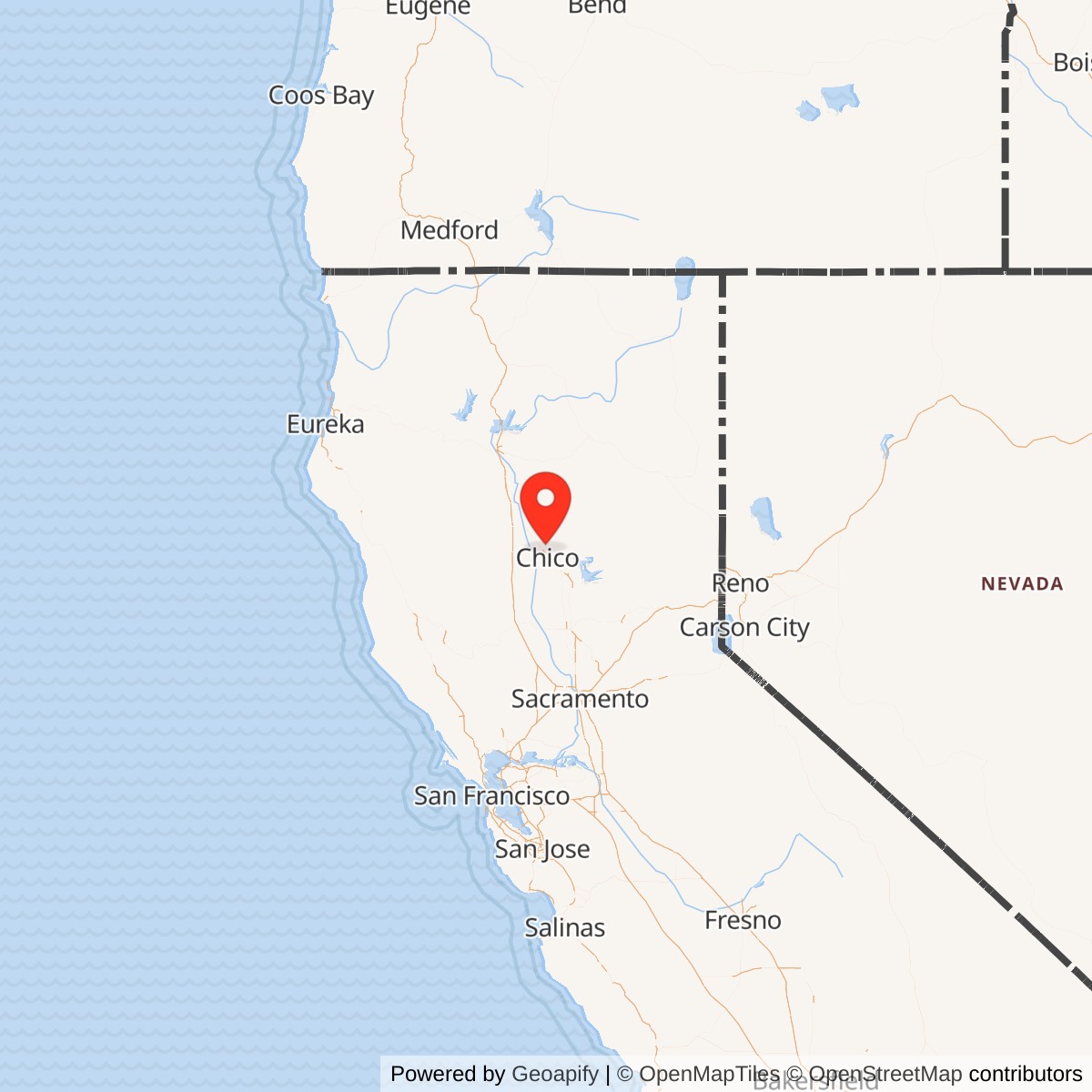
Nearest Town: Chico
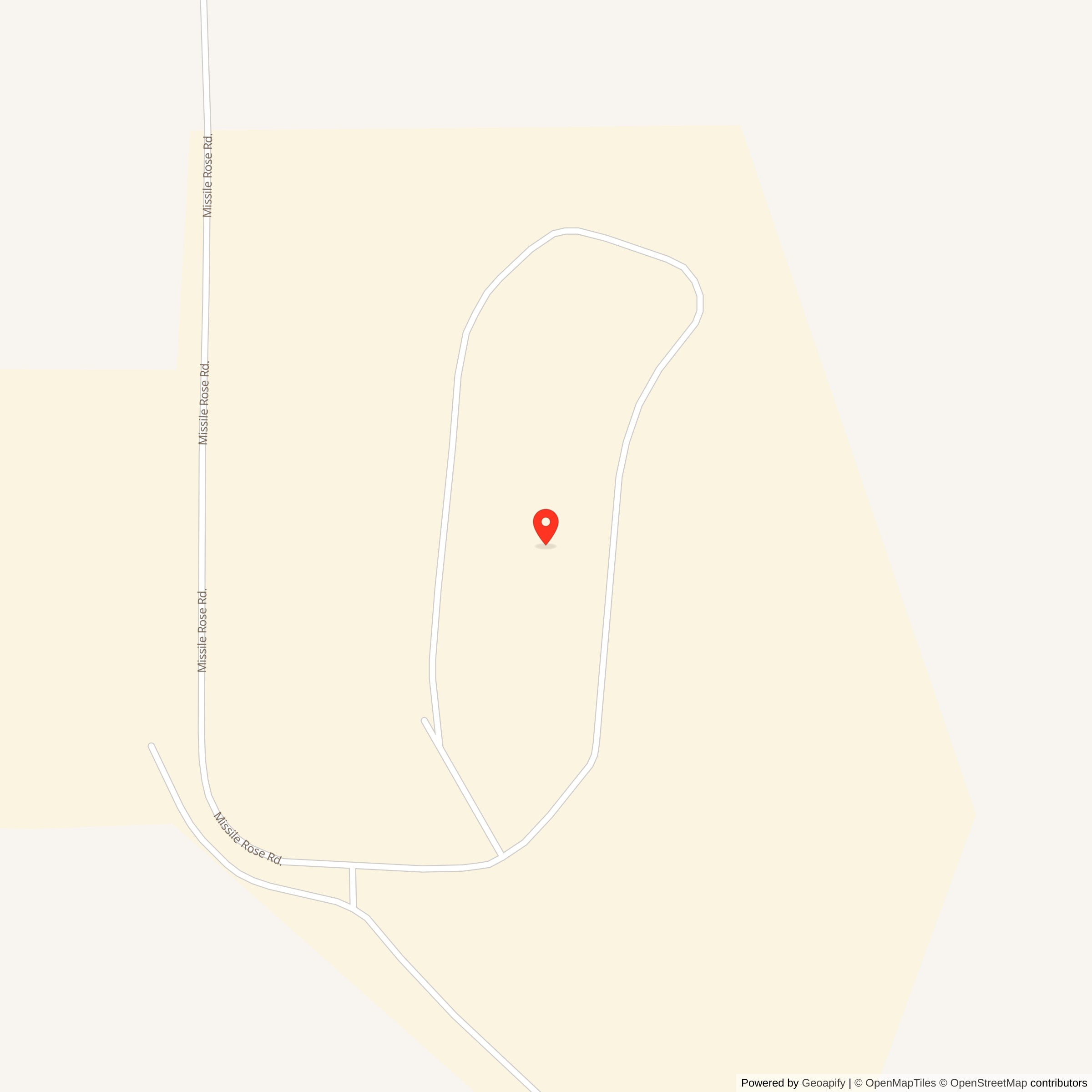
Coordinates:
Latitude: 39°49'5.72"N
Longitude: 121°51'10.08"W
Decimal:
Longitude: -121.8528
Latitude: 39 49.0953333333333
Longitude: -121 51.168
3 silos
Former Titan I Missile Complex with the 851st Strategic Missile Squadron
Read about the Titan I at Beale AFB
List of all Titan I site Coordinates
Detailed information about the Titan I Intercontinental Ballistic Missile can be found here.
Overview
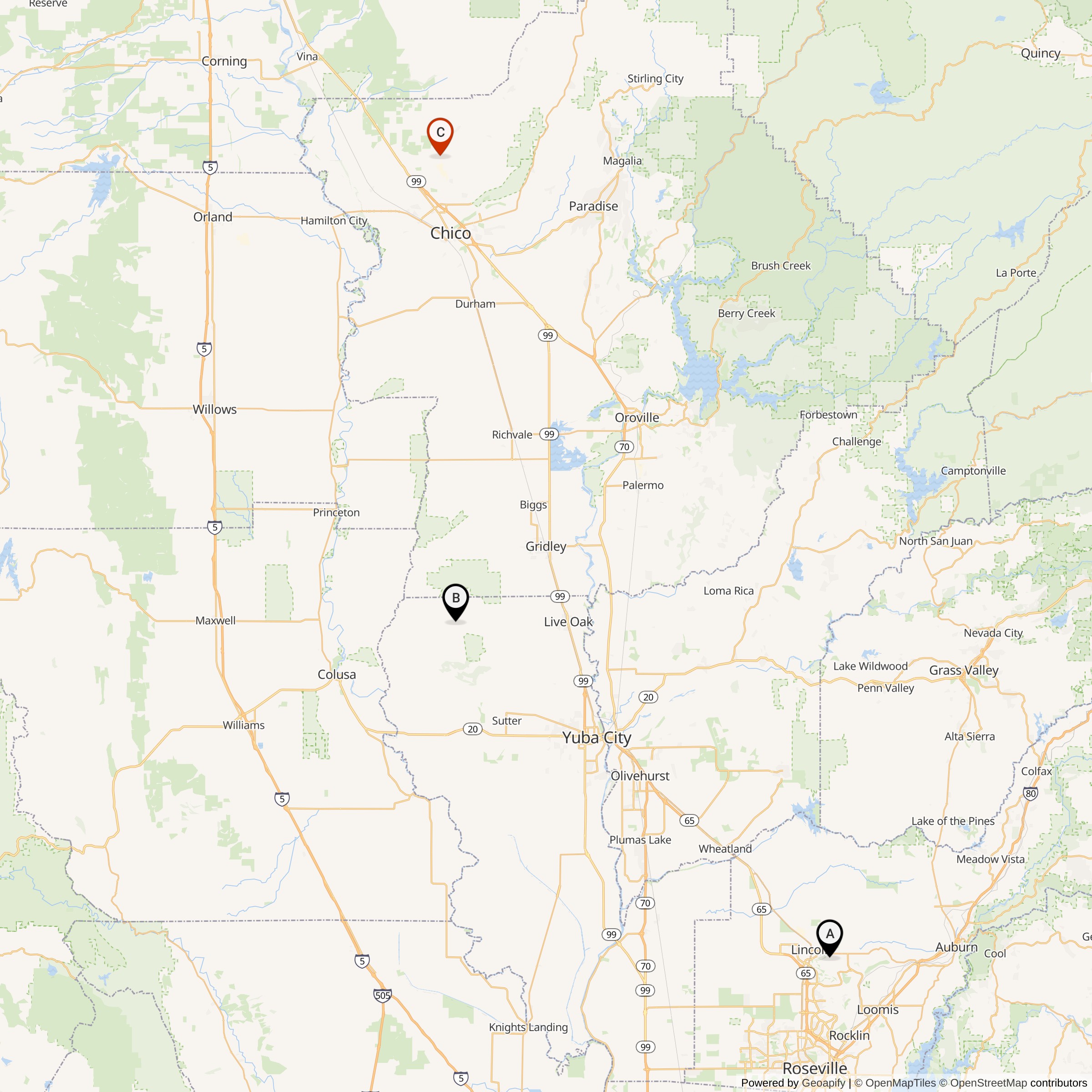
Titan I Missile Complex 851-C was the Chico member of the three-complex intercontinental ballistic missile field supported by Beale Air Force Base. The hardened installation contained three underground HGM-25A Titan I launchers, a control center with crew space, a power house, two guidance antenna silos, propellant and liquid-oxygen terminals, utility systems, and a network of protected tunnels. Sister complexes 851-A near Lincoln and 851-B north of the Sutter Buttes completed the nine-launcher field assigned to the 851st Strategic Missile Squadron.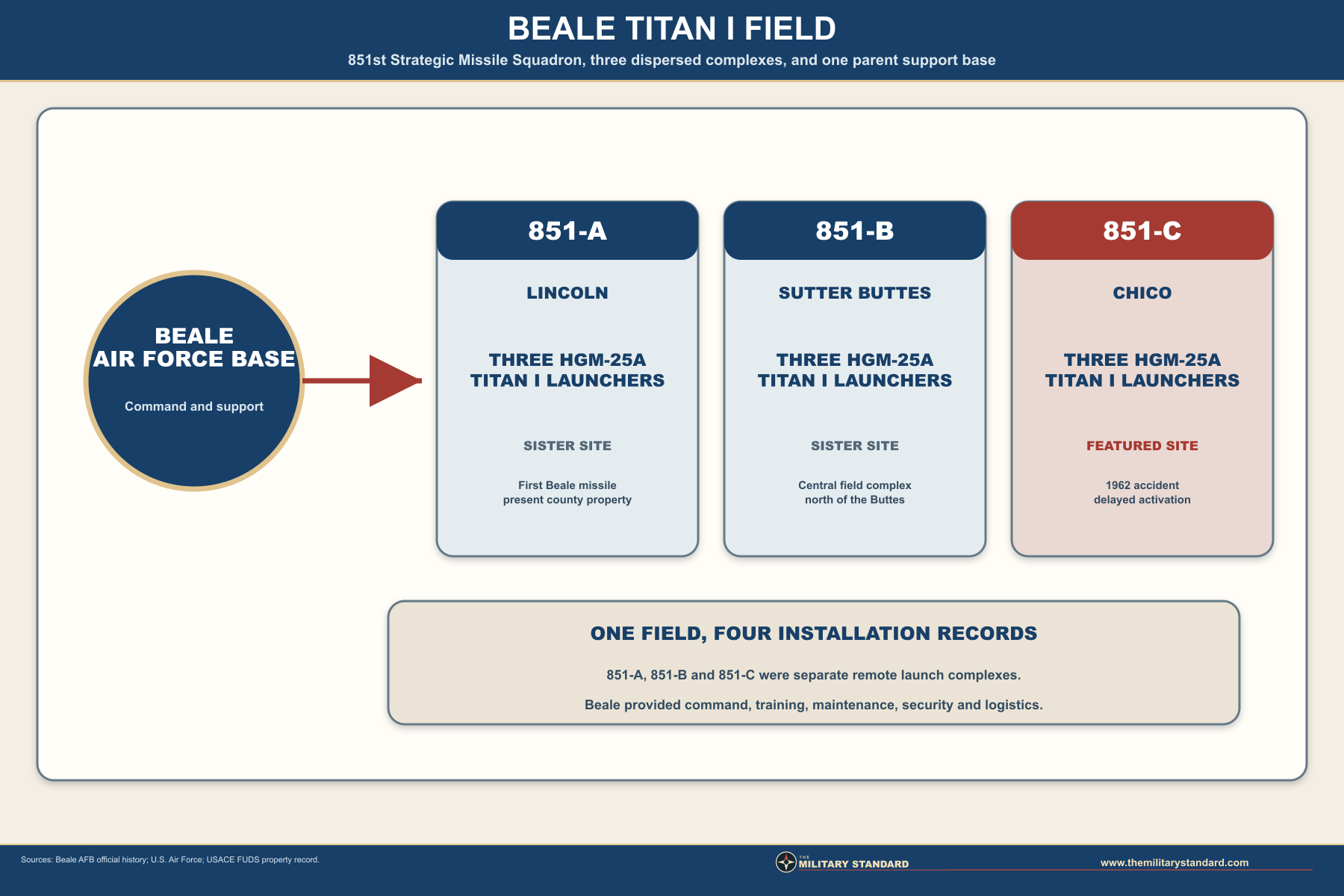
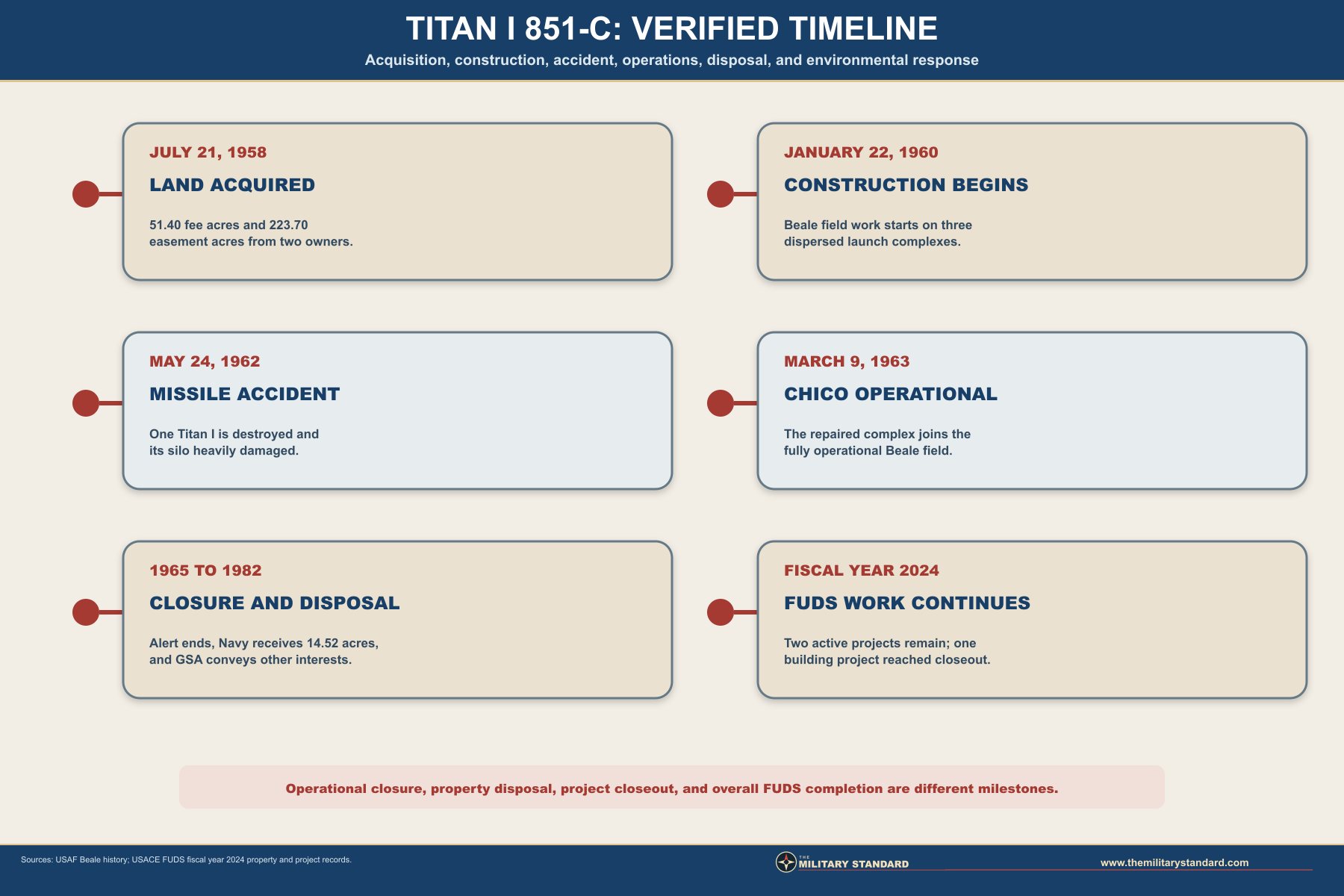
The Chico complex has a more eventful documented history than most Titan I sites. The final missile placed in the Beale field arrived at Complex 4C on April 20, 1962. On May 24, before the Chico complex became operational, an explosion destroyed a Titan I and heavily damaged its silo. The official Beale account attributes the accident to a blocked vent and a blocked valve. Repair and acceptance delayed Chico operations until March 9, 1963, six months after the squadron first reached field alert status.
The site also has an unusually detailed property record. The United States acquired 51.40 acres in fee and 223.70 acres by easement from two private owners on July 21, 1958. A portion later passed to the Department of the Navy, while other interests were conveyed or quitclaimed through the General Services Administration. The fiscal year 2024 USACE FUDS record therefore describes a mixed federal and private ownership pattern rather than a single postmilitary owner.
Environmental work is not complete. The current federal record lists an investigation project involving silo drainage and sampling, a cleanup project involving underground storage tanks, and a building demolition or debris project that reached site closeout in 2006. Right-of-entry refusal has delayed field work for the two active projects.
Installation Identity and Permanent Record
The permanent project identity is Titan I Missile Complex 851-C. The parent installation is Camp Beale / Beale Air Force Base. The remote launch complex had its own land, construction, accident, operational, disposal, and environmental record even though command, training, logistics, security, nuclear support, and higher headquarters were centered at Beale.Several record systems use different names for the same physical installation. Air Force histories use 851-C, Complex 4C, Site C, and Chico. The accident investigation is indexed under T-5 and Complex 4C. The current USACE geographic record uses Beale AFB Titan 1-C, FUDS installation CA99799F599700, and property number J09CA1109. These are aliases, not evidence for separate installations.
The label Titan 1-C can be misunderstood as a missile variant. The numeral identifies the Titan I weapon system and the letter identifies the C complex in the Beale field. The missile itself was the HGM-25A Titan I. The site code 851-C combines the squadron number with the field letter, a convention useful for distinguishing this complex from the many other Titan I sites that also used a local Site C designation.
Location, Coordinates, and Property Geometry
USACE places the former installation in rural Butte County at 39.81777778 north latitude and 121.85277778 west longitude. The database says the installation is not in a city, although Chico is the established regional name.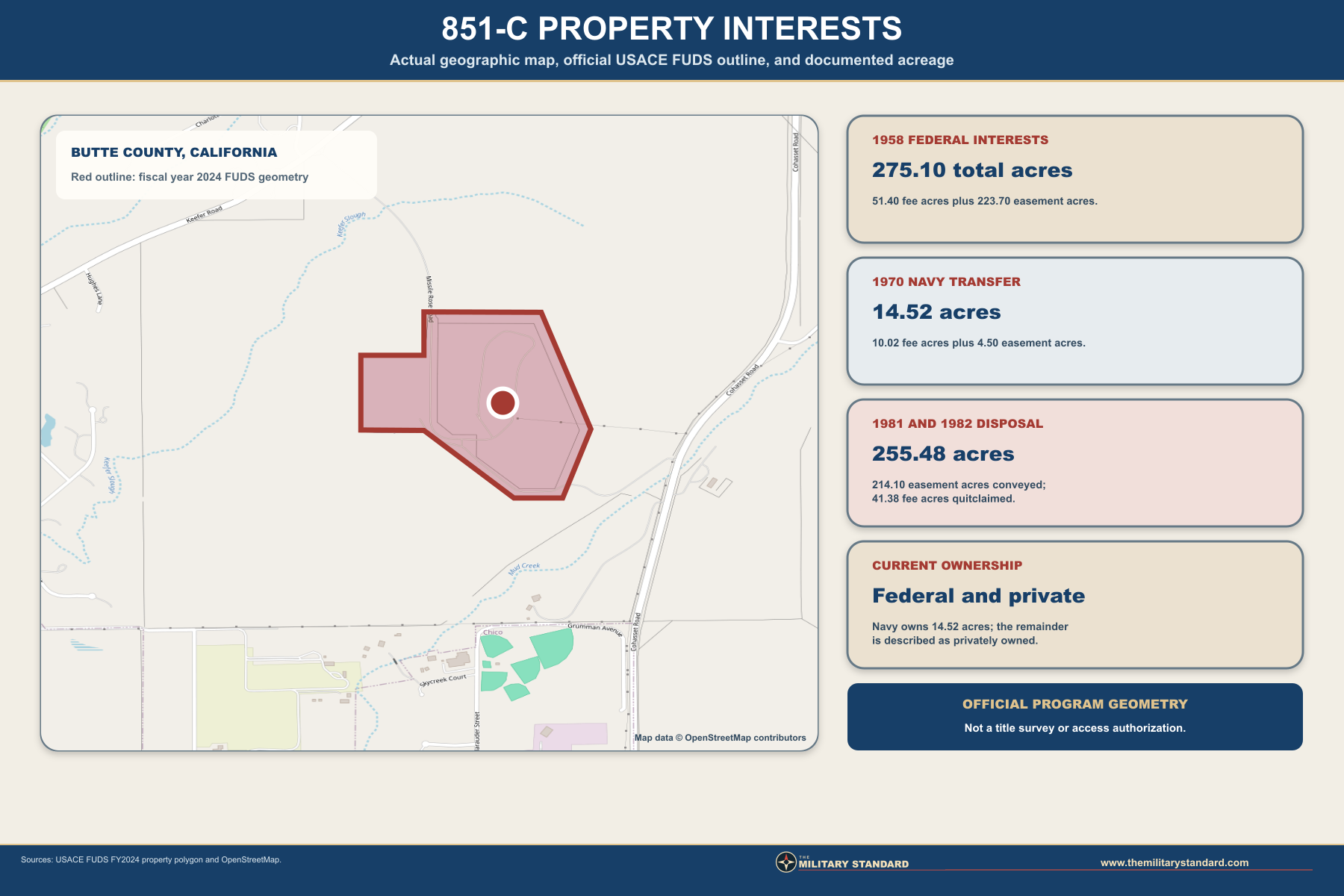
The accompanying property graphic uses the official fiscal year 2024 USACE FUDS polygon over an attributed OpenStreetMap base. That geometry is far better evidence than a hand-drawn footprint, but it remains program mapping rather than a current title survey. It should not be used to identify a legal boundary, select an entrance, navigate across private land, or infer that all land inside the outline has the same present owner.
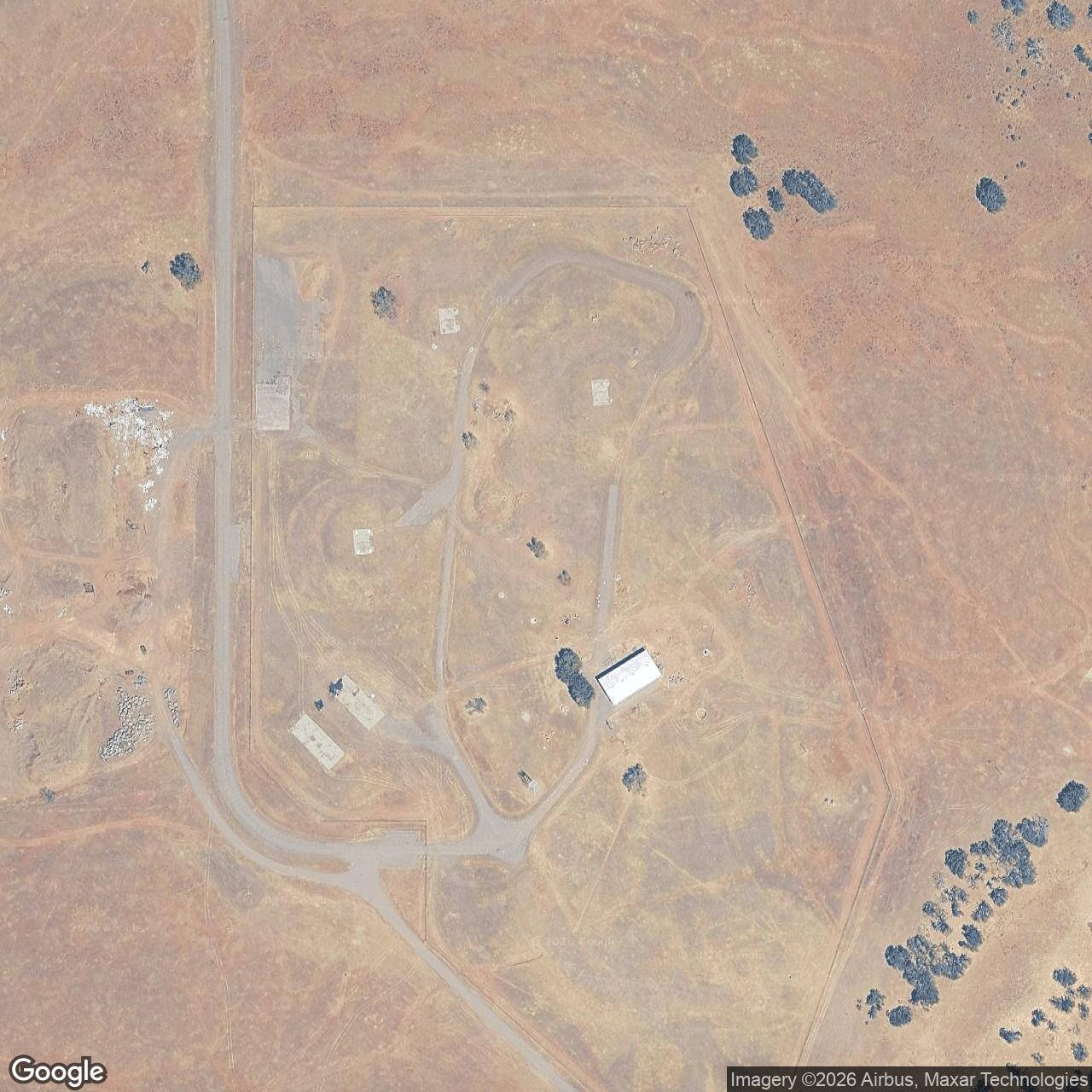
The official point and polygon also should not be confused with an individual silo coordinate. Titan I complexes spread their three launchers, equipment terminals, propellant terminals, guidance antennas, power house, control center, portal, vents, roads, and support features across a sizable core. A single coordinate can identify the installation for history and mapping, but it cannot represent each component.
Land Acquisition and Control
The federal government acquired the Chico site on July 21, 1958 from two private owners. USACE reports 51.40 acres acquired in fee and 223.70 acres acquired by easement, for 275.10 acres of federal property interests. Fee ownership covered the principal complex area, while easements extended military rights and restrictions beyond land held outright.This fee-and-easement arrangement was well suited to a dispersed missile installation. The Air Force needed secure access, utility corridors, safety separation, and limitations on incompatible use, but it did not need to purchase every surrounding acre in fee. The result was an operationally coherent installation built from legally different interests. Later disposal therefore occurred through several transactions instead of one sale.
Acreage figures should not be treated as measurements of the underground plant. The 51.40 fee acres, 223.70 easement acres, and 275.10 total interests describe the land record. The underground tunnels and chambers occupied only part of that area, while the surface security and utility envelope extended beyond visible structures. Modern parcel boundaries may differ from the former federal pattern.
Why Beale Received Titan I
Titan I entered deployment while Strategic Air Command was changing from a bomber-centered retaliatory force to a mixed force of bombers and intercontinental missiles. The missile offered long range, a multistage design, and a powerful nuclear payload, but it also required liquid oxygen, ground-based guidance support, complex checkout, and an above-ground launch sequence. Those demands produced large hardened installations and substantial parent-base support organizations.Beale offered an inland California location with transportation, utilities, construction access, and room for wide dispersal. The three remote complexes were separated from Beale and from one another so that one attack or accident would be less likely to disable the entire field. Beale provided the institutional center, while the launch complexes carried the alert mission in rural locations.
The missile assignment became one chapter in Beale history rather than the base single defining mission. The installation moved from wartime Army use into Strategic Air Command bombardment, tanker, missile, and later reconnaissance roles. The 851st Strategic Missile Squadron linked the remote field to that larger base system, but the three launch sites remained distinct installations for permanent historical identification.
Construction of the Beale Field
Official Beale history gives January 22, 1960 as the beginning of construction for the three-complex field. The U.S. Army Corps of Engineers managed the ballistic missile construction effort, and Peter Kiewit Sons Company was the principal contractor associated with the Beale Titan work. Construction forms and specialized experience moved from the Lincoln complex to the later field sites, making 851-C part of a coordinated program rather than an isolated excavation.The scale was enormous. An official Air Force account says more than 600,000 cubic yards of earth were excavated and that each complex used about 32,000 cubic yards of concrete, 300 tons of piping, 90 miles of cable, and 1,800 supply items. The three Beale complexes together cost more than $40 million in contemporary dollars. These are rounded official summaries, not surveyed Chico-only quantities.
At Chico, excavation and reinforced construction had to integrate missile elevators, silo doors, propellant equipment, liquid-oxygen systems, generators, electrical distribution, communications, ventilation, drainage, guidance antennas, security, and crew support. Concrete completion did not make the site operational. Contractor checkout, Air Force acceptance, equipment testing, crew training, safety work, and Strategic Air Command certification still had to follow.
The May 1962 accident showed why commissioning could not be reduced to a construction completion date. A missile had been installed, but the site was not yet fully accepted for operational alert. The explosion damaged a silo and required repair, investigation, retesting, and renewed acceptance. USACE describes the construction period as 1960 through 1962, while the Air Force gives March 9, 1963 for the repaired complex to become operational.
Standard Titan I Physical Plant
The Chico installation followed the standard three-launcher Titan I arrangement, adapted to local terrain and construction conditions. USACE identifies three missile silos, each with adjacent propellant and liquid-oxygen terminals, an underground control room with living quarters, two antenna silos, an entry portal, and connecting tunnels. The missile silos were approximately 160 feet deep.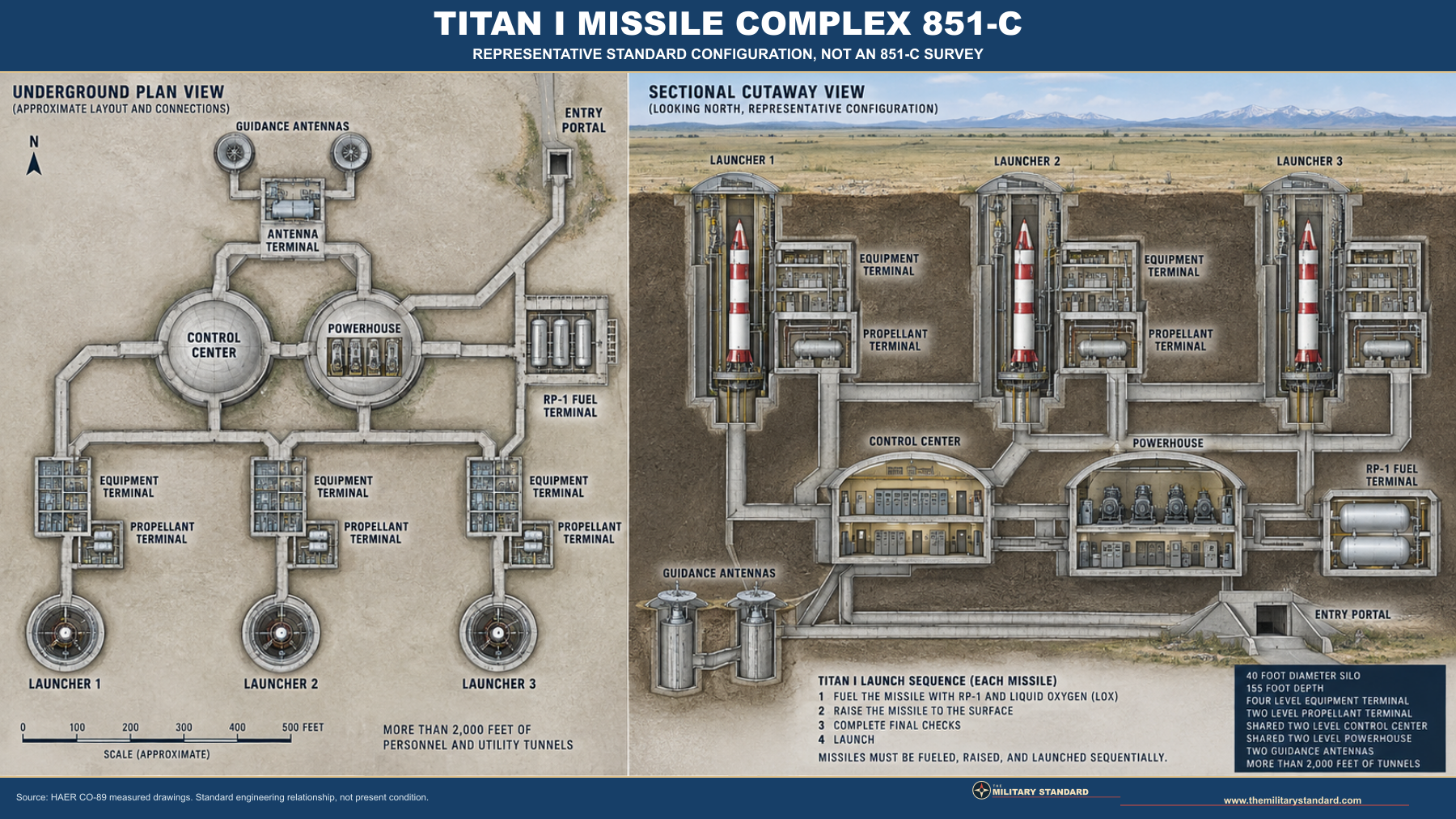
The control center provided command, authentication, monitoring, and crew space. The power house sustained electrical service. Two retractable guidance antennas connected the complex with the radio-inertial guidance system used during the early part of missile flight. Each launcher branch combined a missile silo with nearby equipment and propellant functions, tied into the central plant by protected passageways and utilities.
USACE describes five-foot-thick concrete domes and corrugated-metal tunnel structures encased in about five feet of concrete, with roughly 35 feet of backfill above much of the plant. Those figures communicate the hardened design but should not be read as uniform measurements for every wall, roof, and passage. Different structural elements carried different loads and geometries.
The standard-layout graphic is explicitly an engineering interpretation based on HAER CO-89 and Titan I design evidence. It explains relationships among launchers, terminals, antennas, control spaces, power systems, and the entry portal. It is not an as-built survey of 851-C, a current-condition plan, or an underground access guide.
Surface Features, Utilities, and Industrial Systems
Aboveground features recorded by USACE included roads, security fencing, a helicopter pad, Quonset huts, concrete hardstands, watch towers, an oxidation pond, a septic tank, communications equipment, and openings for the portal, vents, antennas, and missile launchers. Some features served routine operations, others supported emergency response, and others marked the surface connections to the buried plant.Underground tanks and distribution systems supported No. 4 fuel oil, diesel fuel, RP-1 missile fuel, liquid oxygen, liquid nitrogen, water, electricity, sanitary wastewater, and normal drainage. The combination made 851-C a buried industrial facility as well as a weapon site. Propellants, oxidizers, fuels, electrical equipment, confined spaces, drainage water, and aging structures later created separate environmental and safety questions.
The presence of a helicopter pad and hardstands does not make the complex an airfield. The pad supported access and emergency or official movement. The hardstands supported missile operations and service equipment. The site had no runway and did not function as a separate aviation base.
The HGM-25A Titan I System
Titan I was the United States first operational multistage intercontinental ballistic missile. It used RP-1 kerosene fuel and liquid oxygen, a combination that provided substantial performance but prevented indefinite fueled storage. Launch preparation therefore required oxidizer loading and a complex sequence of mechanical, electrical, communications, guidance, and safety actions.The missile remained protected underground during alert, but it could not launch from inside the silo. The elevator raised the fueled missile to the surface after the silo cover opened. A verified photograph of Titan 60-3704 raised at 568-C Silo 3 in Washington shows the same missile type and standard surface-launch method used at 851-C. It is included as a program reference and is not labeled as a Chico photograph.
Radio-inertial guidance required external equipment and communications. Ground-based systems tracked the missile and transmitted guidance information during the early portion of flight. This dependence explains the two retractable guidance antenna silos and the integration between the remote launch complex and a larger command network.
Operational success meant remaining secure, reliable, and ready without firing. Crews trained for authenticated orders, maintenance teams kept intricate systems within tolerances, security forces protected a nuclear site, and support organizations moved specialized parts and supplies. No operational missile was launched from Chico. Deterrence was the mission, and an unused weapon could still perform that mission if an adversary believed it was ready.
The 851st Strategic Missile Squadron
The 851st Strategic Missile Squadron activated on April 1, 1961 to operate the Beale field. Personnel had to master a weapon system that was still entering operational service while contractors finished and tested an unprecedented underground plant. Training, technical orders, emergency procedures, communications checks, and crew certification developed alongside physical completion.The squadron first served within the 4126th Strategic Wing. On February 1, 1963 the parent organization became the 456th Strategic Aerospace Wing. The change was administrative and organizational, not a relocation of the missile sites. The permanent installation record therefore lists both wings for the operating period.
A Titan I crew worked inside a hardened but highly interconnected system. Control officers, technicians, missile maintenance personnel, electricians, propellant specialists, security police, communications staff, civil engineers, firefighters, medical support, and command organizations all contributed to alert readiness. The three remote complexes depended on the parent base even though each could perform its launch-site mission as a geographically separate facility.
Missile Installation and the May 24, 1962 Accident
The first missile installed in the Beale field went to Complex 4A on February 28, 1962. The final field missile was placed at Complex 4C on April 20. That sequence made Chico the last of the three sites to complete initial missile loading and placed it in the final stages of checkout when the May accident occurred.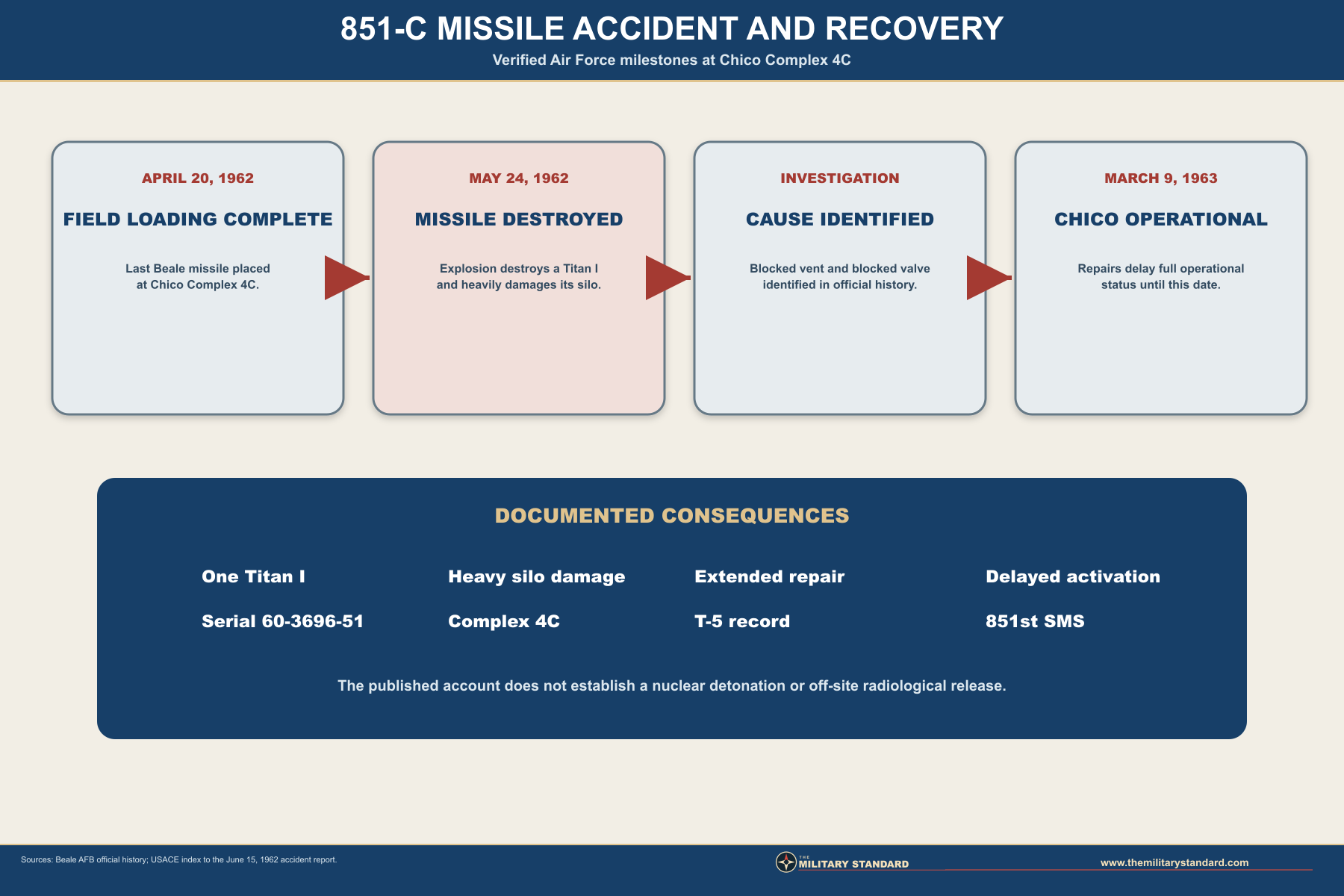
On May 24, 1962 an explosion destroyed a Titan I and heavily damaged its silo at Chico. The official Beale history states that the accident involved two explosions caused by a blocked vent and a blocked valve. The USACE administrative-record index identifies the weapon as SM-68A serial 60-3696-51 and references a June 15, 1962 report by Brigadier General H. K. Kelley, president of the accident investigation board.
The surviving public evidence supports several firm conclusions. A missile was destroyed, a Chico silo was heavily damaged, the site required major repair, and the accident delayed operational acceptance. It does not support embellishment into a nuclear detonation. The reviewed Air Force account does not report an off-site radiological release, and this history does not imply one.
Blocked ventilation and valve conditions were especially dangerous in a confined missile complex containing fuel, oxidizer, pressurized systems, electrical equipment, and limited paths for heat and gases to escape. The official finding demonstrates that small-seeming system restrictions could cascade into catastrophic results. It also explains why checkout procedures, configuration control, and safety review mattered before alert certification.
Repair, Recovery, and Delayed Operational Status
Repair involved more than replacing a missile. Damaged structural, mechanical, electrical, propellant, ventilation, and control systems had to be assessed and restored. The repaired launcher then had to pass inspection and functional testing within a complex where every subsystem interacted with the others. The accident investigation also had to identify causes and inform corrective action.The 851st achieved general alert status in September 1962, but Chico did not become operational until March 9, 1963. That difference is important. A squadron-level milestone can describe the field without proving that every launcher was ready on the same day.
Once the Chico complex joined the operational field, the 851st soon demonstrated high readiness. Official Beale history says it became the first Titan I unit to pass an Operational Readiness Inspection, two months after reaching full operational status. The achievement followed a difficult construction and accident-recovery period and reflected the work of both the remote crews and the support system at Beale.
Alert Operations
Titan I alert work combined long periods of watchfulness with tightly scripted action. Crews monitored equipment, communications, security, environmental conditions, and command circuits. Maintenance teams managed systems whose failure could remove a launcher from alert or create hazards. Exercises tested emergency response as well as the authenticated command path.The Chico accident influenced the wider field safety environment. Later shakedown and Broken Arrow exercises at Beale used accident-based scenarios to test response, communications, radiation precautions, and coordination. A training exercise is not proof of an actual nuclear release; it shows that the Air Force incorporated realistic accident consequences into preparedness.
The three complexes were mutually related but operationally separate. A maintenance problem or accident at one site did not automatically disable the other six launchers. Field dispersal supported survivability against attack and resilience against local failures. The parent base remained essential for command, maintenance, logistics, personnel administration, security support, and coordination.
Engineering Systems and Routine Readiness
Electrical power was fundamental to every other complex function. The power house supported pumps, ventilation, environmental control, communications, lighting, security, guidance equipment, silo doors, and missile elevators. Backup capability mattered because an isolated launch complex had to remain ready during disturbances that could interrupt commercial service. Diesel storage and distribution therefore belonged to the operational system, not merely to building support.Environmental control protected both people and equipment. Underground occupancy created heat, humidity, ventilation, and air-quality demands, while missile and guidance electronics required controlled conditions. The later presence of standing water in official photographs does not describe the operating environment. It documents the postservice condition after active pumping, ventilation, maintenance, and drainage no longer functioned as they had during alert duty.
The missile elevator distinguished Titan I from later silo-launched weapons. It had to lift a fueled missile from a protected underground position to the launch surface while maintaining alignment and coordinating with an opened silo cover. A failure in the elevator, door, propellant system, or sequence could make the launcher unavailable. The enormous machinery also left a deep vertical hazard after the mission ended.
Guidance antennas were housed in separate retractable silos because the radio guidance system needed external contact while the complex also required protection during alert. Their placement near the control and power functions reflects system integration. They should not be mistaken for air-defense radar antennas. The complex guided its own outbound missiles and did not perform regional aircraft surveillance.
Security combined distance, fencing, controlled entry, watch positions, communications, armed response, procedural safeguards, and the hardened plant itself. The rural location limited casual observation but increased the need for reliable links with Beale. Security also protected nuclear components and classified technical systems during maintenance, loading, and alert operations.
Routine readiness generated a substantial documentary trail. Crew logs, maintenance records, inspection findings, configuration changes, technical orders, property records, and emergency exercises all helped manage a complex whose systems could not be judged by appearance alone. Many detailed records remain in archival series that have not been digitized, which is why the public history can establish major milestones more confidently than daily operations.
Accident Evidence and Interpretive Limits
The May 24 accident has often been retold in abbreviated or sensational form. The strongest public account is the official Beale history, which states that a Titan I was destroyed, the silo was heavily damaged, and blocked vent and valve conditions caused two explosions. The USACE index adds the missile serial and identifies the formal accident report. Those facts form the core of this account.The missile serial, 60-3696-51, helps connect the event to the formal Air Force investigation rather than to general Titan I accident lists. It also prevents confusion with missiles involved at other fields. A serial number does not reveal whether every component remained with the missile through repair or disposal, but it anchors the destroyed weapon in the documentary record.
The term explosion should not be expanded into nuclear explosion. Strategic missiles carried nuclear reentry vehicles during the operational era, but high explosives, propellants, oxidizer systems, pressure, electrical faults, and confined gases could produce destructive industrial accidents without a nuclear yield.
The blocked-vent and blocked-valve finding should also remain within its evidentiary limits. It identifies causal conditions in the official summary, but the public article does not reproduce the entire sequence, maintenance history, witness testimony, or engineering analysis. A responsible site history records what is known and points to the formal report rather than inventing a minute-by-minute reconstruction.
The damaged silo was restored instead of abandoned. That decision shows the value Strategic Air Command placed on completing the nine-launcher field despite a phase of rapid technological change. It also meant that repair contractors and Air Force acceptance personnel had to demonstrate that the affected launcher and common systems could return to service without compromising the other two launchers.
Chico delayed operational date makes the accident visible in the field chronology. September 1962 remains an important 851st milestone, but March 9, 1963 is the correct site-specific operational date. Retaining both dates prevents the common mistake of assigning a squadron achievement automatically to every launcher.
Phaseout and Deactivation
Secretary of Defense Robert McNamara directed accelerated Titan I phaseout on May 16, 1964. The decision did not mean the system had failed to perform its deterrent role. It reflected rapid improvements in missile readiness, survivability, fuel handling, guidance, and operating economy. A first-generation system could become strategically obsolete even while still functioning.The first Beale Titan came off alert on January 4, 1965. The 851st Strategic Missile Squadron was inactivated on March 25. Missiles, warheads, classified equipment, and reusable components were removed through controlled Air Force processes. Deactivation ended the nuclear mission, but it did not erase the buried plant or immediately settle every property and environmental obligation.
Dates in different records describe different milestones. The squadron inactivation date is an organizational event. Removal from alert is an operational event. Property excess and conveyance are real-estate events. Environmental response and project closeout are later program events. They should not be collapsed into a single closing date.
Property Transfer and Disposal
On September 14, 1970, 10.02 fee acres and 4.50 easement acres were transferred to the Department of the Navy according to the current USACE property narrative, a total of 14.52 acres. An older administrative-record description references 7.05 easement acres in the transfer documentation. Because the figures differ, this history uses the current FY2024 property total while preserving the older discrepancy as a research note.The General Services Administration conveyed 214.10 easement acres on November 25, 1981. On January 5, 1982 it quitclaimed 41.38 fee acres. GSA retained responsibility for one easement acre within a remaining 4.10-acre interest as a perpetual restrictive easement. The current record says the Navy owns 14.52 acres and the remainder is privately owned.
The Navy transfer is a property transaction, not sufficient evidence for creating a second installation identity. No reviewed source establishes a separately named, staffed, and operated Navy installation at the Chico complex. The permanent record should remain one Air Force-origin installation unless future Navy documentation establishes an independent mission and identity.
USACE says the historical records do not indicate whether restoration was required during disposal. That absence matters because it limits conclusions about what was demolished, sealed, filled, removed, or left in place at each transaction. Later photographs and environmental project records provide evidence for surviving underground structures but do not reconstruct the entire disposal sequence.
FUDS Property and Project Structure
The Formerly Used Defense Sites program identifies 851-C as CA99799F599700, property number J09CA1109. The fiscal year 2024 property status is Properties with Projects and the site is not listed on the National Priorities List. Three projects divide the remaining work by problem type: 01HTRW for silo drainage and sampling, 02CON/HTRW for underground storage tanks, and 03BD/DR for site closure.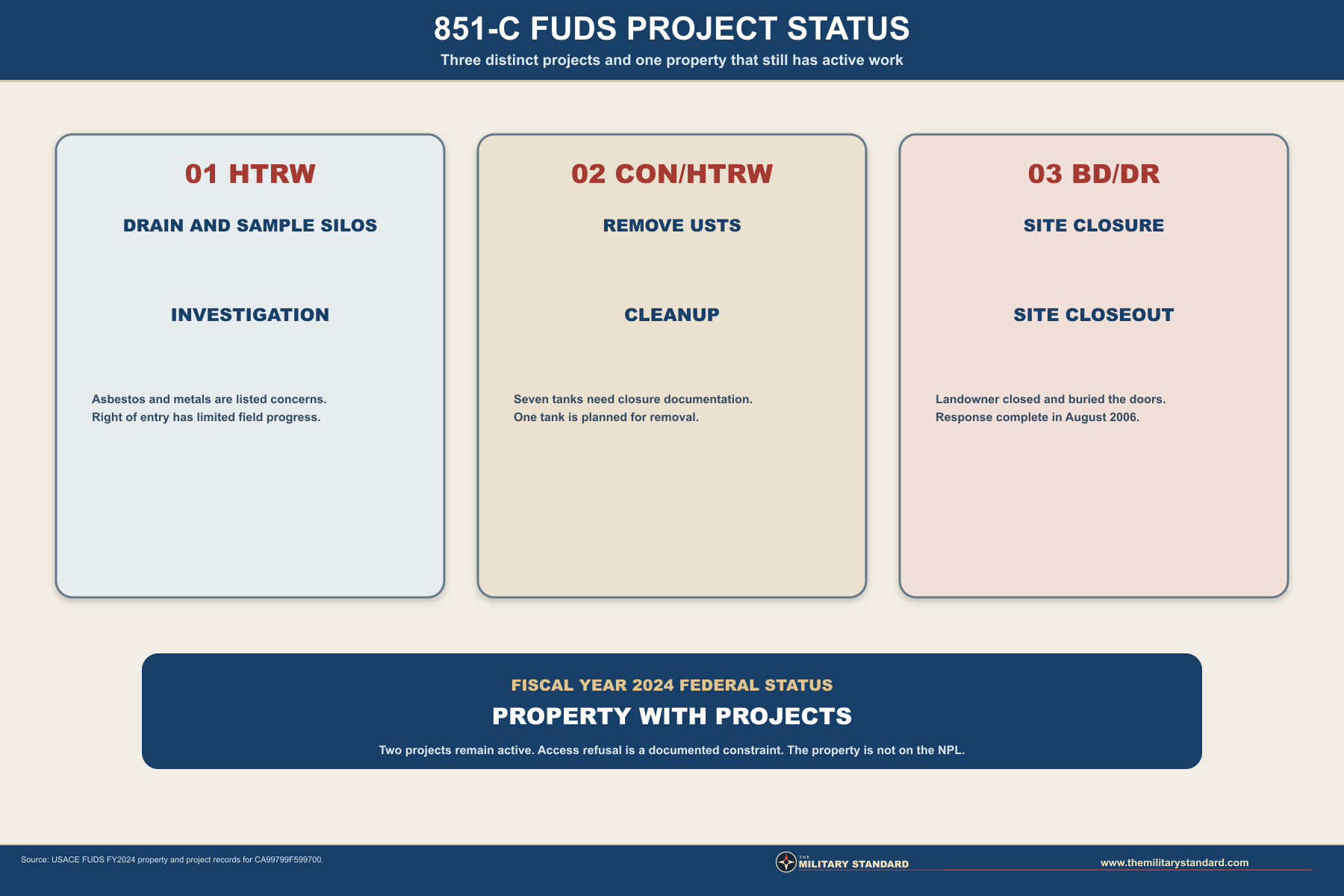
Project status must be read at both property and project levels. The building demolition or debris project reached response complete and site closeout in 2006. The HTRW project remains in investigation, and the tank project remains in cleanup. Therefore, the correct overall statement is that the property still has projects, not that all work is complete.
USACE project records also show that access affects progress. Right of entry has been refused since fiscal year 2017 for the active work. Federal plans can identify preferred sampling, closure, or removal actions, but field completion depends on lawful access to privately controlled property. Projected dates are planning fields, not proof that future work has occurred.
Project 01HTRW: Drain and Sample Silos
Project 01HTRW is named Drain and Sample Silos, SOI and remains in the site-inspection phase. USACE lists asbestos and metals as contaminants of concern in soil or water. The current strategy anticipates regulatory concurrence to close seventeen of eighteen areas of interest, while access is needed to investigate the remaining concern.The project record says right of entry has been refused since fiscal year 2017 and that another request is planned. Fiscal year 2024 sampling and fiscal year 2025 site-inspection completion appear in the strategy as expectations, not verified accomplishments. The database carries September 2035 as a projected completion field. That date must be labeled as planning data rather than a promised or completed milestone.
The project title does not establish that every silo contains the same water, debris, or contaminant conditions. It identifies the response scope. The 2013 Air Force photographs show standing water and deteriorated underground spaces at the time of documentation, but a photograph cannot substitute for sampling results or a current structural inspection.
Project 02CON/HTRW: Remove Underground Storage Tanks
Project 02CON/HTRW is named Remove USTs and is in cleanup, specifically the remedial-action construction phase. The strategy calls for documenting closure of seven underground storage tanks, removing one tank, and closing remaining tanks in place when right of entry is obtained. This language indicates a tank-specific program rather than wholesale removal of the entire missile complex.Right-of-entry refusal has also delayed this work since fiscal year 2017. The database carries September 2032 as a projected completion field. As with the HTRW projection, it is a planning estimate in the FY2024 record and should not be presented as a completed action or guaranteed schedule.
The historical installation contained systems for fuel oil, diesel, RP-1, liquid oxygen, liquid nitrogen, water, wastewater, and normal drainage. Not every tank or line necessarily falls under the same project or regulatory category. The public project record supports the stated closure strategy, but it does not provide a complete tank-by-tank as-built and disposition inventory.
Project 03BD/DR: Site Closure
Project 03BD/DR is the only one of the three shown at site closeout. The project strategy says the landowner closed all doors and buried them. USACE records response complete on August 1, 2006 and site closeout on October 1, 2006. Those are project milestones for the building demolition or debris response.Closing and burying doors can reduce casual access, but it does not prove that every underground chamber was demolished, filled, dry, or structurally sound. It also does not resolve contamination work assigned to separate projects. The presence of site-closeout language beside two active projects is why project-level precision matters.
The current record overlaps the property with the North Central Valley Wildlife Management Area and identifies the federal land agency as the U.S. Fish and Wildlife Service. That data relationship should be treated cautiously. It does not establish that the entire former missile complex is refuge property or that wildlife-area rules resolve the private and Navy ownership distinctions in the property narrative.
Official 2013 Air Force Documentation
On June 7, 2013 the 9th Reconnaissance Wing published an official history article about the deactivated Titan I sites around Beale. Senior Airman Allen Pollard photographed 851-C on May 23. The published images show the silo interior and ribbed connecting tunnels, providing direct, dated visual evidence of surviving underground spaces nearly half a century after deactivation.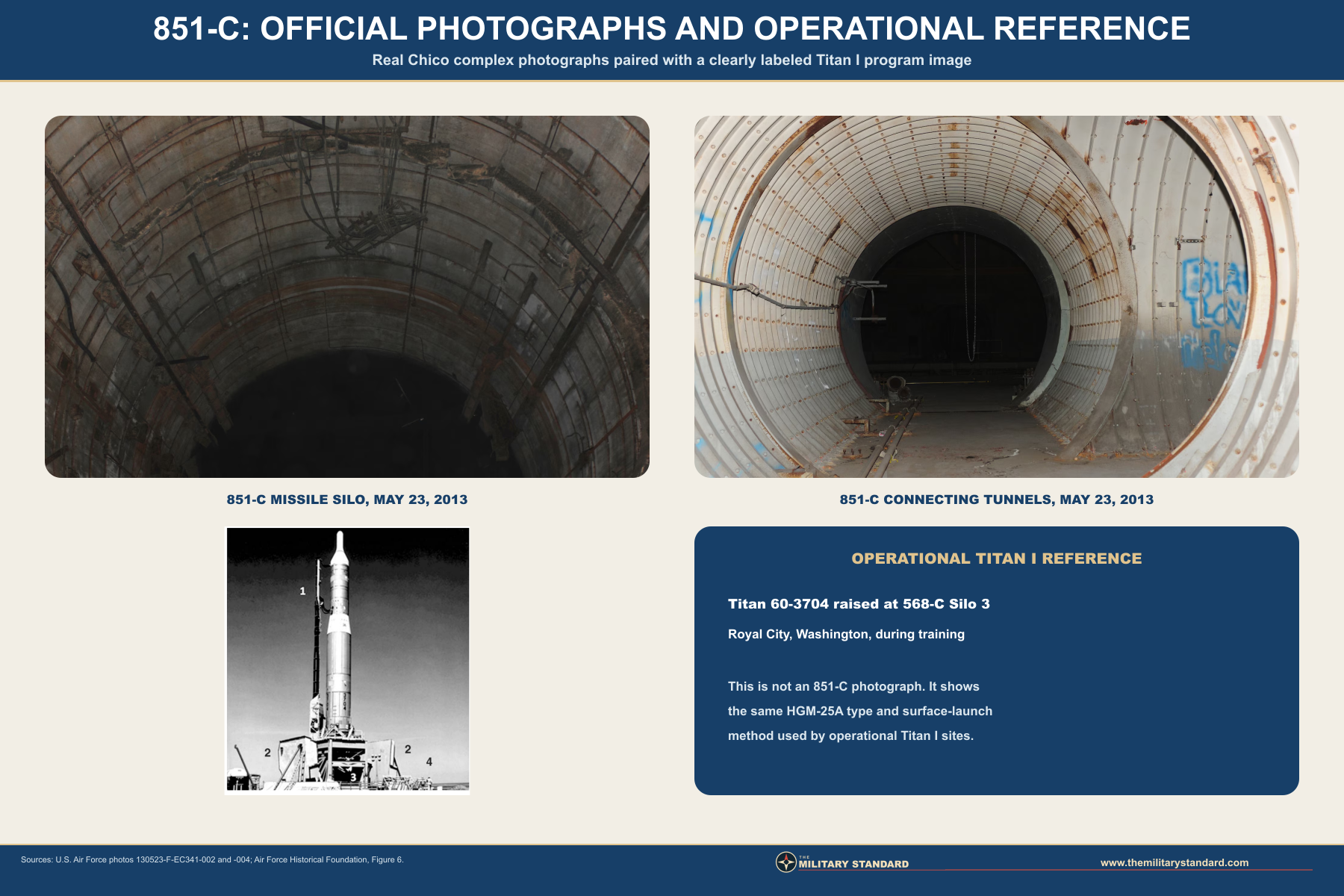
The captions identify the Chico complex as privately owned and not open to the public in 2013. The photographs are historical documentation, not an invitation to enter. Their value lies in showing actual 851-C materials, geometry, water, corrosion, and postservice condition. The accompanying photo graphic uses those official images without black borders and keeps their identity separate from the 568-C operational missile photograph.
Condition can change substantially after a photograph is made. Water levels, corrosion, debris, closures, ownership, ventilation, and structural stability may differ today. The images therefore support the history of survival and deterioration, but they cannot certify present access or safety.
Current Condition, Ownership, Access, and Safety
The fiscal year 2024 property record states that the Navy owns 14.52 acres that are ineligible for DERP and that the remaining former Air Force interests are privately owned. It does not provide a public visitor program, current owner names, a safe route, or a structural certification. The property should be treated as nonpublic unless an authorized owner or agency states otherwise.Titan I ruins present serious hazards even when surface doors have been buried or closed. Deep shafts, water, poor air, unstable debris, corroded metal, asbestos-containing material, electrical remnants, fuel-system residues, sharp edges, and confined-space conditions can be lethal.
The active FUDS projects reinforce that caution. Federal investigators still describe unresolved sampling and underground-tank work, and access has constrained progress. A site that appears dormant can still carry legal, environmental, structural, and safety issues. Permission alone would not replace appropriate professional controls for underground work.
Chronology
- 1958-07-21 The United States acquires 51.40 fee acres and 223.70 easement acres from two private owners for Beale AFB Titan 1-C.
- 1959 Preconstruction investigation and design work support the coming Beale Titan I field.
- 1960-01-22 Official Beale history places the start of construction for the three-complex field on this date.
- 1960-1962 USACE describes construction of the Chico complex during this period.
- 1961-04-01 The 851st Strategic Missile Squadron activates to operate the Beale field.
- 1961 Construction, equipment installation, crew organization, and technical training proceed together.
- 1962-02-28 The first missile in the Beale field is placed at Complex 4A near Lincoln.
- 1962-04-20 The last missile placed in the Beale field arrives at Chico Complex 4C.
- 1962-05-24 An explosion destroys Titan I serial 60-3696-51 and heavily damages its silo at Chico.
- 1962-06-15 The accident investigation board report is dated, according to the USACE administrative-record index.
- 1962-09 The 851st reaches field alert status, although Chico is still being repaired and accepted.
- 1963-02-01 The 456th Strategic Aerospace Wing succeeds the 4126th Strategic Wing as the parent wing.
- 1963-03-09 Chico Complex 4C becomes operational after repairs.
- 1963-05 The 851st becomes the first Titan I unit to pass an Operational Readiness Inspection, according to Beale history.
- 1963 The repaired Chico complex serves as the northern member of the nine-launcher field.
- 1964-05-16 Secretary of Defense Robert McNamara directs accelerated Titan I phaseout.
- 1964 Alert operations continue while phaseout planning begins.
- 1965-01-04 The first Beale Titan I is removed from alert.
- 1965-03-25 The 851st Strategic Missile Squadron is inactivated.
- 1965 Missiles, warheads, classified equipment, and reusable components are removed under controlled processes.
- 1970-09-14 USACE reports transfer of 10.02 fee acres and 4.50 easement acres to the Department of the Navy.
- 1981-11-25 GSA conveys 214.10 easement acres.
- 1982-01-05 GSA quitclaims 41.38 fee acres.
- 1982 GSA retains responsibility for one easement acre within a remaining 4.10-acre interest as a perpetual restrictive easement.
- 2001 GAO FUDS reporting lists active work associated with the Chico property.
- 2006-08-01 USACE records response complete for project 03BD/DR.
- 2006-10-01 USACE records site closeout for project 03BD/DR.
- 2013-05-23 Air Force photographer Senior Airman Allen Pollard documents the 851-C silo and tunnels.
- 2013-06-07 The 9th Reconnaissance Wing publishes Cold War Relics: Deactivated Titan 1 Missile Silos Surround Beale.
- FY2017 USACE records right-of-entry refusal as a continuing constraint for active projects.
- FY2018 Defense environmental reports still carry projected completion schedules for Chico projects.
- FY2024 USACE classifies the property as having projects and not listed on the National Priorities List.
- FY2024 Project 01HTRW remains in investigation for silo drainage and sampling.
- FY2024 Project 02CON/HTRW remains in cleanup for underground storage tanks.
- FY2024 Project 03BD/DR remains at site closeout.
- 2025 Site-inspection completion appears as a USACE planning expectation, not a verified accomplishment.
- 2032-09 The tank project database carries this projected completion field; it is not a completed milestone.
- 2035-09 The silo investigation database carries this projected completion field; it is not a completed milestone.

Sources & References
- WEB Cold War Relics: Deactivated Titan 1 Missile Silos Surround Beale SOURCE FOR: Official Beale field chronology, missile installation dates, May 24 accident, cause, March 9 operational date, phaseout, and 2013 photography
- WEB Beale AFB Titan 1-C FY2024 FUDS Property Feature SOURCE FOR: Official coordinate, polygon, county, acquisition, acreage, facility description, Navy transfer, GSA disposal, current ownership, and property status
- WEB Beale AFB Titan 1-C FY2024 FUDS Project Records SOURCE FOR: Current status, contaminants, right-of-entry constraint, strategy, and projected dates for projects 01HTRW, 02CON/HTRW, and 03BD/DR
- PDF FUDS Inventory, California SOURCE FOR: Official listing of three environmental projects for property J09CA1109
- PDF Site-Wide Remedial Investigation, Former Beale AFB Titan 1-A Administrative Record SOURCE FOR: Archival index to the June 15, 1962 Chico accident report, missile serial, transfer records, and Beale field historical documents
- WEB Beale History: Past to Present SOURCE FOR: Official parent-base history and Strategic Air Command context
- WEB Titan I ICBM SOURCE FOR: National Park Service explanation of Titan I design, underground basing, fueling, and launch sequence
- WEB HGM-25A Titan I SOURCE FOR: National Museum of the U.S. Air Force missile characteristics and service context
- PDF Ballistic Missiles in the United States Air Force, 1945-1960 SOURCE FOR: Official Air Force missile development, deployment policy, and early ICBM context
- PDF To Defend and Deter: The Legacy of the United States Cold War Missile Program SOURCE FOR: Department of Defense and National Park Service program history, Titan I architecture, operations, and phaseout
- WEB Titan One Missile Complex 2A, HAER CO-89 SOURCE FOR: Measured standard Titan I plan, sections, component relationships, construction, and visual verification
- WEB GAO FUDS Status, California SOURCE FOR: Historical 2001 federal cleanup-program status for Titan 1-C, Chico
- PDF FY2018 Defense Environmental Programs Annual Report to Congress, Appendix A SOURCE FOR: Historical cost and schedule context for FUDS work at the Chico property
- PDF FY2018 IRP Report to Congress SOURCE FOR: Historical projected schedules for Drain and Sample Silos and Remove USTs projects
- PDF Status of FUDS Properties with Cost to Complete at or Below $10 Million SOURCE FOR: Historical projected final response-complete date that was not achieved by the FY2024 record
- WEB Air Force Photo 130523-F-EC341-002 SOURCE FOR: Official May 23, 2013 photograph of the 851-C missile silo
- WEB Air Force Photo 130523-F-EC341-004 SOURCE FOR: Official May 23, 2013 photograph of 851-C connecting tunnels
- WEB Air Force Photo 130523-F-EC341-001 SOURCE FOR: Official 2013 photograph and caption stating private ownership and no public access
- PDF Titan Missile Special Issue, Figure 6 SOURCE FOR: Verified photograph of Titan 60-3704 raised at 568-C Silo 3, used only as a program-level operational reference
- WEB OpenStreetMap SOURCE FOR: Attributed geographic base used beneath the official USACE FUDS property geometry