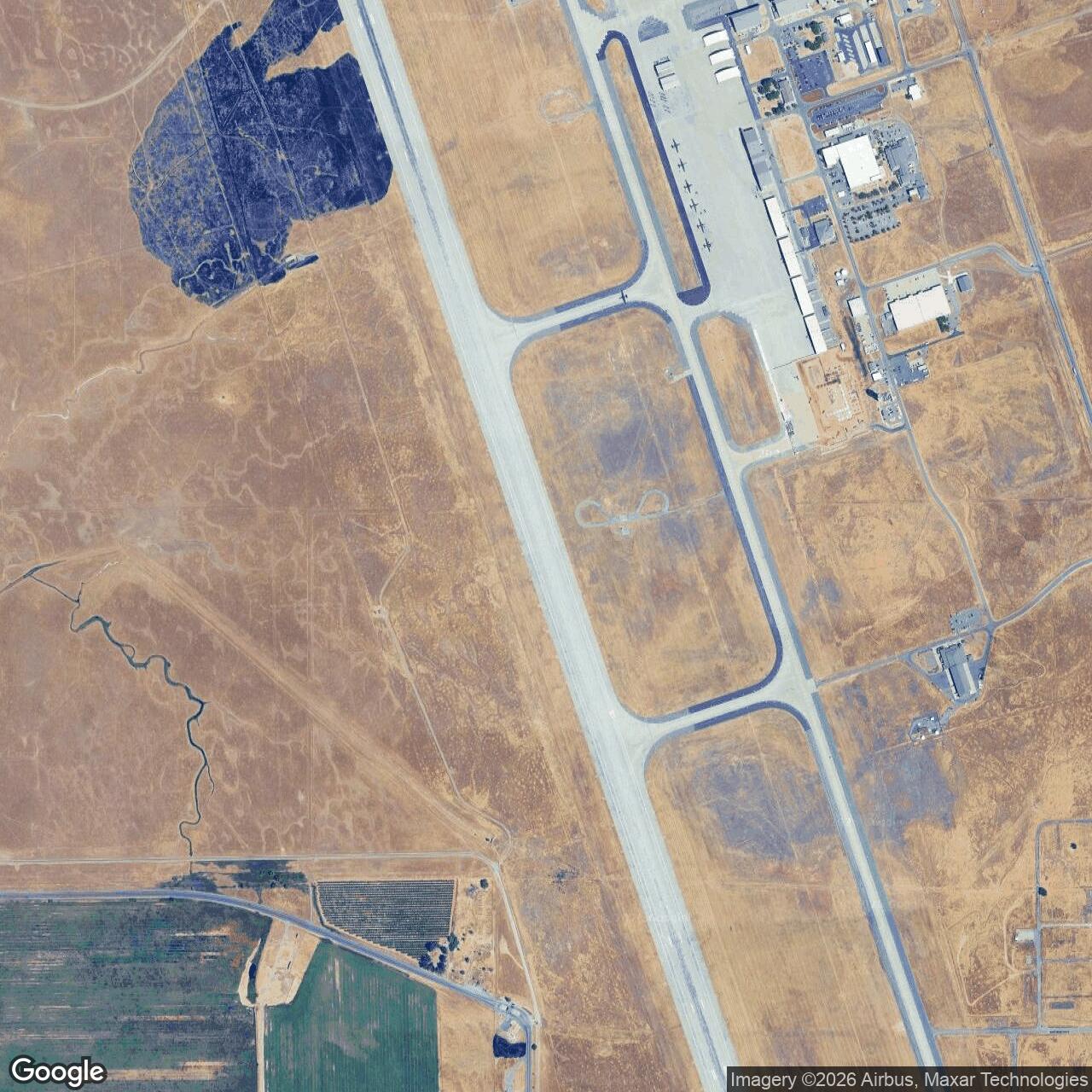
Camp Beale Army Base, Marysville California
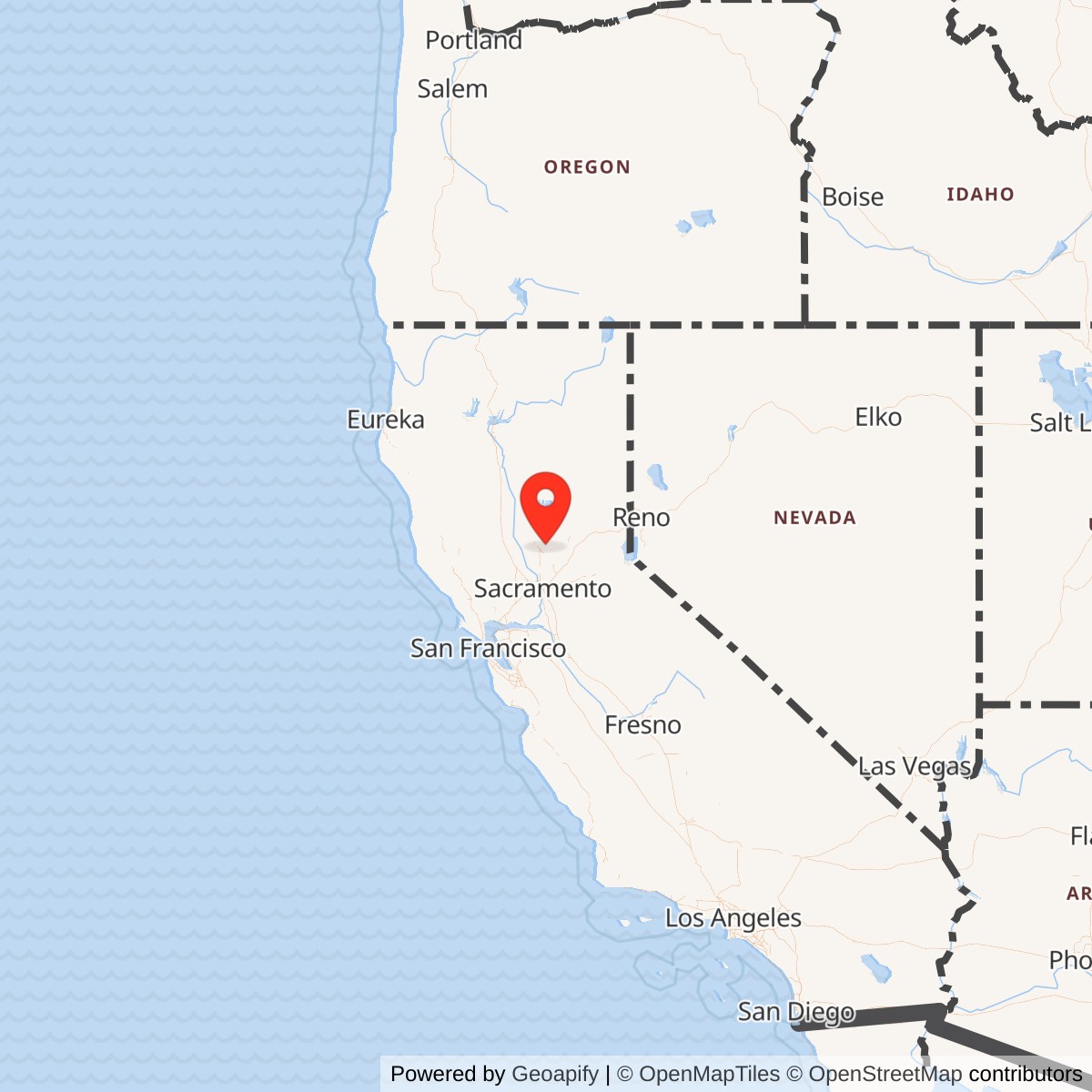
Longitude: -121.4365000
Official Base Website: Camp Beale
Current Role: Active Beale Air Force Base on retained former Camp Beale core
Camp Beale was a World War II U.S. Army training, replacement, prisoner-of-war, chemical-warfare, and separation installation that later became the foundation for Beale Air Force Base. It was not a nineteenth-century frontier fort and not originally an aviation base. It was a wartime ground-force camp built at great speed on roughly 86,654 acres east of Marysville to train armored and infantry divisions, operate extensive live-fire and maneuver ranges, hold enemy prisoners, process soldiers, and support the Army's western wartime mobilization system. After the Army's wartime mission ended, the property was declared surplus in 1947 and transferred into the Air Force system in 1948, creating the direct institutional bridge between Camp Beale and modern Beale AFB.
The camp was named for Edward Fitzgerald Beale, a naval officer, Mexican War veteran, California pioneer, militia brigadier general, federal surveyor, and figure associated with the Army's nineteenth-century camel experiment. That namesake explains one of the unusual features of Beale's later identity: a major Air Force reconnaissance base whose name came not from an aviator, but from a frontier-era western explorer and military figure. The Army camp inherited that name at the moment when the United States was building a national network of enormous temporary mobilization camps for World War II.
The site was militarily useful because it combined space, isolation, transportation access, and varied terrain. The area lay close enough to Marysville, Yuba City, Sacramento, rail lines, highways, and west-coast ports to support a very large training installation, but it also offered tens of thousands of acres of foothill terrain where tanks, infantry, artillery, mortars, machine guns, rockets, and chemical-warfare training could be kept away from dense urban populations. Former dredge-mining areas, ranch lands, orchards, grasslands, and the abandoned mining town of Spenceville all became part of the training environment. Dredge tailings and local materials were used in construction, and Spenceville itself was adapted into an urban-combat training setting.
Camp Beale should be understood in two overlapping layers. The first layer was the World War II Army camp, open as a training post in October 1942 and closed out of Army use by 1947-1948. That is the historic Army installation covered here. The second layer is the successor Air Force installation, now Beale Air Force Base, which remains active on about 23,000 acres. The current base is not a continuation of Camp Beale's ground-combat training mission; it is a successor installation that reused the Army reservation and transformed it into an Air Force bombardier, engineering, Strategic Air Command, reconnaissance, refueling, missile-warning, and high-altitude intelligence-surveillance-reconnaissance base.
Mission Evolution
Camp Beale grew out of the Army's 1940-1942 mobilization crisis. The War Department needed large inland camps capable of handling entire divisions and specialized training at a scale that older posts could not support. Marysville-area officials encouraged federal selection of the site, and the Army acquired a very large block of land from many private owners through purchase and eminent-domain procedures. The military requirement was clear: build a complete training post that could absorb an armored division, later infantry divisions, service troops, a hospital, ranges, roads, utilities, depots, a POW compound, and processing functions.
The first major mission was armored training. Camp Beale was established as the first home of the 13th Armored Division, the "Black Cats." The division activated there on 15 October 1942, and its presence shaped the initial identity of the post. Armored training required far more than barracks and classrooms. It required tank maneuver areas, motor pools, maintenance shops, firing ranges, road networks, fuel and ammunition handling, recovery and repair capacity, and enough space for combined arms exercises. Camp Beale's broad acreage gave the Army the room to train soldiers, crews, platoons, companies, and battalions in the mechanics of modern armored warfare.
The mission expanded rapidly beyond a single armored division. Official Air Force history identifies Camp Beale as a training site for the 13th Armored Division and for the 81st and 96th Infantry Divisions. The camp also supported joint training activity by Army Air Corps units from Sacramento and Santa Rosa Army Air Fields. That made Beale a mixed training landscape: armor, infantry, chemical warfare, air-ground support, range firing, urban-combat scenarios, hospital support, and administrative processing coexisted on the same reservation.
By late 1943 Camp Beale also became part of the Army's Chemical Warfare Service training system. The West Coast Chemical Warfare School opened there in December 1943 under Ninth Service Command jurisdiction. Its courses trained gas officers, noncommissioned officers, Navy personnel, and other students in chemical-warfare defense, protection, and familiarization. Although the school later came under Rocky Mountain Arsenal activity, Camp Beale's selection shows that the post was considered useful not only for maneuver training but also for specialized technical instruction.
In 1945 the mission shifted again toward chemical-warfare materiel processing. The Army Service Forces depot at Camp Beale was designated for classification, rehabilitation, and repacking of Chemical Warfare Service materiel returning from the Pacific. That work included receiving, sorting, packaging, salvaging, and forwarding chemical-warfare equipment and related materiel. This was not glamorous training history, but it was a necessary part of a global war-ending logistics system. Camp Beale's large reservation, storage capacity, transportation access, and existing CWS school activity made it useful for this function.
Camp Beale's personnel-processing mission became enormous. During and immediately after World War II, the camp served as a personnel replacement depot, reception station, induction center, and separation center. California State Military Museum material reports that by September 1945 the Personnel Replacement Depot had sent more than 225,000 men overseas, that about 80,000 others passed through the reception station before it moved to Fort Ord in December 1946, and that the separation center discharged 387,174 men and women before it closed in April 1947. These figures show that Camp Beale was not merely a place where units trained. It became a human sorting, routing, and demobilization machine at the western edge of the Army's wartime personnel system.
World War II Training Role
The daily work of Camp Beale was the physical preparation of soldiers for war. Its scale made that possible. The wartime camp covered roughly 86,000 to 86,654 acres and at peak housed more than 60,000 personnel. It contained barracks, mess halls, chapels, theaters, warehouses, cold-storage plants, a bakery, post exchanges, motor pools, maintenance shops, powerhouses, fire stations, administrative buildings, railroad sidings, a hospital complex, perimeter gates, a small airfield, and huge range and maneuver spaces. It was a temporary military city built for speed rather than architectural permanence.
Construction itself was a major part of the early story. The Army had to replace farms, orchards, ranch structures, mining remains, and open grasslands with a functioning installation in months. Camp Beale's first commander, Colonel A. D. Cowley, arrived in June 1942, and Army engineers and civilian workers built a camp large enough to house tens of thousands of soldiers. The 1,000-bed hospital alone required a large cluster of buildings. The post eventually had multiple theaters, ten chapels, numerous mess halls, and fourteen perimeter gates. The result was a complete wartime support environment rather than a simple tent camp.
The range system was the heart of Beale's training mission. The California State Military Museum summary identifies weapons and training systems associated with Camp Beale ranges, including light, medium, and heavy tanks, self-propelled antitank guns, 37 mm antiaircraft guns, 105 mm howitzers, and 81 mm and 4.2-inch mortars. Range-office facilities included artillery and mortar ranges, submachine-gun ranges with pop-up targets, landscape and miniature antiaircraft ranges, moving targets for machine guns and carbines, rifle ranges, antitank ranges, and an artillery range with a moving target. Three-quarters of the camp's area was reportedly under range-office jurisdiction. That fact explains the long munitions legacy that later followed the site into the FUDS program.
Beale's terrain was also used for field training and bivouacs. Soldiers moved from the built-up cantonment into temporary field encampments, practiced marches and small-unit operations, and learned how to live away from permanent shelter. This mattered for both armored and infantry troops because the Army was preparing units for expeditionary warfare, not merely stateside garrison life. Physical conditioning, road marches, small-arms qualification, maintenance routines, and small-unit field problems formed the daily rhythm of the camp.
The old mining town of Spenceville became one of Camp Beale's most distinctive training environments. The 13th Armored Division reconstructed it as a German-style village and used it for a "combat in cities" course. In the training scenario, a German detachment held the village with roadblocks, booby traps, machine-gun positions, tank emplacements, and prepared defenses. Units were ordered to capture the village and clear it. This use of Spenceville shows how the Army transformed a real California mining landscape into a simulated European battlefield.
The 13th Armored Division was the most important unit associated with Camp Beale. It activated there in October 1942, trained there through 1943, and later moved to Camp Bowie, Texas, and then overseas. The division arrived in France in January 1945, entered combat in the final months of the European war, served under Third Army, and earned campaign credit for Rhineland and Central Europe. It spent only a short period in actual combat, but it suffered significant casualties and took part in the final Allied advance into Germany and Austria. Camp Beale's role in that story was foundational: it was where the division came into being and where much of its early armored training culture was formed.
The 81st and 96th Infantry Divisions added a Pacific-war dimension to the Beale story. Both divisions are tied in official Beale history to the training mission, and both later fought in the Pacific. The 81st Infantry Division served in the Western Pacific and South Philippines campaigns, including Angaur and Peleliu-related operations. The 96th Infantry Division fought on Leyte and Okinawa, where it suffered heavy losses. Camp Beale was not the site of those battles, but it was one of the stateside training landscapes that prepared infantry units for the Pacific war.
Army Air Corps participation broadened the installation's mission. USACE public history notes that Camp Beale was also used for joint training activities by Army Air Corps units from Sacramento and Santa Rosa Army Air Fields. The later Air Force conversion sometimes makes the air connection appear inevitable, but in the World War II period the relationship was practical: air-ground training, bombardier-navigator practice, range use, and joint support could occur because the reservation was large and relatively isolated.
Prisoner-of-War Camp
Camp Beale also held German prisoners of war and served as a base camp for branch POW labor camps in northern California. Official Beale history notes the presence of a prisoner-of-war encampment, while California State Military Museum material gives additional detail: the German POW base camp opened in May 1944, initially using converted dormitories and storehouses and eventually growing into a compound of barracks, mess halls, canteen, storehouses, chapel, fencing, guard towers, and floodlights. The capacity was about 1,200 German prisoners.
The POW mission placed Camp Beale inside the national system of enemy-prisoner labor management. German prisoners held at or under Camp Beale custody supported base operations and agricultural labor in surrounding communities. Branch camps operated at Arbuckle, Chico, Davis, Napa, and Windsor, with prisoners working for local farms and ranches. The Windsor Historical Society records that the Windsor branch reopened a former migrant labor camp in 1944 as a branch of the POW camp located at Camp Beale near Marysville; its purpose was to supply local farmers and ranchers with labor for crops such as apples, pears, prunes, and grapes.
The POW system was both military and economic. It required guards, fenced compounds, transport, work contracts, medical supervision, recreation, religious support, censorship, and discipline. It also linked a global war to northern California agriculture. Captured German soldiers, many of whom had been taken far from California, ended up pruning, harvesting, and maintaining crops because wartime labor shortages had pulled American workers into the armed forces and defense industry.
Camp Beale's POW history is important because it adds a human and international dimension to what might otherwise be a conventional training-camp story. The same reservation that trained American soldiers for combat also held enemy soldiers, used their labor, and served as the administrative center for a small network of branch camps. The POW compound was part of the wartime installation, not a separate anecdote.
Site Design and Physical Layout
Camp Beale's physical design reflected World War II mobilization needs. It was dispersed, functional, and temporary. The main cantonment housed troops, headquarters, hospitals, support services, depots, shops, theaters, messes, chapels, exchanges, and transportation facilities. The surrounding lands supported ranges, bivouacs, maneuver corridors, target areas, artillery and mortar firing, tank training, chemical-warfare instruction, and urban-combat simulations. Its design was not that of a permanent ceremonial post; it was a practical machine for moving soldiers and materiel through training and deployment systems.
The hospital was one of the most important facilities. Official Beale history states that Camp Beale had a 1,000-bed hospital. California State Military Museum material describes the hospital as a major building complex with roughly 100 buildings. A hospital of that size was necessary because a camp housing tens of thousands of soldiers, operating tanks and live-fire ranges, holding prisoners, and processing recruits and returnees needed substantial medical capacity.
The POW compound was another specialized sub-landscape. It was fenced, guarded, lighted, and divided from ordinary troop housing. It contained barracks, mess facilities, stores, chapel space, and support buildings. This design allowed the Army to keep prisoners within the installation while still using their labor under controlled conditions.
The range and training areas were the largest physical component of the camp. USACE's Formerly Used Defense Sites materials identify former Camp Beale as containing large munitions-response areas, including the Southwest Combined Use Area, moving target ranges, machine-gun and rocket-launcher training areas, and other portions where munitions and explosives of concern may remain. Later investigations divided former Camp Beale lands into multiple munitions-response areas because the wartime range system left a long-term safety and environmental footprint.
The postwar Air Force conversion radically changed the physical plant. The Air Force built bomb targets, later added day and night bombing targets, used portions of the old camp for bombardier-navigator training, and eventually converted retained acreage into a modern air base with a runway, hangars, support buildings, and Strategic Air Command infrastructure. Large portions of the former Army reservation were declared excess, sold, or transferred, including land that became the Spenceville Wildlife and Recreation Area. Much of the old Army camp disappeared as buildings were sold, removed, demolished, or paved over, leaving foundations, altered landscapes, range residue, and selected historic remains rather than an intact World War II cantonment.
Transfer, Closure, and Air Force Successor
By 1947 the Army's mission at Camp Beale had essentially ended. The separation center closed in April 1947, the chemical materiel function ceased that year, and the Department of the Army placed Camp Beale on surplus status in May 1947. In September 1947 the property passed to the War Assets Administration for disposal, and a large program of building sales and facilities removal began. Many temporary wartime buildings were sold and carried away, leaving concrete foundations and fragmentary physical traces.
In early 1948, however, the property was withdrawn from War Assets Administration disposal and transferred to the Air Force. That transfer prevented total liquidation of the military reservation and allowed the site to become Beale Air Force Base. The initial Air Force mission was bombardier-navigator training in radar techniques, supported by bomb targets and range space. In 1951 the Beale Bombing and Gunnery Range was reactivated for aviation engineer training, and the base later hosted aviation engineer training and an Air Base Defense School.
The Air Force did not retain all of old Camp Beale. USACE materials state that in 1959 approximately 62,550 acres of former Camp Beale were declared surplus and sold, after clearance activities in 1947, 1958, 1959, and 1962. Some transfers included surface-use restrictions because munitions might remain below ground. Other portions went to the State of California and now form part of the Spenceville Wildlife and Recreation Area. This postwar disposal pattern explains why "Camp Beale" can refer both to the active Beale AFB core and to former training lands east and northeast of the base that are no longer part of the installation.
Beale AFB then became a major Cold War and post-Cold War Air Force installation. It passed through Air Training Command, Continental Air Command, Aviation Engineer Force, Strategic Air Command, and Air Combat Command control. In the late 1950s and early 1960s Beale supported KC-135 and B-52 operations and three nearby Titan I missile sites. In the 1960s it became the home of the SR-71 Blackbird. In the 1970s it became a U-2 base and later also a PAVE PAWS missile-warning site. In the twenty-first century it remains associated with high-altitude reconnaissance, U-2 operations, intelligence-surveillance-reconnaissance units, KC-135 refueling, and combat ammunition training.
Current Status
The historic Army Camp Beale is closed. Its successor installation, Beale Air Force Base, remains active on a retained portion of the former reservation. The current official Beale AFB mission is to provide high-altitude reconnaissance, mission-ready Airmen, and combat-ammunition expertise to combatant commands while integrating new capabilities and supporting the installation with resilient services. Military OneSource identifies the 9th Reconnaissance Wing as the host organization and notes a total-force partnership that includes active duty, Air Force Reserve, California Air National Guard, and Space Force elements.
Modern Beale AFB is therefore an active Air Force installation, not an active Army camp. Camp Beale as a U.S. Army installation is closed and transferred, while Beale AFB as the successor military installation is active. This distinction matters because Camp Beale's World War II Army functions, armored training, infantry training, POW custody, chemical-warfare schooling, replacement processing, and separation-center operations, ended by 1947-1948, but the military use of part of the property continued under Air Force control.
Former Camp Beale lands outside the current AFB remain historically and environmentally significant. USACE identifies former Camp Beale as a FUDS property with munitions-response areas where explosive hazards may remain from machine-gun, rocket, artillery, mortar, landmine, and other training uses. Some areas are agricultural, residential, or wildlife-preservation lands, including portions of the Spenceville Wildlife and Recreation Area. This means Camp Beale's World War II training mission still affects land management, safety guidance, environmental investigation, and public use decades after the Army left.
Chronology
- 1940 Federal and local planning activity began for a large military training installation in the Marysville-Yuba foothills area, later summarized in USACE FUDS material as the establishment of Camp Beale.
- 1942 The U.S. government acquired approximately 86,654 acres for Camp Beale as a wartime training post.
- 1942-06-27 Colonel A. D. Cowley arrived as the first post commander according to California State Military Museum history.
- 1942-10 Official Beale AFB public history dates the opening of Camp Beale to October 1942 as a training site for the 13th Armored Division and the 81st and 96th Infantry Divisions.
- 1942-10-15 The 13th Armored Division activated at Camp Beale.
- 1943 Camp Beale range activity expanded to include tank, artillery, mortar, rifle, machine-gun, antiaircraft, antitank, and other range training.
- 1943 The 13th Armored Division continued building combat readiness at Camp Beale before later movement to Camp Bowie, Texas.
- 1943-12-13 The West Coast Chemical Warfare School opened at Camp Beale.
- 1944-05 A German prisoner-of-war base camp opened at Camp Beale.
- 1944 POW branch camps associated with Camp Beale operated in northern California communities including Arbuckle, Chico, Davis, Napa, and Windsor.
- 1944 Camp Beale continued training and processing activity connected with infantry, armor, chemical-warfare, and air-ground support missions.
- 1945-01 The 13th Armored Division arrived in France after training stateside and later served in the European Theater.
- 1945 The Army Service Forces Depot at Camp Beale was designated for classification, rehabilitation, and repacking of Chemical Warfare Service materiel returning from the Pacific.
- 1945-09 By the end of the war, Camp Beale's Personnel Replacement Depot had sent more than 225,000 men overseas according to California State Military Museum history.
- 1946-07 POW branch-camp activity associated with Camp Beale had closed by this period according to California State Military Museum history.
- 1946-12 Camp Beale's reception-station function moved to Fort Ord after processing about 80,000 personnel.
- 1947-04 The Camp Beale Separation Center closed after discharging hundreds of thousands of service members.
- 1947-05 The Department of the Army placed Camp Beale on surplus status.
- 1947-09 The War Assets Administration assumed custody and began facilities disposal.
- 1948 The property was withdrawn from War Assets Administration disposal and transferred to the Air Force.
- 1948 Beale became an Air Force installation, initially supporting bombardier-navigator radar training and bombing-range use.
- 1951 The Beale Bombing and Gunnery Range was reactivated for aviation engineer training.
- 1958 The first runway at the emerging Air Force base was operational according to California State Military Museum summary.
- 1959 About 62,550 acres of former Camp Beale were declared surplus and sold, with clearance and transfer activities continuing around former range areas.
- 1959-1965 Beale supported three Titan I missile sites near Lincoln, Chico, and the Sutter Buttes.
- 1962-1964 Additional former Camp Beale lands were transferred to the State of California, forming what became part of the Spenceville Wildlife and Recreation Area.
- 1964-1965 Additional former Camp Beale lands were sold at auction.
- 1966 Beale received its first SR-71 Blackbird and became one of the Air Force's signature strategic reconnaissance bases.
- 1976 The first U-2 aircraft arrived at Beale from Davis-Monthan.
- 1979-07-01 The 7th Missile Warning Squadron brought the PAVE PAWS radar mission to Beale.
- 1992-06-01 Beale came under Air Combat Command.
- 2001 The 12th Reconnaissance Squadron activated at Beale as part of the Air Force's Global Hawk mission.
- 2015 USACE documented former Camp Beale as a FUDS property with multiple munitions-response areas requiring investigation.
- Present Camp Beale is closed as a U.S. Army installation; Beale Air Force Base remains active on the retained military core, while former Army training lands continue in mixed public, private, wildlife, agricultural, residential, and FUDS-managed uses.