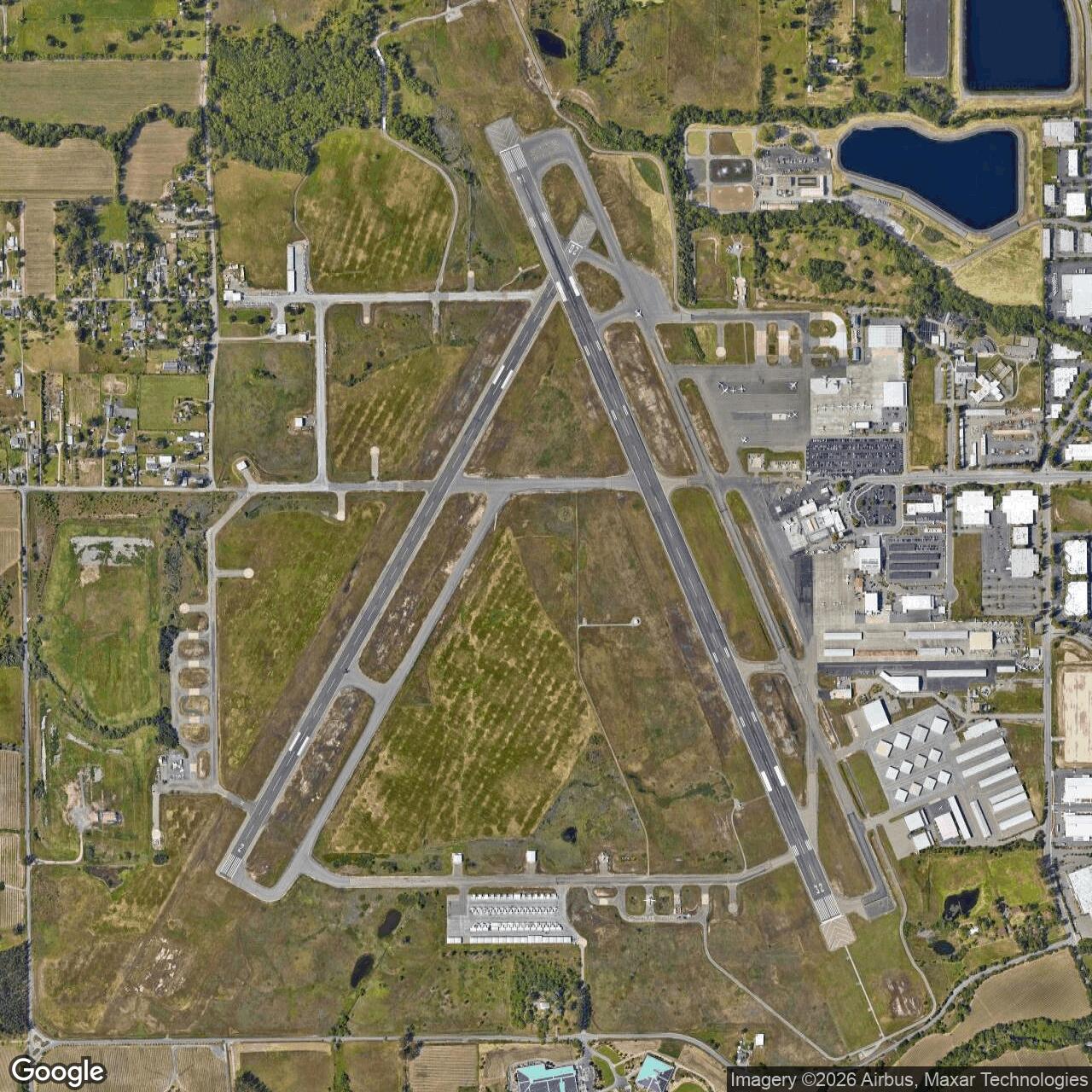
Santa Rosa Army Airfield, California
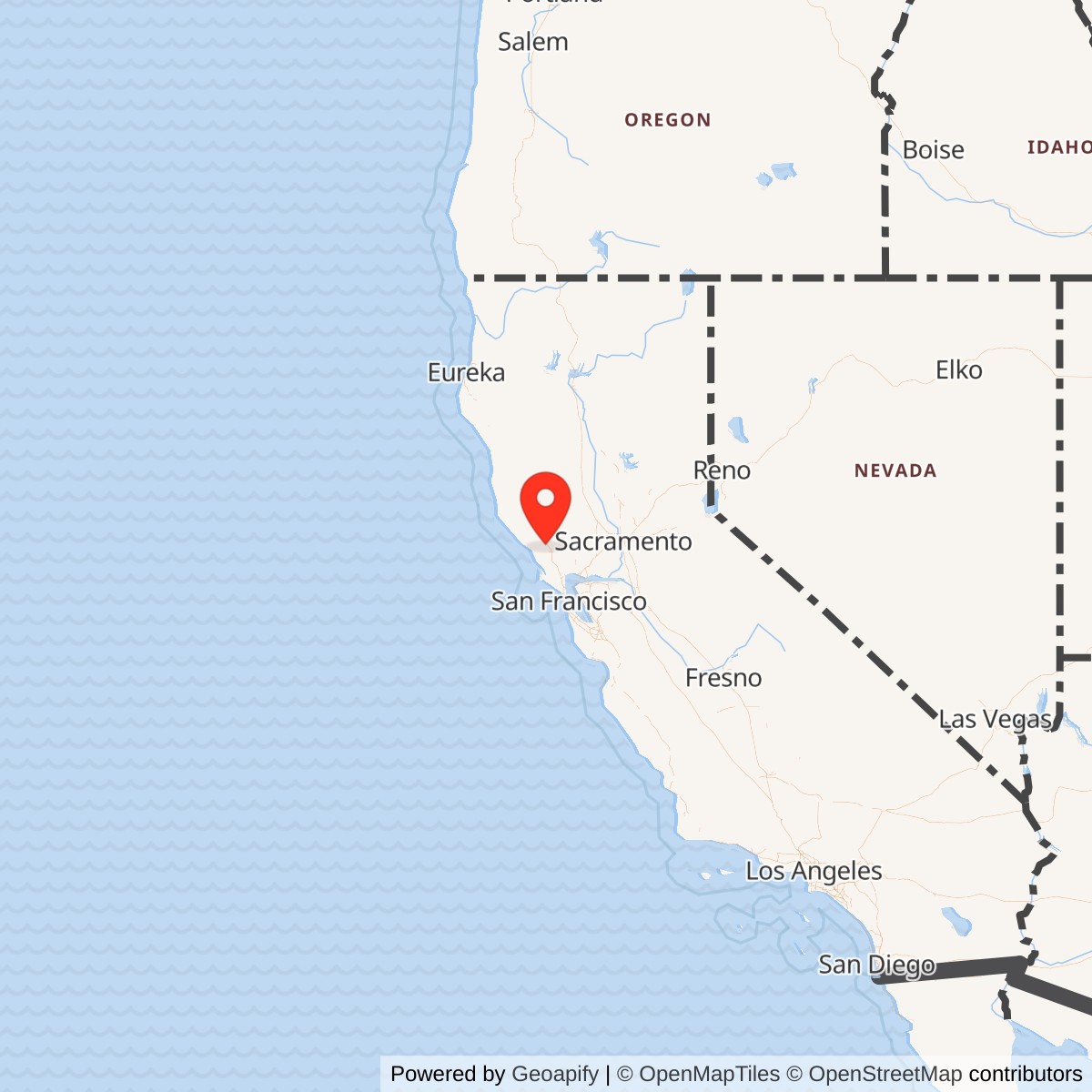
Longitude: -122.8128889
Approximate Base Size: 1165 Acres
Airport ICAO ID: KSTS
Official Base Website: Sonoma County public airport
Current Role: Charles M. Schulz-Sonoma County Airport (STS/KSTS), a Sonoma County public airport with scheduled passenger service, general aviation, aviation businesses, CAL FIRE air attack use, Pacific Coast Air Museum, and surviving Army-built hangars.
Santa Rosa Army Airfield was a World War II Army Air Forces fighter-training installation on the northwestern edge of Santa Rosa, California, at the site now occupied by Charles M. Schulz - Sonoma County Airport. The modern airport's own history gives the cleanest summary of the military transformation: Sonoma County bought 339 acres of agricultural land in 1939 and began constructing a runway with Civil Aeronautics Authority grant support, but the U.S. Army took over in 1942, added 826 acres, lengthened the original runway, built a second runway, added taxiways, aprons, and support facilities, and left behind two Army-built hangars that remain in use. The Army therefore did not merely borrow a finished municipal airport. It expanded a county airfield-in-progress into a wartime fighter base with a footprint of roughly 1,165 acres.
The field's military value came from geography as much as land area. Santa Rosa was close enough to the San Francisco Bay Area and Hamilton Field to belong naturally to the Fourth Air Force's northern California system, but far enough from the Bay's dense urban and industrial districts to offer room, flying space, and dispersal. The site sat in the North Bay, near U.S. 101, in a region with favorable weather, agricultural land that could be converted quickly, and access to existing transportation and labor. That combination made it useful for one of the Army Air Forces' most urgent wartime needs: moving fighter groups and replacement pilots through training before overseas deployment.
The installation should be understood as a Fourth Air Force fighter group and replacement-training field. Between February 1943 and January 1946, the U.S. Fourth Air Corps / Fourth Air Force operated the airport as Santa Rosa Army Airfield. The official airport history says the field was used primarily to train fighter groups and squadrons and, at peak strength, supported about 300 to 500 aircraft and 10,000 personnel. Those numbers put Santa Rosa far beyond the scale of a small local airstrip. It was a large temporary military aviation community whose daily work included flying training, aircraft maintenance, base operations, mess and housing support, communications, crash response, ordnance and fuel handling, medical care, ground transportation, administration, and coordination with nearby fields.
Santa Rosa's wartime history also matters because of the fighter organizations that passed through it. The 354th Fighter Group, 357th Fighter Group, 363d Fighter Group, 367th Fighter Group, and 478th Fighter Group all connect the field to the Army Air Forces' P-39 training and replacement pipeline. Several of those groups later fought in Europe as major combat organizations. Santa Rosa was not where those battles occurred, but it was one of the places where the personnel, habits, airfield routines, and unit cohesion required for later combat were built.
Mission Evolution
The airfield began as a civilian county project before becoming an Army installation. In 1939 Sonoma County purchased 339 acres and began runway construction under the federal civilian airport program. That prewar investment reflected a local and national belief that civil airports had both economic and defense value. After the United States entered World War II, the same logic accelerated dramatically. The Army needed airfields immediately, and local airport projects could be taken over, enlarged, and turned into military bases faster than wholly new sites in some cases.
The Army takeover in 1942 changed the scale and purpose of the field. Adding 826 acres gave the installation room for a second runway, improved taxiways, aprons, hangars, shops, barracks areas, administrative buildings, utilities, and training-support facilities. The field's mission no longer centered on local aviation. It became a station in the Fourth Air Force's wartime network, supporting fighter training and related West Coast air-defense functions. The Army's expansion also created a built environment that shaped the airport long after the military left.
By February 1943, Santa Rosa Army Airfield was operating as a Fourth Air Force base. Its mission focused on training fighter groups and squadrons, initially with Bell P-39 Airacobras and related tactical fighter operations. The P-39 was a demanding aircraft and not the high-altitude escort fighter the Army Air Forces ultimately needed most, but it was widely used in the training and transition pipeline. Santa Rosa's work was therefore practical: base fighter units, keep aircraft flying, train pilots and ground crews, and move organizations to the next station when the training cycle required.
The mission soon broadened from group training into replacement training. The sequence of fighter groups moving through Santa Rosa in 1943 shows a field used intensively but flexibly. Groups arrived from Hamilton, Tonopah, or other stations, trained at Santa Rosa for weeks or months, then moved onward to other California or Pacific Northwest bases or directly toward overseas deployment. By late 1943 and early 1944, the 478th Fighter Group and its squadrons connected Santa Rosa to the replacement-training system, where individual pilots and personnel were processed for assignment rather than only entire combat groups being prepared as intact formations.
The military mission ended after the war. The airport history states that the Fourth Air Force operated the field through January 1946 and that Sonoma County resumed operation of the airport in July 1946. That sequence is important for status: Santa Rosa Army Airfield closed as an Army Air Forces installation, but the aviation use of the land continued. The postwar airport became a Sonoma County public airport, later renamed for Charles M. Schulz, and remains an active public-use airport.
World War II Operations
What happened at Santa Rosa during World War II was the repetitive, dangerous, and essential work of fighter training. The field supported hundreds of aircraft and thousands of personnel at peak operation. That required far more than pilots and runways. Mechanics kept P-39s and other aircraft airworthy. Armorers, fuel handlers, radio technicians, weather personnel, medical staff, clerks, cooks, truck drivers, military police, firefighters, instructors, and base operations personnel all formed part of the operating system. A training field could only produce combat-ready pilots if the rest of the post worked.
The 354th Fighter Group was one of the first major fighter organizations associated with Santa Rosa. Air Force Combat Units of World War II, as reproduced in unit-history summaries, places the 354th at Santa Rosa Army Airfield around March 1943 after earlier training at Hamilton Field and Tonopah. The group trained with P-39s and later moved to Portland Army Air Base before deploying to England. In combat it became famous as the "Pioneer Mustang Group,"" one of the formations central to the early long-range P-51 escort mission. Santa Rosa's role came before that fame: it was one of the stateside places where the group absorbed training, personnel, aircraft routines, and fighter-discipline before moving into the overseas air war.
The 357th Fighter Group followed through Santa Rosa in June 1943. The Army Air Corps Library and Museum's unit history places the 357th at Santa Rosa Army Airfield from June 3 to August 18, 1943, after Hamilton Field and Tonopah and before Oroville, Casper, and England. At Santa Rosa the group continued preparation in P-39s before becoming one of the Eighth Air Force's most successful P-51 fighter groups in Europe. A local training base like Santa Rosa was therefore tied directly to later strategic bombing escort history. The field did not fire the guns over Germany, but it helped prepare the pilots and organizations that later did.
The 363d Fighter Group, later redesignated as a reconnaissance group, also trained at Santa Rosa. Unit-history records place the 363d at Santa Rosa in August 1943 before moving to Sacramento and then England. The group began as a P-39 fighter organization, then converted to P-51s overseas and later to tactical reconnaissance aircraft. Its later work in Europe included fighter, fighter-bomber, reconnaissance, artillery-adjustment, and photo-assessment missions. Santa Rosa was part of the early formation period before the group's combat identity changed overseas.
The 367th Fighter Group added another layer to the field's combat-unit pipeline. Constituted in May 1943 and activated in July, it trained with P-39s and moved to Santa Rosa on October 11, 1943. It later moved to Oakland Municipal Airport and then overseas, where it flew P-38s and P-47s in Ninth Air Force operations. The 367th's later combat record included attacks on railroads, bridges, hangars, airfields, troops, and transportation targets in western France and across the European continent. Again, Santa Rosa's role was preparatory but real: the group's first training months in California helped create the unit that later operated from England, France, Belgium, Holland, and Germany.
The 478th Fighter Group represents the replacement-training phase. Constituted in October 1943, activated in December, and assigned to Fourth Air Force, the 478th became a P-39 replacement-training group after delays in receiving personnel and equipment. Unit-history summaries place the group and component squadrons at Santa Rosa in December 1943 before their distribution to other western fields. Replacement training was less glamorous than combat-group deployment, but it was fundamental to Army Air Forces manpower. Combat units overseas consumed pilots and aircraft, and the United States needed a constant flow of trained replacements who could be sent forward without restarting the entire training process overseas.
Santa Rosa also had a home-defense dimension. The field belonged to the Fourth Air Force system that guarded and trained along the West Coast. By 1945 the threat of direct enemy attack was much lower than in early 1942, but it had not disappeared entirely. A February 1945 Army Air Forces daily chronology records that, in the American Theater, a P-38 from Santa Rosa Army Airfield shot down a Japanese balloon over Calistoga. That episode links the base to the Japanese fire-balloon campaign, one of the unusual ways the war reached the continental United States. It was a small tactical event, but it illustrates why fighter fields in California retained alert and defense relevance even while they trained for overseas war.
The danger at Santa Rosa came mainly from flying and training. P-39 and fighter-transition training involved inexperienced pilots, high-performance aircraft, formation work, gunnery practice, navigation, weather, mechanical failures, and crowded training airspace. The official airport history's peak figure of 300 to 500 aircraft helps explain the risk. A base with that many aircraft was not a quiet backwater. Takeoffs, landings, taxi movement, maintenance, emergency landings, crash response, and coordination with surrounding communities were constant operational concerns. Sonoma County Library's photograph of a 1945 Army Air Corps aircraft with disconnected landing gear at Santa Rosa Army Airfield is a small but vivid reminder that training accidents and mechanical mishaps were part of the local war.
Units, Organizations, and Systems
Santa Rosa Army Airfield was a Fourth Air Force installation. Fourth Air Force was responsible for West Coast air defense and for a large training system that fed the Army Air Forces' global war effort. Within that system, Santa Rosa functioned principally as a fighter field. Its activity belonged to a network that included Hamilton Field, Oakland Municipal Airport, Salinas, Chico, Oroville, Sacramento, Portland, Tonopah, Hayward, and other western training and staging points.
The 354th Fighter Group used Santa Rosa during its early U.S. training period. Its squadrons included the 353d, 355th, and 356th Fighter Squadrons. The group later moved to England, flew P-51s, and became one of the most important long-range escort fighter groups of the European air war. Santa Rosa's part of that story was early and stateside, but the group's later record gives the field's training mission a direct line to major combat outcomes.
The 357th Fighter Group passed through Santa Rosa from June to August 1943. Its squadrons included the 362d, 363d, and 364th Fighter Squadrons. The group later fought with the Eighth Air Force from RAF Leiston, flew P-51 Mustangs, and earned distinguished-unit recognition. The Santa Rosa phase belonged to the P-39 training period, when the group was still building its foundation before conversion into a long-range escort fighter organization.
The 363d Fighter Group, with its 380th, 381st, and 382d Fighter Squadrons, also trained in California before overseas movement. After service as a fighter group, it became a tactical reconnaissance organization, using aircraft such as F-5 and F-6 variants overseas. That trajectory shows how a formation trained at Santa Rosa could be repurposed as battlefield requirements changed.
The 367th Fighter Group, with the 392d, 393d, and 394th Fighter Squadrons, used Santa Rosa in late 1943. It trained with P-39s, later operated P-38s and P-47s overseas, and became a Ninth Air Force fighter-bomber and escort organization. Its presence at Santa Rosa connects the field to the tactical air war that supported the Normandy campaign, the breakout from France, the drive across western Europe, and the defeat of Germany.
The 478th Fighter Group and its associated squadrons connected Santa Rosa to replacement training. Sources identify the 478th as a Fourth Air Force group that began P-39 replacement-training operations in 1944 before disbanding at the end of March 1944. Its component squadrons moved through Santa Rosa, Salinas, Paine Field, Redmond, and other western fields. This short-lived group is important because it shows Santa Rosa was not only a staging stop for famous combat groups; it also helped process the individual pilot-replacement system that sustained the broader air war.
The post also relied on the Army Air Forces base-unit system. By the later war, many airfields were operated by Army Air Forces Base Units that handled station administration, training support, and local base operations while numbered combat groups moved in and out.
Facilities and Physical Layout
Santa Rosa Army Airfield's physical layout grew out of the county's prewar runway project but became an Army-built training base. The county's 1939 purchase supplied the initial ground. The Army's 1942 takeover supplied scale. Adding 826 acres allowed the Army to extend the original runway, build a second runway, add taxiways and apron areas, and create a field capable of sustained military training. The result was a northwestern Santa Rosa aviation landscape with enough runway, ramp, maintenance, and support space to handle hundreds of aircraft.
The runway system was the installation's core. A fighter-training field needed safe approach and departure paths, pavement suitable for repeated operations, parking aprons for large numbers of aircraft, taxiways to reduce runway congestion, and maintenance areas close enough to the flight line to turn aircraft around quickly. Santa Rosa's second runway and expanded apron system made it far more capable than the original county field.
Hangars and shops formed the maintenance heart of the base. The official airport history notes that two Army-built hangars remain in use today. That survival is historically important because temporary wartime airfields often lost most of their original buildings. At Santa Rosa, the continued use of Army-era hangars gives the modern airport a direct architectural link to the World War II base. The Pacific Coast Air Museum's setting at the airport and the surviving World War II-era Butler Hangar further reinforce that physical continuity.
The built cantonment would have included barracks, mess halls, administrative buildings, classrooms, shops, warehouses, medical facilities, communications spaces, utility systems, motor-pool areas, fire/crash-response facilities, and recreation support. The official peak figure of up to 10,000 personnel makes this obvious even where every wartime building is not individually documented in public sources. A base population that large required a temporary military town around the flight line.
Santa Rosa's layout also connected the base to the surrounding community. Personnel needed transportation to and from Santa Rosa. Local workers, construction contractors, suppliers, and businesses were part of the wartime system. The base transformed agricultural land into federal military infrastructure, then later returned the same landscape to county aviation control. That reuse pattern is visible today in the active airport, aviation businesses, museum uses, and surviving hangars.
Role in the Wider Military Network
Santa Rosa Army Airfield only makes full sense as part of the Fourth Air Force's western training and air-defense network. The West Coast in 1942 had two overlapping wartime problems. It needed air defense after Pearl Harbor and the early Pacific crisis, and it needed massive training capacity for a rapidly expanding Army Air Forces. Fighter fields in California, Oregon, Washington, Nevada, and the interior West became both defensive stations and production points for trained air units.
Santa Rosa's location placed it in the northern California portion of that network. Hamilton Field, north of San Francisco Bay, was one of the region's major prewar and wartime Army airfields. Oakland Municipal Airport supported Army Air Forces and Air Transport Command activity. Salinas, Chico, Sacramento, Hayward, Oroville, and other sites handled group training, replacement training, support, and movement functions. Santa Rosa absorbed a portion of this system's fighter load, especially in 1943 when several groups moved through California in rapid succession.
The field's training mission also connected it to the European air war. The 354th, 357th, 363d, and 367th Fighter Groups all later contributed to combat operations in Europe. Their later aircraft, missions, and commands differed, but their paths all passed through the same stateside problem: turn new groups into functional units quickly. Santa Rosa was one of the stations where that happened. The base's significance is therefore not measured only in local construction or acreage. It is measured in the movement of units from California training fields into the global air offensive.
The replacement-training mission tied Santa Rosa to an even larger personnel system. Fighter groups overseas needed replacement pilots. The Army Air Forces could not rely solely on intact groups trained once and sent to war. It needed a steady, reliable stream of pilots and support personnel who could join units already in combat. Santa Rosa's association with the 478th Fighter Group and replacement training shows the field's role in that manpower pipeline.
The February 1945 balloon-interception episode shows the continuing defense side of the network. Japanese balloon bombs were not militarily decisive, but the threat forced monitoring and response across the western United States. A P-38 from Santa Rosa Army Airfield shooting down a balloon over Calistoga demonstrates that the field still contributed to homeland air defense even after its main mission had become training and replacement support.
Postwar Reuse and Current Status
Santa Rosa Army Airfield closed as a military installation after World War II. The official airport history states that the county resumed operation of the airport in July 1946 after the Army's operating period ended in January 1946. In March 1947, Southwest Airways operated the first scheduled commercial flight from Sonoma County Airport with a DC-3. The postwar airport spent decades as a general-aviation and regional air-carrier facility, and in March 2000 Sonoma County renamed it Charles M. Schulz "" Sonoma County Airport in honor of the Peanuts cartoonist who lived in Sonoma County.
The current airport remains active and publicly owned by Sonoma County. AirNav's FAA-derived listing identifies KSTS / STS as Charles M. Schulz - Sonoma County Airport in Santa Rosa, about six miles northwest of the city, open to the public, with an operating control tower. The airport has two active asphalt runways: 02/20 and 14/32. It supports scheduled passenger service, general aviation, business aviation, flight training, air taxi operations, aircraft maintenance, fuel services, and public aviation infrastructure for the North Bay.
The airport's current use also preserves aviation heritage. The Pacific Coast Air Museum occupies a three-acre site at the airport and interprets aviation history through aircraft, exhibits, and events. The World War II-era hangar and surviving Army-built structures make the former military field a visible place of memory rather than a purely abstract former base. The airport landscape is still fundamentally aviation-oriented, even though the Army Air Forces mission ended in 1946.
The field has a public-safety role as well. Airport master-plan materials identify the CAL FIRE / California Department of Forestry and Fire Protection air attack base at the airport, established in 1964, with an immediate response area covering about 4,000 square miles. That mission is not an Army successor mission, but it extends the site's long pattern of using aviation infrastructure for public defense and emergency response. Military fighter training gave way to civil aviation, aviation heritage, and firefighting air operations.
The environmental and munitions history should be tracked cautiously. USACE Formerly Used Defense Sites inventory listings identify Santa Rosa Army Airfield in Sonoma County with project numbers associated with HTRW and MMRP/CWM categories. That does not mean the entire modern airport is unsafe or that every issue derives from Army use, but it does show that the former military installation remains part of the federal environmental-restoration record. As with many wartime airfields, fuel systems, maintenance areas, training residues, and possible munitions-related concerns can leave administrative and cleanup responsibilities long after the military leaves.
Chronology
- 1939 Sonoma County purchased 339 acres of agricultural land and began constructing an airport runway with Civil Aeronautics Authority grant support.
- 1942 The U.S. Army took over the airport project, added 826 acres, extended the original runway, built a second runway, and added taxiways, aprons, and other facilities.
- 1942 Santa Rosa Army Airfield began emerging as a large World War II Army Air Forces installation northwest of Santa Rosa.
- 1943-02 The Fourth Air Force / U.S. Fourth Air Corps operating period at Santa Rosa Army Airfield began according to the official airport history.
- 1943-03 The 354th Fighter Group was stationed at Santa Rosa Army Airfield during its P-39 training period before moving to Portland Army Air Base and later deploying overseas.
- 1943-06-03 The 357th Fighter Group moved to Santa Rosa Army Airfield from Tonopah during its stateside fighter-training sequence.
- 1943-08 The 363d Fighter Group was stationed at Santa Rosa Army Airfield during its P-39 training period before moving to Sacramento and then overseas.
- 1943-08-18 The 357th Fighter Group left Santa Rosa Army Airfield for Oroville Army Airfield.
- 1943-10-11 The 367th Fighter Group moved to Santa Rosa Army Airfield during its P-39 training period.
- 1943-12 The 367th Fighter Group moved from Santa Rosa to Oakland Municipal Airport before overseas deployment.
- 1943-12 The 478th Fighter Group and component squadrons began moving through Santa Rosa Army Airfield as part of Fourth Air Force replacement-training activity.
- 1944-03 The 478th Fighter Group began replacement-training operations with P-39 aircraft after delays in personnel and equipment.
- 1944-03-31 The 478th Fighter Group was disbanded, ending its short-lived replacement-training role.
- 1945-02 A P-38 from Santa Rosa Army Airfield shot down a Japanese balloon over Calistoga during the wartime balloon-threat period.
- 1945 Sonoma County Library later documented a 1945 Army Air Corps aircraft incident photograph at Santa Rosa Army Airfield.
- 1946-01 The Fourth Air Force operating period at Santa Rosa Army Airfield ended.
- 1946-07 Sonoma County resumed operation of the airport as a civil facility.
- 1947-03 Southwest Airways operated the first scheduled commercial flight from Sonoma County Airport using a DC-3.
- 1964 CAL FIRE / California Department of Forestry and Fire Protection established an air attack base at the airport.
- 1989 The Pacific Coast Air Museum was founded, later becoming a major aviation-heritage presence at the airport.
- 2000-03 The Sonoma County Board of Supervisors renamed the airport Charles M. Schulz - Sonoma County Airport.
- Present The former Santa Rosa Army Airfield is active as Charles M. Schulz - Sonoma County Airport, a public Sonoma County airport with scheduled passenger service, general aviation, public-safety aviation, aviation businesses, museum use, and surviving Army-era hangars.