
Camp Pinedale / Western Signal Aviation Unit Training Center, Pinedale California
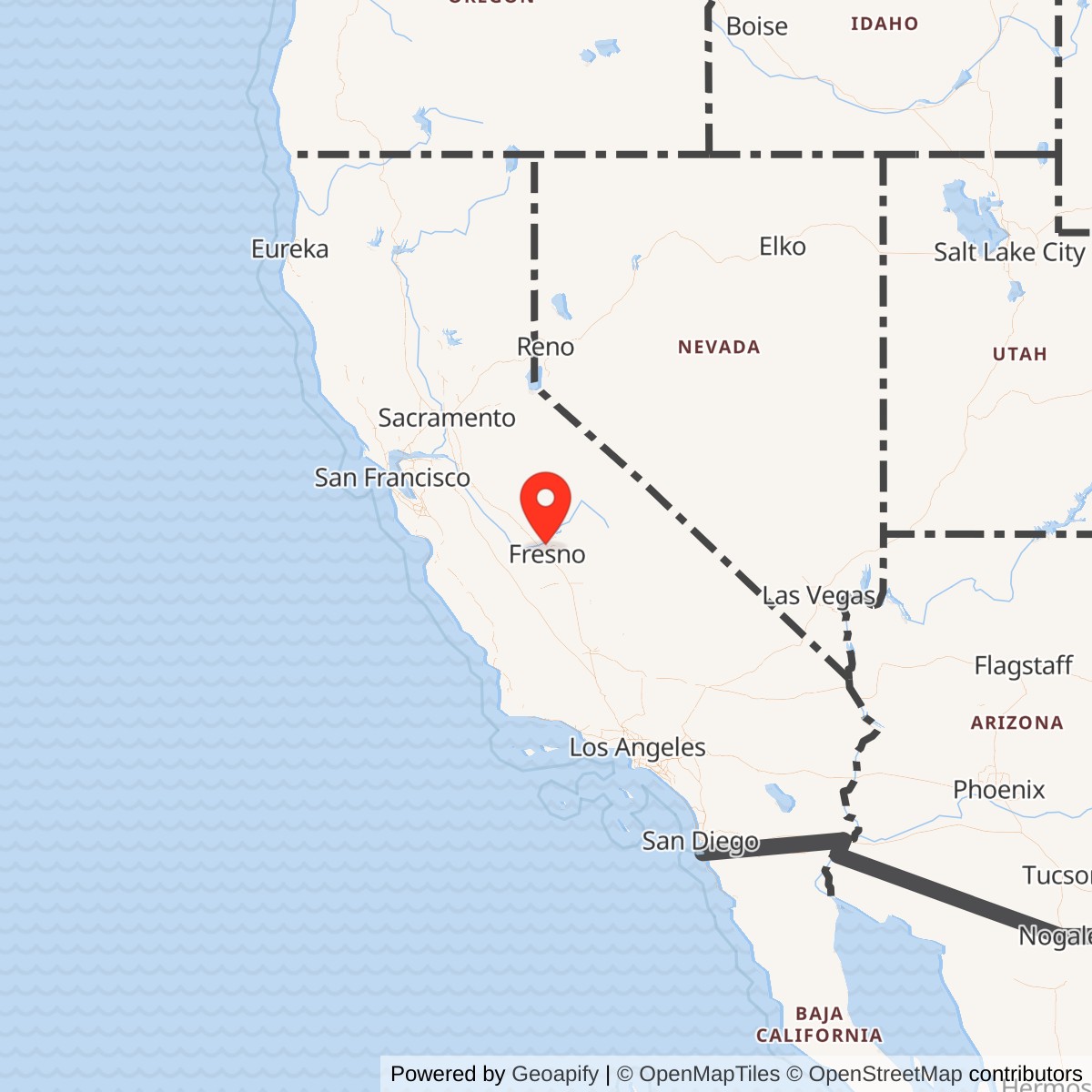
Longitude: -119.8000000
Official Base Website: Former Camp Pinedale site
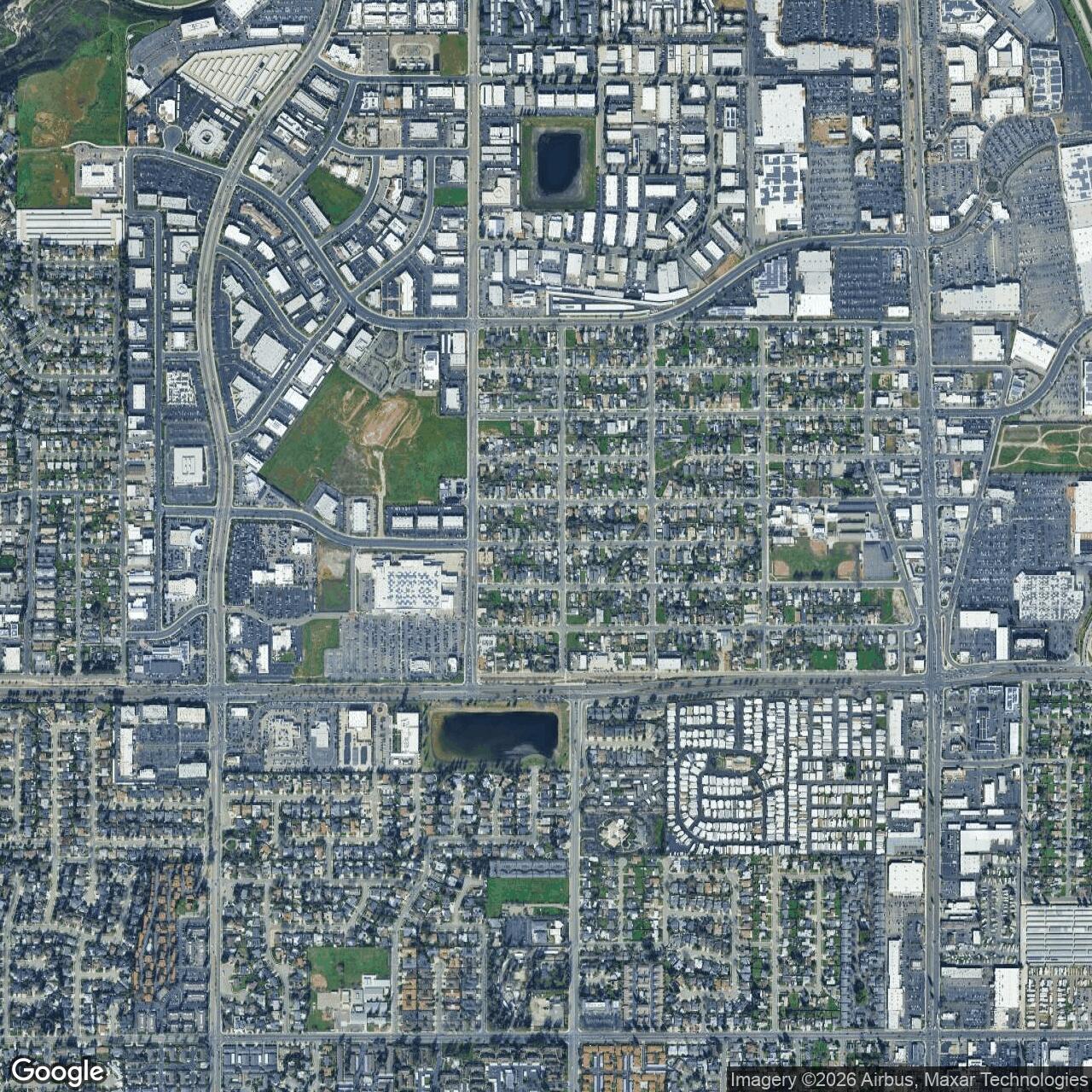
Current Role: Fragmented urban commercial, industrial, transportation, public-utility, and community uses in Fresno's Pinedale and Palm Bluffs area; no active military use.
The same ground in north Fresno carried two sharply different wartime identities within a matter of days. From May through July 1942, the Pinedale Assembly Center confined nearly 4,800 people of Japanese ancestry under Executive Order 9066. After the last prisoners were transferred inland, the Army established Camp Pinedale on August 1, 1942, and converted the site into an Army Air Forces communications-training installation. Two years later, Nisei soldiers returned to Pinedale for advanced radio-intelligence instruction before deploying against Japanese forces in the Pacific. That sequence makes the installation historically important not only for military communications, but also for the contradictions of American wartime policy.
Camp Pinedale was a non-flying Army Air Forces post. It had no runway and did not train pilots or aircrews in the conventional sense. Its purpose was to organize, train, equip, and prepare signal aviation organizations and technical specialists whose radios, telephone systems, radar sets, direction-finding equipment, wire networks, message centers, and command posts allowed air forces to operate. In March 1943 the installation was redesignated the Western Signal Aviation Unit Training Center. By the end of the war, the official Army Air Forces history reported that it had absorbed practically all signal unit-training activity in the continental United States and had trained thirty different types of signal and communications organizations.
The installation should not be confused with the Fresno Army Air Forces Ground Training Center at the Fresno County Fairgrounds, Hammer Field, Visalia Army Air Field, or Sequoia Field. Those installations interacted with the same regional training system, but they occupied different properties and performed different missions. Camp Pinedale was the principal signal aviation unit-training center. Camp Visalia and later Camp Sequoia functioned as subordinate or auxiliary training locations, while Wawona and Badger Pass in Yosemite provided mountain field-training environments. The Camp Pinedale identity belongs to the 569.40-acre north Fresno leasehold and its dispersed training network, not to every site that hosted one of its detachments.
The 840th Army Air Forces Specialized Depot also requires a boundary distinction. It began using approximately 190 acres of the Pinedale property after July 5, 1944, for storage, salvage, and reconditioning. Local sources describe it as adjacent to Camp Pinedale on the northeast, while City of Fresno documentation describes joint use of the larger leasehold. Its separately defined acreage, logistics mission, and later surplus date support treating it as a distinct depot installation within the same overall military property.
Predecessor Site and Wartime Transition
Pinedale began as an industrial landscape rather than a military reservation. The Sugar Pine Lumber Company developed a large sawmill complex north of Fresno in the early 1920s, connected to the Southern Pacific system and to timber operations in the Sierra Nevada. The mill created a company community with worker housing, stores, a school, utility systems, rail access, warehouses, and a prominent water tower. The lumber enterprise failed during the Depression, leaving a substantial but underused industrial plant whose roads, utilities, open land, and storage buildings made the property attractive for later emergency uses.
Valley Compress Company acquired much of the former mill property before the United States entered World War II. By mid-1941 it controlled nearly all of the old industrial site and used portions for cotton storage and related activity. The property retained electrical power, water, sewers, rail connections, warehouse space, and enough open land for rapid construction. Those features allowed federal authorities to transform it quickly in 1942, first into a temporary detention center and then into a military training post. Pinedale's location about eight miles north of downtown Fresno offered access to a major agricultural city without placing a large temporary installation in its urban core.
The first federal wartime use was the Pinedale Assembly Center. An approximately 80-acre detention compound was constructed with ten barracks blocks, each containing twenty-six buildings, plus a separate military-police and administration block. The barracks were newly built even though older mill warehouses and utility systems already existed elsewhere on the property. From May 7 through July 23, 1942, the center confined 4,823 Japanese Americans in total, with a peak population of 4,792. Most had been forcibly removed from Washington, Oregon, and the Sacramento area and were later transferred to Tule Lake, Poston, and other longer-term incarceration sites.
This predecessor history is part of Camp Pinedale's installation identity because the Army Air Forces inherited a landscape created through forced removal. Barracks, roads, utility systems, fencing, administration buildings, and support facilities built for confinement were immediately available for military reuse. The transition was not gradual. The last incarcerated Japanese Americans departed on July 23, and Camp Pinedale was established on August 1. The physical plant remained, but the population and purpose changed from civilian detention to military communications training.
Mission Evolution
Camp Pinedale began receiving soldiers selected for Army Air Forces signal-technician training in December 1942. Its early mission was narrower than its later role. The Fourth Air Force needed a western installation where communications personnel could receive military instruction, specialist refresher work, team training, and preparation for unit assignment. The site's industrial buildings and temporary barracks allowed the command to house large numbers of soldiers while classrooms, shops, outdoor training areas, and nearby undeveloped land supported technical and field instruction.
In March 1943 the establishment became the Western Signal Aviation Unit Training Center. The redesignation reflected a shift from training individual technicians to producing complete deployable organizations. The center organized new companies, battalions, squadrons, detachments, and teams; assigned graduates from Signal Corps, factory, and technical schools; supplied missing nontechnical personnel; issued equipment; conducted unit exercises; and prepared organizations for movement to ports and combat theaters. It became a conversion point where soldiers with separate specialties were assembled into working communications systems.
The official Army Air Forces history described two stabilized divisions within the center. One operated specialist schools. The other organized, trained, and equipped signal aviation units. The divisions depended on each other because many soldiers graduating from specialist instruction were assigned directly into organizations forming at Pinedale. Unit training then moved through team and section work, field practice around Fresno, and final exercises in isolated areas of the Sierra Nevada. This progression turned classroom knowledge into the ability to establish and operate communications under field conditions.
The training mission broadened as the war demanded more complex air-command systems. Signal aviation organizations supported wings, groups, air bases, depots, fighter-control centers, aircraft-warning networks, radio intelligence, construction projects, and theater communications. Thirty types of signal and communications units trained at Fresno during the war. Their equipment and organization differed, but each had to learn how to establish service quickly, maintain it under pressure, move with an air force, protect classified information, and coordinate technical personnel with drivers, clerks, supply specialists, cooks, and administrators.
After IV Fighter Command was deactivated in April 1944, Camp Pinedale assumed responsibility for fighter-control unit training. These organizations used radar, plotting rooms, radio networks, controllers, and information centers to detect aircraft, determine identity, direct interceptors, and defend air bases or regions. Training relied heavily on field operational exercises rather than classroom work alone. Squadrons participated in mock air raids and simulated defense of designated installations, while later radar teams received supplementary instruction on new electronic equipment.
The addition of the 840th Army Air Forces Specialized Depot in July 1944 gave the property a second major mission. The depot used approximately 189.88 acres to store, salvage, recondition, and redistribute clothing, parachutes, equipment, office supplies, and other materiel. Its customers included United States forces and, according to local historical accounts, allied British and Canadian organizations. The depot supported the training center by keeping equipment available and gave the Army Air Forces a western location for recovering and returning scarce materiel to use.
The late-war mission continued after victory in Europe and Japan because communications organizations still had to be demobilized, reorganized, or prepared for occupation and postwar duties. Brigadier General Walter R. Peck assumed command of the 462nd AAF Base Unit at Camp Pinedale in October 1945 after combat command service in Europe. Brigadier General John A. McDavid, a Signal Corps officer with Pacific communications experience, became director of operations at what his official biography called the U.S. Air Force Communications Unit Training Center. Their assignments show that Pinedale remained an important communications organization after combat ended, even as its workload moved toward closure and redistribution.
World War II Mission and Activity
Camp Pinedale's daily work was the production of communications units ready to function overseas. Soldiers arrived with widely different backgrounds. Some were trained radio operators, radar mechanics, telephone specialists, draftsmen, or repairmen. Others were clerks, cooks, drivers, supply personnel, message-center operators, chemical-warfare specialists, camouflage specialists, or ordnance technicians. The center had to turn this mixture into cohesive organizations able to load equipment, travel, establish a field site, connect command posts and airfields, operate around the clock, repair failures, and move again when the tactical situation changed.
Individual instruction was only the beginning. Technical graduates had to learn their duties in teams, and teams had to function as parts of larger companies or battalions. Radio operators practiced nets and procedures. Wire crews planned routes, set poles, laid field wire, spliced cable, and repaired breaks. Radar and aircraft-warning personnel learned plotting, filtering, identification, reporting, and controller coordination. Motor sections kept vehicles operating. Supply sections tracked sensitive and specialized equipment. Headquarters personnel converted information into orders and maintained contact with supported air commands.
Field training gave the center its operational character. Units practiced around Fresno and then moved into isolated Sierra Nevada locations where terrain, distance, weather, limited utilities, and difficult access approximated overseas conditions. The former Civilian Conservation Corps camp at Wawona in Yosemite became a special training site for several hundred soldiers of the 426th Signal Battalion in 1943. The Army later transferred the camp to the Western Signal Aviation Unit Training Center, while signal personnel also used Badger Pass and other National Park Service facilities for summer instruction. These exercises required units to sustain themselves away from the main post and establish communications in mountainous terrain.
Radio-intelligence training created one of Camp Pinedale's most consequential wartime connections. Signal radio-intelligence companies and mobile radio squadrons intercepted enemy communications, analyzed traffic, operated direction finders, and monitored friendly transmissions. Their work required language ability, electronic skill, disciplined security, and the ability to combine scattered signals into useful intelligence. Camp Pinedale trained or completed the advanced preparation of personnel assigned to these organizations before they moved to the Pacific and other theaters.
In summer 1944, more than two hundred Nisei soldiers who had studied Japanese and voice interception at Camp Savage and MacDill Field proceeded to Camp Pinedale for advanced signal aviation training. They were among the first people of Japanese ancestry permitted to return to California while the West Coast exclusion orders still remained in force. The historical irony is unavoidable. The site that had confined Japanese American families in 1942 now prepared Japanese American soldiers to intercept enemy pilots and controllers for the U.S. war effort.
Nisei personnel trained at Pinedale joined mobile radio squadrons operating across the Pacific. Twenty-five went to the 1st Radio Squadron Mobile at Hollandia and later served during operations in the Philippines. Others joined the 6th Radio Squadron Mobile in the China-Burma-India theater, the 7th in New Guinea and Morotai, and the 8th with Twentieth Air Force on Guam. Their intercepted communications and direction-finding work helped locate transmitters, understand Japanese air activity, and support Allied operations. Camp Pinedale's contribution to combat therefore traveled through the specialists and units it prepared, not through weapons fired from the post itself.
The center's output reached multiple theaters. The 396th Signal Company, Aviation was activated at Pinedale on April 1, 1943, and its official lineage carries World War II campaign credit for China Defensive and New Guinea. The 324th Signal Company, Wing was activated at Pinedale on January 10, 1943. Other wing signal companies, construction units, aircraft-warning organizations, radio squadrons, and special communications detachments formed or trained there before overseas movement. The specific organizations changed constantly because the center's mission was throughput rather than permanent stationing.
Local historical sources estimate that approximately 25,000 soldiers received training at Camp Pinedale and that as many as 10,000 were quartered there during the installation's peak period. Those figures describe different measures and should not be combined as a single population count. The larger number represents cumulative trainees over the life of the post. The smaller number represents the scale of housing and personnel present during the busiest period. Together they show that Pinedale was a substantial temporary military community, not a small technical school.
The post also affected the surrounding Pinedale neighborhood. Soldiers used local transportation, businesses, churches, and recreational opportunities, while the installation employed civilians and drew supplies from Fresno's regional economy. The camp population included White and Black service members in a segregated wartime Army. Local records acknowledge racial tensions between some soldiers and residents, reflecting both military segregation and the existing racial divisions of the Pinedale community. These tensions should be understood as part of the social history of a large wartime camp rather than reduced to a single anecdote.
Units, Organizations, and Systems
The Western Signal Aviation Unit Training Center was the installation's defining organization. Established under Fourth Air Force, it controlled the specialist-school and unit-training system, coordinated field exercises, received personnel from technical schools, and prepared complete organizations for overseas movement. Its significance grew as other continental signal-training activities were consolidated. By the war's end it was the Army Air Forces' principal domestic center for signal unit training, giving Camp Pinedale a national role far beyond the size of the Fresno-area property.
The 462nd Army Air Forces Base Unit became the principal late-war and postwar station organization. Base units were administrative organizations designed to operate installations and consolidate activities that had previously been spread across numerous numbered units. Official Air Force biographies identify Brigadier General Walter R. Peck as commanding general of the 462nd AAF Base Unit beginning in October 1945 and John A. McDavid as director of operations at the communications training center during the same period. Publicly available records do not provide a complete squadron-by-squadron roster for every month, but Squadron F is documented at the Camp Visalia and Camp Sequoia auxiliary training sites.
The 426th Signal Battalion illustrates the center's construction and field-training mission. Several hundred of its soldiers occupied the former Wawona CCC camp in Yosemite for special training beginning in 1943. Signal construction battalions had to build communications infrastructure rather than merely operate radios. Their work included poles, open-wire circuits, field lines, cable, switchboards, and related systems needed to connect dispersed airfields and command posts. Wawona's terrain forced crews to practice in conditions that could not be reproduced on the flat Fresno leasehold.
The 396th Signal Company provides a documented example of a unit born at Pinedale and connected to overseas combat. The Army constituted it as the 396th Signal Company, Aviation on March 30, 1943, and activated it at the Western Signal Aviation Unit Training Center on April 1. Its lineage carries World War II campaign participation credit for the China Defensive and New Guinea campaigns. The company's later consolidated lineage also served in Vietnam, although that postwar service occurred under later organizations and does not represent continuing Camp Pinedale operations.
The 324th, 334th, and 337th Signal Companies were among the wing communications organizations associated with Pinedale. Official Army lineage records place activation of the 324th and 334th at Pinedale on January 10, 1943, and the 337th on February 1, 1943. Wing signal companies supported headquarters with radio, telephone, message-center, cryptographic, and field communications. Their activation dates show that the center was organizing deployable units even before the March 1943 formal Western Signal Aviation Unit Training Center designation.
The 331st Signal Company reached Camp Pinedale at the end of its World War II service and was inactivated there on October 17, 1945. Its earlier wartime campaign credits include Algeria-French Morocco, Tunisia, Naples-Foggia, and Rome-Arno. The lineage later returned to active service in Vietnam and the war in Iraq and was activated again in Alaska in 2025. That continuity is historically useful, but it must be stated precisely. The later service belongs to the unit's lineage, not to Camp Pinedale, which had closed decades earlier.
The 840th Army Air Forces Specialized Depot operated as the installation's major logistics tenant. It stored clothing, parachutes, equipment, office supplies, and salvage materiel and performed salvaging and reconditioning. Its separate 189.88-acre operating area, northeast or within the northeastern portion of the larger leasehold, included warehouse and industrial functions distinct from the training center. It remained on its parcel after the training-center acreage began entering surplus status, demonstrating that the depot's closure and disposal followed a separate administrative schedule.
Training Network and Auxiliary Sites
Camp Pinedale depended on a dispersed regional network because the main leasehold could not reproduce every operational environment. Yosemite's Wawona and Badger Pass sites provided mountain terrain. Camp Visalia and later Camp Sequoia supported fighter-control and radar work. Airfields such as Hammer Field and Porterville supplied aviation relationships, aircraft activity, or air-echelon support. The result was a training system rather than a single enclosed campus. Personnel learned at Pinedale, practiced at auxiliary sites, and interacted with operating airfields before overseas shipment.
Camp Visalia appears in surviving secondary records as a branch or subordinate mission area of the Western Signal Aviation Unit Training Center on part of the Visalia Army Air Field property. In July 1945, Squadron F of the 462nd AAF Base Unit moved from Camp Visalia to Camp Sequoia, the former Sequoia Field primary flying school north of Visalia.
Camp Sequoia provided on-the-job training for fighter-control personnel using the AN/CPS-1 radar. Its Electronics School supplied the theoretical background needed for radar operation and maintenance, while the field environment allowed crews to operate equipment as a working control organization. This late-war expansion demonstrates why Pinedale's mission required auxiliary properties. The main post could organize and equip units, but radar crews needed operating space, aircraft activity, and field conditions in which they could practice detection, plotting, control, and maintenance.
Wawona served a different purpose. There, the 426th Signal Battalion and other personnel worked in a mountainous landscape with limited access and existing CCC facilities. The training center maintained a small protective detachment after transfer of the property. Exercises at Wawona and Badger Pass taught field construction, movement, maintenance, and self-sufficiency in terrain far removed from Pinedale's flat industrial grounds. These sites were physically distinct military-use properties and should not be treated as buildings within the Camp Pinedale cantonment.
Role in the Wider Military Network
Camp Pinedale connected the Army Signal Corps, Army Air Forces, technical schools, factories, air commands, depots, ports of embarkation, and overseas theaters. The Signal Corps trained many specialists and developed communications doctrine and equipment. The Army Air Forces determined the operational unit structure and theater requirements. Pinedale brought the people and equipment together, conducted unit training, and prepared organizations for movement. It was therefore a bridge between individual technical education and combat employment.
The center also supported the global air-command system that made World War II air operations possible. Bombardment and fighter wings required radio nets, telephone circuits, message centers, cryptographic service, weather communications, radar warning, direction finding, navigational support, and maintenance. Airfields spread across Britain, North Africa, Italy, China, India, New Guinea, the Philippines, and the Pacific islands could not operate as isolated strips of pavement. Signal organizations trained at Pinedale created the information network that linked aircraft, headquarters, maintenance organizations, depots, and combat commands.
The western location supported the Pacific war especially well. Fresno had rail connections to West Coast ports, access to operating airfields, and proximity to varied terrain. Nisei radio-intelligence soldiers could receive final training before moving to Pacific squadrons. Signal units could prepare for tropical or island communications demands through field exercises and equipment work. Depot operations could receive, recondition, and issue specialized materiel within the western logistics system. Camp Pinedale did not belong to one combat air force overseas, but it fed trained organizations into many of them.
The installation's relationship with the 840th Specialized Depot placed it inside the Army Air Forces service and supply network as well. The depot recovered and redistributed equipment at a time when global operations created constant shortages and large flows of damaged or excess materiel. Training and logistics reinforced each other. Units needed complete equipment sets before shipment, while returned or salvaged items could be repaired and placed back into the supply system. Pinedale combined these functions on one large leased property while keeping the depot's operating area administratively distinct.
Closure, Disposal, and Reuse
Camp Pinedale's training requirement declined rapidly after Japan surrendered. Units no longer needed to be formed and shipped overseas at wartime rates, and the Army Air Forces began consolidating personnel, equipment, and communications training. The post remained active into 1946 under the 462nd AAF Base Unit, but its mission shifted toward processing, redistribution, storage, and shutdown. The presence of senior communications officers during this period reflects the complexity of closing a national training center while preserving the organizations and equipment still needed by occupation forces and the emerging postwar air establishment.
Disposal occurred in stages. Approximately 379.52 acres associated with the training-center portion were declared surplus effective December 3, 1946. The remaining 189.88 acres occupied by the 840th AAF Specialized Depot were declared surplus effective March 1, 1947. Local histories summarize the camp as deactivated in February 1947, which is compatible with a final depot surplus action at the beginning of the following month. The distinction between operational deactivation, surplus declaration, and final lease surrender explains why sources give several different end dates.
The Corps of Engineers assumed custody and prepared buildings and improvements for disposal. On October 10, 1947, the United States surrendered its leasehold interest in the full 569.40 acres and the property reverted to its private owner. City and utility-district histories describe the former military property as returning to Cecil F. White and the Pinedale Compress and Warehouse Company in October 1947. The federal military installation had ended, even though buildings, roads, sewers, warehouses, and other improvements continued in civilian use.
The postwar property returned to industrial and commercial purposes. The California Cotton Cooperative Association later acquired the compress and warehouse property and used large portions for cotton storage. Vendolator occupied part of the former site for military-hardware and vending-machine manufacture before purchasing its property. The Army-built sewage treatment plant and ponds transferred into the local utility system and remained in use until the mid-1970s. The treatment plant was removed when the Palm Bluffs Business Park developed in 1998.
The former leasehold was gradually fragmented by sales, industrial redevelopment, roads, business parks, automobile dealerships, offices, and community growth. Pinedale became surrounded and annexed by Fresno in 1979. The military cantonment did not survive as a recognizable closed base with a preserved gate, headquarters, or parade ground. A 1923 mill water tower survives as a prominent industrial remnant, but it predates the Army and should not be mislabeled as a Camp Pinedale structure. Historical photographs and plans preserve the appearance of the military entrance more clearly than the modern landscape does.
Current Status
Camp Pinedale is closed and no longer under Department of Defense control. Its former 569.40-acre leasehold is divided among urban commercial, industrial, transportation, and community uses in north Fresno. No single current owner or land use represents the entire military property. The surviving Pinedale neighborhood, Palm Bluffs development, former cotton and manufacturing parcels, roads, public utilities, and other redevelopment occupy the larger historical landscape.
The Department of Defense environmental restoration record lists Camp Pinedale as a Formerly Used Defense Sites property and reports final response complete before fiscal year 2020. That status indicates that the identified defense-related environmental response requirements were completed under the program's standards. It does not mean that every historical feature survives, that every private parcel has been examined for every possible condition, or that the wider area is protected from redevelopment. No active Camp Pinedale munitions-response, Superfund, or continuing military cleanup project was identified in the reviewed sources.
Public commemoration concentrates primarily on the 1942 incarceration history. The Pinedale Remembrance Plaza, dedicated on February 16, 2009, stands near the former assembly-center site and uses a fountain and interpretive storyboards to explain Japanese American removal and confinement. This emphasis is historically appropriate because the detention center's civil-rights significance is profound. The later Army Air Forces mission is documented through local history projects, archival photographs, veterans' records, unit lineages, and the City of Fresno historic-resource survey rather than through a preserved military campus.
Chronology
- 1921-1923 The Sugar Pine Lumber Company developed its Pinedale mill, rail, utility, warehouse, and worker-community complex north of Fresno.
- Early 1930s The lumber operation failed, leaving a large industrial property with utilities, roads, rail access, storage buildings, and open land.
- 1940-1941 Valley Compress Company acquired most of the former mill property for cotton storage and related industrial use.
- 1942-03-24 Federal authorities completed acquisition or lease arrangements for the Pinedale wartime site as preparations for Japanese American removal accelerated.
- 1942-05-07 The Pinedale Assembly Center began receiving Japanese Americans forcibly removed from Washington, Oregon, and California.
- 1942-06-29 The detention center reached its documented peak population of 4,792.
- 1942-07-23 The last Japanese Americans departed Pinedale for Tule Lake, Poston, and other inland incarceration centers.
- 1942-08-01 Camp Pinedale was established on the former assembly-center and mill property.
- 1942-10-13 Fresno County authorized a library at the Camp Pinedale school and replacement-depot complex.
- 1942-12 Camp Pinedale began receiving soldiers selected for Army Air Forces signal-technician training.
- 1943-01-10 The 324th and 334th Signal Companies, Wing were activated at Pinedale.
- 1943-02-01 The 337th Signal Company, Wing was activated at Camp Pinedale.
- 1943-03 The installation was redesignated the Western Signal Aviation Unit Training Center.
- 1943-04-01 The 396th Signal Company, Aviation was activated at the Western Signal Aviation Unit Training Center.
- 1943-04 The Army received authority to use the former Wawona CCC camp in Yosemite for special training by several hundred soldiers of the 426th Signal Battalion.
- 1943-12 Arrangements transferred the Wawona camp to the Western Signal Aviation Unit Training Center, which maintained a protective detachment there.
- 1944-04 The deactivation of IV Fighter Command shifted fighter-control unit training responsibility to Camp Pinedale.
- 1944 summer More than two hundred Nisei soldiers came to Camp Pinedale for advanced radio-intelligence training before Pacific assignments.
- 1944-07-05 The 840th Army Air Forces Specialized Depot began joint use of approximately 190 acres for storage, salvage, and reconditioning.
- 1944-1945 Camp Pinedale expanded fighter-control, radar, radio-intelligence, and specialized communications training through auxiliary locations including Camp Visalia and Camp Sequoia.
- 1945-07-14 The Electronics School associated with fighter-control radar training transferred from Wawona to Camp Sequoia.
- 1945-07-23 Squadron F, 462nd AAF Base Unit moved from Camp Visalia to Camp Sequoia for AN/CPS-1 radar and fighter-control training.
- 1945-10 Brigadier General Walter R. Peck assumed command of the 462nd AAF Base Unit at Camp Pinedale, while John A. McDavid became director of operations at the communications training center.
- 1945-10-17 The combat-veteran 331st Signal Company was inactivated at Camp Pinedale.
- 1946-06 Peck departed Camp Pinedale for Second Air Force headquarters as the installation entered its final drawdown.
- 1946-12-03 Approximately 379.52 acres associated with the training-center portion were declared surplus.
- 1947-02 Camp Pinedale was deactivated and Corps of Engineers disposal work proceeded.
- 1947-03-01 The remaining 189.88 acres occupied by the 840th AAF Specialized Depot were declared surplus.
- 1947-10-10 The United States surrendered its leasehold interest in the full 569.40 acres, returning the property and improvements to private ownership.
- 1950-1951 The former military property entered expanded civilian cotton-storage and industrial use under the Pinedale Compress and Warehouse Company and CALCOT.
- 1979 Pinedale was annexed into the City of Fresno.
- Mid-1970s The former Army-built sewage treatment system ceased local utility operation.
- 1998 The former treatment plant was removed during development of the Palm Bluffs Business Park.
- 2007 The City of Fresno completed a historic-resource survey documenting Camp Pinedale, its entrance gate, the former leasehold, and surviving community resources.
- 2009-02-16 The Pinedale Remembrance Plaza was dedicated near the former assembly-center site.
- Before FY 2020 Department of Defense reporting recorded final environmental response complete for the Camp Pinedale FUDS property.
- 2026 The former installation remains an urbanized, privately and publicly divided landscape with no active military mission.
Information sources (17)
- WEBThe Army Air Forces in World War II, Volume VI, Men and Planes, Chapter 19
Source for signal-unit training organization, mission, scale, and field-training methods.
- PDFCity of Fresno Pinedale Historic Resource Survey
Source for acreage, facilities, population, depot use, disposal, reuse, maps, and photographs.
- PDFPinedale Public Utility District Municipal Service Review
Source for the former property, 569-acre reuse, utilities, ownership, and postwar development.
- WEBDensho Encyclopedia, Pinedale Detention Facility
Source for assembly-center dates, population, location, Camp Pinedale succession, and remembrance plaza.
- WEBPinedale Assembly Center Memorial, Pinedale History
Source for Camp Pinedale opening, mission, training population, depot, and closure.
- WEBPinedale Assembly Center Memorial, Pinedale FAQ
Source for location, communications training, trainee totals, and deactivation.
- PDFU.S. Army Center of Military History, Nisei Linguists
Source for Nisei radio-intelligence training at Pinedale and Pacific assignments.
- WEBNational Park Service, Yosemite on the Homefront
Source for the 426th Signal Battalion and Wawona and Badger Pass training sites.
- PDFU.S. Army Center of Military History, 396th Signal Company Lineage and Honors
Source for unit activation at Pinedale and later campaign participation.
- PDFU.S. Army Center of Military History, 324th Signal Company Lineage and Honors
Source for signal-company activation at Pinedale and organizational continuity.
- PDFU.S. Army Center of Military History, 331st Signal Company Lineage and Honors
Source for inactivation at Pinedale and later Vietnam and Iraq lineage.
- PDFU.S. Army Center of Military History, Signal Corps Lineage and Honors
Source for signal-unit lineage, campaigns, and communications organizational history.
- WEBU.S. Air Force Biography, Brigadier General Walter R. Peck
Source for command of the 462nd AAF Base Unit at Camp Pinedale.
- WEBU.S. Air Force Biography, Brigadier General John A. McDavid
Source for late-war communications-center operations and leadership.
- PDFDepartment of Defense Environmental Restoration Program Table 9
Source for final environmental response status under the FUDS program.
- PDFNational Archives, Personal Justice Denied, Assembly Centers
Source for the national assembly-center system and Pinedale confinement conditions.
- WEBNational Archives San Francisco, Japanese American Evacuation Records
Source for archival holdings concerning the Pinedale Assembly Center.