
Gardner Army Airfield, Taft California
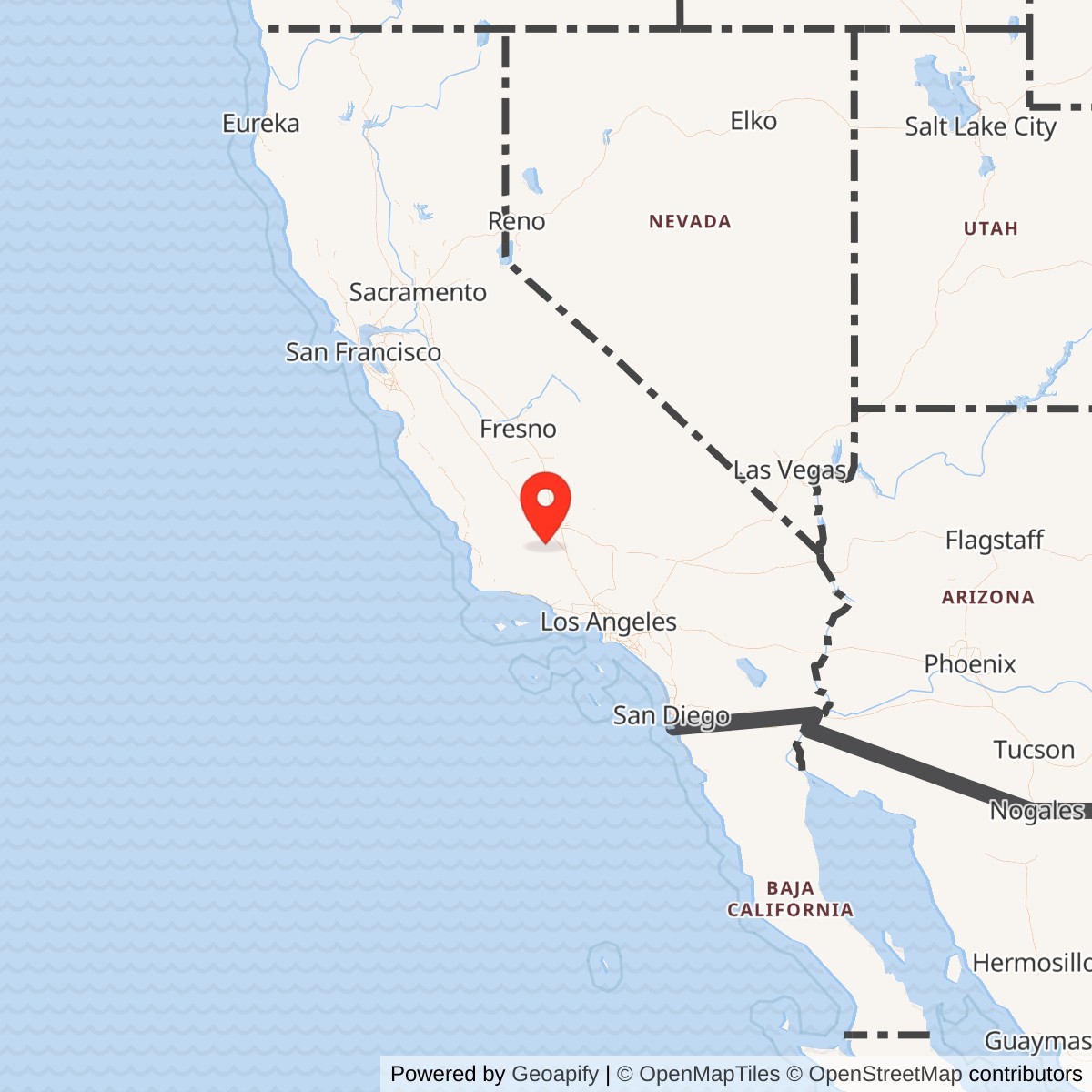
Longitude: -119.3058300
Official Base Website: Gardner Army Airfield
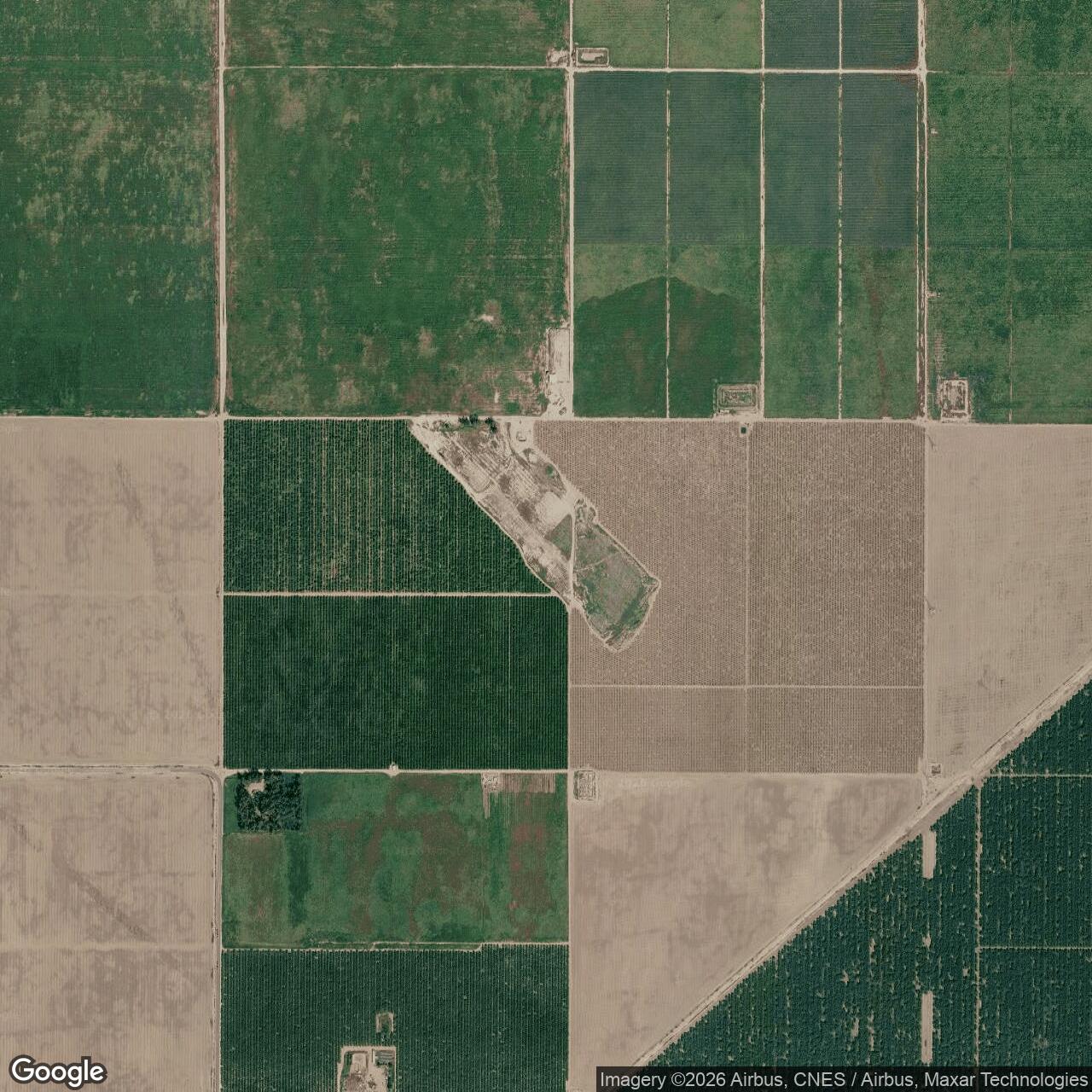
Current Role: Former airfield site returned mostly to agricultural use southeast of Taft; surviving/visible remnants include portions of the concrete/asphalt aircraft apron, traces of former support infrastructure, and a monument near the former entrance at Cadet and Basic School Roads.
Gardner Army Airfield was a World War II U.S. Army Air Forces basic flying school southeast of Taft, California. It was not a permanent Regular Army post and it did not become a long-lived Air Force base. Its military life was short, intense, and tightly tied to the rapid wartime expansion of pilot training. The field was built in the flat oil-and-agricultural landscape of western Kern County, where open land, flying weather, distance from urban congestion, and access to Taft made it suitable for a new Air Corps training installation.
The installation was named for Major John H. Gardner, a World War I aviator. Its mission was to turn aviation cadets into competent basic-flight students before they moved to the next stage of the Army Air Forces training pipeline. Gardner Field belonged to the broad wartime training system that included preflight schools, primary fields, basic flying schools, advanced schools, auxiliary landing fields, and operational replacement or combat-crew training. Gardner's place in that system was basic flying: cadets practiced takeoffs, landings, navigation, formation work, aerial maneuvers, and the habits of military flying in aircraft such as the Vultee BT-13 and Boeing-Stearman PT-17.
Site Selection and Construction
The Army Air Corps began searching for expanded training capacity before the United States entered World War II. In January 1941, Army representatives surveyed the Taft area for a basic flying school. The selected site lay southeast of town in open farmland near Buena Vista Lake. The initial acquisition involved an 880-acre lease from Kern County, followed by additional leases and takings that eventually brought Gardner Field's total acquired acreage to about 1,396.36 acres.
The field's construction reflected emergency mobilization. It was designed to produce training capacity quickly rather than to create a permanent architectural showpiece. The runways, taxiways, aircraft apron, control tower, hangars, barracks, messes, administration buildings, hospital, sewage plant, guardhouse, chapel, quarters, and support buildings were assembled in the temporary and semi-permanent manner typical of wartime AAF fields. Some facilities used more durable materials, but most of the installation was built to solve an immediate problem: the Army needed trained pilots, and it needed them quickly.
Gardner Field's runway plan gave it the physical capacity expected of a basic flying school. Historical summaries describe three asphalt runways arranged in a triangular pattern: a north-south runway of about 6,000 by 150 feet, an east-west runway of about 4,574 by 150 feet, and a northwest-southeast runway of about 5,001 by 150 feet. A large aircraft parking apron and hangars supported the training fleet. The scale was large enough that even after the airfield disappeared into farmland, later aerial photographs and field visits still found an 1,800-foot stretch of concrete and asphalt apron as the most recognizable remaining feature.
The speed of the building program mattered. The 528th School Squadron transferred to the new base on June 2, 1941, the field was activated, and basic facilities were completed by July 21, 1941. Gardner Field was formally dedicated on October 26, 1941, only weeks before Pearl Harbor. More than 10,000 people reportedly attended the dedication, a sign of how important the airfield was to Taft and the surrounding west Kern County community.
Mission and Operations
Gardner Field's primary mission was basic pilot training. Cadets normally arrived after earlier screening and preflight preparation, then advanced through a more demanding phase that emphasized control of more powerful training aircraft, military discipline, emergency procedures, navigation, formation habits, and precision in the air. The field operated under the Army Air Forces training establishment and has been associated in surviving summaries with the Air Corps Basic Flying School, the 328th, 329th, 528th, and 545th School Squadrons, and later Air Technical Service Command jurisdiction after training operations ended.
The training aircraft most associated with Gardner were the Vultee BT-13 Valiant and the Boeing-Stearman PT-17. The BT-13, often nicknamed the "Vultee Vibrator," was a basic trainer rather than a gentle introductory aircraft. It demanded more judgment from cadets than the lighter primary trainers and forced them to handle heavier controls, greater speed, and more advanced procedures. In practical terms, Gardner Field helped determine which cadets could become military pilots and which would be washed out or redirected before advancing to specialized training.
The field operated as a system rather than as a single runway complex. Gardner used auxiliary fields around the Taft and southern San Joaquin Valley area so that cadets could practice landings, takeoffs, emergency procedures, and field operations without crowding the main base. Historical summaries identify six auxiliary fields connected to Gardner: Parker Field, Taft-Kern County Field, Allen Field, Maricopa-Kern / Conners Field, Kern County / Taft Field, and Cuyama Field. These outlying fields were part of the operational reality of AAF training. A basic flying school could not function efficiently if every student landing and takeoff had to occur on the main runways.
The daily routine at Gardner Field mixed flying, ground school, inspections, maintenance, physical training, discipline, and the management of a wartime base community. At peak, local histories state that the base housed about 2,000 Air Corps personnel and employed hundreds of civilians. The base had its own hospital, sewage plant, administration buildings, mess halls, officers' quarters, guardhouse, chapel, barracks, and a landing field infrastructure large enough to sustain continuous training. It was a temporary city whose main product was trained airmen.
Training Risk and Wartime Cost
Flight training was dangerous. The Army Air Forces expanded faster than any peacetime flying system could have done, and Gardner Field was part of that pressured national effort. Thousands of young men were learning to fly military aircraft in a compressed schedule, often in dusty, windy, hot conditions and in crowded training airspace. The work produced pilots, but it also produced accidents.
Surviving summaries state that Gardner's 37th and final class graduated in January 1945. By that point the base had trained about 3,050 soldiers and 8,916 cadets. Twenty-six cadets died in training flights, as did eleven training officers sharing cockpits with them. Those losses belong in the field's history because they show the real cost of the training pipeline. Combat gets most of the attention, but the Army Air Forces also paid heavily at home to build the pilot force before aircrews ever reached an operational theater.
The accident record should be understood in proportion. Gardner trained thousands of cadets and logged a large number of flying hours. Later accounts note that the number of crashes relative to hours flown was considered low. That does not reduce the human cost, but it places the losses in the context of a wartime training establishment operating at high speed, with young pilots learning to fly more demanding aircraft under military standards.
Notable Trainees and Human History
Gardner Field's historical reputation is strengthened by the men who passed through it. The most famous is Chuck Yeager, who later became the first person to fly faster than the speed of sound. Gardner was where Yeager first learned to fly an airplane. The field is also associated with Richard Bong, America's leading World War II ace, and with other men who later became nationally known, including Tom Harmon and Lieutenant Richard E. Miller, one of the Doolittle Raiders.
The broader human story is more than a list of famous names. Taft was an oil and agricultural town, not a polished resort, and incoming cadets had to adjust to dust, heat, petroleum smells, local roads, remote fields, and a landscape quite different from the imagined California of palms and beaches. Local families, businesses, volunteers, civic groups, and entertainers helped absorb the sudden military population. Soldiers went into town, locals visited the base, women worked in war industries and support roles, and Taft's social life reorganized around the airfield.
Gardner Field's proximity to Los Angeles also gave it an unusual morale connection to the entertainment world. Accounts describe celebrity visits, big-band performances, radio broadcasts, and support from Hollywood figures. Jack Benny broadcast from the base theater in 1944, and entertainers such as Bob Hope, Edgar Bergen, and others were part of the wartime morale landscape. These episodes do not define the base's military mission, but they do show how a training field in a dusty oil town became linked to the broader home-front culture of World War II.
Facilities and Physical Layout
Gardner Field's main airfield was centered on three hard-surfaced runways, taxiways, a large apron, aircraft parking and servicing areas, hangars, and a control tower. The runway arrangement allowed training operations under different wind conditions and distributed traffic across the field. The large apron was the working heart of the field, where aircraft were parked, serviced, inspected, and dispatched. Its surviving remnants are important because they are among the few physical pieces of the field still visible.
The cantonment and support area contained the functions expected at a wartime AAF training base. Administration buildings managed personnel, training records, orders, and unit operations. Barracks and quarters housed students, instructors, officers, enlisted personnel, and support staff. Mess halls, supply rooms, medical facilities, a chapel, guardhouse, and recreation facilities made the installation livable. The 40-acre sewage plant shows that Gardner was not just a landing strip; it had municipal-scale utility infrastructure built for a sizable training population.
The auxiliary-field network expanded the training landscape beyond the main base. These satellite landing fields ranged from more developed auxiliary strips to simpler landing mats and emergency fields. They allowed repeated landing practice, reduced congestion at Gardner, and gave cadets experience operating away from the main runway system. Most of those auxiliaries, like the main field, have returned to agriculture with few or no visible traces.
Postwar Closure and Reuse
By early 1945 the Army Air Forces no longer needed Gardner Field at wartime intensity. The final class graduated in January 1945. Gardner Army Airfield was inactivated on February 28, 1945. On March 3, 1945, Gardner Field and its auxiliary fields were transferred from Western Flying Training Command to Air Technical Service Command jurisdiction, and on March 10 they were placed on inactive status. The military training mission was effectively over before the war in the Pacific ended.
The War Department declared Gardner Field surplus on October 27, 1947. The fee-owned acreage was assigned to the Farm Credit Administration in 1948, while leased lands appear to have reverted to prior owners or their successors. Some postwar civil-aviation use occurred for a short period. Gardner was depicted as a civilian airport on some late-1940s charts, and pilots recalled using remaining pavement for touch-and-go practice. By the early 1950s, however, the field had ceased to function as a recognizable airfield.
Agriculture gradually erased most of the installation. Buildings were removed, runways were broken up or plowed under, and the street grid faded. By later aerial-photo accounts, the site had returned mostly to farming. The former aircraft apron remained the most obvious surviving feature, along with traces of infrastructure and a monument at the former entrance. Gardner Field's current status is therefore closed and largely agricultural, with limited physical remnants and local memorial interpretation.
Current Status
Gardner Army Airfield is no longer an active military installation, airport, or public base museum. The former field lies in rural agricultural land southeast of Taft. Surviving features reported in historical airfield documentation include portions of the former aircraft apron, possible building or warehouse remnants, sewage-treatment remains, and the monument near the former entrance at Cadet and Basic School Roads.
Chronology
- 1940 The Army Air Corps began emergency expansion planning for new training-base sites as war spread in Europe and Asia.
- 1941-01-17 Army Air Corps representatives surveyed the Taft area for a basic flying training school site.
- 1941-01-24 Acquisition began with an 880-acre lease from Kern County.
- 1941 Construction proceeded rapidly on runways, hangars, cantonment buildings, utilities, and support facilities.
- 1941-06-02 The 528th School Squadron transferred to the new field and Gardner Field was activated.
- 1941-07-21 Basic facilities were completed.
- 1941-10-26 Gardner Field was formally dedicated at a public ceremony attended by more than 10,000 people.
- 1941-12-07 The Pearl Harbor attack transformed Gardner from a prewar expansion field into part of the full wartime training mobilization.
- 1942 Gardner Field operated as a basic flying school using trainers such as the Vultee BT-13 and Boeing-Stearman PT-17.
- 1943-05-12 The final lease/acquisition transaction brought the total acquired acreage to approximately 1,396.36 acres.
- 1943 The field and its auxiliary airfields continued operating as a regional basic-training system.
- 1944 Gardner remained active as a training and morale center; accounts note major entertainment and radio events at the base during the war.
- 1945-01 The 37th and final Gardner class graduated.
- 1945-02-28 Gardner Army Airfield was inactivated.
- 1945-03-03 Gardner Field and its auxiliary fields transferred from Western Flying Training Command jurisdiction to Air Technical Service Command.
- 1945-03-10 Gardner Field was placed on inactive status.
- 1947-10-27 The War Department declared Gardner Field surplus.
- 1948-06-14 Fee-owned acreage was assigned to the Farm Credit Administration; leased land appears to have reverted to private or local ownership.
- 1949 Aeronautical-chart evidence indicates a brief postwar Gardner Airport reuse.
- 1950s Gardner ceased to function as a recognized airfield; buildings and most airfield features were removed.
- 1970 Later field recollections describe aircraft still able to land on remaining pavement shortly before further bulldozing and agricultural conversion.
- 1990s-2000s Aerial and field observations documented that most of the former field had returned to agriculture, with the aircraft apron and selected remnants still visible.
- Present The former Gardner Army Airfield site is closed and mostly agricultural, with surviving pavement remnants and a memorial marker preserving the memory of the wartime field.
Information sources (7)
- WEBWest Kern Oil Museum
Gardner Army Airfield: The Forgotten WWII Flight School of Taft, California
- WEBAbandoned & Little-Known Airfields
Bakersfield area, Gardner Field section
- WEBPacific Coast Architecture Database
Historic California Posts: Gardner Field
- WEBPacific Coast Architecture Database
United States Army Air Forces (USAAF), Gardner Field, Taft, CA
- WEBLos Angeles Times, Cecilia Rasmussen
8,900 WWII Pilots Earned Their Wings at a Dusty Old Oil Town
- WEBHistorical Marker Database
Gardner Field
- WEBFamilySearch catalog record
Gardner Field, Taft, California: Army Air Forces Training Command