
Military Ocean Terminal Concord, California
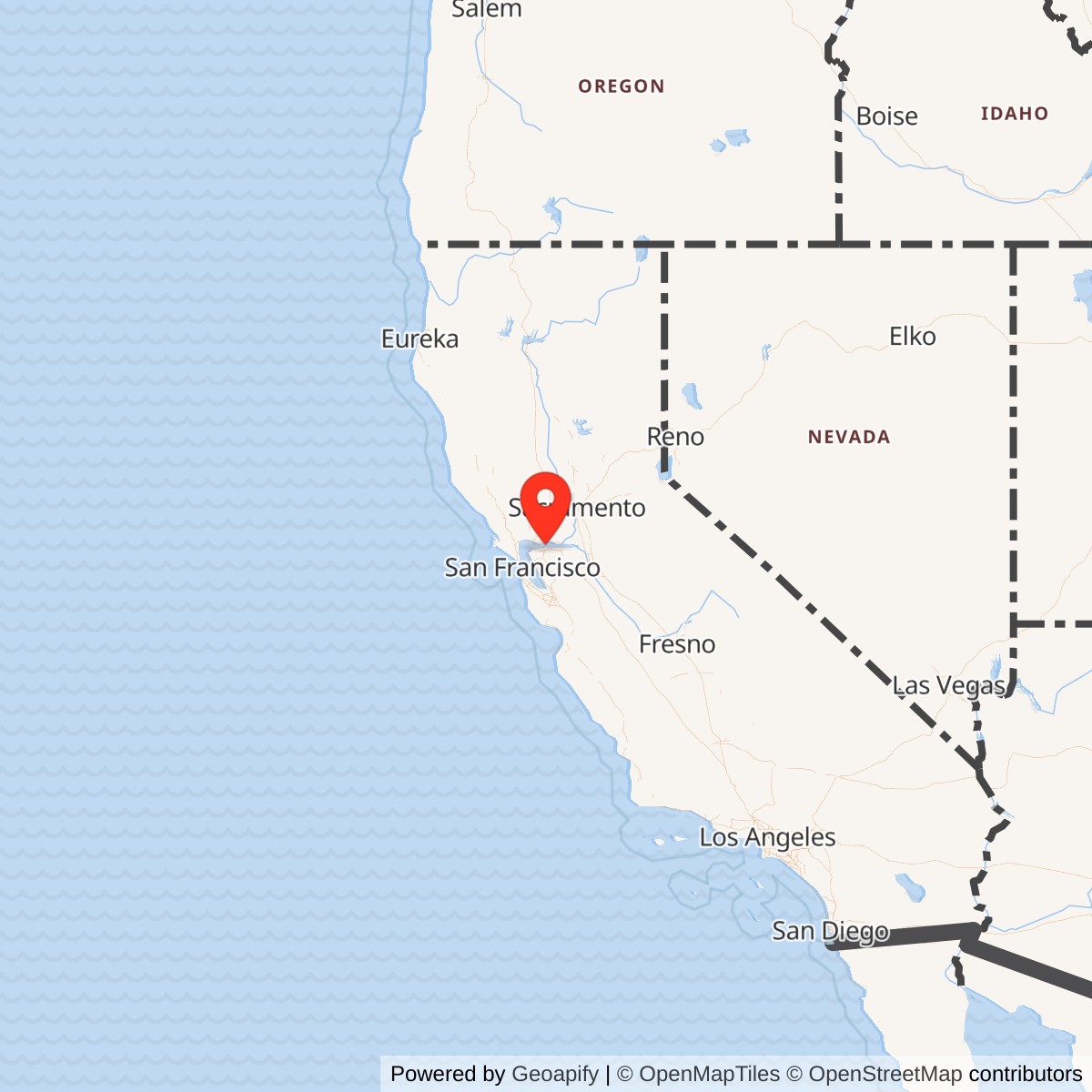
Longitude: -122.0205560
Current Role: Active U.S. Army Military Surface Deployment and Distribution Command West Coast strategic ammunition port supporting the Pacific area of operation; operated by the 596th Transportation Brigade / 834th Transportation Battalion with ocean terminal piers, Army rail, restricted waters, dangerous-cargo/ammunition transshipment, and Port Chicago National Memorial access under Army/NPS arrangements.
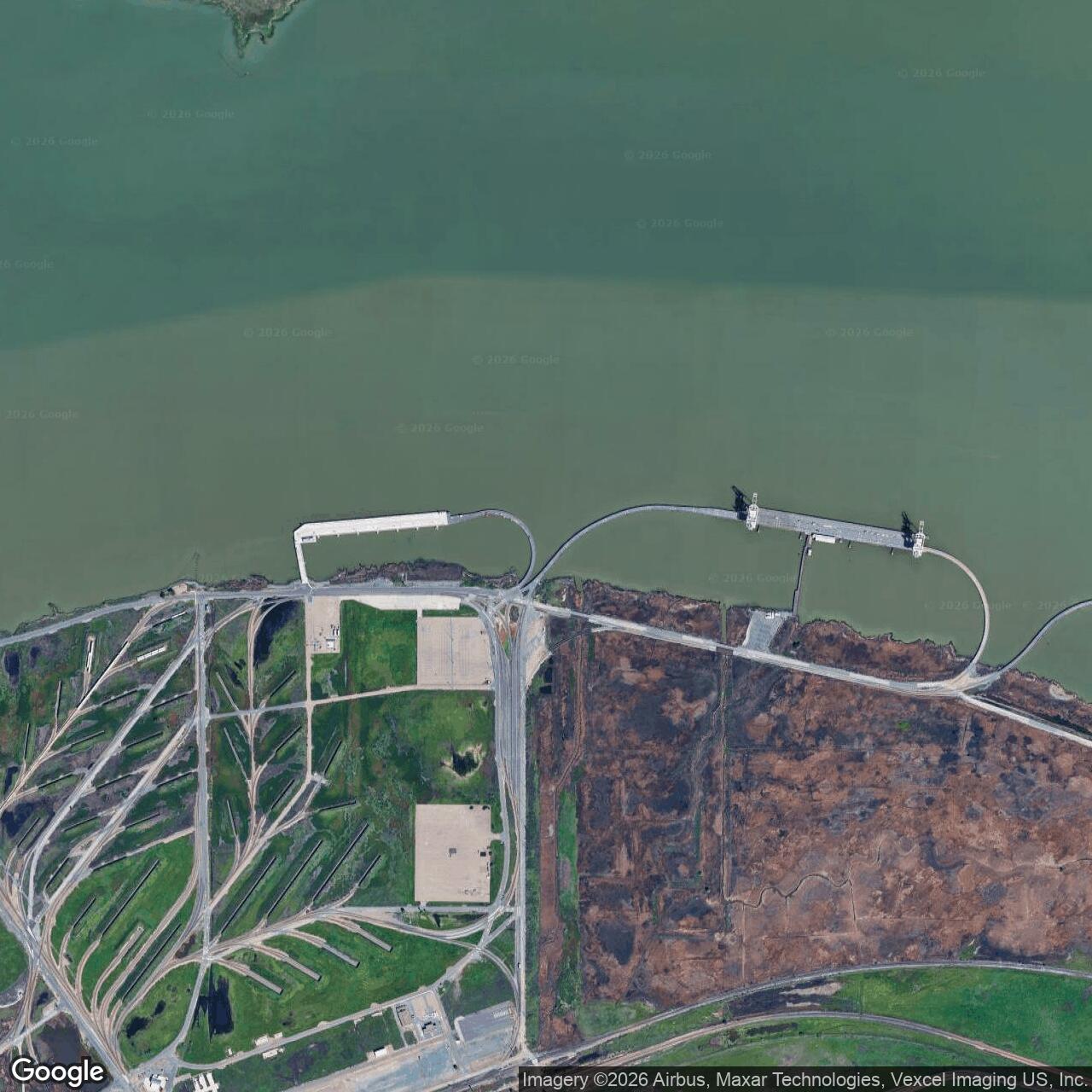
Military Ocean Terminal Concord is one of those places where American military power is almost invisible until the country needs it. From the highway it can look like marsh, tracks, security fencing, piers, low buildings, and a stretch of industrial shoreline on Suisun Bay. In wartime logistics terms, however, it is a strategic pressure valve: a guarded Army ammunition seaport built to move dangerous cargo between rail, storage, and ocean-going ships without pushing that risk through a crowded commercial waterfront. Its value is not measured in runways or parade fields, but in the ability to move ammunition safely, quickly, and at national scale.
The active Army installation occupies the former Navy tidal-side weapons-shipping complex at Port Chicago and Concord. It is operated by the U.S. Army Military Surface Deployment and Distribution Command through the 596th Transportation Brigade and 834th Transportation Battalion. MOTCO is the Army's West Coast strategic ammunition port and supports the Pacific area of operation. It is one of the two Army military ocean ammunition terminals in the United States, paired conceptually with Military Ocean Terminal Sunny Point in North Carolina. Where Sunny Point faces Atlantic, European, African, and Middle Eastern movement requirements, Concord is the West Coast and Pacific-facing counterpart.
The installation's present Army identity dates to the post-Cold War reshaping of the older Concord Naval Weapons Station. Army presence began on 1 October 1997, when the Army's 1302nd Major Port Command relocated from Oakland Army Base to Concord and became the 834th Transportation Battalion. The formal property transfer from the Navy to the Army occurred on 1 October 2008 under the 2005 BRAC process. That means MOTCO has a layered identity: it is a modern active Army logistics installation, but it sits on ground defined by the Navy's World War II Port Chicago Naval Magazine, the July 1944 disaster, the post-explosion expansion of ammunition storage lands, and the Cold War Naval Weapons Station Concord system.
MOTCO's layout reflects that inheritance. The Army's real-property planning digest describes an approximately 115-acre Inland Area and an approximately 6,526-acre Tidal Area, including about 2,045 acres of offshore islands. Those areas are connected by Port Chicago Highway. The operational core includes three ocean terminal piers and an Army-owned rail system tied to major public rail lines. The port's mission is not routine commercial cargo. It is specialized, high-risk, high-consequence ammunition movement, with restricted waters, controlled access, emergency-response systems, and environmental stewardship all built into the installation's daily logic.
Mission Evolution
The site's military mission began with World War II ammunition movement. After Pearl Harbor, the Navy needed a West Coast ammunition-loading facility capable of feeding the Pacific war. Port Chicago Naval Magazine was constructed in 1942 on Suisun Bay, where rail access, deep-water loading potential, and distance from San Francisco's urban piers made large-scale munitions handling possible. The early mission was urgent and dangerous: receive ammunition by rail, move it to ships, and send it west across the Pacific. It was a transit and loading installation more than a traditional storage depot, and the wartime pressure to move tonnage quickly shaped everything that followed.
On 17 July 1944, that mission produced one of the most catastrophic home-front events of World War II. A massive explosion at the Port Chicago Naval Magazine killed 320 sailors and civilians and injured hundreds more. The blast destroyed the pier, two ships, rail equipment, and much of the nearby community. Most of the Navy enlisted men loading ammunition were African American sailors serving in segregated ordnance units, often without adequate training for the dangerous munitions work they were ordered to perform. The disaster was not only a tragedy of explosives and logistics; it exposed the racial hierarchy of the wartime Navy and became a critical civil-rights event in military history.
After the explosion, the Navy did not abandon the port. Instead, it rebuilt and expanded. The Navy built new piers and continued supplying the Pacific Theater. It also acquired an additional inland storage and buffer area of roughly 5,028 acres to increase onsite storage capacity and reduce the danger to surrounding communities. This expansion erased the residential town of Port Chicago and created the larger Navy weapons-station landscape that later became Naval Weapons Station Concord. The mission evolved from emergency wartime ammunition loading into a large, integrated ordnance storage, handling, and shipment complex.
During the Cold War, Concord remained a major weapons and ammunition support base. It supported operations during the Korean War, Vietnam War, and Gulf War era. The Navy operated the facility as part of its Pacific ordnance distribution network, while the inland and tidal areas together provided storage, buffer, pier, rail, and handling capacity. The installation's function was not glamorous, but it was foundational: every overseas operation that depends on ammunition also depends on places that can load, store, inspect, secure, and ship that ammunition.
The Army phase began because the West Coast still needed a dedicated ammunition seaport even as older Navy and Army installations were closing or realigning. Oakland Army Base had long been a major Army port and logistics site, but its closure pushed the Army to preserve essential port functions elsewhere. In 1997, the Army's 1302nd Major Port Command moved from Oakland to MOTCO and became the 834th Transportation Battalion. The Navy still owned the property, but the Army assumed the shipment mission and established its own operation. Under the 2005 BRAC recommendations, the Inland Area of Naval Weapons Station Seal Beach Detachment Concord was closed or realigned while the property and facilities necessary for tidal-area operations were retained for Army use. On 1 October 2008, MOTCO property formally transferred from the Navy to the Army.
The result was not a new installation built from scratch, but a mission conversion. The Navy's weapons-station infrastructure became an Army strategic ammunition terminal. The Army inherited piers, rail, security constraints, environmental obligations, the Port Chicago memorial landscape, and the need to operate amid a region that was simultaneously redeveloping former inland base lands. MOTCO's modern mission is therefore a continuation of the site's essential function, dangerous-cargo movement through Suisun Bay, under Army control and within the joint deployment and distribution enterprise.
Operational Role
MOTCO's operational role is to make ammunition movement possible at the point where land transportation becomes sealift. Ammunition and related dangerous cargo can arrive by rail or other controlled means, move through installation security and storage systems, and be loaded across specialized piers onto vessels. The Army's real-property digest identifies MOTCO as the primary West Coast common-user ammunition terminal. It also states that the 834th Transportation Battalion's mission is to provide terminal and distribution services for deploying and redeploying forces in the California area of responsibility, safely provide ammunition terminal services, create operational and training synergies between East and West Coast ammunition terminals, and oversee installation management.
That role is strategically larger than the installation's footprint suggests. Army sources have described MOTCO as representing nearly 25 percent of the nation's total ammunition throughput capability. A site with that share of national ammunition movement capacity is not simply a local port. It is a national military logistics asset. If its piers, rail, security systems, dredged approaches, or utilities fail, the effect is not confined to Contra Costa County. It affects the Army's ability to project force across the Pacific and support joint operations.
The operational tempo at MOTCO is specialized. Army articles on the military ocean terminals emphasize that MOTCO and MOTSU focus on munitions because the safety, security, and handling requirements are different from ordinary general cargo. The 834th Transportation Battalion also executes general cargo missions at several commercial West Coast ports, but MOTCO itself is the ammunition terminal. This separation is part of the installation's purpose: keep high-risk cargo inside a controlled military terminal where security zones, pier procedures, storage limits, emergency response, and explosives-safety rules are designed around the cargo.
MOTCO is also a training and readiness site. SDDC and Army reporting in the 2010s emphasized exercises, emergency-response readiness, port security, antiterrorism/force-protection scenarios, and coordination with local, state, federal, and military partners. The 2012 Coyote Shield exercise, for example, placed the 834th Transportation Battalion alongside local and federal emergency agencies in antiterrorism, force protection, and emergency-response scenarios. Another SDDC report described MOTCO personnel and contractors spending a week honing emergency-response skills. That kind of work is central to an ammunition port. The installation must be able to move cargo, but it must also be able to contain fires, protect restricted waters, respond to accident scenarios, and coordinate with agencies outside the fence.
The port's operational record also includes support to other military sealift missions. In 2011, Army reporting described 834th Transportation Battalion personnel at MOTCO unloading and loading more than 550 large containers to and from a Military Sealift Command vessel in support of a Navy prepositioning program. That example shows the broader interservice character of the site. The installation is Army operated, but the cargo, ships, and missions belong to the joint force.
Facilities and Physical Layout
MOTCO is a dispersed waterfront, rail, and storage installation rather than a compact post. The Army's Real Property Master Plan Digest describes two principal land components: an approximately 115-acre Inland Area and an approximately 6,526-acre Tidal Area, with the Tidal Area including approximately 2,045 acres of offshore islands. The two areas are connected by Port Chicago Highway. The installation's most important physical features are its three ocean terminal piers, rail system, ammunition-handling infrastructure, restricted shoreline, storage and support spaces, and associated security and emergency-response systems.
The Tidal Area is the operational heart of the modern Army port. It includes the shoreline and pier complex on Suisun Bay, the controlled water approaches, and the land and island buffers that give an ammunition terminal room to operate. The water side is legally and operationally controlled through safety and restricted zones. Federal regulations establish a safety zone around MOTCO onload and offload operations, and the Pier 2 coordinate in 33 CFR 165.1198 provides a useful representative point for the active terminal. In 2024 the Army Corps of Engineers amended the permanent restricted area along the MOTCO shoreline to expand and refine the security buffer, including changes near Hastings Slough and along the navigation-channel edge. These legal boundaries are not administrative trivia. They are part of the physical operating system of a military ammunition port.
The pier complex has been a recurring modernization concern. Army Corps reporting in 2013 noted that Pier 2 had been inoperable for about five years and described pier modernization as essential because MOTCO represented nearly 25 percent of national ammunition shipping capability. That episode illustrates the fragility of specialized infrastructure. An ordinary port can sometimes shift cargo to another berth. A military ammunition terminal needs compatible piers, cranes, rails, clearances, security, explosive-safety arcs, and environmental compliance. When one pier drops out of service, the impact is strategic.
Rail is another defining feature. MOTCO operates an Army-owned rail system tied to major public rail lines. Rail gives the terminal the ability to move large amounts of ammunition and containerized dangerous cargo between the national rail network and the pier complex without routing those materials through ordinary urban cargo terminals. The railroad also makes the old Port Chicago logic visible: the site exists because rail and deep-water shipping meet in a place where the military can control risk.
The Inland Area is smaller in the current Army configuration but important for support functions, administration, access, staging, and connection to the broader former base landscape. The administrative address at 410 Norman Avenue sits within this active Army system. The inland lands beyond the active Army requirement became part of the former Naval Weapons Station Seal Beach Detachment Concord BRAC and redevelopment process. That distinction matters for status and mapping. The former Navy weapons station was much larger than the active Army MOTCO footprint; the Army retained the operational tidal-side ammunition terminal and supporting lands, while surplus inland lands moved through Navy cleanup and local redevelopment planning.
The Port Chicago Naval Magazine National Memorial is physically located within MOTCO. It is a five-acre memorial area associated with the 1944 explosion site. The Army owns the land, while the National Park Service works with the Army through an operating agreement to maintain the memorial, coordinate historic preservation, and provide controlled public access during times when military operations allow. Because the memorial lies inside an active ammunition terminal, visits are limited and security-dependent. That relationship is unusual: a nationally significant civil-rights and World War II memorial exists inside an active Army logistics installation whose modern mission still involves the movement of dangerous cargo.
Units, Organizations, and Systems
The central Army organization at MOTCO is the 834th Transportation Battalion. Its lineage at Concord begins in 1997, when the Army's 1302nd Major Port Command relocated from Oakland Army Base and became the 834th Transportation Battalion. The battalion manages MOTCO's terminal mission and installation responsibilities. Current Army Transportation Command information places the 834th Transportation Battalion/MOTCO at 410 Norman Avenue in Concord and identifies MOTCO as SDDC's West Coast strategic ammunition port supporting the Pacific area of operation.
The 834th falls under the 596th Transportation Brigade, whose mission is to integrate and synchronize surface deployment and distribution capabilities west of the Rockies and execute port operations at Military Ocean Terminal Sunny Point Military Ocean Terminal Concord, and strategic seaports along the West Coast and Alaska. The brigade also serves as installation commander for MOTSU and MOTCO so that infrastructure remains ready and resilient for global ammunition projection. This relationship places MOTCO inside a continental and global distribution network, not merely inside a Bay Area base map.
Above the brigade is Military Surface Deployment and Distribution Command, a major subordinate command of Army Materiel Command and the Army Service Component Command to U.S. Transportation Command. SDDC links installation-level port work to global transportation requirements. Ammunition shipped through MOTCO does not end at the pier. It is part of the Joint Deployment and Distribution Enterprise: rail, terminal, vessel, theater distribution, and operational consumption all connected.
Several other organizations are essential to MOTCO's functioning. The U.S. Army Corps of Engineers supports pier modernization, dredging, regulatory work, environmental review, and infrastructure planning. The Environmental Protection Agency, the Navy, and Army environmental authorities are involved because the old Concord Naval Weapons Station footprint contains multiple cleanup areas. The National Park Service is a partner for Port Chicago National Memorial access and interpretation. Local emergency agencies, law enforcement, fire departments, Coast Guard authorities, and Bay Area regulators also intersect with MOTCO because the installation is an ammunition port on a public waterway in a populated metropolitan region.
Port Chicago, Disaster, and Civil Rights Legacy
No history of MOTCO can be complete without Port Chicago. The present Army terminal inherited more than piers and rails; it inherited one of the most consequential home-front sites of World War II. On 17 July 1944, two ships loading ammunition for the Pacific war exploded at Port Chicago Naval Magazine. The blast killed 320 men and injured about 390 to 400 others, obliterated the pier, destroyed ships and rail equipment, and damaged the nearby town. Most of the dead were African American sailors assigned to dangerous ammunition-loading work under racially segregated Navy policies.
The disaster was followed by one of the most important military justice episodes in American history. Surviving African American sailors were ordered back to ammunition-handling work without sufficient changes to safety procedures or training. On 9 August 1944, 258 sailors refused to resume that work. Fifty were charged with mutiny, convicted in a mass court-martial, and sentenced to hard labor and punitive discharges. Thurgood Marshall and the NAACP helped publicize the case and frame it as a protest against racial discrimination, unsafe working conditions, and unequal treatment inside the military.
The Port Chicago case helped push the Navy toward reform. It did not single-handedly desegregate the armed forces, but it became one of the incidents that exposed the cost of segregated military labor and the unfairness of the Navy's wartime personnel system. In 1948, President Harry S. Truman issued Executive Order 9981, mandating desegregation of the armed forces. The Port Chicago story remained contested for decades, with survivors, families, historians, civil-rights advocates, and members of Congress seeking recognition and justice.
On 17 July 2024, the Secretary of the Navy announced the full exoneration of the remaining 256 defendants from the 1944 Port Chicago general and summary courts-martial. The Navy cited significant legal errors, including improper joint trials despite conflicting interests and denial of meaningful counsel. That exoneration changed the official legal status of the men punished after the disaster and brought the site's history into the present. MOTCO therefore carries a rare dual legacy: it is both an active ammunition port and the ground where one of the Navy's most important civil-rights reckonings took place.
Environmental and Community Context
MOTCO also sits within a major environmental and redevelopment landscape. The former Naval Weapons Station Concord was listed under federal environmental oversight, and cleanup responsibilities differ by area. EPA states that the Inland Area was put on reduced operational status in 1999, the 2005 BRAC Commission recommended partial closure and realignment, and the final BRAC determination transferred the Tidal Area to the Department of the Army in 2008. EPA further notes that the Inland Area is being addressed through federal cleanup actions by the Navy, while the Tidal Area is being addressed by the Army.
This split is important. People often refer generally to "the Concord Naval Weapons Station," but the active Army terminal, the former Navy inland redevelopment area, the Port Chicago memorial, and environmental cleanup sites are not all the same status. The Navy BRAC page identifies the former Naval Weapons Station Seal Beach Detachment Concord as a 12,878-acre property with BRAC closure and continuing environmental-disposal actions. MOTCO, by contrast, is the active Army ammunition terminal carved out of the operationally necessary tidal-side mission area and supporting inland lands.
Community relations are shaped by both the active mission and the former base's redevelopment potential. The inland closure lands have long been part of Concord's reuse planning, with proposals for housing, open space, business uses, and parks. The Army terminal's continued operation limits what can happen near the waterfront and requires careful coordination around transportation routes, restricted waters, environmental protection, endangered species, marshlands, security, and emergency response. MOTCO is not isolated wilderness; it is a controlled military logistics installation embedded in a complex Bay Area ecological and urban-planning setting.
Current Status
Military Ocean Terminal Concord remains active. Its mission is to serve as SDDC's West Coast strategic ammunition port and the Department of Defense's primary ammunition seaport supporting the Pacific area of operation. The 834th Transportation Battalion is stationed there, and the 596th Transportation Brigade integrates MOTCO into a broader network of ammunition terminals and strategic seaports. Current Army Transportation Command information lists the 834th Transportation Battalion/MOTCO at 410 Norman Avenue, Concord, California.
The installation continues to require pier, rail, utility, security, dredging, and resilience investment. Recent regulatory and planning actions show an active port still adapting to mission and infrastructure needs. The 2024 restricted-area rule expanded and refined the water buffer along the MOTCO shoreline to support security and operational needs. Energy-resilience work and backup-power projects are intended to sustain mission-critical activity even during disruptions. Dredging and pier modernization remain central because a deep-water ammunition terminal cannot fulfill its mission without reliable berths and access channels.
Public access is highly restricted because MOTCO is an active ammunition terminal. The major public-facing exception is the Port Chicago Naval Magazine National Memorial, but even that access must be coordinated through the National Park Service and the Army and depends on security and operating conditions. The result is a site that is nationally important but not freely walkable: a place of memory inside a place of continuing military work.
Chronology
- 1942 The Navy constructed Port Chicago Naval Magazine on Suisun Bay to support ammunition loading for the Pacific war.
- 1944-07-17 A massive explosion at Port Chicago Naval Magazine killed 320 sailors and civilians and injured hundreds more, becoming the worst home-front disaster of World War II.
- 1944-08-09 Surviving African American sailors refused to resume ammunition loading under unsafe and racially discriminatory conditions.
- 1944-09 to 1944-10 Fifty sailors were tried and convicted of mutiny in the Port Chicago mass court-martial.
- 1944-1945 The Navy rebuilt and continued the ammunition-shipping mission at Port Chicago.
- Post-1944 The Navy acquired roughly 5,028 additional inland acres to create more storage capacity and a larger safety buffer; the town of Port Chicago was eliminated as part of the expansion.
- Cold War era The expanded Concord weapons-station complex supported Navy ammunition storage, handling, and shipment during Cold War and postwar conflicts, including Korea, Vietnam, and the Gulf War era.
- 1992 Port Chicago Naval Magazine National Memorial was established to mark the site of the disaster.
- 1994 The Port Chicago memorial was dedicated.
- 1997-10-01 The Army's 1302nd Major Port Command relocated from Oakland Army Base to Concord and became the 834th Transportation Battalion, beginning the Army's operational presence at MOTCO.
- 1999 The Inland Area of the Navy installation was placed on reduced operational status.
- 2005 The BRAC Commission recommended partial closure and realignment of Naval Weapons Station Seal Beach Detachment Concord, preserving property and facilities needed to support Army operations in the Tidal Area.
- 2008-10-01 MOTCO properties were formally transferred from the Navy to the Army under the BRAC process.
- 2008-10-30 SDDC held a handover ceremony accepting more than 6,400 acres of former Navy real estate at MOTCO.
- 2009 Port Chicago Naval Magazine National Memorial became a unit within the National Park System, with the memorial located inside MOTCO under Army ownership and NPS/Army access arrangements.
- 2011 MOTCO personnel supported Navy prepositioning operations by moving hundreds of containers to and from a Military Sealift Command vessel.
- 2012 The 834th Transportation Battalion and partner agencies conducted the Coyote Shield exercise, emphasizing antiterrorism, force protection, and emergency-response coordination.
- 2013 Army Corps and Army planning documents highlighted MOTCO pier modernization needs and described the port as representing nearly 25 percent of national ammunition throughput capability.
- 2024-04-22 A new Army Corps restricted-area rule for the MOTCO shoreline became effective, expanding and refining the restricted water boundary for security and operational needs.
- 2024-07-17 The Secretary of the Navy fully exonerated the remaining 256 defendants from the 1944 Port Chicago courts-martial.
- Present MOTCO remains an active U.S. Army SDDC / 596th Transportation Brigade / 834th Transportation Battalion ammunition terminal and the West Coast strategic ammunition seaport supporting Pacific operations.
Information sources (18)
- WEBU.S. Army Transportation Command
unit and installation listings
- WEBU.S. Army / SDDC
SDDC officially accepts former U.S. Navy real estate
- WEBU.S. Army
Military Ocean Terminals play strategic role in defense
- PDFMilitary Ocean Terminal Concord
Real Property Master Plan Digest, May 2011
- WEBU.S. Army
SDDC supports Navy Prepositioning Program
- WEBU.S. Army
Coyote Shield exercise blends military, civilian capabilities
- WEBU.S. Army
MOTCO spends week honing emergency responder skills
- WEBDVIDS / U.S. Army Corps of Engineers Sacramento District
Corps plans to modernize military port's piers
- WEBeCFR, 33 CFR 165.1198
Safety zone; Military Ocean Terminal Concord Safety Zone
- WEBFederal Register
Military Ocean Terminal Concord, California; Restricted Area, 2024
- WEBU.S. Navy BRAC Program Management Office
Former Naval Weapons Station Seal Beach Detachment Concord
- WEBU.S. EPA Superfund Site Profile
Concord Naval Weapons Station
- WEBU.S. Army Environmental Command
PFAS page for Military Ocean Terminal Concord
- WEBNational Park Service
Port Chicago Naval Magazine National Memorial
- WEBNational Park Service
The Mutiny Trial
- PDFNational Park Service
Port Chicago Naval Magazine National Memorial Foundation Document
- WEBU.S. Navy
The Secretary of the Navy Exonerates 256 Defendants from 1944 Port Chicago General and Summary Courts-martial
- WEBMoran Shipping
Military Ocean Terminal, Concord"terminal listing