
Naval Weapons Station Concord / U.S. Naval Magazine, Port Chicago, California
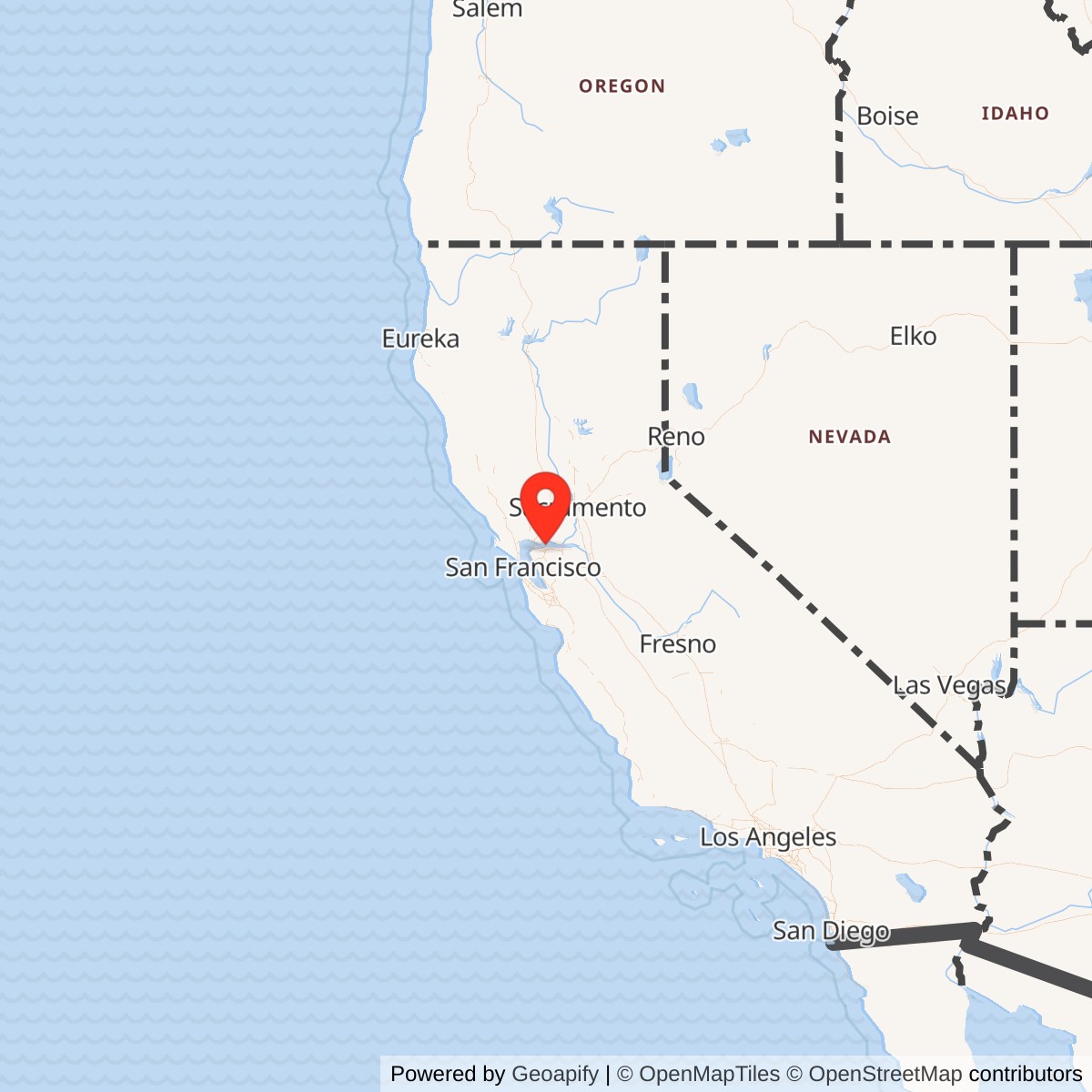
Longitude: -122.031944
Current Role: Former Navy weapons station and ordnance transshipment base established as U.S. Naval Magazine, Port Chicago; Tidal Area now active Army Military Ocean Terminal Concord (MOTCO), while the former Inland Area remains in Navy BRAC cleanup, transfer, and Concord reuse planning.
Naval Weapons Station Concord was one of the Navy's great West Coast ordnance landscapes. It began in 1942 as U.S. Naval Magazine, Port Chicago, a wartime ammunition-loading and storage annex tied to Mare Island Naval Shipyard and the Mare Island magazine system. Its geography explains the choice. The site sat far enough inland from the Golden Gate to give the Navy room for dangerous explosive handling, yet it remained directly connected to deep water, rail corridors, the Bay Area industrial base, and the Pacific war supply chain. Ships could be loaded for the Pacific from the Tidal Area, while ammunition could be received, stored, staged, and moved across a dispersed magazine reservation.
The installation's later name, Naval Weapons Station Concord, can obscure how concentrated its original purpose was. This was not a shipyard, not an air station, and not a conventional training base. It was a naval ordnance and ammunition transshipment installation built to move explosives at wartime speed. During World War II, that meant loading ships bound for the Pacific. During the Korean War, Vietnam War, and Cold War, it meant sustaining a long-term Navy weapons station with magazines, piers, warehouses, administration areas, laboratories, rail lines, and safety buffers. After 2008, its story split into two successor paths: the Tidal Area became the Army's Military Ocean Terminal Concord, while the former Inland Area entered the Navy BRAC, cleanup, transfer, and Concord reuse process.
The installation is inseparable from the Port Chicago disaster of July 17, 1944. The explosion that destroyed the pier, two ships, and much of the immediate waterfront killed 320 people and became the worst home-front disaster of World War II. It also exposed the Navy's segregated labor system, unsafe ammunition-loading practices, and unequal treatment of African American sailors. The subsequent work stoppage, courts-martial, and long struggle for exoneration make Concord not only a weapons-station history, but one of the most important military civil-rights landscapes in the United States.
Mission Evolution
The first mission was immediate wartime outloading. After the United States entered World War II, the Navy needed new ammunition facilities on the Pacific Coast capable of handling heavy explosives for a global ocean war. Port Chicago's waterfront, rail access, and separation from dense urban waterfronts made it attractive for a naval magazine. The facility was established in 1942 as U.S. Naval Magazine, Port Chicago, with its early operations focused on receiving, staging, and loading munitions onto cargo ships bound for the Pacific Theater.The July 1944 explosion forced a major redesign. Ammunition still had to move, but the original waterfront arrangement had proven catastrophically vulnerable. After the disaster, the Navy rapidly restored operations and then expanded away from the pier into what became the Inland Area. In 1944 and 1945 the Navy purchased thousands of acres for dispersed storage and support functions. This Inland Area eventually contained magazine groups, administration buildings, barracks, weapons laboratory facilities, a rail system, and the small Naval Outlying Field Concord that supported NAS Alameda's wartime aviation network. The post-disaster mission was the same at a strategic level, but the physical system became more dispersed and more deliberate.
After World War II, the installation shifted from emergency wartime loading to long-term ordnance support. The Navy continued to use Concord through the Cold War, with the base supporting ammunition movement and storage during the Korean War, the Vietnam War, and later Pacific-facing military commitments. In this period the name Naval Weapons Station Concord better reflected its broader role. The base was not merely a Port Chicago pier; it was a large weapons station with an inland magazine complex and a waterfront terminal linked by rail and road.
The late twentieth-century mission narrowed as Navy logistics patterns changed. The Inland Area was placed on reduced operational status in October 1999, while the Tidal Area remained important for ammunition movement. BRAC 2005 then recommended operational closure of the Inland Area except for property and facilities needed to support Army operations in the Tidal Area. On October 1, 2008, the Navy transferred the Tidal Area and retained support property to the Army. The Navy retained responsibility for environmental cleanup and transfer of the surplus Inland Area. From that point forward, the old Navy weapons station became two different modern landscapes: an active Army munitions port and a former Navy BRAC reuse and remediation property.
Operational Role
Concord's wartime operating role was dangerous, repetitive, and decisive. Munitions arrived by rail and were moved through a controlled waterfront loading system. The Navy's wartime demand placed extreme pressure on the pier crews because the Pacific campaign consumed enormous quantities of bombs, shells, cartridges, depth charges, rockets, and related ordnance. Much of the work at Port Chicago was performed by African American enlisted sailors assigned to segregated ordnance battalions under white officers. Many lacked adequate explosives-handling training despite being ordered to perform one of the most hazardous logistical jobs in the Navy.The disaster on July 17, 1944, occurred while the SS E.A. Bryan and SS Quinault Victory were being loaded at the pier. A massive detonation at 10:18 p.m. destroyed the pier, obliterated the ships, damaged the nearby town of Port Chicago, and sent the force of the blast across the Bay Area. The cause was never definitively established, but later official and interpretive accounts emphasize the unsafe work system, insufficient training, intense loading pressure, and segregated assignment of risk. The operational lesson was brutal. Ammunition logistics was not rear-area paperwork. It was a front-line industrial hazard on American soil.
The human aftermath became as consequential as the explosion itself. Survivors were traumatized, but the Navy ordered African American sailors back to ammunition work without first addressing the conditions they feared. On August 9, 1944, 258 African American sailors refused to resume loading ammunition. Fifty were charged with mutiny, tried at Treasure Island, convicted, and sentenced to hard labor and dishonorable discharges. Thurgood Marshall, then special counsel for the NAACP, helped publicize the injustice. The Port Chicago 50 case became an early military civil-rights flashpoint and helped expose the contradiction between a war fought for democracy abroad and segregated, unequal treatment within the armed forces.
The Navy rebuilt the ammunition system because the war still required it. After the explosion, Concord's mission expanded inland. Dispersed magazines, rail movement, and a more separated support layout reflected the need to reduce concentration of explosives and personnel at any one point. The base returned to service and continued moving munitions through the final year of World War II. This resilience was operationally necessary, but it also meant the landscape of Concord was physically remade by the disaster.
During the Korean War and Vietnam War eras, Naval Weapons Station Concord functioned as a West Coast ordnance and shipping support node. The installation supported Pacific-facing military operations by receiving, storing, staging, and loading ammunition and weapons. The Inland Area's earth-covered magazines and the Tidal Area's piers formed a single logistics chain. Rail lines were central to that chain, linking national ammunition depots and arsenals to ship-loading facilities. Concord's value came from the safe spacing of explosive storage, the controlled movement of weapons, and the ability to put ammunition aboard ships for overseas military operations.
In the post-Cold War era, activity declined in the Inland Area, but the Tidal Area retained strategic value. That distinction explains the 2005 BRAC result. The Navy no longer needed the full weapons station, but the Department of Defense still needed a West Coast ammunition port. The Army presence that began with port-command functions in the late 1990s became permanent after the 2008 transfer. Military Ocean Terminal Concord now carries forward the active ammunition-port mission, while the former Navy identity remains central to the site's history, cleanup, and public memory.
Port Chicago Disaster and the Civil-Rights Legacy
The Port Chicago disaster is the defining event in the installation's history. At the time of the explosion, Port Chicago was a major ammunition-loading facility that pushed ordnance into the Pacific war. The men doing much of that labor were African American sailors serving in segregated units that received limited opportunity, limited training, and highly dangerous assignments. The explosion killed 320 people, including 202 African American sailors, and injured hundreds more. It destroyed the SS E.A. Bryan, the SS Quinault Victory, the pier, rail equipment, cargo, and much of the immediate loading area.The disaster revealed how the Navy's personnel system distributed risk. White officers supervised, while African American enlisted sailors handled the dangerous work. Surviving Black sailors were ordered back to loading ammunition after the blast, while white officers received hardship leave. The men's refusal to return under the same conditions was not a conventional mutiny in the sense of attempting to seize command or overthrow authority. It was a refusal to resume hazardous labor after an enormous disaster, without confidence that the underlying problems had been fixed.
The trial that followed became one of the largest mutiny proceedings in Navy history. Fifty men were convicted. The legal case attracted national attention because it joined military discipline, wartime necessity, racial discrimination, and industrial safety. Thurgood Marshall's involvement linked Port Chicago to the broader civil-rights movement. The case helped build pressure for changes in Navy policy, and it stands as one of the incidents that exposed the injustice of segregated military service before President Harry S. Truman's 1948 desegregation order.
The legacy continued long after the war. In 1999 President Bill Clinton pardoned Freddie Meeks, one of the convicted sailors. On July 17, 2024, the 80th anniversary of the explosion, the Secretary of the Navy fully exonerated the remaining 256 defendants from the 1944 general and summary courts-martial. The Navy's legal review found significant legal errors, including improper mass trials, denial of meaningful counsel, and proceedings that occurred before the Navy's Court of Inquiry report was finalized. That exoneration did not change the operational history of the weapons station, but it changed the official moral record of what happened after the disaster.
Site Design and Facilities
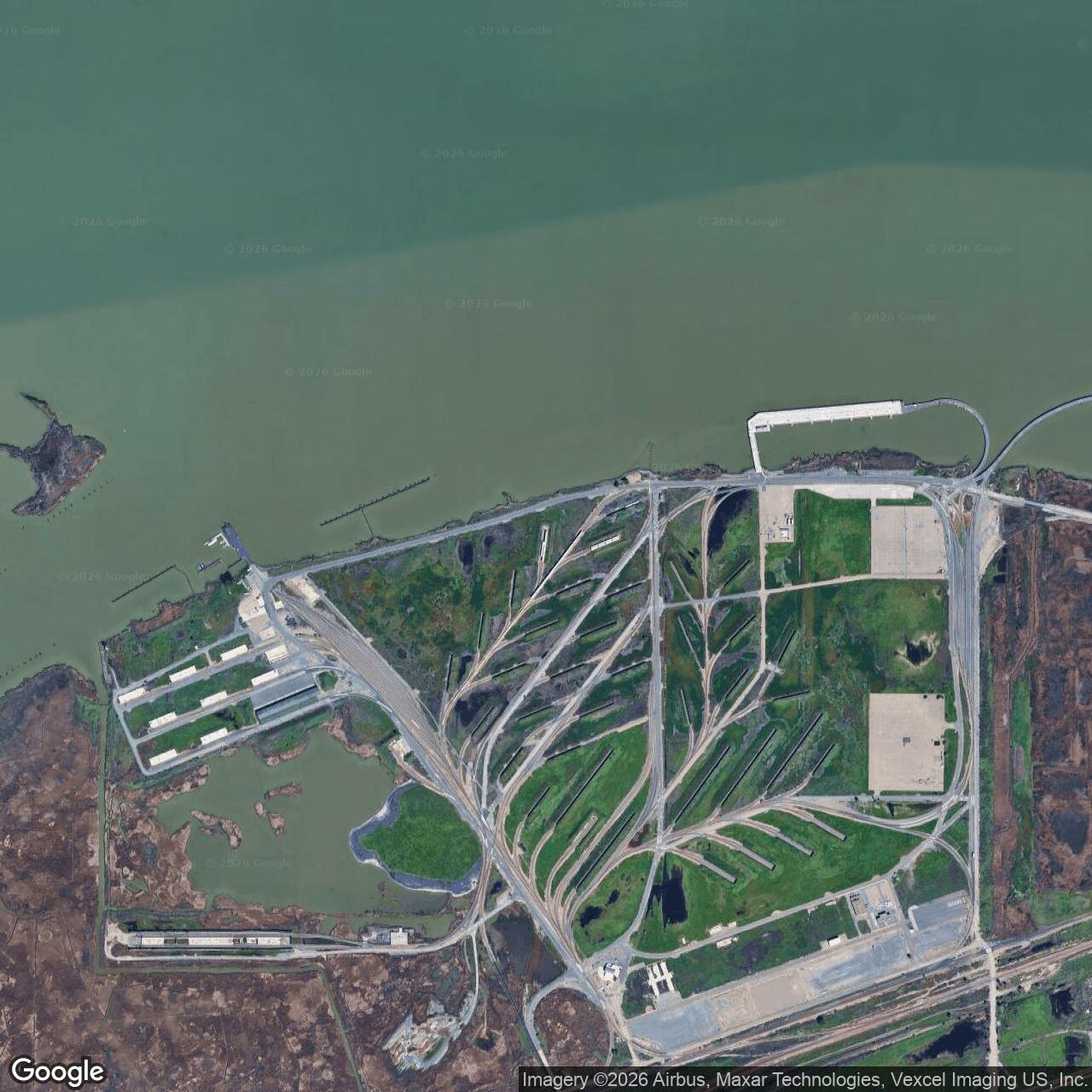
Naval Weapons Station Concord consisted of two major geographic components. The Tidal Area lay along Suisun Bay and included the ammunition-loading piers, waterfront terminal functions, and the Port Chicago disaster site. The Inland Area, southeast of the waterfront, contained the dispersed magazine and support landscape created and expanded after the disaster. EPA describes the former station as a roughly 12,800-acre installation composed of an approximately 5,170-acre Inland Area, an approximately 7,630-acre Tidal Area, and a small radiography facility in Pittsburg, California. Navy BRAC records list the total acreage as 12,878 acres.The Tidal Area's defining facilities were its piers, rail approaches, staging areas, and waterfront explosive-safety zones. It was where munitions became ship cargo. After the 1944 disaster, the terminal was rebuilt with additional piers and a safer operating pattern. The waterfront mission survived because the geography remained valuable. It gave the Navy, and later the Army, a deep-water ammunition port with rail access and safety arcs that would be difficult to recreate elsewhere in the Bay Area.
The Inland Area reflected the logic of explosive dispersal. Ammunition magazines, warehouses, support buildings, laboratory functions, barracks, roads, rail spurs, and open safety buffers were spread across thousands of acres. This design reduced the risk that a single incident would destroy the entire storage system. Earth-covered magazines, rail sidings, and separated loading points were not incidental features. They were the physical grammar of an ammunition base.
The former Naval Outlying Field Concord was a separate aviation function within the broader weapons-station landscape. It stood on the southern edge of the Inland Area and supported wartime naval aviation training linked to NAS Alameda. It should be understood as a distinct auxiliary airfield, not as the primary identity of Naval Weapons Station Concord. The weapons station's defining mission was ordnance, while the airfield was a secondary facility inside or adjacent to the same military landscape.
The modern Army successor, MOTCO, retains the active waterfront and a smaller supporting inland footprint. Recent Army planning documents describe MOTCO as a munitions and general cargo transshipment facility with a Tidal Area, a smaller Inland Area, three ocean terminal wharves, and an Army-owned rail system connecting with major commercial rail lines. That continuity is important. The Navy base is closed as a Navy installation, but its core waterfront purpose did not disappear.
Units, Organizations, and Systems
The original Navy system tied Port Chicago to Mare Island Naval Shipyard and the Mare Island magazine. Mare Island's shipyard and ordnance functions made the North Bay a major naval industrial region, and Port Chicago supplied additional space and waterfront capacity for the explosive demands of World War II. The installation's first identity as U.S. Naval Magazine, Port Chicago, places it inside the Navy's wartime ammunition system, not inside the aviation or shipbuilding systems sometimes associated with other Bay Area installations.The personnel system at Port Chicago included Navy ordnance battalions, enlisted labor details, white officers, civilian workers, merchant seamen, Coast Guardsmen, and Maritime Service personnel. The disaster casualty list reflected that mixed waterfront world. It was a Navy base, but the work of loading ships involved several categories of wartime personnel. That mix made the disaster both a naval tragedy and a home-front industrial disaster.
During the Cold War, Naval Weapons Station Concord belonged to the Navy's ordnance, storage, and weapons logistics system. It supplied fleet and theater requirements rather than hosting combatant ships or aircraft as its main activity. Its rail and pier functions tied it to inland ammunition depots, national supply chains, and Pacific operational commands. In that sense, Concord was a link between industrial production, inland storage, maritime transport, and combat demand.
After the Army transfer, the successor system changed names but retained the underlying military logic. Military Surface Deployment and Distribution Command uses MOTCO as a strategic ammunition port. Army sources identify it as the only strategic seaport for shipping ammunition to the Pacific region and a major share of West Coast ammunition shipping capacity. The port's modern role links Joint Munitions Command, Army transportation units, commercial railroads, military ocean terminal operations, and Pacific combatant-command requirements. The Navy weapons station is closed, but the larger system function of West Coast ammunition movement remains active.
Role in the Wider Military Network
Naval Weapons Station Concord mattered because ammunition logistics is a decisive military network. Combat units do not fight for long without ordnance. In World War II, the Pacific campaign required enormous flows of ammunition from factories and depots to ships and forward bases. Port Chicago was one of the West Coast places where those flows became maritime cargo. Its rail connections, waterfront loading points, and explosive safety areas made it a vital link between the American home front and the Pacific war.Within the Bay Area, Concord sat in a dense military-industrial network. Mare Island, Hunters Point, Oakland, Alameda, Richmond, San Francisco, Benicia, and other sites each handled different parts of the wartime support system. Concord's role was not to build ships or train pilots, but to arm the war supply chain. Its later Inland Area expansion and NOLF Concord aviation component also show how Navy functions overlapped within the same geography when wartime urgency required it.
In the Cold War, the installation remained a Pacific-facing logistics node. Its ordnance-storage and loading mission supported conflicts and deterrence postures far from California. During Korea, Vietnam, and later military operations, Concord's work was measured in the movement of weapons through a controlled port and magazine system. It did not need a high public profile to be strategically important. Its function was to make combat power deliverable.
Today MOTCO keeps the network role alive under Army control. The site's survival as a munitions port shows that the military value of the old Navy landscape exceeded the Navy's need for the entire weapons station. The Tidal Area remained too important to abandon, while the Inland Area became surplus. Concord therefore illustrates a common post-Cold War pattern: one part of a base closes and enters cleanup and reuse, while another part remains active because its logistics function is hard to replace.
Closure, Transfer, and Reuse
The closure story unfolded gradually. By October 1999, the Inland Area was on reduced operational status. The Navy no longer needed most of the large inland magazine landscape at the level built for World War II and Cold War requirements. In 2005 BRAC recommended closure of the Inland Area except for property needed to support Army operations in the Tidal Area. Navy BRAC records list the closure date as September 30, 2008.On October 1, 2008, the Navy transferred the Tidal Area and retained support property to the Army, creating the modern Military Ocean Terminal Concord. The Army successor took over the active ammunition-port mission, while the Navy continued environmental work to make surplus property suitable for transfer. EPA identifies the former station as a Superfund cleanup site and notes environmental investigations that began under the Navy Assessment and Control of Installation Pollutants program in 1982 before continuing under the Installation Restoration Program and CERCLA framework.
The former Inland Area became a major civic planning issue for Concord. The City of Concord serves as the Local Reuse Authority for the surplus lands. Reuse planning has emphasized a mix of open space, parks, conservation, housing, commercial development, transportation connections, and public facilities. The scale of the former base makes the reuse effort one of the most consequential land transitions in the East Bay.
The Port Chicago Naval Magazine National Memorial gives the active Army site a public commemorative role, but access remains controlled because the memorial lies inside MOTCO. Visitors generally require reservations and guided access coordinated through the National Park Service and the active military installation. That controlled access reinforces the dual nature of the site: it is both a national memorial and an active munitions terminal.
Current Status
Naval Weapons Station Concord is closed as a Navy installation. The former Tidal Area and retained support property are now Army-controlled Military Ocean Terminal Concord, an active military munitions and general cargo transshipment facility. MOTCO operates waterfront piers and an Army-owned rail system, and it remains a strategic West Coast ammunition port. The Port Chicago Naval Magazine National Memorial is located within the active MOTCO security perimeter.The former Inland Area is in the Navy BRAC cleanup and transfer process. EPA describes NWS Concord as a Superfund site, with investigation and cleanup tied to former ordnance, industrial, rail, storage, and support activities. The Navy continues environmental work to prepare portions of the property for transfer and reuse. The City of Concord's reuse process covers the surplus former Navy lands and has become a long-term planning effort involving housing, open space, parks, transportation, conservation, environmental constraints, and public benefits.
The correct status is therefore mixed. As a Navy base, Naval Weapons Station Concord is former and closed. As a military logistics landscape, part of the former installation remains active under the Army. As a public memory site, the Port Chicago disaster location is nationally significant but access-controlled. As a civic landscape, the Inland Area is still moving through cleanup, transfer, and reuse. Few installations show so clearly how one base can become a former Navy installation, an active Army terminal, a national memorial, and a redevelopment landscape at the same time.
Chronology
- 1942 The Navy established U.S. Naval Magazine, Port Chicago, as an ammunition-loading and storage facility tied to Mare Island Naval Shipyard and the Mare Island magazine system.
- 1942 The port began supporting the Pacific war by receiving, staging, and loading munitions onto ships.
- 1944-07-17 The Port Chicago explosion destroyed the loading pier, the SS E.A. Bryan, and the SS Quinault Victory, killing 320 people and injuring hundreds more.
- 1944-08-09 258 African American sailors refused to resume ammunition loading after the disaster under the same unsafe and segregated conditions.
- 1944-09-14 to 1944-10-24 Fifty sailors were tried at Treasure Island in the Port Chicago mutiny trial and convicted.
- 1944-1945 The Navy acquired thousands of acres for the Inland Area to disperse storage and support functions away from the waterfront.
- 1945 Post-disaster expansion produced a broader weapons-station landscape with magazines, support facilities, rail lines, and the Naval Outlying Field Concord aviation component.
- Korean War era The station continued as a West Coast ordnance and ammunition-support installation.
- Vietnam War era Naval Weapons Station Concord supported Pacific military operations through weapons storage and transshipment.
- 1982 Navy environmental investigations began under the Navy Assessment and Control of Installation Pollutants program.
- 1994 Concord Naval Weapons Station was listed as a Superfund cleanup site.
- 1997-10-01 The Army established a port-command presence when the 1302nd Major Port Command relocated from Oakland Army Base to the Concord terminal and became the 834th Transportation Battalion.
- 1999 The Inland Area was placed on reduced operational status.
- 2005 BRAC recommended closure of the Inland Area except property needed to support Army operations in the Tidal Area.
- 2006 The Department of Defense designated the Concord City Council as the Local Reuse Authority for the former Navy property.
- 2008-09-30 Navy BRAC records list the closure date for the former Naval Weapons Station Seal Beach Detachment Concord.
- 2008-10-01 The Navy transferred the Tidal Area and retained support property to the Army, and the active military port became Military Ocean Terminal Concord.
- 2013 Army and USACE public reporting described MOTCO as a strategic West Coast ammunition port requiring pier modernization.
- 2024-07-17 The Secretary of the Navy fully exonerated the remaining 256 defendants from the 1944 Port Chicago general and summary courts-martial.
- Present The former Navy installation remains split between active Army MOTCO operations, the Port Chicago Naval Magazine National Memorial, Navy BRAC cleanup and transfer work, and Concord reuse planning for the former Inland Area.
Sources & References
- WEB Navy BRAC Program Management Office Former Naval Weapons Station Seal Beach Detachment Concord
- WEB City of Concord Community Reuse Project History of the Concord Naval Weapons Station
- WEB U.S. Environmental Protection Agency Concord Naval Weapons Station, Superfund Site Profile
- WEB National Park Service Port Chicago Naval Magazine National Memorial
- WEB National Park Service The Port Chicago Story
- WEB National Park Service The Mutiny Trial
- WEB National Park Service Places
- WEB Naval History and Heritage Command Port Chicago Naval Magazine Explosion
- WEB U.S. Navy The Secretary of the Navy Exonerates 256 Defendants from 1944 Port Chicago General and Summary Courts-martial
- WEB U.S. Army Military Ocean Terminals play strategic role in defense
- WEB U.S. Army Corps of Engineers Sacramento District Corps plans to modernize military port's piers
- PDF U.S. Army Finding of No Practicable Alternative for Cargo Staging Area Project at Military Ocean Terminal Concord
- WEB U.S. Army Environmental Command Military Ocean Terminal Concord