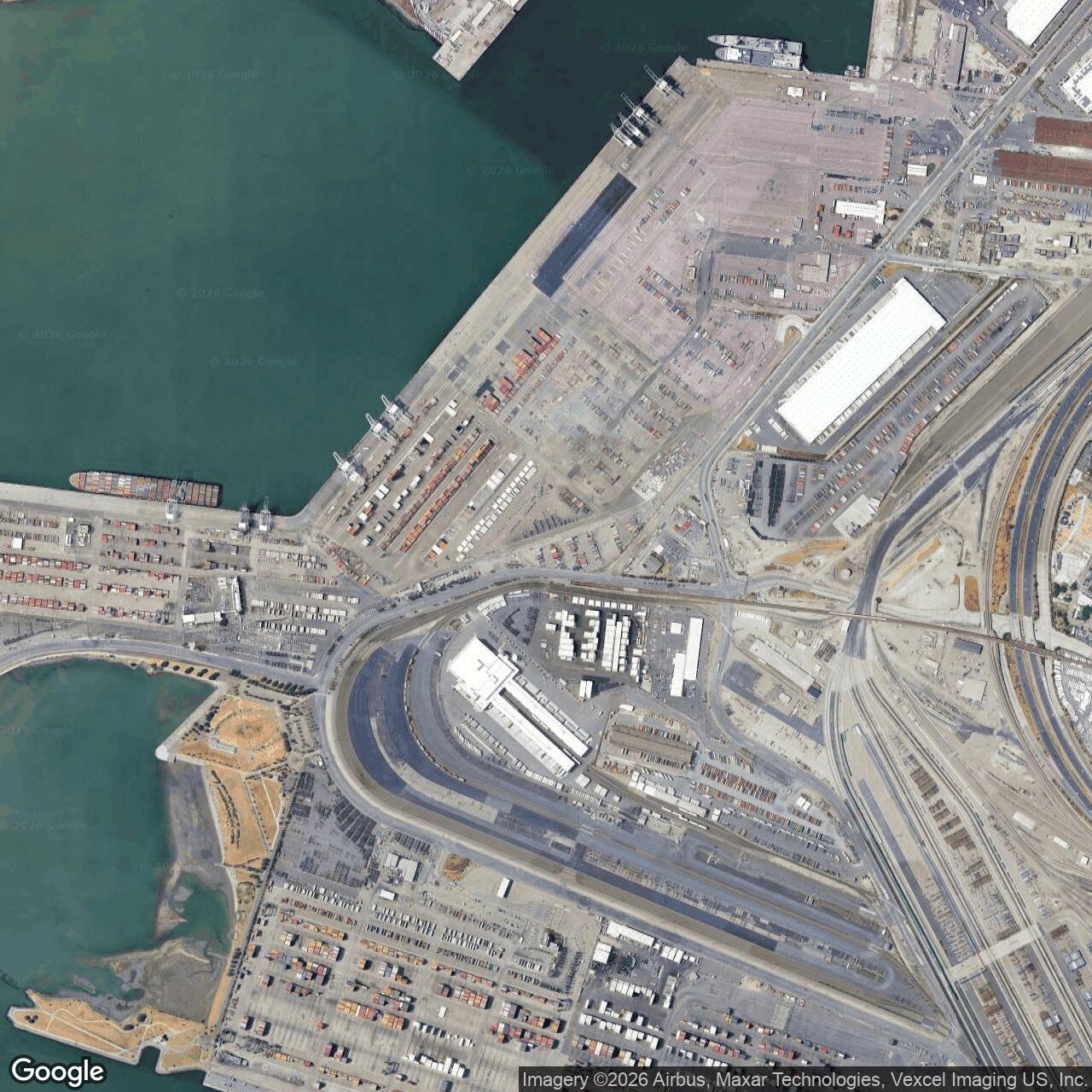
Oakland Army Base / Oakland Army Terminal, California
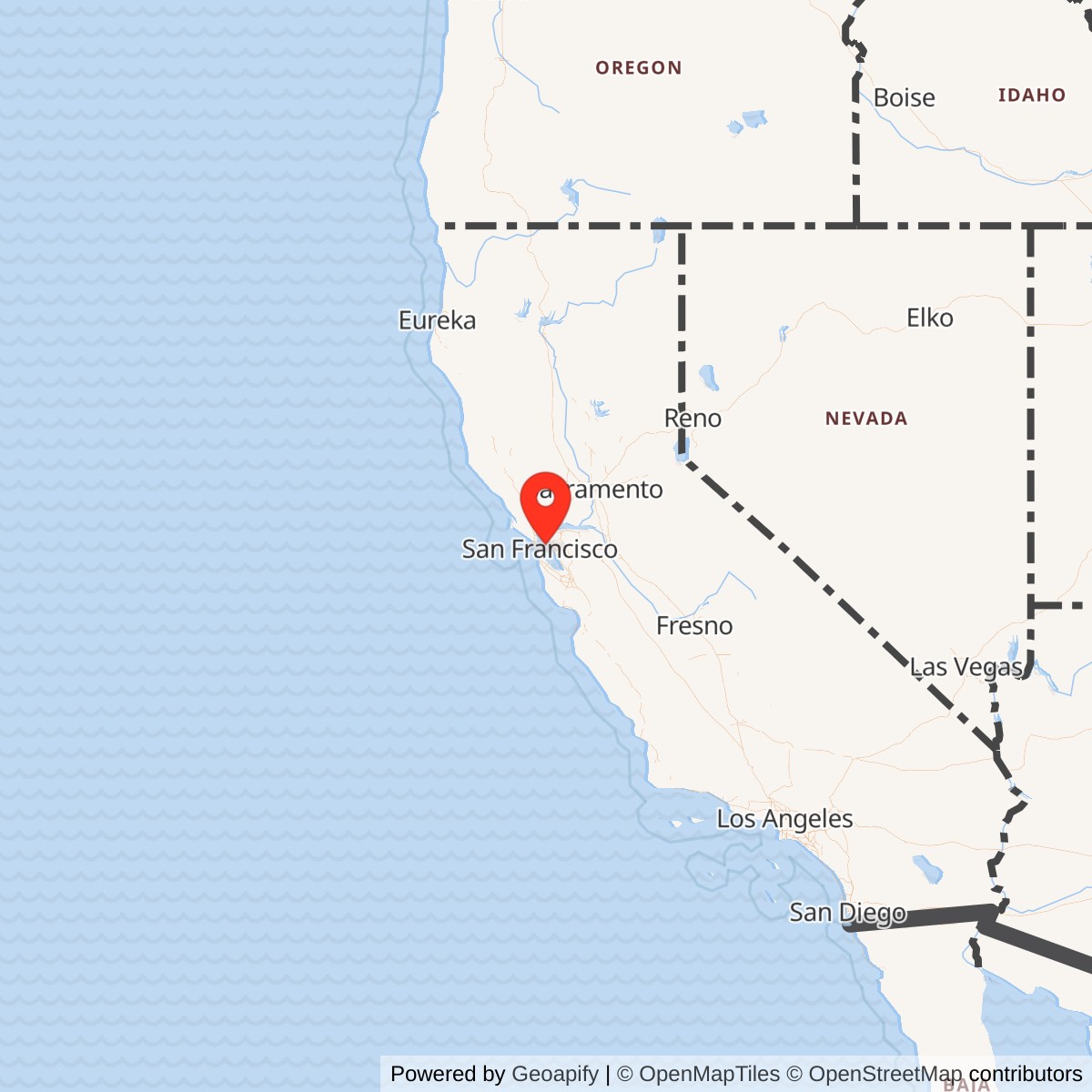
Longitude: -122.316667
Official Base Website: https://www.oaklandca.gov/Planning-Building/General-Plan-Neighborhood-Plans/Neighborhood-and-Citywide-Plans/Gateway-Industrial-District-Oakland-Army-Base
Current Role: Former Army base closed and reused as Port of Oakland / City of Oakland Gateway Industrial District, seaport logistics, rail and warehouse/distribution facilities, maritime support, infrastructure, Bay Trail connections, and related industrial redevelopment.
Oakland Army Base was one of the Army's great port installations of the Pacific century. It was not a conventional troop post with maneuver fields and firing ranges. It was a rail, road, warehouse, wharf, transit-shed, ship-berth, and traffic-management base built to move people and cargo across an ocean. The installation occupied reclaimed tidal land on the Oakland Outer Harbor, where rail lines, deep water, Bay Bridge highway access, and the protected waters of San Francisco Bay converged. That geography made the site valuable in exactly the way the Army needed in 1941: it could receive freight from the continental interior, sort and store it, move it by rail or truck to warehouses and transit sheds, and load it directly to vessels bound for the Pacific.
The base began as the Oakland Sub-Port of the San Francisco Port of Embarkation, a subsidiary terminal created because Fort Mason's older waterfront was too small for the scale of World War II. Construction began in 1941, and the sub-port was commissioned on December 8, 1941, one day after the Japanese attack on Pearl Harbor. The name changed several times as missions and commands changed: Port and General Depot, Oakland Sub-Port of the San Francisco Port of Embarkation, Oakland Army Base, Oakland Army Terminal, Military Ocean Terminal Oakland, and Military Ocean Terminal Bay Area. The administrative cantonment area was also known as Camp John T. Knight before it was merged into Oakland Army Base in 1946. Those name changes are not cosmetic. They trace the installation's evolution from wartime sub-port, to permanent Army logistics base, to Cold War transportation headquarters, to Vietnam-era military ocean terminal, to BRAC closure property.
The site's significance lies in the fact that it made Pacific logistics physically possible at scale. National Park Service material on the San Francisco Port of Embarkation describes the port system as the Army's major West Coast shipping funnel to the Pacific. During World War II, more than 1.6 million military passengers and more than 23.5 million measured tons of material moved through the San Francisco Port of Embarkation system. Oakland Army Base became the largest cargo terminal in that system and, by Army historical description recorded in HAER documentation, was the only complete Army port installation in the nation, with rail marshalling yards, huge warehouses, waterside transit sheds, piers for large cargo ships, shops, a complete internal rail system, administrative and service buildings, a dry dock, and temporary quarters for troops. That made it more than a dock. It was a complete Army logistics machine.
The installation remained important after World War II because the strategic logic that created it did not end in 1945. The Korean War brought another surge of cargo. In the Vietnam era, Oakland became one of the largest military port complexes in the world, operating through Military Ocean Terminal Bay Area and managing enormous quantities of Department of Defense cargo through Army and commercial piers. By the Cold War's later decades, the base's most important function was less the direct loading of every ton from its own wharves than the management of military traffic, freight movement, personal property, vehicles, storage, and transportation coordination across a wide western region. It closed as an Army installation on September 30, 1999, under the 1995 BRAC round, and the former property became part of the City of Oakland and Port of Oakland's long-running industrial, logistics, and waterfront redevelopment landscape.
Mission Evolution
Oakland Army Base grew out of a specific prewar problem: Fort Mason could not carry the Pacific burden alone. By the late 1930s the Army understood that any major Pacific conflict would require a much larger embarkation and cargo system than the existing San Francisco waterfront installation could support. Fort Mason had been the Army's Pacific transport hub since the early twentieth century, but its three piers and urban waterfront limits could not absorb the volume of cargo and personnel the Army anticipated. A San Francisco Port of Embarkation planning board looked for additional Bay Area sites and identified the partly developed Oakland Outer Harbor, where land could be acquired, filled, built out, and connected to rail and shipping infrastructure.
The original mission was therefore expansion, relief, and acceleration. Oakland was built to relieve Fort Mason by adding a much larger cargo and depot terminal to the San Francisco Port of Embarkation. Existing leased and city waterfront assets were not enough. The Army needed its own integrated terminal where freight could arrive, be inspected, stored, segregated, packed, repaired, staged, and loaded in a single controlled system. The Oakland site was well suited because three transcontinental railroads served the Bay Area, and the East Bay offered room for rail yards and warehouses that the San Francisco waterfront lacked.
Construction began in 1941. The Army purchased and filled former tideland and mudflat areas west of Maritime Street, adding millions of cubic yards of fill to create usable industrial land. Bechtel-McCone-Parsons Corporation and Army Port Contractors played major roles in design and construction, while the early labor force included military personnel and civilian contractors. The base was still incomplete when it was commissioned on December 8, 1941. HAER documentation records that only a fraction of the installation had been completed by that day, and the shock of Pearl Harbor gave the commissioning an urgent rather than ceremonial character. The Army did not have the luxury of waiting for a perfect facility; it needed a working Pacific port immediately.
The World War II mission quickly became immense. Oakland handled outbound cargo, troop movement support, vehicle and equipment preparation, storage, maintenance, rail switching, ship loading, and later returning personnel and disposition functions. The waterfront areas were formally designated Oakland Army Base effective January 1, 1944. The southern administrative and support section, Camp John T. Knight, provided cantonment and service functions until it was merged into Oakland Army Base in 1946. By the end of the war, Oakland had become a core piece of the San Francisco Port of Embarkation rather than merely an auxiliary overflow site.
After 1945, the mission shifted but did not disappear. The base supported the return of service personnel from the Pacific, the handling of war-surplus material, and the reduced peacetime needs of an Army still responsible for occupation forces and Pacific garrisons. The Korean War reversed that downsizing almost immediately. Cargo loads surged, and Oakland again became a major military terminal. Its position on the Bay, internal rail network, storage capacity, and ability to interface with both Army and commercial shipping made it too useful to abandon.
The 1950s and 1960s brought a command and mission transformation. In 1955 the San Francisco Port of Embarkation was reorganized as the U.S. Army Transportation Terminal Command Pacific, and Oakland became the Oakland Army Terminal. In 1964 the command headquarters moved from Fort Mason to Gilbreath Hall at Oakland. In 1965 and 1966, Army traffic-management reforms and the creation or consolidation of Military Traffic Management and Terminal Service functions made Oakland the headquarters and operational center for Western Area responsibilities. The name Oakland Army Base returned in 1966, but the mission had changed: it was no longer simply a World War II-style sub-port; it was a command, traffic-management, and military ocean-terminal complex.
During the Vietnam War, the base was again central to Pacific operations. Military Ocean Terminal Bay Area handled or managed enormous volumes of cargo, much of it moving through Army facilities and associated commercial container piers. The Vietnam era also exposed a major structural change in global shipping: containerization. The Army chose not to make the full investment needed to convert Oakland Army Base itself into a modern container port on the scale required by commercial ocean shipping. Instead, military traffic managers coordinated with commercial carriers and nearby container piers. That decision changed the installation's meaning. Oakland remained essential, but increasingly as a military traffic-control and logistics-management node within a larger commercial-maritime system rather than as a self-contained breakbulk port handling every movement from its own wharves.
By the late Cold War, Oakland Army Base's mission included freight movement across western states, storage and shipment of personal property and privately owned vehicles, management of military cargo, support to seagoing vessels and transportation fleets, facility and equipment maintenance, and coordination with commercial carriers. It also hosted Navy public works functions under interservice agreements, showing how a former World War II Army port became a multi-service support landscape. The 1995 BRAC round recommended closure, and the installation ceased military operations on September 30, 1999. Its post-Army mission became civilian redevelopment: port logistics, warehousing, distribution, rail, infrastructure, jobs policy, environmental remediation, and reuse planning.
Operational Role
Oakland Army Base's operational role was to turn continental production into Pacific combat power. Freight arriving by rail or truck was not automatically useful to forces overseas. It had to be received, documented, inspected, repaired if necessary, segregated by destination, held securely, packaged or crated, moved to a berth at the right time, and loaded onto the correct vessel in a sequence that made sense when unloaded thousands of miles away. That is what a port of embarkation did. It was not merely a place where ships docked; it was the Army's translation system between land logistics and ocean movement.
The physical plant supported that work. HAER documentation describes Oakland Army Base as having deep-draft ship berths, wharves, warehouses, transit sheds, rail trackage, shops, a dry dock, open and covered storage, administrative buildings, and troop quarters. By completion in 1943, the installation included thirteen deep-draft ship berths, more than 175 buildings and structures, twenty-seven miles of rail trackage, and millions of square feet of open and covered storage. These facilities allowed the Army to manage cargo in industrial sequence: rail arrival, classification, storage, maintenance, packing, movement to transit shed, and ship loading.
The base also had a personnel role, although Camp Stoneman and Fort McDowell were more specialized troop-processing nodes. Oakland handled soldiers, crews, returnees, and temporary quarters, and it served as a disposition center for personnel returning from overseas assignments. The relationship among Bay Area facilities is important. Fort Mason remained the historical headquarters and symbolic port site; Fort McDowell on Angel Island handled personnel processing; Camp Stoneman at Pittsburg became a major staging and replacement center; Oakland Army Base became the largest cargo terminal and later a central command and traffic-management site. The San Francisco Port of Embarkation functioned as a system, and Oakland was the system's industrial freight engine.
During World War II, the base moved supplies at a scale that is difficult to visualize. California Military Museum summaries place wartime movement through the terminal in the tens of thousands of soldiers and millions of tons of supplies, while detailed Army-derived summaries distinguish 8.5 million tons of cargo during the four most active World War II years. The larger San Francisco Port of Embarkation system moved more than 1.6 million military passengers and more than 23.5 million measured tons of cargo during the 45 months of war. Oakland's role was to keep the cargo side from choking the entire Pacific supply chain.
The kinds of work performed at the base show how broad that mission was. Mission support activities included maintaining facilities and equipment, repairing and upgrading equipment, preparing vehicles and material for overseas shipment, storing fuels, managing wastes, supporting seagoing vessels, and servicing rail and land transportation vehicles. The installation's warehouses and shops were therefore part of the movement process. Cargo often had to be made ready for ocean shipment, not merely passed through.
Oakland's operational role also touched prisoner and labor history. In 1944, Italian Service Units made up of former Italian prisoners of war began working at the base. Their presence reflects the wider wartime labor system in which surrendered or cooperating Italian POWs were reorganized for service and labor support after Italy's armistice. On a major port installation, labor mattered almost as much as cranes and rails. Cargo movement depended on coordinated work by soldiers, civilians, longshoremen, contractors, prisoners, clerks, supervisors, railway crews, and ship personnel.
After victory in 1945, the base handled return and disposition work. The direction of movement reversed as personnel and equipment came home from the Pacific. Returning service members, surplus material, captured or returned equipment, and occupation-support cargo all passed through the Bay Area system. Oakland did not become idle; it became part of the Army's postwar drawdown and Pacific occupation logistics.
The Korean War demonstrated the installation's continuing operational value. Cargo loading increased sharply after war began in 1950, and 7.2 million tons of cargo passed through the terminal during the three active years of the conflict according to Army-derived historical summaries. This Korean War surge is one of the strongest arguments for treating Oakland Army Base as more than a World War II temporary installation. It had become a permanent strategic logistics node for Pacific operations.
The Vietnam era produced another operational peak. Oakland Army Base, through Military Ocean Terminal Bay Area and the Military Traffic Management Command Western Area structure, managed more than 37 million tons of cargo over the eight years of the Vietnam conflict according to California Military Museum summaries derived from Army materials. The base and its associated commercial pier system became the gateway through which enormous volumes of materiel flowed to Southeast Asia and other Pacific destinations. The operational work included coordination of commercial container traffic as well as Army terminal activity. More than 70 percent of Department of Defense cargo moving through the Bay Area during that era was managed through MTMCWA and MOTBA structures in Oakland and San Francisco.
In the late twentieth century, the installation's work became less visible but remained consequential. Oakland Army Base managed freight movements originating in twenty western states, handled personal property and privately owned vehicles, coordinated movements with commercial carriers, maintained infrastructure, and supported Army and Navy activities in the Bay Area. A logistics base like Oakland rarely produced dramatic battlefield stories on its own grounds. Its impact was cumulative: ships sailed, cargo arrived, units deployed, vehicles moved, supplies reached theaters, and the Army's global posture remained possible.
Facilities and Physical Layout
The Oakland Army Base landscape was built from water, mudflat, fill, rail, and military urgency. The HAER history emphasizes that the land occupied by the installation was unreclaimed tidal marsh into the twentieth century. As recently as the early 1910s, west Oakland real-estate maps showed the Outer Harbor area as broad mudflat, with the historic shoreline east of the later Southern Pacific 16th Street classification yard. A portion of the area west of Maritime Street was filled during the 1910s and 1920s, and additional fill occurred when the Army built the base in 1941. This origin matters because Oakland Army Base was not simply placed on an old military reservation. It was engineered into existence.
The construction task was enormous. The site sat on shallow tideland facing the Oakland Outer Harbor. When the Army began building in June 1941, additional filling was completed using hydraulic sand fill capped by dry fill. HAER documentation states that approximately six million cubic yards of rock fill were required. The result was a new military-industrial landscape: firm enough for heavy warehouses, rail yards, vehicles, cranes, transit sheds, and wharves; close enough to deep water for ships; and connected enough to rail and highway systems to function as a continental gateway.
The completed World War II base included thirteen deep-draft ship berths, more than 175 buildings and structures, twenty-seven miles of rail trackage, and millions of square feet of open and covered storage. Those numbers explain how the base functioned. Deep-draft berths handled large cargo ships. Transit sheds held freight close to the piers for loading. Warehouses provided longer-term storage and sorting. Rail trackage allowed freight cars to move directly into and through the base. Open storage allowed vehicles, crates, heavy equipment, and bulk cargo to be staged. Shops repaired vehicles and equipment. Administrative buildings controlled paperwork, schedules, records, and command functions.
The installation developed recognizable districts. HAER identified a Northwest Historic District made up of administrative and operational facilities and a Northeast Historic District dominated by warehouse activities. Key documented resources included the post headquarters building, privately owned vehicle inspection building, exchange cafeteria, printing plant, storehouses, general-purpose administration building, vehicle maintenance shops, warehouses, box and crate shop, railroad engine shop, Knight Rail Yard, and wharves 6, 6 1/2, and 7. This collection of structures shows the base's functional diversity. It needed offices, shops, stores, print and paperwork facilities, vehicle movement, rail switching, warehousing, and marine loading.
Camp John T. Knight formed the administrative and cantonment component of the base before the name was discontinued in 1946. It was named for Brigadier General John Thornton Knight, a veteran of the Spanish-American War and World War I who had served in San Francisco. The Camp Knight designation can cause confusion because it suggests a separate traditional camp, but it was functionally part of the Oakland port and support complex. Its merger into Oakland Army Base after the war reflected what had already been true operationally: the administrative, troop, support, warehouse, rail, and wharf components worked as one installation.
The base's relationship to rail was fundamental. Oakland's value came partly from the fact that freight could be moved by rail from the interior United States into the base's own yards and warehouses. The Knight Rail Yard and internal rail network connected the waterfront to the continental rail system. In a pre-container and early-container era, this rail-maritime interface was crucial. The port was an industrial conversion point: freight cars became ship loads.
The waterfront was equally important. Wharves 6, 6 1/2, and 7, deep-draft berths, transit sheds, and related structures allowed the Army to load ships directly. Fort Mason's older piers had symbolic and command importance, but Oakland's waterfront gave the Army the scale and industrial depth needed for mass cargo movement. The base was deliberately placed where rail and deep water could be brought together under Army control.
The postwar base remained physically useful because these elements were flexible. Warehouses could store different commodities. Shops could support different vehicle fleets. Rail yards could handle cargo during multiple wars. Administrative buildings could house changing commands. Gilbreath Hall, Building 1, became headquarters for Army transportation functions after the command moved from Fort Mason in 1964. The installation's infrastructure was therefore not limited to one wartime product line. It could support World War II breakbulk cargo, Korean War surge movements, Vietnam-era traffic management, personal property shipments, vehicle processing, Navy public works functions, and later civilian logistics reuse.
Current redevelopment preserves the same broad logic while changing ownership and purpose. The City of Oakland's Gateway Industrial District occupies a 160-acre area that was once part of Oakland Army Base, adjacent to the Port of Oakland and West Oakland. Modern reuse emphasizes seaport access, railroads, major roads, warehouse and distribution facilities, local jobs, truck management, air-quality mitigation, and Bay Trail connections. The Port of Oakland's former-base redevelopment likewise emphasizes logistics facilities tied to marine terminals and rail. The Army is gone, but the geographic logic of the site remains the same: rail, road, waterfront, freight, and distribution.
Units, Commands, and Organizations
The San Francisco Port of Embarkation was the parent system that created Oakland Army Base. Its headquarters were at Fort Mason, but its wartime mission spread across the Bay Area. Oakland began as the Oakland Sub-Port of that system and became the largest cargo terminal within it. The relationship between the two should be understood as headquarters and major subsidiary base rather than as two unrelated installations.
The first installation commander identified in HAER documentation was Colonel Robert L. Allen, commander of the Oakland Sub-Port. His recollection of the commissioning on December 8, 1941, captures the emergency mood of the base's birth. The Army did not build Oakland in a calm peacetime sequence. It commissioned the post under wartime shock while construction continued around the clock.
Army Port Contractors, Bechtel-McCone-Parsons Corporation, MacDonald & Kahn, Utah Construction Company, W. A. Bechtel Company, and other San Francisco Bay Area contractors were central to construction. At least some soldiers of the 394th Quartermaster Battalion also helped build the installation. Construction history matters here because the building of the base was itself a wartime operation. The Army had to create a massive port while simultaneously using it.
Camp John T. Knight was the named administrative and cantonment area associated with Oakland Army Base. It was officially commissioned in 1942 and merged into the base in 1946.
The U.S. Army Transportation Terminal Command Pacific replaced the San Francisco Port of Embarkation structure in 1955. Under that system Oakland Army Terminal became increasingly important as the Army's transportation command focus shifted from old Fort Mason toward the more expandable East Bay terminal. By 1964 Gilbreath Hall at Oakland had replaced Fort Mason as headquarters for the command.
The Military Traffic Management and Terminal Service, later Military Traffic Management Command, made Oakland a western traffic-management headquarters. In 1965 the Army established traffic regions, and Western Area functions were eventually centered at Oakland. During the Vietnam era, Military Ocean Terminal Bay Area operated as a subordinate command of Military Traffic Management Command-Western Area. These organizations made Oakland not merely a pier but a command node controlling cargo movement across a broad region and through both military and commercial facilities.
The Navy Public Works Center Oakland / San Francisco Bay is also part of the post's institutional history. In 1974 the Army granted the Navy authority to use, administer, and maintain base infrastructure and family housing under permit arrangements that were later extended. That Navy presence reflects the dense interservice support environment of the Bay Area and the difficulty of separating Army port infrastructure from broader Department of Defense shore-support needs.
The Army Reserve enclave after closure represents the last military layer. BRAC closure ended Oakland Army Base as a full active Army installation on September 30, 1999, but a small Army presence and Reserve enclave remained during transfer and reuse processes. This is common in BRAC closures: operational closure precedes full property disposal, environmental cleanup, and final redevelopment.
Role in the Wider Military Network
Oakland Army Base belongs first to the San Francisco Port of Embarkation system. During World War II, the SFPE network included Fort Mason, Fort McDowell, Oakland Army Base, Camp Stoneman, and other scattered Bay Area facilities. Fort Mason provided the historic headquarters and pier complex. Fort McDowell handled personnel processing on Angel Island. Camp Stoneman staged troops at Pittsburg for final movement toward ships. Oakland handled the enormous cargo and terminal workload that Fort Mason could not absorb. The system moved soldiers and cargo, not just ships.
In the Pacific war, the system converted American industrial geography into overseas military force. Railroads brought goods west. Bay Area terminals sorted them. Ships carried them across the Pacific. Camps and forts staged troops. Ports, depots, warehouses, longshore labor, traffic commands, and shipping schedules linked home-front production to combat theaters. Oakland's value lay in being the high-volume cargo engine inside that system.
In the Korean War, the same system logic returned. The United States had demobilized after World War II but still needed Pacific logistics capacity when war broke out in Korea. Oakland could be surged because its facilities, rail connections, and port workforce already existed. The base moved 7.2 million tons of cargo during the three active Korean War years, demonstrating that the wartime investment had become a reusable strategic asset.
In Vietnam, the system expanded beyond Army-owned wharves into a hybrid military-commercial transportation network. Containerization changed shipping economics and port infrastructure. Rather than turning every Army berth into a fully modern commercial-style container terminal, military traffic managers coordinated large amounts of cargo through commercial container piers. Oakland Army Base remained central because it housed the command, records, traffic management, storage, vehicle, and support functions that tied the military system to commercial transportation. This was a different kind of port power: less visibly concentrated at one pier, but broader in management reach.
By the late Cold War, Oakland was part of the Military Traffic Management Command system, the Port of Oakland economy, Bay Area military infrastructure, and western-state freight network. It managed cargo, personal property, vehicles, and transportation support across a broad region. The base was therefore a node in national mobility, not simply a local installation.
BRAC closure placed Oakland into another system: post-Cold War base realignment, environmental cleanup, local reuse planning, economic development, and historic-resource mitigation. The City of Oakland, Port of Oakland, Oakland Base Reuse Authority, UC Berkeley oral-history project, state and federal regulators, community coalitions, developers, and logistics companies all became part of the post-Army story. In this sense, the base's final military act was not a deployment but a transfer into civilian logistics redevelopment.
Postwar and Cold War Service
Oakland Army Base's postwar story is not a quiet epilogue. It is a second and third career. After World War II, the base was used for reception of returning service members, disposition of overseas personnel, and distribution of surplus material. These functions were crucial to demobilization. The Army had to bring people home, process property, account for cargo, and redistribute or dispose of enormous quantities of wartime equipment. Oakland's wartime machinery was redirected toward the reverse flow of demobilization.
The Korean War reactivated the installation's high-volume cargo role. Cargo loadings increased dramatically after 1950, and the base again became a major Pacific logistics terminal. This period reinforced the value of retaining large Army port infrastructure after 1945. A temporary camp could be disposed of when the emergency ended, but a strategic port was harder to replace.
The 1955 reorganization into U.S. Army Transportation Terminal Command Pacific marked a major institutional change. The old port-of-embarkation terminology belonged to a World War II system; the new command name reflected a permanent transportation mission. Oakland Army Terminal became increasingly central to that mission. The 1964 move of headquarters from Fort Mason to Oakland was especially important. It signaled that the center of gravity in Bay Area Army transportation had shifted from the older San Francisco waterfront to the larger East Bay terminal.
Vietnam made Oakland globally significant again. The base did not fight the war, but it moved the war. Ammunition, vehicles, supplies, equipment, personal property, and other cargo moved through Military Ocean Terminal Bay Area and associated commercial piers under military management. The installation also became part of the lived experience of soldiers deploying to or returning from the Pacific and Southeast Asia, even when troop movement increasingly involved air travel or other routes. Oakland's name became associated with the machinery of Vietnam-era deployment and logistics.
The base also had a social and labor history in the Cold War era. Thousands of civilians worked there across decades. The base employed clerks, warehouse workers, mechanics, traffic managers, rail and vehicle personnel, administrators, public works personnel, guards, supervisors, and specialists. Its closure in 1999 was therefore not just a military decision; it was a labor and community event in West Oakland. UC Berkeley's Oakland Army Base Oral History Project was created to preserve the memories of workers, veterans, community members, and officials because the base was a major institution in the life of Oakland as well as in the Army transportation system.
Closure and Reuse
The 1995 Base Realignment and Closure Commission recommended closure of Oakland Army Base and relocation of MTMC Western Area functions. The recommendation became effective in September 1995, and the installation officially ceased military operations on September 30, 1999. A caretaker presence and transfer process remained, but the base's active Army mission had ended.
Closure created a complicated reuse problem. The former base was valuable because it sat next to the Port of Oakland, rail lines, highways, and the Bay Bridge. It was also complicated because it contained industrial buildings, utilities, environmental concerns, historic resources, transportation constraints, and nearby West Oakland communities affected by truck traffic, diesel emissions, unemployment, and redevelopment decisions. The Oakland Base Reuse Authority became responsible for planning and conversion, and the 2002 Final Reuse Plan described the property as a 425-acre cargo and distribution facility strategically located on the Oakland waterfront.
Property transfer and redevelopment proceeded over years rather than instantly. UC Berkeley's oral-history project notes that ownership transferred to the City of Oakland and the Port of Oakland in 2006 and that parts of the base had been determined eligible for listing in the National Register of Historic Places as a discontiguous historic district. Redevelopment threatened the physical resources that made up that district, so oral history and documentation became mitigation measures for the loss of historic fabric. This is an important part of the base's legacy: when the Army landscape disappeared, memory work and HAER documentation became the surviving historical infrastructure.
The City of Oakland's Gateway Industrial District now occupies a 160-acre area that was once part of the base. The city describes it as a district connected to the seaport, railroads, and major roads, with modern warehouse and distribution facilities, local jobs, pollution-reduction goals, new roads, utilities, bike paths, and Bay Trail connections. The Port of Oakland's former-base redevelopment similarly emphasizes logistics facilities tied to the seaport and railyard. The Army base closed, but the land did not stop being a freight landscape. It returned to the same underlying economic geography that made it militarily useful: movement, storage, rail, trucks, waterfront access, and distribution.
Current Status
Oakland Army Base is closed as an Army installation. Its former lands are now divided among Port of Oakland, City of Oakland, logistics, warehouse, infrastructure, and public-access uses. The most visible current identity is the Gateway Industrial District and Port-related redevelopment zone near the foot of the Bay Bridge. Modern uses include warehouse and distribution facilities, maritime-support activity, infrastructure improvements, seaport logistics, rail and truck connections, job-policy oversight, environmental mitigation, and public connections such as Bay Trail segments. The Army Reserve enclave and residual federal cleanup/transfer obligations formed part of the transition, but the installation no longer functions as an active Army base.
Chronology
- 1910s Portions of the Oakland Outer Harbor mudflats west of Maritime Street were filled and lightly developed before the Army acquired the property.
- 1932 The Army's Bay Area transport operation was named the San Francisco Port of Embarkation, headquartered at Fort Mason.
- 1939 War in Europe underscored the need for larger U.S. military logistics and Pacific transport capacity.
- 1940 A San Francisco Port of Embarkation board recommended expansion beyond Fort Mason and identified the Oakland Outer Harbor as a suitable site.
- 1941-01 The first Oakland land was acquired after War Department approval of the expansion plan.
- 1941-02 Limited operations began using existing site facilities.
- 1941-04 Landfill and building construction began on what was initially called the Port and General Depot.
- 1941-06 Major construction at the Oakland site was underway, including tideland filling and terminal development.
- 1941-12-08 The Oakland Sub-Port of the San Francisco Port of Embarkation was officially commissioned one day after the attack on Pearl Harbor.
- 1942 The administrative area was commissioned and designated Camp John T. Knight.
- 1943 The integrated terminal facility was completed at a reported cost of $35 million.
- 1943-12-11 War Department Circular No. 321 designated the waterfront areas as Oakland Army Base, effective January 1, 1944.
- 1944-01-01 Oakland Army Base became the effective name for the waterfront terminal areas.
- 1944 Italian Service Units composed of former Italian prisoners of war began work at the base.
- 1945 The base supported Pacific war logistics and then reception and disposition of returning service personnel.
- 1946-04-03 Camp John T. Knight was officially unified with Oakland Army Base and the Camp Knight designation was discontinued.
- 1950 The Korean War began, sharply increasing cargo movement through Oakland.
- 1950-1953 Oakland Army Base handled 7.2 million tons of cargo during the three active Korean War years.
- 1955-10 The San Francisco Port of Embarkation was reorganized as U.S. Army Transportation Terminal Command Pacific, and the base became Oakland Army Terminal.
- 1964 Gilbreath Hall / Building 1 at Oakland Army Terminal replaced Fort Mason as headquarters for U.S. Army Transportation Terminal Command Pacific.
- 1965 Army traffic-management reforms established Western traffic functions connected to Oakland.
- 1965-04 The Joint Army-Navy Ocean Terminal, Oakland, was transferred into the MTMTS structure, and predecessor command functions were consolidated into Western Area traffic-management organizations.
- 1966-07 Oakland Army Terminal was renamed Oakland Army Base and reassigned under Western Area military traffic-management structures.
- 1966-1974 During the Vietnam era, Oakland Army Base and Military Ocean Terminal Bay Area handled or managed major volumes of military cargo through Army and commercial port facilities.
- 1974-06 The Army granted the Navy Public Works Center authority to use and maintain base infrastructure and family housing under permit arrangements.
- 1984 Military Traffic Management Command territorial realignment adjusted Eastern and Western Area responsibilities, with Oakland continuing as a Western Area node.
- 1995-07-01 The BRAC Commission called for closure of Oakland Army Base and relocation of MTMC Western Area functions.
- 1995-09-28 The BRAC closure recommendation became effective.
- 1999-09-30 Oakland Army Base officially ceased military operations.
- 2002-07-31 The Oakland Base Reuse Authority adopted the Final Reuse Plan for Oakland Army Base, describing the closed base as a 425-acre cargo and distribution facility.
- 2006 Ownership of the former base transferred to the City of Oakland and the Port of Oakland according to UC Berkeley oral-history project background.
- 2007-2009 The Oakland Army Base Oral History Project documented memories of the closed installation as a cultural-resource mitigation measure.
- 2012 Oakland approved updated redevelopment and reuse planning for the former base.
- 2017 The Port of Oakland moved toward logistics-facility development on former Army Base land as part of the planned seaport logistics complex.
- 2019 The City of Oakland completed major Gateway Industrial District infrastructure upgrades, including new roads, utilities, bike paths, and Bay Trail connections.
- Present The former Oakland Army Base is reused as a Port of Oakland / City of Oakland logistics, warehouse, distribution, rail, maritime-support, infrastructure, and public-access redevelopment landscape; it is closed as an Army installation.