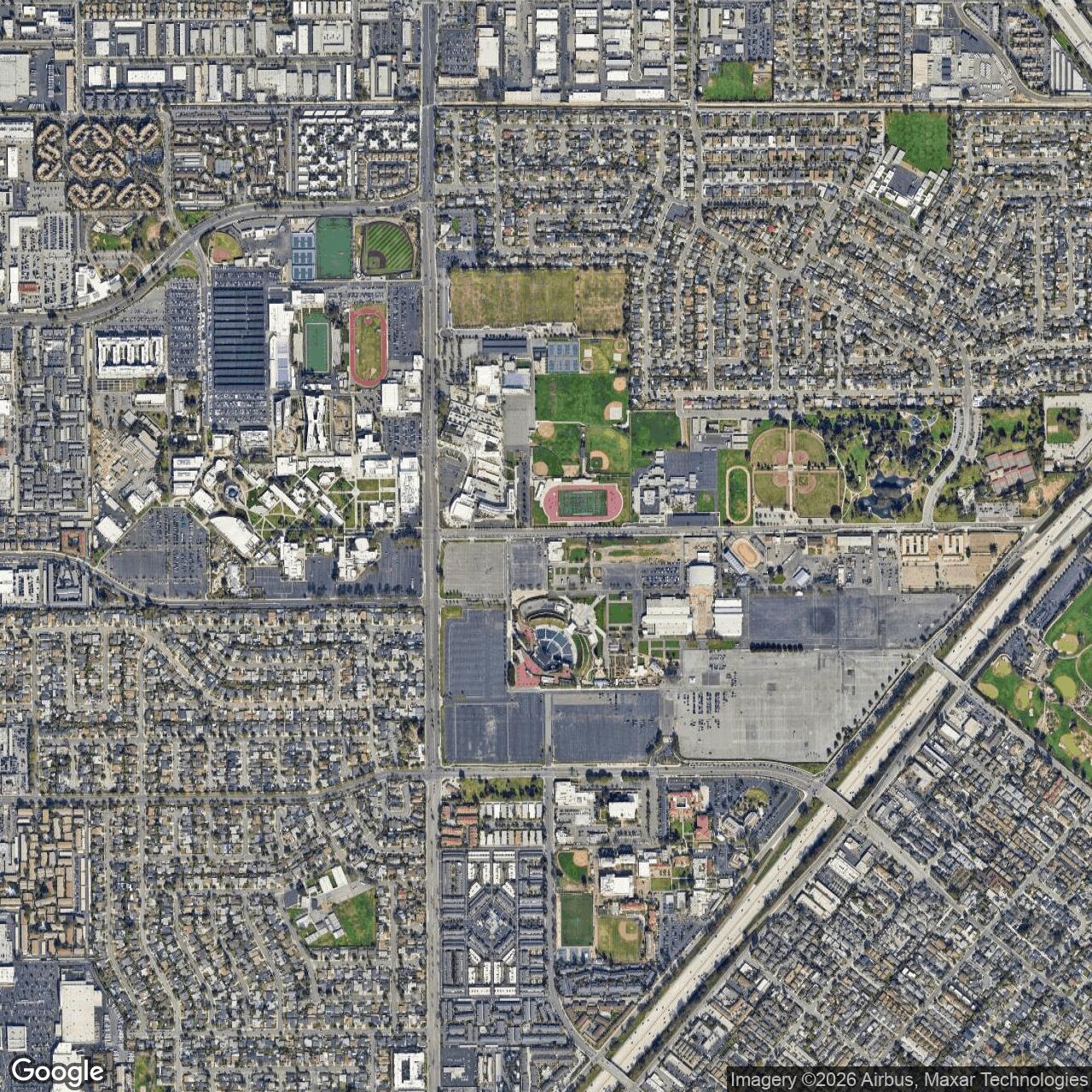
Santa Ana Army Air Base, Santa Ana California
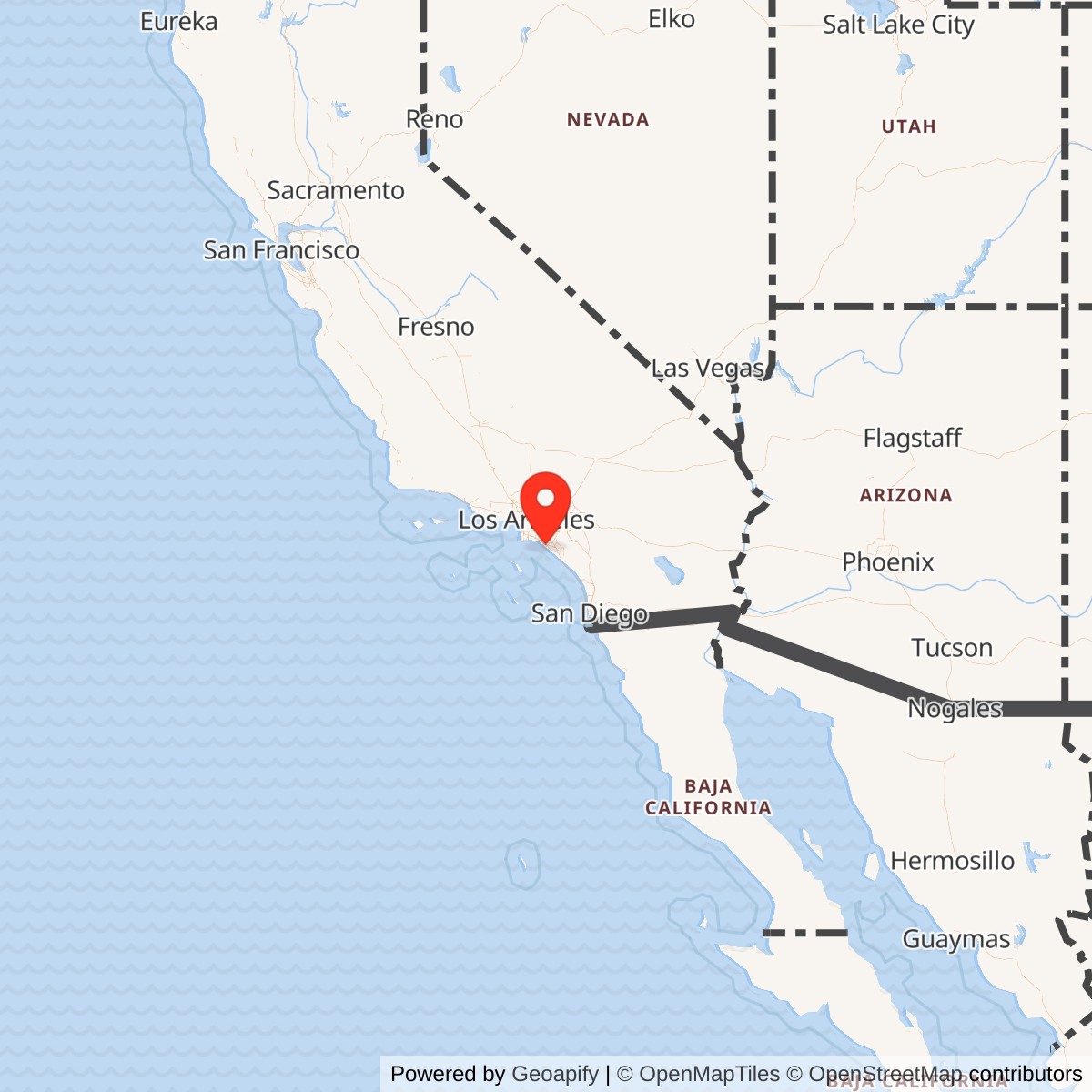
Longitude: -117.9048530
Airport ICAO ID: KSNA
Current Role: Former main SAAAB footprint reused by OC Fair & Event Center / Heroes Hall, Orange Coast College, Vanguard University, Costa Mesa civic and school facilities, TeWinkle Park, residential neighborhoods, and commercial development; adjacent Orange County Airport / John Wayne Airport has related but separate wartime AAF airport-use context.
Santa Ana Army Air Base was one of the strangest and most consequential "air bases" of World War II California because its importance did not depend on runways. It was a ground-training, classification, preflight, redistribution, and separation installation for the Army Air Forces, built on former agricultural land in what is now Costa Mesa. Thousands of aviation cadets arrived there before they ever touched the controls of a military aircraft. They were tested, drilled, classified, screened, medically examined, instructed, and sorted into the pilot, navigator, bombardier, ground-crew, or other tracks that fed the enormous Army Air Forces training machine.
That makes Santa Ana different from the many wartime Army airfields that later became municipal airports. The main Santa Ana Army Air Base cantonment had no flying field, no permanent hangar line, and no operational runway system. Its value was administrative, psychological, educational, physical, and personnel-driven. It was where the Army Air Forces turned mass enlistment and conscription into classified aviation manpower. The adjacent Orange County Airport, later John Wayne Airport, had wartime Army Air Forces use and a small leased support presence, but the heart of SAAAB was the large non-flying training and personnel base whose footprint is now occupied by the OC Fair & Event Center, Orange Coast College, Vanguard University, Costa Mesa civic and school facilities, TeWinkle Park, and surrounding residential and commercial development.
The base was activated in February 1942 and deactivated in March 1946. In those four years it handled a huge share of the human throughput behind American airpower in the Pacific and European wars. Costa Mesa Historical Society's fact sheet gives the base size as 1,336.685 acres, the maximum personnel strength as 26,000 Air Force personnel, and the primary function as classification and preflight training for pilots, navigators, and bombardiers. It also records approximately 149,400 personnel entering the training system, roughly 128,000 graduates during the classification/preflight period from February 15, 1942, to October 31, 1944, more than 72,000 combat returnees processed during the redistribution period, and more than 38,000 veterans discharged during the temporary separation-center period. Those numbers explain why a non-flying base deserves full installation treatment: Santa Ana was one of the main valves through which Army Air Forces manpower moved.
Mission Evolution
Santa Ana Army Air Base grew from the prewar emergency expansion of the Air Corps training system. The Army Air Corps had already established major training centers at Maxwell Field in Alabama and Randolph Field in Texas, and the West Coast training system initially centered at Moffett Field in northern California. Navy interest in Moffett's lighter-than-air facilities, the growing need for aviation manpower, and the pressure to build a west-coast classification and preflight center pushed the Army toward a new Southern California site. The Santa Ana / Costa Mesa area offered open land, favorable weather for year-round training, nearby transportation, proximity to the wider Southern California aviation economy, and enough space to build a temporary military city.
The first mission was classification and preflight training. Aspiring aviation cadets arrived as raw personnel, not as pilots. The base's job was to determine who could become what. Physical exams, psychological testing, aptitude screening, academics, military discipline, physical conditioning, and preflight instruction shaped the early pipeline. Cadets who survived the process moved on to primary flying schools, bombardier schools, navigator schools, or other specialized training. Those who did not meet aviation standards were redirected into ground-crew or other Army Air Forces assignments. In this role, SAAAB was both a school and a sorting system. It did not produce flying hours; it produced correctly routed aircrew candidates.
The base also became the headquarters point for the West Coast / Western Flying Training Command system. That command relationship made Santa Ana more than a local training camp. From Santa Ana, the Army Air Forces managed a wide web of contract and military flying schools across the western United States. The headquarters function tied the base to primary, basic, advanced, bombardier, navigator, and specialized training fields from California across the Southwest. Even though cadets did not fly from the main SAAAB cantonment, the base sat near the top of a regional air-training network that did fly every day.
By late 1944 the aviation training crisis had eased. The Army Air Forces had built an immense pool of trained aircrew, some training programs were contracting, and the personnel problem shifted from producing airmen to managing men returning from overseas. On November 1, 1944, SAAAB moved into an Army Air Forces Personnel Distribution Command role. Its mission changed from making aircrew candidates to processing experienced combat returnees for reassignment, leave, evaluation, or movement through the next stage of service.
After V-E Day in May 1945 the base's mission shifted again, this time toward separation and demobilization. SAAAB worked around the clock as a temporary separation center. Combat veterans returned from overseas, were processed through medical and administrative channels, and many were discharged back into civilian life. Late in 1945 the base also temporarily housed Japanese aliens being returned to Japan by the Immigration and Naturalization Service while they awaited transportation. By early 1946 the wartime emergency that had created the base had ended, and the Army deactivated SAAAB on March 31, 1946.
Operational Role
Santa Ana's operational role was personnel conversion. In practical terms, the base took civilians, new soldiers, aviation cadets, returning combat veterans, and later separation candidates and moved them through highly structured Army systems. Its day-to-day military life was built around testing, marching, physical training, academic classes, inspections, medical examinations, formations, counseling, command processing, discipline, recreation, and administrative paperwork. This was not the glamour version of airpower, but it was one of the conditions that made that airpower possible.
During the classification and preflight period, the base functioned like an industrial-scale selection machine. Aviation cadets were evaluated for mental aptitude, physical ability, coordination, psychological suitability, education, and military discipline. Classification was consequential because it determined the rest of a cadet's war. A man classified as a pilot entered a different pipeline from a man classified as a navigator or bombardier. Another might be redirected to ground crew or radio training. Santa Ana's testing and classification process therefore shaped squadrons that later appeared across the Pacific, Mediterranean, China-Burma-India, and European theaters.
Preflight training gave cadets their first sustained taste of aviation military culture. The instruction did not make them pilots in the cockpit sense. Instead, it prepared them for the demands of military flying school: mathematics, navigation fundamentals, aircraft recognition, military customs, physical conditioning, discipline, drill, command structure, and the emotional pressure of being screened constantly. The experience was intense enough that many veterans later remembered SAAAB as a difficult but formative place. It was a camp built to separate desire from capability and to impose Army Air Forces discipline before flight training began.
The scale was enormous. Costa Mesa Historical Society's summary places the maximum military population at 26,000 and lists about 800 buildings, including barracks, hospital wards, school buildings, administration buildings, chapels, theaters, and warehouses. The utility system alone was designed for a city-sized population, with water, sewer, and electrical networks spread across the base. The base's human output mattered more than its architecture, but the architecture made the output possible. SAAAB had to house, feed, march, teach, test, discipline, medicate, entertain, and administer tens of thousands of men in compressed wartime time.
The redistribution mission after November 1944 changed the emotional character of the base. Instead of receiving men at the beginning of their Army Air Forces careers, SAAAB increasingly handled men who had already flown combat missions, survived overseas service, or returned from demanding assignments. The base became a place of evaluation and transition: whether a combat returnee would be reassigned, retained, sent onward, or prepared for discharge. Its function was still personnel processing, but now the personnel were experienced veterans rather than raw cadets.
The temporary separation-center mission after September 1945 completed the arc. Santa Ana became one of the places where the wartime Army Air Forces dissolved itself back into civilian society. Records cited by the Costa Mesa Historical Society show more than 38,000 combat veterans and other veterans discharged from the base between September 14, 1945, and March 31, 1946. In that final role, the base served the opposite function from its beginning. It no longer pulled civilians into the Army Air Forces; it sent veterans out of the military system and back into Orange County, California, and the rest of the country.
Units / Organizations / Systems
Santa Ana Army Air Base's most important organization was the West Coast Air Corps Training Center, later redesignated through the Army Air Forces training-command system as the Western Flying Training Command. The center controlled a large network of western training installations and contract schools. Its presence at Santa Ana made the base a headquarters as well as a cantonment.
The Army Air Forces Classification Center was the central operating organization for the cadet-classification mission. It conducted the testing, screening, and sorting that determined whether cadets would proceed as pilots, bombardiers, navigators, or into other specialties. This was the heart of the SAAAB wartime training mission.
The Army Air Forces Preflight School, with pilot, bombardier, and navigator preflight functions, provided the formal preflight phase before cadets advanced to specialized flying or aircrew schools. Costa Mesa Historical Society notes that SAAAB was the largest of the classification centers and the only one of the three major centers to provide preflight training for all three classifications: pilots, navigators, and bombardiers.
The 81st Flying Training Wing / classification and preflight structure also belongs in the SAAAB organizational story. The wing and related base-unit arrangements linked Santa Ana to the wider Army Air Forces Training Command lineage and to the western flying-school network. Later, as training contracted and redistribution became the mission, the 1040th Army Air Forces Base Unit and Personnel Distribution Command functions became central.
The base also interacted with the Women's Army Corps, Women Airforce Service Pilots, medical personnel, civilian instructors, Hollywood and USO-style entertainment networks, local civilian workers, and nearby military installations. Its support personnel did much of the invisible work that kept the cadet pipeline and later redistribution center moving. Administrative clerks, cooks, supply personnel, instructors, medical staff, military police, chaplains, motor-pool workers, and civilian employees made the base function at city scale.
Facilities / Physical Layout
SAAAB occupied a large rectangular main footprint in present-day Costa Mesa. The Costa Mesa Historical Society gives the main base location as bounded by Baker Street on the north, Harbor Boulevard on the west, Wilson Street on the south, and Newport Boulevard on the east, with the main entrance at Newport Boulevard.
The base was a temporary wartime city of barracks, classrooms, administrative offices, hospital wards, utility lines, mess facilities, chapels, theaters, warehouses, training spaces, parade and drill areas, recreation areas, and support shops. Costa Mesa Historical Society's fact sheet lists approximately 800 buildings and more than 1.35 million square feet of barracks. It also lists 28 convalescent hospital wards, 18 school buildings, 155,000 square feet of administration buildings, four chapels, four theaters, and 17 warehouses. Those buildings were not ornamental; they were machinery for personnel throughput.
Because SAAAB was a non-flying installation, its layout followed training-center logic rather than airfield logic. There was no runway axis defining the base. Instead, the cantonment was organized around movement between barracks, classrooms, testing areas, drill fields, messes, medical spaces, and headquarters. The physical plant was designed to take large groups of men and move them through repeated routines of instruction, inspection, physical conditioning, and processing.
The adjacent Orange County Airport was related but distinct. The Army Air Forces used the airport during the war and maintained a small support presence there, partly to connect headquarters officials with flying activity elsewhere in the western training system. That airport history later fed into John Wayne Airport's development, but it should not be confused with the main SAAAB cantonment. The Army base's historical core was the present OC Fairgrounds / Orange Coast College / Costa Mesa civic and school area.
A few former base buildings survived long after deactivation. One barracks became Heroes Hall at the OC Fair & Event Center, a veterans museum whose permanent exhibit, The SAAAB Story, interprets the air base's history. Other buildings were moved, reused, adapted for school and civic purposes, or eventually removed. The general pattern is typical of temporary World War II installations: large physical scale during the war, rapid conversion after closure, and only scattered surviving structures.
Role in the Wider Military Network
Santa Ana Army Air Base only makes full sense as a node in the Army Air Forces training network. It did not train airmen to fly at the main base, but it determined who would enter the flying pipeline. The Army Air Forces' wartime expansion depended on this kind of screening because flying training consumed aircraft, fuel, instructors, fields, and time. Sending unfit or poorly matched candidates into advanced training wasted scarce resources. SAAAB helped solve that problem by classifying men before they entered more expensive training stages.
The base was also a command node. Western Flying Training Command, headquartered at Santa Ana, oversaw or coordinated training fields and contract schools across the western United States. Santa Ana therefore connected Southern California to a much larger geography of Army airpower training: primary schools, basic fields, advanced fields, bombardier schools, navigator programs, and specialized training installations. The base's system role was headquarters, classification, preflight, and personnel management.
Santa Ana also belonged to Orange County's dense World War II military landscape. Nearby wartime installations included the Santa Ana Naval Air Station at Tustin, Marine Corps Air Station El Toro, Los Alamitos-related outlying fields, Orange County Airport / Orange County Army Air Field, and other Army, Navy, Marine Corps, and support sites scattered across Southern California. This concentration reflected the region's weather, aircraft industry, open land, and proximity to Pacific war logistics. SAAAB added the personnel-processing and cadet-screening piece to that military geography.
The post-1944 redistribution and separation functions tied Santa Ana to another military system: demobilization. Bases that had built the wartime force had to be repurposed to unwind it. SAAAB's late-war and immediate postwar work processing combat returnees and discharging veterans made it part of the Army Air Forces' national demobilization architecture. Its role was no longer only to create airmen; it also helped manage the return of veterans from war to civilian life.
Closure and Postwar Reuse
Santa Ana Army Air Base was deactivated on March 31, 1946. Title passed to the War Assets Administration soon after, and the large wartime cantonment entered the familiar postwar process of disposal, reuse, removal, and conversion. Buildings were sold, moved, adapted, or dismantled. Land that had been assembled quickly for military use was redistributed to educational, state, municipal, commercial, and private purposes.
Orange Coast College became one of the most important reuse stories. Orange Coast College records state that local voters established the new college in January 1947, that the college pursued land from the decommissioned base, and that by February 1, 1948, the college took possession of former SAAAB land. The college's own history also records that OCC was awarded 243 acres of the former base and began classes in September 1948. That transfer turned a wartime training landscape into one of Orange County's major public-education campuses.
The OC Fair & Event Center became another major reuse. The fairgrounds occupy part of the former base, and Heroes Hall preserves one former barracks as a veterans museum. The OC Fair's SAAAB exhibit explains that the fairgrounds sit on former air-base land and that Heroes Hall's building is a renovated base barracks. In this way, the site's current public memory is not confined to a marker. It has a physical museum connection to the base.
The City of Costa Mesa absorbed much of the former military landscape into its civic identity. The city's own history notes that World War II brought thousands of trainees to the Santa Ana Army Air Base and that the former base area became the Orange County Fairgrounds, Orange Coast College, and the present Civic Center area. Many former cadets and veterans returned after the war with families, helping fuel Costa Mesa and Orange County's postwar growth.
There was also a small postwar military afterlife. Part of the former base area was used in the mid-1950s for Nike guided-missile training, and a later Air National Guard presence remained on a small portion of the former SAAAB land. The Costa Mesa Historical Society's current-use list identifies the Air National Guard 222nd Combat Communications Squadron among the reuse occupants. That Air Guard presence, however, later ended; press and Air Guard lineage summaries indicate that the 222nd Combat Communications Squadron left Costa Mesa for Beale Air Force Base in 2007, where it became associated with the 222nd Intelligence Squadron. The main SAAAB Army Air Forces installation had already closed in 1946; the later Air Guard use was a separate successor layer.
Current Status
The former Santa Ana Army Air Base is closed as an Army Air Forces installation. Its land is now a mosaic of civilian and institutional uses: OC Fair & Event Center, Heroes Hall, Orange Coast College, Vanguard University, Costa Mesa High School, Davis Elementary School, Costa Mesa Civic Center, TeWinkle Park, commercial development, residential neighborhoods, and related public facilities. The base's wartime grid is no longer readable as a single military reservation, but the boundary logic is still visible through the large civic and educational parcels that replaced it.
Heroes Hall at the OC Fair & Event Center is the most visible public-history anchor. Its SAAAB Story exhibit interprets the base, uses a renovated barracks building, and connects visitors to cadet life, wartime training, service-member experiences, German prisoners of war who worked on the base, segregation in military training, home-front themes, and veterans' stories. The Costa Mesa Historical Society's SAAAB Wing and photograph/artifact collections provide an additional local-memory infrastructure.
Chronology
- 1940-07-08 The Air Corps established its major regional training-center structure, including the West Coast training system that would later relocate key functions to Santa Ana.
- 1941-06-20 The Army Air Corps became the Army Air Forces, placing the future Santa Ana base inside the rapidly expanding wartime air arm.
- 1941-06-16 The Army selected the Santa Ana / Costa Mesa site for the new West Coast training center after the need to move from Moffett Field became clear.
- 1941-08-21 The City of Santa Ana leased land associated with the future base site.
- 1941-10-23 Official groundbreaking for Santa Ana Army Air Base took place.
- 1941-10-24 Major construction contract work was awarded for the base's wartime cantonment.
- 1942-02-15 Santa Ana Army Air Base was activated.
- 1942-02-16 Officers and enlisted men began moving onto the base while construction was still underway.
- 1942-02-20 The first small group of aviation cadets arrived.
- 1942-03 Instruction began for cadets in the early classification and preflight program.
- 1942-05 The base organization expanded into wings, groups, squadrons, flights, and squads to manage the growing cadet population.
- 1942-07-01 The first large class of cadets graduated from the Santa Ana program.
- 1942-1943 SAAAB grew into the largest of the three major Army Air Forces classification centers and the only one providing preflight training for pilots, navigators, and bombardiers.
- 1943-07-31 The western training organization was redesignated as Army Air Forces Western Flying Training Command.
- 1943-fall The base reached its maximum wartime strength of about 26,000 military personnel.
- 1943-11 Women Airforce Service Pilots and Women's Army Corps personnel became part of the wartime base environment.
- 1944-05-22 The pilot school phase closed as the Army Air Forces began contracting its aircrew-training pipeline.
- 1944-05-31 Aircrew classification ended at Santa Ana.
- 1944-10-31 The main classification/preflight period ended, by which time approximately 149,400 personnel had entered training and about 128,000 had graduated according to Costa Mesa Historical Society's fact sheet.
- 1944-11-01 SAAAB transferred to an Army Air Forces Personnel Distribution Command role and became a redistribution center for combat returnees.
- 1945-05-07/08 With the end of the European war, the base increasingly shifted toward returnee processing and separation-center work.
- 1945-09-14 The temporary separation-center period began, during which more than 38,000 veterans were discharged through the base by March 31, 1946.
- 1945-late Japanese aliens being returned to Japan by the Immigration and Naturalization Service were temporarily housed at the base while awaiting transportation.
- 1946-03-31 Santa Ana Army Air Base was deactivated.
- 1946-05-04 Title to the former base passed from the Army to the War Assets Administration.
- 1947-01 Local voters established the Orange Coast Junior College district.
- 1948-02-01 Orange Coast Junior College took possession of former SAAAB land.
- 1948-09-13 Orange Coast College classes began on the former air-base property.
- 1949 The Orange County Fair relocated to former SAAAB land that became the permanent fairgrounds site.
- 1953-06-29 Costa Mesa incorporated as a city, with much of the former base landscape becoming part of the city's civic and educational geography.
- 1955-06 Former SAAAB property was annexed to the City of Costa Mesa.
- 1956-01 A portion of the former base was reportedly operating as a Nike guided-missile training compound.
- 1958-06 The Air National Guard received a small parcel of former base land; remaining surplus property moved toward federal disposal.
- 1970-07-28 The Santa Ana Army Air Base Site was registered as California Historical Landmark / Point of Historical Interest P180.
- 1979-06-29 A commemorative plaque honoring the pilots, bombardiers, and navigators who trained at SAAAB was dedicated on the Air National Guard parcel.
- 2007-09 The 222nd Combat Communications Squadron left Costa Mesa for Beale Air Force Base, ending the long Air National Guard successor presence on the former SAAAB site.
- 2017 Heroes Hall opened at the OC Fair & Event Center in a renovated Santa Ana Army Air Base barracks building.
- 2021-11-11 Heroes Hall reopened its updated permanent exhibit, The SAAAB Story.
- Present The former SAAAB footprint is reused by OC Fair & Event Center, Heroes Hall, Orange Coast College, Vanguard University, Costa Mesa civic and school facilities, parks, residences, businesses, and related public uses.