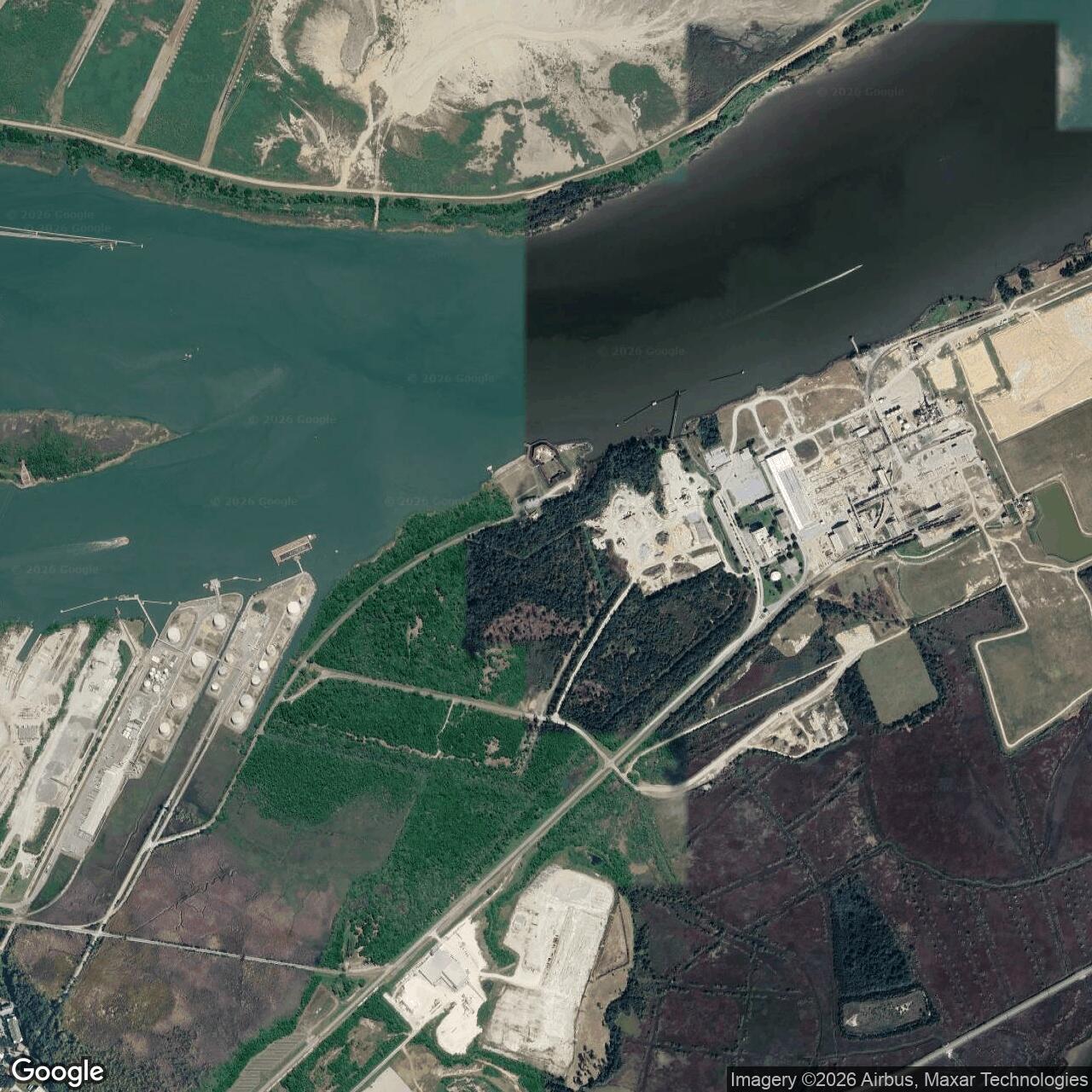
Fort James Jackson Army Base, Savannah Georgia
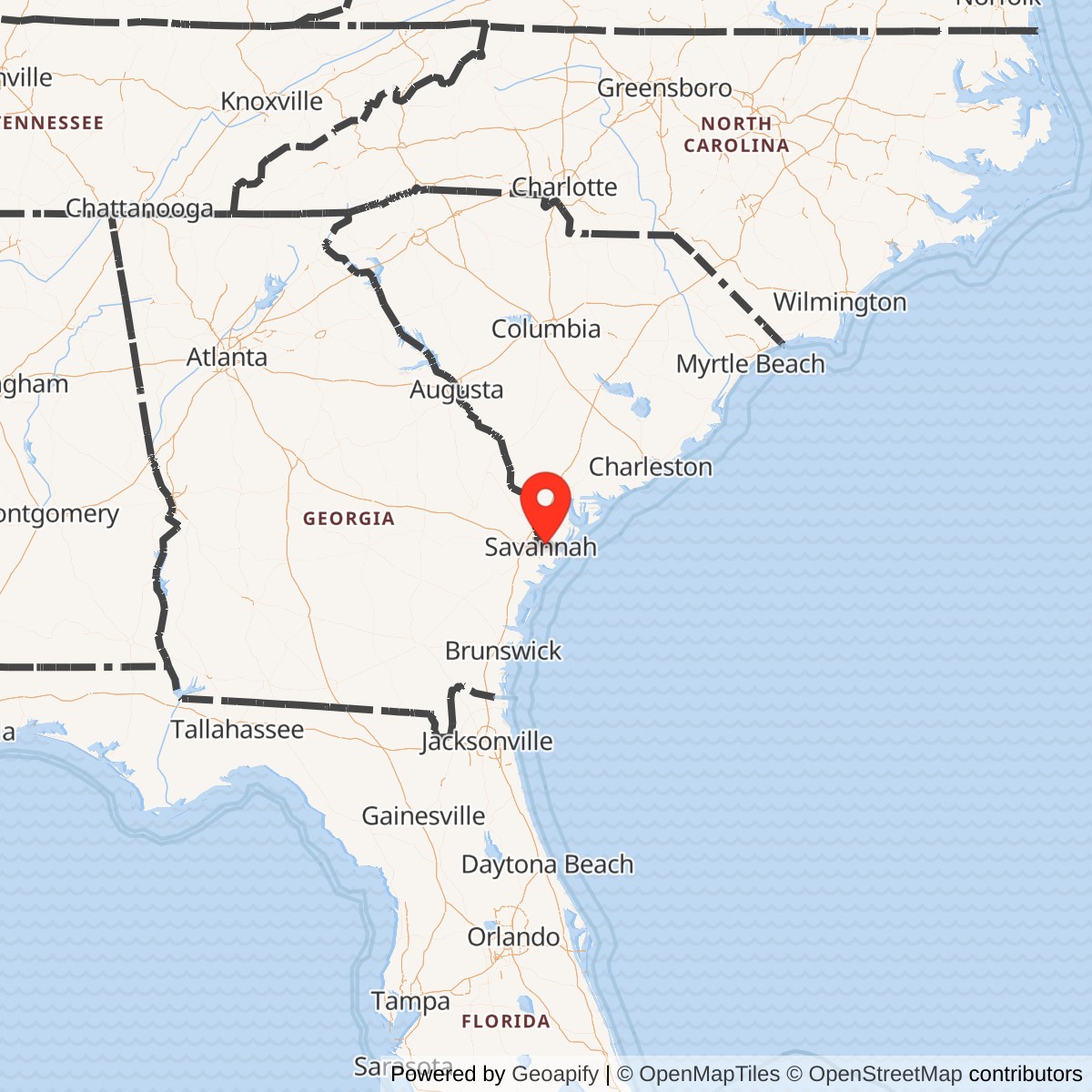
Longitude: -81.036133
Official Base Website: https://chsgeorgia.org/old-fort-jackson/
Current Role: Old Fort Jackson National Historic Landmark; State of Georgia-owned historic site / museum operated by Coastal Heritage Society with public interpretation, exhibits, and cannon / weapons demonstrations.
Fort James Jackson, now best known as Old Fort Jackson, is the Savannah River fort that sits between the older eighteenth-century "Mud Fort" tradition and the later Fort Pulaski / Fort Screven coastal-defense landscape. It is not the large twentieth-century training post called Fort Jackson in South Carolina. This Fort Jackson was a federal seacoast fortification built on the south bank of the Savannah River to defend the water approach to Savannah, Georgia. The National Historic Landmark documentation identifies the historic property as Fort James Jackson, gives Fort Oglethorpe as a former alternate name, places it at 1 Fort Jackson Road in Savannah, and classifies its historic use as defense and its current use as recreational museum.
The site occupied a strategic bend in the Savannah River near Five Fathom Hole, a deep-water anchorage below the city. Its purpose was straightforward: any hostile vessel moving upriver toward Savannah had to pass within the defensive logic of the fort and the surrounding river batteries. That made the location useful long before the present brick work was built. During the American Revolution, Georgia authorities attempted to fortify the same general area with an earthen work known as the "mud fort" on Salter's Island. That work was unhealthy, temporary, and abandoned, but the strategic lesson endured. The river approach to Savannah needed a permanent federal defensive work.
The United States government purchased the Fort Jackson property in 1808 from Nichol Turnbull and began construction that year under Captain William McRee, a young U.S. Army engineer and West Point graduate. Work continued under the pressures that preceded the War of 1812, and the fort was rushed to completion in early 1812. The completed work was named for James Jackson, Revolutionary War veteran, Georgia political leader, and former governor and U.S. senator. It became one of the rare surviving examples of the United States' Second System of seacoast fortification and one of the few surviving masonry forts of that program whose original form remains legible.
Fort James Jackson should be treated as a separate Army installation from Fort Pulaski and Fort Screven. Fort Pulaski was the later Third System masonry fort at Cockspur Island, guarding the outer approach to Savannah near Tybee Roads. Fort Screven was the later Endicott-era and early twentieth-century Coast Artillery post on Tybee Island. Fort James Jackson was earlier and farther upriver. It remained important because Fort Pulaski did not fully cover all possible approaches to Savannah; vessels could still threaten the city through alternate waterways and enter the Savannah River above Pulaski. In that river-defense system, Jackson guarded the inner approach and later served as the headquarters point for Confederate Savannah River defenses during the Civil War.
Site Design, Defenses, and Physical Plant
Fort James Jackson was not a star fort like many better-known nineteenth-century forts. Its National Historic Landmark nomination describes it as an irregularly shaped gun battery of earth and brick masonry, enclosed at the rear by brick walls with four demi-bastions. The river-facing gun platform was supported by arched brick casemates that could be used for storage rooms, offices, and cells. A brick powder magazine stood on the southwest side of the gun platform, while later alterations included a concrete traverse added in the 1870s. The masonry, earthwork, tidal moat, counterscarp walls, and riverfront orientation together gave the fort a compact but powerful defensive form.
That design is central to the fort's historical value. Fort Jackson was built under the Second System of American seacoast defenses, the pre-War-of-1812 building program that replaced many temporary earthen works with stronger masonry fortifications at selected ports. The NHL nomination emphasizes that Fort James Jackson is nationally significant because it retains most of its Second System masonry, original design, and function. It identifies the fort as one of only a small number of surviving Second System seacoast fortifications and as the only remaining Second System fortification built as a masonry gun battery. Its faceted semicircular battery form, originally protected at the rear by a palisade, made it unusual even within its own generation of forts.
The original work was completed in stages. Construction began in 1808, paused when funds ran short in 1810, and then resumed in earnest as war with Britain became more likely. By June 1810, McRee reported that the wharf, barracks at Savannah, and Fort Jackson were finished, but that additional brickwork, earth parapet work, and wooden platform work remained to complete the fort according to the original plan. By early 1812, the War Department and Georgia authorities treated the fort as a newly finished military work that needed a garrison.
The fort changed during the nineteenth century without losing its basic Second System identity. From 1846 to 1860, under the Savannah District of the Corps of Engineers, the Army repaired and strengthened the fort. Work was scheduled in winter months to avoid the fever season. Improvements included additional brick scarp walls and adaptations needed to make the old fort more useful in a changing harbor-defense environment. During the Civil War, the fort became part of a wider system of Confederate river batteries, obstructions, mines, and naval forces. After the war, Army inspections considered whether it still had a place in future coastal defense, and in the 1870s renewed interest in modernization led to requests for heavier Rodman and Parrott armament.
The current preserved property is small compared with later coastal-defense reservations. The NHL boundary is 7.8 acres and includes the masonry fort, its tidal moat, and counterscarp walls, the nationally significant resources associated with Fort James Jackson. That compact acreage should not obscure its military meaning. Unlike vast twentieth-century training reservations, Fort Jackson was a small artillery work whose influence came from its position on a navigable river, its guns, and its relationship to other defenses controlling the approach to Savannah.
Mission and Military Role
Fort James Jackson's primary mission was Savannah River harbor defense. It existed to prevent enemy naval forces from moving upriver to threaten Savannah's wharves, warehouses, population, and communications. Savannah was a major Atlantic port with commercial, political, and military value, and the river channel was its lifeline. Fort Jackson's guns were intended to make that channel dangerous to an enemy vessel. In peacetime, the fort also represented federal control of a key maritime approach and the presence of the U.S. Army Corps of Engineers in shaping national seacoast defense.
During the War of 1812, the fort was manned but not attacked. On June 26, 1812, McRee requested militia for the newly finished fort. By June 29, a company of state militia and a detachment of artillery occupied it. The wartime garrison included local militia companies such as the Chatham Artillery, Republican Blues, and Heavy Artillery Company, as well as elements of the 8th Regiment, United States Infantry, which remained associated with the fort until 1815. The fort therefore served as an active defensive post in a war emergency even though the British never tested it in battle.
In the 1820s, Fort Jackson's role became complicated by public health. Company H, 4th United States Heavy Artillery garrisoned the fort in 1821, but the unhealthy river-marsh environment caused serious yellow fever problems. The U.S. health officer used Five Fathom Hole opposite the fort as a quarantine ground, requiring vessels to stop there until 1827. This turned the fort's immediate surroundings into a point where military defense, maritime control, disease risk, and port regulation overlapped.
The Mexican War era revived Fort Jackson's military relevance. In 1846, the Army Engineer Department recommended refitting the fort despite the completion of Fort Pulaski downriver. The reason was tactical geography. Fort Pulaski guarded the north and south channels through Tybee Sound, but hostile vessels using Warsaw Sound, the Wilmington River, and related waterways could still threaten Savannah above Pulaski. Fort Jackson was necessary to guard that inner approach.
Civil War Service
Fort James Jackson's most active wartime role came during the Civil War. After Georgia seceded, Confederate forces incorporated the fort into the Savannah River defense system. It served as a headquarters for river defenses, supported adjacent batteries, and formed part of a network intended to keep Union naval forces from reaching Savannah. The wider system included river obstructions, underwater mines, earth batteries guarding multiple river approaches, and naval patrols by Confederate vessels including the ironclads C.S.S. Savannah and C.S.S. Georgia.
The fort's Confederate garrisons changed over time. Units associated with the post included the 4th Louisiana, the 1st Georgia Volunteers, and the 1st Georgia Regulars. By 1863, the need for a semi-permanent river-battery force led to the formation of the 22nd Battalion Georgia Artillery. Companies A and B served at Fort Jackson, and Company A formed part of the fort's last Confederate garrison. These unit associations make the fort more than a static structure; it was a living military post integrated into Savannah's Confederate command system.
The fort saw direct fire during the war. In October 1862, the Union vessel Planter, famously associated with Robert Smalls, fired on Fort Jackson at extreme range with a 30-pounder Parrott rifle. The fort could not effectively return fire because of the range, while a supporting Confederate battery at Causton's Bluff fired on the Union vessels. Local accounts cited in the NHL documentation state that firing lasted about an hour and that more than 100 shots were fired at the fort, though Fort Jackson suffered little or no damage. This episode connected the fort to one of the Civil War's most important maritime freedom stories, because Smalls had previously escaped slavery by taking the Planter out of Charleston and delivering it to Union forces.
Fort Jackson also received high-level Confederate attention. On October 31, 1863, Confederate President Jefferson Davis toured Savannah's river defenses with senior Confederate military and naval leaders. At Fort Jackson he was greeted with a twenty-one-gun salute before continuing to other defensive positions. This visit shows that Savannah's defenses were not local improvisations alone; they were part of the Confederacy's strategic concern with keeping Atlantic ports and river systems out of Union hands.
The fort's Confederate period ended with Sherman's approach to Savannah. After capturing Atlanta, General William T. Sherman moved toward the coast in the March to the Sea. By December 1864, Confederate General William J. Hardee faced the prospect of being trapped in Savannah between Sherman's army and Union naval forces. On December 20, 1864, Hardee ordered the evacuation of the city and Fort Jackson. Before leaving, Confederate troops burned the enlisted men's barracks, spiked the fort's guns, and dumped ammunition into the moat. The ironclad C.S.S. Georgia, unable to escape, was sunk by its own crew at Five Fathom Hole near the fort.
Union troops occupied Fort Jackson on the morning of December 21, 1864. The first occupying units identified in the NHL documentation were the 28th Regiment Pennsylvania Veteran Volunteer Infantry and the 29th Ohio Volunteer Infantry. They raised the U.S. flag over the fort and briefly came under fire from the ironclad C.S.S. Savannah before that vessel moved upriver and was later scuttled. On January 16, 1865, the Union garrison was relieved by Companies C, D, and F of the 55th Massachusetts Volunteer Infantry, a regiment of African American soldiers. Those troops worked to restore the fort to fighting condition by remounting cannon before departing for Morris Island on February 1, 1865.
The last known firing of Fort Jackson's guns came in the closing days of the war. On April 11, 1865, after news of Richmond's fall reached Savannah, river batteries fired salutes of victory. The Union warship Pontiac began the salutes, and Fort Jackson made what the NHL nomination describes as the first Army reply. That is believed to be the final occasion on which the fort's guns were fired.
Postwar Army Use, Renaming, and Disposal
After the Civil War, Fort Jackson remained a federal military concern, but its status declined. Army inspectors visited the fort to supervise removal of Confederate ordnance from the moat and to determine whether the installation still had a useful place in coastal defense. In 1867, the fort briefly returned to quarantine-related use, echoing the earlier nineteenth-century relationship between the river anchorage, disease control, and port regulation.
In the 1870s, the Army considered modernization. Requests were made for 10-inch Rodman guns, 100-pounder Parrott guns, and later 15-inch guns with front-pintle carriages. Engineer reports indicate that some guns were in position, but not necessarily the calibers contemplated by approved projects. By 1884 the fort was essentially a caretaker post, with a designated caretaker rather than a substantial garrison.
The name changed during this late period. In 1884 the Army renamed Fort Jackson as Fort Oglethorpe, honoring Georgia founder James Edward Oglethorpe. That name remained until the War Department assigned Oglethorpe's name to an active military base in north Georgia in 1905. The Savannah fort then resumed the Fort Jackson identity. This naming history is important because references to Fort Oglethorpe in older material may refer to the Savannah River fort during the 1884-1905 period, not to the later installation near Chickamauga.
The Spanish-American War gave the fort one last military connection. In 1898, concern about possible Spanish naval attacks on southern ports led the Army to relocate some guns. Fort Jackson's guns were removed and sent to Brunswick, Georgia, to help defend that port. The fort itself did not become an active modern Endicott-era Coast Artillery post in the way Fort Screven did. Instead, its final contribution was to supply armament for another threatened harbor-defense point.
Congress authorized disposal of Fort Jackson as surplus property in 1923. In June 1925, the City of Savannah purchased the property for park purposes. The Great Depression interrupted local plans, and during World War II the property became associated with Southeastern Shipyards and the industrial waterfront. The fort passed to American Cyanamid in 1955, and preservation nearly failed when the company considered sale for scrap brick. Local advocates, including Judge Alexander A. Lawrence and other Savannah citizens, helped press for public preservation. In 1965, the Georgia Historical Commission purchased the property. The site opened as a historical museum in 1969, closed during state budget difficulties in 1975, and reopened on Labor Day 1976 under the operation of the Coastal Heritage Society.
Role in the Wider Military Network
Fort James Jackson's wider significance lies in its place within successive American coastal-defense systems. It began as part of the Second System, the federal pre-War-of-1812 effort to strengthen vulnerable ports through masonry defenses built by Army engineers. That makes it earlier than the better-known Third System forts such as Fort Pulaski and fundamentally different from later Endicott-era concrete batteries such as those at Fort Screven. Fort Jackson preserves a moment when the young republic was still working out how to defend ports with domestic engineering talent, masonry construction, and strategic river control.
Within Savannah, Fort Jackson formed part of a layered harbor-defense geography. It did not replace all other defenses, and later forts did not make it immediately irrelevant. Fort Pulaski guarded the outer approach near the mouth of the river and Tybee Sound. Fort Screven later covered Tybee Island and modern seacoast artillery needs. Fort Jackson guarded the inner river approach closer to Savannah, particularly the possibility that hostile vessels could bypass the outer defenses through alternate waterways and emerge above Pulaski. In the Civil War, that system expanded into multiple earth batteries, obstructions, mines, and naval vessels, with Fort Jackson serving as headquarters for the river defenses.
The fort also connects the Army's military history to engineering history. Captain William McRee's work at Fort Jackson belongs to the early U.S. Army Corps of Engineers tradition that shaped American seacoast defense in the first half of the nineteenth century. The NHL nomination specifically emphasizes Fort Jackson's technological significance as a rare surviving Second System masonry gun battery. Its preservation allows the physical comparison of three generations of Savannah-area defense: Fort Jackson's Second System battery, Fort Pulaski's Third System casemated masonry fort, and Fort Screven's later concrete coast-defense batteries.
Current Status
Fort James Jackson is now preserved and interpreted as Old Fort Jackson, a National Historic Landmark and museum. Coastal Heritage Society operates the site with multi-era military history programming, historical interpreters, cannon firings, weapons demonstrations, exhibits, and public access to much of the fort's structure. The fort is owned by the State of Georgia and operated under a public-history stewardship model rather than as an active military installation. The current visitor address remains 1 Fort Jackson Road in Savannah.
The preserved landscape is compact but highly legible. Visitors can still read the river-facing gun platform, casemates, brick and earth construction, moat, counterscarp walls, powder magazine areas, and later defensive adaptations. The fort is no longer isolated in the same way it was in the nineteenth century; modern Savannah, port activity, industrial waterfront development, and tourism surround the broader setting. Yet the essential military logic remains visible. The fort still faces the Savannah River, and oceangoing vessels moving along the channel make the original purpose of the site immediately understandable.
Chronology
- 1777 Georgia authorities funded a defensive work near the Fort Jackson area, known later as the "mud fort," to guard the Savannah River approach.
- 1778 The Revolutionary-era mud fort was abandoned after yellow fever and unhealthy conditions undermined the garrison.
- 1808 The United States government purchased the Fort Jackson property from Nichol Turnbull and began construction of a brick masonry battery under Captain William McRee of the U.S. Army Corps of Engineers.
- 1810 Work paused when funding ran short, though major components of the fort, wharf, and related barracks work were already in progress or partially completed.
- 1812 Fort James Jackson was rushed to completion as war with Great Britain approached.
- 1812-06-26 Captain McRee requested militia support from the governor of Georgia to garrison the newly finished fort.
- 1812-06-29 A company of Georgia militia and a detachment of artillery occupied Fort Jackson.
- 1812-1815 War of 1812 garrisons included local militia companies and elements of the 8th Regiment, United States Infantry.
- 1821 Company H, 4th United States Heavy Artillery garrisoned the fort.
- 1820s Five Fathom Hole opposite the fort served as a quarantine anchorage, and yellow fever conditions made the site difficult for troops.
- 1846 The Army Engineer Department recommended refitting Fort Jackson because Fort Pulaski did not fully cover all approaches to Savannah.
- 1846-1860 The Savannah District, Corps of Engineers, repaired and strengthened Fort Jackson, working mainly in winter months to avoid the fever season.
- 1861 Confederate forces incorporated Fort Jackson into the Savannah River defense system.
- 1862-10 The Union vessel Planter, associated with Robert Smalls, fired on Fort Jackson at long range; the fort suffered little or no damage.
- 1863 The 22nd Battalion Georgia Artillery was formed to provide semi-permanent garrisons for Savannah river batteries, with Companies A and B serving at Fort Jackson.
- 1863-10-31 Confederate President Jefferson Davis visited Fort Jackson during a tour of Savannah River defenses.
- 1864-12-20 Confederate forces evacuated Savannah and Fort Jackson, burned barracks, spiked guns, and dumped ammunition in the moat.
- 1864-12-21 Union troops occupied Fort Jackson and raised the U.S. flag over the fort.
- 1865-01-16 Companies C, D, and F of the 55th Massachusetts Volunteer Infantry relieved the Union garrison and worked to restore the fort's guns.
- 1865-02-01 The 55th Massachusetts departed Fort Jackson for Morris Island, South Carolina.
- 1865-04-11 Fort Jackson's guns are believed to have fired for the last time during salutes marking news of Richmond's fall.
- 1867 The fort briefly served again as a port quarantine station.
- 1870s Army engineers considered modernization and requested heavier armament for the fort.
- 1884 The Army renamed Fort Jackson as Fort Oglethorpe.
- 1898 During the Spanish-American War, guns were removed from the fort and sent to Brunswick, Georgia, for harbor-defense use.
- 1905 The Fort Oglethorpe name was reassigned to a north Georgia installation; the Savannah fort resumed the Fort Jackson name.
- 1923 Congress authorized disposal of Fort Jackson as surplus property.
- 1925-06 The City of Savannah purchased the property for park use.
- 1940s The fort property was associated with Southeastern Shipyards and Savannah's wartime industrial waterfront.
- 1955 American Cyanamid purchased the fort property.
- 1965 The Georgia Historical Commission purchased the fort after preservation advocates warned that the structure could be lost.
- 1969 The fort opened as a historical museum.
- 1975 The state closed the site due to budget problems.
- 1976 Coastal Heritage Society reopened Old Fort Jackson and began operating it as a public historic site.
- 2000-02-16 Fort James Jackson was designated a National Historic Landmark.
- Present Old Fort Jackson remains a State of Georgia-owned historic site and museum operated by Coastal Heritage Society, with public interpretation, exhibits, and daily military-history programming.
- Visual and Reference Resources
- The National Historic Landmark nomination is the best single source for the fort's physical description, UTM-based location, acreage, construction chronology, military context, Civil War service, postwar ownership, and preservation history. Coastal Heritage Society's Old Fort Jackson page is the best current public-use source because it describes the site's present operation, interpretive programs, daily cannon firings, and visitor identity. The American Battlefield Trust and Explore Georgia summaries are useful concise public-facing references for the fort's War of 1812, Civil War headquarters, and Savannah River defense role. The Library of Congress Carol M. Highsmith photograph record is a strong public-domain visual source for modern exterior imagery.